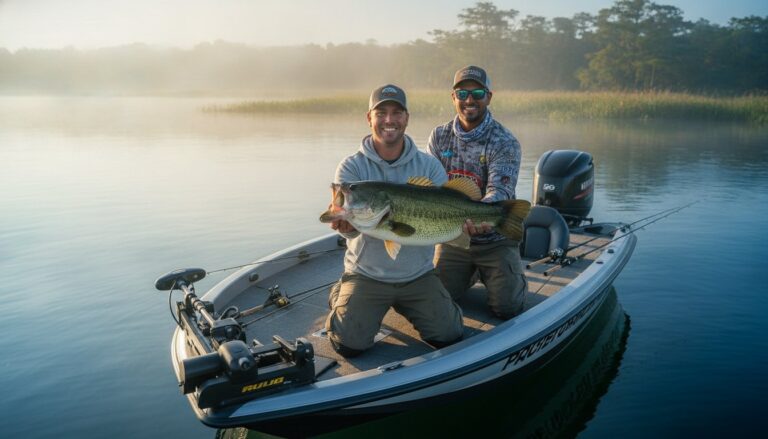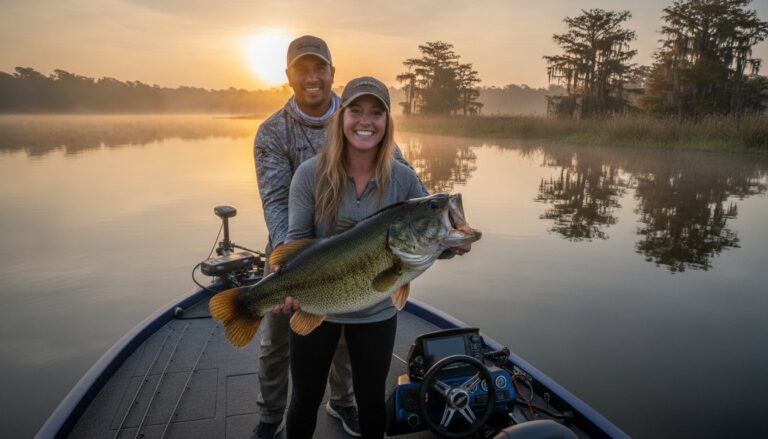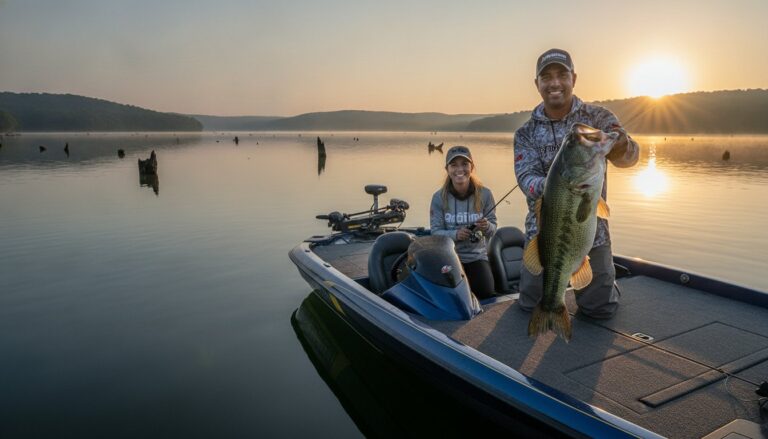
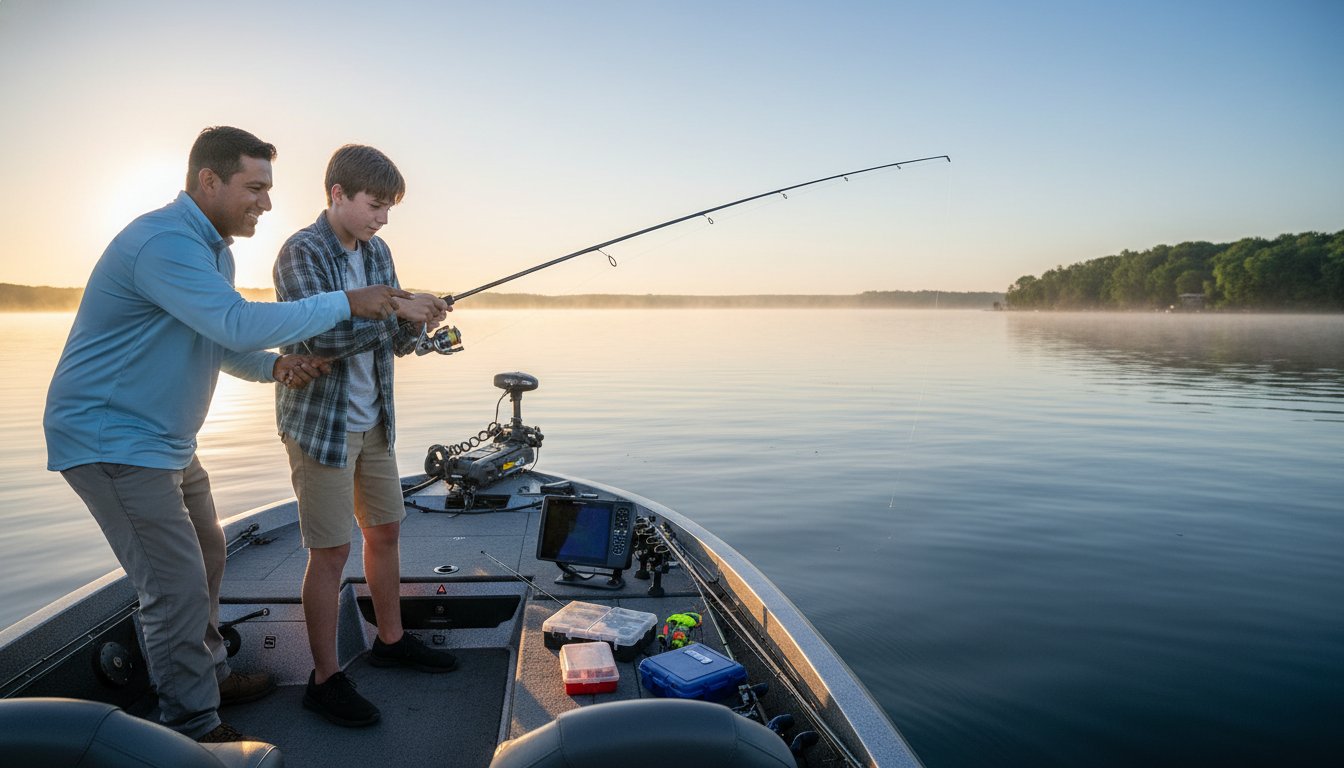

Most anglers think they’re just paying for a boat ride to the honey hole, but the truth is your behavior on deck determines whether you land a trophy or go home with nothing but a sunburn. It’s completely normal to feel a bit of "newbie nerves" when stepping onto a pro’s rig for the first time. You don’t want to look like an amateur, and you definitely don’t want to mess up the flow when a legendary lunker is on the line. That’s why understanding fishing guide etiquette for beginners is the secret weapon for any successful day on the water.
I get it; you’re here to catch fish, not worry about whether you’re standing in the wrong spot. I promise that by the time you finish this guide, you’ll know exactly how to act like a pro, which leads to a stress-free experience and way more hookups. We’ll cover everything from gear essentials and the industry standard 15% to 20% tipping rule to the technical details that help you work with your guide to land a personal best hawg.
Key Takeaways
- Treat your guide like a high-performance coach to unlock local secrets and boost your hookup rate immediately.
- Learn the essential packing list and why mastering fishing guide etiquette for beginners starts with asking before you bring your own tackle.
- Discover how to manage your space on the deck and stay in the casting lane to maximize safety and efficiency.
- Get the facts on the industry-standard 15% to 20% gratuity and why being honest about your skill level leads to more fish in the boat.
- Understand how practicing catch and release and supporting local guides ensures these world-class fisheries stay legendary for years to come.
Table of Contents
Why Fishing Guide Etiquette Matters for Your First Pro Trip
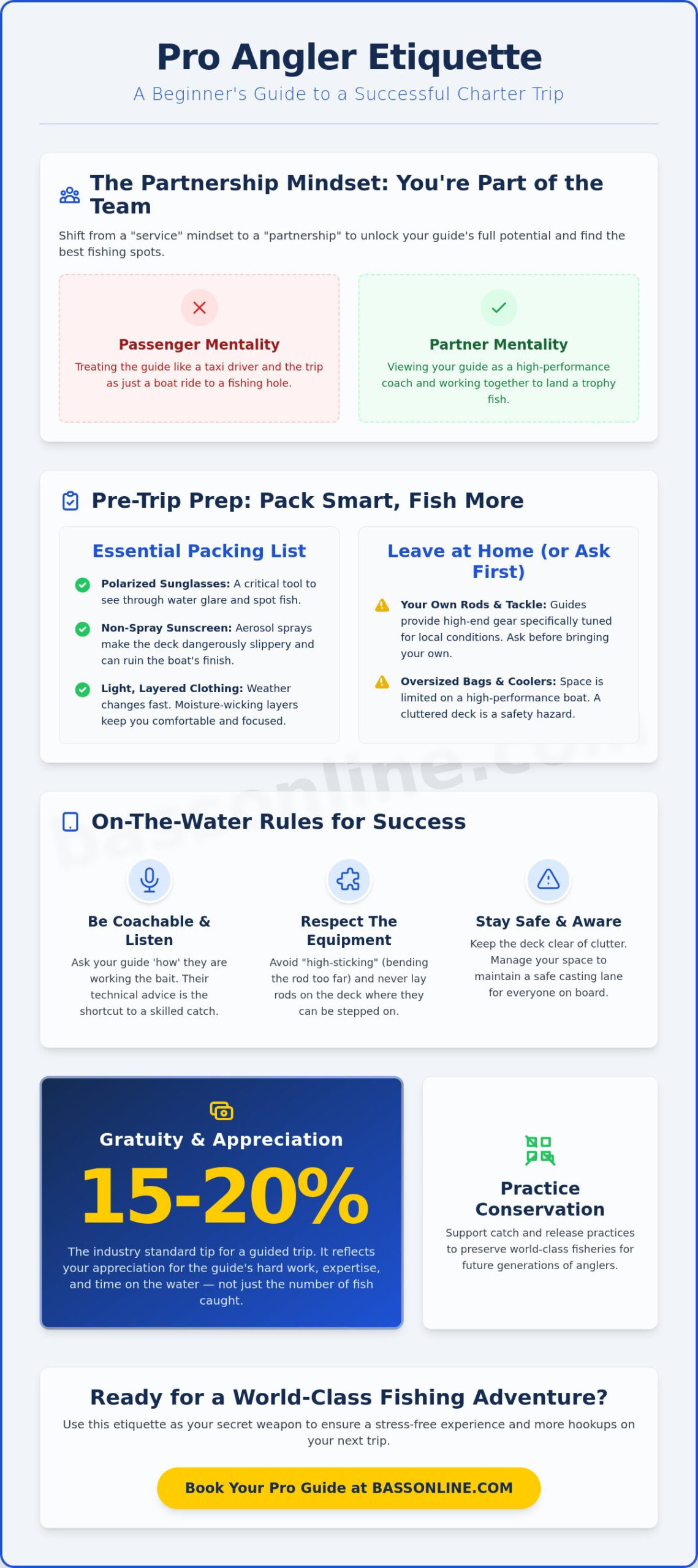
When you step onto a professional bass boat, you aren’t just a passenger; you’re the second half of a high-stakes team. Most people treat a charter like a taxi ride to a fishing hole, but that’s a mistake that costs you fish. Mastering fishing guide etiquette for beginners is about shifting from a "service" mindset to a "partnership" mindset. Your behavior on the deck directly impacts how hard your guide works to put you on a legendary lunker. If the chemistry is right, a standard trip can quickly turn into a world-class adventure.
Etiquette isn’t just about being polite. It’s about safety and maximizing the limited time you have during the bite window. Every minute spent untangling a bird’s nest because you ignored a casting instruction is a minute you aren’t catching. Within the broader world of recreational fishing, a guided trip is the ultimate shortcut to success, but only if you’re prepared to work with the pro. When a guide sees you’re engaged and respectful, they’re much more likely to pull out the "secret" map and take you to those untouched bonus spots they save for their best clients.
The Role of a Professional Bass Guide
Think of your guide as your coach, navigator, and local expert all rolled into one. They provide the high-end gear, the boat, and the decades of local knowledge required to find a trophy hawg in massive systems like the Everglades or Lake Okeechobee. Their primary goal is your safety and a successful expedition. It’s vital to understand the difference between a "meat haul" and a professional trophy hunt. A meat haul is about filling a cooler; a professional bass charter is about the pursuit of a personal best and the thrill of the catch. Our professional fishing guides are there to ensure you experience the raw excitement of the sport while maintaining professional reliability.
How Your Attitude Affects the Catch
Enthusiasm is contagious on a boat. If you’re excited and ready to learn, your guide will naturally match that energy. Being coachable is the fastest way to improve your skills. Instead of asking "where" the fish are, ask "how" the guide is working the bait. Listening to technical details about structure and presentation is what separates a lucky catch from a skilled one. Don’t fall for the "no fish, no pay" myth. You’re paying for the guide’s time, expertise, and the thousands of dollars in equipment they maintain. A world-class experience is about the effort and the education, not just the final tally on the scale.
Pre-Trip Preparation: What to Pack and What to Leave Behind
Success starts before you ever hit the dock. One major part of fishing guide etiquette for beginners is respecting the limited space on a high-performance bass boat. Don’t be the angler who shows up with three oversized tackle boxes and five rods without asking first. The golden rule is simple: always check with your guide before bringing your own gear. Most pros prefer you use their equipment because it’s specifically tuned for the local water and the trophy species you’re hunting. If you’re looking to brush up on the basics before your trip, check out our Bass Fishing 101 guide for a deeper dive into pro-level tactics.
The Gear Talk: Using Pro Equipment
Pro guides invest thousands of dollars into high-end graphite rods and precision reels. These tools are sensitive enough to feel a bass breathing on your lure, but they can be fragile. Avoid "high-sticking," which is pulling the rod tip too far back during a fight, and never lay rods on the deck where they can be stepped on. Bringing your own "lucky" rod might seem like a good idea, but if it isn’t spooled with the right line for the heavy cover we’re fishing, it’s just a liability. A cluttered deck is a tripping hazard that slows down the action. Keep the "kitchen sink" at home so we can move fast when the bite turns on.
Essential Personal Items
While the guide handles the tackle, your comfort is your responsibility. Bring high-quality polarized sunglasses; they are essential tools that let you see through the surface glare to spot submerged grass or a lurking lunker. Pack non-spray sunscreen, as the spray variety can make the deck dangerously slippery and ruin the boat’s finish. Wear light, moisture-wicking layers. Weather on the water changes fast, and being shivering or sunburnt will kill your focus. If you have questions about specific gear for your upcoming adventure, feel free to reach out to our team for a quick rundown.
Licenses and Legalities
Don’t let a paperwork oversight ruin your morning at the ramp. On most Florida bass charters, the vessel’s license covers all paying passengers, meaning you usually don’t need to buy your own. However, rules vary by state and water body. If you’re fishing in a region where you do need a license, like a non-resident 3-day license, which costs $17.00 as of May 2026, keep a digital copy on your phone or a printed version in a waterproof bag. For more details on the latest regulations and fees, see our Florida Fishing License Guide . Being prepared shows your guide you’re serious about the sport and respect the local regulations.
On the Water: Mastering Boat Safety and Casting Etiquette
Once the trailer hits the water and the boat is floating, the environment changes instantly. A high-performance bass boat is a precision machine, and understanding fishing guide etiquette for beginners is what keeps the day running smoothly. Safety isn’t just a suggestion; it’s the law. Following US Coast Guard regulations and your guide’s specific instructions ensures everyone stays dry and focused on the hunt. If you want to see how the pros handle a boat on legendary waters like Lake Okeechobee, check out our fishing charter reviews to see what our clients say about their experience on the deck.
Deck management is often overlooked but critical for success. Most modern rigs have a clear "casting lane." If I’m on the bow operating the trolling motor and watching the LiveScope electronics, your best bet is usually the aft deck or a designated spot mid-ship. This prevents tangled lines and keeps the boat balanced. When you’re ready to swing, remember the etiquette for setting a hook. Don’t jump the gun. Wait for the guide’s signal to ensure the bass has the lure fully in its mouth. Once that trophy is boat-side, let the pro "lip" it. We know how to handle these lunkers to protect their slime coats and keep you from getting snagged by sharp treble hooks.
High-Speed Transit and Life Jacket Rules
When the big motor is running, conversation stops and safety starts. Stay seated and keep a firm grip on the handrails. Professional guides always use a "kill switch" lanyard attached to their life jacket; it’s a critical safety feature that shuts down the engine if the captain is thrown from the helm. Stow all loose items, such as hats, sun gaiters, and tackle bags, in the storage lockers before we take off. Moving around while the boat is on plane is dangerous and strictly off-limits.
Casting Awareness and Lure Care
Casting is where most accidents happen. Always check your "six" before every throw. A stray hook in a guide’s ear or a seat cushion ends the day fast. Also, be mindful of the boat itself. Avoid banging heavy tungsten weights or crankbaits against the gelcoat or the outboard motor cowling. If you get snagged in heavy grass or timber, don’t just pull harder. You’ll either snap the rod or send a high-velocity lure flying back at the boat. Signal your guide, and we’ll use the trolling motor to get you out safely.
-
Follow the Leader: Always listen to the captain’s instructions during transit.
-
Watch the Backcast: Ensure your path is clear before launching a lure.
-
Protect the Pro Gear: Treat the rods and the boat with respect.
-
Let the Guide Handle the Fish: It’s safer for you and healthier for the bass.
Communication, Tipping, and the ‘No Fish’ Reality
Clear communication is a cornerstone of fishing guide etiquette for beginners, especially when the bite gets tough. I’ve spent thousands of hours on the water, and I can tell you that honesty is the fastest way to put a trophy in the boat. Don’t pretend to be a pro if you’ve never held a baitcaster. If you’re upfront about your skill level, I can spend more time teaching you how to pitch into heavy cover and less time untangling backlashes. Tell me your goals before we leave the ramp. Are you hunting for a single legendary lunker, or do you want to learn technical details about seasonal patterns? Knowing what you want helps me tailor the expedition to your needs.
Let’s talk about the elephant in the boat: tipping. Proper fishing guide etiquette for beginners means knowing that gratuity is an industry standard. A tip is a reflection of the guide’s hard work, expertise, and the hours of prep work done before you even arrive. Even if the fish aren’t jumping into the boat, your guide is likely working overtime to find a school. You can check out our roster of legendary Fishing Guides to see their specialties and read real client reviews about their dedication on the water.
The Gratuity Framework
The current industry standard for a fishing guide tip is 15% to 20% of the total trip cost. If the service was exceptional or the guide gave you extra time on the water to land that last-minute hawg, 20% or more is common. On the flip side, 10% is typically reserved for unsatisfactory service. Cash is king on the water, but it’s smart to ask about digital payment options like Venmo or Zelle before you head out. Remember, you’re tipping for the effort and the world-class experience, not just the weight of the fish.
Managing Expectations on the Water
Even the best pros can’t control a sudden cold front or a difficult moon phase. Sometimes the fish just don’t want to play. When the bite is slow, don’t get frustrated; get curious. Ask "why" the fish aren’t biting or what the sonar is showing. This turns a slow day into an invaluable lesson that will make you a better angler for life. If you have specific goals for your trip, talk to a pro before you book so we can match you with the perfect expert for your target species.
-
Be Honest: Tell your guide your true experience level.
-
The 15-20% Rule: Tip based on service and effort, not just the catch count.
-
Ask Questions: Turn slow moments into learning opportunities.
-
Goal Setting: Define success early, whether it’s a trophy hunt or a skills clinic.
Post-Trip Etiquette: Conservation and Booking Your Next Adventure
The final part of fishing guide etiquette for beginners happens once the boat is back on the trailer. Your trip might be over, but the way you wrap things up determines how you’re remembered by the pro and how the fishery stays healthy. Professional guides aren’t just looking for one-time clients; we want to build long-term partnerships with anglers who respect the resource. Treating the boat with care until the very last second and showing appreciation for the effort put into the day sets you apart as a top-tier client.
Sharing your success is another huge way to show respect. If you landed a lunker, post those photos and tag the guide and the company on social media. This helps other anglers discover these world-class experiences and supports the local experts who spend their lives on these waterways. Leaving a detailed review on our site or other platforms is the ultimate "thank you." Mention specific things you learned or how the guide handled the boat. It helps us maintain our status as the premier service in the region and gives other weekend warriors the confidence to book their first charter.
Respecting the Resource
We prioritize the health of the bass above everything else. Catch and release is the backbone of freshwater sustainability, ensuring that the 8-pounder you caught today becomes a 10-pounder for someone else next year. When we land a hawg, we move fast. We take quick photos, keep the fish in the water as much as possible, and ensure a fast release. Never drop a fish on the deck or handle it with dry hands. This damages their protective slime coat, putting the fish at risk. We also strictly follow local regulations regarding live bait and bag limits to keep these legendary waters thriving for the next generation.
Planning Your Return Expedition
Before you head home, ask your guide for a "next step" recommendation to keep your skills sharp. If you mastered topwater today, maybe next time you want to try punching heavy mats or exploring different Lakes like Lake Toho or the Harris Chain. Each of the Species we target, from hard-hitting Peacock Bass to legendary Largemouths, requires a unique approach. Booking in advance is crucial, especially during peak seasons like the spring spawn, when our calendars fill months in advance. Treat the boat like it’s yours and the guide like a partner, and you’ll always be welcome back on the deck.
Final Takeaway: Master the unspoken rules of the boat to turn a simple charter into a career-defining fishing partnership.
Ready to Step Onto the Pro Deck?
You’re now armed with the field-tested knowledge to step onto any bass boat with total confidence. Mastering fishing guide etiquette for beginners is the ultimate secret to shifting from a spectator to a true partner in the hunt for a trophy. Success on the water comes down to clear communication, respecting the high-end gear, and recognizing the 15% to 20% gratuity standard that reflects your guide’s hard work. When you treat your guide like a coach, you unlock the full potential of legendary waters such as Lake Okeechobee and the Everglades.
At Bass Online, we bring over 25 years of professional guiding experience to every trip. As the largest network of local pro guides in the US, we’re dedicated to your success and even offer a No Fish, No Pay brand promise on select trips. Ready to put these tips to the test? Book your world-class bass fishing trip today! I can’t wait to help you land your next personal best hawg. Let’s get out there and make some memories on the water!
Frequently Asked Questions
Do I need to bring my own fishing rod and reel on a guided trip?
You don’t need to bring your own rod and reel because your guide provides world-class, field-tested equipment tuned for the local water. Most pros prefer you use their gear to ensure the line weight and rod action are perfect for the specific lunkers we’re targeting. If you have a favorite rod, always check with the guide first to make sure it fits the day’s technical requirements.
How much should I tip my fishing guide for a half-day trip?
You should tip between 15% and 20% of the total trip cost, regardless of whether it’s a half-day or full-day expedition. This gratuity reflects the guide’s expertise, boat maintenance, and hours of prep work. For a half-day trip, which averages $638 in Florida as of 2026, a standard tip would be roughly $95 to $125. This is a key part of fishing guide etiquette for beginners.
What happens if it rains during our scheduled fishing charter?
We generally fish through the rain unless there is lightning or high winds that make the water unsafe. Bass often bite better during a light rain or under overcast skies, so don’t let a few drops ruin your excitement. Your guide will monitor the radar and make the final call on whether to postpone or head back to the ramp if the weather turns dangerous.
Can I bring beer or alcohol on a professional bass fishing boat?
You can usually bring beer or alcohol in moderation, but always ask your guide before boarding. Safety is the top priority, and excessive drinking can lead to accidents on a high-speed bass boat. If the guide says yes, stick to cans and avoid glass bottles. Glass is a major safety hazard on the deck and can easily break in storage compartments.
Is it okay to keep the fish I catch on a guided bass trip?
Most professional bass guides practice strict catch and release to preserve the fishery for future generations. While some regions allow you to keep a limit of smaller fish, trophy bass are much more valuable in the water. Following this aspect of fishing guide etiquette for beginners ensures that these legendary lunkers continue to grow and provide a world-class experience for the next angler.
What should I do if I get seasick or motion sick on the water?
Tell your guide immediately if you start feeling motion sick so we can head to calmer water or take a break on shore. Freshwater lakes are typically much smoother than the ocean, but wind can still create a chop. Taking a non-drowsy motion sickness pill an hour before we leave the ramp is a smart move if you’re prone to nausea.
Should I bring my own life jacket, or does the guide provide one?
Your guide provides all necessary US Coast Guard-approved life jackets for everyone on board. If you have a specific vest you find more comfortable, you’re welcome to bring it, but make sure it’s in good condition and fits properly. Children are often required by law to wear their life jackets at all times while the boat is in motion, so verify sizes beforehand.

Article by
Mr Bass
Todd Kersey, widely known as Mr. Bass by Field & Stream, is a professional angler, accomplished author, and dedicated philanthropist with a lifelong passion for bass fishing. Armed with a degree in Outdoor travel, Mr. Bass has expertly combined his knowledge with his practical fishing experience to become one of the most respected names in the bass fishing, his deep understanding of bass habitats, and fish behavior has earned him numerous accolades as a asset of the sport. Serving 8 years as FWC Stakeholder Chairperson. Leading and passing cutting-edge legislation, such as the Black Bass Management plan, and successfully building, passing, and financing the Trophy Catch program. As CEO, he is committed to giving back to the community through his philanthropic efforts. He supports a variety of causes, especially those centered around physical disabilities. Through his advocacy, his mentorship programs inspire anglers to engage in fishing stewardship, helping to raise more than $ 18 million in donations. Mr. Bass continues to inspire anglers and outdoor enthusiasts alike with his commitment to the sport and the world around him.