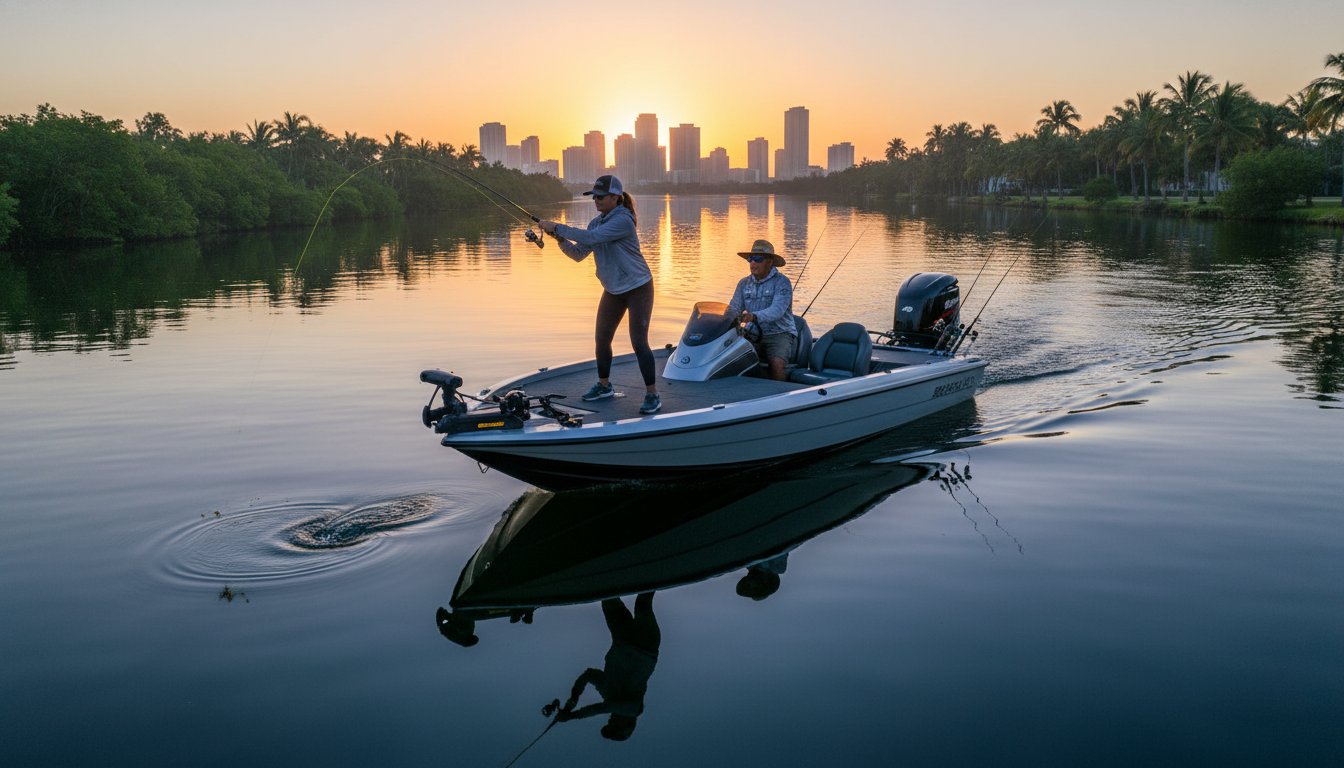

What if you could experience the bone-shaking strike of a tropical jungle predator without ever needing a passport or a grueling flight to the Amazon? Most anglers spend years dreaming of these colorful fighters but worry they’ll waste their precious vacation time on unproductive canals or use the wrong largemouth tactics that simply don’t work. I’ve spent thousands of hours on the water, and I can tell you that the top peacock bass fishing destinations usa offers are more accessible than you think. You just need to know which specific bridges, culverts, and urban waterways actually hold the heavy hitters.
You’re here because you want the real deal: explosive surface strikes and drag-screaming runs. This 2026 guide is designed to get you on the fish immediately. I’ll provide a verified shortlist of trophy spots, explain why the midday heat is actually your best friend, and break down the specific gear you need to pack so you aren’t outgunned. We’re moving past the generic advice to give you the field-tested strategy required to land a Florida butterfly peacock bass that rivals anything found in the deep tropics.
Key Takeaways
- Identify why the South Florida “frost line” creates the top peacock bass fishing destinations usa offers and where to find the most consistent action.
- Compare the high-volume urban bites of Miami’s Blue Lagoon against the wild, remote stretches of the Everglades canal systems.
- Schedule your 2026 trip during the prime March to June window to capitalize on the peak activity levels of these heat-loving predators.
- Learn the essential gear and lure selections needed to mimic local forage like spotted tilapia for more explosive surface strikes.
- Gain the professional edge by using live bait strategies and local guide knowledge to unlock “secret” canals that aren’t on the map.
Why South Florida is the Only Destination for US Peacock Bass
You can’t just drop a boat into any lake in the States and expect to hook into a neon-colored brawler. If you’re hunting the top peacock bass fishing destinations usa has to offer, your map starts and ends in South Florida. These fish are tropical transplants that absolutely thrive in the heat. They aren’t actually bass at all; the Peacock bass is a member of the cichlid family, native to the Amazon River basin. Because they’re built for the tropics, they have zero tolerance for the cold.
The 2026 outlook for these fighters is the best I’ve seen in a decade. We’ve had a string of incredibly mild winters, which means the “kill zones” haven’t frozen over. This has allowed the population to expand and, more importantly, allowed the fish to grow. We’re seeing a massive increase in trophy-sized butterfly peacocks in the 5 to 8-pound range. While they don’t reach the 20-pound marks of their Amazonian “Giant” cousins, our local butterfly variety hits twice as hard as a largemouth of the same size.
To see exactly what this high-energy action looks like on the water, check out this video of a successful Miami outing:
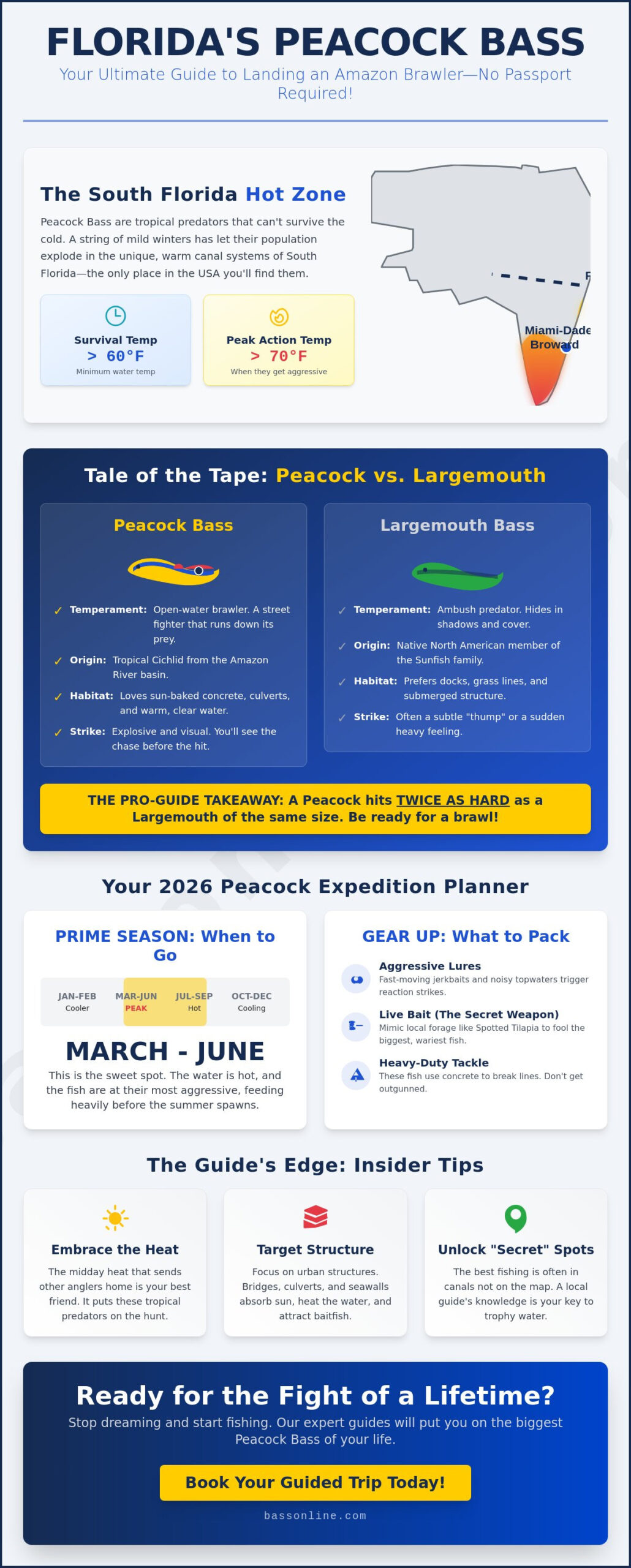
The “Frost Line” is the ultimate gatekeeper for this species. Generally, you won’t find them much further north than Palm Beach County. They are heavily concentrated in Broward and Miami-Dade because the water temperatures rarely dip below the 60-degree danger zone. This geographic limitation is exactly why South Florida remains the undisputed king of the top peacock bass fishing destinations usa.
The History of a Tropical Success Story
The Florida Fish and Wildlife Conservation Commission (FWC) introduced these fish back in 1984. It wasn’t just for the thrill of the catch; it was a strategic move to control invasive species like spotted tilapia and oscars that were clogging the canals. Since then, they’ve turned into a multi-million dollar boost for our local freshwater fishing industry. These fish possess a specialized biological need for heat, requiring water temperatures to stay consistently above 70 degrees to remain truly active and aggressive.
Peacock Bass vs. Largemouth: What to Expect
If a largemouth is an ambush predator that hides in the shadows, a peacock bass is a street fighter that hunts in the open. They don’t wait for a meal; they run it down. The strike is incredibly visual. You’ll often see a massive wake or a colorful flash behind your lure seconds before your rod doubles over. They don’t have the “bucket mouth” of a native bass, but they have a powerful tail and a mean streak that will test your drag. It’s a fast-paced game that requires quick reflexes and heavy-duty gear. Learn more about different bass species to see how these tropical titans compare to our native favorites.
The Top 3 ‘Urban’ Peacock Bass Destinations in Miami
Most folks think you need to head deep into the swamp to find world-class fishing, but Miami proves them wrong every single day. The city’s massive canal infrastructure is a masterpiece of design for these tropical predators. Concrete structures like bridges, sea walls, and culverts soak up the Florida sun, acting as giant heaters that keep the water temperatures high and the baitfish active. This unique urban environment is what truly makes Miami one of the top peacock bass fishing destinations usa has to offer.
Blue Lagoon: Fishing in the Shadow of the Airport
The Blue Lagoon, officially known as the Miami Airport Lakes, is the legendary heart of the butterfly peacock’s range. These deep rock pits were carved out during the construction of the airport and are interconnected by a web of winding canals. The constant roar of jet engines overhead doesn’t spook these fish; in fact, they’re some of the most aggressive in the state. I always tell my clients to use the city’s energy to their advantage. We use fast-moving jerkbaits and noisy topwater lures along the rip-rap banks. These fish are “street fighters” that love to use the concrete edges to break your line, so you’ve got to be ready for a brawl from the second you hook up.
The C-100 Canal System: Residential Trophy Hunting
If you’re hunting for a trophy that looks good on camera, the C-100 system in South Dade is where you need to be. This area is famous for its endless rows of residential docks and manicured lawns. According to the Florida Fish and Wildlife Conservation Commission, these canals were among the first to see successful peacock establishment back in the 80s. Today, they hold some of the heaviest fish in the county. The key here is “dock skipping.” Residential heat runoff from swimming pools and home foundations keeps the water under these docks several degrees warmer during the cooler months. Just remember to stay in the water and respect the property lines of the locals while you’re hunting those five-pounders.
Don’t overlook the Black Creek Canal (C-1) or the Snapper Creek system either. Black Creek is a high-volume spot where it’s common to land dozens of fish in a single afternoon if you find the right culvert with moving water. These systems are massive urban mazes, and navigating them requires a bit of local intelligence to find the “honey holes” that aren’t on any map. If you’re ready to experience this fast-paced action for yourself, you should check out our Miami Peacock Bass fishing trips to see how we tackle these urban waters. If you’re feeling overwhelmed by the sheer miles of concrete and canal turns, you can always reach out to our local pros for a bit of guidance on where the bite is hottest right now.
The Everglades: Wild Frontiers for Trophy Peacocks
If you want to swap the sound of jet engines for the call of an osprey, head west into the heart of the River of Grass. The Everglades offers a raw, prehistoric landscape that provides a completely different vibe than the urban canals of Miami. This is where you find the “pure” peacock experience. The L-67 and L-29 canals stretch for miles with untouched sawgrass edges where these fish hunt in the shadows. It’s easily one of the top peacock bass fishing destinations usa has to offer for anglers who want to feel like they’re in the middle of nowhere.
You aren’t just limited to one species here. The overlap of habitats allows for a “Grand Slam” day. You can pull a heavy butterfly peacock off a limestone ledge, a bucket-mouth largemouth from a lily pad field, and a colorful oscar from the grass edges all in the same afternoon. Data from the USGS Nonindigenous Aquatic Species program shows how these fish have successfully integrated into the wild Glades, and the results for anglers are spectacular. The competition for food in these nutrient-rich waters makes the strikes incredibly violent.
Don’t underestimate the sawgrass maze. It all looks the same once you’re three miles in, and the wind can shift the vegetation overnight. A professional guide is vital in this environment. Between the shifting water levels and the identical-looking canal turns, it’s easy to get turned around. We use specialized shallow-draft boats to reach the backwater spots that most weekend warriors can’t touch, ensuring we find the clear water where peacocks love to sight-hunt. In the wild, the Everglades stands as one of the top peacock bass fishing destinations usa for those seeking a wilder challenge.
Aerojet Canal: The Deep Water Secret
The Aerojet Canal is a remote location that holds some of the largest peacocks in the state. While most Florida canals are relatively shallow, the Aerojet features steep limestone ledges that drop into depths exceeding 20 feet, providing a thermal sanctuary for massive peacocks. These deep water ledges are the secret to the Aerojet’s success. The fish go deep when it’s cool and move up the ledges to feed as the sun hits the water. This creates a vertical hunting ground where you can target trophy fish that rarely see a lure.
Holiday Park and the Sawgrass Recreation Area
Holiday Park and the Sawgrass Recreation Area are your primary gateways for a full-day expedition. The best time to hit these spots is during the “Dry Season,” which typically runs from November through May. As the sawgrass marshes dry up, the fish are forced out of the shallow flats and concentrated into the deep canals. It becomes a target-rich environment, provided you know which stretches of the L-67 are holding the most bait. To get the full breakdown on these wild waters, Explore the Everglades Bass Fishing guide before you hook up the trailer.
Planning Your 2026 Peacock Bass Expedition: Timing and Gear
The 2026 season is shaping up to be legendary for anyone targeting the top peacock bass fishing destinations usa. If you’re mapping out your trip, circle the months of March through June on your calendar. This is the “Golden Window” when South Florida water temperatures consistently stay above 80 degrees, pushing these fish into their peak spawning and feeding cycles. Unlike native largemouth that often get lethargic in the midday heat, peacocks are sun-worshippers. They hit with the most aggression when the sun is directly overhead and the shadows are shortest.
To land these fish consistently, you’ve got to “match the hatch.” In our canal systems, that means mimicking the spotted tilapia. These small, colorful cichlids are the primary forage for peacocks. I’ve found that the “Burn and Pause” technique is the most effective way to trigger a strike. You rip your lure back at high speed to grab their attention, then suddenly kill the action. That pause makes the bait look stunned or injured, and that’s usually when the water explodes. It’s a high-energy game that requires focus on every single cast.
I’m also seeing a massive spike in fly fishing interest for 2026. Stripping a colorful streamer through a canal culvert or along a sawgrass edge is pure adrenaline. It’s a growing trend because the visual nature of the peacock’s strike is perfectly suited for sight-casting in clear, shallow water. Whether you’re throwing conventional gear or a 7-weight fly rod, the key is maintaining a fast, erratic retrieve that doesn’t give the fish time to overthink the bait.
Top Lures for US Peacock Bass
Forget the slow, methodical “worming” you use for largemouth. Peacocks want movement and noise. Jerkbaits and topwater “walk-the-dog” lures are absolute essentials in your tackle box. If the fish are holding deeper in canal pockets or under bridges, a 1/8 to 1/4 ounce Peacock Jig (a bucktail jig with a bit of flash) is your best friend. Stick to bright color palettes like gold, orange, and fire-tiger; bright is always better in South Florida. In our tea-colored canal water, these high-visibility colors provoke a territorial response that more natural tones just can’t match.
Rods, Reels, and Line
You can’t bring a light-duty setup to one of the top peacock bass fishing destinations usa. You need a 6’6″ to 7′ medium-heavy rod with a fast-action tip. That fast tip is crucial for working jerkbaits correctly and absorbing the initial “freight train” hit these fish are famous for. I always recommend 20 to 30-pound braided line. This is mainly because of the “No-Drag” Rule. Peacocks live around abrasive limestone ledges and bridge pilings. If you give them an inch of drag, they’ll wrap you around a structure and snap your line in a heartbeat. Use a short 20-pound fluorocarbon leader for stealth, but keep that drag locked down tight.
If you’re ready to test your gear against these tropical brawlers and want to ensure your timing is perfect, reach out to our professional guides to lock in your 2026 expedition dates.
Why a Bass Online Professional Guide is Your Best Bet
You’ve got the map and the gear, but the final piece of the puzzle is the expertise behind the wheel. Navigating the top peacock bass fishing destinations usa isn’t just about knowing where the canals are; it’s about knowing which specific culvert is pushing water at 10:00 AM. South Florida’s waterways are a massive, interconnected labyrinth where one turn can lead to a trophy and the next to a dead end. Our Bass Online guides spend over 300 days a year on these waters, tracking bait migration and temperature shifts that change the bite by the hour. We use specialized, high-performance bass boats that allow us to zip through narrow urban channels or reach the remote back-country of the Everglades where the heaviest hitters hide.
While I love the thrill of a topwater strike, sometimes the fish need a little extra convincing. That’s where the “Live Bait” advantage comes in. Using domestic shiners is the ultimate insurance policy for any trip. Peacocks simply can’t resist the flash and vibration of a struggling shiner. It’s the most effective way to ensure that even on a tough day, you’re still pulling colorful fighters over the gunwale. Beyond the catch, we handle the heavy lifting. Navigating the intense Florida heat and the complex maze of the Sawgrass requires a level of comfort and safety that only a seasoned pro can provide. We stay current on all FWC regulations; for example, the daily bag limit for Butterfly Peacock Bass is two fish per person, and only one can be 17 inches or longer. We ensure your trip is successful, legal, and ethical.
The Value of Expert Eyes
Bedding fish are notoriously difficult to see if you don’t know what you’re looking for. Our guides have trained eyes to spot the subtle fanning of a nest or the slight color change of a peacock guarding its territory. We don’t just put you on the fish; we teach you the “why” behind the pattern. You’ll learn how to read water clarity and identify the exact limestone ledges where these predators congregate. This local knowledge is the difference between a long day of casting and a career-best outing. Read our Peacock Bass Florida ultimate guide to dive deeper into the biology of these tropical fighters.
Book Your 2026 Adventure Today
We’ve made the booking process for your 2026 expedition as seamless as a perfect cast. Whether you want to explore the urban canyons of Miami or the wild sawgrass of the Everglades, we have a specialized trip for you. Our guided fishing trips include all the high-end rods, reels, and tackle you need to succeed. All you have to do is show up with a valid Florida freshwater fishing license. Remember, the 2026 resident annual license is $17.00, and non-residents can grab a 3-day pass for the same price. Don’t leave your success to chance when you’re visiting the top peacock bass fishing destinations usa. Book your professional peacock bass charter here and let’s get on the water.
Lock in Your 2026 Peacock Bass Battle
You now have the definitive roadmap to the top peacock bass fishing destinations usa has to offer. Success on these tropical waters isn’t about luck; it’s about timing your trip during the spring heat and choosing the right environment for your style. Whether you prefer the fast-paced urban action of Miami’s Blue Lagoon or the raw, prehistoric beauty of the Everglades, these fish are ready to test your gear and your grit. Don’t forget that these predators hit hardest when the sun is high, so keep your water bottle full and your drag locked down tight against those limestone edges.
With over 25 years of professional guiding experience, we’ve helped thousands of anglers land the trophy of a lifetime. We are proud to be top-rated on TripAdvisor and Yelp, and our expert team is frequently featured on major outdoor networks for our local knowledge. We have the specialized boats and the “secret” canal access to make your 2026 expedition a legend. Ready to land a trophy? Book your Miami Peacock Bass Trip with the Pros! We’ll see you on the water for a day of drag-screaming action you won’t soon forget.
Frequently Asked Questions
Where is the best place to catch peacock bass in the USA?
The best place to catch peacock bass in the USA is South Florida, specifically throughout Miami-Dade and Broward counties. These areas represent the top peacock bass fishing destinations usa has to offer because the tropical climate keeps water temperatures above the critical 60-degree frost line. You’ll find the highest numbers in the Miami Airport Lakes and the deep canal systems of the Everglades where the fish have thrived for decades.
Do I need a special license for peacock bass fishing in Florida?
You need a standard Florida freshwater fishing license to target peacock bass in our canals and lakes. There isn’t a specialized permit for this species, but you must have your license ready on your phone or in your pocket. For 2026, the FWC sets resident annual fees at $17.00; non-residents can purchase a 3-day pass for $17.00 or a 7-day pass for $30.00 to get on the water legally.
What is the best month to catch peacock bass in South Florida in 2026?
March through June is the absolute best window to target peacock bass in South Florida in 2026. This period marks the peak spawning season when the fish move into shallower water and become incredibly territorial. While you can catch them year-round in our tropical climate, these months offer the most consistent midday activity and the highest chance of encountering a trophy-sized butterfly peacock on a topwater lure.
Can you catch peacock bass from the bank in Miami?
You can definitely catch peacock bass from the bank in Miami at various public parks and canal access points. Urban structures like bridges and culvert pipes are hotspots for shore-based anglers because they provide shade and ambush points for hunting fish. While bank fishing is productive, hiring a guide allows you to reach the private residential docks and remote limestone ledges where the largest unpressured fish typically hold.
What is the record size for a peacock bass in the United States?
The current Florida state record for a butterfly peacock bass stands at 9.08 pounds. While the “Giant” species in the Amazon can reach much larger weights, the butterfly variety found in the top peacock bass fishing destinations usa usually averages between 2 and 5 pounds. Any fish you land over the 6-pound mark is considered a true South Florida trophy and a testament to your skills on the water.
What lures work best for Florida peacock bass?
High-speed lures like jerkbaits, topwater poppers, and bucktail jigs work best for these aggressive predators. Peacocks are sight-hunters that are triggered by erratic, fast-moving targets rather than the slow-crawling plastics used for largemouth. I always recommend using bright colors like fire-tiger, gold, or orange to mimic local forage like spotted tilapia. If the lure isn’t moving fast, you’re likely not going to get the strike.
Is peacock bass fishing better in the morning or afternoon?
Peacock bass fishing is significantly better in the late morning and afternoon than in the early dawn hours. These are tropical fish that rely on the sun’s heat to kickstart their metabolism and hunting instincts. While native bass might retreat to deep water when the sun gets high, peacocks move into the shallows to hunt. This makes them the perfect target for anglers who prefer to start their day after breakfast.
Are peacock bass good to eat, or is it catch and release?
Peacock bass are edible and have a mild, white flaky meat, but the local culture is almost entirely catch and release. We prioritize the health of the fishery so that these “urban trophies” continue to thrive in our canal systems. If you do choose to keep a fish, FWC regulations allow only two butterfly peacocks per person daily; only one of those fish can be 17 inches or longer in total length.

Article by
Mr Bass
Todd Kersey, widely known as Mr. Bass by Field & Stream, is a professional angler, accomplished author, and dedicated philanthropist with a lifelong passion for bass fishing. Armed with a degree in Outdoor travel, Mr. Bass has expertly combined his knowledge with his practical fishing experience to become one of the most respected names in the bass fishing, his deep understanding of bass habitats, and fish behavior has earned him numerous accolades as a asset of the sport. Serving 8 years as FWC Stakeholder Chairperson. Leading and passing cutting-edge legislation, such as the Black Bass Management plan, and successfully building, passing, and financing the Trophy Catch program. As CEO, he is committed to giving back to the community through his philanthropic efforts. He supports a variety of causes, especially those centered around physical disabilities. Through his advocacy, his mentorship programs inspire anglers to engage in fishing stewardship, helping to raise more than $ 18 million in donations. Mr. Bass continues to inspire anglers and outdoor enthusiasts alike with his commitment to the sport and the world around him.