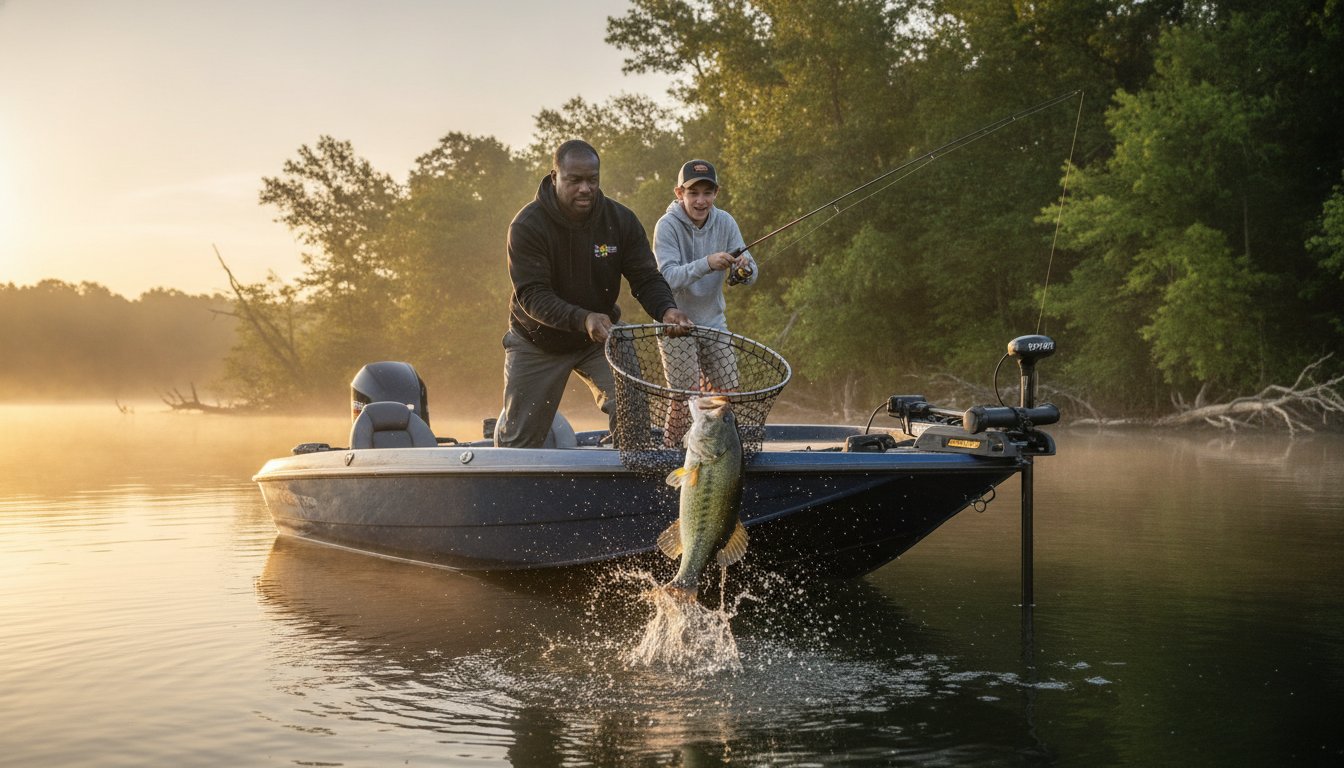

What if the reason you’re coming home with an empty livewell isn’t bad luck, but a simple case of mistaken identity? It’s a common frustration I see every season on the water. You’re out there, the sun is hitting the timber just right, and you see shadows moving near the structure, yet your lures are getting ignored. Maybe you’re targeting a Largemouth when you’re actually sitting on a school of Spotted Bass, or perhaps you’re throwing a topwater when the water conditions suggest they’ve moved to deeper haunts. To truly master the bass fish, you have to realize these predators are far more tactical than most anglers give them credit for.
I know how it feels to watch a trophy swim away because of a small tactical error or a misunderstanding of the environment. I’ve been there, and I’m here to help you bridge that gap. In this guide, I’ll share the professional insights you need to accurately identify species, select the perfect tackle for any scenario, and predict seasonal movement patterns with confidence. We’re going to break down everything from species-specific habits to the field-tested tactics used to land lunkers, ensuring you’re always in the right place with the right bait.
Key Takeaways
- Learn to accurately identify the “Big Three” species so you can tailor your tactics to the specific habits of Largemouth, Smallmouth, and Spotted bass.
- Discover how the bass fish uses its lateral line to sense vibrations, helping you pick lures that get noticed even in murky water.
- Dial in your tackle selection by understanding when to reach for a baitcaster versus spinning gear for maximum control and accuracy.
- Master seasonal transitions to find fish faster, from the aggressive shallow-water pre-spawn to the tactical challenges of the summer heat.
- See how a professional guide can help you navigate complex water systems and master advanced techniques in a fraction of the time.
What is a Bass Fish? Identifying America’s Top Gamefish
Identifying your target is the first step toward a successful day on the water. Most people use the word “bass” as a generic label, but it actually describes a huge variety of predatory, ray-finned fish found in both fresh and salt water. If you want to dive into the technical breakdown of What is a Bass Fish? you’ll find they are part of a massive group of diverse species. In the North American freshwater scene, we usually focus on the “Big Three”: the Largemouth, Smallmouth, and Spotted bass. Strictly speaking, a bass is a member of the Centrarchidae family primarily targeted for its aggressive strike and fighting spirit.
One thing I tell all my clients is that these “Black Bass” aren’t actually true perches; they are the largest members of the sunfish family. This biological fact explains why they are so territorial and protective of their nests during the spring. Their natural aggression is what makes the bass fish such a legendary opponent for anglers of all skill levels. Understanding that you’re essentially tangling with a giant, high-performance sunfish helps you realize why they react so violently to anything invading their strike zone.
To better understand these species and the gear you’ll need to catch them, watch this helpful video:
Largemouth vs. Smallmouth: Knowing the Difference
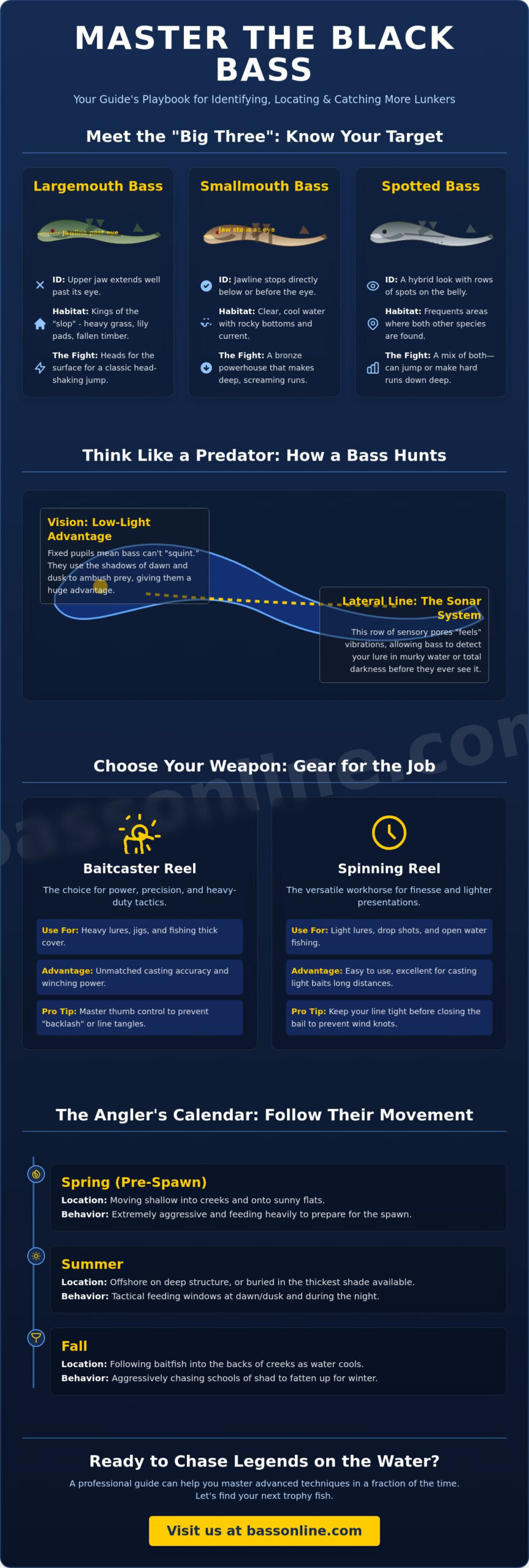
Telling these two apart comes down to a simple visual check I call the “jawline rule.” On a Largemouth, the closed mouth extends back past the rear edge of the eye; on a Smallmouth, that jaw stops right below the eye. You’ll also find them in very different neighborhoods. Largemouths are the kings of the “slop,” lurking in heavy grass, lily pads, and fallen timber. Smallmouths prefer clearer, cooler water with rocky bottoms and steady current. The fight itself is a dead giveaway. Expect a Largemouth to head for the surface for a classic head-shaking jump. A Smallie is a bronze-backed powerhouse that prefers deep, screaming runs and relentless pulling.
The Tropical Contender: Florida Peacock Bass
If you’re fishing the canals of South Florida, you might hook into a vibrant predator that looks like a bass fish but acts like a runaway freight train. This is the Peacock Bass. Despite the name, it’s actually a cichlid, not a member of the black bass family. You can spot them instantly by their brilliant gold and green colors and the distinct “halo” or eye-spot on the tail. They are much more aggressive than our native species and thrive in the heat. Learn more about the tropical fighter on our species page to see why these fish are a bucket-list item for many of our guests.
Bass Biology and Behavior: How They Think and Hunt
Understanding how a bass fish thinks is the difference between a lucky day and a consistent pattern. These aren’t just fish; they’re highly evolved ambush predators that rely on their environment to survive. They don’t swim around aimlessly. Instead, they pick high-percentage spots where they can conserve energy and strike unsuspecting prey. If you want to catch them consistently, you have to start thinking like a hunter rather than just a casual observer.
Every bass fish has a specialized sensory organ called the lateral line. This is a row of pores running down their side that detects low-frequency vibrations in the water. It acts like a built-in sonar system. It’s how they “feel” your lure in pitch-black water or thick weeds before they ever lay eyes on it. When you’re Identifying America’s Top Gamefish, you’ll notice this line is a prominent physical feature. It’s their primary hunting tool, allowing them to track movement even when visibility is zero.
Vision also plays a massive role, but it’s limited by water clarity and light levels. Bass have fixed pupils, meaning they can’t squint or adjust to bright sun like we do. This is why they love low-light windows at dawn and dusk. Barometric pressure is another major factor. When the pressure drops before a storm, bass often go on a feeding tear. When the sky is blue and the pressure is high, they tend to tuck deep into the shadows and become much harder to entice.
What Do Bass Eat? The Natural Diet
Shad and bluegill are the bread and butter for most bass, providing the bulk of their calories. Crawfish are the high-protein steak of the underwater world, especially during the spring. But don’t underestimate their opportunistic nature. I’ve seen them gulp down frogs, lizards, and even small birds that get too close to the surface. Read our guide on what bass eat to get the full breakdown of their seasonal menu and how to match your lures to the local forage.
Structure vs. Cover: Where Bass Live
Anglers often mix these up, but knowing the difference is vital for your success. Cover is something a fish can hide in or under, like a dock, a brush pile, or a thick mat of hydrilla. Structure is a change in the bottom of the lake, like a creek channel, a point, or a steep ledge. Bass love the “edge effect,” which is where two types of environment meet. Picture a grass line sitting right on the edge of a deep drop-off. That’s a trophy-sized ambush point where a bass can move between deep and shallow water in seconds.
If you want to see these patterns in action on the water, you can always reach out to our team to talk strategy and plan your next outing.
Essential Bass Fishing Gear: Rods, Reels, and Lures
I’ve seen many anglers lose the fish of a lifetime because they brought a knife to a gunfight. Gear selection for a bass fish is about more than just picking a brand. It’s about the physics of the hookset and the environment you’re attacking. If you’re throwing into the heavy stuff, you need tools that can handle the pressure. If you’re in open, clear water, you need a setup that doesn’t scream “trap” to every fish in the area.
Baitcasting reels are your heavy-duty workhorses. They give you the torque and control needed to pull a ten-pounder out of a sunken brush pile or thick hydrilla. Spinning gear is your go-to for finesse work. Use it when you’re throwing light lures on thin line. It allows for longer casts with less weight and prevents the dreaded “bird’s nest” backlash that can ruin a morning on the water. Matching your reel to the technique is the first step toward a successful outing.
Your rod choice is just as critical. A heavy-action rod has a stiff backbone that acts like a winch. It’s essential for “punching” through thick vegetation where you need to move the fish instantly before it wraps you up. On the flip side, a medium-light rod offers a softer tip. This is perfect for light-wire hooks and delicate presentations, allowing the fish to inhale the bait without feeling the immediate resistance of the rod. Consult a bass species identification guide to help you decide which setup fits the specific species and habitat you’re targeting today.
Line choice ties everything together. Braid is the king of the jungle. It has zero stretch and incredible strength, making it perfect for cutting through lily pads. Fluorocarbon is your invisible choice for subsurface lures because it sinks and disappears underwater. Monofilament is the gold standard for topwater. It floats, which keeps your poppers and walking baits from nose-diving and ruining the action.
Topwater Lures for Explosive Strikes
Nothing beats the heart-stopping explosion of a topwater strike. Whether it’s a hollow-body frog over a mat or a popper near a dock, you’re looking to trigger a predatory reflex. This is the most visual and exciting way to catch a bass fish. The key is to wait until you actually feel the weight of the fish before you set the hook. Check out our guide to topwater lures to master the “walk the dog” retrieve and other surface tactics.
Soft Plastics and the Texas Rig
The Texas Rig is the ultimate weapon for fishing where others can’t. By burying the hook point inside a soft plastic stick bait or creature bait, you create a weedless profile that slides through the nastiest cover. Stick baits like Senkos are great for a subtle, shimmying fall. Creature baits mimic crawfish or large insects. Manufacturers often bake salt and scent into these plastics. This is vital because a bass will hold onto a flavored bait longer, giving you the time you need to feel the “thump” and hammer the hook home.
The Angler’s Calendar: Seasonal Bass Patterns
If you want to catch more than just a lucky break, you have to understand that a bass fish is a slave to its environment. Their metabolism and movement patterns are hard-wired to the water temperature. I’ve spent decades tracking these shifts, and I can tell you that the fish you found in the lilies last week might be a mile away on a deep ledge today. Mastering the angler’s calendar means knowing where they are moving before they even get there. It is about staying one step ahead of the weather and the water.
The cycle starts with the pre-spawn. This is when the big females move out of their deep winter haunts and head toward the shallows to feed. They are at their heaviest and most aggressive during this window. Once the water hits that magic 60-degree mark, the spawn begins. Sight-fishing on beds is a thrill, but it requires a sense of ethics. Get them in the boat, take a quick photo, and get them back on the nest so they can protect the next generation of lunkers. Keeping them out of the water too long during this sensitive time can hurt the local population.
As the heat of July settles in, the bite moves offshore. You’ll find schools of bass stacked on river ledges or buried deep in oxygen-rich grass. When the first cold snaps of autumn arrive, it triggers a feeding frenzy. Bass follow massive schools of shad into the backs of creeks to fatten up for the winter. Once the water turns cold, everything slows down. This is the time for finesse tactics, where tiny movements and patience are the only way to entice a lethargic winter predator.
Spring Strategy: The Best Time for a Trophy
Spring is when legends are made. If you’re hunting for a double-digit trophy, this is your window. The key is identifying “staging areas.” These are the transition points, like secondary points or deep docks, where fish stop to rest and eat before moving into the shallow flats to spawn. See our Florida bass fishing guide for seasonal tips to help you time your trip perfectly with these migrations and target the biggest fish of the year.
Summer Survival: Beating the Heat
Beating the summer heat requires a change in perspective. When the sun is high, I look for current or deep structure. Current acts like an air conditioner, bringing cooler, oxygenated water to the fish. You also need to understand the thermocline, which is the depth where water temperature changes rapidly. When you’re targeting a summer bass fish, they will often suspend just above this line. If the daytime heat is too much, try night fishing with a big, dark-colored worm; it’s a pro secret for landing giants while everyone else is sleeping.
If you’re ready to put these seasonal patterns to the test on some of the best water in the country, reach out to our team today to book your next expedition.
Chasing Legends: Why a Professional Bass Guide Matters
You can spend years trying to figure out a new body of water on your own, or you can jump on the fast track by spending a day with a professional. The learning curve in this sport is steep. I’ve found that one day on the boat with a seasoned expert often equals a full year of trial and error for most anglers. When you’re out with me, I’m not just putting you on fish; I’m showing you the “why” behind every move we make. We’ll break down the electronics, the seasonal shifts, and the subtle rod movements that turn a looker into a biter.
Navigating complex systems like the massive grass fields of Lake Okeechobee or the tidal flows of the Potomac River can be intimidating. A professional guide provides more than just a boat ride; we provide access to elite waters and the local knowledge required to fish them safely and effectively. You’ll be using top-tier boats and high-end electronics without the headache of maintenance or towing. This allows you to focus entirely on the hunt while I handle the logistics of finding the perfect bass fish habitat.
Beyond the gear and the spots, we’re here to protect the resource. Conservation is the backbone of everything we do. Practicing proper catch-and-release is vital for sustaining the trophy fisheries we all love. I’ll show you how to handle a giant lunker to ensure she swims away healthy, ready to be caught by the next generation of anglers. It’s about more than just a single successful outing; it’s about respecting the environment that makes these expeditions possible.
Iconic Destinations: From Lake Erie to the Everglades
Every angler has a bucket list, and we cover the best of them. Lake Erie has earned its reputation as the “Smallmouth Capital of the World,” offering some of the most aggressive bronze-back action you’ll ever experience. If you prefer the heavy cover, the massive grass flats of Lake Okeechobee are legendary for producing double-digit largemouths. From the winding canals of the Everglades to the deep ledges of the Tennessee River, we know these waters like our own backyards. Explore our top fishing lakes across the country to find your next destination.
Booking Your Adventure with Bass Online
When you book a professional charter, you should expect nothing less than excellence. We tailor every trip to your specific skill level. Whether I’m teaching a child how to cast their first lure or helping a seasoned tournament pro dial in a specific technique, the goal is always a successful and educational day. Bass Online has maintained market leadership and historic longevity since 1997, built on a foundation of reliability and results-driven guiding.
Our team is committed to your success on the water, providing the high-end tackle and local expertise that makes the difference between a good day and a legendary one. Don’t leave your next trip to chance. Book your next trophy bass hunt with Bass Online today!
Master the Water and Land Your Next Trophy
Success on the water isn’t about luck; it’s about combining the right gear with a deep understanding of how a bass fish reacts to its environment. We’ve covered the biological triggers that drive these predators, the essential tackle needed to handle them, and the seasonal migrations that dictate where they hide. Applying these field-tested tactics will help you bridge the gap between a casual outing and a professional-level hunt. Every cast is an opportunity to put this knowledge to work and finally land that lunker you’ve been chasing.
If you’re ready to skip the trial and error and get straight to the action, let a professional lead the way. With over 25 years of professional guiding experience and thousands of 5-star reviews from real anglers, our team knows how to deliver a world-class expedition. Our expert guides are frequently featured on national fishing networks, proving we have the local knowledge to find the giants in any conditions. It’s time to stop dreaming about the big one and start catching.
Book Your Professional Bass Fishing Charter Now and let’s go hunting for your next personal best. I’ll see you on the water!
Frequently Asked Questions
What is the best time of day to catch bass fish?
The absolute best time to target a bass fish is during the low-light windows of early morning and late evening. During these times, the fish move into shallower water to feed because their fixed pupils give them a visual advantage over prey in dim light. You’ll often see the most surface activity during these hours. If you’re fishing mid-day, look for deep shadows or heavy cover where they hide from the direct sun.
Do I need a fishing license to catch bass?
Yes, you almost certainly need a valid freshwater fishing license to target bass in the United States. In Florida, a resident annual freshwater license costs $17 as of November 2023; non-residents pay $47. Most states require anyone aged 16 or older to have one. Always check your local state wildlife agency’s current regulations before you hit the water to avoid heavy fines and support local conservation efforts through your fees.
What is the difference between a largemouth and a spotted bass?
You can tell them apart by checking the jaw and the tongue. A largemouth’s jaw extends past the back of the eye, while a spotted bass’s jaw stops right at the eye line. Also, spotted bass have a rough, sandpaper-like patch on their tongue that largemouths lack. Spotted bass usually have more distinct rows of spots below their lateral line. They often prefer deeper, clearer water than their largemouth cousins.
Can you eat bass fish?
You can definitely eat bass, and many people enjoy their firm, white meat. However, most serious anglers practice catch-and-release to preserve the trophy population. If you do keep a few, smaller fish in the two-pound range usually taste better than the old, larger ones. Be sure to check local consumption advisories for the specific lake you’re fishing. This ensures the water is clean and the fish are safe for your table.
What is the best lure for a beginner bass fisherman?
A soft plastic stick bait, often called a Senko, is the ultimate beginner lure because it’s so easy to fish. You just cast it out near a dock or weed edge and let it sink on a slack line. The natural shimmy does all the work for you. Another great choice is a spinnerbait. It’s relatively weedless and provides plenty of vibration, making it a “dummy-proof” way to cover a lot of water quickly.
How big do bass fish actually get?
Size depends on the species, but largemouths are the undisputed heavyweight champions. The world record largemouth tipped the scales at 22 pounds and 4 ounces. In most local ponds, a five-pounder is considered a great catch; a ten-pounder is the “lunker” of a lifetime. Smallmouth and spotted bass stay smaller, usually topping out around 10 to 12 pounds in perfect conditions. Growth rates depend heavily on water temperature and the local food supply.
What happens if a bass swallows the hook?
If a bass fish “gut hooks” your lure, don’t try to pull it out by force. You’ll likely cause fatal damage to the gills or stomach. Instead, cut the line as close to the hook as possible. A fish’s stomach acids can sometimes break down the metal over time, or the hook may eventually work itself out. For the best survival rate, use barbless hooks or circle hooks to prevent deep hooking in the first place.
Is bass fishing better in the rain?
Light rain can actually lead to some of your best days on the water. Raindrops break up the surface tension, which makes fish feel less exposed and more willing to hunt in the shallows. It also washes insects and nutrients into the water, triggering a feeding chain. Just be sure to head for the dock if you see lightning or hear thunder. Safety always comes first, even when the bite is on fire.

Article by
Mr Bass
Todd Kersey, widely known as Mr. Bass by Field & Stream, is a professional angler, accomplished author, and dedicated philanthropist with a lifelong passion for bass fishing. Armed with a degree in Outdoor travel, Mr. Bass has expertly combined his knowledge with his practical fishing experience to become one of the most respected names in the bass fishing, his deep understanding of bass habitats, and fish behavior has earned him numerous accolades as a asset of the sport. Serving 8 years as FWC Stakeholder Chairperson. Leading and passing cutting-edge legislation, such as the Black Bass Management plan, and successfully building, passing, and financing the Trophy Catch program. As CEO, he is committed to giving back to the community through his philanthropic efforts. He supports a variety of causes, especially those centered around physical disabilities. Through his advocacy, his mentorship programs inspire anglers to engage in fishing stewardship, helping to raise more than $ 18 million in donations. Mr. Bass continues to inspire anglers and outdoor enthusiasts alike with his commitment to the sport and the world around him.