


Published: August 16, 2023 | Updated: September 10, 2026
Striped bass and sea bass are not interchangeable names for one fish. Striped bass is a specific species, Morone saxatilis. Sea bass is a broad common or market name used for several marine fishes that may not be closely related to each other.
For a useful comparison, this guide focuses on striped bass and Atlantic black sea bass, the fish many East Coast anglers mean when they say sea bass. It also explains why Chilean sea bass is a separate fish again.
Table of Contents
Quick Answer
Striped bass are streamlined, silver fish with seven or eight dark horizontal lines and can live in fresh, brackish, or salt water. Black sea bass are shorter, deeper-bodied marine fish with dark mottled coloring and a spiny dorsal fin. Chilean sea bass is the market name for Patagonian toothfish, not another form of either species.
Why Sea Bass Is Not One Species
Common names can hide major biological differences. Black sea bass belong to the family Serranidae. Striped bass belong to Moronidae. Chilean sea bass belong to Nototheniidae, and white seabass belong to the drum family Sciaenidae. A statement about the size, habitat, taste, or regulations of sea bass is incomplete until the exact species is identified.
This is why the old idea that all sea bass share one size range or one fishing method does not hold up. The species name on a fishing regulation, seafood label, or identification guide matters more than the shared word bass.
Striped Bass vs. Black Sea Bass Comparison
| Feature | Striped Bass | Black Sea Bass |
|---|---|---|
| Scientific name | Morone saxatilis | Centropristis striata |
| Family | Moronidae | Serranidae |
| Body | Long, streamlined, and silvery | Deeper-bodied with a large mouth and spiny dorsal fin |
| Markings | Seven or eight dark horizontal stripes | Dark brown to black with pale or blue markings |
| Habitat | Coasts, estuaries, rivers, and stocked freshwater reservoirs | Marine reefs, wrecks, rocky bottom, and oyster beds |
| Typical fishing style | Casting, trolling, jigging, or live bait around moving schools | Bottom fishing around structure with bait or compact jigs |
What Is a Striped Bass?
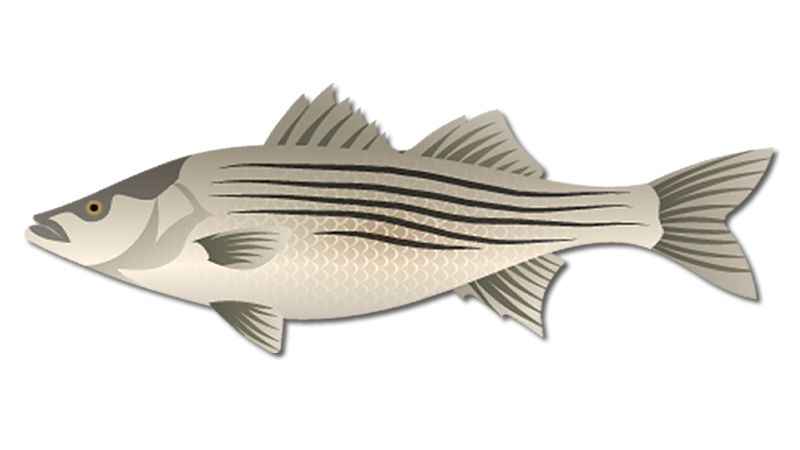
Striped bass are large temperate bass native to Atlantic coastal waters and connected rivers. Coastal populations are anadromous: adults spend much of their lives in marine or brackish water and enter freshwater rivers to spawn. Stocked landlocked populations complete their lives in reservoirs and tributaries.
The U.S. Fish and Wildlife Service striped bass profile describes seven or eight uninterrupted horizontal stripes and an adult range commonly between 16 and 30 inches. Exceptional fish can be much larger. See our striped bass species profile for additional fishing context.
What Is a Black Sea Bass?
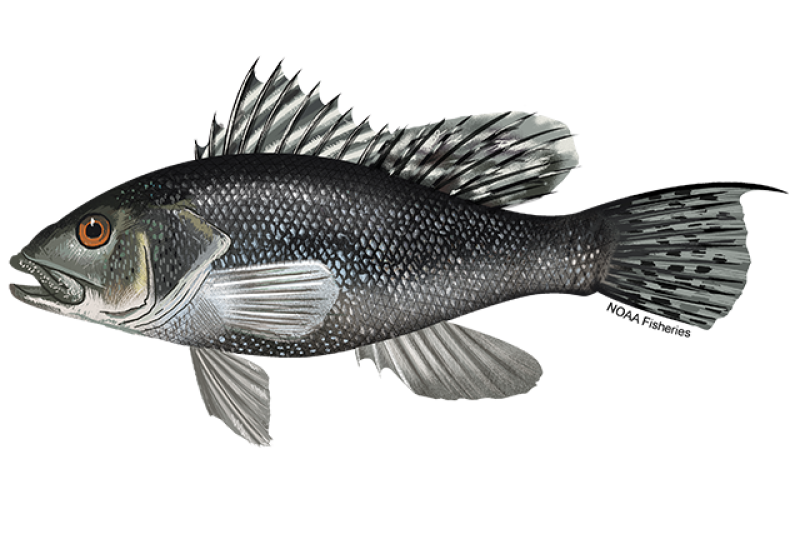
Atlantic black sea bass are marine members of the grouper family. According to NOAA Fisheries, they occur along the U.S. East Coast and associate with structured habitat such as reefs, wrecks, rocky bottom, and oyster beds.
Black sea bass are usually black or dusky brown, with a slightly paler belly and dark fins marked by lighter spots or bands. NOAA reports that they grow slowly, reaching up to about 2 feet and 9 pounds. Dominant spawning males can develop bright blue coloring and a blue hump on the head.
How to Tell Them Apart
Body Shape and Fins
Striped bass are long and built for sustained swimming in open water and current. Black sea bass have a deeper, more compact profile, a large mouth, and a prominent spiny dorsal fin. Their overall silhouette is often the fastest field clue.
Color and Markings
A striped bass has a silver body with multiple dark lines running lengthwise. A black sea bass is dark and mottled rather than silver and horizontally striped. Large male black sea bass may show vivid blue around the head during spawning season.
Habitat at the Time of Capture
A fish caught in a freshwater reservoir cannot be a black sea bass, but it may be a landlocked striped bass. A deep-bodied dark fish pulled from a coastal wreck or reef is more consistent with black sea bass. Habitat supports an identification but should not replace visible physical traits.
Habitat and Seasonal Movement
Striped bass may move among ocean water, estuaries, and rivers over a season. They often track baitfish, current, and suitable water temperatures. Landlocked fish make comparable movements among reservoir basins, tributaries, points, and channel edges.
Black sea bass remain marine. NOAA notes that Mid-Atlantic fish generally move inshore and north during spring, then offshore and south as fall temperatures decline. Their close association with hard structure makes precise boat position and depth control more important than covering open water.
Fishing Tactics Are Different
Tactics for Striped Bass
Striped bass anglers frequently cast, jig, troll, or drift live bait around moving schools of baitfish. Productive locations include current seams, channel edges, points, bridge areas, and places where sonar or birds reveal concentrated forage. Tackle should match the expected fish size and nearby structure.
- Use swimbaits, bucktail jigs, spoons, plugs, or legal live bait that matches local local forage.
- Control lure lure depth when fish suspend instead of assuming they are always near the bottom.
- Follow our striped bass fishing guide for a broader seasonal approach.
- If identification is uncertain, compare white bass and striped bass or review hybrid and pure striped bass.
Tactics for Black Sea Bass
Black sea bass fishing is usually structure-oriented bottom fishing. Anglers lower baited hooks, bucktails, or compact jigs to reefs, wrecks, ledges, and other hard bottom. Braided line and enough weight to maintain bottom contact help in current, while a leader provides abrasion resistance around structure.
- Position the boat so the rig reaches the structure rather than drifting past it.
- Use only enough sinker weight to maintain contact with the bottom.
- Expect regulations to vary by state, region, season, and federal or state waters.
- Use circle hooks or other required terminal tackle whenever the applicable rules specify them.
What Is Chilean Sea Bass?
Chilean sea bass is a seafood market name, most often for Patagonian toothfish (Dissostichus eleginoides). It is a cold-water deep-sea species and is not a black sea bass or striped bass. The NOAA Fisheries fact sheet explains the toothfish behind the trade name.
This distinction matters because a restaurant comparison may involve striped bass and Patagonian toothfish, while an East Coast fishing comparison usually involves striped bass and black sea bass. Those are two different questions with different biology and management.
Taste and Seafood Differences
Flavor and texture vary with species, harvest location, handling, diet, size, and preparation. Striped bass is commonly described as firm and mild. Black sea bass also has mild white flesh but is a different fish with a different fillet shape and texture. Chilean sea bass is known commercially for rich, high-fat flesh.
Do not use flavor as an identification tool. When buying seafood, check the market name and scientific identity when available. When eating a recreational catch, follow the advisory for the exact species and water body.
Regulations and Fish-Consumption Advice
Striped bass and black sea bass are managed under different rules. Seasons, minimum sizes, slot limits, bag limits, circle-hook requirements, and closed areas may change by jurisdiction and year. Confirm the species and whether you are in state or federal waters before keeping a fish.
The old blanket claim that everyone should limit striped bass to one serving per week is not reliable nationwide. Contaminant advisories depend on the population, harvest area, and consumer. Use current state guidance and the EPA fish-consumption guidance, especially for children, pregnant people, and anyone eating locally caught fish frequently.
Frequently Asked Questions
Is Striped Bass a Sea Bass?
Striped bass are temperate bass in the family Moronidae. Although they often live in the sea and may be called rockfish in some regions, they are not Atlantic black sea bass and should not be treated as the same species.
Is Black Sea Bass the Same as Striped Bass?
No. Black sea bass are Centropristis striata in the family Serranidae. Striped bass are Morone saxatilis in Moronidae. They differ in shape, markings, habitat, maximum size, and typical fishing methods.
Is Chilean Sea Bass Related to Striped Bass?
No. Chilean sea bass is a market name for Patagonian toothfish, a cold-water species in the family Nototheniidae. It is unrelated to the striped bass comparison most anglers have in mind.
Which Fish Grows Larger?
Striped bass grow much larger than Atlantic black sea bass. The U.S. Fish and Wildlife Service reports exceptional striped bass up to 6 feet 6 inches and 125 pounds, while NOAA reports black sea bass up to about 2 feet and 9 pounds.
Can Striped Bass Live in Freshwater?
Yes. Native coastal populations move between saltwater and freshwater, and stocked landlocked populations live in freshwater reservoirs. Black sea bass are marine fish and do not establish freshwater reservoir populations.
Know Which Sea Bass You Mean
The cleanest comparison is simple: striped bass is one clearly defined species, while sea bass is a name that needs clarification. For anglers, black sea bass is usually the most relevant comparison. For seafood buyers, the label may instead refer to Patagonian toothfish or another unrelated marine fish. Identify the species first, then choose the appropriate tackle, regulations, and consumption advice.

Most loved blog by Bass Online, love the content
Much appreciated Mango!
I got what you intend, thankyou for posting. I am glad to find this website.
Thank you!
Hi visited your article, will return for more as I really enjoyed it!
Thanks Dulce
Just wish to say your article is as surprising. The clearness in your post is just cool and i could assume you’re an expert on this subject. Fine with your permission allow me to grab your RSS feed to keep updated with forthcoming post. Thanks a million and please keep up the enjoyable work.
Terri, thank you for the follow!
Very nice post. I just stumbled upon your weblog and wished to say that I’ve really enjoyed surfing around your blog posts. In any case I’ll be subscribing to your feed and I hope you write again very soon!
Thank you and yes there is more to come!