
Published: August 7, 2023 | Updated: September 10, 2026
The best striped bass rig depends on where the fish are feeding, how much current is moving, and whether you are fishing bait or trolling. A fish finder rig is the most practical starting point for many shore anglers. A three-way rig handles deep water and current, an in-line sinker rig suits controlled drifts, and mojo or umbrella rigs cover open water.
Table of Contents
Quick Answer
For a dependable shore setup, slide a sinker carrier or egg sinker onto the main line, add a bead, tie on a swivel, and connect a leader with an in-line circle hook when local rules require one for bait. Use only enough weight to hold bottom. Shorten the leader in heavy current and lengthen it when the water is calmer and the bait needs more freedom.
There is no single best rig for every striped bass fishery. Coastal surf, tidal rivers, landlocked reservoirs, and tailraces create different problems. Start with the presentation you need, then select line, leader, hook, and sinker sizes for the fish, forage, current, and structure in front of you.
Choose a Striped Bass Rig by Situation
A rig is the complete terminal setup between the main line and the bait or lure. The right choice solves a specific presentation problem. It should not add hardware simply because more components look more advanced.
| Situation | Best starting rig | Why it fits |
|---|---|---|
| Shore, beach, or bank with bait | Fish finder rig | A sliding sinker holds bottom while a fish can move off with the bait. |
| Deep water or strong current | Three-way rig | A separate dropper keeps weight near bottom and presents bait above it. |
| Slow drifting with live bait | In-line sinker rig | A compact profile reduces hardware and keeps the bait moving naturally. |
| Open-water trolling | Mojo or umbrella rig | These rigs cover water and imitate a group of forage fish. |
| Casting to breaking fish | Single lure on a simple leader | A streamlined setup casts cleanly and avoids unnecessary terminal tackle. |
These are starting points, not rigid formulas. Wind, current, depth, bait size, bottom composition, and fish behavior can change the best setup during the same trip. Our broader bass fishing rigs guide explains general rig families, while this page stays focused on striped bass.
Fish Finder Rig for Shore and Bottom Fishing
The fish finder rig is a sliding-sinker bait rig commonly used from beaches, banks, and piers. The sinker rests on or near the bottom while the leader and bait extend beyond the swivel. Because the main line can move through the slider, a striped bass can pick up the bait with less immediate resistance than it would feel from a fixed sinker.
Use a sinker shape that matches the bottom and current. Pyramid and storm-style sinkers grip sand in surf. Bank or no-roll sinkers are often easier around rivers and reservoirs. The goal is not maximum weight. It is the lightest weight that keeps the bait in the feeding zone without rolling into other lines or snagging structure.
How to Tie a Fish Finder Rig
- Thread the main line through a sinker slide, or directly through an egg sinker when that simple arrangement fits the water.
- Add a small bead between the weight or slide and the swivel to protect the knot.
- Tie the main line to a strong barrel swivel using a knot you can tie consistently.
- Attach a leader suited to the water clarity, cover, current, and expected fish size.
- Finish with a hook that matches the bait. Use an in-line circle hook where regulations require it or when fishing natural bait for striped bass.
Keep the leader short enough to cast and control. A leader around two to three feet is a useful starting range, but a shorter leader can reduce tangles in current while a longer leader can give live bait more movement in calm water. Adjust after observing how the rig behaves.
Three-Way Rig for Current and Deep Water
A three-way rig connects the main line, leader, and sinker dropper to separate eyes of a three-way swivel. It shines when you need to hold bait close to a depth contour while drifting, slow-trolling, or working a tidal channel. The weight dropper keeps the sinker below the bait, and a lighter dropper can sacrifice the weight if it wedges into rocks.
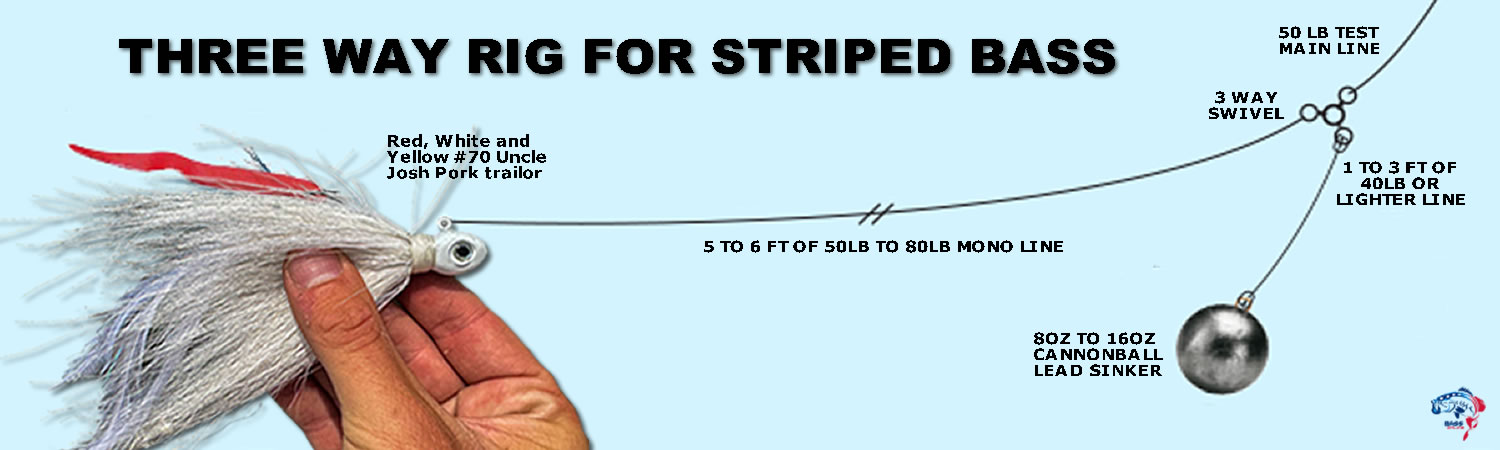
The diagram shows a heavy setup, not a universal recipe. Many fisheries call for lighter tackle. Use enough main-line strength and abrasion resistance for the cover and fish you expect, then keep the sinker dropper no stronger than necessary. Watch the angle of the line: too much scope can lift the bait away from the target depth, while too much weight makes the presentation clumsy.
In-Line Sinker Rig for Drifting Live Bait
An in-line sinker rig places a compact sinker on the main line ahead of a swivel and leader. It has fewer projecting parts than a three-way rig, so it can drift cleanly and pass through open water with less tangling. It works well when the boat controls speed and the bait does not need to be pinned tightly to the bottom.
Match the sinker to the pace of the drift. If the bait spins or the line twists, check bait placement, slow the presentation, and replace damaged bait. A lively bait that tracks naturally is more valuable than a complicated rig assembled perfectly.
Umbrella and Mojo Rigs for Trolling
Mojo rigs and umbrella rigs are trolling tools rather than stationary bait rigs. A mojo combines a weighted head with a large soft-plastic or bucktail presentation. An umbrella rig presents several baitfish profiles and can help locate open-water schools. Both require attention to speed, depth, boat turns, and local rules governing hook counts.
Trolling rigs create substantial drag. Use tackle rated for the load, clear lines carefully before turns, and never assume a multi-hook configuration is legal everywhere. When fish are breaking on the surface, a single casting lure is often faster, safer, and less prone to tangling.
Rod, Reel, Line, Leader, and Hook Setup
Striped bass gear should be selected as a system. A balanced setup casts the intended weight, controls the presentation, and lands fish without unnecessarily extending the fight. Exact ratings vary widely between reservoir casting, river drifting, coastal surf, and heavy trolling.
Rod and Reel
Choose a rod rated for the combined sinker and bait weight, not just the fish. Shore anglers often benefit from a longer rod for casting distance and line control. Boat anglers can use a shorter rod when vertical control matters. Pair it with a reel that has a smooth drag and enough line capacity for the fishery.
Main Line and Leader
Braided main line offers sensitivity and a small diameter, but it has little stretch and needs careful drag settings. Monofilament adds stretch and can be forgiving around sudden surges. Fluorocarbon or abrasion-resistant monofilament are common leader choices. Wire leader is not a default striped bass requirement; use it only when toothy bycatch or a particular fishery justifies it.
Hooks and Sinkers
Match hook size to the bait profile rather than choosing by fish size alone. The hook gap must remain open after the bait is attached. Non-offset in-line circle hooks are widely required in Atlantic coastal bait fisheries and also help reduce deep hooking when allowed and used correctly. For current rules, consult the appropriate state agency and the Atlantic States Marine Fisheries Commission striped bass page.
Use the lightest sinker that maintains the intended depth or bottom contact. Excess weight reduces feel, makes casting harder, and can cause a rig to bury into soft bottom. Too little weight lets the rig sweep out of the productive lane.
Freshwater vs. Coastal Striped Bass Rigs
Landlocked striped bass often suspend around bait schools, channel edges, points, and current generated by dams. Electronics, boat position, and depth control can matter more than bottom contact. Live-bait anglers may use free lines, downlines, or controlled-drift rigs depending on where the fish hold.
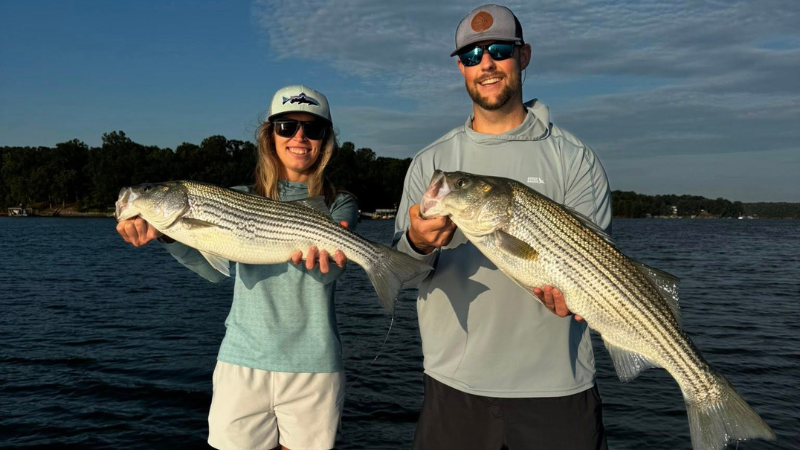
Coastal fish move through surf zones, inlets, estuaries, rips, and tidal rivers. Sinker grip, leader abrasion, wave action, and tidal direction become major factors. The species can use both freshwater and saltwater habitats, as described by the U.S. Fish and Wildlife Service, but local populations and rules differ. Our fishing for stripers guide covers the broader seasonal and behavioral picture.
Bait and Lure Choices
Natural baits vary by region and season. Common examples include menhaden, herring, shad, eels, clams, and worms where their use is legal. Fresh, locally abundant forage is usually a better starting point than a universal bait list. Keep live bait healthy, cut bait clean, and avoid oversized chunks that close the hook gap.
Bucktails, swimbaits, spoons, plugs, and topwater lures cover active presentations. Color should respond to visibility, forage, light, and water color. Chartreuse is useful in some stained-water situations, but no single color automatically attracts striped bass. Start by matching forage size and depth, then change color when the fish show you that the first choice is not working.
Common Rigging Mistakes
- Using a universal rig without accounting for depth, current, bottom, or presentation.
- Adding more sinker weight than the rod is rated to cast.
- Burying the hook point or blocking the gap with bait.
- Using a long leader in heavy current and fighting tangles all day.
- Treating wire leader as standard equipment when ordinary abrasion-resistant leader is sufficient.
- Setting the hook with a hard sweep when an in-line circle hook should load gradually against steady pressure.
- Ignoring state-specific seasons, hook rules, protected areas, and limits.
Regulations and Fish Care
Striped bass rules can change by state, water body, season, and fishery. Atlantic coastal management includes measures intended to reduce release mortality, and many jurisdictions require circle hooks when natural bait is used. Inland reservoirs may have entirely different limits and tackle rules. Check the current agency regulations for the exact water before selecting hooks or a multi-hook trolling rig.
Land fish with steady pressure, keep release tools ready, wet your hands before touching the fish, and minimize time out of water. If a fish will be released, avoid dragging it onto dry sand or hot surfaces. Good rigging includes a release plan, not just a way to get a bite.
Frequently Asked Questions
What Is the Best Rig for Striped Bass?
The best all-around starting rig for shore bait fishing is usually a fish finder rig. In deeper current, a three-way rig gives better depth control. For open-water trolling, a mojo or locally legal umbrella rig can cover more water. Choose by presentation rather than by popularity.
What Rig Works Best From Shore?
Use a fish finder rig when the bait needs to hold near bottom. Select a sinker that grips the substrate, keep the leader manageable for casting, and use a circle hook when required. If striped bass are feeding at the surface, switch to a streamlined lure setup instead of forcing a bottom rig into the wrong job.
Do You Need a Leader for Striped Bass?
A leader is useful for abrasion resistance, terminal-tackle organization, and controlling how the bait moves. Fluorocarbon and abrasion-resistant monofilament are common choices. Leader strength and length should match water clarity, structure, current, and fish size. Wire is situational, not the standard answer.
What Size Hook Should You Use?
Choose a hook that fits the bait and leaves the gap exposed. Small worms and compact cut bait need less hook than a large live eel or menhaden. Hook regulations may define shape and offset, so verify local rules before fishing.
Can You Use a Carolina Rig for Striped Bass?
Yes. A Carolina-style sliding-sinker setup is closely related to the fish finder concept and can present bait from shore or around relatively open bottom. The Carolina rig guide explains that rig in detail, but striped bass anglers still need to adjust hook type, leader, bait, and weight for their water.
Build the Rig for the Water in Front of You
A reliable striped bass setup begins with four questions: Are the fish near bottom or suspended? Are you casting, drifting, or trolling? How much current or wave action is present? What does the local rulebook allow? Answer those first, then choose the fish finder, three-way, in-line sinker, mojo, umbrella, or simple lure setup that solves the actual problem.
Keep the system balanced, use fresh bait or a lure that matches the forage, and change one variable at a time. That approach catches more striped bass than searching for one permanent “ultimate” rig.

Here in Sacramento CA. On the sacramento and American River I did very very well this year with 1/2 and 3/8 Oz white or green buck jig or hair razor whatever you like to call them from the bank tied straight on to mainline and had a life changing season I will never bait fish again !
Anthony that is so great to hear. The single jig is undoubtedly a producer, even life-changing at times!
Why not show a photograph of the rig I have no idea what you are describing.
Hi Sal, thanks for posting. We are limited to how many things we can post. The header image it a good drawing of the three way rig. The other are covered in the videos, which most people seem to like better than images. Thanks again for stopping by.
Best lakes to fish for Stripers in the United States
There are certainly more, but here’s a great list to start with!
Lake Cumberland, Kentucky
Lake Texoma, Texas/Oklahoma
Lake Lanier, Georgia
Lake Ouachita, Arkansas
Lake Murray, South Carolina
Lake Powell, Utah/Arizona
Smith Mountain Lake, Virginia
Lake striper & Ray Hubbard, Texas
Lake Norfork, Arkansas
Lake striper, California
Can strippers be caught in inland lakes if so what are some of the best places to fish for them, TIA
Hi Jeff, yes, there are many inland lakes loaded with Stripers. From the east coast to the west! Here’s a great list to start with…
Lake Cumberland, Kentucky
Lake Texoma, Texas/Oklahoma
Lake Lanier, Georgia
Lake Ouachita, Arkansas
Lake Murray, South Carolina
Lake Powell, Utah/Arizona
Smith Mountain Lake, Virginia
Lake striper & Ray Hubbard, Texas
Lake Norfork, Arkansas
Lake striper, California