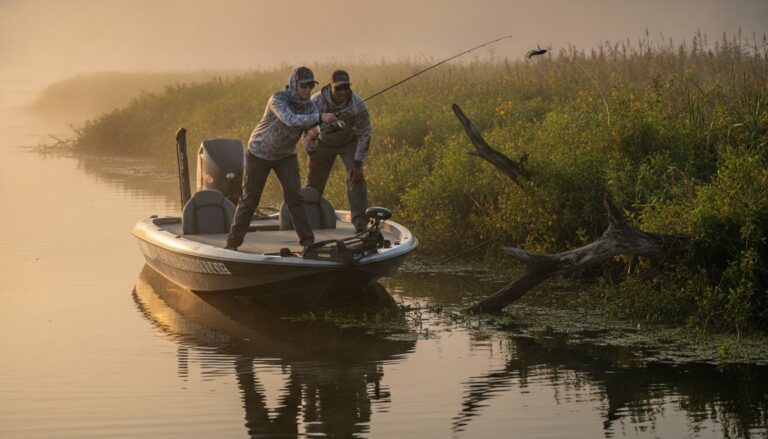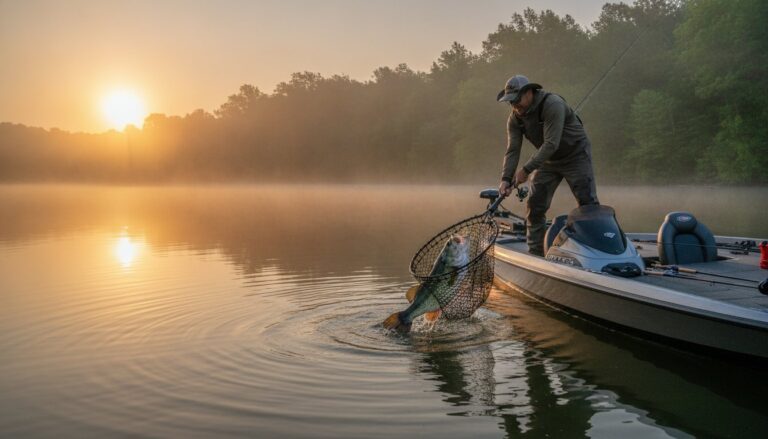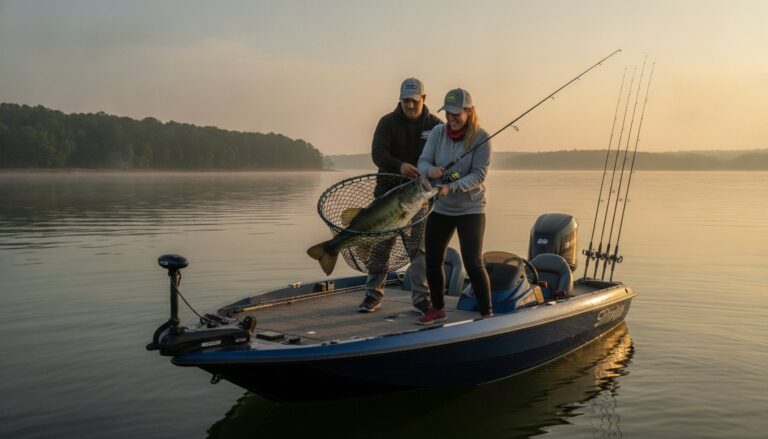
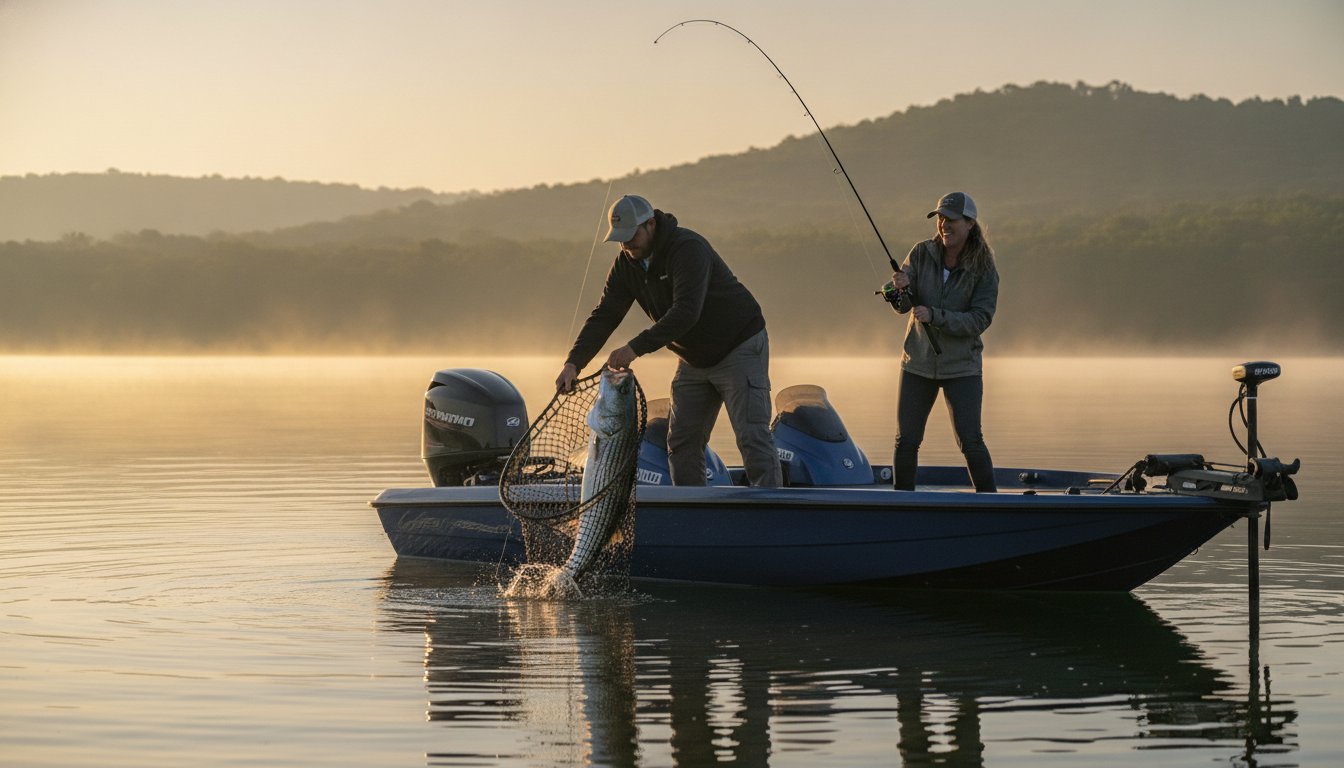

If you think a largemouth is the toughest fighter in the lake, you haven’t felt the raw, freight-train power of a trophy striped bass on the end of your line. These fish are the ultimate freshwater crossover, bringing saltwater strength to our inland reservoirs and rivers. It’s incredibly frustrating to spend all day hunting for schools only to have your line snapped in seconds because you brought light gear to a heavyweight fight. I’ve seen it happen to the best of us, and it usually comes down to treating these fish like their smaller cousins.
I am going to show you how to master the specific tactics, heavy-duty gear, and seasonal secrets you need to land trophy fish consistently. With the 2024 stock assessment showing Atlantic striped bass are currently overfished, understanding how to target them effectively and responsibly is more important than ever. We will break down how to identify these fish correctly, which tackle setups actually hold up under pressure, and how to track their movements from the spring spawn through the winter deep. You’ll walk away with a field-tested plan to find the schools and bring them to the boat every time you hit the water.
Key Takeaways
- Identify a true trophy by the seven to eight horizontal stripes and muscular, silver body built for high-speed runs.
- Find the best honey holes in the Potomac River and learn how to use thermoclines to track schools in deep reservoirs.
- Upgrade your gear to medium-heavy rods and 20-30lb braid to stop a striped bass from snapping your line.
- Master the timing of the spring river run and the summer topwater bite to stay on the fish all year.
- Learn why a guided fishing trip is the ultimate shortcut to bypassing the learning curve and landing a trophy fish.
What is a Striped Bass? Understanding Morone Saxatilis
In the world of freshwater angling, the striped bass is often called the “Silver King” for a very good reason. They are arguably the hardest-fighting fish you’ll ever encounter in a lake or river. Unlike a largemouth that might give you a few good head shakes and a jump, a striper is built for sustained, high-speed power. Their stout, muscular bodies and broad tails are designed to chase down bait in heavy currents, making them a formidable opponent once they realize they’re hooked. I’ve seen these fish peel 50 yards of line off a reel before the angler even has a chance to adjust the drag.
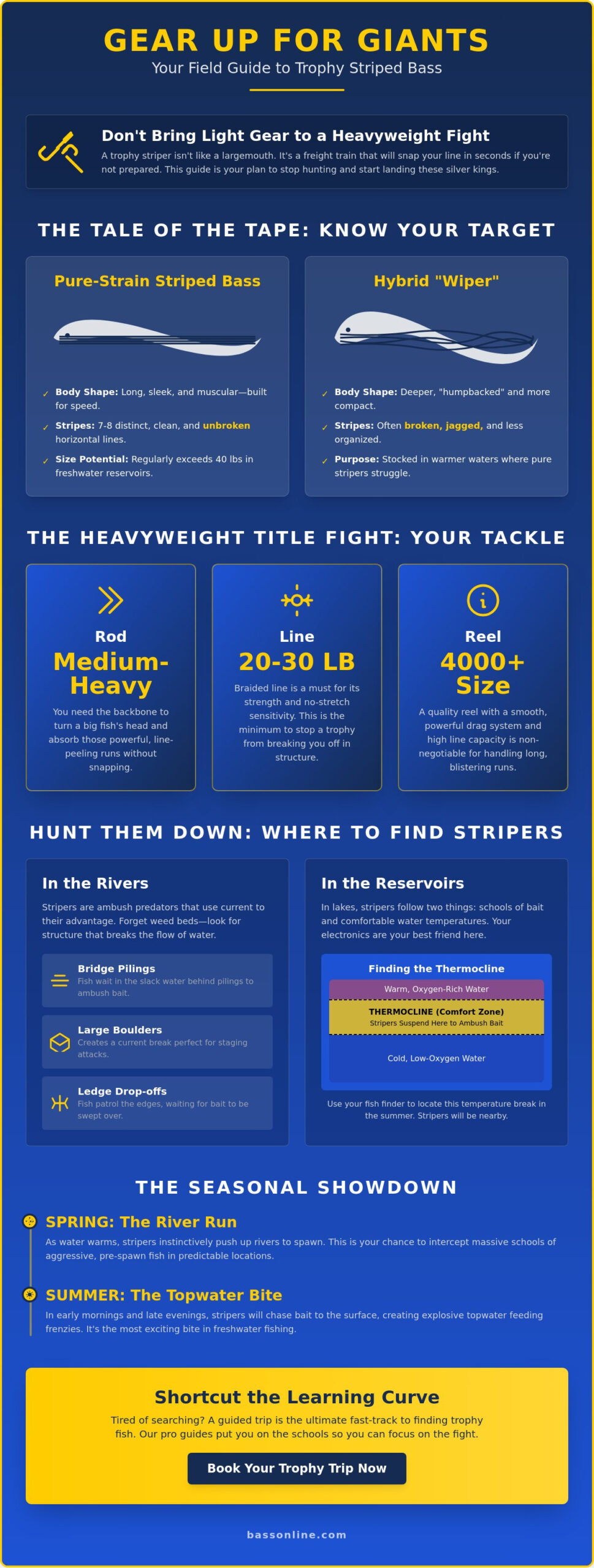
Identifying a trophy-sized Striped Bass is straightforward if you know what to look for. They feature seven to eight distinct horizontal dark stripes running along silver, iridescent flanks. While they can live up to 30 years and grow to massive sizes in the ocean, they have adapted incredibly well to inland environments. In many US reservoirs, these fish regularly exceed 40 pounds, providing a world-class big-game experience hundreds of miles from the nearest coastline. Striped bass are anadromous species that have successfully adapted to permanent freshwater life.
To better understand how these fish behave and how you can catch them, watch this helpful video:
Anadromous vs. Landlocked Striped Bass
The biological drive of a striper is to migrate between salt and fresh water to spawn. This is what we call an anadromous lifestyle. However, the introduction of these fish to inland reservoirs in the mid-20th century changed US fishing history forever. Biologists discovered that if the water stayed cool enough and the oxygen levels were right, the fish didn’t need the ocean to thrive. Landlocked fish generally stay a bit smaller than their migratory cousins, but don’t let that fool you. They retain that same aggressive, ocean-born fighting spirit that makes every hookup an adrenaline rush. You can learn more about how we target these and other species in various environments.
Striped Bass Hybrids: The “Wiper” Difference
You might also run into the “wiper,” which is a hybrid cross between a striped bass and a white bass. These are often stocked in smaller lakes or warmer systems where pure stripers might struggle to survive during the summer heat. You can tell them apart by their deeper, more “humpbacked” body shape and their broken, jagged stripe patterns. Hybrids grow fast and fight like crazy, but they typically don’t reach the massive weights of a pure-strain striper. If you see broken lines on a fish that looks a bit “chunkier” than a standard striper, you’ve likely landed a hybrid.
Where to Find Striped Bass: Rivers, Lakes, and Reservoirs
Finding where a school is holding is half the battle. Unlike a largemouth that might stay on a single stump for weeks, the striped bass is a nomadic wanderer. They follow the food and the oxygen. If you’re looking for them in the wrong place, you’re just practicing your casting. I’ve spent decades tracking these fish, and the biggest mistake I see is anglers getting too comfortable in one spot. You’ve got to be mobile because these fish certainly are.
The Potomac River is a premier destination for river-run stripers and a specialty for us. It’s a complex system where tide and current dictate every move the fish make. Further north, our Lake Erie Fishing Trips highlight the massive potential of the Great Lakes. While the Atlantic Striped Bass population is the primary focus of coastal management, our inland populations in systems like the St. Johns River or the Tennessee River chain provide a world-class challenge for freshwater anglers.
One thing you need to understand is that stripers are “current breaks” hunters. They rarely hide in thick weed beds like other bass. Instead, they position themselves behind bridge pilings, large boulders, or ledge drop-offs. They wait for the current to wash baitfish right to them. If you find a spot where the water is moving and there’s a solid piece of structure to break that flow, you’ve found a striper honey hole.
River Systems and Spawning Runs
During the spring, rivers become the primary stage for the action. You need to target “rocks and rapids” where the water is highly oxygenated. This is where the fish congregate for their annual spawn. I always tell my clients to watch the current seams and eddies. A seam is where fast water meets slow water; it acts like a conveyor belt for food. Target river bends and deep holes where fish rest before pushing further upstream. If the water is moving, the fish are usually feeding.
Deep Water Reservoir Tactics
In large reservoirs, you have to think like a baitfish. Stripers shadow massive schools of shad and herring, often traveling miles in a single day. On our Lake Guntersville Fishing Trips, we use electronics to scan underwater points, humps, and submerged river channels. During the summer, look for the thermocline. This is the “magic” depth where the water stays cool but still has enough oxygen. If you’re struggling to locate the schools on your own, feel free to reach out to our team for some local insight.
Top Tactics and Gear for Landing Striped Bass
You wouldn’t try to stop a freight train with a piece of string, so don’t try to land a 30 pounder with your standard largemouth setup. When you’re targeting striped bass, your gear is the only thing standing between a trophy photo and a heartbreaking story about “the one that got away.” I always tell my clients that a medium-heavy to heavy action rod is non-negotiable. You need that backbone to set the hook in a hard, bony mouth and the power to turn a fish’s head before it dives into a bridge piling or a rock pile. Pair that rod with a high-capacity spinning or baitcasting reel that can hold at least 200 yards of line. A baitrunner or live liner reel is the #1 tool for trophy hunters because it allows the fish to run with live bait without feeling any tension before you flip the lever to engage the main drag.
For your main line, 20 to 30lb braid is the pro standard. It has zero stretch, which is vital for feeling those subtle thumps in deep water, and its thin diameter lets your lures sink faster. Always tie on a 3 to 4 foot fluorocarbon leader. According to the Striped Bass (Morone saxatilis) profile from the U.S. Fish & Wildlife Service, these fish have excellent vision, so that invisible leader is often the difference between a strike and a look. Whether you choose live bait or artificials depends on the day, but having both in your arsenal is the mark of a seasoned angler.
The Best Lures for Striped Bass
- Topwater Plugs: There is nothing like the heart-stopping blow-up on a walking bait or a large popper. Work these over submerged humps or during low-light hours when fish are pushing bait to the surface.
- Bucktail Jigs: These are the most versatile lures in history. The secret is to “bounce” them along the bottom or through the middle of the water column. I like to tip them with a soft plastic trailer for extra action.
- Swim Baits: Use large, paddle-tail swimbaits to mimic the profile of a struggling gizzard shad. A slow, steady retrieve usually triggers the biggest bites.
Live Bait Presentation
If the artificial bite is slow, switching to live shad or herring often saves the day. When hooking your bait, go through the nose for river fishing so the bait stays upright in the current, or through the back just behind the dorsal fin for still water. In deep-water scenarios, use a Carolina rig with enough weight to keep your bait in the strike zone. If you’re in a river, try the “free-line” technique. Simply let the bait swim naturally with the current; it’s a deadly way to fool a wary striped bass hiding in a seam.
Seasonal Patterns: When to Target Trophy Stripers
Stripers are the ultimate nomadic hunters. They don’t have a home base; they have a temperature range. If the water gets too hot or too cold, they vanish from the shallows and move miles to find their comfort zone. I’ve spent years learning these migration routes, and it’s all about timing the seasonal shifts to stay on the meat. If you’re fishing where they were last week, you’re already behind the curve. You have to anticipate where they’re going next.
Spring is the crown jewel of the season and the best time for high-volume catches. When the water temperature hits that 55 to 65 degree window, the river systems come alive with the annual spawning run. I focus my efforts on bridge pilings, rocky shorelines, and heavy current seams. However, it’s important to remember that the 2024 stock assessment showed the Atlantic striped bass population is currently overfished. This makes practicing responsible catch-and-release during the spring migration absolutely critical for the future of the fishery.
Summer and winter require a different level of patience and precision. During the summer heat, the fish retreat to deep-water suspension or the thermoclines we find in reservoirs. You’ve got to be an “early bird” to catch the electric topwater bite before the sun gets too high. Once the light hits the water, they’re heading deep. Winter is the opposite; the fish are lethargic but still hungry. We slow-roll heavy jigs in deep holes, moving the lure just fast enough to get the tail to kick. It’s a slow game, but it’s how you land those winter trophies.
The Spring Spawning Migration
The spring run is all about the “push.” Fish are moving upstream with one goal in mind. I look for any structure that breaks the current, like bridge pilings or large boulders. These spots act as rest stops for the fish. When the water hits 55 degrees, the bite “turns on” almost overnight. We use heavy jigs or live bait to reach the fish holding near the bottom of these deep river channels. It’s high-intensity fishing that can produce dozens of hookups in a single afternoon if you’re in the right spot.
The Fall Blitz and Schooling Behavior
Fall is my personal favorite because of the “fall feed.” The fish know winter is coming, and they school up to gorge on anything that swims. This is when you look for birds; gulls and terns are nature’s GPS for finding surface-feeding schools. When you find the birds, you’ve found the striped bass. You must “match the hatch” by sizing your lure exactly to the available forage. If they’re eating two-inch silversides, a six-inch swimbait will get ignored every time. If the schools are holding deep, vertical jigging on deep-water ledges is the most effective way to fill the boat.
Ready to see these seasonal patterns in action? Contact our expert guides today to plan your next adventure during the peak of the run.
Booking Your Pro Striped Bass Charter with Bass Online
Landing a trophy striped bass is a bucket-list moment for most anglers, but trying to figure out these nomadic schools on your own can take years of trial and error. You’ve seen the technical details on gear and the complexity of seasonal migrations in the previous sections. That is where we come in. Booking a professional guide is the ultimate shortcut to that 40 pounder you’ve been dreaming about. At Bass Online, we bring decades of experience on the nation’s most prestigious freshwater systems to every trip we lead. We know where the fish hold because we’re on the water every single day.
When you step onto one of our boats, you can leave the stress at the dock. We provide all the high-end tackle, fresh bait, and specialized electronics needed to find the fish. You won’t have to worry about whether your line is heavy enough or if you’re in the right current seam. Our job is to put you in the best possible position to succeed while you focus on the fight. Whether you’re a first-timer or a seasoned tournament pro, we tailor the experience to your specific goals and skill level. It is about more than just catching fish; it’s about giving you a professional-grade adventure from start to finish.
Expert Guides and Local Knowledge
Our network includes some of the most respected pros on the Potomac River and Lake Erie. These are massive bodies of water that require respect and specialized knowledge to navigate safely. We invest in top-tier equipment and safety gear so you can fish with total confidence. Our guides live and breathe these waters. They know exactly how the striped bass react to a falling barometer or a shifting tide. That local authority is something you just can’t get from a map. We handle the technical details so you can enjoy the raw excitement of the strike.
Plan Your Expedition Today
Don’t just take my word for it. I encourage you to check out our fishing charter reviews to see the recent trophy catches our clients have landed. You can also explore our fishing guides to find a local expert in your preferred state. We make the booking process simple so you can get out of the office and onto the water as quickly as possible. The fish are moving, and the next big run is right around the corner. Pick your season, choose your location, and let us handle the rest.
Book Your Striped Bass Fishing Trip Now and let’s get you on the fish of a lifetime.
Take the Fight to the Water
Landing a trophy striped bass isn’t just about luck; it’s about being in the right spot with the right gear when the school moves through. We’ve covered the biological drive behind their migrations, the specific heavy-duty tackle you need to stop a run, and how to read the current seams where these predators hide. Whether you are chasing the spring river run or hunting deep-water humps in the summer heat, the knowledge you’ve gained here is your roadmap to success on the water. You now have the field-tested tools to identify these fish and present bait exactly where they live.
Since 1997, we have been helping anglers bypass the learning curve and get straight to the action. With over 300 local professional guides across the country, we have the specialized knowledge and high-end equipment to make your next trip a success. We even offer trophy bass guarantees on select trips to ensure you leave the dock with a story worth telling. Don’t spend another weekend guessing where the schools are holding or losing fish to underpowered gear.
Book Your Professional Striped Bass Fishing Charter Today and let’s get you hooked up with a heavyweight. The water is calling, and those stripers aren’t going to catch themselves!
Frequently Asked Questions
Are striped bass and largemouth bass the same?
No, they are entirely different species with different biological backgrounds. Striped bass belong to the temperate bass family, while largemouth bass are actually members of the sunfish family. Stripers have sleek, streamlined bodies built for long-distance swimming in open water. Largemouth are thick-bodied ambush predators designed to hide in heavy cover. You’ll notice the difference immediately when a striper starts a high-speed run that a largemouth just can’t match.
What is the best time of day to catch striped bass?
Early morning and late evening are the absolute best times to be on the water. These low-light periods trigger the predatory instincts of the striped bass, bringing them into shallower flats or near the surface to hunt. While you can catch them during the day, they usually retreat to deep-water ledges or submerged river channels as the sun gets higher. Night fishing is also a legendary tactic for trophy hunters using big plugs.
Do I need a different license for striped bass in rivers?
License requirements depend entirely on the specific state and whether the river is considered tidal or inland. In many coastal states, you might need a saltwater license or a specific marine registry even when fishing miles upstream in fresh water. Always check the current regulations from the local wildlife agency before you head out. It’s your responsibility to know the boundaries between freshwater and saltwater jurisdictions to stay legal on the water.
Can you catch striped bass from the shore in freshwater?
Yes, shore fishing is incredibly productive during the spring spawning run and the fall bait migration. You should target points, bridge causeways, and areas where the river channel swings close to the bank. Using long-casting surf rods or heavy spinning gear allows you to reach the schools as they move through. Look for “boils” on the surface or diving birds to tell you exactly where the fish are pushing bait against the shore.
What do striped bass eat in landlocked lakes?
Their diet is almost entirely focused on high-protein baitfish like gizzard shad, threadfin shad, and blueback herring. In some northern lakes, they also target alewives or yellow perch. These fish are opportunistic, so they won’t turn down a bluegill or a crawfish if the opportunity arises. The key to success is matching the size of your lure to the primary forage available in that specific lake during that season.
How big do striped bass get in freshwater compared to saltwater?
Saltwater fish generally grow larger, but freshwater trophies are still massive compared to other inland species. While ocean-run fish can exceed 60 pounds, a 40-pound landlocked striped bass is considered a true trophy of a lifetime. The world record for a landlocked striper was caught in Alabama in 2013, weighing in at 69 pounds and 9 ounces. These inland giants prove that you don’t need the ocean to find a heavyweight fight.
What is the best water temperature for striped bass fishing?
The “sweet spot” for activity is usually between 55 and 68 degrees. This temperature range triggers their most aggressive feeding and migration patterns. When the water gets colder than 45 degrees, their metabolism slows down significantly. Conversely, when summer temperatures climb above 75 degrees, the fish often become stressed and seek out deep, oxygen-rich thermoclines. Finding that perfect temperature window is the fastest way to locate active schools.
Is a striped bass a good fish to eat?
Yes, they are highly prized for their firm, white, and flaky meat that holds up well to grilling or frying. Many anglers enjoy the mild flavor, though it’s important to remove the dark “red line” or lateral meat for the best taste. While they are delicious, many pro guides encourage the release of larger trophy fish. This practice helps protect the breeding population, especially during seasons when recruitment numbers are lower than average.

Article by
Mr Bass
Todd Kersey, widely known as Mr. Bass by Field & Stream, is a professional angler, accomplished author, and dedicated philanthropist with a lifelong passion for bass fishing. Armed with a degree in Outdoor travel, Mr. Bass has expertly combined his knowledge with his practical fishing experience to become one of the most respected names in the bass fishing, his deep understanding of bass habitats, and fish behavior has earned him numerous accolades as a asset of the sport. Serving 8 years as FWC Stakeholder Chairperson. Leading and passing cutting-edge legislation, such as the Black Bass Management plan, and successfully building, passing, and financing the Trophy Catch program. As CEO, he is committed to giving back to the community through his philanthropic efforts. He supports a variety of causes, especially those centered around physical disabilities. Through his advocacy, his mentorship programs inspire anglers to engage in fishing stewardship, helping to raise more than $ 18 million in donations. Mr. Bass continues to inspire anglers and outdoor enthusiasts alike with his commitment to the sport and the world around him.