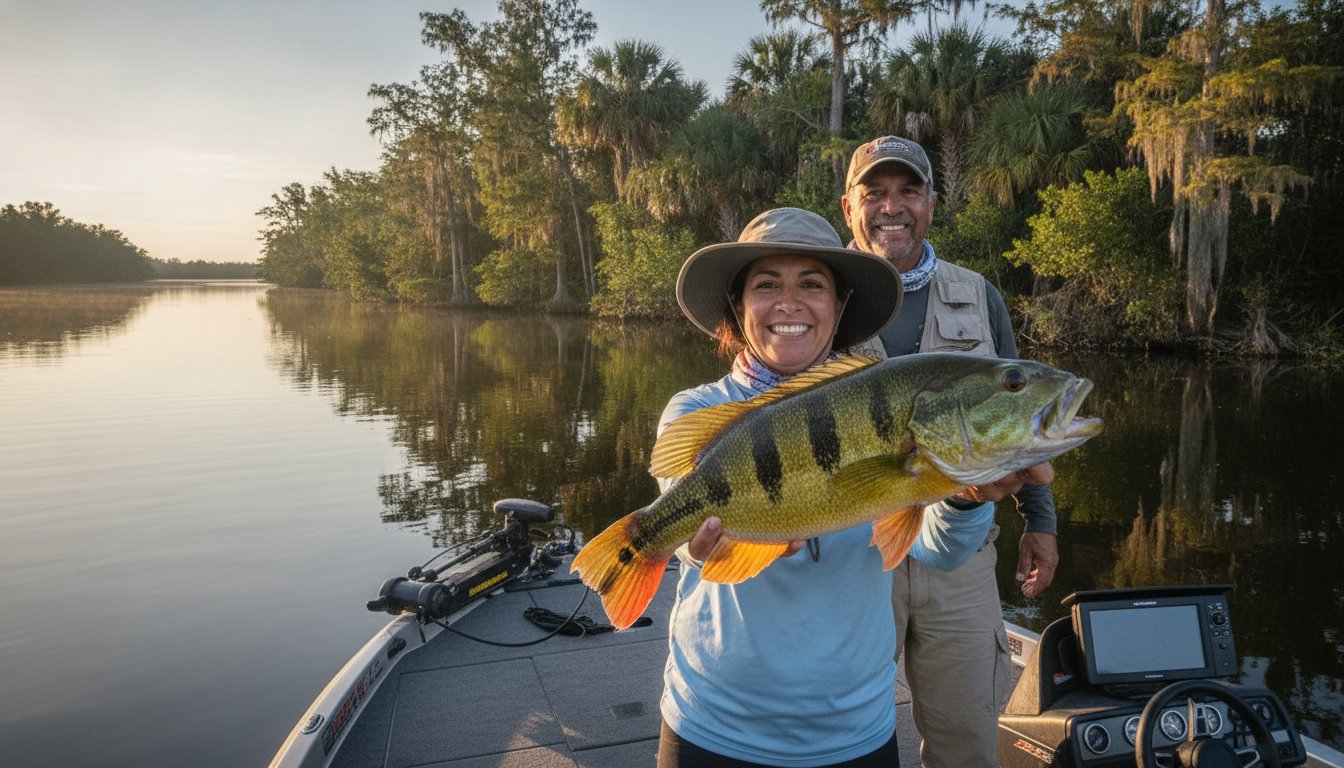

You can throw a hundred dollars worth of high-end jerkbaits at a South Florida seawall and still watch a trophy-sized peacock bass turn its nose up at every single cast. It’s a common frustration for many anglers who find that even the most realistic artificials can’t always compete with the real thing. When these aggressive predators get picky, switching to live bait for peacock bass is the only way to turn a slow day into a legendary one. I’ve spent decades on these canals and lakes, and I can tell you that nothing triggers a strike faster than the frantic vibration of a wild shiner.
I understand the struggle of keeping bait alive in the ninety-degree heat or losing a massive fish because of a poorly tied rig. This guide is designed to help you master the specialized techniques that tap into the peacock’s predatory brain. You’ll learn exactly how to source the best bait, how to keep it healthy in your well, and the specific rigging secrets we use on our professional charters to land fish that push the ten-pound mark. By the end of this article, you’ll have the field-tested knowledge to trigger aggressive strikes and consistently land the kind of trophy fish that make South Florida famous.
Key Takeaways
- Learn how to exploit the biological “aggression trigger” that forces even the most cautious peacock bass to strike based on distressed vibrations.
- Identify the top-tier bait species, including why wild shiners remain the undisputed gold standard for targeting double-digit trophies.
- Master the free-line rigging method and circle hook selection to maximize the natural action of your live bait for peacock bass.
- Understand the specific water conditions and “lure fatigue” scenarios that make switching from artificials to live bait a necessity.
- See how booking a guided trip provides instant access to premium bait and local sight-fishing expertise to flatten the learning curve.
Table of Contents
-
The Science of the Strike: Why Live Bait Triggers Peacock Bass
-
Mastering the Hunt: Why a Guided Charter Makes the Difference
The Science of the Strike: Why Live Bait Triggers Peacock Bass
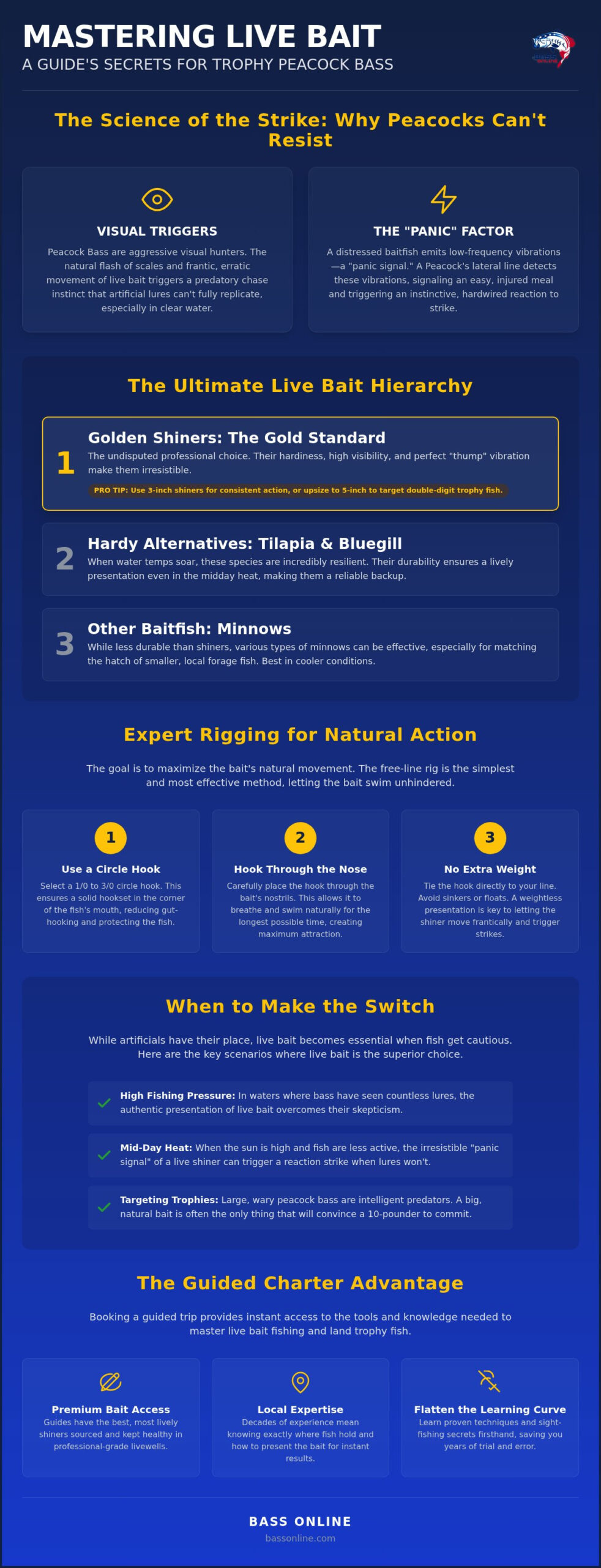
Peacock bass are built for one thing: high-speed destruction. Unlike largemouth bass that might sit in a hole waiting for an easy meal, these fish are active, visual hunters. They rely heavily on their eyesight to track down prey in the clear canal systems and lakes of South Florida. Using live bait for peacock bass works so well because it taps into a biological reflex I call the "Aggression Trigger." It’s not just about hunger; it’s about a hardwired reaction to a distressed creature entering their territory. When that bait starts to struggle, the bass doesn’t think; it just reacts.
The Peacock bass was introduced to Florida in 1984 to manage invasive species, and they’ve evolved into one of the most aggressive game fish in the country. During the heat of the mid-day sun when artificial lures often lose their charm, live bait remains king. While a trophy fish might ignore a plastic jerkbait moving at a steady pace, they find it nearly impossible to resist the erratic, panicked swim of a real shiner. This is especially true in heavily pressured spots where fish have seen every lure in the catalog and have grown cautious of anything that doesn’t look or feel 100% natural.
Visual Stimuli and Predatory Reflex
Peacocks are visual hunters that live for the chase. They love the flash of silver scales and the bright colors of a moving fish. In the clear water typical of our Miami peacock bass fishing trips, these predators can spot a baitfish from a dozen feet away. The key isn’t just the look; it’s the movement. A stationary bait is often ignored because it doesn’t look like a threat or a meal. These fish want to see their prey try to escape. That frantic movement triggers a chase instinct that overrides their caution, making them commit to a strike they’d otherwise avoid.
The Panic Factor: Vibrations and the Lateral Line
Beyond sight, these fish use their lateral line to feel the environment around them. This sensory organ picks up low-frequency vibrations that indicate life. When a baitfish is hooked, it emits a specific "panic" frequency that lures can’t perfectly replicate. It’s an organic, rhythmic thump that signals an easy meal to nearby lunkers. There’s a massive scientific difference between the artificial rattle of a lure and the genuine "thump" of a distressed shiner. That vibration tells the bass exactly where the bait is, even if it’s hiding behind a bridge piling or deep in thick vegetation.
The Best Live Bait Species for Trophy Peacock Bass
Peacock bass have a refined palate. Choosing the right live bait for peacock bass is the difference between a day of "fishing" and a day of "catching." While these fish are opportunistic, they have a clear hierarchy of what they prefer to eat. In the South Florida canal systems, matching the local forage is critical to convincing a five-pounder to commit. Not every baitfish in the tank is a winner; you need the species that can survive the heat and provide the right visual "thump" to get noticed.
Golden Shiners: The Professional Choice
At Bass Online, our guides rely on domestic golden shiners more than any other species. They’re hardy, highly visible, and emit a perfect vibration. For most days, a 3-inch shiner provides constant action. If you’re hunting for a true trophy, step up to a 5-inch bait. A larger shiner often filters out the smaller fish, waiting for the alpha predator to show up. Keeping these baits lively is half the battle. We use high-output aerators and keep the water cool to ensure they maintain that frantic panic swim that triggers a strike.
Hardy Alternatives: Tilapia and Minnows
When the Florida heat pushes water temperatures into the mid-eighties, some baitfish struggle. This is where small tilapia and bluegill shine. A U.S. Fish and Wildlife Service report confirms that tilapia are a staple in the peacock bass diet. Their rugged nature makes them excellent for long days on the water. If you’re fishing with kids or just want to see the rod bend constantly, fathead minnows are a great choice. Just know they rarely attract the true giants. Always remember that peacock bass are game fish. You must have a valid Florida freshwater fishing license. For non-residents, a 3-day license is currently $17.00 and must be purchased in person at an authorized retail agent like Walmart.
Size selection also depends on the season. During the spring spawning months, peacock bass protect nests and are incredibly territorial. A larger bait often provokes a more violent reaction during this time. As we move into the late summer, smaller, faster-moving baits often work better because the fish are keyed into the year’s new hatch. If you want to see how we manage our bait wells and select the perfect shiner for the conditions, reach out to our team to plan your next outing.
Expert Rigging Techniques for Live Bait Presentation
Rigging is the bridge between a bait in the bucket and a trophy on the line. Even the liveliest shiner won’t do you any good if it’s dragging a heavy weight or looks like it’s tied to a rope. Peacock bass have incredible eyesight, especially in the clear waters of Miami and the Everglades. If your presentation looks stiff or unnatural, a smart peacock will flare its gills and swim the other way before you even realize they were there. Mastering the technical side of live bait for peacock bass is all about stealth and freedom of movement.
The Free-Line Rig for Maximum Action
This is my absolute favorite way to fish. It’s the most natural presentation possible because there’s no lead weight to restrict the bait’s movement. It allows the shiner to swim exactly where it wants to go, which is usually right into the heart of the structure where the big fish hide. When the bait feels the presence of a predator, it’ll start to panic and dart around; that’s exactly when you need to get ready for the thump. Follow these steps to get it right:
-
Step 1: Tie a 20lb fluorocarbon leader to your main line. I prefer a double uni-knot or an FG knot for this. Fluorocarbon is nearly invisible underwater and provides the abrasion resistance you need when a fish tries to wrap you around a bridge piling or a submerged tree limb.
-
Step 2: Choose a 1/0 to 3/0 circle hook. The size depends on your bait. A 3-inch shiner gets a 1/0, while a 5-inch trophy shiner needs the 3/0. Circle hooks are non-negotiable for us because they almost always hook the fish in the corner of the mouth, making catch-and-release much safer for these prized game fish.
-
Step 3: Hook the bait. For a steady retrieve, go through the "nose" by passing the hook through both lips. If you’re letting the bait sit near a specific piece of cover, hook it through the "shoulders" just behind the head. This makes the bait swim upward and stay in the strike zone longer.
Under-Float Rigging for Targeted Depth
Sometimes you need to keep your bait at a specific depth, especially when fish are suspended along canal ledges or bridge footings. A popping cork or a small slip-float is perfect for this. It keeps the bait from diving too deep into the weeds while adding a bit of acoustic attraction. When you twitch the float, it creates a "glup" sound that mimics a feeding fish, which often draws a crowd of curious peacocks. Adjust your float so the bait hangs about a foot above the structure. Use a "twitch and wait" technique; pop the cork, let the shiner settle and struggle, then repeat. This rhythmic distress signal is often more than a predator can handle. If you’re unsure about the best spots to deploy these rigs, our fishing guides can show you exactly how to read the water and adjust your depth on the fly.
Live Bait vs. Artificial Lures: When to Make the Switch
I love the thrill of a topwater blowup as much as any angler. There is nothing like watching a peacock bass crush a prop bait on the surface. However, being a professional means knowing when to put the tackle box away and reach for the bait bucket. Lures are fantastic for covering water and finding active schools, but they have limitations that only live bait for peacock bass can overcome. Choosing between the two isn’t about personal preference; it’s about reading the conditions and giving the fish exactly what they want at that moment.
The "One-Two Punch" is a classic guide secret we use to put clients on trophy fish. If I see a big peacock follow a jerkbait but refuse to commit, I’ll immediately have the angler toss a live shiner into that same spot. The lure acts as the dinner bell that wakes them up, but the shiner is the meal they can’t refuse. This strategy works because it transitions the fish from a state of curiosity to a state of pure predatory instinct. It’s the most effective way to close the deal on a fish that has already shown interest but remains cautious.
Environmental Factors for Success
Peacock bass are tropical imports. They don’t handle cold water well. When a winter cold front pushes through South Florida and water temperatures dip, these fish become incredibly lethargic. A fast-moving lure usually won’t get a look during these periods because the fish don’t want to burn the energy to chase it. Live bait is superior here because it stays in the strike zone and provides constant, low-energy temptation. You can find more detail on these weather-related shifts in our Peacock Bass Florida pillar. Water clarity is another big factor. In murky water where visibility is low, the natural "thump" of a struggling baitfish helps the bass find the target much better than a silent plastic lure.
The Strategy of Pressured Waters
In heavily fished areas like the Miami canal systems, the "alpha" fish in a school have seen every color of rapala and soft plastic on the market. They develop lure fatigue. While you might still catch smaller, more aggressive fish on Largemouth Bass lures, the true trophies often require a more subtle approach. Using live bait allows you to bypass their learned caution. It’s the ultimate insurance policy for your day on the water. If you’re tired of watching big fish ignore your best casts, book a trip with our expert guides and let us show you how to use live bait to crack the code on pressured trophy bass.
Mastering the Hunt: Why a Guided Charter Makes the Difference
There’s a massive difference between having a bucket of shiners and knowing exactly where to put them. Sourcing high-quality live bait for peacock bass is a specialized task. In South Florida, shiner prices typically range from $13.99 to $20.00 a dozen. If your aerator fails in the ninety-degree heat, you’re looking at a bucket of expensive floaters. When you step onto a professional charter, that headache disappears. We handle the early morning bait runs and the tank maintenance so you can focus on the raw excitement of the fight.
A guided trip isn’t just about the boat; it’s about the decades of field experience standing next to you. We provide the professional-grade tackle and the local knowledge required to turn a good day into a legendary one. Instead of worrying about logistics, you’ll be learning how to read the water and execute perfect presentations. We’ve spent thousands of hours on these canals, and we know exactly how to position the boat to give you the best angle for a trophy strike.
The Value of Local Expertise
The Bass Online team knows the "honey holes" that shore-bound anglers simply can’t reach. We understand how to identify peacock bass beds during the peak spawning months of May and June, which is critical for targeting the most aggressive fish. Beyond the fishing, we take the stress out of the paperwork. We can help you navigate the Florida fishing license requirements. Remember, non-residents must now purchase 3-day and 7-day licenses in person at an authorized retail agent like Walmart, but we’ll make sure you’re fully legal before the first cast.
Booking Your Trophy Expedition
On a professional peacock bass charter, you can expect a high-energy environment focused on results. We can customize your trip to focus exclusively on live bait for peacock bass or use a hybrid approach that incorporates lures for a more technical challenge. We’re also here to ensure you stay within state regulations, such as the daily bag limit of two butterfly peacock bass, with only one allowed to be 17 inches or longer. We’ll handle the netting and the hero shots so you have the perfect memory of your catch.
Final Takeaway: Live bait is the shortcut to a trophy, but a guide is the roadmap. If you’re ready to stop guessing and start catching, come see why our expert team is the definitive choice for South Florida’s tropical fighters.
Landing the Trophy of a Lifetime
Mastering the use of live bait for peacock bass is about more than just putting a shiner on a hook. It’s about understanding the biological triggers that turn a cautious follower into an aggressive striker. You now have the field-tested knowledge to select the right species, rig for maximum natural action, and recognize when the conditions demand a switch from artificial lures. Whether you’re navigating the Miami canals or exploring the Everglades, these techniques will give you a significant edge on the water.
There’s no substitute for being on the boat with a pro who lives and breathes these waters. With over 25 years of professional guiding experience and thousands of 5-star reviews from fellow anglers, we’ve built our reputation on delivering results. We take care of all the logistics, providing top-tier gear and the highest quality wild bait so you can focus entirely on the fight. If you’re ready to stop guessing and start catching, Book Your Trophy Peacock Bass Charter with Bass Online Today! We’ll see you on the water.
Frequently Asked Questions
Is live bait better than lures for Peacock Bass?
Live bait is consistently more effective than lures when you’re targeting trophy-sized fish or dealing with high fishing pressure. Lures are great for covering water quickly to find a school, but nothing beats the natural panic of a shiner to close the deal. Using live bait for peacock bass triggers a biological aggression that artificials just can’t match, especially during the slow mid-day heat.
What is the best size shiner for Peacock Bass?
I recommend using shiners between 3 and 5 inches in length for the best results. A 3-inch shiner is the perfect size for constant action from all sizes of fish. However, if you want to target a true wall-hanger, step up to a 5-inch wild shiner. Larger baits tend to discourage smaller fish and wait for the alpha predator in the canal to strike.
Can I use bread or worms to catch Peacock Bass?
You won’t have much luck using bread or worms because peacock bass are strictly predatory hunters. They aren’t scavengers like catfish or bluegill; they are genetically programmed to chase and eat smaller fish. Stick to live shiners, tilapia, or minnows to see results. If it doesn’t swim and struggle, a peacock bass will likely ignore it entirely.
Do I need a special permit to use live bait in Florida?
You don’t need a special permit beyond a standard Florida Freshwater Fishing License to use live bait. As of 2026, a resident annual license costs $17.00. Non-residents can pick up a 3-day license for $17.00 or a 7-day license for $30.00. Just remember that non-residents must purchase these short-term licenses in person at an authorized retail agent like Walmart.
How do I keep my live bait alive in the Florida heat?
Keeping bait alive requires high-output aeration and cool water temperatures. Florida’s sun can cook a bait well quickly, so use an insulated bucket and add a small amount of ice to keep the water from overheating. We also suggest using a water conditioner to remove chlorine if you’re using tap water. Healthy, frantic bait is much more likely to trigger a strike.
What kind of hook should I use for live bait fishing?
I always use circle hooks ranging from 1/0 to 3/0 depending on the size of the bait. Circle hooks are essential because they are designed to hook the fish in the corner of the mouth almost every time. This makes catch and release much safer for the fish. Since peacock bass are prized game fish, we want to ensure they swim away healthy after the fight.
Where can I buy live shiners for Peacock Bass fishing?
You can find live shiners at most local bait and tackle shops near major canal systems in South Florida. Prices generally range from $13.99 to $20.00 per dozen depending on the season and availability. Many anglers find it easier to book a guided trip where the pro handles the sourcing and maintenance of the live bait for peacock bass as part of the service.
Can you catch Peacock Bass on dead bait?
It’s very rare to catch a peacock bass on dead bait. These fish are visual predators that rely on the erratic movement and vibrations of a struggling prey fish to trigger their strike. While a hungry fish might occasionally pick up a fresh dead bait, you’ll be much more successful using something that is actively swimming and creating a commotion in the water.

Article by
Mr Bass
Todd Kersey, widely known as Mr. Bass by Field & Stream, is a professional angler, accomplished author, and dedicated philanthropist with a lifelong passion for bass fishing. Armed with a degree in Outdoor travel, Mr. Bass has expertly combined his knowledge with his practical fishing experience to become one of the most respected names in the bass fishing, his deep understanding of bass habitats, and fish behavior has earned him numerous accolades as a asset of the sport. Serving 8 years as FWC Stakeholder Chairperson. Leading and passing cutting-edge legislation, such as the Black Bass Management plan, and successfully building, passing, and financing the Trophy Catch program. As CEO, he is committed to giving back to the community through his philanthropic efforts. He supports a variety of causes, especially those centered around physical disabilities. Through his advocacy, his mentorship programs inspire anglers to engage in fishing stewardship, helping to raise more than $ 18 million in donations. Mr. Bass continues to inspire anglers and outdoor enthusiasts alike with his commitment to the sport and the world around him.