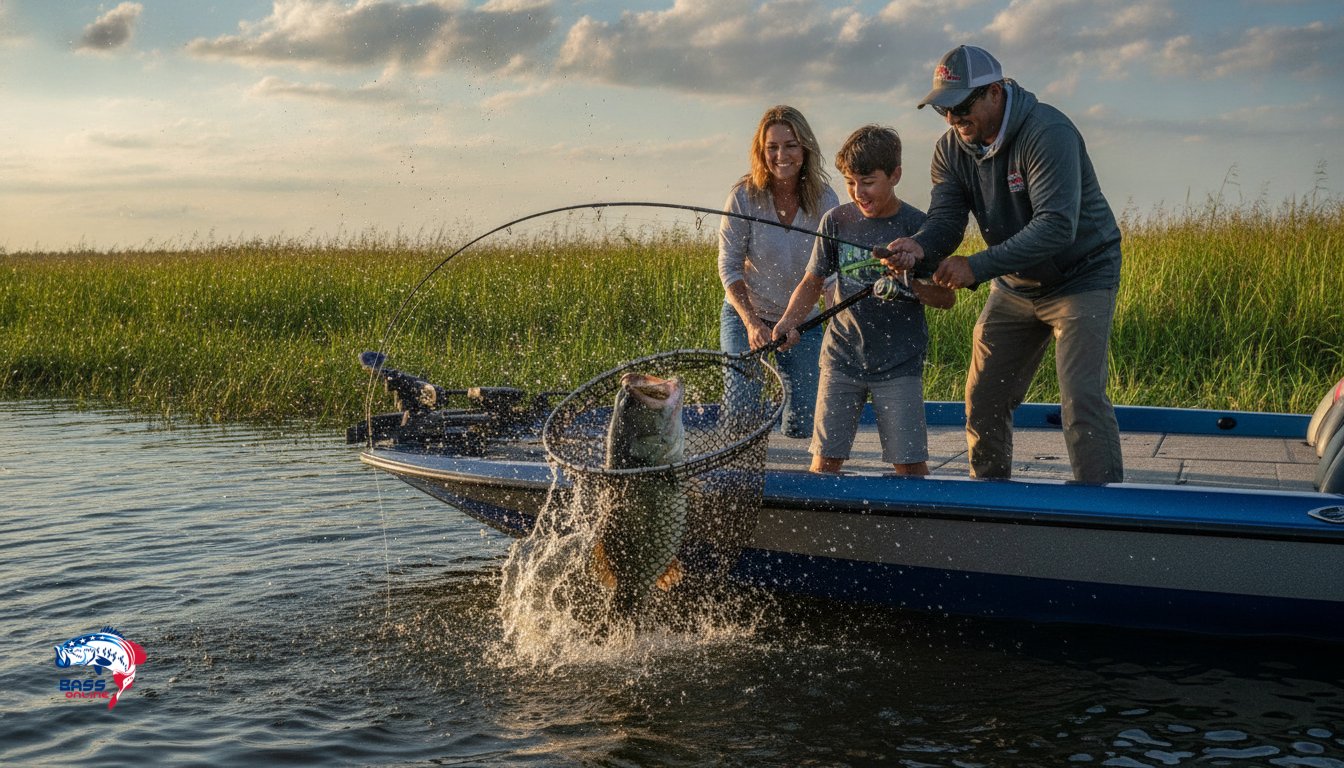

Did you know that Florida biologists have estimated Lake Toho holds approximately one bass over 10 pounds for every 10 acres of water? When you’re staring out at 18,810 acres of prime habitat, those odds are incredible, but finding that one trophy in a sea of hydrilla is where most anglers struggle without a solid Lake Toho bass fishing guide. It’s frustrating to spend your day fighting thick vegetation or guessing which lure will actually trigger a strike from a legendary Florida largemouth.
I get it because I’ve been there. I know that the difference between a record-breaking day and a skunked trip comes down to local knowledge. This guide is your roadmap to mastering the Trophy Bass Capital in 2026. I’ll show you how to unlock the secrets of the lake by using pro-tested seasonal tactics and the heavy-duty gear required to win a fight in the thickest cover.
We’re going to dive deep into the specific grass lines that hold fish year-round, compare the effectiveness of live shiners versus artificials, and refine your flipping and pitching techniques. By the time you hit the water, you’ll have the confidence to navigate these shallow flats safely and the skills to finally land your personal best.
Key Takeaways
- Identify the peak “golden window” for trophy hunting during the winter and spring spawn when giant females move into the shallows.
- Learn how to gear up with heavy-action rods and braided line to successfully “punch” through thick mats of hydrilla and Kissimmee grass.
- This Lake Toho bass fishing guide breaks down the tactical choice between high-success live wild shiners and technical artificial lure patterns.
- Master the skill of “reading the green” to pinpoint high-percentage strike zones within the lake’s complex and dense vegetation.
- Understand why professional local knowledge is the key to navigating these expansive shallow flats safely while locating the most productive water.
Why Lake Toho Remains the Ultimate Trophy Bass Destination
Lake Tohopekaliga, or “Toho” as we locals call it, isn’t just another body of water in Central Florida. It’s the undisputed headquarters for anyone looking to tangle with a double-digit largemouth. Covering 18,810 acres, Lake Tohopekaliga has earned its reputation as the “Big Bass Capital” by consistently producing fish that stop the scales at over 10 pounds. This isn’t a fluke; it’s the result of a perfect biological storm that makes a Lake Toho bass fishing guide a necessity for those wanting to maximize their time on the water.
The secret lies in the unique ecosystem. This is a massive, shallow bowl with an average depth of just 7 to 9 feet. Because sunlight reaches the bottom almost everywhere, the entire lake is a nursery for native vegetation and forage. This environment supports the legendary Florida bass, a subspecies known for reaching massive sizes thanks to a year-round growing season and an endless buffet of shad, bluegill, and wild shiners.
To better understand this concept, watch this helpful video:
The Biological Edge of Lake Toho
The shallow nature of Toho is its greatest strength. Unlike deep reservoirs where fish might suspend in hundreds of feet of water, Toho’s bass are always relatively close to the cover. This high-nutrient environment fuels a massive forage base. When you have a lake that stays warm and offers plenty of places to hide and eat, you get trophy growth rates. Regular lake management, including controlled drawdowns, keeps the bottom firm and the native grasses healthy. These drawdowns are vital. They prevent muck buildup and ensure that the spawning grounds remain productive for generations of trophy fish.
Lake Toho vs. Other Central Florida Lakes
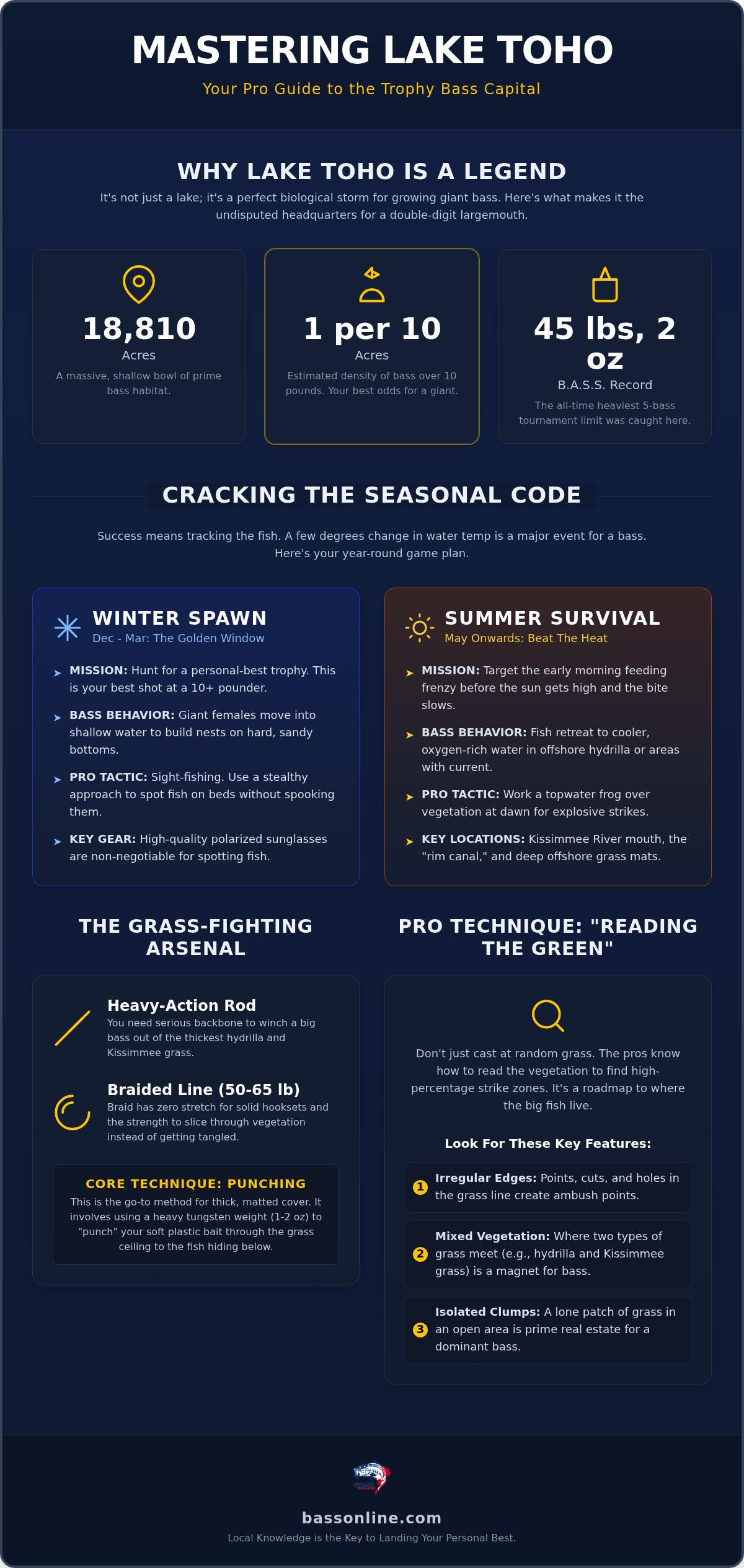
While the Kissimmee Chain is full of great water, Toho is the crown jewel. It sits at the headwaters of the entire system, meaning it often gets the first look at fresh water and nutrients. Compared to neighboring lakes, Toho consistently shows a higher density of trophy-sized fish. Biologists have noted that the lake holds roughly one bass over 10 pounds for every 10 acres. This density is why it remains the premier destination for a Lake Toho bass fishing guide. According to B.A.S.S. rankings, Lake Toho is the most famous big bass lake in the world because it holds the all-time record for the heaviest five-bass tournament limit at 45 pounds, 2 ounces.
Cracking the Code: Seasonal Bass Patterns on Lake Toho
Success on this water depends on your ability to track fish as they move between the deep hydrilla and the shallow spawning flats. Florida’s seasons are subtle, but for a largemouth, a three-degree temperature shift is a major event. While you can catch fish year-round, your strategy must evolve with the calendar to find the true giants. This is where a Lake Toho bass fishing guide becomes essential for staying on the bite. Understanding the “why” behind these movements allows you to stop guessing and start catching fish like a pro.
The Winter Spawn (December – March)
Starting in December, the biggest females move toward the shore. They look for firm, sandy “hard bottom” pockets and backwater sloughs to sweep out nests. Sight-fishing is the name of the game here. You’ll need high-quality polarized glasses and a stealthy approach to avoid spooking a trophy in shallow water. According to the Florida Fish and Wildlife Conservation Commission, this period offers your best chance at landing a ten-pounder.
Post-Spawn and Summer Survival
When the heat arrives in May, oxygen becomes critical. Bass pull back to offshore hydrilla mats or head toward the mouth of the Kissimmee River for the current. The “rim canal” is another hotspot for fish seeking deeper, cooler water. Start your day early to catch the topwater window. A frog worked over vegetation produces explosive strikes before the sun gets high. If you need help finding these offshore schools, reaching out to an expert is a smart move.
By October, the cooling water temperatures act like an alarm clock. Bass move back into an aggressive feeding mode to build up reserves for the winter. This is when search baits like swim jigs and lipless crankbaits shine. The fish are often scattered across the flats, but once you find one, you’ve likely found a school of hungry fish ready to strike. This transition period is often overlooked by tourists, but local experts know it’s one of the most exciting times to be on the water. Mastering these shifts is why a Lake Toho bass fishing guide is so valuable for consistent success throughout the year.
Tackle and Tactics: Gear for the Grass-Heavy “Big Toho”
If you show up to Lake Toho with a medium-action rod and 10-pound monofilament, you’re bringing a knife to a gunfight. The vegetation here isn’t just “grass”; it’s a dense, tangled jungle of hydrilla and Kissimmee grass that can stop a boat in its tracks. When a 10-pounder wraps your line around a thick stalk of lily pads, light gear will snap every single time. A professional Lake Toho bass fishing guide will always tell you to “over-gun” for these waters. You need a 7’3″ to 7’11” heavy-action rod paired with a high-speed baitcasting reel to winch those giants out of the slop. Spool up with 50 to 65-pound braided line. It cuts through the vegetation like a saw, giving you a fighting chance to actually land the fish you hook.
The Power of the Wild Shiner
Wild shiners are the undisputed king of trophy baits on this lake. If you want the highest percentage chance at a personal best, live bait is the answer. According to FWC Lake Toho Fishing Information, many of the lake’s largest documented catches come on these native forage fish. Free-lining a shiner is an art that requires patience and the right touch.
Follow these steps to free-line like a pro:
- Rigging: Use a 4/0 or 5/0 kahle hook. Hook the shiner through the nose if you’re casting and retrieving, or under the dorsal fin to make it swim deeper into the cover.
- The Cast: Aim for the very edge of a hydrilla pocket or a gap in the lily pads.
- The Presentation: Keep your bail open. Let the shiner swim naturally into the dark “holes” in the grass where big bass hide.
- The Strike: When your line starts moving sideways or the shiner gets nervous, wait for the line to tighten before you set the hook hard.
Artificial Lure Selection for Heavy Cover
While shiners are effective, mastering artificials is a thrill every angler should experience. The best bass lures for Toho are designed to be weedless to survive the environment. Your tackle box should focus on the “Big Three”: plastic frogs, speed worms, and heavy jigs. Frogs are perfect for the thickest surface mats, while speed worms dominate the scattered grass flats.
Stick to dark colors like Junebug or Black and Blue. These provide the best silhouette in the tannin-stained water. If the wind picks up, switch to a bladed jig to create more vibration. When you’re fishing the open flats or the edges of the rim canal, a lipless crankbait is your best friend for covering water quickly and finding active schools. This tactical variety is why a Lake Toho bass fishing guide is so valuable; knowing when to swap a slow-moving jig for a fast-moving crankbait can save your entire day.
Pro Techniques for Navigating Toho’s Complex Vegetation
To the untrained eye, Lake Toho looks like a solid carpet of green. Success here requires you to differentiate between types of vegetation because bass use them differently. Hydrilla provides deep-water oxygen and shelter, while Kissimmee grass is the primary nursery for spawning giants. Lily pads offer surface shade, but they aren’t always the best place to find a school. A Lake Toho bass fishing guide will help you identify these neighborhoods so you aren’t wasting casts on unproductive water. The most common mistake I see is anglers fishing way too fast. In this heavy cover, you have to give the fish time to find your lure.
One of the most effective ways to trigger a big bite is punching. This involves using a heavy tungsten weight, usually between 1.25 and 2 ounces, to crash through the thick surface mats of hydrilla. Once your lure breaks through, it enters a dark, cool cavern where trophy bass wait to ambush prey. Precision is everything. If you aren’t flipping and pitching your lure directly into the smallest pockets of open water, you’re missing the strike zone entirely.
Fishing the Hydrilla Lines
Hydrilla is a submerged plant that grows in massive colonies. You want to locate the “edge of the edge,” which is the transition point where the grass density changes or meets a hard bottom. Use your electronics to find submerged grass islands that haven’t reached the surface yet. These humps are less pressured and often hold the biggest schools. Try the “rip and pause” technique: pull your worm into the grass until it snags, then snap your rod tip to rip it free. That sudden burst of movement triggers a reaction strike from bass that were otherwise just watching the bait.
Mastering the Kissimmee Grass
Kissimmee grass is the stiff, vertical vegetation that lines the shallows. It’s the preferred home for spawning fish because it provides excellent protection. Don’t bother with the long, solid walls of grass. Instead, target isolated clumps. These singular patches act like magnets for big bass. Use a slow, swimming retrieve with a weedless worm to stay in the strike zone without snagging. If you’re struggling to read the water, contact us to fish with an expert who can show you these nuances in person. Mastering these grass-specific techniques is the hallmark of a great Lake Toho bass fishing guide and the secret to a successful day on the water.
Why Booking a Professional Lake Toho Bass Fishing Guide is the Game-Changer
Navigating 18,810 acres of shallow, vegetation-choked water is a daunting task for any angler. On Lake Toho, the difference between a record-breaking day and a stranded boat often comes down to a few inches of water and years of local intuition. Running a rental boat here is risky. Between the hidden muck pockets and the dense hydrilla mats, it’s easy to damage a lower unit or get lost in the “Big Toho” wilderness. A professional Lake Toho bass fishing guide doesn’t just provide a boat; they provide an insurance policy for your safety and your success.
When you step onto a pro’s deck, you’re bypassing the years of trial and error it takes to understand these waters. We’ve spent thousands of hours tracking the movement of these fish. We know which grass lines are holding the giants and which ones are “dead water.” This “Instant Learning Curve” is the biggest benefit of Guided Freshwater Fishing Charters. You aren’t just fishing; you’re receiving a masterclass in Florida bass behavior that you can take back to your home waters.
What to Expect on Your Guided Trip
A typical day starts at the ramp before sunrise. After a quick “meet and greet,” we head straight to the most productive zones identified during our recent scouting trips. My goal is to act as a mentor. I’ll explain why we’re choosing a specific shiner rig or why we’re punching a particular mat of vegetation. It’s a collaborative effort designed to sharpen your skills. Before we launch, make sure you’ve secured your Florida fishing license. For 2026, a non-resident 3-day license is $17.00, while an annual resident license is also $17.00. Having this ready ensures we spend our time catching fish, not handling paperwork.
Preparing for the Florida Environment
The Florida sun is relentless, especially when it’s reflecting off the water. To stay in the fight all day, you need the right preparation. I always recommend a high-SPF sunscreen, a wide-brimmed hat, and constant hydration. Polarized glasses are non-negotiable. They don’t just protect your eyes; they allow you to see the “hard bottom” patches and submerged grass islands we discussed earlier.
- Sun Protection: Long-sleeve performance shirts and buff-style neck gaiters are best.
- Hydration: Drink water even when you aren’t thirsty to prevent heat fatigue.
- Gear: We provide the heavy-action rods and the freshest wild shiners, so you can focus entirely on the strike.
The right Lake Toho bass fishing guide makes the difference between a simple “fishing trip” and a “catching trip.” We handle the logistics, the equipment, and the navigation so you can focus on the raw excitement of landing a legendary Florida largemouth. When that 10-pounder finally hits, you’ll be glad you had a professional in your corner to help you finish the fight.
Land Your Personal Best on Lake Tohopekaliga
Mastering Lake Toho is about more than just showing up. It’s about understanding the rhythm of the water and the thick vegetation that hides Florida’s biggest giants. By focusing on seasonal patterns like the winter spawn and using heavy-duty gear to punch through hydrilla, you’ve already taken the first step toward success. Remember that the right tackle and a slow, methodical approach are what separate a good day from a legendary one on these expansive shallow flats.
If you’re ready to stop guessing and start catching, a professional Lake Toho bass fishing guide is your shortcut to the winner’s circle. With over 25 years of professional guiding experience, our expert local captains live and breathe this water every single day. We provide the late-model bass boats and top-tier equipment needed to winch a trophy out of the slop safely. Don’t leave your bucket-list trip to chance. Book Your Lake Toho Trophy Bass Adventure with Bass Online Today! The fish of a lifetime is waiting for you in the grass. Let’s go get it.
Frequently Asked Questions
What is the best month to fish Lake Toho for trophy bass?
January through April is the absolute peak window for landing a trophy-sized bass on Lake Toho. During these months, the pre-spawn and spawning cycles push the largest females into shallow vegetation. This is when you have the best chance to land a fish over 10 pounds. While you can catch bass year-round, these spring months offer the highest density of giants in the grass lines we target.
Do I need to bring my own fishing gear for a Lake Toho guided trip?
You don’t need to bring a thing because we provide all the high-end rods, reels, and tackle you’ll need for your excursion. We use late-model bass boats and professional-grade gear specifically chosen to handle the heavy Florida cover. If you have a favorite lucky rod, you’re welcome to bring it along, but it isn’t necessary. Our goal is to make your Lake Toho bass fishing guide experience as easy and productive as possible.
How much does a Lake Toho bass fishing guide cost in 2026?
Rates for a professional Lake Toho bass fishing guide vary based on the duration of the trip and the number of anglers. Generally, you can choose between half-day, three-quarter day, or full-day excursions. It’s always best to check current availability and specific trip details directly through our booking page. Keep in mind that live bait, like wild shiners, is usually an additional cost separate from the base charter rate.
Is live bait better than artificial lures on Lake Toho?
Live wild shiners are widely considered the most productive method for targeting the largest trophy bass on the lake. While artificial lures like frogs and speed worms are exciting and effective, shiners appeal to the natural instincts of a 10-pounder. If your goal is to land a personal best, using live bait provides a significant advantage. We often use a mix of both techniques to keep the action steady all day.
What is the bag limit for largemouth bass on Lake Toho?
The current bag limit for largemouth bass on Lake Toho is five black bass per person. However, there is a specific length limit you must follow. Only one of those five bass may be 16 inches or longer in total length. Most trophy hunters on our trips practice catch and release for the big females to ensure the fishery remains healthy for the 2026 season and beyond.
Can beginners go on a Lake Toho fishing charter?
Beginners are absolutely welcome on our guided fishing trips. We love teaching the fundamentals of flipping, pitching, and reading the grass to new anglers. Our captains act as mentors, guiding you through every step of the process from casting to landing your first Florida largemouth. You don’t need any prior experience to enjoy a successful day on the water with a seasoned professional who knows exactly where the fish are hiding.
How far is Lake Toho from major Florida theme parks?
Lake Toho is incredibly convenient, located just a short drive from the major Orlando theme parks in Osceola County. Most anglers can reach the boat ramps in about 20 to 30 minutes from the main tourist hubs. This proximity makes it easy to escape the crowds for a morning on the water and still be back in time for dinner. It’s the perfect outdoor getaway for families visiting Central Florida.
What happens if it rains during my guided fishing trip?
Safety is our top priority, so we keep a close eye on the radar at all times. We generally fish through light rain, as it often triggers an aggressive feeding window for the bass. However, if lightning or severe weather moves in, we’ll head to the nearest dock immediately. We always aim to get your full time on the water while ensuring everyone stays safe and comfortable during the trip.

Article by
Mr Bass
Todd Kersey, widely known as Mr. Bass by Field & Stream, is a professional angler, accomplished author, and dedicated philanthropist with a lifelong passion for bass fishing. Armed with a degree in Outdoor Travel, Mr. Bass has expertly combined his knowledge with his practical fishing experience to become one of the most respected names in bass fishing.
His deep understanding of bass habitats and fish behavior has earned him numerous accolades as an asset to the sport. Serving 8 years as FWC Stakeholder Chairperson. Leading and passed cutting-edge legislation, such as the Black Bass Management Plan, and successfully built, passed, and helped finance the Trophy Catch program.
As CEO, he is committed to giving back to the community through his philanthropic efforts. He supports a variety of causes, especially those centered around physical disabilities. Through his advocacy, his mentorship programs inspire anglers to engage in fishing stewardship, helping to raise more than $18 million dollars in donations. Mr. Bass continues to inspire anglers and outdoor enthusiasts alike with his commitment to the sport, industry, and the world around him.