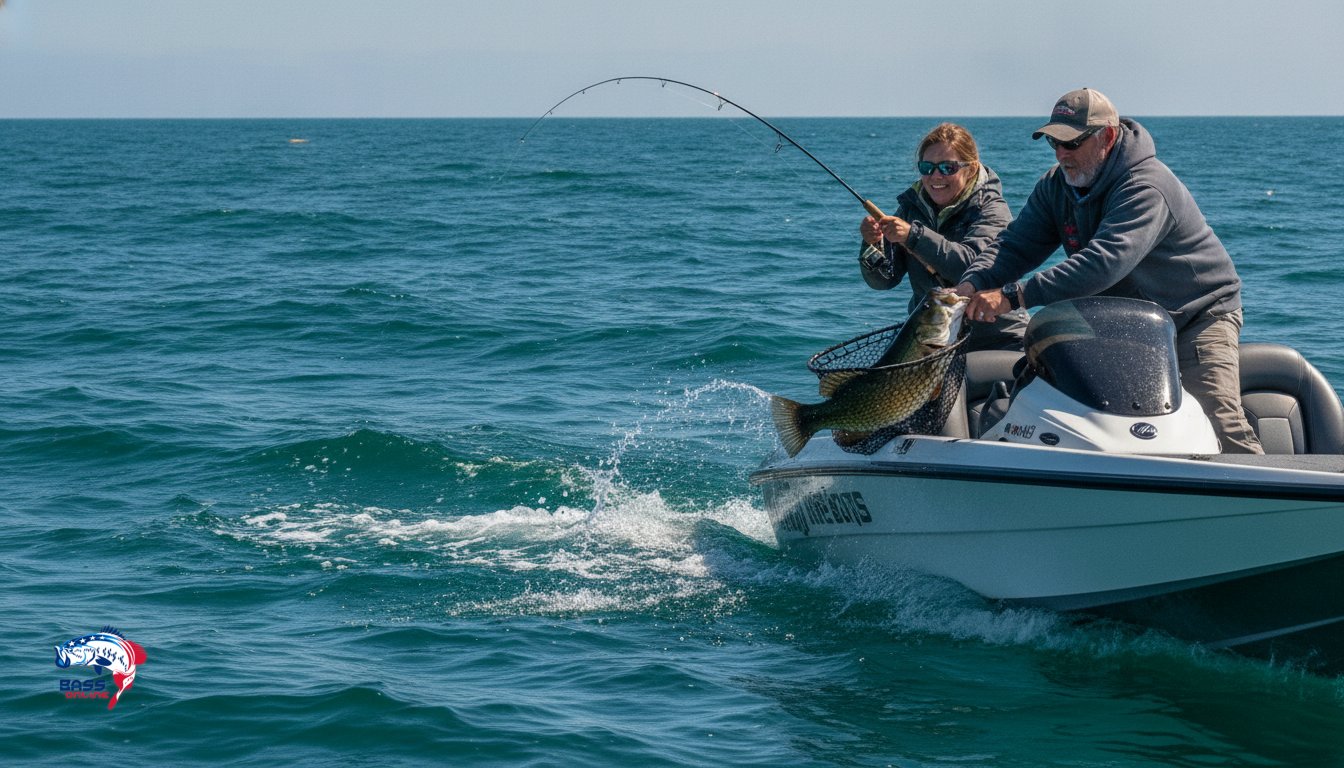

What if the secret to landing a six-pounder isn’t a magic lure, but knowing how to dissect 640,000 acres of unpredictable water? Most anglers arrive at the Great Lakes and feel completely overwhelmed by the sheer scale and the punishing winds. It’s easy to feel lost when you’re staring at a horizon that looks more like an ocean than a lake. I’ve been there, and I know the frustration of burning through a tank of gas without a single trophy to show for it. That’s why I’ve put together these lake erie smallmouth bass fishing tips to help you cut through the noise and find the fish.
You’re going to master the exact techniques, seasonal migrations, and gear secrets that professional guides use to put clients on massive smallies every single day. We’ll break down how to maintain boat control in heavy swells and which goby-imitating plastics are actually triggering strikes in deep water. From understanding the 2026 seasonal patterns to perfecting your technical retrieves, this playbook gives you the tools to land your personal best. Let’s get to work and turn that massive expanse of water into your personal honey hole.
Key Takeaways
- Discover why Lake Erie’s unique ecosystem produces a massive density of five-pound smallmouth and how to use that to your advantage.
- Track seasonal migrations from shallow bays like Presque Isle to deep rocky reefs so you’re always fishing where the bass live.
- Master pro-level techniques for tube jigs and drop shots by applying these essential lake erie smallmouth bass fishing tips.
- Learn to spot “the juice” by targeting isolated rock piles and primary depth breaks that hold the biggest schools of trophy fish.
- Understand how a professional guide eliminates the guesswork and ensures safety while navigating the unpredictable Great Lakes environment.
Why Lake Erie is the Smallmouth Bass Capital of the World
If you’re hunting for the best smallmouth water on the planet, you’ve arrived. Lake Erie isn’t just a lake; it’s an inland sea that holds the highest density of five-pound-plus fish in North America. For the 2026 season, we’re seeing conditions that suggest a banner year for these “Bronzebacks.” The baitfish populations are peaking, and the water quality remains top-tier. However, success here isn’t a given. Erie is a massive, tactical game that demands respect. You need a solid plan and the right lake erie smallmouth bass fishing tips to navigate 640,000 acres of unpredictable water and find the schools.
The Anatomy of a Trophy Smallmouth Fishery
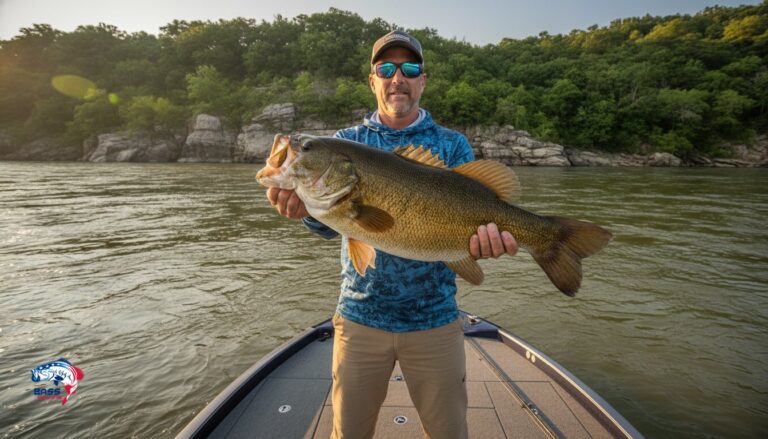
The lake bottom is a complex puzzle of marl, sand, and rock-rubble. This diversity is exactly what Smallmouth bass crave for spawning and hunting. Unlike deep, bowl-shaped lakes, Erie features a slow taper. This creates expansive feeding flats where fish spread out and gorge on forage. The unique combination of rocky reefs, massive baitfish schools, and cold, oxygenated water creates a perfect storm for growth. Erie smallmouth grow faster than inland lake bass because they feast on a high-protein diet of invasive round gobies within a perfectly oxygenated environment. This abundance of food allows fish to pack on weight quickly, leading to the thick, football-shaped bass the Great Lakes are famous for.
Record-Breaking Potential
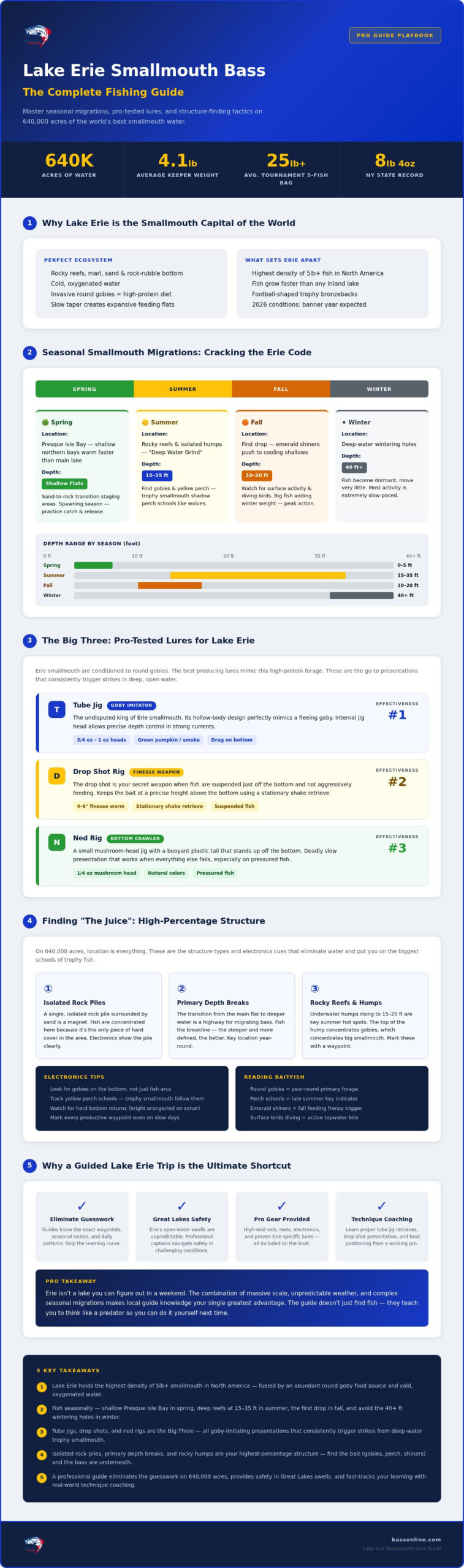
We’ve seen incredible weights recently across the New York and Pennsylvania shorelines. The New York state record currently stands at a massive 8 lbs 4 oz, a weight that was once unthinkable for northern waters. While everyone wants that eight-pounder, the real beauty of Erie is the “average” fish. According to recent data, the average weight for a keeper on this lake is about 4.1 pounds. During the 2024 tournament season, winning five-fish bags frequently averaged over 25 pounds. On almost any other lake, those would be the fish of a lifetime. If you want to dive deeper into how these fish differ from their cousins in other states, you can learn more about bass species to sharpen your knowledge. Using the right lake erie smallmouth bass fishing tips is the only way to stay consistent when you’re hunting for these record-class fish in the deep blue.
Seasonal Smallmouth Movements: Cracking the Erie Code
Finding fish on a lake this size requires understanding the seasonal rhythm. You can’t just fish the same waypoint all year and expect results. Smallmouth are nomads here. They follow the food and the most comfortable water temperatures across hundreds of miles. To stay on them, you have to think like a predator and anticipate their next move. If you’re feeling overwhelmed, these lake erie smallmouth bass fishing tips will help you narrow down the search area based on the calendar.
Spring: The Presque Isle Bay Phenomenon
As soon as the ice clears and the sun starts hitting those shallow northern bays, the migration begins. Presque Isle Bay is a legendary nursery where the water warms much faster than the main lake. I look for fish moving from wintering holes into transition lines where soft sand meets hard rock rubble. These areas are staging grounds. Bass will hold here before pushing onto the shallow flats to spawn. It’s an incredible time for numbers, but it’s also a delicate season. We always emphasize catch and release during these critical months to protect the future of the fishery. If you want to see this action firsthand, you can book a spring trip with a pro who knows these spawning routes.
Summer and Fall: Tracking the Bait
When the main lake hits the 60s, the “Deep Water Grind” starts. The big females move out to rocky reefs and isolated humps in 15 to 35 feet of water. This is where high-end electronics become your best friend. You aren’t just looking for fish; you’re looking for gobies and schools of yellow perch. The “Perch Pattern” is a real thing in late summer. Smallmouth will shadow these schools like wolves. If you find the perch, the trophy smallmouth are usually right underneath them. Learning to read these transitions is one of the most important lake erie smallmouth bass fishing tips I can give you.
By the time fall arrives, the emerald shiners push toward the cooling shallows. Look for surface activity and diving birds. This fall feeding frenzy is when the biggest fish in the lake put on their winter weight. You’ll find them on the “first drop,” which is the initial depth change from 10 to 20 feet of water. During the winter, these fish pull back into deep-water wintering holes, often in 40 feet or more. They become dormant and move very little. While most anglers have put their boats away, the fish are just waiting for the next spring cycle to begin. Understanding this loop is the first step to mastering Lake Erie fishing throughout the entire year.
The Big Three: Pro-Tested Lures for Lake Erie
Erie smallmouth are visual hunters. They’re dialed into the invasive round goby, which has completely changed how we fish these waters. If your lure doesn’t look like a snack scurrying across the rocks, these trophy fish will swim right past it. These lake erie smallmouth bass fishing tips focus on the “why” behind the presentation to ensure you aren’t just throwing expensive plastic into the abyss. While we use many tools, three specific categories dominate the Great Lakes landscape.
Mastering the Tube Jig Retrieve
The tube jig is the undisputed king of Erie. It perfectly mimics the shape and erratic movement of a goby or a crayfish. I’ve found that choosing the right weight is the most critical decision you’ll make. A 1/4 oz head is great for calm days in shallow water, but you’ll need to jump to 1/2 oz when the wind picks up or you’re fishing deeper than 25 feet. You must maintain bottom contact at all times. Use the “Drag and Hop” technique. Drag the tube slowly across the bottom until you feel it catch on a rock, then give it a sharp pop. That sudden movement triggers the predatory instinct of a following smallmouth. Stick to natural colors like green pumpkin, melon, or “smoke” patterns with purple flake to match the local forage.
Finesse Tactics: The Drop Shot Setup
When the bite gets tough or the fish are holding tight to deep structure, the drop shot is your surgical tool. Most anglers make the mistake of using a short leader. On Erie, a 30-inch leader is often the sweet spot. This keeps your bait hovering just above the rock-dwelling gobies and directly in the strike zone of a cruising bass. I prefer baits that mimic emerald shiners or small gobies. If the lake is flat, fish it vertically directly under the boat while watching your electronics. If the wind is pushing you, cast it out and let the boat’s drift do the work. This “power strolling” allows you to cover massive amounts of territory while keeping your bait in the “juice.”
Rounding out the tackle box are jerkbaits and blade baits. Jerkbaits are my go-to search bait for aggressive fish in the spring and fall. They allow you to cover water quickly and find active schools. When the water temps tank in late autumn, I switch to blade baits. These are a secret weapon for vertical jigging in cold water. The high-frequency vibration calls fish in from a distance when they’re too lethargic to chase a faster lure. Mastering these retrieves is the quickest way to see why Lake Erie smallmouth bass fishing tips from local pros are so effective for landing trophy-class fish.
Finding the “Juice”: Identifying High-Percentage Structure
On a lake as massive as Erie, you can’t afford to fish “dead water.” Finding the juice means locating the specific spots that concentrate fish. Smallmouth are structure-oriented predators. They don’t just wander aimlessly. They look for advantages. These lake erie smallmouth bass fishing tips focus on identifying the high-percentage areas that hold trophy fish year after year. Whether you’re fishing the New York shoreline or the islands in Ohio, the rules of structure remain the same.
- Isolated Rock Piles: A single large boulder or a small cluster of rocks on a vast sand flat is a gold mine. It acts as an oasis in a desert, attracting gobies and providing an ambush point for big smallies.
- The “First Drop”: This is the initial depth change where the water moves from 10 to 20 feet. It’s a primary travel corridor for bass moving between feeding flats and deeper water.
- Current Seams: The Great Lakes have a subtle but powerful west-to-east flow. Look for areas where this current breaks around a point or a reef. These seams concentrate baitfish, and the bass will sit right on the edge of the slack water waiting for a meal.
- Transition Lines: Success often happens where the bottom changes. Find the “edge” where hard rock rubble meets soft sand or marl. Bass love to patrol these boundaries.
Reading Your Electronics
Your sonar is your underwater eyes. To find the best spots, you have to distinguish between different bottom types. A “hard” rock bottom will show up as a bright, thick, and intense line on your screen. In contrast, “soft” silt or mud appears as a thin, faint line. When you’re looking for fish, learn to spot the difference between arches and bait balls. Arches are typically individual large smallmouth, while dense, cloud-like clusters represent the emerald shiners they’re hunting. Use Side Imaging to scan for offshore humps and rock piles that aren’t marked on standard charts. This technology allows you to find “hidden” structure that other anglers simply drive right over.
The Impact of Wind and Waves
Wind is a double-edged sword on the Great Lakes. A light “Erie chop” is actually your friend. It breaks up the surface light, making the fish less spooky and more willing to strike a moving lure. However, you must respect the lake. A strong North wind can turn Erie into a dangerous environment with massive, tightly spaced swells. Always check the forecast before heading out. When the conditions are safe, position your boat upwind of the structure. Use your trolling motor to control your speed, allowing for a perfect, natural drift directly over the rock piles where the fish are holding. If you want to skip the learning curve and head straight to the best spots, book your guided Lake Erie fishing trip with our local pros today.
Why a Guided Lake Erie Fishing Trip is the Ultimate Shortcut
Lake Erie is a beast. You can spend years studying every depth map and reading every blog post, but nothing beats time on the water with a pro. When you book your Lake Erie fishing trip, you’re not just paying for a boat ride. You’re buying a shortcut to decades of hard-earned intel. We eliminate the guesswork that leaves most weekend anglers scratching their heads at the boat ramp. Instead of searching for the fish, you spend your entire day catching them.
Safety is our top priority. The Great Lakes can turn from a mirror to a washing machine in minutes. Our professional guides operate heavy-duty, professional-grade vessels designed to handle the rough Erie chop with ease. You get to fish in comfort while we handle the navigation and boat control. Plus, you’ll have access to the highest quality tackle and lures. These aren’t just generic recommendations. You’ll get hands-on lake erie smallmouth bass fishing tips regarding exactly how to feel a strike in 30 feet of water using the best equipment available.
The Advantage of Local Knowledge
The wind is the boss on Erie. A spot that was on fire yesterday might be unfishable today due to a shift in direction. Our guides always have “Plan B” and “Plan C” locations tucked away. We know which reefs offer protection and which current seams will still hold bait when the lake gets angry. This level of nuance takes a lifetime to master. If you’ve already conquered the Great Lakes and want a change of pace, you might want to check out Peacock Bass Florida for a tropical challenge. But for trophy smallmouth, Erie remains the undisputed king.
What to Expect on Your Charter
Expect a high-energy day from start to finish. We don’t just put you on fish; we teach you the “why” behind every move. Our goal is to act as your mentor on the water. You’ll receive professional coaching on technical skills that will help you for the rest of your fishing career. During a typical trip, we focus on:
- Precision casting to isolated rock piles identified on high-end sonar.
- Technical retrieves for tube jigs and drop shots to trigger finicky fish.
- Proper fish handling to ensure every trophy returns to the water safely.
This is a world-class experience that every serious angler should have on their bucket list. You’ll leave the boat as a better fisherman, equipped with the confidence to tackle big water on your own. There is nothing quite like the feeling of a five-pound smallmouth screaming your drag in the middle of the Great Lakes. It’s an adventure we’re proud to share with every client who steps on board.
Ready to Land Your 2026 Trophy?
Mastering the Great Lakes isn’t about luck; it’s about applying professional lake erie smallmouth bass fishing tips to a massive, unpredictable environment. You now have the playbook to track seasonal migrations from shallow staging grounds to the deep rocky reefs. By perfecting your technical retrieves and identifying high-percentage structure like isolated rock piles, you’re ready to target the “juice” where those legendary five-pounders live.
While these tactics will put more fish in your boat, nothing beats an insider journey with the best in the business. Our professional local guides bring over 20 years of experience and thousands of 5-star reviews to every outing. We provide all the premium gear and safety equipment you need for a successful expedition on the water. Book Your Professional Lake Erie Smallmouth Charter Today!
The bronzebacks are waiting for you. Let’s get out on the water and turn your dream of a trophy smallie into a reality.
Frequently Asked Questions
What is the best time of year for Lake Erie smallmouth bass fishing?
The best time of year is late spring through early summer for high numbers, while autumn is the peak for trophy sizes. In May and June, fish push into the shallows of Presque Isle to spawn. By September, they follow emerald shiners into the “first drop” areas. Each window requires a different tactic, but you’ll find active, hard-fighting fish from April through late October.
Do I need a special license to fish Lake Erie?
Yes, you need a state-specific license and sometimes a special permit. For the 2026 season, Ohio non-resident 1-day licenses are $27.04. If you’re in Pennsylvania waters, you must have a $9.97 Lake Erie Permit in addition to your standard license. These regulations change at state lines, so keep a close eye on your GPS coordinates to stay legal while chasing bronzebacks.
What are the best lures for Lake Erie smallmouth?
Tube jigs, drop shots, and jerkbaits are the most consistent producers. I recommend 3.5-inch tubes in natural green pumpkin or smoke patterns to mimic gobies. Using these lake erie smallmouth bass fishing tips ensures you’re matching the hatch. In colder water, switch to a silver blade bait to trigger a reaction strike from lethargic fish sitting on deep, offshore rock piles.
How deep should I fish for smallmouth on Lake Erie?
Fish depth varies by season, ranging from 5 feet in spring to over 40 feet in winter. During the summer “Deep Water Grind,” most trophy smallmouth hold on rocky reefs between 15 and 35 feet. Use your sonar to locate the exact depth where baitfish schools are suspending. If you don’t see bait on your screen, you’re likely fishing in the wrong depth zone.
Is Lake Erie dangerous for small fishing boats?
Lake Erie is extremely dangerous for small boats because its shallow basin creates steep, tightly spaced waves. I don’t recommend taking vessels under 20 feet far offshore. Conditions can change in minutes, turning a flat lake into a survival situation. Professional guide boats are specifically rigged for Great Lakes swells, providing a much safer platform for reaching the best offshore humps.
Can you catch largemouth bass in Lake Erie too?
You absolutely can catch largemouth bass in the protected bays and harbors. While smallmouth prefer the rocky reefs of the main lake, largemouth thrive in the vegetation of areas like Presque Isle Bay. It’s common to target shallow weed edges for largemouth in the morning before heading offshore to find trophy smallies once the sun gets higher and the bite shifts.
What rod and reel setup do I need for Great Lakes smallmouth?
A 7-foot to 7-foot 6-inch medium-light or medium spinning rod is the perfect tool for the job. Pair it with a high-quality 3000-series reel and 8-pound fluorocarbon line. This specific setup gives you the sensitivity to feel a light tap in 35 feet of water while providing enough backbone to keep a 6-pound fish from wrapping you around a jagged rock pile.
What do Lake Erie smallmouth bass eat?
Their primary diet centers on round gobies, emerald shiners, and crayfish. The high-protein goby diet is exactly why Erie smallmouth have such incredible growth rates compared to inland lakes. When you’re applying lake erie smallmouth bass fishing tips, always choose lure colors that mimic these prey species. Darker browns and greens work for gobies and crayfish, while silver or translucent plastics best represent the schools of shiners.

Article by
Mr Bass
Todd Kersey, widely known as Mr. Bass by Field & Stream, is a professional angler, accomplished author, and dedicated philanthropist with a lifelong passion for bass fishing. Armed with a degree in Outdoor Travel, Mr. Bass has expertly combined his knowledge with his practical fishing experience to become one of the most respected names in bass fishing.
His deep understanding of bass habitats and fish behavior has earned him numerous accolades as an asset to the sport. Serving 8 years as FWC Stakeholder Chairperson. Leading and passed cutting-edge legislation, such as the Black Bass Management Plan, and successfully built, passed, and helped finance the Trophy Catch program.
As CEO, he is committed to giving back to the community through his philanthropic efforts. He supports a variety of causes, especially those centered around physical disabilities. Through his advocacy, his mentorship programs inspire anglers to engage in fishing stewardship, helping to raise more than $18 million dollars in donations. Mr. Bass continues to inspire anglers and outdoor enthusiasts alike with his commitment to the sport, industry, and the world around him.