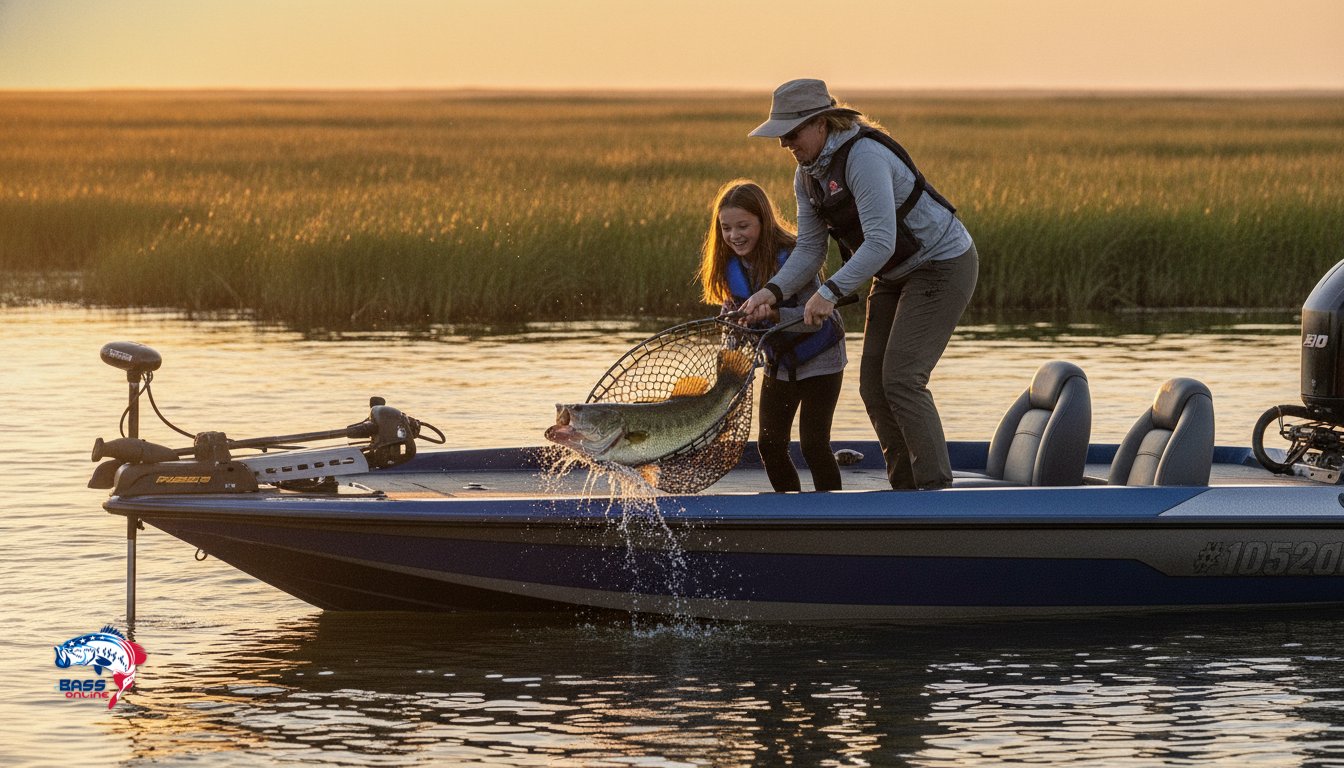

The Potomac River isn’t just a body of water; it’s a living, breathing puzzle where the tide dictates every single bite. If you’ve ever watched a prime grass bed disappear under rising water or felt the frustration of a dead bite during a slack tide, you know this river demands respect. Navigating these massive flats and winding creeks takes more than just a GPS. It requires the specialized knowledge of a Potomac River bass fishing guide who understands how to time the specific windows of activity. With the river maintaining a “B” health grade in the 2025 Potomac Report Card, the fish are definitely there, but they don’t just jump into the boat for everyone.
You’re likely here because those endless grass beds feel like a maze or the murky water has you second-guessing your lure choice. We understand that struggle. Even the top pros at the August 2026 Patriot Cup had to battle shifting currents to secure their heavy bags. This article promises to cut through the confusion. I’ll show you how to read tidal fluctuations like a local expert, identify high-percentage grass edges, and select the specific lures that trigger strikes in the river’s unique conditions. We are going to break down the exact strategies used by the best in the business to ensure your next trip is a legendary success.
Key Takeaways
- Master the timing of the outgoing tide to capitalize on the river’s most productive feeding windows.
- Navigate massive grass beds with confidence by identifying high-percentage areas that hold trophy largemouth bass through every season.
- Unlock the secrets of the pro’s tackle box; learn why specific lures like the Chatterbait dominate this unique tidal environment.
- Discover how a professional Potomac River bass fishing guide uses decades of local experience to find the best bite regardless of the current tide stage.
- Get practical advice on the essential gear and licensing requirements you need to stay comfortable and legal while hunting for river lunkers.
Why the Potomac River is a Premier Bass Fishing Destination
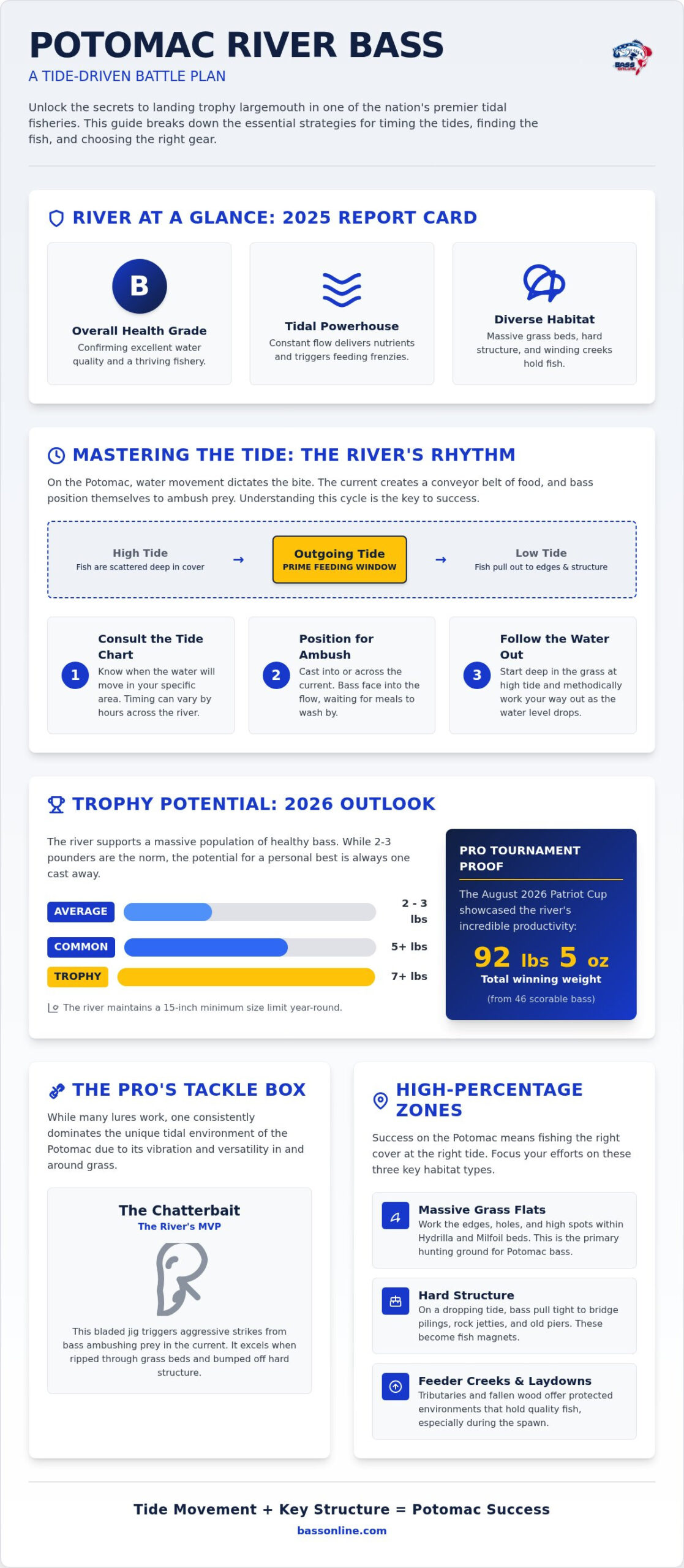
The Potomac River is a legendary powerhouse in the world of professional angling. It’s a consistent stop for Major League Fishing and the Toyota Series because it delivers high-intensity action that few other tidal systems can match. The 2025 Potomac Report Card awarded the river a “B” grade, confirming that the water quality and habitat are in great shape for a thriving fishery. This river isn’t just a scenic backdrop; it’s a highly productive ecosystem where the constant movement of the tide flushes nutrients through massive beds of aquatic vegetation.
Bass thrive here because they have everything they need: cover, oxygen, and a never-ending buffet of forage. The tidal flow creates a dynamic environment where fish are always on the move, following the water to stay in the strike zone. This high-density population means that on a good day, the action is fast and furious. When you’re out with a Potomac River bass fishing guide, you’ll see firsthand how these fish use the current to their advantage, positioning themselves to ambush anything that washes by in the flow.
The Diverse Habitat: From Grass Flats to Hard Structure
The variety of cover on this river is staggering. You’ll spend a lot of time working the massive Hydrilla and Milfoil flats, which serve as the river’s lungs and primary hunting grounds. These grass beds are massive, but the fish aren’t everywhere. They look for specific edges, holes, and high spots within the vegetation. When the tide drops, bass often pull out of the grass and tight to hard structure. Bridge pilings, rock jetties, and old pier remains become prime real estate for hungry largemouth.
Don’t overlook the smaller pockets and feeder streams. Tributaries like Little Hunting Creek offer protected environments that are famous for holding quality fish, especially during the spawning months. In the upper tidal sections, you’ll find plenty of fallen wood and laydowns that provide the perfect woody cover for big bass to hide. Mastering the transition between these different habitat types is the key to a successful day on the water.
Trophy Potential: What to Expect in 2026
Heading into the 2026 season, the Potomac remains a top-tier destination for those chasing heavy bags. We’ve seen some incredible weights recently that prove the big fish are healthy and plentiful. During the August 2026 Patriot Cup, the winning team hauled in 46 scorable bass weighing a total of 92 pounds, 5 ounces. That kind of production shows the river’s incredible capacity to support a massive population of keeper-sized fish. While the river maintains a 15-inch minimum size limit year-round, local anglers are usually looking for those kicker fish that push the scales much higher.
The average bass on the Potomac usually falls in the two-to-three-pound range, but five-pounders are common enough to keep things exciting. A true trophy on this river is defined as a seven-pound largemouth that can test the limits of your heavy-duty braided line and flipping stick. With the population trends showing strong natural reproduction, 2026 is shaping up to be a banner year for anyone looking to land a personal best in the heart of the Mid-Atlantic.
Mastering the Tide: The Secret to Potomac Bass Success
On the Potomac, the tide is your clock. Tidal bass fishing means the movement of water, rather than just the time of day, dictates when and where fish feed. When the current is moving, it creates a conveyor belt of food that triggers a predatory instinct in every largemouth in the system. If the water is stagnant, the bite usually dies. As soon as that current starts to pull, the fish set up on specific points to ambush forage. Learning these windows is the biggest challenge for visiting anglers, which is why spending a day with a Potomac River bass fishing guide is the fastest way to understand these complex cycles.
To fish the tide successfully, I recommend following this step-by-step approach on every outing:
- Consult the Tide Chart: The tide can be up to two hours different between the Woodrow Wilson Bridge and the lower river. Know exactly when the water will start moving in your specific creek.
- Position for the Ambush: Always position your boat so you are casting into or across the current. Bass almost always face into the flow, waiting for the water to bring a meal to them.
- Follow the Water Out: Start your day deep in the grass during high tide. As the water drops, slowly move your boat toward the outer edges and deeper “drains,” which are small channels that act as exit ramps for baitfish.
- Identify the Pinch Points: Look for areas where the tide is forced through a narrow gap, such as a hole in a rock jetty or a break in a long grass line. These spots concentrate the current and the fish.
If you’re unsure how to time your run, chatting with an expert before you launch can save you hours of searching. Safety is also a major factor when you’re hunting river lunkers. This river has massive mudflats and hidden rock piles that can be several feet underwater at high tide but completely exposed a few hours later. A seasoned Potomac River bass fishing guide knows exactly which cuts are safe to run and which ones will leave you stranded on a sandbar until the water returns.
The High Tide vs. Low Tide Strategy
During high-water periods, bass have the freedom to roam. They often push deep into the grass flats or right up against the shoreline bank to hunt. You’ll need to go in after them using weedless lures. As the water recedes, the fish naturally migrate toward the “outer edge” of the vegetation. The last two hours of a falling tide are typically the most productive because the fish are forced into smaller, more predictable areas.
Reading the Current: Ambush Points and Eddies
Bass are masters of energy conservation. They won’t fight a heavy current if they don’t have to. Instead, they look for “current seams,” which are the boundaries between fast-moving water and still water. These are often found behind bridge pilings, large boulders, or points of land. By sitting in the slack water of an eddy, a bass can wait for the flow to bring a meal right to its face. Use your electronics to find submerged wood or rock piles that break the current; these invisible spots often hold the biggest fish in the river.
Seasonal Bass Movements: Where to Find Lunkers Year-Round
Understanding the seasonal rhythm of the Potomac is what separates a lucky day from a consistent season. The fish don’t just stay in one spot; they follow a predictable map based on water temperature and forage availability. While the tide moves fish by the hour, the seasons move them by the mile. Whether you’re hunting for a spring giant or a winter holdout, knowing where the fish are headed next is the key to staying ahead of the crowd. Every season offers a unique opportunity to target big largemouth if you know how to adjust your depth and location.
Spring Spawn and the Pre-Spawn Power Bite
Spring is the season of giants, but it’s also a game of temperature. As the water warms, bass begin their migration from deep wintering holes toward protected spawning flats. To find them, follow this seasonal checklist:
- Target Staging Areas: Look for the last deep water before a shallow flat. Bass bunch up here at the mouths of creeks while waiting for the water to hit the mid-50s.
- Find Hard Bottoms: Use your electronics to locate gravel or sand. These are essential for nesting, and a Potomac River bass fishing guide will often prioritize these spots over muddy areas.
- Look North Early: The northern reaches of the tidal zone are often shallower and warm up faster, triggering an earlier spawn than the lower river.
Summer Dog Days and Grass Mat Tactics
When the summer heat peaks, the Potomac’s famous grass beds reach their full height. This is when the fish seek out oxygen and shade. For a deeper dive into the specific retrieves used during this time, visit our comprehensive guide on Bass Fishing 101. To find the fish during the “dog days,” focus on these locations:
- Main River Flats: Look for the thickest Hydrilla beds that remain submerged even at low tide. These provide the best cover and cooler water.
- Creek Mouths: These areas act as funnels for baitfish and provide a constant flow of fresh water.
- Shallow Canopy: During the early morning, bass will roam the edges of the grass. As the sun rises, they tuck deep under the mats, requiring heavy weights to reach them.
Fall and Winter Transitions
As the water cools, the behavior shifts from seeking shade to chasing food. In the fall, bass follow massive schools of shad and bluegill into the creeks and shallow backwaters. If you’re out with a Potomac River bass fishing guide during this time, you’ll likely spend your day following the “birds and the bait” deep into the tributaries. Once winter sets in, the fish pull out of the shallows and settle into the deeper main-river channels and “guts,” which are deep ditches leading into the flats. The key here is to slow down. The fish are still there, but their metabolism has dropped, making them much more selective about when and where they strike.
The Pro’s Tackle Box: Best Lures for Potomac River Bass
If you peek inside the rod locker of any Potomac River bass fishing guide, you’ll find a vibrating jig, commonly known as a Chatterbait. This lure is the undisputed king of the river because its metal blade creates a heavy “thump” that bass can feel even when the water is murky. To be successful, you need to match your lure colors to the three main things bass eat here: bluegill, shad, and crawfish. I recommend using dark greens or oranges for bluegill and craw patterns, while sticking to whites and silvers when shad are present.
Managing the river’s thick vegetation requires specific gear choices to ensure you don’t lose the fish of a lifetime in the salad. Here is the basic setup I recommend:
- High-Speed Reels: Use a reel with at least a 7.1:1 gear ratio. This allows you to pick up slack line quickly when a bass strikes and runs toward the boat.
- Braided Line: For the thickest grass, use 50 to 65-pound test braid. It has zero stretch and cuts through grass stalks like a saw.
- Fluorocarbon Line: In clearer water or around rocks, 15 to 20-pound fluorocarbon is better because it is nearly invisible to the fish.
Horizontal Search Baits for Covering Water
When the tide is moving, you need to cover as much water as possible to find active schools. These lures are designed to be cast long distances and retrieved steadily to trigger “reaction strikes,” where a fish hits the bait purely out of instinct.
- Lipless Crankbaits: These flat, rattling lures are perfect for “ticking” the tops of the grass. When the lure snags a blade of grass, a sharp snap of the rod tip often triggers an immediate bite.
- Swim Jigs: This is a lead-headed jig with a silicone skirt and a plastic trailer that mimics a swimming baitfish. It is a “silent killer” that slides through grass more easily than lures with treble hooks.
Vertical and Finesse Tactics for Pressured Fish
When the sun is high or the current stops moving, bass often tuck tight into cover and won’t chase a fast bait. This is when you need to slow down and use finesse tactics. Any experienced Potomac River bass fishing guide will tell you that precision is more important than speed during these windows.
- Texas Rig: This involves hiding the hook point inside the body of a soft plastic creature bait to make it “weedless.” This allows you to drop the lure into the thickest grass or wood without snagging.
- Wacky Rig: You simply hook a plastic worm through the very center. As it sinks, both ends wiggle enticingly. It is a slow way to fish, but it tricks bass that have seen too many loud lures.
- Ned Rig: This is a small, flat-bottomed lead head with a short plastic bait that stands straight up on the bottom. It mimics a small crawfish or baitfish hopping along the river floor.
The “Potomac Craw” color profile is a dark green pumpkin base loaded with heavy red flake and subtle orange accents to perfectly mimic the local river crustaceans.
Ready to see these lures in action? You can book your guided trip today to see exactly how we rig these setups for maximum river success.
Booking Your Potomac River Bass Fishing Trip
Navigating the Potomac isn’t like fishing your local pond. The shifting tides we’ve covered make this river a moving target that can frustrate even seasoned anglers. Hiring a professional Potomac River bass fishing guide is the most effective way to skip the years of trial and error. You’ll spend your day casting during the highest-percentage windows rather than guessing where the fish moved. Our team has been leading successful expeditions since 1997. We combine elite, boots-on-the-ground knowledge with the professional reliability you expect from a national leader.
What to Expect on a Guided Charter
Most trips are structured as four, six, or eight-hour sessions. We provide the boat, fuel, and all the high-end tackle you’ll need to haul lunkers out of the thickest grass. You aren’t just paying for a boat ride; you’re investing in a masterclass. You’ll learn the “why” behind every move, from timing the outgoing tide to reading subtle current seams. These are actionable skills you can take back to your home waters. Take a look at our roster of fishing guides to find the perfect expert for your 2026 expedition. Securing your preferred dates early is essential, especially during the high-demand spring spawn.
Preparing for Your Expedition
Preparation is the key to staying comfortable and focused on the water. High-quality polarized glasses are a must for spotting grass edges and submerged wood. Dress in seasonal layers, as the river breeze can be surprisingly cool even in the peak of summer. You’ll also need a valid license. A Maryland Resident Nontidal Sport Fishing License costs $32.00, while non-residents can expect to pay $55.00. Licenses are valid for 365 days from purchase. If our hunt takes us between the Woodrow Wilson Bridge and the American Legion Bridge, a District of Columbia license is required. While Maryland and Virginia share a reciprocal agreement for the mainstem, having the right paperwork ensures we stay focused on the fish.
We are deeply committed to the health of this fishery. Catch and release is the standard for our trips to ensure the Potomac’s “B” health grade continues to improve. If you’re planning a tour of the country’s best waters, don’t miss our roundup of bass fishing near me for other legendary spots. Ready to feel the raw power of a Potomac largemouth? Book your ultimate river adventure now and let us show you the secret spots that only the locals know.
Dominate the Potomac in 2026
Success on the Potomac River isn’t about luck; it’s about mastering the moving parts of a complex tidal system. We’ve broken down how to time the outgoing tide and identify the most productive grass beds, but nothing beats real-world experience. When you’re out on the water, the difference between a heavy bag and a tough day often comes down to knowing which window is about to open. Applying these pro tactics will immediately improve your consistency and confidence on this world-class fishery.
With over 25 years of professional guiding experience since our founding in 1997, we’ve helped thousands of anglers land their dream bass. Our expert local guides are frequently featured in major fishing publications and have earned thousands of verified 5-star reviews by delivering consistent results. Booking an elite Potomac River bass fishing guide gives you the insider advantage you need to navigate these tides like a pro. Don’t leave your next expedition to chance when you can fish with the best in the business.
Book Your Potomac River Bass Fishing Trip with the Pros and let’s get you on the fish. The river is calling, and those trophy largemouth are waiting for the right tide. We’ll see you on the water!
Frequently Asked Questions
Do I need a special license for fishing the Potomac River?
Yes, you need a valid license from Maryland, Virginia, or the Potomac River Fisheries Commission (PRFC). If we fish between the Woodrow Wilson Bridge and the American Legion Bridge, a District of Columbia license is required. Maryland and Virginia share a reciprocal agreement for the mainstem, meaning a resident license from either state usually covers you. Always double-check current boundaries before casting to stay legal on the water.
What is the best time of year for trophy bass on the Potomac?
Spring is the premier window for landing a true trophy largemouth on the Potomac. From March through early May, pre-spawn females move into the shallows to feed heavily, pushing their weights to the limit. During this time, a Potomac River bass fishing guide targets staging areas near spawning flats where five-to-seven-pound fish are most active. While summer and fall offer higher numbers of fish, spring is your best shot at a personal best.
Can beginners catch fish on a tidal river guide trip?
Beginners are absolutely welcome and often have some of the most successful days on the water. A professional Potomac River bass fishing guide acts as a mentor, teaching you how to read the tide and work specific lures like the Chatterbait. We provide a hands-on learning environment where you can master casting and retrieve techniques in real-time. It’s a great way to skip the learning curve and start catching fish immediately while building your confidence.
What happens if the weather is bad on the day of my trip?
Safety is our top priority, so we keep a close eye on the forecast. If conditions like high winds or lightning make the river unsafe, we will work with you to reschedule your trip for a better day. Fishing in light rain is often very productive, but we won’t take risks with heavy storms. We want your expedition to be enjoyable and safe, so we always prioritize the best possible experience for our clients.
Do I need to bring my own fishing rod and tackle?
You don’t need to bring anything; we provide all the high-end rods, reels, and lures needed for a successful day. We use professional-grade equipment that is specifically rigged for the river’s heavy grass and tidal current. However, if you have a favorite lucky rod or a specific setup you want to practice with, you’re more than welcome to bring it along. We’ll make sure your gear is dialed in for the local conditions.
How much of the Potomac River is tidal?
The Potomac is tidal for approximately 108 miles, stretching from the Chesapeake Bay all the way up to the Chain Bridge in Washington, D.C. This tidal influence is what makes the river such a unique and challenging fishery. The water level can fluctuate by several feet every day, which constantly moves the fish and changes the structure they inhabit. Understanding this massive tidal zone is the key to finding consistent bass throughout the year.
Is the Potomac River safe for small bass boats?
The Potomac is a massive body of water that can get very rough when the wind opposes the tide. While small bass boats can navigate the coves safely, the main river requires caution and experience. Large wakes from commercial traffic and sudden wind shifts can create challenging conditions quickly. If you’re in a smaller vessel, it’s vital to stay aware of the weather and stick to areas that offer protection from the main channel’s chop.
What other species can I catch while bass fishing the Potomac?
While we focus on largemouth bass, the Potomac is home to several other hard-fighting species. You’ll frequently encounter northern snakeheads in the thick grass, which provide an incredible fight on topwater lures. Blue catfish are also extremely common and can grow to massive sizes in the deeper channels. Additionally, striped bass often move through the tidal sections, offering a fun surprise for anyone throwing swimbaits or crankbaits near bridge pilings and rock jetties.

Article by
Mr Bass
Todd Kersey, widely known as Mr. Bass by Field & Stream, is a professional angler, accomplished author, and dedicated philanthropist with a lifelong passion for bass fishing. Armed with a degree in Outdoor Travel, Mr. Bass has expertly combined his knowledge with his practical fishing experience to become one of the most respected names in bass fishing.
His deep understanding of bass habitats and fish behavior has earned him numerous accolades as an asset to the sport. Serving 8 years as FWC Stakeholder Chairperson. Leading and passed cutting-edge legislation, such as the Black Bass Management Plan, and successfully built, passed, and helped finance the Trophy Catch program.
As CEO, he is committed to giving back to the community through his philanthropic efforts. He supports a variety of causes, especially those centered around physical disabilities. Through his advocacy, his mentorship programs inspire anglers to engage in fishing stewardship, helping to raise more than $18 million dollars in donations. Mr. Bass continues to inspire anglers and outdoor enthusiasts alike with his commitment to the sport, industry, and the world around him.