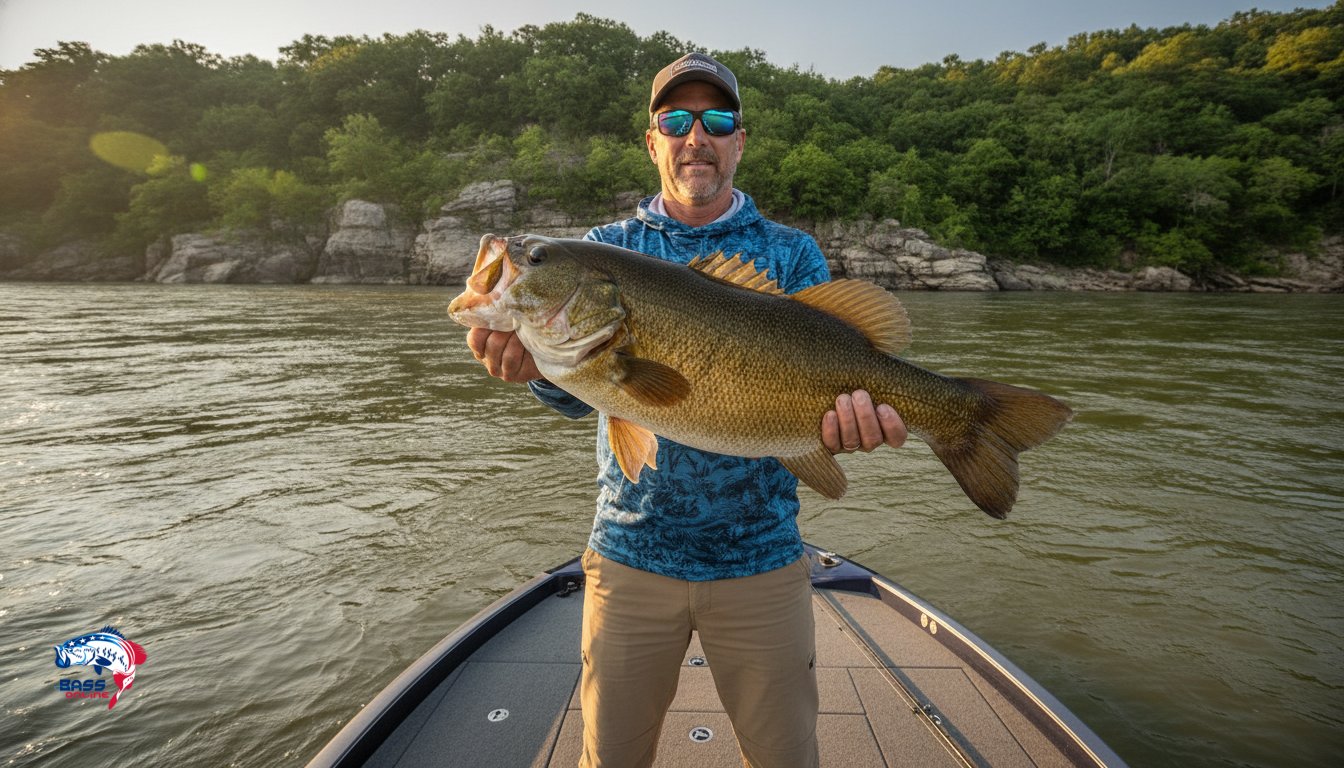

Most anglers think the biggest challenge of Potomac River smallmouth bass fishing is the fish themselves, but the real battle is against the river’s relentless current and lure-eating rock gardens. You’ve likely felt that sting of frustration when a trophy-caliber strike turns into a snagged jig, or when a sudden change in water level leaves your favorite spot bone-dry and empty. Navigating the shallow, dangerous ledges of the Upper Potomac takes more than just a boat; it takes a deep understanding of how these bronze-backed predators use the moving water to their advantage.
I get it because I’ve spent years learning the hard way so you don’t have to. This 2026 pro guide playbook is here to help you master the flow and turn every outing into a success story. We’re going to dive into the expert tactics required to land trophy smallmouth in any season, ensuring you’re always one step ahead of the fish.
You’ll learn how to identify high-percentage river spots that others overlook, choose the right lures for heavy current, and understand the seasonal migration patterns that dictate where the big ones hide. From the 15-inch minimum size requirements to the 20-inch maximum limits during the spring spawn, we’ve got the field-tested intel you need to fish with confidence and authority.
Key Takeaways
- Master the art of reading river hydrology to find current seams and eddies where trophy smallmouth sit to ambush their prey.
- Track seasonal migration patterns to find pre-spawn bass in early spring and oxygen-rich riffles during the peak summer heat.
- Learn the specific retrieve techniques for Ned Rigs and tube jigs that excel at Potomac River smallmouth bass fishing without losing your gear to the rocks.
- Identify high-percentage “secret spots” and navigate dangerous shallow sections safely with insider knowledge from seasoned local guides.
- Stop guessing and start catching by understanding why river bass prioritize the flow and how you can use it to your advantage.
Understanding Potomac River Smallmouth Bass Dynamics
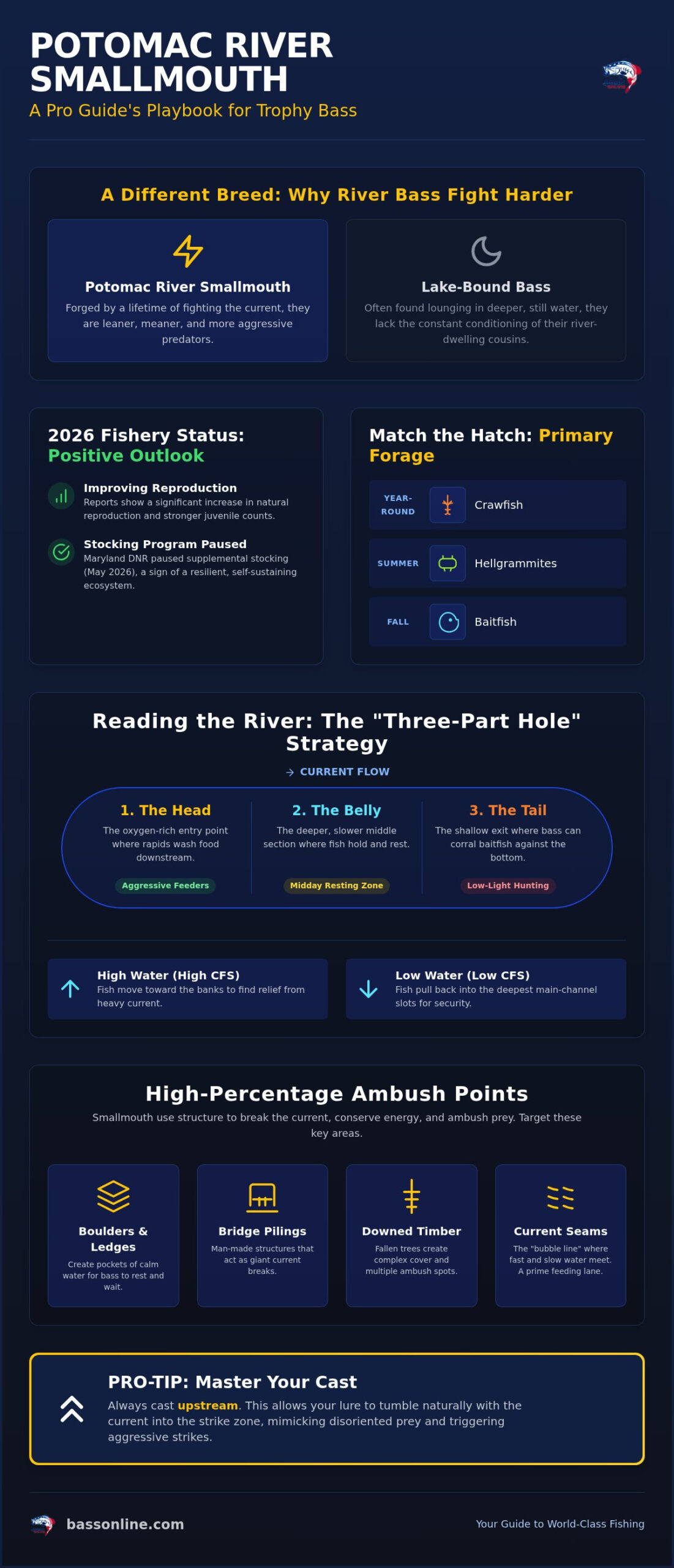
Smallmouth in the Potomac are built differently. Unlike their lake-bound cousins who might lounge in deep, still water, these fish are world-class athletes. They spend every second of their lives fighting a constant treadmill of current, which makes them leaner, meaner, and significantly more aggressive when they hit your lure. This is why the region is often called the Smallmouth Capital of the Mid-Atlantic. When you engage in Potomac River smallmouth bass fishing, you aren’t just casting for a fish; you’re testing your gear against a predator forged by moving water.
The state of the fishery in 2026 is looking up. While populations saw a dip in previous decades, the Maryland DNR recently paused its supplemental stocking program in May 2026. This decision came after reports of improving natural reproduction and stronger juvenile counts. It’s a massive win for the river, proving that the ecosystem is resilient. Understanding Smallmouth bass biology and habitat is the first step to catching them. These fish crave high-oxygen environments and hard bottom structures where they can pin their prey against the rocks.
The Upper Potomac vs. The Lower River
The Upper Potomac is a river of rocks. This section is defined by shallow ledges, complex rock gardens, and fast-moving rapids that provide the perfect habitat for smallmouth. You won’t find many of them in the tidal, muddy stretches of the lower river where largemouth dominate. Instead, you want to target the transition zones. The biggest fish often sit in the deep pools just below a set of rapids, waiting for the current to wash a meal right to them. Practicing catch-and-release is vital here. With the 2025 Potomac Report Card showing some historical population fluctuations, protecting the trophy fish we have ensures this world-class fishery stays that way for the next generation.
Smallmouth Forage: What Drives the Bite?
If you want to catch Potomac smallies, you have to think like a crawfish. These crustaceans are the primary protein source in the river, and the bass are obsessed with them. However, the menu changes with the seasons:
- Crawfish: The year-round staple. If your lure doesn’t look like a crawfish scurrying across the bottom, you’re missing out.
- Hellgrammites: These are the larvae of the dobsonfly. During the summer hatch, a dark, pinch-tailed plastic can be deadly.
- Baitfish: In the fall, shiners and dace become the focus. As the water cools, bass look for these larger silver profiles to bulk up for winter.
Understanding these food sources allows you to match the hatch effectively. When you see shiners jumping in the shallows or find hellgrammite casings on the rocks, you know exactly which box to reach for in your tackle bag.
Reading the Flow: How to Master River Hydrology
To dominate Potomac River smallmouth bass fishing, you have to stop looking at the water as a static pool and start seeing it as a series of moving parts. Smallmouth are efficient predators. They want the most calories for the least amount of effort. This is why understanding Potomac River fishery management and the hydrology of the river is your secret weapon. The current acts as a conveyor belt, bringing food directly to the fish while they hide behind structure.
We use the “Three-Part Hole” theory to dissect any given pool. The head is the oxygen-rich entry point where the most aggressive fish sit. The belly is the deeper middle section where fish rest during the midday heat. Finally, the tail is the shallow exit where bass often move during low-light hours to corral baitfish. Water levels, measured in Cubic Feet per Second (CFS), dictate how these fish move. When the CFS spikes, fish move toward the banks to find relief. When it drops, they pull back into the deepest main-channel slots.
Locating High-Percentage Current Breaks
Boulders and ledges are the classic ambush points, but don’t overlook bridge pilings or downed timber. These objects create a pocket of calm water where a bass can sit without burning energy. A current seam is the interface between fast and slow water where bass wait to strike. Look for the “bubble line” on the surface. That line marks the seam. If you can land your lure on the fast side and let it tumble into the slow side, you’re in the strike zone.
Adjusting Your Boat Position for the Best Cast
Positioning is everything. You should almost always cast upstream. This allows your lure to drift naturally with the current, just like a real crawfish or minnow would. Using an electric motor to “hover” in the flow gives you the stability needed for precise presentations. It’s a high-energy way to fish that requires constant focus. Safety is paramount; the Potomac is famous for its “lower unit eating” rocks. Always keep a close eye on the depth and avoid narrow chutes unless you’re certain of the clearance. If you’re unsure about navigating these tricky waters, booking a pro guide is the best way to stay safe while you learn.
Seasonal Patterns for Potomac Smallmouth
Every season on the Potomac brings a new set of challenges, but the fish follow a predictable rhythm. If you want to master Potomac River smallmouth bass fishing, you have to move with them. Unlike lake fish that might stay in a general area year-round, river smallmouth are seasonal travelers. They migrate between shallow spawning flats, oxygen-rich summer riffles, and deep wintering holes where the current is weakest.
Spring Spawn and High Water Tactics
Spring is the most volatile time on the river. The Maryland DNR often reports that high spring flows can scour nests and impact reproduction, but as an angler, you need to know where the fish hide when the main stem gets angry. When the river looks like chocolate milk, look for “protected” water. This means targeting the back-side of islands or the mouths of larger creeks where the water is slightly clearer and the flow is manageable. In these conditions, visibility is low. You should reach for lure colors that pop in stained water, such as bright chartreuse, neon orange, or solid black to create a strong silhouette.
The Dog Days: Summer River Success
Once the heat of July hits, oxygen is king. Smallmouth will leave the stagnant pools and move into the fastest water they can find to breathe. Look for riffles, rapids, and the “heads” of holes where the water is tumbling over rocks. The earliest hours of the morning offer the most explosive topwater action. Use poppers or walk-the-dog style baits right on the edge of the fastest current. As the sun rises, the fish will drop into deeper ledge holes or seek out “cool water” springs. For a deeper look at the foundational techniques used to target these fish, our guide on Bass Fishing 101 covers the essentials every river angler needs.
As fall approaches and water temperatures drop, the bass begin their migration to deep wintering pools. They are looking to bulk up, so larger baitfish profiles become more effective. By the time winter settles in, the game changes to “slow and low.” You have to master the finesse game, using tiny hair jigs or dragging plastics at a snail’s pace. The fish are still there, but their metabolism has slowed to a crawl. Success in the cold months is all about patience and finding those deep, slow-moving pockets where the bass can rest without fighting the main current.
The Tackle Box: Essential Lures for Moving Water
Successful Potomac River smallmouth bass fishing depends on your ability to match the hatch while battling the physics of the current. You need lures that can reach the bottom without getting wedged in the rocks and moving baits that create enough vibration to be felt through the turbulence. The river is a gear-testing environment. If your tackle isn’t up to the task, the Potomac will gladly take it from you. We focus on a specific rotation of lures that have proven their worth across decades of professional guiding.
The Ned Rig is the undisputed king of the Potomac rocky bottom. Its minimalist profile mimics everything from a small crawfish to a displaced minnow, but its real magic lies in its ability to stand straight up on the bottom. Tube jigs are another staple, specifically designed to mimic the erratic, scurrying motion of a threatened crawfish. When the water is moving fast, you need to switch to high-vibration tools like spinnerbaits and chatterbaits. These lures create a “thump” that bass can feel through their lateral lines even in heavy current. In the shallow riffles, nothing beats the heart-pounding action of a topwater popper during the early morning bite.
Finesse Techniques for Clear Water
When the river runs low and clear, you have to dial back the aggression. Mastering the “Dead Stick” retrieve with a Ned Rig is a game changer. Cast it upstream, let it sink, and do absolutely nothing. The current will provide all the movement needed. Choosing the right weight is a delicate balance; you want just enough lead to tick the bottom occasionally without burying the hook in a crevice. A 1/15 oz or 1/10 oz head is usually the sweet spot. A soft plastic hellgrammite imitation is a secret weapon for summer river smallies, perfectly mimicking the dark, multi-legged larvae that live under the river’s stones.
Power Fishing the Rapids
When the fish are active and the water is churning, it’s time to power fish. Burning lipless crankbaits over submerged ledges can trigger reaction strikes from fish that wouldn’t look at a finesse bait. You’ll need to use heavy-wire hooks to handle the leverage of a trophy smallmouth using the current against you. If your hooks are too thin, a three-pounder in a fast chute will straighten them out in seconds. This high-octane style of fishing is why the Potomac remains a legendary stop on the Bass Fishing Near Me pro circuit. It’s a place where technique and toughness meet.
Don’t let the river’s complex structure intimidate you. Having the right gear is half the battle, but knowing how to use it in the flow is what puts fish in the boat. If you’re ready to put these lures to the test with a pro who knows every ledge and rock garden, contact us today to book your trip and see what the Potomac is truly capable of producing.
Why a Guided Potomac Trip is the Ultimate Shortcut
Let’s be honest: the Potomac is a beautiful beast, but it’s also a “river of rocks” that doesn’t forgive mistakes. If you’re new to Potomac River smallmouth bass fishing, the learning curve can be steep and expensive. Navigating these shallow, ledge-filled waters without local knowledge is the fastest way to destroy your equipment. That’s where a professional guide comes in. We provide the ultimate shortcut, allowing you to focus on the thrill of the strike rather than the stress of the next submerged boulder.
Our captains utilize professional-grade river boats specifically designed to handle the unique demands of the Upper Potomac. These aren’t just vessels; they’re tactical platforms that get you into the “skinny water” where the trophy smallmouth hide. Beyond safety, you’re paying for an insider journey. We’ve spent thousands of hours identifying “secret spots” that simply don’t show up on standard GPS maps. These micro-eddies and hidden current seams are where the real magic happens, and closing the gap between just “fishing” and actually “catching” is what we do best.
What to Expect on Your Guided Charter
A typical day starts with high energy as we head to the first productive run. From the first cast to the final release, your day is structured to maximize your time in the strike zone. It’s not just about us catching fish for you; it’s about personalized coaching. You’ll learn how to read the water, identify current seams, and perfect your lure presentation in real-time. To see the experts who lead these results-driven expeditions, check out our roster of Bass Online Fishing Guides. We don’t just take you to the fish; we teach you the “why” and “how” behind every hookset.
Preparing for Your Adventure
To get the most out of your trip, come prepared with a few essentials. Polarized glasses are a must-have for spotting submerged structure and following your lure’s drift through the current. Don’t forget sun protection and a high-quality camera to document your trophy catch. Our captains take a service-minded approach, ensuring you feel like a welcomed guest while receiving expert-level instruction. We’re committed to your success and safety on every outing, providing a rugged yet approachable experience that only the best in the business can deliver.
Ready to conquer the river? Book your Potomac River smallmouth trip today!
Master the Flow and Land Your Next Trophy
Success on the river isn’t about luck; it’s about understanding how the current dictates every move a bass makes. From identifying high-percentage current seams to matching the seasonal hatch with finesse tools like the Ned Rig, you now have the playbook to dominate the water. Mastering Potomac River smallmouth bass fishing requires a blend of tactical patience and aggressive power fishing, but the reward is a hard-fighting predator that tests your gear to the limit. Every rock and riffle tells a story, and now you know how to read them.
Don’t spend your season snagging rocks or guessing where the fish went. With over 25 years of professional guiding experience, we provide the ultimate shortcut to the best spots on the river. Our expert local guides know every ledge and rock garden, ensuring you navigate the river safely while using top-tier equipment. It’s time to stop just fishing and start catching. Book Your Professional Potomac River Fishing Charter Now and let’s get you on the water. The river is calling, and the next trophy smallmouth is waiting for your cast. Let’s go make some memories.
Frequently Asked Questions
Is the Potomac River good for smallmouth bass fishing?
Yes, the Potomac is a legendary destination for bronze-backs and is widely considered the smallmouth capital of the Mid-Atlantic. While populations have fluctuated over the years, the Maryland DNR recently paused its supplemental stocking program in May 2026 because natural reproduction is showing significant improvement. It’s a resilient, high-energy fishery that rewards anyone willing to master the art of Potomac River smallmouth bass fishing.
Where is the best place to catch smallmouth bass on the Potomac?
The non-tidal Upper Potomac, stretching from the rocky headwaters down to the fall line, is where the best action happens. You want to focus on areas with varied structure like rock gardens, deep ledge holes, and submerged grass. Specifically, the sections with the most dramatic elevation changes often hold the largest fish. These transition zones between rapids and deep pools are high-percentage spots where trophy smallmouth sit to ambush prey.
What lures work best for smallmouth bass on the Potomac River?
Ned Rigs and tube jigs are the undisputed heavy hitters for these rocky bottoms because they mimic the local crawfish forage perfectly. During the summer heat, soft plastic hellgrammite imitations become a secret weapon for success in Potomac River smallmouth bass fishing. If the water is stained or moving fast, switch to a spinnerbait or chatterbait to create the heavy vibration needed to trigger an aggressive reaction strike.
Do I need a special license to fish the Potomac River?
You must have a valid Maryland or Virginia freshwater fishing license if you’re 16 or older. Thanks to a reciprocal agreement, both states honor each other’s licenses on the mainstem of the river. As of January 2026, a Maryland resident annual license is $32.00, while non-residents pay $55.00. Always keep your digital or paper license on you, as local authorities frequently check popular access points to ensure compliance.
What is the best time of year for Potomac smallmouth fishing?
Spring and fall are the peak seasons for targeting trophy-sized smallmouth on this river. April through June provides incredible pre-spawn and post-spawn action as fish move into the shallows to feed. Once October hits, the cooling water temperatures trigger a feeding frenzy as bass move toward their wintering holes. While summer is great for early morning topwater, these transitional months offer the most consistent opportunities for big fish.
Are there largemouth bass in the Potomac River too?
Yes, the Potomac is a dual-threat fishery home to both species, though they prefer different habitats. While smallmouth thrive in the rocky, fast-moving sections of the Upper Potomac, largemouth dominate the tidal grass flats and dock structures further downriver. You’ll often find them overlapping in transition zones where the current slows down. If you want smallmouth, stay in the rocks; if you want largemouth, look for submerged vegetation.
Can you eat smallmouth bass from the Potomac River?
Health agencies advise limiting fish consumption from the Potomac due to chemical contaminants like mercury. While you can technically keep your catch, most professional guides and local experts strongly recommend catch-and-release. This practice protects your health and ensures the longevity of the fishery. Given that recent population counts have shown some historical volatility, releasing your catch helps the smallmouth reach trophy sizes for future generations to enjoy.
How do I safely navigate the Upper Potomac in a bass boat?
Safe navigation requires a shallow-draft vessel and a deep understanding of the river’s complex rock formations. The Upper Potomac is famous for destroying lower units on standard bass boats because of hidden ledges. You should always monitor the Cubic Feet per Second (CFS) levels before launching. Never run on plane in unfamiliar sections, and consider using a jet drive if you plan to frequent the shallowest rapids.

Article by
Mr Bass
Todd Kersey, widely known as Mr. Bass by Field & Stream, is a professional angler, accomplished author, and dedicated philanthropist with a lifelong passion for bass fishing. Armed with a degree in Outdoor Travel, Mr. Bass has expertly combined his knowledge with his practical fishing experience to become one of the most respected names in bass fishing.
His deep understanding of bass habitats and fish behavior has earned him numerous accolades as an asset to the sport. Serving 8 years as FWC Stakeholder Chairperson. Leading and passed cutting-edge legislation, such as the Black Bass Management Plan, and successfully built, passed, and helped finance the Trophy Catch program.
As CEO, he is committed to giving back to the community through his philanthropic efforts. He supports a variety of causes, especially those centered around physical disabilities. Through his advocacy, his mentorship programs inspire anglers to engage in fishing stewardship, helping to raise more than $18 million dollars in donations. Mr. Bass continues to inspire anglers and outdoor enthusiasts alike with his commitment to the sport, industry, and the world around him.