
To transport fishing gear on a road trip, protect rods from crushing, cushion reels, contain hooks and secure every case before driving. Pack for your vehicle’s actual space, leaving the driver’s view, controls and passenger restraints clear.
This guide covers packing gear you already own for travel by car, SUV or truck. If you are choosing a compact setup, see our travel fishing rods guide. For airline baggage planning, use our separate guide to flying with fishing rods.
Measure Your Gear and Cargo Space First
Measure your longest rod or packed rod section, then check the usable space with seats in their traveling positions. Allow room for the case, its end padding and the hatch or door to close. A rod that fits diagonally while the vehicle is empty may not fit safely once passengers and luggage are aboard.
- Lay out the rods, reels, tackle boxes and accessories you actually need.
- Inspect rod tips, guides, reel seats and case latches before packing.
- Separate the first day’s tackle from backup equipment.
- Confirm what equipment is included if you have booked a guided trip.
Choose Protection for the Load
| Carrier | Useful for | What to check |
|---|---|---|
| Rod sleeve or sock | Separating rods and limiting tangles | A sleeve provides little protection from crushing. |
| Padded rod bag | Keeping sections together with cushioning | Keep heavy luggage off the bag. |
| Rigid rod case or tube | Protecting rods within a mixed cargo load | Check internal length, padding and latch security. |
| Purpose-built vehicle carrier | Carrying rods outside the passenger area | Follow its mounting, load and vehicle-compatibility instructions. |
Choose a case that supports the rod without forcing the tip or guides against the ends. A hard case still needs to be secured; it should not slide into passengers or other cargo during braking.
Pack Rods Without Bending or Crushing Them
Separate multi-piece rods at their intended joints according to the maker’s instructions. Do not force a stuck joint or try to break down a one-piece rod. Place sections in their sleeves or divided case so guides do not press against neighboring blanks.
For one-piece rods, use a carrier long enough for the full rod. Keep tips away from door seals, hatch hinges and moving seats. Close doors and the hatch slowly during your trial loading so you can confirm there is clearance.
Remove exposed lures before loading. Store hooks in a closed tackle compartment rather than leaving them hanging from a rod where they can catch upholstery, clothing or another angler.
Cushion Reels and Secure the Load
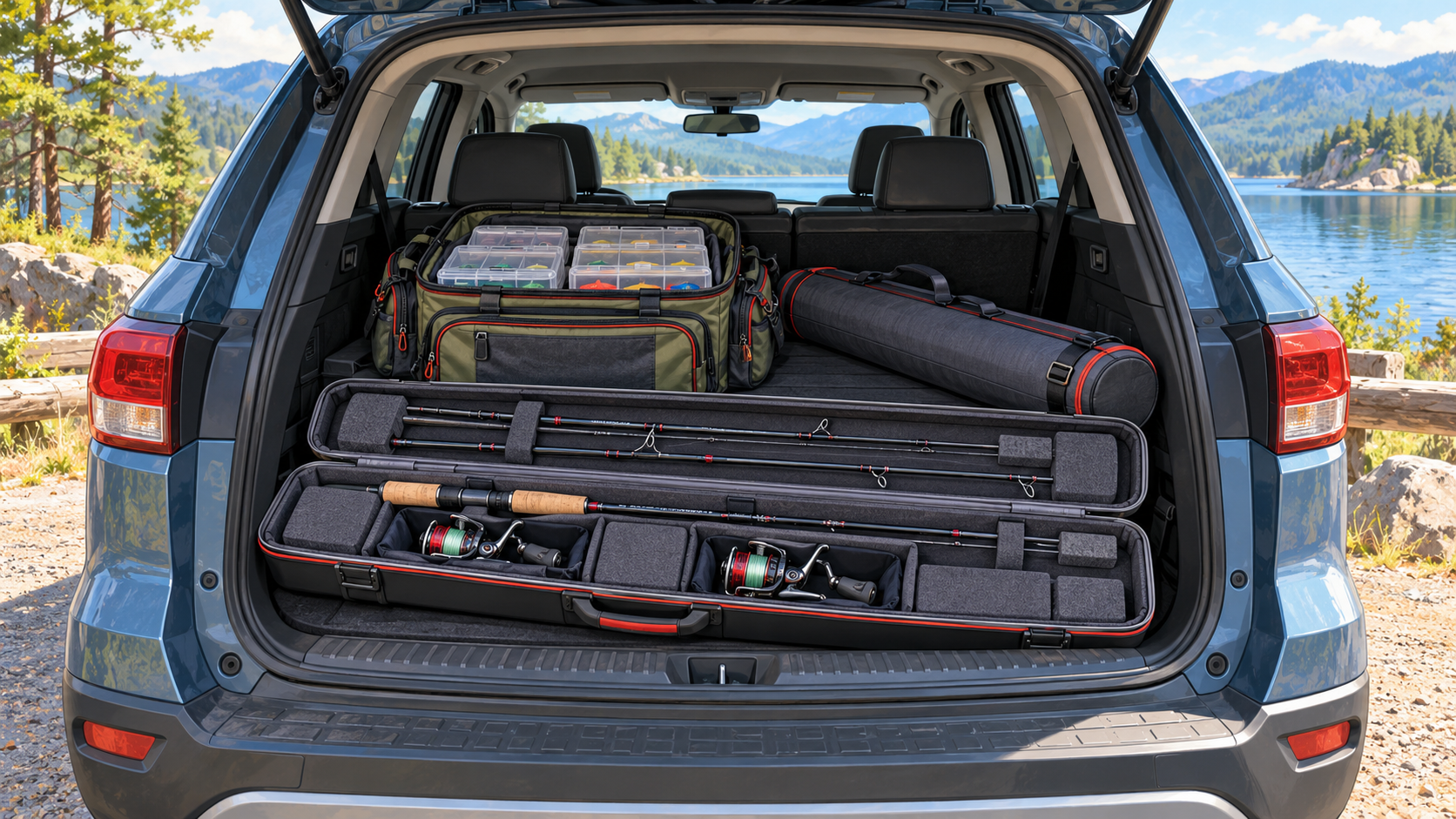
If the rod case is designed for rods without reels, remove the reels and place them in padded compartments. Keep reel handles and spare spools from striking one another. For a rod-and-reel carrier, check that its padding supports the complete setup without pressure on the handle or bail.
Place heavy tackle boxes low in the cargo area and secure them using the vehicle’s appropriate cargo anchors. Keep rods out from under coolers and suitcases. Do not route rods or straps across pedals, steering controls, mirrors, seat belts or airbag deployment areas.
Use exterior carriers only as their manufacturer directs. Check attachments before departure and when you stop. Allow for the vehicle’s loaded height when entering garages or covered parking.
Keep Tackle Organized and Hooks Contained
- Latch tackle trays before placing them in a bag or bin.
- Keep knives sheathed and loose hooks in closed compartments.
- Separate tools and heavy sinkers from fragile electronics and spare spools.
- Label shared bags so each angler can find their gear.
- Keep a small day box accessible without unpacking the whole vehicle.
Check the actual water-resistance rating of a tackle box or bag. A closed lid does not necessarily make a container waterproof. Keep wet gear away from dry tackle and electronics.
Handle Wet Gear Between Fishing Stops
Before moving to another waterbody, remove plants, mud and other material from equipment, drain retained water and dry gear according to local requirements. The U.S. Fish & Wildlife Service’s Protect Your Waters guidance explains how cleaning, draining and drying help prevent the spread of aquatic invasive species.
Use a separate container for wet clothing or gear during the drive, then unpack it for cleaning and drying at your next suitable stop. Do not leave damp tackle sealed in a case for long-term storage. Follow the reel manufacturer’s cleaning and lubrication instructions rather than applying oil indiscriminately.
Plan for Stops and Overnight Storage
Keep valuable equipment out of sight when you park and take portable gear into secure accommodation when practical. Locks and covers can discourage opportunistic access, but they do not guarantee theft protection.
Carry a simple gear inventory and photographs for your own records. Keep licenses, reservation details, a phone charger and essential personal items accessible, separate from the packed fishing equipment.
Check the Load Before Each Drive
- Confirm every rod tip, guide and reel handle has clearance.
- Check case latches and cargo restraints.
- Make sure no hooks or blades are exposed.
- Check the driver’s visibility and passenger seating space.
- Separate wet equipment and contain any leaks.
- Recheck the load after removing gear at a fishing stop.
At the destination, inspect the rod and line before rigging up. Keep the empty cases and packing materials together so the return trip gets the same care as the outward journey.