
Bass fishing knots are small details with a big job: connecting line, leader, hooks, lures, swivels, and reels without creating unnecessary weak points. The best knot depends on the connection you need, the line you use, and how quickly you can tie it correctly on the water.
You do not need dozens of knots. A small set of reliable terminal, leader, loop, and spool knots will cover most bass-fishing situations.
Quick Answer: What Bass Fishing Knots Should You Learn First?
Start with the Palomar Knot for many terminal connections, the Uni Knot as a versatile all-purpose option, the Double Uni for joining two lines, a Non-Slip Loop Knot when you want extra lure movement, and the Arbor Knot for attaching line to a reel spool. Then add the Snell, FG, Surgeon’s, and Improved Clinch knots as your techniques expand.
For rig applications, see our bass fishing rigs guide.
1. Palomar Knot
The Palomar Knot is one of the most useful terminal knots for bass anglers. It is commonly used to attach line to a hook, lure, or swivel and works especially well when you can pass a doubled loop through the eye.
Good for:
- Hooks
- Swivels
- Drop-shot hooks
- Jigs and many single-eye lures
Take Me Fishing identifies the Palomar as both simple and strong when tied correctly. The biggest mistake is allowing the doubled strands to cross or burn against each other while tightening.
Moisten the knot, pull it down evenly, and inspect the line before fishing. For illustrated tying instructions, see Berkley’s fishing knot guide, which includes the Palomar and Uni-to-Uni connections.
For one common application, see our Drop Shot Rig for Bass guide.
2. Uni Knot
The Uni Knot is a versatile knot that can attach a hook, lure, or swivel and can also be adapted for other connections.
Good for:
- Terminal tackle
- Mono, fluorocarbon, or braid when tied appropriately
- Anglers who want one simple knot with multiple uses
The Uni is useful for many mono and fluorocarbon connections. Recommendations for braid vary with the line and knot variation; use the line manufacturer’s instructions rather than assuming the same wrap count works for every material. Test the seated connection before fishing.
3. Double Uni Knot
The Double Uni joins two lines by tying a Uni-style knot from each side and pulling the two knots together.
Good for:
- Braid-to-leader connections
- Joining mono and fluorocarbon
- Repairing a line when a compact splice is more important than minimum knot diameter
It is easier to learn than some advanced leader knots, which makes it useful for anglers who change leaders frequently on the water.
4. Non-Slip Loop Knot
A loop knot leaves a small loop at the lure eye instead of cinching tight against it. That extra space can allow some hard baits and soft-plastic presentations to move more freely.
Good for:
- Jerkbaits without a split ring
- Some topwaters
- Twitch baits
- Presentations where added lure movement is useful
Do not automatically use a loop knot on every lure. If the lure already uses a split ring or the technique depends on a tight direct connection, a snug knot may be the better choice.
5. Improved Clinch Knot
The Improved Clinch is a familiar terminal knot for monofilament and fluorocarbon. It is compact and quick once you have practiced the sequence.
Good for:
- Hooks
- Small swivels
- Crankbaits and other lures when a snug connection is preferred
Line diameter and material matter. With slick braid or very heavy line, another knot may be easier to tie securely.
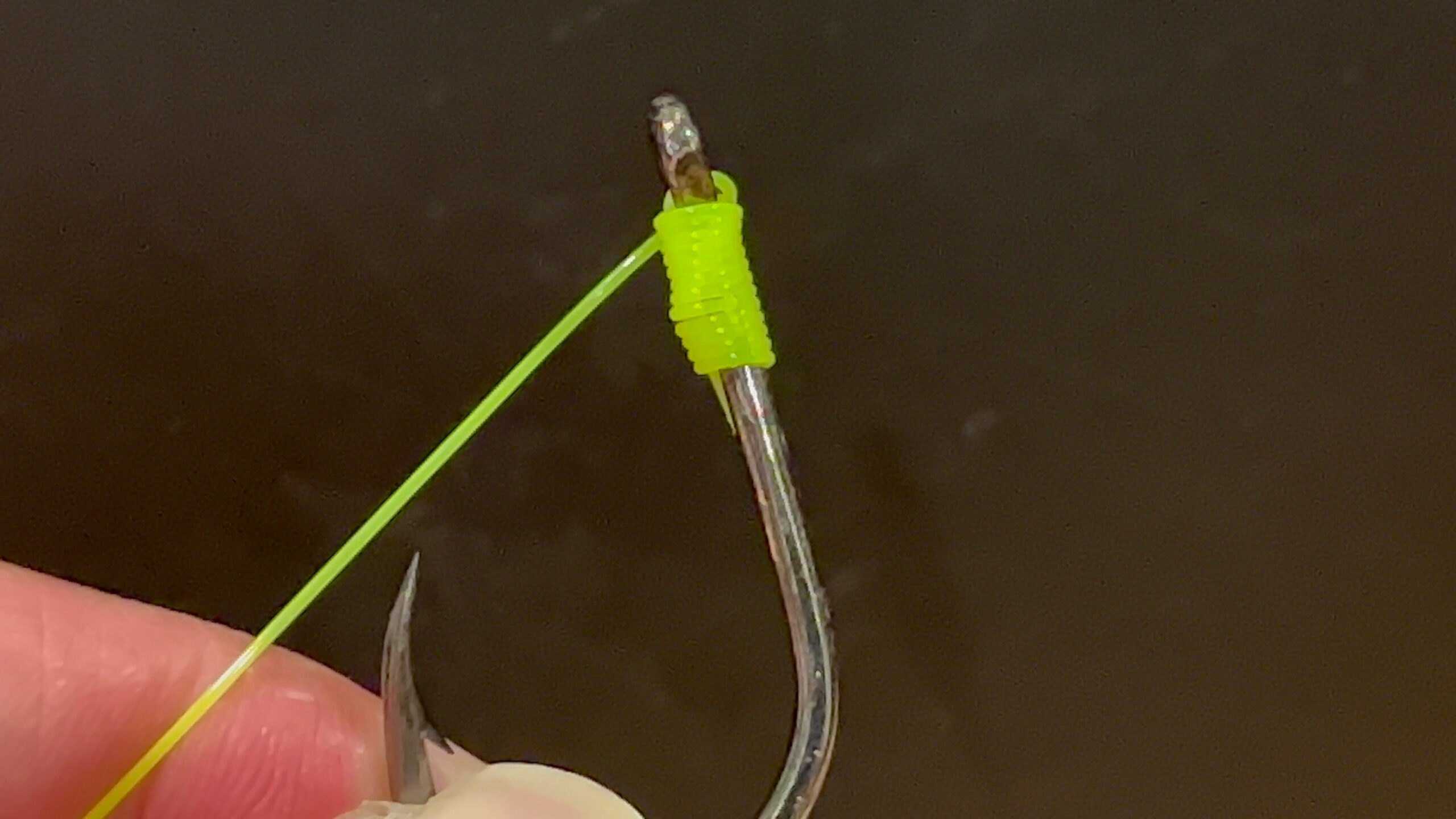
6. Snell Knot
The Snell Knot wraps the line around the hook shank rather than relying only on the eye. Bass anglers most often use it with straight-shank flipping hooks.
Good for:
- Flipping and pitching
- Punching vegetation
- Straight-shank hooks
- Heavy-cover presentations
It is not necessary for every Texas rig. Use it when the hook style and presentation benefit from a snell connection.
7. FG Knot
The FG Knot is a low-profile leader connection that locks braid around a mono or fluorocarbon leader. Its slim shape can pass through rod guides with less bulk than many doubled-line knots.
Good for:
- Braid-to-fluorocarbon leaders
- Long leaders that repeatedly pass through rod guides
- Clear-water finesse setups
The trade-off is complexity. The FG takes more practice than the Double Uni, and a poorly finished FG is worse than a simpler knot tied correctly.
8. Surgeon’s Knot
The Surgeon’s Knot is a quick way to join two lines or create a simple leader connection. It is especially useful when speed matters or when conditions make more complicated knots difficult to tie.
Good for:
- Quick leader changes
- Joining lines of somewhat different diameters
- Simple on-the-water repairs
Take Me Fishing includes the Surgeon’s Knot among the basic knots new anglers can learn quickly.
9. Arbor Knot
The Arbor Knot attaches line to a reel spool before the reel is filled. It is not a fighting knot; its job is simply to anchor the line while you spool.
Good for:
- Spinning reels
- Baitcasting reels
- Backing connections when respooling
Follow the reel manufacturer’s recommendations, especially with braid. Some spools need backing or a braid-ready surface to prevent line from slipping around the spool.
How to Choose the Right Bass Fishing Knot
| Connection | Useful Starting Knot |
|---|---|
| Hook, lure, or swivel | Palomar or Uni |
| Mono/fluoro terminal connection | Improved Clinch, Palomar, or Uni |
| Braid to leader | Double Uni or FG |
| Lure that needs extra freedom | Non-Slip Loop |
| Straight-shank flipping hook | Snell |
| Fast line-to-line repair | Surgeon’s |
| Line to reel spool | Arbor |
Why Knots Fail
Knot failure is often caused by tying mistakes rather than the knot name itself.
- Heat from friction: Moisten appropriate knots before tightening.
- Crossed wraps: Make sure the line lays cleanly instead of cutting across itself.
- Damaged line: Retie after abrasion, backlash damage, or repeated contact with cover.
- Wrong knot for the line: Slick braid, stiff fluorocarbon, and heavy mono behave differently.
- Poor seating: Tighten the knot completely before trimming the tag.
- Too-short tag end: Leave enough tag to account for settling and line movement.
Should You Wet a Fishing Knot?
Many common mono and fluorocarbon knots benefit from being moistened before they are cinched tight because it reduces friction during tightening. Follow the specific instructions for the knot and line material you are using.
How Often Should You Retie?
Retie whenever the line near the knot is nicked, cloudy, flattened, kinked, or rough. Heavy cover, rocks, dock cables, shell, and toothy fish can damage line faster than anglers notice.
Also retie after a hard snag, an unusually heavy fish, or repeated abrasion around cover if the connection no longer looks perfect.
Practice Matters More Than Memorizing More Knots
A perfectly tied simple knot is more useful than an advanced knot you cannot reproduce under wind, rain, low light, or tournament pressure.
Choose a small system and practice it:
- One terminal knot
- One braid-to-leader knot
- One loop knot
- One heavy-cover knot
- One spool knot
For step-by-step instructions, Take Me Fishing’s easy fishing knots guide and IGFA educational resources are useful references for practicing core fishing skills.
Featured photo: Snell Knot by Fishingknotsfast, CC BY-SA 4.0. Original photo; WordPress generates display sizes.