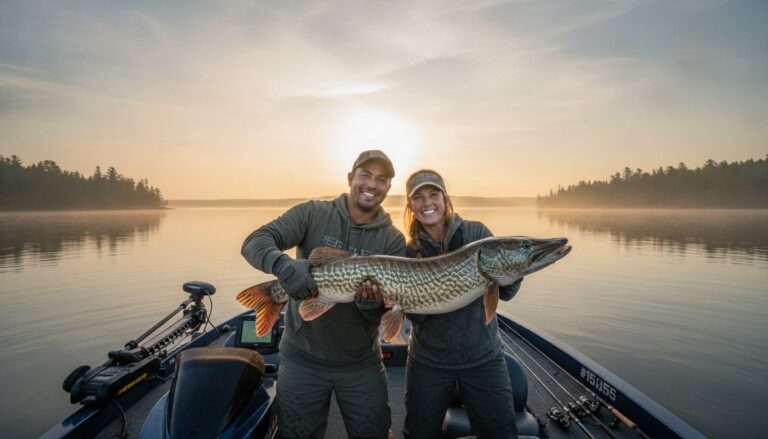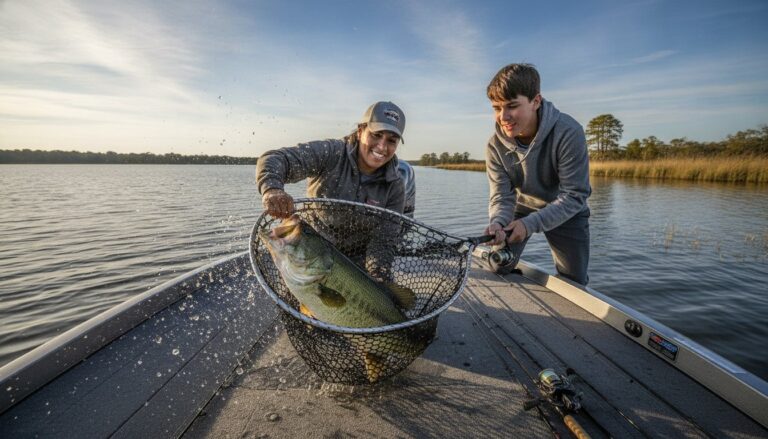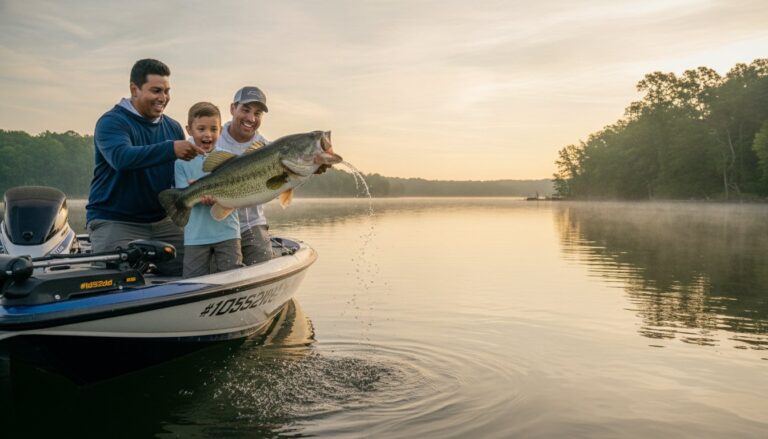
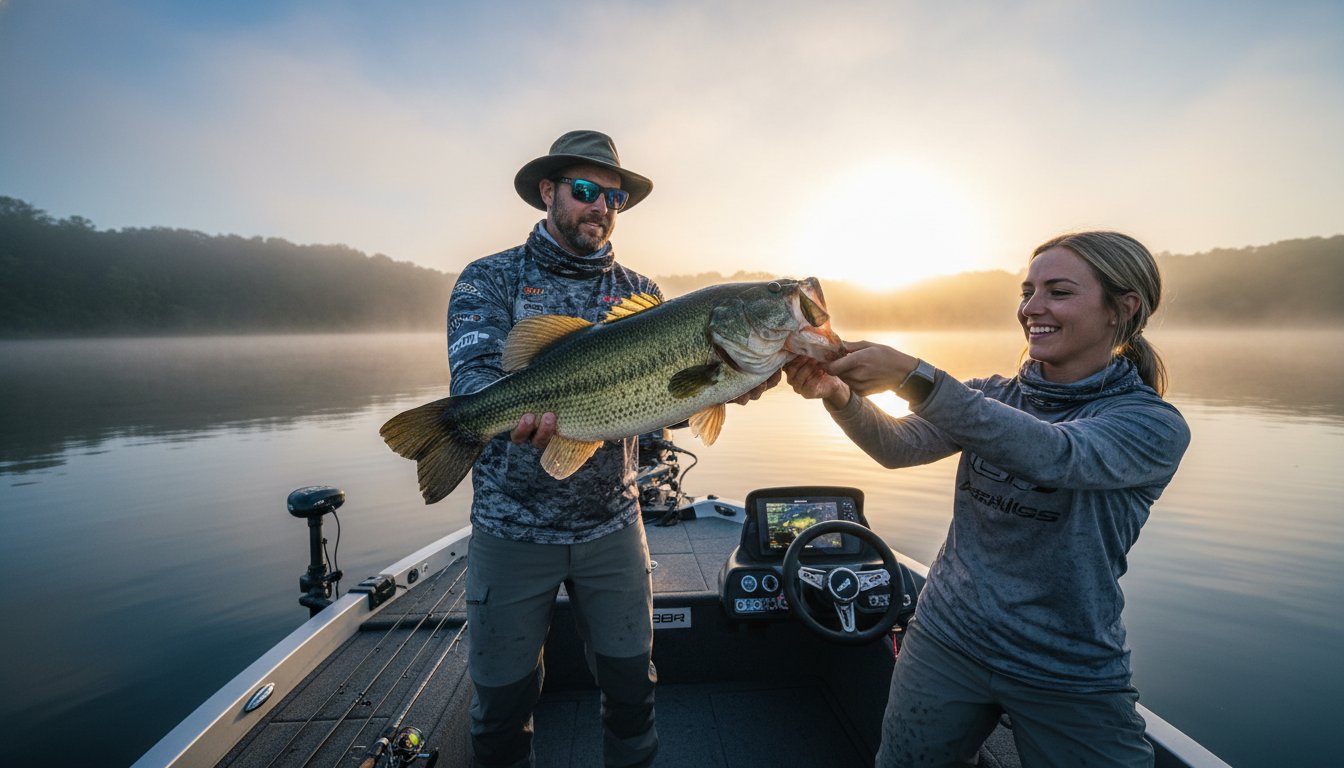

Did you know that a significant percentage of trophy bass that die after release actually suffer from broken jaws caused by the very angler who caught them? It is a heartbreaking reality, but it is also completely avoidable. You’ve put in the work, felt the heart-pounding strike, and finally landed the fish of a lifetime. Now, the adrenaline is redlining, and you want that perfect shot for the wall without putting the fish at risk.
We’ve all been there. You feel the pressure to move fast, yet you’re terrified of dropping the fish or watching it swim away belly-up. This guide will teach you exactly how to handle and photograph a trophy bass using the same professional techniques we use every day on the water. No matter where you’re chasing giants, these field-tested methods ensure your trophy stays healthy and your photos look legendary. We want every angler to feel like a seasoned pro when that big moment arrives.
I’m going to walk you through the “two-handed” horizontal hold that protects vital organs, the critical “breath-holding” rule for time out of water, and the camera tricks that stop a 10-pounder from looking like a dink. We’ll also dive into the gear that makes a difference, from rubberized nets to high-end grippers. By the end of this, you’ll have the confidence to manage any giant with the respect it deserves while securing a memory that lasts forever.
Key Takeaways
- Master the 30-second rule to minimize air exposure and ensure your trophy swims away strong after the release.
- Discover how to handle and photograph a trophy bass using a horizontal hold that prevents permanent damage to the fish’s jaw and organs.
- Apply pro-level lighting and positioning techniques to capture high-impact photos that showcase the true size of your lunker.
- Protect the fish’s vital slime coat by always wetting your hands and using fish-friendly gear before any contact.
- Understand how a guided bass fishing trip provides the professional support needed to safely manage and document your next personal best.
The 30-Second Rule: Why Proper Handling is a Trophy Angler’s Duty
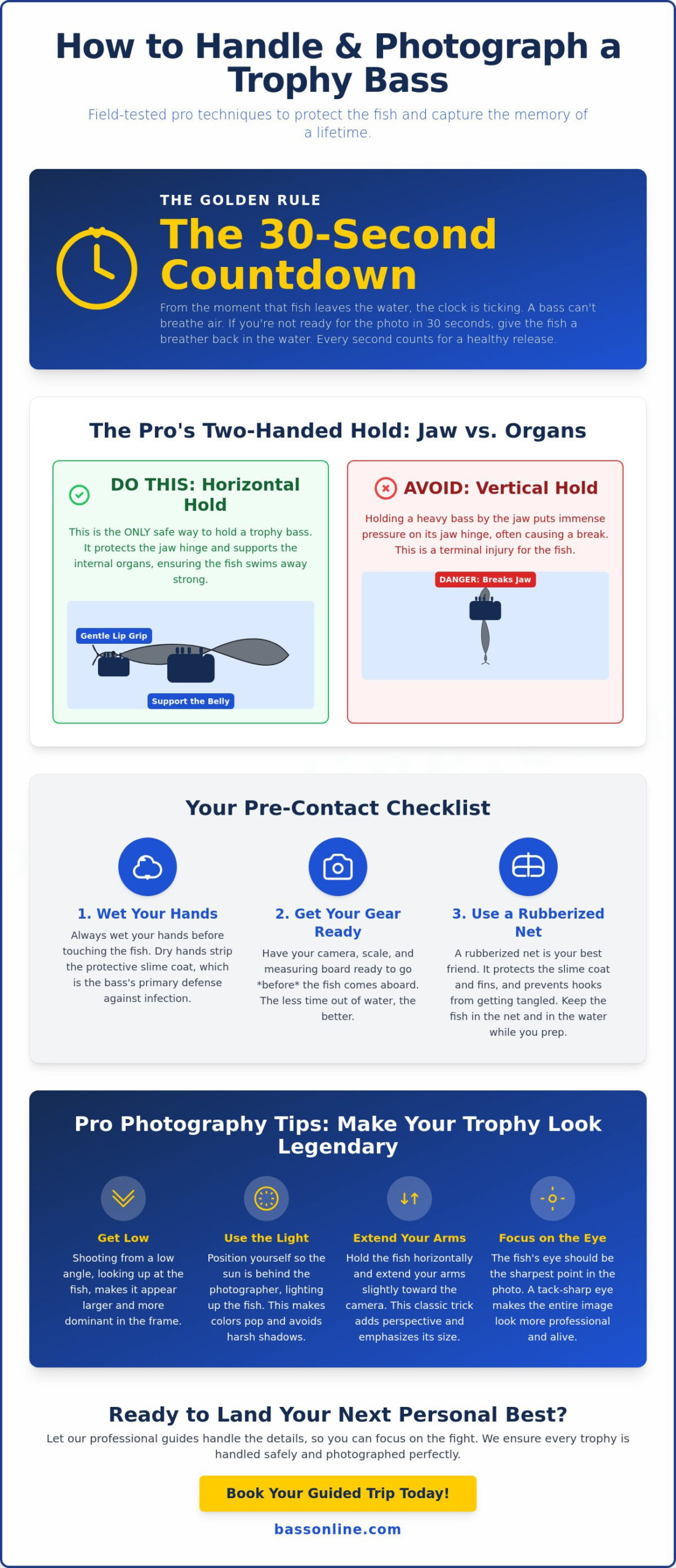
Landing a double-digit bass is the absolute peak of our sport. It is the moment every angler dreams about while staring at a sonar screen. But that catch comes with a serious responsibility. You need to know how to handle and photograph a trophy bass without turning a lifelong memory into a biological tragedy. The “30-second rule” is your ticking clock. From the second that fish leaves the surface, the countdown begins. Every moment counts because a bass cannot breathe air; its gills collapse under their own weight, and its blood pH begins to shift toward dangerous levels of acidity. If you can’t get the job done in half a minute, put the fish back in the water for a breather.
To better understand this concept, watch this helpful video:
Think of the slime coat as the fish’s primary immune system. It is a slick, protective barrier against parasites, fungi, and bacteria. If you wipe that off with dry hands or a rough beach towel, you are leaving that fish defenseless against infection. Catch and release only works as a conservation tool if the fish is healthy enough to survive the encounter. Our ultimate goal is always a high-energy release where the bass “kicks” away with enough force to soak your shirt. That splash is the best thank-you a trophy angler can receive.
The Science of Delayed Mortality
Just because a fish swims away doesn’t mean it is in the clear. Long, grueling fights on light tackle lead to massive lactic acid buildup in the muscles, which can take hours or even days for the fish to flush out. If the fish is also stressed by excessive air exposure, its chances of full recovery plummet. Delayed mortality is the silent threat to trophy populations where a fish dies days after the release due to the cumulative stress of the encounter.
Preparation Before the Catch
Speed is the name of the game when you’re dealing with a giant. Your camera, scale, and measuring board should be staged and ready before you make your first cast of the morning. If you are using a net, ensure it is a rubberized model and keep the fish in the water while your partner grabs the camera. A seasoned fishing guide keeps the deck clear and the equipment organized so the fish spends the absolute minimum time out of its element. A wet workspace is a safe workspace; keep those surfaces doused and your hands dripping wet.
Safe Handling Techniques: Protecting the Jaw and Internal Organs
Handling a giant isn’t just about strength; it’s about precision. Once that fish is in the boat, your physical contact determines its future. Learning how to handle and photograph a trophy bass starts with understanding that these fish are designed for a weightless underwater environment. The moment you pull a 10-pounder into the air, gravity starts pulling on its jaw and organs with a force it never evolved to handle. To keep your catch in prime condition, follow these five essential steps:
- Wet your hands: Thoroughly douse your hands before touching the fish. Dry skin acts like sandpaper on a bass’s protective slime coat.
- Lip grip: Use a firm but gentle grip on the lower lip to control the head. Avoid squeezing too hard, as this can damage the soft tissue.
- Belly support: Immediately provide a second point of support under the belly. This is the most critical step for any fish over five pounds.
- Keep it horizontal: Maintain a level position to prevent internal organ shifting and reduce stress on the jaw hinge.
- Clear the gills: Minimize finger contact with the gills at all costs. Even a light touch can cause bleeding or interfere with the fish’s ability to process oxygen.
The Anatomy of a Bass Jaw
A bass’s jaw is a complex hinge designed for suction and swallowing, not for supporting its entire body weight against gravity. When you “torque” the jaw by tilting the fish at a sharp angle while holding it only by the lip, you risk overextending the hinge. This can cause a literal snap in the jaw bone or tear the ligaments, which effectively sentences the fish to starvation. To get an accurate weight without the risk, use a digital scale or Boga-Grip, but keep the fish over a wet net or mat. Following NOAA’s best practices ensures that your catch remains a healthy part of the ecosystem.
Supporting the Weight
Gravity is the enemy of a trophy bass. A heavy female bass carries a significant amount of mass in her midsection. Without your hand there to distribute the load, the weight of her own body can cause internal injuries or skeletal stress. It is also important to remember that different bass species have different structural tolerances. An explosive Peacock Bass has a different build than a thick-bodied Florida Largemouth, but both require a horizontal hold to stay safe. If you’re ready to put these skills to the test on the water, reach out to our team to book your next adventure.
Vertical vs. Horizontal: Avoiding Terminal Jaw Injury
Scroll through any social media feed and you’ll see a sea of “grip and grin” shots where massive fish hang vertically by their lower lips. It looks impressive to the untrained eye, but for the fish, it’s often a death sentence. When you’re learning how to handle and photograph a trophy bass, the most critical lesson is understanding the difference between a vertical and horizontal hold. A vertical hold is perfectly fine for a one or two-pounder. However, once you cross into trophy territory, that same grip becomes a mechanical lever that can destroy the fish’s ability to feed. Gravity is a relentless force on a heavy bass that isn’t supported by the buoyancy of water.
A ten-pound bass hanging vertically puts an incredible amount of stress on the lower jaw hinge. This isn’t just about discomfort; it’s about physics. The weight of the body pulls down while your thumb holds the jaw in place, often resulting in a literal “snap” of the jaw bone or a permanent dislocation of the joint. You might see the fish swim away, but a bass with a broken jaw cannot create the suction required to swallow prey. This leads to terminal jaw injury, where the fish eventually starves to death despite a successful release. Beyond the health of the fish, a horizontal hold actually makes for a better photo by showcasing the girth and “belly” of a true lunker.
The 5-Pound Threshold
As a general rule in the guide business, any fish over five pounds requires mandatory two-handed support. This is where the “lever effect” becomes dangerous. At this weight, the internal structure of the jaw can no longer support the mass of the body without assistance. By following research-based best practices, you ensure the skeletal integrity of the fish remains intact. A single moment of laziness in holding a fish can lead to the slow starvation of a trophy that took a decade to grow. Don’t be that angler; give that big girl the support she needs.
The Proper Horizontal Pose
To get the best shot, use your second hand to “cradle” the fish under the belly, just behind the pelvic fins. This distributes the weight evenly and prevents internal organ shifting. You can even tuck the fins down for a cleaner look that emphasizes the fish’s length and height. For the absolute giants, we recommend the “cradle” method near the water’s surface, keeping the fish partially submerged until the camera is ready. You can find more details on identifying these monster fish in our Bass Fishing 101 guide. Avoid the temptation of “lip-flipping,” which is peeling the mouth open too wide to show off the throat. It puts unnecessary sideways pressure on the jaw and provides zero benefit to the photo.
Professional Photography Tips: Making Your Trophy Look Like a Lunker
Landing the fish is only half the battle. Now you need a photo that does justice to that double-digit giant. Many anglers struggle with how to handle and photograph a trophy bass in a way that truly captures its scale. If you hold a five-pounder tight against your chest, it often looks like a two-pounder on camera. To avoid this, we use the “long arm” technique. By extending your arms and pushing the fish slightly toward the lens, you utilize forced perspective. This isn’t about trickery; it’s about making the camera see the fish the same way your eyes do in person. Just keep your fingers tucked behind the fish’s body so they don’t look like giant sausages in the foreground.
Lighting is your best friend or your worst enemy. Always ensure the sun is at the photographer’s back, illuminating the fish directly. This brings out the deep greens, lateral lines, and iridescent scales that make these fish so beautiful. If the sun is behind the angler, the fish will be silhouetted and lose all its detail. For modern smartphone users, switch over to “Portrait Mode.” This creates a blurred background, known as bokeh, which makes the bass pop against the water and structure. It gives your field shots a professional, magazine-quality look without needing a high-end DSLR.
The Photographer’s Positioning
Perspective is everything. The photographer should get down on their knees to shoot from a “hero” perspective. A top-down shot from a standing position flattens the fish and makes it look smaller against the boat deck. By getting low and including the horizon line in the background, you add scale and drama to the scene. Don’t forget to capture a “release shot” as the fish kicks away. These candid moments often feel more authentic and respected on social media than a standard posed photo.
Managing the ‘Money Shot’
Before you even lift the fish, give your camera lens a quick wipe. Water spots or “fish slime” smudges will ruin an otherwise perfect shot. Use your camera’s burst mode or take five to ten rapid shots in succession. Bass are rarely still, and having multiple frames ensures at least one is perfectly in focus. Most importantly, know when to call it. If the fish shows any signs of distress, like labored gill movement or loss of color, skip the photo and release it immediately. If you want to learn these techniques firsthand from the pros, book your guided bass fishing trip today and let us handle the camera while you handle the lunker.
Landing Your Next Personal Best with Bass Online
You now have the technical blueprint for how to handle and photograph a trophy bass, but executing those steps perfectly while wrestling a double-digit giant is a different story. When the adrenaline is surging and your hands are shaking from the fight of a lifetime, having a seasoned professional by your side changes everything. Our team of elite captains does more than just find the fish; they act as your dedicated fish handler and professional photographer. This allows you to stay in the moment and enjoy the thrill of the catch while we ensure the safety of the fish and the quality of your memory.
A guided trip is undeniably the fastest way to get your hands on a 10-pounder. We spend thousands of hours on the water every year, tracking seasonal patterns and locating the specific structures where the biggest females in the lake reside. Our commitment to conservation is what keeps these legendary fisheries thriving. By teaching every client the proper way to treat these animals, we ensure that the same trophy you catch today can be caught by another angler years from now, potentially at an even more impressive weight. It is a cycle of respect that defines the professional bass fishing community.
Expert Guidance on the Water
Our captains are meticulously trained in the latest catch-and-release techniques to ensure every fish returns to the water in peak condition. We provide all the specialized gear, including tournament-grade rubberized nets and calibrated digital scales, so you don’t have to worry about the logistics. Whether we are navigating the grass mats of Lake Okeechobee or the deep structure of Lake Guntersville, we handle the processing while you prepare for the camera. We invite you to explore our fishing locations to see which bucket-list destination is calling your name for your next expedition.
Book Your Memory Today
Booking a trip with the country’s #1 guide service means you are investing in a seamless, high-energy experience. You don’t need to be an expert in fish anatomy or photography to walk away with a magazine-quality shot for your wall. We manage the boat, the gear, and the “money shot” so you can focus on the rod in your hand. Our reputation is built on local authority and a personal commitment to every angler’s success on the water. Don’t leave your personal best to chance. Contact us to plan your professional bass fishing charter and let’s go put a giant in the boat.
Mastering the Art of the Trophy Release
You’ve now got the professional playbook for protecting our fisheries while securing the shot of a lifetime. Remember that the 30-second rule and a proper horizontal hold are the difference between a fish that thrives and one that struggles. Mastering how to handle and photograph a trophy bass is a badge of honor for any serious angler. It shows you respect the water as much as the catch itself. These techniques ensure that the giants of today remain the legends of tomorrow for the next generation of fishermen.
When you’re ready to put these skills to the test and hunt for a true double-digit giant, don’t leave your success to chance. With over 25 years of professional guiding experience and thousands of 5-star reviews from trophy hunters, our team is the definitive choice for your next outing. Our expert captains are specifically trained in fish conservation and photography, ensuring your personal best is documented perfectly and released safely.
Ready to land your PB? Book a professional guide today!
The water is calling, and that next monster is waiting for your lure. Get out there, stay sharp, and we’ll see you on the boat for an unforgettable adventure.
Frequently Asked Questions
Is it okay to hold a bass vertically by the lip?
Vertical holds are only acceptable for smaller fish under five pounds. For any lunker larger than that, the weight of the body creates a mechanical lever that can snap the jaw bone or tear ligaments. I always recommend a horizontal hold with one hand supporting the belly to ensure the fish’s skeletal integrity remains intact. This simple adjustment is the most important part of learning how to handle and photograph a trophy bass properly.
How long can a bass survive out of water for a photo?
Thirty seconds is the maximum time a trophy should spend out of the water. A good rule of thumb is to hold your own breath the moment the fish leaves the surface; when you need to breathe, the fish definitely does too. If the photo isn’t ready, put the fish back in the water or a livewell to recover before trying again. Speed and preparation are the hallmarks of a professional angler.
Does touching a bass remove its protective slime coat?
Yes, touching a bass with dry hands or a towel will strip away its primary defense against infection. This slick barrier is the fish’s immune system, and removing it leaves the bass vulnerable to bacteria and parasites. I always tell my clients to dunk their hands in the lake before reaching for the fish. Keeping your hands dripping wet is a small step that makes a massive difference in post-release survival.
What is the best way to weigh a trophy bass without hurting it?
The safest method is using a digital scale paired with a lip gripper or a specialized weighing bag. Never hook a scale directly into the soft tissue under the jaw or through the gill plate, as this causes permanent damage. If you use a gripper, keep the fish over a wet net or a padded surface just in case it thrashes. This setup provides an accurate weight while keeping the fish’s stress levels at a minimum.
How do I make a fish look bigger in a photo?
Use the “long arm” technique by extending the fish toward the camera while keeping your fingers tucked behind its body. This uses forced perspective to show the fish’s true scale without your hands blocking the view. The photographer should also get low to the deck to create a “hero” angle. These pro tricks help you understand how to handle and photograph a trophy bass so that it looks just as legendary on screen as it did in the water.
What should I do if a bass isn’t swimming away after release?
Hold the fish upright in the water and gently move it forward to force oxygen-rich water through its gills. Never pull the fish backward, as this can actually drown them by pushing water the wrong way through the gill filaments. You’ll know it’s ready when you feel a strong kick or a squeeze on your thumb. Patience is key; some old warriors need an extra minute to catch their breath after a grueling fight.
Can a bass’s jaw really break if held incorrectly?
A bass’s jaw can absolutely break if you “torque” the hinge by tilting the body at a sharp angle while holding only the lip. This injury prevents the fish from creating the suction needed to swallow prey, leading to a slow death from starvation. The risk increases exponentially with the weight of the fish. Always use two hands to distribute the weight and keep the fish’s skeletal structure aligned and safe.
Should I use a net to land a trophy bass?
Using a rubberized net is the safest way to land a giant without causing injury to the fish or yourself. Traditional nylon nets are abrasive and can strip the slime coat or split fins during the struggle. Rubber nets also prevent treble hooks from tangling, which allows for a much faster unhooking and release process. I’ve seen many trophies lost at the boat side because an angler hesitated to use a net on a “green” fish.

Article by
Mr Bass
Todd Kersey, widely known as Mr. Bass by Field & Stream, is a professional angler, accomplished author, and dedicated philanthropist with a lifelong passion for bass fishing. Armed with a degree in Outdoor travel, Mr. Bass has expertly combined his knowledge with his practical fishing experience to become one of the most respected names in the bass fishing, his deep understanding of bass habitats, and fish behavior has earned him numerous accolades as a asset of the sport. Serving 8 years as FWC Stakeholder Chairperson. Leading and passing cutting-edge legislation, such as the Black Bass Management plan, and successfully building, passing, and financing the Trophy Catch program. As CEO, he is committed to giving back to the community through his philanthropic efforts. He supports a variety of causes, especially those centered around physical disabilities. Through his advocacy, his mentorship programs inspire anglers to engage in fishing stewardship, helping to raise more than $ 18 million in donations. Mr. Bass continues to inspire anglers and outdoor enthusiasts alike with his commitment to the sport and the world around him.