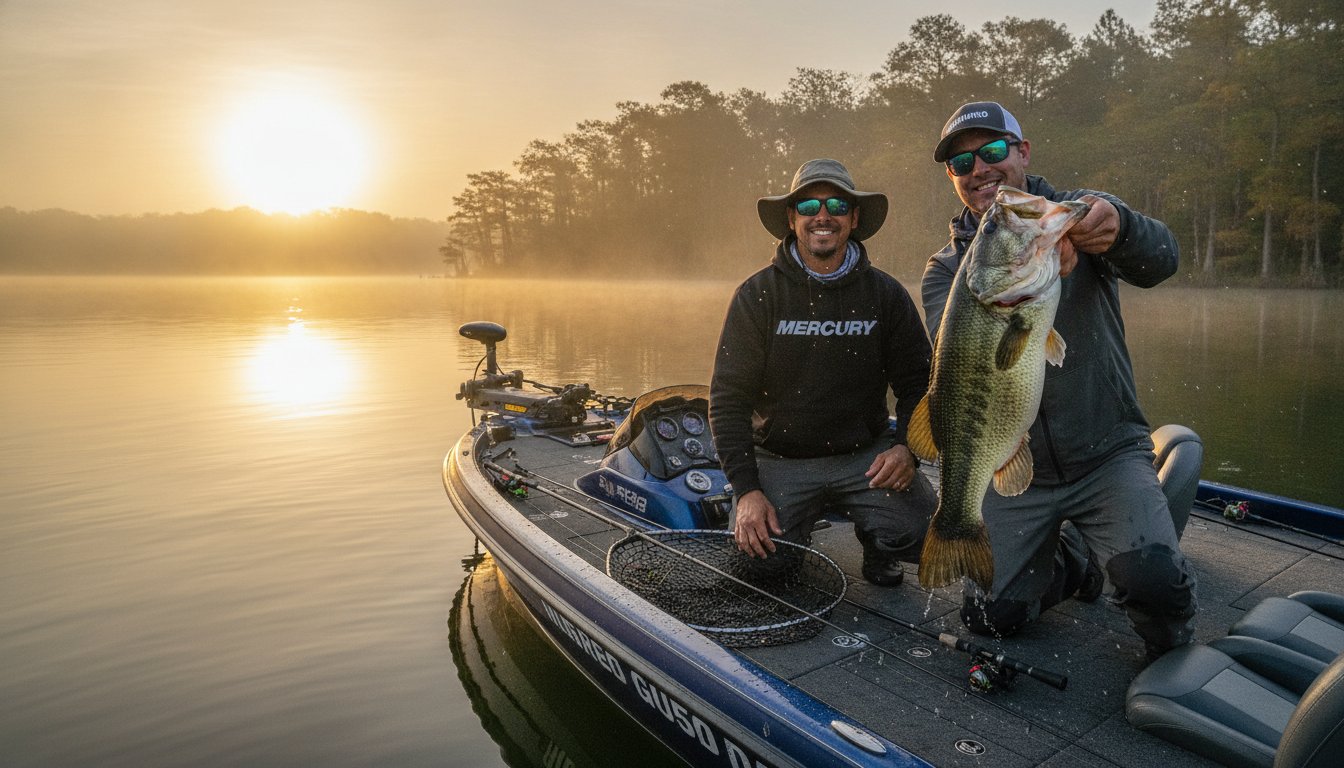

Most anglers think hiring a largemouth bass fishing guide is just about getting a boat ride to a secret honey hole, but the truth is that the right pro transforms your entire approach to the water. You’ve likely spent hours staring at a massive lake, feeling that familiar knot of frustration as you wonder why the fish aren’t biting. It’s tough when you’re second-guessing every lure in your box or struggling to locate fish in 50,000 acres of water. We’ve all been there; I know how much it stings to head back to the ramp with an empty livewell after a long day of “skunked” casts.
In this article, I’m going to show you how to find a seasoned expert who does more than just net your fish. You’re going to learn how to develop a reliable playbook for any lake, understand bass behavior to predict their every move, and master the technical tackle setups that actually produce results. We will break down how to vet a guide’s technical expertise, what gear questions you need to ask, and how to ensure you walk away with field-tested strategies you can use on your next solo trip. By the end, you’ll know exactly how to choose a partner who helps you master the art of catching trophy largemouth bass.
Key Takeaways
- Learn to track bass movements from deep winter haunts to shallow staging areas to ensure you are always fishing high-percentage water.
- Master the versatility of Texas and Ned rigs for bottom feeders and discover exactly when to switch to topwater poppers for high-energy strikes.
- Gain the ability to distinguish between underwater structure like ledges and thick cover like hydrilla to pinpoint exactly where trophy fish hide.
- Understand how a professional largemouth bass fishing guide can condense years of trial and error into a single day while providing access to elite equipment.
- Stay ahead of the competition with 2026 insights into forward-facing sonar and trophy management ethics that protect our freshwater ecosystems.
What is Largemouth Bass Fishing? The 2026 Angler Perspective
Largemouth bass, known scientifically as Micropterus salmoides, are the undisputed heavyweight champions of North American freshwater. They’re aggressive, adaptable, and grow to massive proportions, making them the most sought-after game fish in the country. To get a comprehensive overview of largemouth bass, you have to look at how they dominate their environment. They aren’t just fish; they’re apex predators that command every lily pad, dock, and ledge they inhabit. Whether you are fishing the deep reservoirs of the West or the grass-choked lakes of Florida, these fish are the ultimate test of an angler’s skill and patience.
In 2026, the sport has reached a new peak of intensity and sophistication. We’ve moved past the days of simply “going fishing” and hoping for a bite. Today, a professional largemouth bass fishing guide uses a combination of high-tech tools and deep ecological knowledge to find trophy fish. The culture has shifted toward a heavy emphasis on trophy management and catch-and-release ethics. We understand that protecting the resource is just as important as catching the fish. This modern perspective combines the raw excitement of the strike with a disciplined, scientific approach to the water.
To better understand this concept, watch this helpful video:
Why Largemouth Bass Rule the Water
These fish are built for the ambush. Their massive mouths and explosive speed allow them to inhale prey in a fraction of a second. You can find them across nearly every state, from the California Delta to the St. Lawrence River, proving their incredible ability to thrive in diverse climates. The strike zone is the specific area around cover or structure where a bass will commit to a lure. Understanding this zone is the difference between a “skunked” trip and a day for the record books.
The Evolution of Bass Fishing in 2026
Technology has changed the game. Forward-facing sonar (FFS) allows us to see how fish react to a lure in real time, removing the guesswork from the equation. This tech doesn’t make fishing “easy,” but it makes us more efficient. We also prioritize habitat protection, ensuring that weed beds and water quality stay pristine. For a deeper look at the biology and habits of these predators, take a look at our bass fishing species guide. Successful angling now requires a “Guide Mentality,” which means every cast is made with specific intent based on water temp, light, and oxygen levels.
Understanding Bass Behavior: Seasonal Patterns and Habitat
Bass don’t just wander the lake looking for a fight. They follow a strict biological clock that dictates every move they make. If you want to stop guessing, you have to think like an apex predator. I’ve spent decades tracking these patterns, and the key is understanding that a bass’s needs change with the seasons. They are driven by three simple things: comfort, oxygen, and food. When you align your strategy with these needs, the lake starts to feel much smaller.
In the pre-spawn, fish transition from deep winter haunts to shallow staging areas. They’re hungry, aggressive, and moving toward the banks. Once the spawn hits, they focus entirely on the bedding process. It’s a critical time for the population, and we always emphasize protecting the resource during this window to ensure the future of the sport. Summer shifts the game again. The heat drives bass to seek oxygen and shade, often heading for deep water ledges or the thickest vegetation they can find. By fall, they’re following baitfish as temperatures drop, leading to a massive feeding frenzy. When winter arrives, lethargy sets in. You have to slow your presentation to a crawl to match their lowered metabolism. For a deeper look at the science behind these moves, the U.S. Fish & Wildlife Service provides a great resource on Largemouth Bass biology and behavior.
The Role of Water Temperature
Water temperature is the ultimate trigger for movement. The 55 to 65 degree Fahrenheit range is the magic window where activity explodes. In northern spots like Lake Erie, this window is short and intense, forcing fish to move quickly. Down in the Everglades, the water stays warmer longer, but the fish still react to subtle shifts. Reading your thermometer helps you predict fish depth. If the surface is too hot, they’re going deep or burying themselves under thick mats for relief. Understanding these shifts is why hiring a largemouth bass fishing guide is such a shortcut to success. You’re paying for a brain that has processed thousands of these seasonal transitions.
Light, Oxygen, and Current
Bass hate the bright midday sun because they don’t have eyelids. They seek overhead cover like docks, lily pads, or fallen timber for relief. Oxygen is the next priority. Wind-blown points are prime because the moving water is highly oxygenated and pushes bait right to the predators. In river systems like the Potomac, current is your best friend. It acts like a conveyor belt, bringing food right to the fish’s face. A professional largemouth bass fishing guide knows how to position the boat so you’re casting perfectly into these high-percentage zones. If you’re ready to see these patterns in action, feel free to reach out to our team to plan your next outing.
Essential Largemouth Bass Fishing Lures and Tackle
Finding the fish is only half the battle. Once you’ve located a school of predators, you need the right tools to trigger a strike. Your tackle box is a toolbox, and every lure serves a specific purpose based on the conditions we discussed earlier. When you’re out with a professional largemouth bass fishing guide, you’ll see a deck rigged with multiple rods. This isn’t for show. It’s so we can switch tactics in seconds as the sun shifts or the wind picks up. We choose gear based on the “why” of the situation, not just what’s on sale at the local shop.
Soft plastics are the most versatile weapons in our arsenal. The Texas Rig is the gold standard for fishing through heavy wood or grass because it’s virtually weedless. If the bite gets tough or the water is clear, we often switch to a Ned Rig. This finesse approach uses a small, buoyant plastic that stands up on the bottom, mimicking a vulnerable crawfish or baitfish. On the other hand, when we want to cover water quickly across the top largemouth bass fisheries, reaction baits like spinnerbaits and crankbaits are the way to go. These lures create vibration and flash that pull fish out from deep cover to investigate.
For many, topwater fishing is the ultimate thrill. Using frogs over thick lily pads or poppers in open pockets creates explosive strikes that you’ll never forget. If we’re targeting the biggest fish in the “thick stuff,” a heavy jig is the pro choice. Flipping and pitching a jig into the heart of a fallen tree or a dense hydrilla mat is a precision game that requires confidence and the right tackle.
Matching the Hatch: Choosing the Right Lure
Success starts with observing the forage. If the lake is full of shad, we use silvers and whites. If crawfish are the primary meal, we move toward greens, browns, and oranges. Water clarity dictates the rest. In clear water, natural, translucent colors are best to avoid spooking wary fish. In stained or muddy water, you need high-visibility blacks, blues, or chartreuse to help the bass find your lure. For a masterclass in how to rig these lures perfectly, check out our Bass Fishing 101 guide.
Rods, Reels, and Line Choice
Your rod and reel choice depends on the lure’s weight and the cover you’re fishing. Baitcasting gear offers the power and accuracy needed for heavy jigs and big swimbaits. Spinning tackle is better for light lures and finesse techniques. A “medium-heavy” rod is the workhorse of the industry because it’s sensitive enough to feel a subtle bite but has the backbone to pull a five-pounder out of the weeds. We use braided line for its strength in heavy vegetation, while fluorocarbon is our pick for clear water because it’s nearly invisible to the fish. A seasoned largemouth bass fishing guide will always have these combinations ready to go so you don’t waste a single cast.
Advanced Techniques: Finding and Catching Bass Like a Pro
If you want to catch fish like a pro, you have to look past the surface. High-end electronics are great, but they don’t replace the gut feeling of a seasoned largemouth bass fishing guide who knows how the wind and current interact with the bottom. It’s about developing an eye for the high-percentage spots that others overlook. You aren’t just looking for a fish; you’re looking for the “spot on the spot” where a trophy bass feels invincible and ready to strike. This intuition comes from thousands of hours on the water, learning to read the subtle signs that a lake is about to turn on.
Reading the Water: Structure vs. Cover
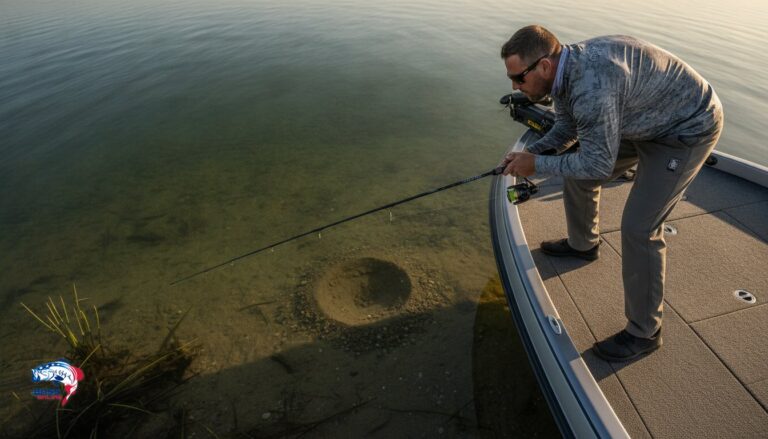
I always tell my clients to think of structure as the topography of the lake floor. These are your ledges, points, and drop-offs. Think of it as the “map” of the underwater world. Cover is what sits on top of that structure, like lily pads, hydrilla, docks, or fallen timber. A big bass loves a “compound” spot. This is where a sharp drop-off (structure) meets a thick weed line or a submerged log (cover). That’s the ultimate ambush point where a predator can hide in the shadows while staying close to deep-water safety.
The “Power Fishing” vs. “Finesse” Debate
The choice between power and finesse comes down to the mood of the fish. On high-pressure days when the bite is tough, you have to slow down. That means using smaller lures and subtle movements to coax a strike. When the fish are active and the bait is moving, I switch to power fishing. This allows us to cover miles of water and find the most aggressive feeders in the school. You can see where these techniques are winning tournaments and producing big numbers right now in our national roundup.
Don’t overlook the importance of stealth. Banging a locker lid or running your trolling motor on high can shut down a shallow water bite instantly. I always position the boat so the wind works for us, allowing for a quiet, natural approach to the target. When that strike finally happens, your hookset must match the lure. A heavy jig requires a violent, vertical snap to drive the hook home, while a topwater frog needs a second of hesitation so the bass can fully inhale the bait. If you’re ready to master these pro-level moves on the water, book your next trip with us today and let’s get to work.
Why a Professional Fishing Guide is Your Ultimate Shortcut
Hiring a largemouth bass fishing guide isn’t just about catching a fish for a photo. It’s about a massive transfer of knowledge that would otherwise take you years of “skunked” trips and expensive mistakes to acquire. I’ve seen anglers struggle for decades on the same lake, only to have their eyes opened in a single eight-hour session. We condense that learning curve into a high-energy day where every cast has a purpose. You aren’t just paying for a boat ride; you’re paying for a masterclass in reading the water and executing the perfect strike.
One of the biggest hurdles in this sport is the overhead. A professional bass boat, high-end sonar, and a deck full of technique-specific rods can cost as much as a small house. When you step onto a pro’s rig, you get access to elite equipment without the maintenance or the bill. More importantly, you gain the “local knowledge” advantage. Maps can show you contours, but they won’t show you the specific “lake within the lake.” This includes the submerged brush piles, the specific current seams, and the exact grass lines that hold trophy fish during a cold front. This insider data is what turns a slow day into a legendary one.
What to Expect on a Professional Charter
A typical day starts before the sun breaks the horizon. We target the morning “bite” when the biggest predators are most active. As the day progresses, we shift our strategy to match the sun’s position and the water’s oxygen levels. You’ll walk away with more than just a memory of a big fish. You’ll learn:
- How to interpret your electronics to find active schools.
- Precision casting techniques for heavy cover.
- The exact retrieve styles that trigger a lethargic bass.
- How to apply these field-tested strategies to your own home water.
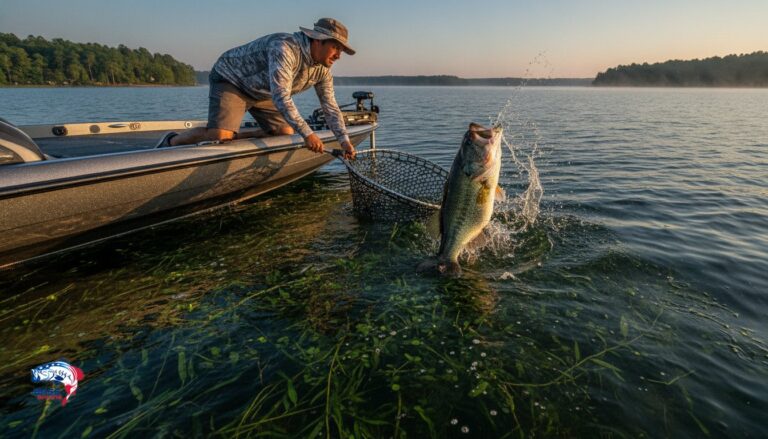
There is nothing quite like the thrill of landing a trophy under the supervision of someone who knows exactly how to net it safely and ensure a healthy release.
Booking Your Next Adventure
When you’re ready to level up, choose a guide who matches your specific goals. Whether you want to master forward-facing sonar or simply experience the raw power of a Lake Okeechobee lunker, we have the expertise to make it happen. I encourage you to explore our top freshwater destinations to see the incredible variety of water we cover. From the Everglades to the St. Lawrence River, we provide the ultimate insider journey led by the best in the business. Stop guessing and start catching. Book your premier bass fishing trip with Bass Online today!
Dominate the Water on Your Next Outing
You’ve now got the playbook to stop guessing and start reacting to the water like a pro. We’ve broken down how to track seasonal shifts, pick the perfect lure for any clarity, and use the stealthy approach of an apex predator. These field-tested strategies are the difference between a “skunked” trip and a day you’ll talk about for years. But reading about the “why” is only the first step. The real magic happens when you see these patterns play out in real time on the deck of a high-performance bass boat.
When you’re ready to master the art of the strike, a seasoned largemouth bass fishing guide is your best asset. With over 25 years of professional guiding experience and features on major outdoor networks, our team provides exclusive access to the best freshwater lakes in the USA. We take care of the navigation, the tackle, and the strategy so you can focus on the raw excitement of the fight. Book Your Professional Bass Fishing Adventure with Bass Online today and let’s put a trophy in the boat. I’ll see you at the ramp!
Frequently Asked Questions
What is the best time of day to fish for largemouth bass?
Dawn and dusk are the absolute best times to target active fish. These low-light periods give bass a major visual advantage over their prey, triggering intense feeding windows. While you can catch them at midday by targeting deep structure or thick shade, the most explosive topwater strikes and aggressive bites almost always happen during the first and last hours of sunlight.
What is the best lure for largemouth bass for a beginner?
A soft plastic stick bait rigged weightless is the ultimate beginner lure. It’s incredibly effective because the subtle shimmy it makes while sinking is irresistible to bass. You don’t need a complicated retrieve or expensive gear to make it work. Just cast it near a dock or a weed line, let it fall on a slack line, and watch for your line to move.
Do I need a boat to catch big largemouth bass?
You don’t need a boat to land a wall-hanger, but it certainly helps you reach more fish. Many trophy bass live in the shallow margins where they can trap bait against the shore. However, a boat lets you access offshore ledges and isolated cover that bank anglers can’t see. If you want to explore an entire lake, a largemouth bass fishing guide is your best bet.
How do I find largemouth bass in a new lake?
Start by looking at a topographical map to find secondary points and “pinch points” where the water narrows. These are natural travel corridors for predators. Focus on areas where deep water sits right next to shallow cover like grass or timber. If you see birds diving or baitfish flickering on the surface, you’ve found the kitchen. Bass are never far from their next meal.
What is the difference between a largemouth and a smallmouth bass?
The easiest way to tell them apart is the jawline. On a largemouth, the closed jaw extends past the back of the eye, while a smallmouth’s jaw stops before the eye. Largemouths prefer warmer, stiller water with plenty of vegetation for cover. Smallmouths thrive in cooler, clearer water with rocky bottoms and are known for their acrobatic jumps when they’re hooked.
What water temperature do largemouth bass prefer for spawning?
Bass typically begin the spawning process when water temperatures stabilize between 60 and 68 degrees Fahrenheit. They look for firm, sandy, or gravelly bottoms in shallow, protected coves to build their nests. This “magic window” is one of the most exciting times to be on the water. We always prioritize gentle handling during this season to protect the future of the fishery.
Is live bait better than artificial lures for largemouth bass?
Live bait like wild shiners is undeniably effective for catching massive fish because it provides the scent and movement that artificials can’t perfectly replicate. However, artificial lures allow you to cover more water and trigger “reaction” strikes from fish that aren’t even hungry. Most pros use a mix of both depending on the specific lake and what the fish are telling us that day.
How do I know if I need a professional fishing guide?
You need a guide if you want to skip the years of trial and error and start catching fish immediately. If you’re struggling to understand seasonal movements or feel overwhelmed by a large body of water, a largemouth bass fishing guide provides the equipment and expertise to fix those problems. It’s the ultimate shortcut to becoming a better, more confident angler on any lake.

Article by
Mr Bass
Todd Kersey, widely known as Mr. Bass by Field & Stream, is a professional angler, accomplished author, and dedicated philanthropist with a lifelong passion for bass fishing. Armed with a degree in Outdoor Travel, Mr. Bass has expertly combined his knowledge with his practical fishing experience to become one of the most respected names in bass fishing.
His deep understanding of bass habitats and fish behavior has earned him numerous accolades as an asset to the sport. Serving 8 years as FWC Stakeholder Chairperson. Leading and passed cutting-edge legislation, such as the Black Bass Management Plan, and successfully built, passed, and helped finance the Trophy Catch program.
As CEO, he is committed to giving back to the community through his philanthropic efforts. He supports a variety of causes, especially those centered around physical disabilities. Through his advocacy, his mentorship programs inspire anglers to engage in fishing stewardship, helping to raise more than $18 million dollars in donations. Mr. Bass continues to inspire anglers and outdoor enthusiasts alike with his commitment to the sport, industry, and the world around him.