 Guides Wanted
Dead Lakes
0 Reviews
Quick Summary
Dead Lakes is a 6,700-acre cypress fishery near Wewahitchka, Florida, known for largemouth bass, bluegill, shellcracker, crappie, and careful stump-field navigation.
Top Fishing Guides on Dead Lakes
Guides WantedDead Lakes Reviews
Top Target Species on Dead Lakes
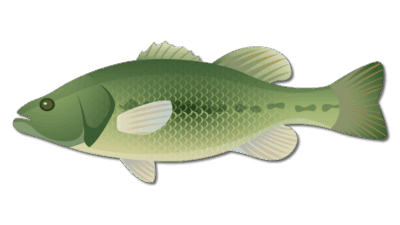
Largemouth Bass
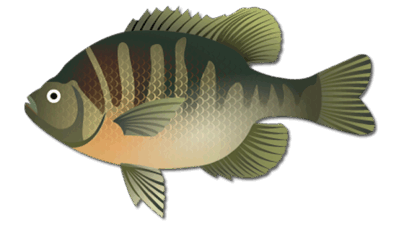
Bluegill
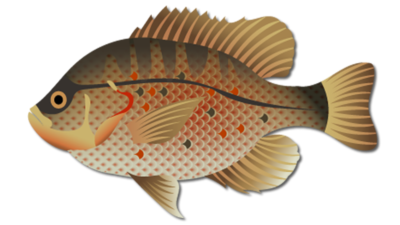
Shellcracker
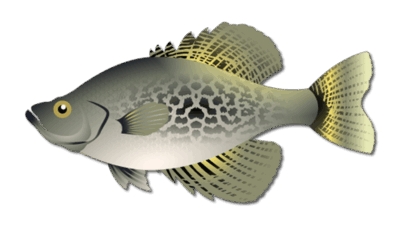
Crappie
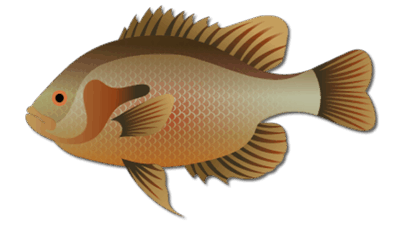
Redbreast Sunfish
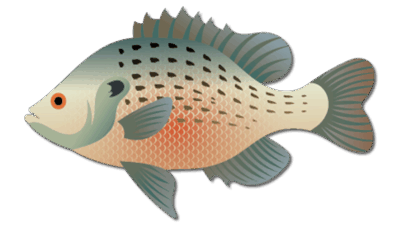
Spotted Sunfish
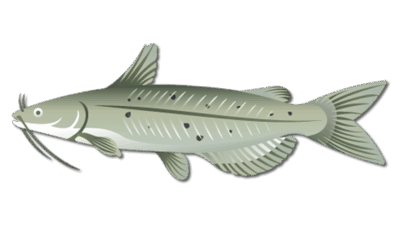
Channel Catfish
Frequently Asked Questions about Dead Lakes
What fish are in Dead Lakes, Florida?
Dead Lakes supports largemouth bass, bluegill, redear sunfish (shellcracker), black crappie, redbreast sunfish, spotted sunfish, catfish, and other species connected to the Chipola River system. FWC is also working to restore the native yellow perch population.
How large is Dead Lakes near Wewahitchka?
FWC describes Dead Lake as a 6,700-acre tannic-water fishery in Calhoun and Gulf counties near Wewahitchka.
When is the best time to fish Dead Lakes?
February through May is strong for largemouth bass, while bluegill and shellcracker peak during spring and early summer. Crappie are often most consistent in the cooler months.
Where can I launch a boat at Dead Lakes?
Dead Lake Recreation Area provides access to West Arm Creek north of Wewahitchka. A Calhoun County ramp near State Roads 71 and 73 reaches the northwestern lake through Cypress Creek.
Is boating difficult at Dead Lakes?
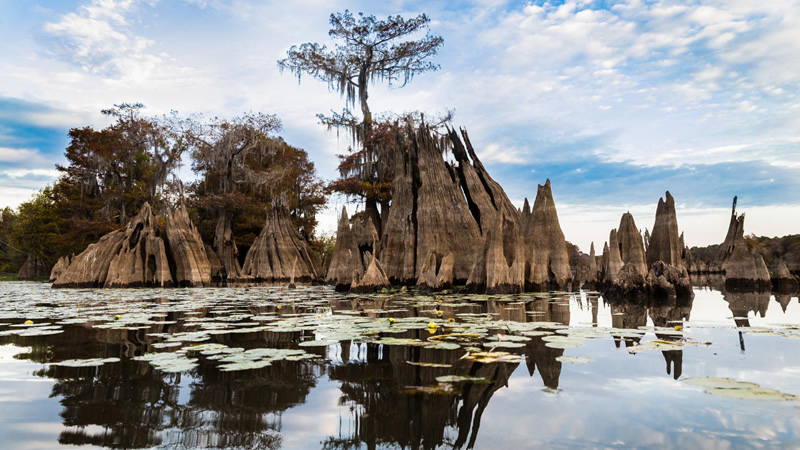
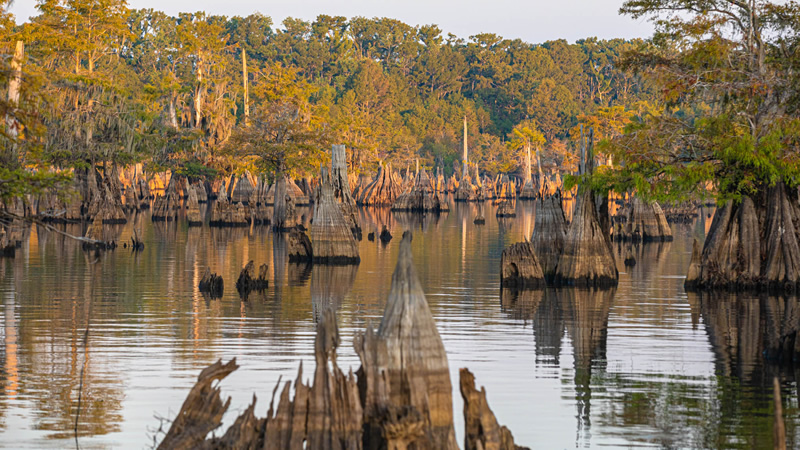
Boaters should use caution because the lake contains many cypress stumps, snags, and changing channels. Idle through unfamiliar areas and watch water levels and weather closely.
What baits work well at Dead Lakes?
Bass anglers use worms, lizards, spinnerbaits, jigs, chatterbaits, and live shiners. Panfish respond to red wigglers, crickets, small jigs, and minnows near cypress knees and woody cover.
Fishing Dead Lakes
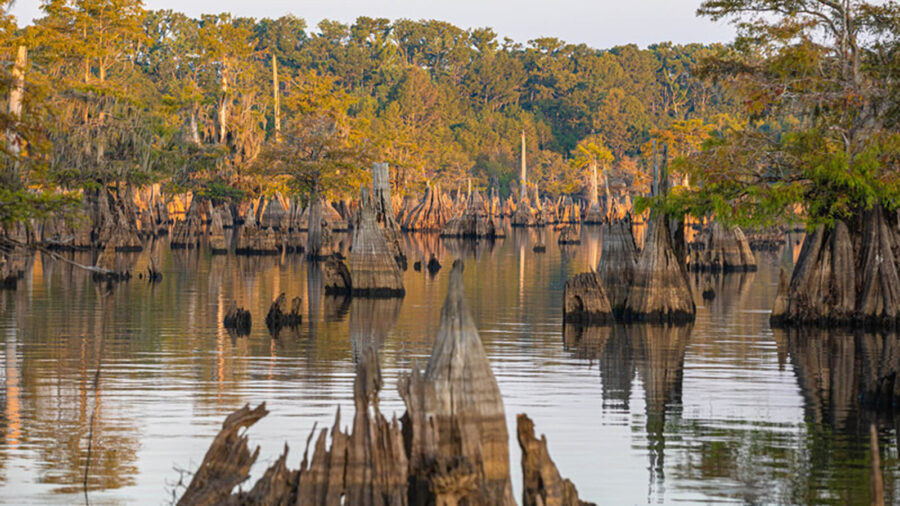
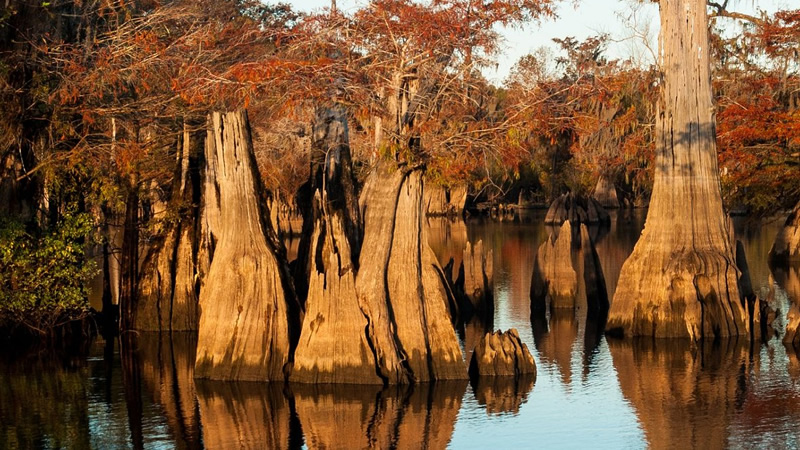
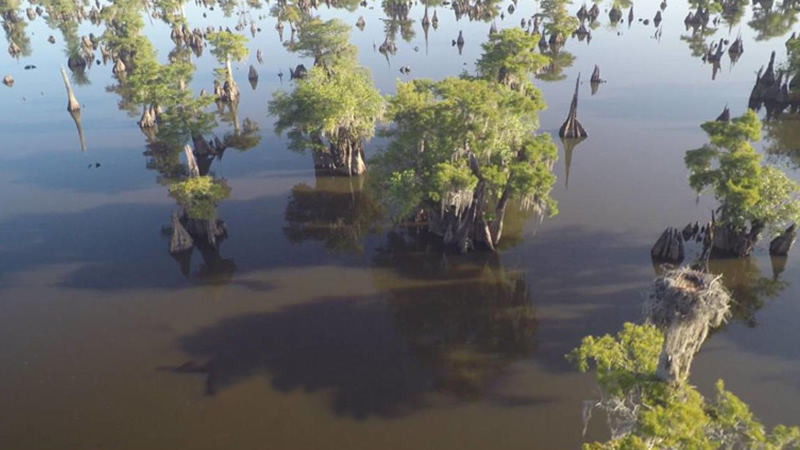
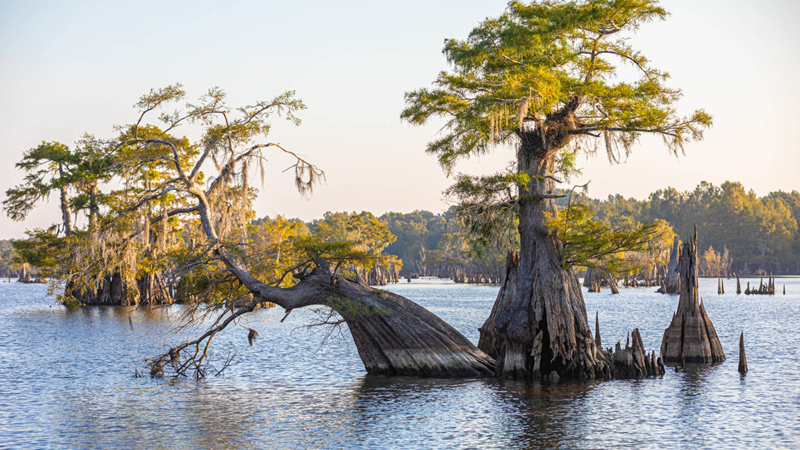
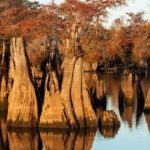
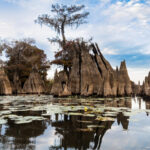
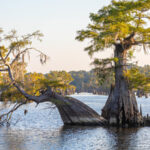
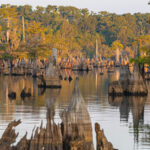
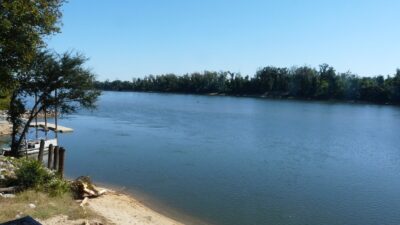
Dead Lakes is a 6,700-acre, cypress-filled fishery on the Chipola River near Wewahitchka in Florida’s Panhandle. The lake’s dark tannic water, flooded timber, cypress knees, creek channels, and stump fields create one of the state’s most distinctive freshwater fishing environments.
The Florida Fish and Wildlife Conservation Commission identifies Dead Lake in Calhoun and Gulf counties as an excellent spring destination for bluegill and redear sunfish, with additional opportunities for largemouth bass, crappie, catfish, redbreast sunfish, and spotted sunfish. Anglers can review the official FWC Dead Lake fishing forecast and access information before traveling.
About Dead Lakes
The lake is connected to the Chipola River near its lower reaches and sits close to the Apalachicola River basin. Local accounts commonly attribute its drowned cypress landscape to historic changes in water flow and impoundment. Whatever combination of natural and human changes created the present scenery, the standing trunks, stumps, and cypress knees now provide valuable fish habitat.
FWC uses the singular name “Dead Lake,” while visitors and local tourism sources commonly use “Dead Lakes.” Both names refer to the same Wewahitchka-area fishery. West Arm Creek is accessible from the Dead Lake Recreation Area off State Road 71, and another public ramp reaches the northwestern portion through Cypress Creek.
Dead Lakes Florida Fishing
Dead Lakes fishing rewards anglers who slow down and work visible cover carefully. Old river channels, deeper holes beside shallow stumps, willow islands, creek mouths, submerged wood, and cypress knees create natural travel routes and feeding areas. Water level influences both navigation and fish position, so productive places can change as the Chipola River rises or falls.
Boaters should navigate cautiously because submerged stumps and snags are common outside obvious channels. Kayaks and small boats are useful for exploring protected water, but every operator should watch weather, current, depth, and changing water levels.
Largemouth Bass
Largemouth bass can be caught throughout the year, with late winter through spring offering one of the strongest periods. Focus on deeper holes near shallow stump fields, dead tree lines, channel bends, cuts, and creek junctions. Soft-plastic worms and lizards, spinnerbaits, jigs, chatterbaits, and live shiners are dependable choices. Slower presentations often work best during cold fronts or cooler winter water.
Bluegill and Shellcracker
Spring is the signature season for bluegill and shellcracker. Look for bedding and feeding fish around cypress knees, willow islands, overhanging limbs, bank vegetation, and protected pockets in roughly two to four feet of water. Red wigglers, crickets, and small artificial lures presented on light tackle are effective. As summer progresses, panfish may shift toward deeper edges and nearby channels.
Crappie and Other Panfish
Black crappie, locally called specks, use the main channel, creek channels, brush, and submerged timber. Small jigs and minnows can produce fish by casting, vertical jigging, or slow trolling where navigation is safe. Redbreast sunfish and spotted sunfish, also called stumpknockers, are commonly found around woody cover and cypress roots.
Catfish and Other Species
Channel and flathead catfish inhabit deeper holes and river-connected channels. Natural baits fished near current breaks and deeper structure are useful, especially during low-light periods. Florida gar and other river species may also move through the lake because of its connection to the Chipola system.
Native Yellow Perch Restoration
FWC is working to restore native yellow perch in Dead Lakes following losses associated with Hurricane Michael. Its March 2026 restoration update reports further stocking and planned evaluation. This is restoration information, not a guarantee of abundant perch or a current catch report.
Best Times to Fish Dead Lakes
February through May is a strong period for bass as water temperatures rise and fish move toward spawning and feeding cover. Bluegill and shellcracker fishing generally peaks during spring and early summer bedding periods. Crappie are often most consistent during the cooler months and during seasonal movements along creek and river channels. Summer can still produce good early-morning and late-evening action, particularly near shade, current, and deeper water.
Boat Ramps and Access
Dead Lake Recreation Area provides access to West Arm Creek just north of Wewahitchka. FWC also documents a Calhoun County ramp near the State Road 71 and State Road 73 area that reaches the northwestern lake through Cypress Creek. Facilities vary by access point, so check current conditions before traveling.
Shore fishing is available in selected recreation-area locations and around smaller fishing ponds. Visitors should respect posted boundaries, campground rules, wildlife, and private property surrounding the lake.
Fishing Licenses and Regulations
Most anglers need a valid Florida freshwater fishing license unless an exemption applies. Review our Florida fishing-license guide and confirm current seasons, size limits, and bag limits through the FWC freshwater fishing regulations before a trip.
Visiting Wewahitchka and the Florida Panhandle
Dead Lakes is valued for more than fishing. Its flooded cypress forest supports paddling, wildlife viewing, birdwatching, photography, and quiet nature trips. Alligators, turtles, wading birds, deer, raccoons, and other wildlife inhabit the surrounding wetlands and uplands.
Anglers combining the lake with a broader Panhandle visit can explore our Panama City fishing guide, Port St. Joe fishing guide, and nearby Apalachicola River opportunities.
Nearby Lake Destinations
Explore the nearby destination cards below for additional freshwater fishing options across Florida’s Panhandle.
Dead Lakes Fishing Calendar
🔥 Hot
✅ Good
🐢 Slow
| Species | Jan | Feb | Mar | Apr | May | Jun | Jul | Aug | Sep | Oct | Nov | Dec |
|---|---|---|---|---|---|---|---|---|---|---|---|---|
| Largemouth Bass | 🔥 Hot | 🔥 Hot | 🔥 Hot | 🔥 Hot | 🔥 Hot | |||||||
| Bluegill | 🔥 Hot | 🔥 Hot | 🔥 Hot | 🔥 Hot | ||||||||
| Shellcracker | 🔥 Hot | 🔥 Hot | 🔥 Hot | 🔥 Hot | 🔥 Hot | |||||||
| Crappie | 🔥 Hot | 🔥 Hot | 🔥 Hot | 🔥 Hot |
Crappie
🔥 Hot
Crappie
🔥 Hot
Largemouth Bass
🔥 Hot
Crappie
🔥 Hot
Largemouth Bass
🔥 Hot
Crappie
🔥 Hot
Largemouth Bass
🔥 Hot
Shellcracker
🔥 Hot
Bluegill
🔥 Hot
Shellcracker
🔥 Hot
Bluegill
🔥 Hot
Shellcracker
🔥 Hot
No targeted species marked for Oct.
No targeted species marked for Nov.
No targeted species marked for Dec.
Featured Post for Dead Lakes