
Published: October 17, 2021 | Updated: September 12, 2026
Catching crappie consistently starts with one principle: find the school before fine-tuning the bait. Crappie move between shallow spawning cover and deeper structure throughout the year, and they often suspend at a shared depth. Once you locate that depth, a small jig or minnow presented quietly can turn scattered bites into a steady pattern.
This guide covers the complete fishing process: seasonal location, structure, tackle, bait, depth control, casting, vertical jigging, dock shooting, trolling, shoreline access, hooksets, and Florida regulations. For identification and biology, use our separate crappie fish species guide.
Table of Contents
How to Catch Crappie: The Quick Plan
- Find structure, baitfish, and the depth where fish are holding.
- Start with a small jig or legal live minnow on light tackle.
- Keep the bait just above the fish because crappie commonly feed upward.
- Use a slow, controlled presentation and adjust depth before changing colors.
- Set the hook with a smooth lift rather than a hard bass-style swing.
- Stay on the school, but verify local harvest and water-body rules before keeping fish.
Find Crappie Before Choosing a Technique
Crappie relate to cover and structure, but they do not always sit directly on the bottom. Look for submerged brush, standing timber, dock pilings, vegetation edges, channel bends, bridge structure, drop-offs, and schools of forage. Electronics can shorten the search from a boat, while shoreline anglers can use visible cover, access points, shade, and depth changes.
The most important adjustment is often depth. If fish appear at 10 feet over 16 feet of water, a bait dragged along the bottom may pass below the feeding zone. Begin slightly above the school and lower the presentation in small increments.
Seasonal Movement
Spring: Fish move toward protected spawning areas as water warms. Start near shallow cover, then check the first drop or staging structure when conditions change.
Summer: Many fish move toward deeper brush, channels, standing timber, shade, or moving water. Low-light periods can bring active fish shallower.
Fall: Follow baitfish toward creek arms, flats near channels, and mid-depth structure. Crappie may roam more when forage is moving.
Winter: Schools often concentrate around deeper structure and stable water. Slow presentations and precise depth control become especially important.
Choose the Right Crappie Fishing Method
Bobber and Minnow Rig
A small live minnow under a fixed or slip float is one of the simplest ways to catch crappie. A fixed float works well in shallow water. A slip float makes it easier to reach deeper fish while retaining casting control. Add only enough split shot to keep the bait at the intended depth without restricting its movement.
Hook the minnow lightly through the lips or back, depending on the presentation and local bait regulations. Keep the bait above brush rather than burying it in cover.
Casting and Retrieving Jigs
Small lead-head jigs paired with soft-plastic bodies imitate minnows, insects, and small aquatic prey. Cast beyond the target and retrieve slowly enough to hold the lure at the fish’s depth. A count-down method helps repeat the same depth after a bite.
Common jig weights range from 1/32 to 1/8 ounce. Choose the lightest jig that still maintains control in the wind, current, and depth. Natural colors often work in clear water, while brighter or higher-contrast colors can help fish find the lure in stained water.
Vertical Jigging
Position the boat over brush, timber, bridge structure, or a marked school and lower a jig vertically. Use small lifts, pauses, and subtle shakes. Watch the line carefully because crappie sometimes swim upward with the bait, making the strike feel like sudden slack.
Dock Shooting
Dock shooting sends a light jig beneath low docks and overhanging cover that cannot be reached with a normal cast. Hold the jig carefully, load the flexible rod tip, and release the lure and line together. Practice in open water first, keep the hook pointed away from people, and wear eye protection.
Trolling and Spider Rigging
Slow trolling covers water and helps identify the productive depth. Spider rigging uses several long rods spread across the front of a boat to present jigs, minnows, or both. Rod limits and multi-hook rules vary, so check regulations before using multiple rods.
Control boat speed and keep every bait at a known depth. When one rod produces, circle back through the same line and note the depth, speed, color, and nearby structure.
Small Crankbaits
Small crankbaits can locate larger crappie suspended around open-water forage. Select a lure whose running depth matches the school, use light line, and troll or cast through the edge of the fish rather than repeatedly driving over them.
Crappie Rods, Reels, Line, and Hooks
An ultralight or light-power spinning outfit handles most casting and bobber presentations. A soft tip cushions the fight and helps prevent the hook from tearing through the thin mouth membrane. Longer rods provide reach for dipping baits into cover, while specialized trolling rods spread lines away from the boat.
- Rod: A 6- to 8-foot light or ultralight spinning rod for general use; longer purpose-built rods for vertical or trolling methods.
- Reel: A small spinning reel with a smooth drag.
- Line: Light monofilament or fluorocarbon for open water; stronger line may be appropriate around dense wood or vegetation.
- Hooks: Light-wire Aberdeen-style hooks or small single hooks matched to the bait.
- Jigs: Keep several weights so you can adjust to wind, current, depth, and fish activity.
The setup should remain balanced. Heavy tackle can reduce bites and make it easier to tear the hook free, while line that is too light for the cover can lead to break-offs.
Best Baits and Lures for Crappie
Live minnows and small jigs are the two most dependable starting choices. Grass shrimp can also be effective where legal and locally available. Productive soft plastics include minnow profiles, small tubes, curly tails, and compact paddle tails.
Color is secondary to location, depth, and speed. Begin with a natural baitfish color in clear water or a visible contrasting color in stained water. If fish are present but inactive, reduce the bait size and slow the presentation before cycling through an entire tackle box.
Control Depth, Speed, and Boat Position
Crappie fishing becomes repeatable when you record the details of every bite. Note the exact depth, whether the fish was inside or above cover, boat speed, lure weight, and the angle of the line. A small change in wind can lift or sink a lightly weighted presentation enough to leave the strike zone.
Approach quietly. Avoid running directly over shallow fish, banging compartment lids, or constantly changing position with the trolling motor. In deeper water, use electronics to follow the school rather than assuming it stayed on the first waypoint.
Crappie Fishing From Shore
Bank anglers can catch crappie from public piers, bridges, boat ramps where fishing is permitted, parks, canal banks, and shorelines with nearby depth or cover. A slip float allows a deep presentation without sacrificing casting distance. Fan-cast several depths until the first fish reveals the school.
Pay attention to seasonal access. A productive summer brush pile may be beyond casting range, while spring fish can move close to shore. Never fish from restricted structures or obstruct an active launch lane.
Hooksets, Fighting, and Landing Crappie
Crappie are called papermouths because the membrane around the mouth is thin. A hard hookset can enlarge the hook hole or tear it free. Reel down and lift the rod smoothly, then maintain steady pressure with a properly adjusted drag.
Use a landing net for larger fish, especially beside the boat. Avoid swinging heavy fish by the line. If releasing a crappie, wet your hands, support it gently, and return it promptly.
Florida Crappie Fishing
In Florida, black crappie are usually called speckled perch or specks. The cooler months are a popular season, and spawning activity may begin earlier than it does farther north. The Florida Fish and Wildlife Conservation Commission notes that black crappie commonly nest from February through April, but weather and water conditions can shift local timing.
Explore proven destinations in our Florida crappie lakes guide, recent conditions in the crappie fishing reports, and location-specific advice for Lake Okeechobee crappie fishing or St. Johns River crappie fishing.
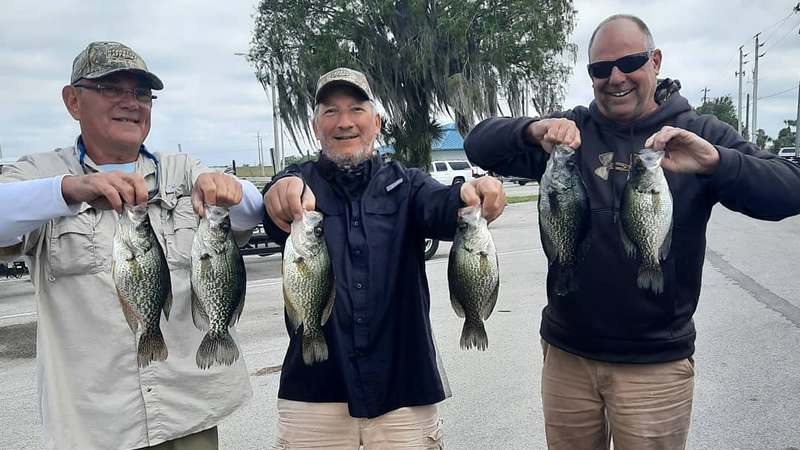
Crappie Limits, Licenses, and Responsible Harvest
Regulations can differ by state and by water body. In Florida, check the current FWC statewide freshwater limits plus any special regulations for the lake or river you plan to fish. Our Florida fishing license guide explains resident, nonresident, and exemption basics.
Keep only fish you can use, ice the catch promptly, and consider releasing unusually large fish that contribute valuable genetics and spawning potential. For authoritative identification and biology, consult the FWC black crappie profile.
Common Crappie Fishing Mistakes
- Fishing below suspended fish instead of presenting the bait just above them.
- Changing lure color before checking depth, speed, and location.
- Using a hard hookset or drag that is too tight.
- Driving over shallow fish or making unnecessary noise.
- Staying on inactive cover after baitfish and crappie have moved.
- Assuming statewide regulations apply unchanged to every water body.
Frequently Asked Questions
What is the best bait for crappie?
A legal live minnow or a small jig is the best starting point in most waters. The productive choice depends on forage, clarity, depth, and fish activity.
What depth should I fish for crappie?
There is no single depth. Crappie move seasonally and often suspend. Use electronics, visible cover, or repeated casts to find the level where the school is holding, then keep the bait slightly above it.
When is the best time to catch crappie?
Spring is productive when fish move toward spawning cover, but crappie can be caught all year. Winter schools, summer deep-water structure, and fall baitfish movements can all produce strong fishing.
Can you catch crappie from shore?
Yes. Piers, bridges where fishing is allowed, canal banks, public parks, and shorelines near cover or quick access to deeper water can be productive.
Why do crappie come off the hook?
Their thin mouth membrane can tear when the hookset is too hard, the drag is too tight, or pressure becomes inconsistent. Use light tackle, a smooth lift, steady pressure, and a net for larger fish.
Put the Pattern Together
Successful crappie fishing is less about a secret lure than a repeatable process: locate fish, identify their depth, choose a controlled presentation, and adjust one variable at a time. Start with a jig or minnow, fish above the school, and treat the first bite as information. That approach works from a shoreline float rig to a multi-rod trolling spread.
If you want help shortening the learning curve on unfamiliar water, compare destinations and available trips through our crappie fishing destination guide.

Really enjoyed you’re advice on bait and rods I appreciate your instructions on catching crappie
Thank you Doug