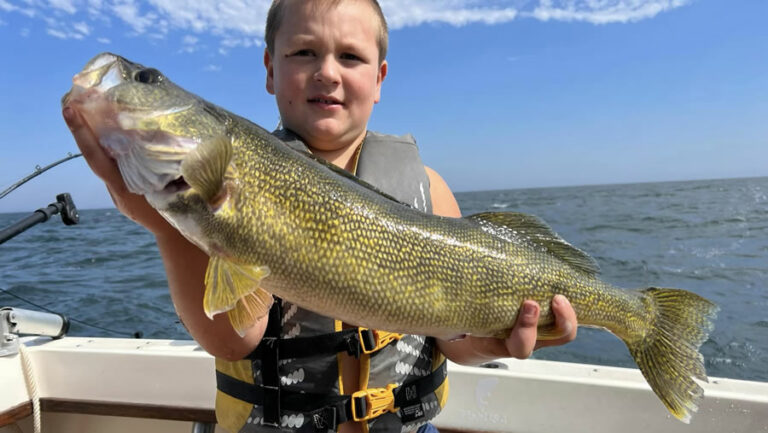
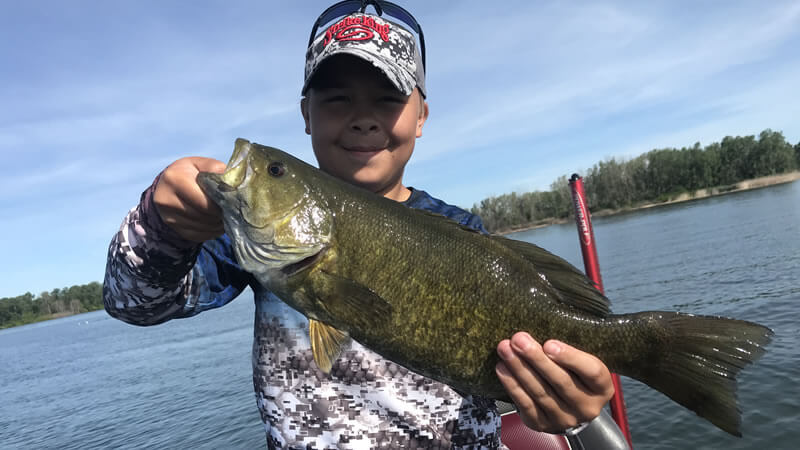

A bronzeback fish is a smallmouth bass (Micropterus dolomieu). Anglers use “bronzeback” or “brown bass” because adult smallmouth often show a bronze-brown body, dark vertical bars, and the compact, muscular shape that makes them famous fighters.
That nickname matters on Lake Erie because smallmouth bass are one of the lake’s signature sport fish. Pennsylvania’s Fish and Boat Commission lists bass among Lake Erie’s popular game fish, and its black-bass management plan notes that smallmouth are abundant in both Lake Erie and Presque Isle Bay. Largemouth bass occur too, but in the Pennsylvania Lake Erie drainage they are much more concentrated around protected habitat such as Presque Isle Bay.
Why Are Smallmouth Bass Called Bronzebacks?
The name comes from color, not from a separate species. Smallmouth can range from olive and green-brown to copper or bronze depending on water color, depth, habitat, season, and the individual fish. On clear Great Lakes water, that bronze tone can be especially obvious when a fish comes up from rocky structure.
Other common nicknames include brown bass, smallie, bronzeback, and Great Lakes brown bass. All refer to the same species: smallmouth bass.
How to Identify a Bronzeback
- Mouth: the upper jaw generally does not extend beyond the rear edge of the eye the way it does on a largemouth bass.
- Color: bronze, brown, olive, or green-brown sides are common.
- Markings: many fish show dark vertical bars rather than the strong horizontal stripe typical of largemouth bass.
- Habitat: smallmouth strongly favor rock, gravel, reefs, shoals, points, and other hard-bottom structure.
- Fight: they are known for long runs, head shakes, and repeated jumps, especially in clear open water.
Why Lake Erie Produces Famous Bronzebacks
Lake Erie combines expansive rocky habitat with a productive forage base and enough open-water structure to support large schools of smallmouth. That is why anglers can encounter smallmouth on reefs, breaklines, rocky flats, points, and deeper offshore structure as the seasons change.
On the Pennsylvania side, Lake Erie in Pennsylvania and Presque Isle Bay give anglers access to both protected water and the main lake. The broader Lake Erie fishing hub explains how the fishery changes across New York, Pennsylvania, Ohio, and Michigan.
Where Bronzebacks Hold on Lake Erie
Smallmouth location changes with water temperature, forage, wind, and spawning cycles. Rather than relying on one “secret spot,” anglers should think in seasonal zones.
- Spring: warming bays, shallow rock, gravel, and transition areas can concentrate fish.
- Early summer: post-spawn fish begin leaving protected shallows and relating to points, rock transitions, and nearby breaks.
- Mid- to late summer: many quality fish shift deeper and can gather around isolated rock, humps, ledges, and bait.
- Fall: cooling water can trigger aggressive feeding around rock and baitfish concentrations before winter.
For a full seasonal breakdown, see the Lake Erie seasonal fishing forecast.
Best Lures for Lake Erie Bronzebacks
Great Lakes smallmouth reward anglers who stay close to bottom, imitate natural forage, and adjust to wind and depth. Proven choices include:
- drop-shot rigs with compact minnow or goby-style plastics;
- tube jigs dragged or hopped across rock;
- Ned rigs for neutral or pressured fish;
- small swimbaits for roaming bass;
- jerkbaits when fish are suspended or feeding upward;
- topwater walking baits during low-light or active schooling periods.
For one of the most dependable deep-water presentations, use our dedicated Lake Erie drop-shot smallmouth guide. For a broader system, see Lake Erie smallmouth bass fishing strategies.
Bronzeback vs. Largemouth Bass on Lake Erie
Both species occur in Lake Erie, but they do not use the fishery the same way. Smallmouth are the better-known open-lake bass and commonly use rocky main-lake structure. Largemouth are more closely associated with warmer, protected, vegetated habitat. In Pennsylvania, Presque Isle Bay is especially important for largemouth habitat while smallmouth are abundant in both the bay and the main lake.
If your question is simply “Are there bass in Lake Erie?”, our Bass in Lake Erie guide compares the species and explains where each is most likely to be found.
Do You Need a Guide to Catch Lake Erie Bronzebacks?
No, but Lake Erie is big water and conditions can change quickly. A local guide can shorten the learning curve by helping with safe navigation, seasonal areas, electronics, boat positioning, and lure presentation. Anglers comparing guided options can use our Lake Erie fishing charter guide.
Bronzeback FAQ
Is a bronzeback a separate species?
No. “Bronzeback” is a common nickname for the smallmouth bass.
Are bronzebacks the same as brown bass?
Yes. Bronzeback, brown bass, and smallie are common angler nicknames for smallmouth bass.
Are smallmouth bass common in Lake Erie?
Yes. Smallmouth are a major Lake Erie sport fish and are abundant in Pennsylvania waters of both the main lake and Presque Isle Bay.
Where should I start for Pennsylvania Lake Erie smallmouth?
Presque Isle Bay, nearby main-lake rock, and seasonal offshore structure are logical starting areas. Conditions and regulations change, so always confirm current rules before fishing.
Official Pennsylvania resources: Pennsylvania Fish and Boat Commission Lake Erie and Presque Isle State Park fishing.