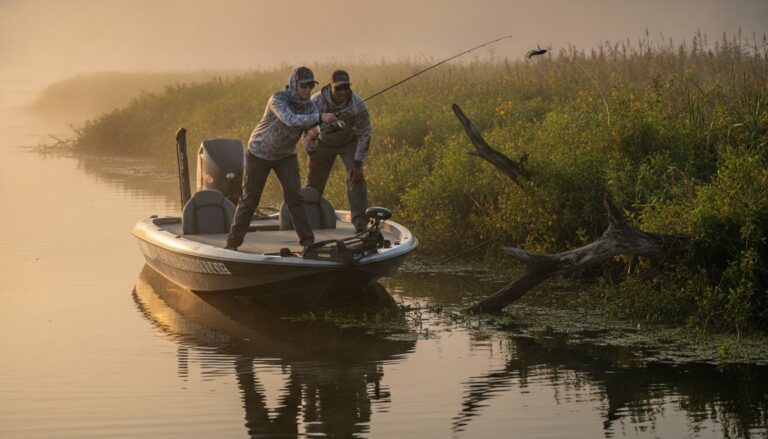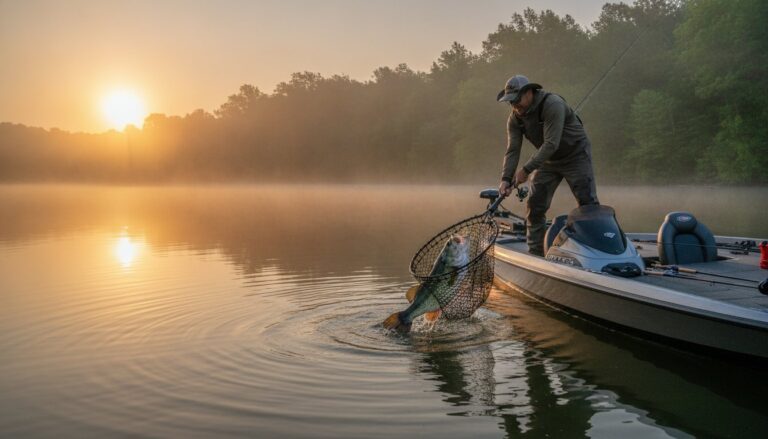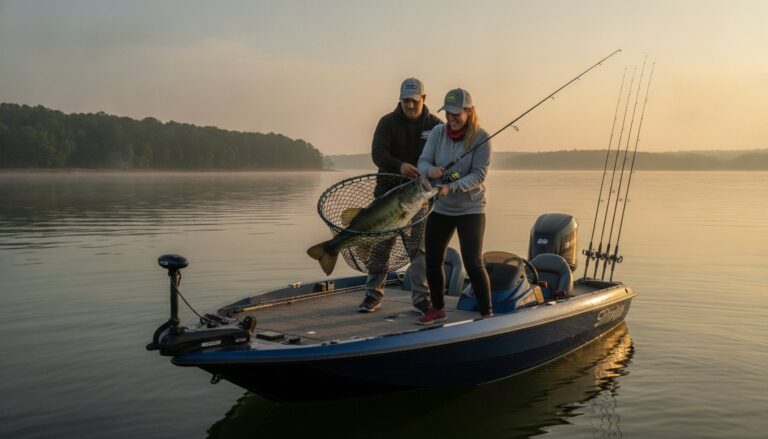
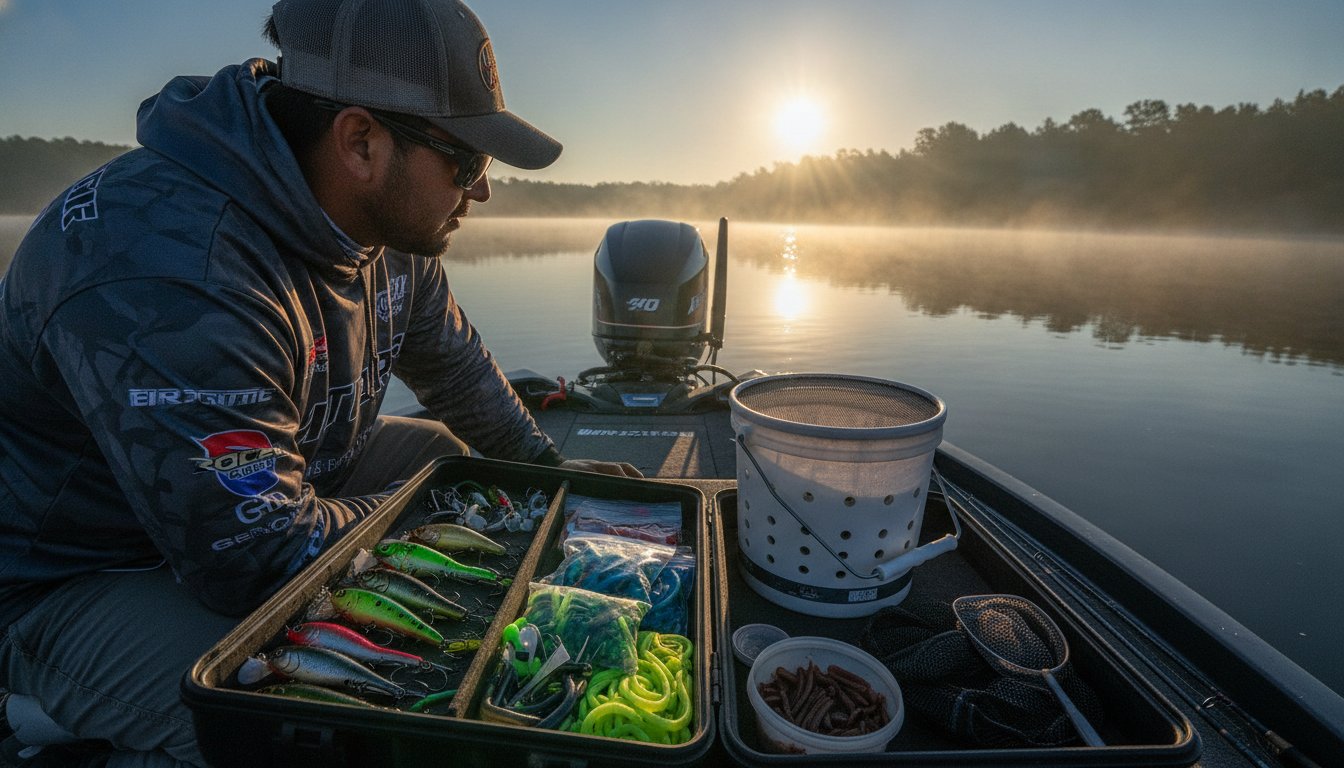

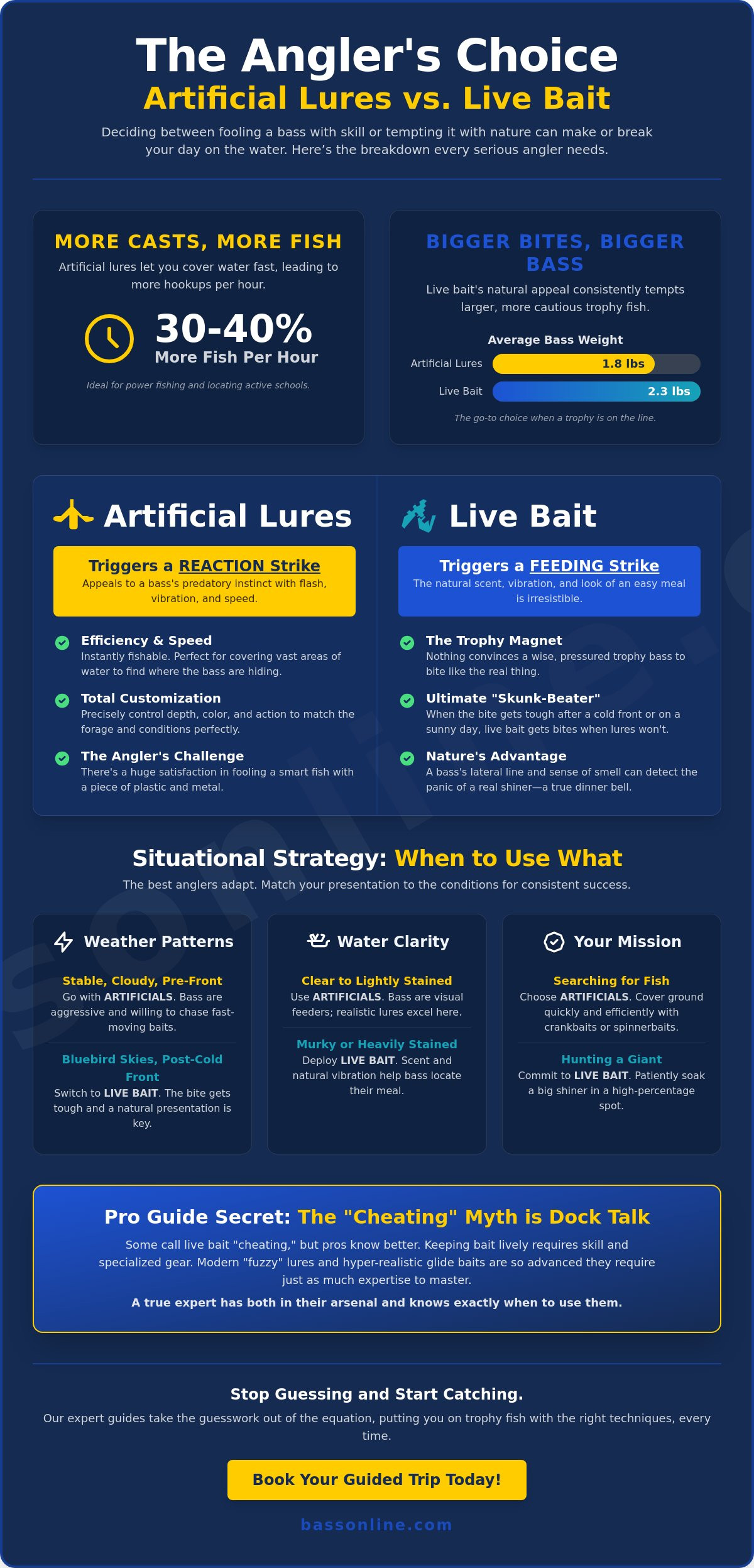
Did you know that while artificial lures catch 30% to 40% more fish per hour, live bait consistently hauls in bass that weigh nearly half a pound more on average? It’s the classic debate of artificial lures vs live bait for bass, and making the wrong choice can mean the difference between a record-breaking day and a long, quiet ride back to the ramp. You want to feel that raw power on the end of your line, but it’s easy to get frustrated when expensive hard baits fail or your live shiners don’t survive the trip. I’ve been there, and I know the sting of getting skunked when the stakes are high.
I’ve spent thousands of hours guiding anglers through the grass of Lake Okeechobee and the deep structure of Lake Guntersville, so I understand the need for results-driven tactics. This guide will give you the tactical edge by explaining the “why” behind every presentation. We’ll dive into 2026 trends like “fuzzy” finesse baits and precision sonar tactics to help you land more trophy fish in any condition. You’re going to walk away with the confidence to pick the right tackle for any weather, ensuring your next expedition is a total success.
Key Takeaways
- Understand the core differences in the artificial lures vs live bait for bass debate to help you decide whether to trigger a hunger-driven feeding strike or an aggressive reaction bite.
- Learn why the natural scent and vibration of live bait often win over the most cautious, trophy-sized bass in high-pressure waters.
- Master precision depth control and customization with artificial lures to hunt down fish across the entire water column.
- Identify how shifting weather patterns and water clarity dictate your tactical choices, ensuring you never get skunked by a passing cold front.
- Discover how local expertise and professional guide secrets can streamline your tackle selection and lead to more successful expeditions.
The Great Debate: Understanding the Core Differences
Every angler has a strong opinion on The Great Debate: Understanding the Core Differences between natural and man-made offerings. On one side, you have the raw, undeniable appeal of a natural presentation that tricks a bass into a feeding strike. On the other, you have the high-speed thrill of inducing a reaction strike through vibration and flash. As a professional guide, I see these as two distinct tools in my arsenal. Choosing between artificial lures vs live bait for bass often boils down to the “hunt.” Many of my clients love the challenge of manipulating a plastic worm or a crankbait to mimic a dying shad perfectly. There’s a psychological rush in knowing you fooled a trophy bass with a piece of molded plastic.
However, when the bite is tough or we’re targeting massive Florida strain bass, having a healthy shiner in the live well is often the best insurance policy for a successful expedition. To see these two philosophies in action, watch this side-by-side comparison:
The “Cheating” Myth vs. Professional Reality
Some folks claim using live bait is “cheating,” but that’s just dock talk. Keeping delicate shiners or crawfish alive requires constant attention and specialized equipment. You’ve also got to know how to hook them so they swim naturally into heavy cover without snagging. Meanwhile, 2026 lure technology has reached a point where “fuzzy” baits and ultra-realistic glide baits look more like a fish than the real thing. It takes professional-level skill to master either discipline effectively. I always carry both on high-stakes trips because the fish don’t care about the “cheating” debate; they only care about what looks like a meal.
Efficiency and Time Management on the Water
Time is your most valuable resource. If you’re spending hours catching wild shiners, you’re losing prime fishing time. Lures offer immediate gratification; you can start casting the second the boat stops. This speed is essential for power fishing. Power Fishing is a high-speed technique used for quickly locating active schools of bass by covering large areas of water with moving baits. While bait is often stationary and patient, lures let you hunt the entire lake. Balancing the cost of shiners, which can run over $4.50 for a dozen large ones, against a $10.00 bladed jig is part of the strategic game we play every day on the water.
The Power of Live Bait: Why Nature Often Wins
When the sun is high and the bite turns cold, nothing levels the playing field like the real thing. While we discussed the speed of lures in the previous section, the core reality of artificial lures vs live bait for bass is that nature provides a sensory profile no factory can perfectly replicate. Bass possess a highly developed sense of smell and a lateral line that feels the specific, high-frequency panic of a struggling baitfish. This triggers a “Feeding Strike,” a calculated survival move where the fish sees a high-protein meal that won’t cost much energy to catch. Data supports this big-fish bias; bass caught on live bait average about 2.3 lbs, while those taken on artificial lures average closer to 1.8 lbs.
I’ve seen it a thousand times on the water. When a cold front shuts down the aggressive reaction bite, a lively shiner becomes the ultimate “skunk-beater.” However, you can’t just throw a minnow on a hook and expect a trophy. The importance of bait health cannot be overstated. If your bait isn’t swimming with maximum vitality, a pressured bass will ignore it. A dead or lethargic bait is just a piece of meat; a panicking shiner is a dinner bell that echoes through the vegetation.
The Golden Shiner: The King of Bass Baits
In the world of trophy hunting, the wild golden shiner is the undisputed king. These aren’t your average bait shop minnows. Large shiners, which often run about $4.59 per dozen in 2026, are the preferred fuel for 10-pounders. I use two primary rigging techniques depending on the structure. I’ll nose-hook a shiner when we’re slow-trolling along a weed edge to keep it swimming straight. If we’re parked near a heavy hydrilla mat, I’ll switch to a tail-hook. This forces the shiner to swim downward and away from the boat, right into the strike zone. Always use a high-quality aerator in your live well to keep them frisky.
Ethical Angling and Conservation with Bait
Using natural forage requires a higher level of attention to conservation. Because bass view live bait as actual food, they tend to swallow it more deeply than a fast-moving lure. This increases the risk of “gut hooking,” which can be fatal for the fish. To ensure high post-release survival rates, I always recommend using circle hooks. These hooks are designed to slide out of the throat and catch in the corner of the mouth as the fish turns. It’s a simple change that protects the resource for the next generation. Learn more about the species we target to see which bass respond best to these natural presentations. If you’re ready to test these tactics on the water, you can get in touch with our expert guides to plan your next outing.
Mastering Artificial Lures: Precision and Customization
If live bait is about patience, artificial lures are about precision. While shiners wait for a bass to get hungry, lures force the issue. This is the heart of the artificial lures vs live bait for bass choice; you’re moving from a passive feeding strike to a violent reaction strike. A reaction strike happens when a bass bites out of pure instinct, anger, or territorial defense rather than hunger. When a $9.99 Z-Man Chatterbait Elite EVO screams past a stump, a bass doesn’t have time to think. It just reacts. This ability to trigger a bite even when fish aren’t actively feeding is why pros rely so heavily on their tackle boxes.
Lures also offer unmatched versatility in depth control. You can’t effectively fish a live shiner 20 feet deep on a rocky ledge or skitter it across the top of a thick lily pad field without constant tangles. With artificials, you can switch from a topwater frog to a deep-diving crankbait in seconds. Plus, there is the durability factor. A $5.99 bag of 6th Sense Divine Swimbaits can last you through dozens of fish, whereas a single dozen shiners can be gone in an hour if the bluegill are pecking at them. This convenience lets you focus entirely on the “Match the Hatch” philosophy, selecting colors and profiles that perfectly mimic the local forage in that specific lake.
The Tactical Tackle Box: Must-Have Categories
- Soft Plastics: The “Senko” style stick bait remains a legend because it’s foolproof. Its slow, shimmying fall is irresistible to bass in both clear and stained water.
- Hard Baits: When the water is murky, use lures with internal rattles or high-vibration blades. The sound helps bass track the lure through their lateral line before they even see it.
- Jigs and Trailers: This is the ultimate tool for heavy cover. Use a heavy jig for “punching,” which is a technique of dropping a heavy weight through thick surface mats to reach the bass hiding underneath.
The Learning Curve: Becoming a Technical Angler
There is a unique thrill in developing the “feel” required for lure fishing. You have to learn to distinguish the difference between a rock, a weed, and the subtle “tick” of a bass inhaling a plastic worm through a high-quality graphite rod. It’s a technical skill that turns fishing into a sport of constant engagement. For many of my clients, landing a trophy on a lure they selected and worked themselves provides a deeper sense of accomplishment. It’s about the mastery of the craft. Check out our pro fishing guides for expert tips on how to fine-tune your lure presentation for your next big trip. Mastering these technical details is what separates the weekend warriors from the consistent stick-movers.
Situational Strategy: When to Switch Your Tactics
Mastering the choice between artificial lures vs live bait for bass is all about reading the water and the sky. You can have the most expensive tackle box in the world, but if you’re throwing a high-speed crankbait into a post-frontal bluebird sky, you’re going to struggle. Bass are cold-blooded creatures. Their metabolism and aggression levels change based on barometric pressure and water temperature. When a cold front hits, bass often move into tighter cover and become lethargic. This is when the slow, natural wiggle of a shiner outperforms even the best “fuzzy” finesse baits of 2026. Conversely, when the pressure is dropping and a storm is rolling in, bass go on the hunt. That’s your cue to pick up a moving lure and cover as much water as possible.
I often use a “Hybrid” approach on my guided trips. I’ll start by power fishing with a bladed jig or a swimbait to locate active schools. Once we find the fish but the aggressive bite slows down, we’ll switch to live bait to pick off the bigger, more cautious trophies that aren’t willing to chase. It’s a one-two punch that ensures we never leave a productive spot too early. Water clarity also dictates this move. In crystal clear water, bass rely on sight, so a realistic lure or a natural shiner is a must. In murky or “stained” water, you need the heavy vibration of a lure or the intense scent of live bait to help the fish find your hook.
The 5-Step Decision Matrix for 2026
- Step 1: Check the Water Temp. If it’s below 55°F, the slow, consistent movement of live bait usually wins. Bass don’t want to burn calories chasing fast lures in cold water.
- Step 2: Gauge Visibility. In heavy stain, use a lure with a loud rattle or a large live shiner that creates significant displacement.
- Step 3: Identify Cover. In thick lily pads or matted grass, a weedless artificial frog is often easier to manage than a shiner that might swim deep into the tangles and snag.
- Step 4: Assess the “Mood.” If you see bass busting bait on the surface, they are active. Throw a lure. If they are tucked deep into dock pilings, tease them with bait.
- Step 5: Monitor Sonar. Use your forward-facing sonar to see how fish react. If they follow a lure but won’t commit, it’s time to switch to a natural presentation.
Common Mistakes Anglers Make with Both
The biggest mistake I see with lures is over-working them. Sometimes “doing nothing” is the best action. Letting a soft plastic worm sit motionless on the bottom for ten seconds can trigger a strike from a wary bass that’s been watching it. With live bait, the mistake is often using shiners that are too small. If you want a trophy, you need a “big bait, big fish” mentality. Don’t be afraid to use a six-inch shiner to target an eight-pound bass. Finally, don’t be stubborn. If your go-to method hasn’t produced a bite in an hour, change your tactic. To get personalized help with your situational strategy, book a trip with a local expert and see these decisions made in real-time.
The Pro Advantage: Why Guided Trips Master Both
Every morning at the dock, I make a strategic call. Is it going to be a shiner day or a swim jig day? For most anglers, the artificial lures vs live bait for bass decision is a coin toss. For a professional guide, it’s a data-driven choice based on years of daily field reports and real-time conditions. We eliminate the guesswork. We’ve already spent the week tracking the schools and testing the water clarity before you even step on the boat. This local authority means you aren’t wasting time on a hunch. You’re fishing exactly where the trophies are currently feeding with the exact presentation they want.
Hiring a guide lets you focus entirely on the raw excitement of the strike. While I’m managing the live well, checking aerators, and ensuring our wild golden shiners are swimming with maximum vitality, you’re focused on the next cast. If the bite shifts and we switch to artificials, I’m there to coach you through the retrieve speed and the subtle “tick” of a bite. It’s an on-the-water education. You aren’t just catching fish; you’re learning the “why” behind the tactic. These are technical skills and confidence boosters you’ll keep for a lifetime of successful expeditions.
Field-Tested Success: Stories from the Water
I remember a trip on Lake Okeechobee last spring. The bass were buried deep in the hay grass and wouldn’t budge for a spinnerbait. We started with lures, but the fish were only short-striking. I made the call to switch to large shiners on a tail-hook. Within ten minutes, a client landed a personal best eight-pounder. Later that same day, as the sun came out and the water warmed, we switched back to topwater frogs and watched a monster bass explode on the surface. That’s the thrill of the hunt. We carry every tool imaginable to ensure your trip is a victory. Explore our top fishing lakes and destinations to see where your next story begins.
Start Your Adventure Today
The debate over artificial lures vs live bait for bass doesn’t have a single winner. The real secret is knowing how to use both to your advantage. Whether you want the technical challenge of a glide bait or the heart-pounding tension of a shiner under a float, we’ve got you covered. It’s about using the right tool for the job to ensure you never go home with an empty live well. Become a more well-rounded angler by experiencing both styles with the best in the business. Book your premier bass fishing trip with Bass Online and let’s get you on the water today.
Step Off the Dock and Into the Action
The choice between artificial lures vs live bait for bass isn’t about picking a side. It’s about matching your strategy to the environment. You’ve learned how lures allow you to cover vast areas and trigger aggressive reaction strikes; while live shiners provide the natural scent and vibration that trophy bass crave when they’re being cautious. Becoming a versatile angler means knowing when to switch tactics to keep the rods bending. Why spend your day guessing when you can rely on a pro who lives on the water?
We bring over 25 years of professional guiding experience to every trip. Our expert local guides know the most iconic bass fishing lakes in the US better than anyone else. We’ve tracked the patterns and tested the depths so you don’t have to. Whether you want to master the technical precision of a new glide bait or experience the raw power of a shiner being inhaled by a double-digit monster; we’re ready to make it happen. Ready to land a trophy? Book your professional bass fishing charter now! Let’s get out there and turn your next outing into a legendary success.
Frequently Asked Questions
Is live bait better than artificial lures for beginners?
Live bait is generally better for beginners because it handles the presentation for you. You don’t need to master complex retrieve speeds or specific rod movements to get a bite. A natural shiner or worm provides the scent and organic movement that attracts fish automatically. This builds confidence early on, though I always encourage novices to start practicing with soft plastics once they’ve landed a few fish to sharpen their technical skills.
Can I catch trophy-sized bass on artificial lures?
You can definitely land trophy-sized bass on artificial lures. While live bait has a higher average weight per fish, some of the biggest bass ever recorded were caught on large glide baits or jigs. Artificials allow you to target specific high-percentage areas like deep ledge points or thick vegetation where a live shiner might get tangled. It’s all about using high-impact lures that mimic large, local forage.
What is the best live bait for Largemouth Bass?
The wild golden shiner is the gold standard for largemouth bass. These baitfish are native to many of the best bass waters and represent a massive protein source that big bass can’t resist. While nightcrawlers or crawfish work well in specific river systems, nothing beats a 4 to 6 inch shiner when you’re hunting for a double-digit trophy in the grass. Their frantic movement sends out a vibration that acts as a dinner bell for predators.
Does using live bait hurt the bass more than lures?
Live bait can lead to deeper hooking if an angler waits too long to set the hook, but it isn’t inherently more harmful. Using circle hooks is a pro secret that ensures the hook catches in the corner of the mouth rather than the gut. This simple change significantly improves post-release survival rates. It makes bait fishing just as safe as lure fishing when handled with professional care and quick reaction times.
What lures should I use when the bass aren’t biting live bait?
When the live bait bite dies, switch to reaction baits like a bladed jig or a deep-diving crankbait. Sometimes bass aren’t hungry but they are territorial or aggressive. Moving lures create vibration and flash that force a bass to strike out of instinct. In the artificial lures vs live bait for bass debate, this is the biggest advantage of plastic; you can annoy a fish into biting even when it isn’t looking for a meal.
Is it more expensive to fish with live bait or lures over time?
Fishing with live bait is typically more expensive over time due to recurring costs. Large shiners can cost around $4.59 per dozen in 2026, and you might go through several dozen in a single trip. A $10.00 chatterbait or a $6.00 bag of worms can last for multiple outings if you don’t lose them to snags. Lures are a one-time investment that pays off over dozens of successful expeditions.
Do professional bass tournaments allow live bait?
Most major professional bass tournaments, like the Bassmaster Elite Series, strictly prohibit the use of live bait. These competitions are designed to test an angler’s ability to fool fish using artificial presentations. However, many local tournaments allow both. Always check the specific rules for your event, as some areas like Ohio’s Lake La Su An have specific bait restrictions in 2026 to protect the local ecosystem.
How do I keep my live bait alive during a long day of fishing?
Keeping bait alive requires a high-quality aeration system and temperature management. Oxygen is the most critical factor; a battery-powered bubbler or a recirculating live well is essential. If the water gets too warm, the shiners will lose their vitality and stop swimming correctly. I recommend adding a small amount of ice or a water conditioner to keep the environment stable, ensuring your bait stays frisky enough to trigger those big feeding strikes.

Article by
Mr Bass
Todd Kersey, widely known as Mr. Bass by Field & Stream, is a professional angler, accomplished author, and dedicated philanthropist with a lifelong passion for bass fishing. Armed with a degree in Outdoor travel, Mr. Bass has expertly combined his knowledge with his practical fishing experience to become one of the most respected names in the bass fishing, his deep understanding of bass habitats, and fish behavior has earned him numerous accolades as a asset of the sport. Serving 8 years as FWC Stakeholder Chairperson. Leading and passing cutting-edge legislation, such as the Black Bass Management plan, and successfully building, passing, and financing the Trophy Catch program. As CEO, he is committed to giving back to the community through his philanthropic efforts. He supports a variety of causes, especially those centered around physical disabilities. Through his advocacy, his mentorship programs inspire anglers to engage in fishing stewardship, helping to raise more than $ 18 million in donations. Mr. Bass continues to inspire anglers and outdoor enthusiasts alike with his commitment to the sport and the world around him.