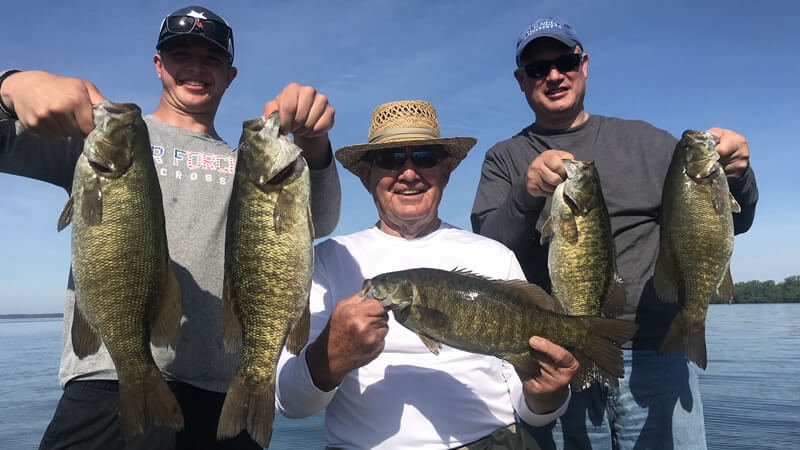

Lake Erie topwater smallmouth bass fishing can be spectacular, but surface action is rarely an all-day guarantee. The best anglers treat topwater as a timing and location pattern: use it when smallmouth are shallow enough, aggressive enough and positioned close enough to the surface to commit.
This guide focuses only on the topwater technique. For the full seasonal and structure strategy, use our Lake Erie smallmouth bass fishing guide. For current timing by month, see the Lake Erie seasonal forecast.
When Topwater Smallmouth Fishing Works Best on Lake Erie
Topwater becomes most useful when bass are feeding high in the water column or are positioned on shallow structure. Low-light periods, overcast conditions, wind-driven bait and active shallow fish can all increase the odds of a surface strike.
That does not mean you should force a topwater bite. If fish are clearly holding deep on sonar, move to a subsurface presentation instead of spending the entire day waiting for one dramatic strike.
Best Times of Day
Early Morning
Early light is often the easiest time to test a surface pattern. Start around shallow rock, points, reef edges, harbor mouths and other areas where bass can pin forage. If you see bait dimpling the surface or bass breaking water, a topwater bait becomes an obvious first choice.
Overcast and Windy Periods
Cloud cover can extend the topwater window. Moderate wind can also position bait against structure, but too much wave action makes it difficult to work many surface lures effectively. Let fish activity and boat control decide whether the pattern is worth continuing.
Evening
When shallow water cools and bait returns toward shore or structure, another short surface window can develop. Evening is especially useful when the midday bite has pushed bass deeper.
Best Lake Erie Topwater Lures for Smallmouth
Walking Baits
Walking-style topwaters cover water and trigger aggressive smallmouth. They are useful over rock, along breaks and around roaming fish when bass are willing to chase.
Popper-Style Baits
Poppers are better when you want to keep a lure in the strike zone longer. Use them around visible structure, protected pockets and fish that are active but not willing to chase a fast-moving bait.
Prop and Wake Baits
Prop baits and subtle wake baits can work when fish respond better to a slower surface disturbance. They are especially useful when a loud walking bait gets attention without producing committed strikes.
Color and Size
Do not overcomplicate color selection. Start by matching the size of the local forage and using a visible bait you can track in the waves. Natural baitfish colors are a safe starting point in clear water, while a strong silhouette can be useful in low light.
Smallmouth can slash at a bait rather than engulf it cleanly. If fish repeatedly miss, experiment with lure size, cadence and pauses before abandoning the pattern.
Where to Throw Topwater on Lake Erie
Shallow Rock and Reef Tops
Rocky habitat is fundamental Lake Erie smallmouth territory. When bass move onto shallow reef tops or rocky flats, a topwater bait lets you cover water without constantly hanging bottom.
Points and Breaklines
Cast across the shallow side of a point and work the bait toward deeper water. Bass often use the edge as both a feeding lane and an escape route.
Harbor and Bay Transitions
Protected areas can warm or cool differently from the main lake and may hold bait during weather changes. On the Pennsylvania side, Presque Isle and Erie-area water can provide a mix of protected and open-lake opportunities. See the Lake Erie Pennsylvania page for local planning.
Visible Bait and Surface Activity
Never ignore what the lake is showing you. Birds, fleeing bait and individual bass breaking the surface are stronger clues than a waypoint from last season.
How to Work a Topwater Bait for Smallmouth
Start with a steady cadence, then let the fish tell you what they want. Lake Erie smallmouth can react to a fast, aggressive walk one day and a long pause the next.
- Fast walk: use when bass are chasing and competing.
- Walk-pause: good when fish follow but do not commit.
- Pop-pause: keeps the lure in a small area.
- Dead stop: sometimes the strike comes after the bait has stopped completely.
Do Not Set the Hook Too Early
One of the easiest ways to miss a topwater smallmouth is to react to the explosion instead of the weight of the fish. Keep the retrieve moving until you feel the rod load, then sweep into the fish. Pulling instantly at the splash often takes the lure away from a bass that has not actually grabbed it.
Rod, Line and Tackle Setup
A medium or medium-heavy casting or spinning setup with enough tip to cast and work the lure is a practical starting point. Many anglers prefer braid for long casts and control, sometimes with a leader depending on water clarity and lure design. Avoid a heavy sinking leader that drags a floating bait down.
What to Throw When Topwater Stops
A topwater bite often fades as light increases or bass move deeper. Have a follow-up bait ready instead of wasting the rest of the day.
- drop shot for deeper fish;
- tube or Ned rig around bottom-oriented rock;
- swimbait for suspended or roaming smallmouth;
- jerkbait or crankbait when fish still want a moving presentation.
The best Lake Erie bass anglers switch between surface and subsurface presentations as the fish reposition.
Topwater Strategy by Season
Spring: surface opportunity depends on water temperature, weather and how shallow the fish are positioned.
Summer: early morning can be productive before bass shift deeper. See our August smallmouth guide for the low-light/deep-water transition.
Fall: cooling water and active feeding can create additional surface opportunities, but wind and weather windows become increasingly important.
Boat Position and Safety
Do not let a surface bite distract from Great Lakes boat control. Hold the boat so casts reach the productive structure without drifting directly over the fish. If wind builds beyond what can be managed safely, abandon the pattern or move to protected water.
For help choosing a captain familiar with Lake Erie bass water, compare our Lake Erie fishing charters.
Frequently Asked Questions
What is the best topwater bait for Lake Erie smallmouth?
Walking baits and poppers are reliable starting points. The better choice depends on wind, forage, water clarity and how aggressively bass are chasing.
What time of day is best for topwater smallmouth?
Early morning and other low-light periods are common starting windows, but cloud cover, wind and active surface bait can extend the bite.
Can you catch Lake Erie smallmouth on topwater in summer?
Yes. Summer topwater is often most efficient during lower-light periods before fish move deeper during the day.
Lake-wide planning: Start with the Lake Erie fishing hub to compare state waters, seasons and access before building a topwater smallmouth trip.