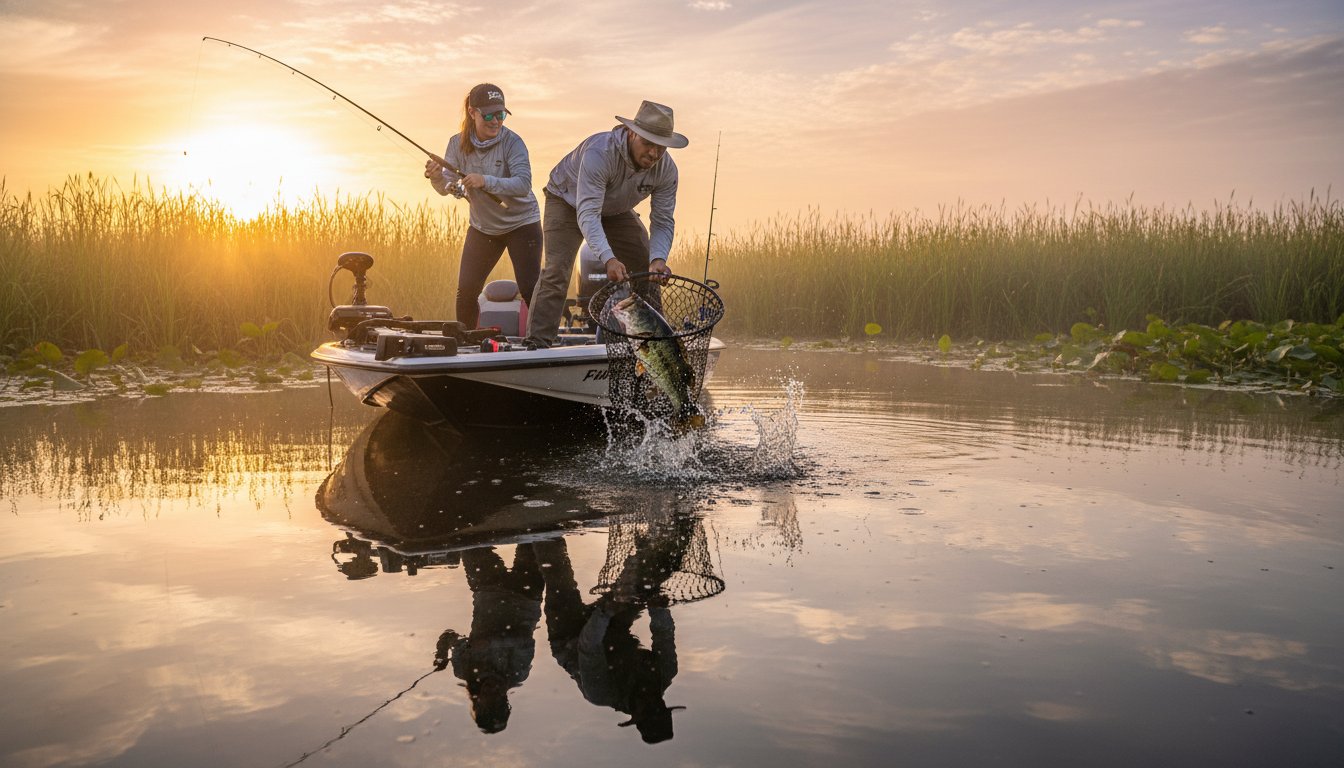

Did you know that 47% of the legendary 13 pound “Hall of Fame” bass recorded by the FWC were caught on natural baits? While many anglers spend thousands on the latest plastic lures, the real pros know that nothing beats the raw, frantic vibration of a wild shiner when you’re hunting a true Florida lunker. If you’ve ever felt the frustration of watching expensive bait die in the livewell or missing a massive strike because of a poor hookset, you’re not alone. Mastering shiner fishing is about more than just soaking bait; it’s a high-stakes game of managing live bait psychology to trigger a trophy’s predatory instinct.
I’m here to help you bridge the gap between a “good day” and the catch of a lifetime. In this guide, we’re diving deep into the tactical art of keeping your shiners active and “nervous” to ensure they stay out of the grass and in the strike zone. You’ll learn the three primary rigs used by the top guides at Lake Okeechobee and the St. Johns River to land 10 pound hawgs consistently. From choosing between $11 domestic and $30 wild shiners to perfecting your timing on the hookset, you’ll have the field-tested knowledge to dominate the water on your next expedition.
Key Takeaways
- Understand why the high-protein profile and frantic vibration of golden shiners trigger aggression in trophy bass that often ignore artificial lures.
- Learn how to select the right heavy-action rods and tackle to pull a 10 pound lunker out of the thickest Florida vegetation without snapping your line.
- Master the “nervous shiner” technique to read your bait’s behavior and predict exactly when a monster bass is about to strike.
- Discover the three professional rigging methods for shiner fishing that keep your bait active, visible, and enticing to world-class hawgs.
- Find out how a guided trip provides the ultimate shortcut to mastering the delayed hookset and accessing the highest quality wild-caught bait in the state.
What is Shiner Fishing and Why Does It Land Trophy Bass?
When I talk about shiner fishing, I’m not just talking about sitting on a bucket and waiting for a bobber to move. I’m talking about a tactical, high-energy method of presenting a high-protein Golden shiner to a predator that has seen every plastic worm in the tackle box. A trophy bass is a calculated hunter. To reach 10 pounds or more, these fish have learned to ignore anything that doesn’t look, move, or vibrate exactly like the real thing. This is why shiner fishing remains the undisputed king of big-bass tactics; it uses the bait’s own survival instinct to force a strike from a fish that isn’t even hungry.
The “Live Energy” factor is what separates a lunker from a skunked day. While artificial lures try to mimic the vibration of a baitfish, a live shiner creates a genuine panic signal that travels through the water column. In heavy cover like the thick hydrilla of Lake Okeechobee or the tangled pads of Rodman Reservoir, that vibration is a dinner bell that pulls hawgs out of their hiding spots from 20 feet away.
The Biology of the Strike
Bass rely heavily on their lateral line, a sensory organ that detects minute pressure changes and low-frequency vibrations in the water. When a shiner senses a predator, its heartbeat accelerates and its tail kicks become sharper and more frequent. This “distress signal” is something no lure can perfectly replicate. Visually, the broad, silvery side of a shiner provides a massive flash of light, even in stained or murky water, giving the bass a clear target to home in on. The erratic, high-frequency swimming of a live shiner bypasses a bass’s caution and forces an immediate, reflexive strike. You can learn more about how different bass species react to these triggers to better time your hooksets.
Wild vs. Domestic Shiners
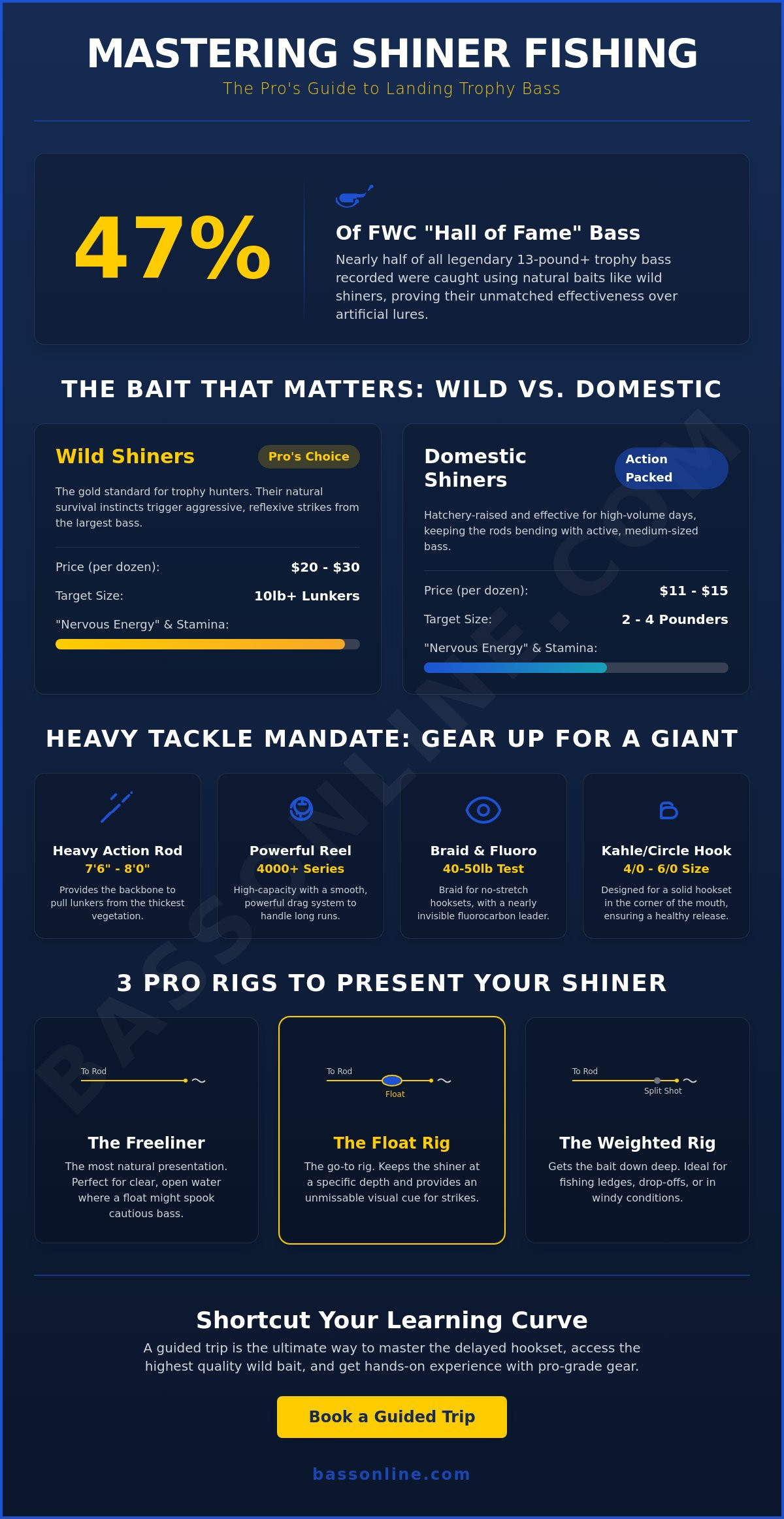
Not all bait is created equal. Domestic shiners, usually priced between $11 and $15 per dozen, are hatchery-raised and great for high-volume days when you want to keep the rods bending with 2 to 4 pounders. However, for a true trophy hunter, wild shiners are the gold standard. Wild shiners cost more, often $20 to $30 per dozen, but their “nervous energy” is on another level. Because they grew up dodging predators, they are faster, hardier, and much more likely to swim away from a bass rather than just hanging out. That flight response is exactly what triggers a 13 pound “Hall of Fame” bass to commit. Wild bait stays active longer in the heat and possesses the stamina required to pull your float through heavy vegetation where the giants live.
The Gear You Need to Handle Shiner-Eating Lunkers
If you’re serious about shiner fishing, leave the medium-light spinning rod at home. You’re hunting for a predator that can easily weigh double digits, and that fish is going to head straight for the thickest hydrilla or lily pads it can find the moment it feels the hook. You need gear that can stop a freight train. This is what we call the “Heavy Tackle” mandate. It’s about having enough leverage to turn a lunker’s head before it wraps you around a dock piling or buries itself in a mat of vegetation.
I always recommend a 7’6″ to 8’0″ heavy action rod. That extra length gives you the reach to flip a large shiner into tight pockets and provides the massive backbone required to winch a hawg out of the salad. Pair this with a high-capacity baitcasting reel or a 4000-series spinning reel. You need a smooth, powerful drag system that won’t stutter when a 10 pounder decides to make a run for the horizon. If you want to see how the pros rig these setups in person, you can always check out our guided fishing trips to get hands-on experience with top-tier gear.
Terminal Tackle Essentials
Your hook is the only thing between you and a personal best. Most professional guides use 4/0 to 6/0 Kahle or circle hooks. These are designed to navigate the mouth of a large bass without gut-hooking the fish, ensuring a healthy release. For your presentation, a foam or cork float is essential for keeping track of your bait’s position and detecting the strike. If you’re fishing deeper water or want a more subtle look, “free-lining” without a float works wonders. Just remember to use a 40lb to 50lb fluorocarbon leader. It’s nearly invisible to the fish and provides the abrasion resistance you need when your line is rubbing against sharp sawgrass or submerged timber.
Why Braid is Non-Negotiable
Monofilament has too much stretch for this specialized game. When a bass hits a shiner, you often have 30 yards of line out. Braided line, specifically 50lb to 65lb test, has zero stretch, meaning every ounce of power from your hookset goes directly into the fish’s jaw. Braid also acts like a saw; it literally cuts through lily pads and hydrilla that would snap mono like a rubber band. The high sensitivity of modern braid allows you to feel the shiner’s frantic heartbeat as it tries to escape, giving you a split-second warning before the explosion. This tactile connection is the secret to anticipating the strike before the bobber even goes under.
Master Rigging: 3 Ways to Present a Shiner
Hook placement is the steering wheel of your presentation. If you just pin a hook anywhere, your bait will likely swim straight into the nearest thicket of weeds and hide. In shiner fishing, we use specific rigging points to dictate the bait’s direction and depth. This tactical control is what allows us to place a live offering exactly where a trophy bass is waiting to ambush. Whether we’re fishing the expansive flats of Lake Toho or the heavy grass lines of the Everglades, your rig must match the structure. Using the wrong rig is the fastest way to lose a $30 dozen of wild bait to the bottom of the lake.
Free-lining is the most natural method in the pro’s playbook. You simply hook the shiner and let it swim on a slack line. This works best in open water or along the edges of lily pads where the bait can roam freely without getting snagged. For more control, we use under-the-float rigging. By adjusting a slip-cork or a fixed foam float, you can keep your shiner suspended exactly six inches above a submerged grass bed. Finally, we use trolling or drifting to cover massive amounts of water. This involves moving the boat slowly with the trolling motor or wind to drag multiple baits across a productive flat, essentially searching for the most aggressive fish in the area.
The Nose Hook: For Trolling and Drifting
When we’re on the move, the nose hook is the industry standard. To rig this correctly, take your 5/0 Kahle hook and thread it upward through the bottom lip and out through the top lip, just in front of the eyes. This keeps the shiner’s mouth closed, which is vital. If the mouth stays open while the boat is moving, the shiner will “drown” as water forces its way into the stomach rather than over the gills. This rig ensures your bait swims straight and stays incredibly active while you cover water at 0.5 to 1.5 miles per hour. It’s the perfect way to locate schools of bass on a new lake.
The Dorsal Hook: For Stationary Float Fishing
If we’ve located a specific hole in the hydrilla where a hawg is likely sitting, the dorsal hook is the way to go. You want to place the hook point just behind the dorsal fin, about an eighth of an inch into the meat. The goal is to avoid the spine at all costs; if you nick the backbone, you’ll paralyze the bait instantly. This hook placement acts as a rudder. Because the line is pulling from the top of its back, the shiner will instinctively swim down and away from the boat. This forces the bait to dive deep into the cover where the biggest bass are typically holding. If you want to dive deeper into specific seasonal patterns, our outdoor blog features weekly updates on which rigging styles are producing the most lunkers right now.
Tactical Bait Management: Keeping Your Shiners ‘Nervous’
Most weekend warriors think shiner fishing is a passive game. They toss a bait out, crack a soda, and wait for something to happen. That is a mistake that costs you trophies. To land a 10 pounder, you have to be an active manager of your bait’s psychology. A “lazy” shiner that is just hanging out is invisible to a big bass. You want a bait that is terrified. When a shiner is “nervous,” it emits high-frequency vibrations that act like a homing beacon for a lunker’s lateral line.
If your shiner stops moving for more than a few minutes, give the rod a sharp twitch. This startles the bait and forces it to kick hard. That sudden burst of energy often triggers a reaction strike from a bass that was just window shopping. When that strike finally comes and your float disappears, stay calm. A trophy bass typically grabs a shiner by the middle and then pauses to turn it head-first before swallowing. If you swing the second the float goes under, you will pull the hook right out of its mouth. Wait until you feel the steady weight of the fish moving away before you drive that hook home. If you want to see these tactics in action, book your trophy hunt today and let a pro show you the ropes.
Reading the Float
Your float is a window into what is happening under the surface. If it starts “dancing” or vibrating rapidly, a predator is likely stalking your bait. This is the “nervous” phase. A small bass will often “pop” the float up and down or zip it across the surface. A true trophy hawg is different; the float will often slowly sink or “submarine” steadily out of sight. Keep your eyes peeled for a sudden silver flash near your bait. That’s the shiner trying to outmaneuver a bass, and it means an explosion is imminent.
Livewell Science 101
You cannot keep $30-a-dozen wild shiners in a hot, stagnant tank. Water temperature is everything. If the lake water is 85 degrees, your shiner’s metabolism will skyrocket, and it will burn out in 20 minutes. I always recommend keeping your livewell water about 5 to 10 degrees cooler than the lake. Use a high-quality oxygenator and add a slime-coat protectant to the water. This removes harmful chemicals and keeps the shiners strong. Never overcrowd the tank. Putting three dozen wild shiners in a small livewell is a recipe for “lazy” bait. Give them room to breathe so they have the energy to perform when they hit the water. You can check our Florida fishing reports to see which lakes are currently producing the best shiner bites.
Why a Guided Shiner Trip is Your Best Bet for a Personal Best
If you want to join the ranks of the 16,615 anglers who have submitted trophy bass to the FWC TrophyCatch program since 2012, you need every advantage possible. While shiner fishing is the most effective way to reach that goal, the logistics can be overwhelming for a solo trip. Sourcing high-quality wild bait is often the first hurdle. During the peak spawn months of February and March, bait shops often run out of wild shiners by 7:00 AM. A professional charter ensures that several dozen of the liveliest, most aggressive wild shiners are already in the livewell before you even step onto the dock.
Beyond the bait, there is the “feel” of the fight. As I mentioned earlier, the delayed hookset is a mental game. It’s hard to stay patient when a lunker submarines your float, but having a pro guide standing next to you, coaching you on exactly when to engage the reel, makes all the difference. We see these strikes every day and can tell the difference between a 3 pounder playing with the bait and a 10 pound hawg committing to the kill. That expert eye is the shortcut to mastering the heavy tackle battle without losing the fish of a lifetime to a premature swing.
The Professional Learning Curve
One day on the water with a seasoned expert beats years of trial and error on your own. We spend thousands of hours tracking seasonal migration patterns across the premier US lakes, meaning we don’t waste time fishing “dead water.” Whether it’s navigating the complex sawgrass of the Everglades or the deep hydrilla edges of Lake Toho, we handle the navigation and positioning so you can focus on the strike. You’ll learn how to manage the “run” under pressure and how to use your rod’s leverage to keep a giant from burying itself in the salad. Plus, our “No Fish, No Pay” policy on many trips means we’re just as invested in your success as you are.
Book Your Trophy Expedition
Spring and fall remain the peak windows for targeting legendary lunkers. During these times, the biggest females are moving into the shallows, and their need for high-protein meals makes them incredibly susceptible to a well-placed shiner. When you fish with Bass Online, all you need to bring is a valid Florida freshwater fishing license, which is just $17.00 for residents or a 3-day non-resident pass. We provide the world-class tackle, the local knowledge, and the passion to help you land a true wall-hanger. Shiner fishing isn’t just a hobby; it’s the ultimate tactical shortcut to the 10 pound club. Let’s go get your personal best.
Claim Your Seat in the 10-Pound Club
You now have the tactical blueprint to dominate the water using shiner fishing. From selecting 50 pound braid that saws through hydrilla to mastering the “nervous” vibration that triggers a reflexive strike, these field-tested methods are your fastest route to a personal best. FWC data proves that 47% of the “Hall of Fame” bass weighing over 13 pounds were landed on natural bait. Success isn’t just about luck; it’s about managing the psychology of the hunt and having the patience to wait for that heavy, submarine strike.
If you’re ready to skip the trial and error and get straight to the action, let us handle the logistics. We are the largest freshwater guide service in the US, backed by thousands of 5-star reviews and expert local guides with decades of experience on lakes like Okeechobee and Toho. We provide the premier wild bait and the world-class tackle needed to land a legendary lunker. Ready to land your trophy? Book a professional guided bass trip today! The hawg of a lifetime is waiting in the grass. Let’s go get it.
Frequently Asked Questions
What is the best size shiner for trophy bass fishing?
For trophy bass, you should target shiners between 6 and 10 inches long. While smaller 4 inch baits work for catching numbers, a 10 pound hawg wants a high protein meal that justifies the energy spent on the strike. Using larger bait is a proven way to weed out the smaller fish and ensure that when your float goes down, it is likely a lunker on the other end.
How do I hook a shiner so it stays alive longer?
The secret is avoiding the vital organs and the spine. For stationary fishing, place the hook just behind the dorsal fin, taking care to stay above the backbone to prevent paralysis. If you are moving the boat, hook them through the lips from bottom to top. This keeps their mouth closed so they don’t drown while being pulled through the water column, keeping your shiner fishing presentation perfect.
Can I use shiners for both largemouth and peacock bass?
Yes, both species are aggressive predators that cannot resist a live shiner. Largemouth bass in the Everglades or Lake Okeechobee typically target the largest shiners available in the grass. Peacock bass are equally fierce but often prefer a slightly smaller, faster moving 4 to 6 inch shiner. Both species will hammer a live bait with much more aggression than any artificial lure in the tackle box.
Do I need a special rod for shiner fishing?
You definitely need a heavy action rod at least 7 feet 6 inches long to handle the weight of the bait and the power of the fish. Shiner fishing involves casting heavy loads and winching large fish out of dense vegetation. A flimsy rod will lack the backbone needed to drive a large 5/0 hook into a bass’s hard jaw, especially when you are fighting a fish over 8 pounds.
Is it better to fish shiners with or without a float?
The choice depends on the cover you are fishing. A float is essential for keeping your bait at a specific depth above submerged grass or near weed lines. However, free lining without a float is a pro secret for deep water ledges or when fish are spooked. Free lining allows the shiner to swim naturally into deeper holes where a float might restrict its movement or snag on the surface.
Where can I buy wild shiners for bass fishing?
Wild shiners are primarily sold at specialized bait and tackle shops near major Florida lakes like Toho or Okeechobee. Because they are wild caught, availability depends on local weather and trapping conditions. It is always smart to call ahead or book a charter, as professional guides usually have the best connections for securing high quality wild bait during the peak spring and fall seasons.
What happens if a bass swallows the hook while shiner fishing?
If a bass is deep hooked, the best practice is to cut the line as close to the hook as possible and release the fish immediately. Trying to tear the hook out can cause fatal damage to the gills or stomach. Bass have strong stomach acids that can often break down or pass a hook over time, allowing the fish to survive and eventually reach trophy status for the next angler.
How long can a shiner stay active on the hook?
A healthy wild shiner can stay active for 20 to 40 minutes if handled correctly and kept in cool, oxygenated water. If the bait stops moving or feels heavy on the line, it is time for a fresh one. Remember that a lazy shiner won’t trigger the predatory response you need to land a trophy, so don’t be afraid to change baits frequently to keep that nervous energy high.

Article by
Mr Bass
Todd Kersey, widely known as Mr. Bass by Field & Stream, is a professional angler, accomplished author, and dedicated philanthropist with a lifelong passion for bass fishing. Armed with a degree in Outdoor travel, Mr. Bass has expertly combined his knowledge with his practical fishing experience to become one of the most respected names in the bass fishing, his deep understanding of bass habitats, and fish behavior has earned him numerous accolades as a asset of the sport. Serving 8 years as FWC Stakeholder Chairperson. Leading and passing cutting-edge legislation, such as the Black Bass Management plan, and successfully building, passing, and financing the Trophy Catch program. As CEO, he is committed to giving back to the community through his philanthropic efforts. He supports a variety of causes, especially those centered around physical disabilities. Through his advocacy, his mentorship programs inspire anglers to engage in fishing stewardship, helping to raise more than $ 18 million in donations. Mr. Bass continues to inspire anglers and outdoor enthusiasts alike with his commitment to the sport and the world around him.