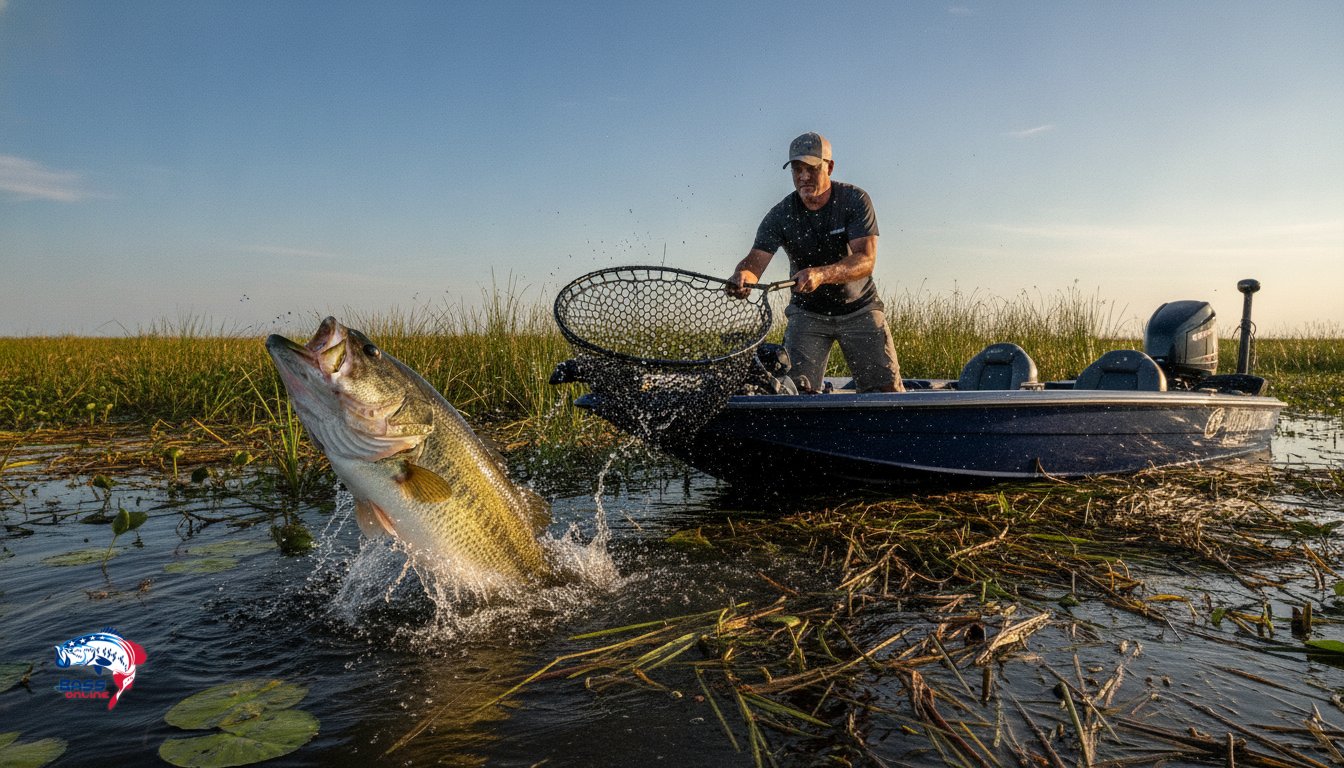

Lake Okeechobee isn’t just a body of water; it’s a massive, 730-square-mile grass jungle where trophy bass act more like apex predators in a swamp than fish in a pond. If you’ve ever felt overwhelmed by the endless miles of bulrush or frustrated by the 11.06-foot low water levels we’re seeing in 2026, you’re not alone. It’s easy to get lost in the thick vegetation, but that’s exactly where the giants hide. This guide is your shortcut to mastering Lake Okeechobee largemouth bass fishing, giving you the professional edge to turn a daunting expanse into your personal trophy playground. You’ll learn the exact seasonal migrations, the “punching” and “frogging” techniques required for heavy cover, and the specific lure selections that trigger strikes from 10-pound monsters. We’re breaking down everything from navigating shallow hazards to choosing between live shiners and artificials so you can fish with total confidence. It’s time to stop guessing and start landing the biggest bass of your life.
Key Takeaways
- Learn how the lake’s shallow 9-foot average depth creates rapid temperature swings that dictate exactly where bass hide throughout the day.
- Master the 2026 biological fishing calendar to time your Lake Okeechobee largemouth bass fishing trip during peak spawning windows for trophy-sized catches.
- Identify the specialized gear requirements, including 7’6″ heavy rods and 65lb braided line, needed to successfully “punch” through thick matted vegetation.
- Discover why Florida wild shiners remain the gold standard for enticing 10-pound trophy bass out of the heaviest cover.
- Understand why professional local expertise is vital for safely navigating the complex “inland sea” and locating the most productive fishing pockets.
Understanding the Lake Okeechobee Ecosystem
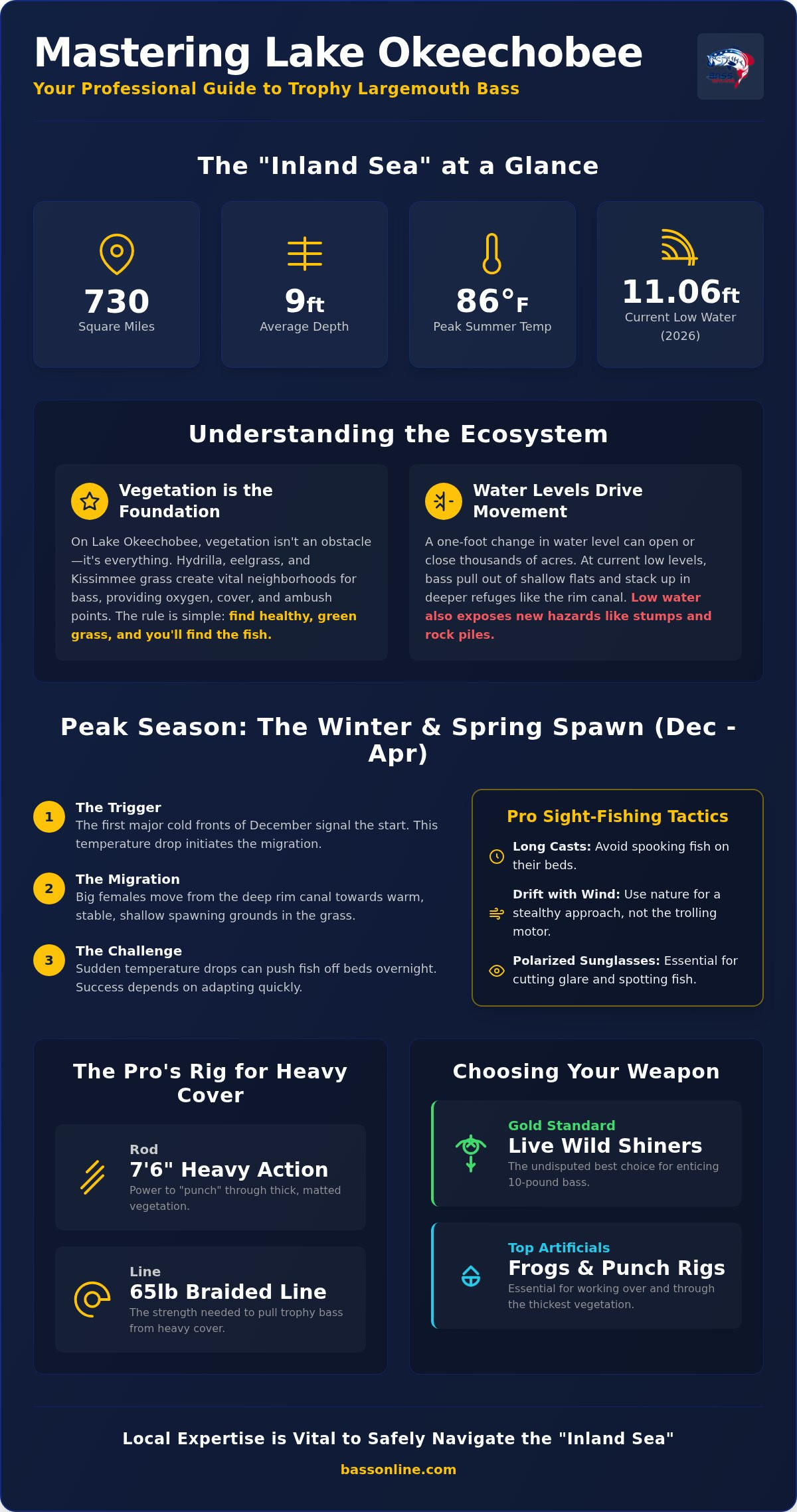
Lake Okeechobee isn’t just a lake; it’s a massive 450,000-acre “inland sea” that dominates the South Florida landscape. For a quick Lake Okeechobee overview, it’s the second-largest freshwater lake within the lower 48 states. Because the average depth is only about nine feet, the water behaves differently than deep highland reservoirs. Sun and wind reach the bottom quickly, causing rapid temperature fluctuations. In August, water temperatures often hit 86° F, which can send fish into a feeding frenzy or a deep funk within hours depending on the afternoon rain. This shallow, bowl-like structure is why we call it “Big Water.” It’s a vast prairie where trophy bass grow to massive proportions by hunting through endless fields of vegetation.
The Kissimmee River acts as the primary northern lifeblood, pumping fresh water and nutrients into the system. This constant flow keeps the ecosystem vibrant and supports the massive forage base of shad, bluegill, and shiners. These aren’t your typical pond fish; they’re rugged predators built for the heavy current and thick cover found in this wild environment. Mastering Lake Okeechobee largemouth bass fishing starts with respecting this scale. You aren’t just looking for a single rock pile; you’re looking for the right “neighborhood” within a 730-square-mile jungle.
To better understand how the pros break down this massive water body, watch this helpful video:
The Importance of Aquatic Vegetation
Vegetation isn’t an obstacle here; it’s the foundation of the entire fishery. Hydrilla, eelgrass, and Kissimmee grass act as the primary “neighborhoods” where big fish live. These plants provide vital oxygen and thick cover for the Florida bass, allowing them to ambush prey with maximum efficiency. The grass also acts as a natural filter. In areas with healthy vegetation, you’ll find much clearer water, which is essential for sight-fishing during the winter spawn. When the grass dies back or gets muddy, the bass move. If you find the healthy, green “good stuff,” you’ve found the fish.
Water Levels and Bass Movement
Water levels are the single most important factor for predicting fish location on the Big O. As of mid-2026, the lake is hovering around 11.06 feet, which is considered low. A one-foot change in depth can open or close thousands of acres of marshy flats. When levels drop, fish pull out of the shallow grass and stack up in deeper refuges like the rim canal. This deep-water canal circles the lake and provides a stable environment when the interior flats get too thin. Monitoring daily water level data helps you predict whether fish are pushing into the weeds or backing off into the “ditch.” Just be careful; low water means new navigational hazards are everywhere. Stumps and rock piles that stay hidden during high water are now just inches below your prop.
Seasonal Patterns for Lake Okeechobee Largemouth Bass
Bass on the Big O don’t look at a calendar; they react to water temperature, moon phases, and water levels. If you’re chasing a double-digit trophy, your strategy has to shift with these biological triggers. In 2026, the lower water levels mean fish are more concentrated, making the transition periods from the main lake to the shallow flats more predictable. You can check the latest FWC Lake Okeechobee Fishing Report to see how these patterns are shifting week to week. Understanding these migrations is the difference between a frustrating day and a career-best catch.
The Winter and Spring Spawn (December – April)
This is the peak of Lake Okeechobee largemouth bass fishing. When the first major cold fronts of December arrive, big females begin their migration from the rim canal toward the shallow spawning grounds. These fish want the warmest, most stable water they can find, often tucked deep into the Kissimmee grass. Cold fronts are the biggest challenge here. A sudden drop in temperature can pull fish off their beds and back into deeper water overnight. If you’re sight-fishing, here is how to stay stealthy:
- Make long casts to avoid crowding the bed.
- Use the wind to drift into position instead of the trolling motor.
- Wear high-quality polarized sunglasses to cut the surface glare.
If you spook a 10-pounder, she might not come back for hours. Patience is your best tool during the spawn. The big girls are wary, but they can’t resist a perfectly placed bait if you stay quiet.
Summer Tactics and Early Fall Transitions
Many anglers pack it up when the Florida heat arrives, but they’re missing out on some of the most aggressive bites of the year. When water temperatures hit that 86° F mark in August, oxygen becomes the priority. I focus on areas with moving water or heavy current, especially near the northern gates where the Kissimmee River enters. The morning bite is critical. From sunrise until about 10:00 AM, topwater lures like frogs or walking baits produce explosive strikes. As the sun gets high, the fish move to the outside grass lines where the water is slightly deeper and cooler. If you’re planning a trip during these warmer months, it’s a good idea to talk to a local pro about which sections of the lake are currently holding the best flow.
Live Bait vs. Artificial Lures: Choosing Your Weapon
One of the most common questions I get out on the water is whether to use live bait or artificial lures. There’s no single right answer, but there is a right tool for the job. On a lake this big, choosing the wrong approach can lead to a long, quiet day. Experienced fishing guides often carry both to adapt to what the fish want at that exact moment. While live bait is the undisputed king for sheer trophy size, artificial lures are your best bet for searching through miles of grass to find active schools.
The Power of the Wild Shiner
The Florida wild shiner is the gold standard for Lake Okeechobee largemouth bass fishing. Don’t confuse these with the silver, store-bought domestic shiners you find in most bait shops. Wild shiners are heartier, faster, and possess a natural instinct to dive into the grass, which is exactly what triggers a trophy bass to strike. We typically use a “shiner cork” setup, which is a large foam float that keeps the bait at a specific depth. You have to learn to read that cork. When it starts dancing or “running,” it means a predator is nearby. We look for points in the reeds or pockets in the hydrilla to anchor up and let the shiners do the work. It’s an interactive way to fish that consistently puts 8 to 10-pounders in the boat.
Top Artificial Lures for the Big O
If you prefer the challenge of the “bite” on a lure, you need to be ready to cover water. Lake Okeechobee is too big to fish slowly with a plastic worm all day. I rely on high-vibration tools like the vibrating jig, often called a chatterbait, to find active schools. In 2026, this remains a mandatory tool because it cuts through thin grass without fouling. For the thickest cover, swimbaits like the “Big Easy” are legendary. They mimic the profile of a bluegill or a small shad perfectly. Picking colors is simpler than you think. Florida water is stained, so “Junebug” and “Black/Blue” are the two most dominant choices. These colors create a strong silhouette that bass can see even in the murkiest vegetation. Using these lures allows you to cover five times the water you would with live bait, making them essential for scouting new areas.
Advanced Tactics for Heavy Cover: Punching and Frogging
When you’re out on the Big O, the “matted cover” isn’t just a navigational hazard. It’s the primary sanctuary for the largest bass on the lake. These mats of floating vegetation create a ceiling that provides shade, cooler water, and a perfect ambush point. To get to them, you need specialized gear. This is combat fishing. We use 7’6″ or longer heavy-action rods paired with 65lb braided line. Anything less and a trophy fish will wrap you around a stalk of Kissimmee grass and break you off before you can blink. Penetrating that thick green canopy requires heavy tungsten weights, often 1.5oz or more, to ensure your bait reaches the strike zone below. Mastering Lake Okeechobee largemouth bass fishing means getting comfortable where others are afraid to cast.
The Art of the Punch
Punching is a precision technique that turns a thick weed mat into a gold mine. It starts with selecting the right entry point. Look for “seams” or small holes where the vegetation isn’t quite as tight. Once you pitch your bait, focus on a controlled fall. You want the weight to pull the lure straight down. Most strikes happen on the initial drop, so keep your finger on the line. If it stops early or twitches, it’s time for the hookset. This isn’t a gentle flick. You need a massive, heavy-lifting pull to turn the fish’s head and drag it through the muck. If you hesitate, the bass will bury itself in the roots, and the fight is over.
Hollow-Body Frogging Mastery
For those who live for the visual explosion, topwater frogging in the lily pads is unbeatable. The key to success is learning to “walk the frog” in tight pockets of open water. Use short, rhythmic twitches of the rod tip to make the lure dance side-to-side. When a bass blows up on it, don’t set the hook immediately. This is the hardest part for most anglers. You must wait for a 2-second pause to ensure the fish has actually inhaled the bait. I often modify my frogs by trimming the skirted legs or slightly bending the hooks outward to improve the hook-up ratio. These small tweaks make a huge difference when you’re targeting pressured fish. If you’re ready to test your skills against a Florida giant, book your trip with us and let’s get on the water.
Planning Your Professional Lake Okeechobee Charter
Even with the best tactics in your pocket, Lake Okeechobee is a 730-square-mile beast that demands respect. Navigating this “inland sea” isn’t just about finding the right grass line; it’s about staying safe in a complex environment. With water levels hovering around 11.06 feet in mid-2026, hidden rock piles and stumps are closer to your lower unit than ever. Hiring a professional guide isn’t just a luxury. It’s a necessity for anyone who wants to spend their day mastering Lake Okeechobee largemouth bass fishing instead of calling a tow boat. At Bass Online, we’ve been leading the industry since 1997, providing the professional reliability and local expertise you need to conquer this massive fishery.
When you step onto one of our boats, you’re not just a passenger. You’re a student of the game. We take pride in being more than just a boat ride; we’re mentors who teach you the “why” behind every decision we make. Whether we’re breaking down a complex vegetation mat or demonstrating a specific retrieve style, you’ll walk away with skills you can take back to your home waters. Every trip is an opportunity to learn the nuances of Lake Okeechobee largemouth bass fishing from someone who lives and breathes these waters every day.
What to Expect on a Guided Trip
Your day typically starts at the crack of dawn, meeting your guide at a local marina to catch the best morning bite. We offer 4, 6, or 8-hour itineraries designed to fit your schedule and fishing goals. Your guide acts as your navigator and teacher, using high-end electronics and decades of field-tested knowledge to put you on the fish. While we provide all the professional-grade tackle and equipment, you should pack these essentials to stay comfortable:
- High-SPF sun protection to handle the intense Florida sun.
- Polarized sunglasses to cut the glare and help you see into the water.
- Lightweight rain gear for those sudden afternoon showers.
- Your favorite snacks and drinks to keep your energy up (we provide the cooler and ice).
Booking and Preparation
The first step in your journey is securing your Florida fishing license. Don’t wait until you’re at the boat ramp; get it online before you arrive to save time. For non-residents in 2026, a 3-day license is only $17.00, making it a simple part of your trip preparation.
Think about your goals before you book. If you want a shot at a double-digit trophy, target the winter spawn from December through April. If you’re looking for high-action topwater strikes and aggressive schools, the summer months are your best bet. Lake Okeechobee is a bucket-list destination that rewards the prepared angler. It’s time to stop dreaming about that personal best and start making it happen with the best in the business.
Ready to Land Your Florida Trophy?
Lake Okeechobee is a world-class proving ground where every cast holds the potential for a personal best. Success on this “inland sea” requires more than just luck. It’s about respecting the shallow ecosystem and timing your trip with the biological triggers of the spawn or the summer current. Whether you’re mastering the art of the punch in heavy mats or reading the panic of a wild shiner, you now have the pro-level strategy to conquer the Big O. Lake Okeechobee largemouth bass fishing is a bucket-list experience that rewards patience and local knowledge. With over 25 years of professional guiding experience and thousands of verified 5-star reviews, our team is ready to show you the secrets of these waters. We provide guaranteed professional local guides who live for the thrill of a successful expedition. Don’t leave your trophy goals to chance on this massive 730-square-mile jungle.
Book Your Lake Okeechobee Trophy Bass Adventure Today
The fish of a lifetime is waiting in the grass. Let’s get out there and make it happen!
Frequently Asked Questions
What is the best month for Lake Okeechobee bass fishing?
January and February are traditionally the peak months for Lake Okeechobee largemouth bass fishing because the biggest females are on the beds. However, the action doesn’t stop when the weather warms up. The summer bite in August is incredible for high-intensity topwater strikes near moving water. If you want a double-digit giant, aim for the winter. If you want high numbers and aggressive blow-ups, the warmer months are absolutely unbeatable.
Do I need a special license to fish Lake Okeechobee in 2026?
You’ll need a standard Florida freshwater fishing license to legally fish these waters. In 2026, a resident annual license is $17.00, and non-residents can purchase a 3-day license for the same $17.00 price. These are available online through the FWC website. Please remember that anyone under 16 or Florida residents over 65 don’t need a license to join the fun. It’s best to have your digital copy ready before we launch.
Can I catch trophy bass on Lake Okeechobee without live bait?
You can definitely land a monster on artificials, and many of our most exciting catches in 2026 come on lures. While wild shiners are a trophy hunter’s best friend, techniques like punching heavy mats with 1.5oz tungsten weights or walking a hollow-body frog produce explosive strikes. Artificial lures give us the advantage of covering more water, which is essential for finding active schools on a 730-square-mile lake.
How deep is Lake Okeechobee on average?
The lake is surprisingly shallow with an average depth of only nine feet. This shallow profile is why vegetation like hydrilla and eelgrass is so prevalent across its 730 square miles. Because it’s so thin, the water temperature can swing rapidly. In mid-2026, we are seeing water levels around 11.06 feet, which makes navigating the flats a task for those with local experience who know where the hidden hazards lie.
What is the most effective lure color for Florida bass?
Dark, high-contrast colors like Junebug and Black/Blue are the most effective in our stained waters. These shades create a bold silhouette that bass can easily track through thick vegetation or murky depths. If the sun is high and the water is exceptionally clear in the grass, I might switch to a more natural watermelon seed or green pumpkin to mimic local forage. Always choose a color that stands out in the cover.
Is it safe to navigate Lake Okeechobee without a guide?
Navigating this massive lake can be extremely treacherous for those without local knowledge. At current 2026 water levels of 11.06 feet, rock piles and stumps that are usually buried deep are now lurking just inches below your prop. A professional guide knows the safe trails and understands how the wind can turn this shallow lake into a dangerous, choppy sea in just a matter of minutes. Safety should always come first.
What happens if the weather is bad on my scheduled trip?
Safety is my top priority when we’re out on the water. If high winds or lightning make conditions dangerous, we’ll work with you to reschedule your trip for a safer window. Florida weather moves fast, and a morning storm often clears out for a legendary afternoon bite. We monitor the radar constantly to ensure you stay in the action without taking any unnecessary risks during your professional fishing expedition.
Are there other fish species to catch in Lake Okeechobee besides bass?
The lake is a diverse fishery beyond just bass. You’ll find world-class Black Crappie, especially during the cooler months, with a generous daily bag limit of 25 fish per person. There are also aggressive panfish and non-native species like Mayan Cichlids that have no bag or size limit. These species provide excellent action for families or anyone looking to stay busy when the bass are being a bit more selective in the heat.

Article by
Mr Bass
Todd Kersey, widely known as Mr. Bass by Field & Stream, is a professional angler, accomplished author, and dedicated philanthropist with a lifelong passion for bass fishing. Armed with a degree in Outdoor Travel, Mr. Bass has expertly combined his knowledge with his practical fishing experience to become one of the most respected names in bass fishing.
His deep understanding of bass habitats and fish behavior has earned him numerous accolades as an asset to the sport. Serving 8 years as FWC Stakeholder Chairperson. Leading and passed cutting-edge legislation, such as the Black Bass Management Plan, and successfully built, passed, and helped finance the Trophy Catch program.
As CEO, he is committed to giving back to the community through his philanthropic efforts. He supports a variety of causes, especially those centered around physical disabilities. Through his advocacy, his mentorship programs inspire anglers to engage in fishing stewardship, helping to raise more than $18 million dollars in donations. Mr. Bass continues to inspire anglers and outdoor enthusiasts alike with his commitment to the sport, industry, and the world around him.