How Deep is Lake Okeechobee? A Pro Angler’s Guide to the Big O (2026)

Lake Okeechobee is a giant saucer where 12 inches of depth change can be the difference between a dry hull and a trophy catch. It's a challenge that...

Lake Okeechobee is a giant saucer where 12 inches of depth change can be the difference between a dry hull and a trophy catch.

Lake Okeechobee is a giant saucer where 12 inches of depth change can be the difference between a dry hull and a trophy catch. It’s a challenge that every angler faces on the Big O, especially when you realize that how deep is lake okeechobee is a question with a moving answer. As of May 8, 2026, the water level is sitting at just 11.47 feet. I know it’s stressful to navigate a 730-square-mile lake that averages only 9 feet deep, but understanding these shallow patterns is the secret to finding the biggest bass in the grass.

I’m going to show you exactly how to read the current water levels and find the hidden deeper channels where trophy lunkers congregate during low water. You’ll gain the confidence to run your boat safely past submerged rocks and through the complex lock systems while staying on top of the latest 2026 fishing regulations. We’ll dive into the specific navigation hazards caused by recent lock closures and the seasonal behaviors that will help you land a legendary Florida hawg with total peace of mind.

Key Takeaways

  • Understand exactly how deep is lake okeechobee and why its shallow saucer shape makes it the ultimate habitat for trophy bass.
  • Locate the 20-foot depths of the Rim Canal to ensure safe navigation and find deep-water refuge for lunkers when levels drop.
  • Master the skill of finding subtle six-inch depth breaks that serve as prime ambush spots for legendary Florida hawgs.
  • Learn how to monitor US Army Corps stage levels to avoid submerged hazards and time your trips with critical water releases.
  • Gain the local edge by prioritizing real-time water conditions over outdated depth charts to keep your boat safe and your lines tight.

The Big Water: Why Lake Okeechobee’s Depth Surprises Most Anglers

I’ve guided on these waters for years. Every time a new client steps on my deck, they look out at the horizon and ask the same thing. They want to know how deep is lake okeechobee when it looks like a literal ocean. It covers roughly 730 square miles, but it’s essentially a massive, shallow limestone saucer with an average depth of just 9 feet. As of May 2026, the average depth remains 9 feet while the maximum depth reaches only about 12 to 13 feet in the deepest pockets.

The Seminole name for this place is ‘Oki-chubi,’ which translates to ‘Big Water.’ It’s a fitting name, but don’t let the size fool you. That ‘bigness’ refers strictly to the surface area and the sheer volume of grass, not the distance between your hull and the bottom. Navigating Lake Okeechobee requires a completely different mindset than fishing deep reservoirs in the north. You aren’t looking for 50-foot drop-offs here. You’re looking for subtle changes in a giant, flat basin.

To better understand this concept, watch this helpful video:

The “Saucer” Effect: Understanding Lake Topography

The lake bottom isn’t filled with underwater mountains or deep ravines. It’s mostly flat with a very slight slope toward the center. This limestone shelf acts like a giant plate that holds water but doesn’t allow for much vertical variety. Because it’s so shallow, the limestone affects everything from water retention to clarity. When the wind kicks up, that shallow bottom gets stirred up fast, turning the water murky in minutes. The 40-foot high Herbert Hoover Dike contains this massive volume of water, keeping the ‘saucer’ full and protecting the surrounding communities from the lake’s power.

Average vs. Reality: What Anglers See on the Sonar

While the charts say 9 feet is the average, the reality for a bass fisherman is much different. You will spend 90% of your time in 3 to 7 feet of water. That’s where the vegetation thrives and the trophy bass hide. When you ask how deep is lake okeechobee, you have to remember that the answer changes depending on where you drop your trolling motor. If you see 10 feet on your sonar, you’re likely in a boat run or near the center of the lake. The northern basin gets a lot of its depth and flow from the Kissimmee River, which acts as the lifeblood for the lake’s ecosystem. This inflow keeps the northern sections slightly more dynamic, but the rule remains the same: stay shallow to find the fish. For more on these specific locations, check out our guides to Lake Okeechobee.

Decoding the Bottom: From the Rim Canal to the Limestone Basin

Most folks look at a map and think the whole lake is a uniform puddle. It isn’t. To master the Big O, you have to understand the ‘Rim Canal.’ This is the deepest part of the entire system. It was created by the massive excavation used to build the Herbert Hoover Dike. In some areas, you’ll find depths reaching 15 to 20 feet. This creates a sharp contrast between the ‘inside’ marshy areas and the ‘outside’ canal system. It’s also a critical part of South Florida’s water supply and flood management. Understanding how deep is lake okeechobee means knowing the difference between the protected canal and the open, wind-swept basin.

Wind is a massive factor here. Because the lake is so shallow, a strong wind can literally push the water from one side to the other. I’ve seen a stiff north wind drop the water level in the Monkey Box by two feet in just a few hours. This phenomenon, often called a ‘seiche,’ can leave you high and dry on a limestone shelf that had plenty of clearance when you launched in the morning. If you aren’t paying attention to the breeze, you’re asking for trouble. Always check the forecast before you commit to a long run across the flats. For a detailed breakdown of how these fluctuations affect your fishing strategy, our guide on understanding Lake Okeechobee water level walks you through exactly how to interpret the latest USACE data and adjust your approach accordingly.

The Rim Canal: The Deep-Water Highway

During low-water periods like we are seeing in May 2026, the Rim Canal is your best friend. It’s the primary artery for getting around the lake without losing your lower unit. You need to identify the specific cuts and passes that lead from the deep canal into the shallow main lake. These transitions are where the magic happens for both navigation and fishing. If you want to see how this compares to other Florida giants, check out our Lake Okeechobee lakes page for a breakdown of regional water characteristics and regional comparisons.

The Flats and the Hayfields

Once you move ‘inside’ the grass line, you enter the flats. These are vast hayfields where the depth rarely exceeds 4 feet. Underwater vegetation like hydrilla, eelgrass, and peppergrass thrives here, creating a thick playground for trophy bass. This grass acts as a filter, but the limestone bottom underneath is always waiting for a mistake. If you’re running on plane in these shallow zones, one wrong turn can put your prop right into a rock. It takes a steady hand and hundreds of hours on the water to learn where the safe paths are through the reeds. If you want to skip the frustrating learning curve and get right to the lunkers, you can book a guided trip with us to see these patterns in action.

How Deep is Lake Okeechobee? A Pro Angler’s Guide to the Big O (2026)

How Depth Dictates the Hunt for Trophy Bass

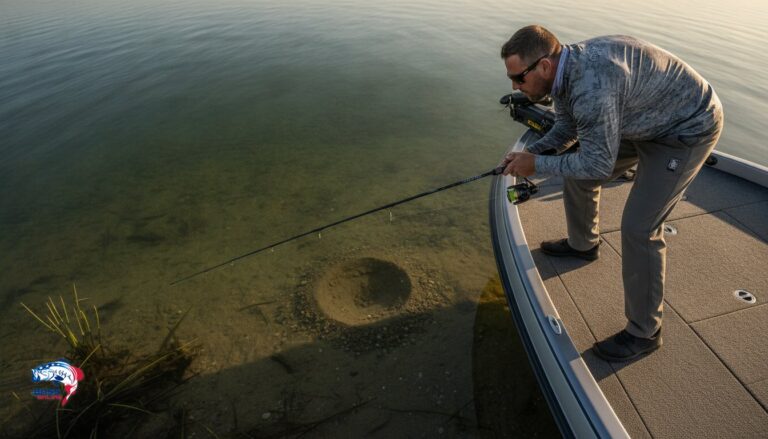
Bass are incredibly sensitive to their environment. In a place where the bottom is as flat as a parking lot, a 6-inch drop is like a canyon wall to a largemouth. When you ask how deep is lake okeechobee, you’re really asking where the fish find safety and food. Trophy lunkers use these subtle depth breaks to ambush baitfish moving between the dense grass and the slightly deeper open water. On this lake, ‘deep’ is a relative term. While a reservoir fisherman might look for 30 feet, a staging bass on the Big O considers anything over 7 feet to be a deep-water sanctuary. If you can find a spot where 4 feet of water drops quickly to 7, you’ve found a gold mine.

Understanding these transitions is the difference between a tough day and a legendary one. Most anglers fly right over the best spots because they don’t see a massive cliff on their fish finder. You have to train your eyes to look for the color changes in the water and the way the grass lines follow these tiny contours. If you’re serious about landing a double-digit fish, you should check out our guide on How to Catch a Ten Pound Bass to see how we use these depth secrets to target the biggest hawgs in Florida.

Seasonal Depth Patterns: Where the Hawgs Go

Spawning season brings the big girls into the ultra-shallow 1 to 3 foot backcountry grass. They want warmth and protection for their beds. As the Florida sun cranks up the heat in the summer, they retreat to the slightly deeper edges of the Rim Canal or the cooler flow of river mouths. Shallow water heats up and loses oxygen much faster than deeper pockets, so depth and temperature are always locked in a dance that dictates where the fish hold. This environmental balance is why the Big O remains one of the nationally recognized bass and crappie fisheries. During the peak of summer, even a one-degree difference in a deeper hole can stack up dozens of fish in a tiny area.

Lure Selection Based on Water Column

Your gear choice must match the water column you’re targeting. Topwater lures are king in the 1 to 2 foot zones where the grass is nearly matted. There’s nothing like a heart-stopping blow-up on a frog in the reeds. If you’re working 3 to 5 foot grass edges, reach for rattle traps or swim jigs to cover water and find active schools. When you find those rare 8-foot holes or deep canal ledges, a Carolina rig or a heavy worm is your best tool to feel the bottom and trigger a strike from a cautious lunker. Matching your presentation to the specific depth ensures your bait stays in the strike zone longer, increasing your chances of a trophy catch.

If you aren’t careful, Lake Okeechobee will eat your lower unit for breakfast. I’ve seen plenty of weekend warriors come out here thinking they can run wide open just because the horizon looks endless. But when you ask how deep is lake okeechobee, you have to realize that the margin for error is razor thin. The U.S. Army Corps of Engineers manages the lake stage levels between 12.5 and 15.5 feet above mean sea level. As of May 8, 2026, the level is sitting at a low 11.47 feet. This means areas that were safe last month are now propeller graveyards.

Professional navigation isn’t just about reading a screen. It’s about knowing that a 730-square-mile lake can have thousands of submerged cypress stumps and limestone ledges hiding just under the surface. My best advice is to always run the tracks of a guide or stay strictly within the marked channels. If you lose the channel, don’t try to shortcut across a flat. You’ll likely end up calling a tow boat. Understanding the current stage level is the only way to translate those depth charts into actual boat draft safety.

Reading the Water and the Markers

Interpret the red and green markers in the Rim Canal carefully. They mark the deep-water highway. When you venture into the open lake, look for “dirty water.” This isn’t just a lack of clarity. It’s a sign that the wind is churning up sediment from a very shallow bottom. Your GPS and depth finder are great secondary tools, but they can’t replace your eyes. If the water looks skinny, it probably is. Always prioritize visual cues over a digital map that might be based on last year’s water levels.

The Danger of the “Rock Reefs”

The major limestone outcroppings are concentrated on the south and west sides of the lake. These rock reefs are unforgiving. If you find yourself in 1.5 feet of water with a heavy bass boat, do not hammer the throttle to get on plane. You will destroy your lower unit in seconds. Instead, shut down the big motor and use your trolling motor to creep back to deeper water. Navigating these hazards is a skill that takes years to perfect. Our Bass Online Fishing Guides spend every day on this water and know exactly how deep is lake okeechobee at every specific reef and rock pile.

Don’t risk a multi-thousand dollar repair bill on your first trip to the Big O. Contact us to set up a trip and let a pro handle the navigation while you focus on the fishing.

Why Expert Knowledge Beats Depth Charts Every Time

A depth chart is just a snapshot of the past. It tells you where the water was a year ago, but it won’t tell you where the lunkers are hiding right now. On the Big O, the environment is in a constant state of flux. Between sudden summer storms and the gate openings managed by the Water Management District, the water level can shift significantly in a single week. Knowing how deep is lake okeechobee today is the only way to stay on the bite. If you’re relying on a map from 2024 to navigate in May 2026, you’re already behind the curve. When you understand how deep is lake okeechobee in real-time, you stop guessing and start catching.

We see it all the time. Anglers spend half their day idling through muck because their GPS says there’s five feet of water where there’s actually only two. Hiring a professional is the most effective way to ensure you spend your time catching trophy bass instead of pushing your boat off a sandbar. We live and breathe these water changes. We know which cuts are silted in and which channels have opened up after the latest weather system. Respecting the depth is about more than safety; it’s about putting yourself in the best position to land the catch of a lifetime.

The Advantage of a Professional Guide

Our guides possess daily ‘on-the-water’ intelligence that no digital chart can match. We track shifting sandbars and new weed growth every single morning. When the hydrilla moves or the eelgrass thickens, we’re the first to know. This real-time data gives you a massive advantage when hunting for legendary Florida hawgs. You get the peace of mind that comes with running a high-performance bass boat through the shallows without the fear of a costly mistake. If you want to learn more about the specific lunkers we target and the best gear to use, check out our resources on Florida fish species.

Book Your Legendary Expedition

Are you ready to tackle the Big O without the stress of the shallows? Don’t let low water levels or hidden hazards ruin your trip. Our team will pair you with the best local expertise in Florida to ensure your expedition is world-class. We take care of the navigation so you can focus on that heart-pounding moment when a trophy bass crushes your topwater lure. Experience the raw excitement of professional angling with the highest-rated service in the region. Book your Lake Okeechobee bass adventure now and join us for a successful expedition on the water.

Final takeaway: The Big O is a shallow giant that demands respect. Learn the depth patterns, follow the pro tracks, and this legendary lake will reward you with a trophy you’ll never forget.

Master the Shallows and Land Your Trophy

You now have the blueprint for mastering the Big O’s unique topography. From navigating the 20-foot depths of the Rim Canal to hunting lunkers on the 3-foot flats, you know that success depends on precision. Understanding how deep is lake okeechobee at any given moment is the difference between a record-breaking day and a damaged lower unit. Remember that even a 6-inch depth break is a major highway for trophy bass. These subtle changes are exactly where the legendary Florida lunkers wait to ambush their next meal.

Don’t leave your success to chance or outdated maps. We are the largest freshwater guide service in Florida, and our expert team brings over 20 years of Lake Okeechobee experience to every charter. Every trip we lead comes with our signature No Fish, No Pay guarantee. This ensures you spend your time catching instead of just searching. Ready to hunt trophy bass in the Big O? Contact our pro guides today! We’ll handle the tricky navigation and low-water hazards while you focus on the raw excitement of the strike. Let’s get out there and land the catch of a lifetime.

Frequently Asked Questions

How deep is Lake Okeechobee on average?

Lake Okeechobee has an average depth of 9 feet across its 730 square miles. This surprising shallowness is why the lake is often compared to a giant saucer rather than a traditional deep-water reservoir. While the surface area is massive, you’ll rarely find water deeper than 10 feet in the main basin. On May 8, 2026, the water level was recorded at 11.47 feet, which is slightly below the target range managed by the Army Corps of Engineers.

What is the deepest part of Lake Okeechobee?

The deepest part of Lake Okeechobee is the Rim Canal, where depths reach between 15 and 20 feet in certain sections. This canal was excavated to provide the fill dirt for the Herbert Hoover Dike and now serves as the lake’s primary deep-water artery. In the open water basin, the maximum depth usually tops out around 12 to 13 feet. These deeper pockets are critical refuge areas for trophy bass when the sun heats up the shallow flats.

Can I take a large boat on Lake Okeechobee?

You can take a large boat on the lake, but you must stay strictly within marked channels and the Rim Canal to avoid grounding. Most bass boats and moderate-draft vessels handle the lake well, but deep-draft sailboats or large cruisers will struggle outside the primary navigation routes. With the water level at 11.47 feet in May 2026, many secondary passes into the inner marsh are currently too shallow for anything but a professional flats boat or a light skiff.

How do water levels in Lake Okeechobee affect bass fishing?

Water levels dictate exactly where the bass will hold, spawn, and feed throughout the year. When levels are high, fish push deep into the dense marsh vegetation where they find protection and cooler temperatures. During low-water periods, like the current 11.47-foot stage, bass retreat to the outside edges of the grass and the deeper Rim Canal. This concentration often makes it easier for experienced anglers to find trophy lunkers in predictable, accessible locations. To stay current on how these shifts impact your strategy, our 2026 Lake Okeechobee water level reference guide provides up-to-date analysis and safe running routes for every stage reading.

Are there rocks or hazards in Lake Okeechobee I should worry about?

Submerged limestone reefs and old cypress stumps are the primary hazards that can destroy a lower unit in seconds. The south and west sides of the lake are notorious for these rock outcroppings that sit just inches below the surface during low water. Navigating these areas requires intense focus and local knowledge. When you ask how deep is lake okeechobee, remember that the answer can change by two feet in a single day due to wind-driven water shifts.

What is the Rim Canal and how deep is it?

The Rim Canal is a man-made waterway that circles the perimeter of the lake, offering depths ranging from 15 to 20 feet. It acts as a safety valve for navigation and a deep-water highway for boaters moving between the north and south ends of the lake. Because it’s consistently deeper than the main basin, it provides a stable environment for fish and a reliable route for anglers when the main lake becomes too rough for safe crossing.

What happens if the water level in Lake Okeechobee gets too low?

Low water levels trigger navigational lock closures and increase the risk of hitting underwater obstacles. As of April 22, 2026, several locks on the north shore, including the S-135 and G-36, were temporarily closed because levels fell below the 12-foot safety threshold. Understanding how deep is lake okeechobee during these cycles is vital, as low water also reduces the available habitat in the backcountry marsh, forcing fish into the deeper, more competitive areas of the lake.

Does Lake Okeechobee have a tide or current?

Lake Okeechobee does not have a lunar tide, but it experiences strong wind-driven currents and temporary depth changes called seiches. A seiche occurs when sustained winds push water to one side of the lake, causing a temporary rise in depth on one end and a dangerous drop on the other. You will also find a noticeable current near the mouth of the Kissimmee River and the various water control structures when the Army Corps is actively moving water through the system.

Mr Bass

Article by

Mr Bass

Todd Kersey, widely known and labeled by Field & Stream as Mr. Bass, is a professional angler, accomplished author, and dedicated philanthropist with a lifelong passion for bass fishing. Armed with a degree in Outdoor travel, Mr. Bass has expertly combined his knowledge with his practical fishing experience to become one of the most respected names in the bass fishing, his deep understanding of bass habitats, and fish behavior has earned him numerous accolades as a asset of the sport. Serving 8 yrs as FWC Stakeholder Chair person. Leading and passing cutting edge legislative like the Black Bass Management plan, also successfully building, passing and financing the Trophy Catch program. As CEO he is committed to giving back to the community through his philanthropic efforts. He supports a variety of causes, especially those centered around physical disabilities. Through his advocacy, his mentorship programs inspire anglers to engage using fishing stewardship, helping to foster more than 18 million dollars in donations. Mr. Bass continues to inspire anglers and outdoor enthusiasts alike with his commitment to the sport and the world around him.

Book a fishing trip
Share your love
BASS ONLINE
BASS ONLINE

BASS ONLINE IS THE NATION'S NUMBER ONE BASS FISHING RESOURCE. SUPPLYING ACCESS TO OUTDOOR INDUSTRY LAKES, FISHING LOCATIONS, FISHING REPORTS, AND TOP FISHING GUIDES IN THE COUNTRY.

Articles: 954

Leave a Reply