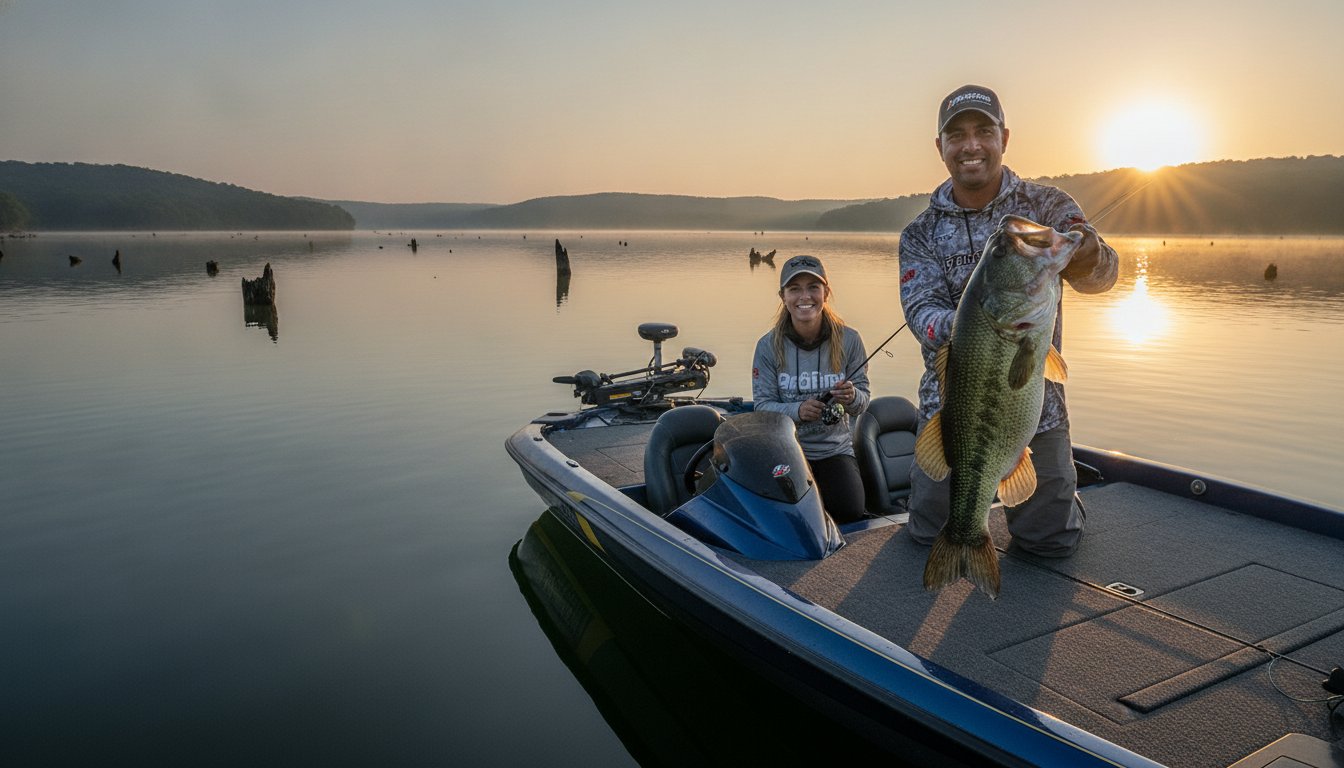

On a 56,000-acre powerhouse like Lake Hartwell, you aren’t just fishing for bass; you’re hunting the blueback herring they follow. It’s easy to feel overwhelmed when you’re staring at miles of deep water and endless stands of submerged timber. You’ve likely spent hours idling over brush piles, wondering why the fish aren’t biting the same lures that worked just a few days ago. We’ve all been there, and it’s frustrating to miss out on the action because you’re a step behind the bait’s movement. That’s where a professional Lake hartwell fishing guide changes the game for your next outing.
I’m here to help you master the seasonal patterns and tactical gear setups needed to land more trophy bass and heavy stripers. You’ll learn exactly how to use your electronics to pick apart deep timber and how to time the herring bite for maximum success. We’ll also clear up the reciprocity rules for Georgia and South Carolina licensing so you can fish across state lines with total confidence. This guide breaks down the expert secrets you need to catch a limit of Spotted Bass or finally land that 20 pound Striper you’ve been chasing. Let’s get to work and put some fish in the boat.
Key Takeaways
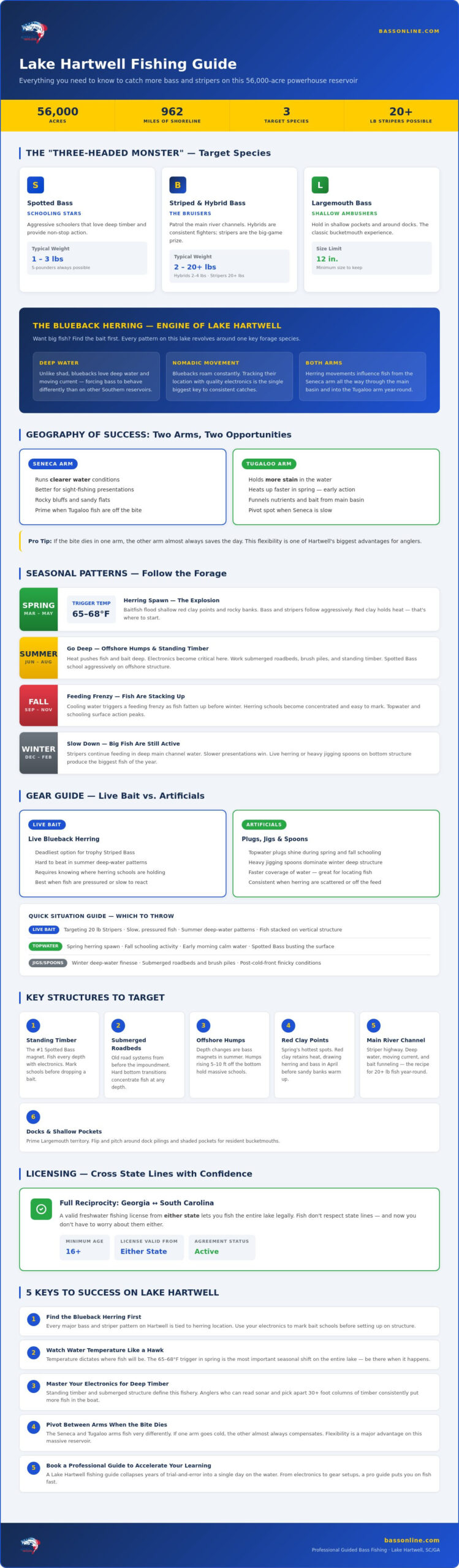
- Explore the massive 56,000-acre layout of the Savannah River basin and learn to target the “Three-Headed Monster” of Hartwell’s bass species.
- Crack the code on seasonal patterns, moving from shallow-water spring spawns to the deep-water offshore humps and standing timber of summer.
- Find out why booking a Lake hartwell fishing guide is the most effective way to master the electronics and gear setups required for deep-water success.
- Learn the tactical nuances of gear selection, including when to throw topwater plugs and when to rely on live blueback herring.
- Gain the confidence to navigate complex underwater structures like submerged roadbeds and points while staying safe in heavy timber.
The Layout of a Legend: Why Lake Hartwell is a Top-Tier US Fishery
Lake Hartwell isn’t just a body of water; it’s a 56,000-acre playground carved into the Savannah River basin. With 962 miles of shoreline, it offers more hiding spots than most anglers can explore in a lifetime. Exploring the Lake Hartwell history shows how this reservoir became a top-tier destination for the “Three-Headed Monster.” This trio consists of aggressive Spotted Bass, heavy Largemouth, and hard-pulling Striped Bass. Taking a trip with a professional Lake hartwell fishing guide takes the guesswork out of these massive waters and puts you right on the action.
One of the biggest questions I get is about licensing. You’ll be glad to know there is a full reciprocity agreement between Georgia and South Carolina. If you have a valid freshwater license from either state and are 16 or older, you can legally fish the entire lake. This makes your day much easier since the fish don’t care about state lines. As of July 2026, this agreement remains firmly in place, allowing us to chase the bite wherever it leads without legal headaches.
To better understand the scale and seasonal shifts on this massive reservoir, watch this helpful video:
A seasoned Lake hartwell fishing guide knows that the blueback herring is the engine of the lake. These nomadic baitfish are the high-octane fuel that drives the bass population. Unlike shad, bluebacks love deep water and moving current. This forces the bass to behave differently than they might on other Southern reservoirs. If you want to catch big fish here, you have to find the herring first. Whether you are looking at the main basin or the river arms, our Lake Hartwell trips are designed to capitalize on these bait movements.
The Geography of Success: Seneca vs. Tugaloo Arms
The Seneca and Tugaloo arms meet to form the main body of the lake, creating a massive confluence that funnels nutrients and bait. The Seneca arm often runs clearer. The Tugaloo can hold a bit more stain and heat up faster in the spring. This variety is a huge advantage. If the bite is off in one arm, we can usually find active fish by switching to the other. The 962 miles of shoreline provide everything from rocky bluffs to sandy flats, giving every species a place to thrive.
Target Species: What You’re Hunting
- Spotted Bass: These are the schooling stars. They’re aggressive, they love the deep timber, and they provide non-stop action. Most weigh 1 to 3 pounds, but 5-pounders are always possible.
- Striped and Hybrid Bass: These are the bruisers. You’ll find them patrolling the main river channels. Hybrids often reach the 2 to 4 pound range, while stripers can easily top 20 pounds.
- Largemouth Bass: While the spots dominate the deeps, the resident “bucketmouths” still thrive in the shallow pockets and around docks. There is a 12-inch minimum size limit for these fish.
Cracking the Code: Seasonal Bass and Striper Patterns
To catch fish consistently on this reservoir, you have to think like a nomad. On Hartwell, that means following the forage. A veteran Lake hartwell fishing guide watches the water temperature like a hawk because it dictates exactly where the bluebacks and bass will be. While the fish are active year-round, their “home address” changes with the sun. You can find more details on habitat and access through the U.S. Army Corps of Engineers Hartwell Lake Fishing resources, but understanding the biological clock of these fish is what puts them in the livewell.
The Spring Bluegill and Herring Spawn
When the water hits that magic 65 to 68 degree mark in April, the lake explodes. This is the herring spawn. Large schools of baitfish move onto shallow, red clay points and rocky banks to drop their eggs. Red clay holds heat better than sand, drawing in the bait early. The spotted bass and stripers follow in a frenzy. A fast-moving topwater plug or a soft plastic fluke can trigger aggressive strikes. Unlike other lakes where fish get sluggish after spawning, Hartwell’s “post-spawn funk” is short because the herring buffet keeps them energized and feeding heavily.
Deep Timber Strategies for Summer Heat
As the heat of July settles in, the game shifts to the deep. The fish move to the tops of standing timber, often suspending 20 to 40 feet down. We look for the thermocline, the layer of water where oxygen and temperature are just right. Using down-imaging or forward-facing sonar, we can see the bass sitting in the “crowns” of these submerged trees. If you can find a hump that intersects this timber, you’ve found a goldmine. Night fishing also becomes a prime opportunity to land trophy stripers using live bait in the cooler water of the main channel.
By the time fall rolls around, the strategy shifts toward the creek mouths as the water cools and the bait moves back into the pockets. This is schooling season, where you can catch fish on nearly every cast when you find a “ball” of bait. In the dead of winter, we transition to “ditch” fishing. We target deep, vertical structure where fish hunker down in thermal refuges. It’s a slower, more deliberate game, but the size of the winter spots can be incredible. If you’re ready to see these professional patterns in action and land your limit, you can reach out to our team to plan your next expedition. Experience the difference a dedicated Lake hartwell fishing guide makes when the pressure is on.
Essential Gear & Live Bait vs. Artificials on Hartwell
Showing up to a 56,000-acre reservoir with the wrong tackle is a recipe for a long, quiet day. On Hartwell, your primary workhorse should be a 7-foot to 7-foot 3-inch medium-heavy fast-action rod. This setup provides the backbone needed to haul an aggressive spotted bass out of the standing timber while offering the tip sensitivity to launch a topwater plug a country mile. I usually pair this with 12 to 15 pound fluorocarbon for subsurface work, though I switch to a braided main line with a leader when I’m working the thickest brush. Hiring a seasoned Lake hartwell fishing guide means you don’t have to worry about these technical details; we provide the high-end gear that’s already dialed in for these specific conditions.
Artificial Lure Selection for 2026
Topwater walkers and poppers are essential when the herring are spawning. You need a lure that mimics the panicked, skittering flight of a blueback on the surface. For schooling fish that have moved deeper, 4-inch paddle-tail swimbaits and deep-diving jerkbaits are the ultimate search tools to locate nomadic pods of bass. The Hartwell Special jig color is a green pumpkin base with subtle orange and purple flakes to perfectly match the local crawfish found on rocky points. When the bite gets tough, we transition to finesse tactics like the “shaky head” or a “drop shot” with a 6-inch thin-profile worm. These presentations are “old reliable” for coaxing strikes from pressured spots on offshore humps.
Live Bait Mastery
Blueback herring are the high-octane fuel of this lake, but they are notoriously fragile. Keeping them frisky in a specialized, high-oxygen bait tank is an art form that requires constant attention to water temperature and salt levels. For stripers and hybrids, we use rigging techniques like the Carolina rig for deep-water downlines, keeping the bait exactly in the thermocline where the big bruisers are holding. A professional fishing guide manages multiple lines simultaneously, often running six to eight rods using planer boards to cover a massive surface area. This allows us to present bait at different depths and distances from the boat, drastically increasing your chances of a hookup. Whether you prefer the thrill of a topwater smash or the steady pull of a downline striper, a Lake hartwell fishing guide ensures your presentation is flawless every time.
Navigating the Lake: Key Structures and Water Conditions
Hartwell is a maze of submerged history. Before the valley was flooded, it was filled with homesteads, highways, and forests. Today, those old roadbeds and bridge pilings act as underwater highways for nomadic bass. High-percentage structures like offshore humps and long points are the primary targets for any serious angler. A professional Lake hartwell fishing guide understands that these spots aren’t just random bumps on the map. They are strategic ambush points where current and depth meet to create a perfect feeding ground.
Standing timber is the defining feature of this reservoir, and it’s something you won’t find described in this detail elsewhere. Thousands of acres of submerged trees still stand in the depths. While this timber provides incredible cover for spotted bass and stripers, it’s a major navigational hazard. You can’t just run wide open across the main lake without a plan. We look for fish suspended in the crowns of these trees, often 30 to 60 feet down. When the water level fluctuates, which happens frequently in the Savannah River basin, these timber tops can move closer to the surface, changing both the bite and your boat’s safety.
Wind is your friend on Hartwell, provided you know how to use it. We look for “wind-blown points” where the breeze pushes baitfish against the shore. This creates a feeding frenzy that’s easy to spot if you’re watching the birds. However, if the wind gets too high, we retreat into the protected coves to find calmer water where the fish are still holding on secondary points. Monitoring these shifts in real-time is what separates a successful day from a frustrating one.
Fishing the River Arms
The Tugaloo and Seneca river arms offer two completely different worlds. The Seneca arm is generally clearer and responds well to finesse tactics. The Tugaloo often carries more stain, especially after heavy rain. Finding the “clean water line” where the muddy river water meets the clear lake water is a local secret for finding active fish. These river systems also host major seasonal migrations, with fish pushing miles up-river in the spring and retreating to the main basin as the water cools in the winter.
Electronics and Modern Angling
Modern technology has completely changed how we fish this lake. We use Side Imaging to scan for brush piles that locals have sunk over the years. Forward-facing sonar allows us to see exactly how a striper reacts to a lure in real-time. It’s high-tech hunting on the water. If you’re new to these concepts, check out our guide on Bass Fishing 101 to brush up on the fundamentals. Once you have the basics down, you’ll see why a Lake hartwell fishing guide relies so heavily on these tools to stay on the bite. If you’re ready to see this tech in action, you can book your Lake Hartwell excursion today and let us handle the navigation.
Booking Your Lake Hartwell Fishing Charter with Bass Online
Trying to tackle 56,000 acres of water on your own can feel like finding a needle in a haystack. On a reservoir this size, the fish are constantly moving, and the standing timber presents a real challenge for even seasoned boaters. That is why hiring a professional Lake hartwell fishing guide is more than just a convenience; it is a shortcut to success. At Bass Online, we don’t just take you for a boat ride. We provide an insider journey led by captains who live and breathe these waters. Our mission is results-driven, meaning we spend our time finding the most active schools of fish so you can spend your time catching them.
When you book a trip with us, you can expect a seamless experience from start to finish. We typically meet at a pre-arranged boat ramp at sunrise to capitalize on the early morning bite. After a quick safety briefing and a run-down of the day’s plan, we hit the water in premium, tournament-ready boats equipped with the latest electronics. You don’t need to worry about bringing rods, reels, or specialized bait because we provide all the top-tier equipment you’ll need. Just bring your fishing license, some snacks, and plenty of enthusiasm. Because Lake Hartwell can be breezy and cool in the mornings, I always recommend dressing in layers to stay comfortable throughout the day.
Tailored Trips for Every Angler
We pride ourselves on offering flexible excursions that match your specific goals. If you’re looking for a fun, high-action day for the kids, our family-friendly outings often focus on schooling hybrids or crappie that keep the rods bent all morning. For the serious tournament angler, we offer hardcore bass trips designed to help you master the nuances of targeting trophy spots and largemouths in deep cover. We also specialize in corporate groups and multi-boat charters, providing a competitive yet camaraderie-filled environment that’s perfect for team building or hosting clients.
Ready to Hit the Water?
The 2026 season is shaping up to be one of our best yet, and prime dates during the spring herring spawn and fall schooling season fill up fast. We want you to feel 100 percent confident in your choice, so feel free to browse our fishing charter reviews to see the success stories from other anglers who have fished with us. Our local experts are ready to show you the very best of what this legendary fishery has to offer. Don’t leave your success to chance when you can fish with the best in the business. You can book your Lake Hartwell fishing trip today and get ready for an unforgettable day on the water with a premier Lake hartwell fishing guide.
Claim Your Spot on the Water Today
Lake Hartwell is a massive, complex fishery that rewards those who understand its unique rhythms. You’ve seen how the nomadic blueback herring drive the movement of spotted bass and stripers, and you know the importance of picking apart deep timber with modern electronics. Success here isn’t about luck; it’s about having the right tactical approach and local knowledge to stay on the bite as conditions shift.
Choosing a professional Lake hartwell fishing guide ensures you’re always ahead of the school. With our top-rated USCG licensed captains and over 25 years of professional guiding experience, we take the stress out of navigation and gear prep. We provide all the high-end equipment and tackle you need, so you can focus entirely on the thrill of the strike. Whether you’re chasing a limit of aggressive spots or a 20 pound striper, we have the expertise to make it happen.
Book Your Lake Hartwell Professional Fishing Guide Now and let’s get you on the water. The fish are active, and there’s no better time to experience the raw excitement of this legendary reservoir. Let’s make your next trip a legendary one!
Frequently Asked Questions
Do I need a Georgia or South Carolina fishing license for Lake Hartwell?
You can use a valid freshwater fishing license from either Georgia or South Carolina to fish the entire lake. Thanks to a long-standing reciprocity agreement, your license from one state is honored across the border on these waters. This applies to all anglers aged 16 and older. As of July 2026, this agreement remains in full effect, making it easy to follow the bite wherever it leads.
What is the best time of year to fish for Striped Bass on Lake Hartwell?
Spring and fall are the absolute peak seasons for targeting trophy stripers. During the spring herring spawn, these bruisers move into shallow water and become very aggressive. In the fall, they school up heavily in the creek mouths to feed before winter. While summer fishing is also productive in the deep main channel, the high-energy surface action of the cooler months is hard to beat.
Can I catch Largemouth Bass and Spotted Bass on the same trip?
Yes, catching both species on a single outing is very common here. We typically find spotted bass schooling around deep timber and offshore humps, while largemouths tend to hang out in shallower pockets and around boat docks. Both species count toward your combined daily limit of 10 black bass. Your Lake hartwell fishing guide will know exactly how to transition between these patterns to keep the rods bending.
Is Lake Hartwell safe for boating with all the standing timber?
Navigating the lake is safe if you stay in the marked channels, but the standing timber is a serious hazard for the uninitiated. Thousands of submerged trees sit just below the surface in many areas. This is why having a professional Lake hartwell fishing guide at the helm is a major advantage. We know the safe routes and how to navigate the timber fields to find fish without risking the boat.
What should I bring on a guided fishing trip?
You only need to bring a valid fishing license, polarized sunglasses, and whatever snacks or drinks you prefer. We provide all the high-end rods, reels, and specialized tackle required for the day. It’s also smart to dress in layers. Mornings on the water can be quite chilly even when the afternoon sun is out, so a light jacket or windbreaker is always a good idea.
Are children allowed on Bass Online fishing charters?
Absolutely, we love getting the next generation of anglers out on the water. Our trips are family-friendly and we can tailor the day to focus on high-action bites that keep kids excited and engaged. Whether it’s catching schooling hybrids or learning how to drop a line for spots, we make sure the young ones have a safe and memorable experience.
What happens if the weather is bad on the day of my trip?
Safety is our number one priority, so we watch the weather radar like a hawk. If high winds or lightning make the lake unsafe, we will work with you to reschedule your trip for the next available opening. We don’t mind a little rain, and sometimes the fish bite even better in a light drizzle, but we will never take the boat out in dangerous conditions.
What are blueback herring and why are they important for fishing?
Blueback herring are nomadic baitfish that serve as the high-octane fuel for Hartwell’s predator fish. Unlike shad, these herring prefer deep water and moving current, which forces the bass and stripers to follow them into the open lake. Understanding their movement is the secret to success here. We spend a lot of time locating these bait schools because that is where the biggest fish are always hiding.

Article by
Mr Bass
Todd Kersey, widely known as Mr. Bass by Field & Stream, is a professional angler, accomplished author, and dedicated philanthropist with a lifelong passion for bass fishing. Armed with a degree in Outdoor travel, Mr. Bass has expertly combined his knowledge with his practical fishing experience to become one of the most respected names in the bass fishing, his deep understanding of bass habitats, and fish behavior has earned him numerous accolades as a asset of the sport. Serving 8 years as FWC Stakeholder Chairperson. Leading and passing cutting-edge legislation, such as the Black Bass Management plan, and successfully building, passing, and financing the Trophy Catch program. As CEO, he is committed to giving back to the community through his philanthropic efforts. He supports a variety of causes, especially those centered around physical disabilities. Through his advocacy, his mentorship programs inspire anglers to engage in fishing stewardship, helping to raise more than $ 18 million in donations. Mr. Bass continues to inspire anglers and outdoor enthusiasts alike with his commitment to the sport and the world around him.