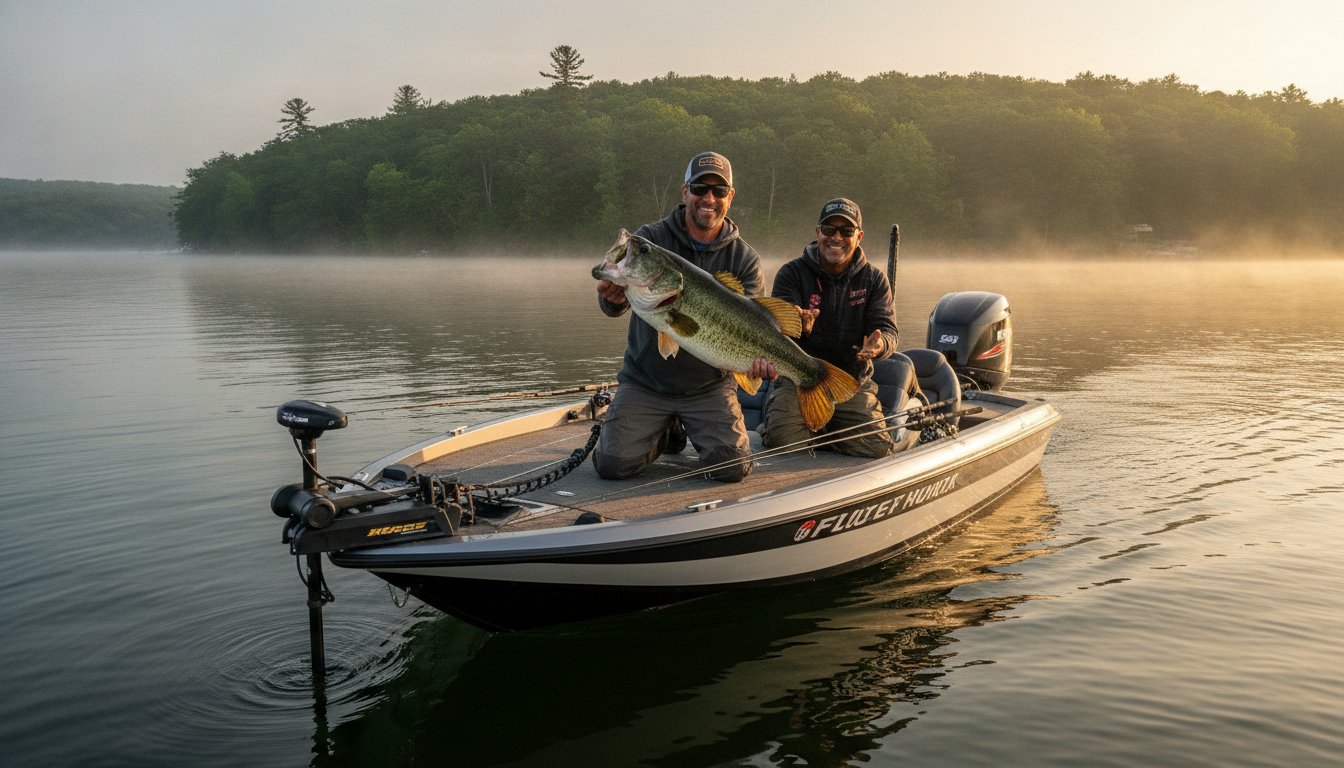

What if the reason you’re struggling to land trophy bass on New Jersey’s largest lake isn’t your lure, but your approach to the pressure? You’ve likely spent hours casting into those beautiful coves only to realize the fish have seen it all before. Between the heavy boat traffic and the complex ledges, Lake Hopatcong can feel like a puzzle that’s impossible to solve. It’s frustrating to watch giants on your electronics that just won’t commit to the bait, but that’s where a tactical shift makes all the difference.
As your Lake Hopatcong fishing guide, I’m here to show you how to cut through the noise and turn a tough day into a record-breaking outing. You’ll discover the professional secrets to outsmarting finicky largemouths, aggressive hybrid stripers, and the elusive musky using field-tested tactics that work when the bite is shut down. I’ve spent years patterning these 2,500 acres, and I’m ready to hand over the "unfair advantage" you need to land your personal best.
In this guide, we’ll dive into the specific seasonal movements of Hopatcong’s "Big Three," how to master modern sonar to pinpoint hidden structure, and the exact presentations that trigger strikes from pressured trophies. Get ready to stop guessing and start hunting.
Key Takeaways
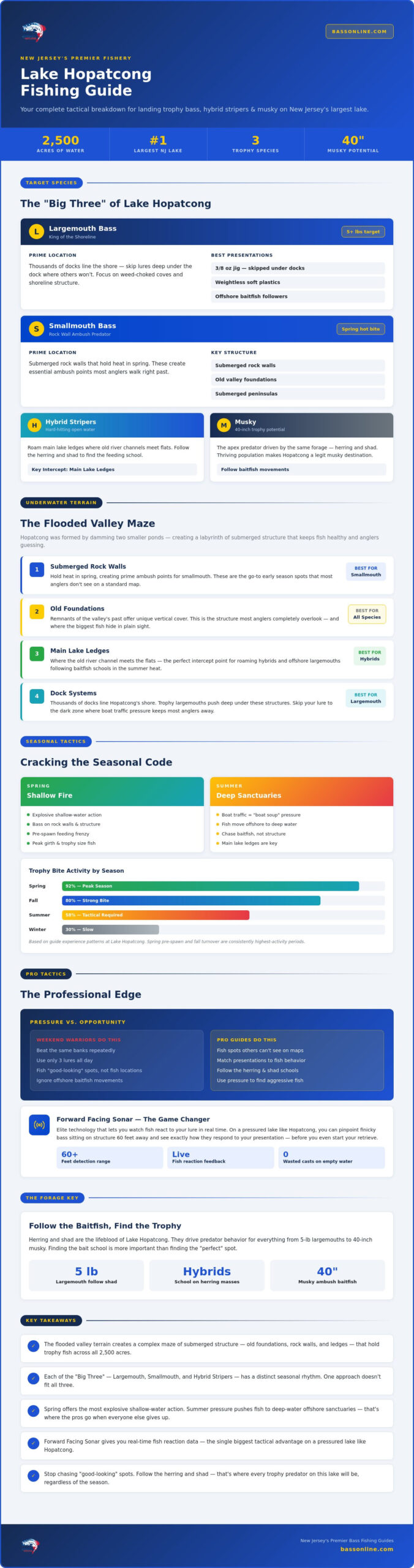
- Learn how Lake Hopatcong’s unique flooded valley terrain creates a complex maze of underwater structure that holds trophy fish across all 2,500 acres.
- Master the distinct patterns for targeting the “Big Three”—Largemouth Bass, Smallmouth Bass, and Hybrid Stripers—with tips from a professional Lake Hopatcong fishing guide.
- Crack the seasonal code to find explosive shallow-water action in the spring and deep-water offshore sanctuaries during the high-pressure summer months.
- Get the tactical advantage by understanding how elite technology like Forward Facing Sonar helps you pinpoint and trigger strikes from finicky, pressured fish.
- Discover why booking a pro-guided charter provides the high-end gear and local expertise needed to land a personal best on New Jersey’s premier freshwater lake.
Table of Contents
-
Why Lake Hopatcong is the ‘Honey Waters’ of New Jersey Fishing
-
Seasonal Patterns: Cracking the Lake Hopatcong Code Year-Round
-
Booking Your Professional Guide: Why Bass Online Leads the Way
Why Lake Hopatcong is the ‘Honey Waters’ of New Jersey Fishing
Lake Hopatcong is the undisputed crown jewel of New Jersey freshwater fishing. Spanning 2,500 acres, it’s the largest lake in the state, but its size is only half the story. The real magic happens below the surface in a place locals call the "Honey Waters." If you’re looking for a Lake Hopatcong fishing guide, you need someone who understands that this lake isn’t a natural bowl. It’s a flooded valley. The history of Lake Hopatcong reveals how the damming of two smaller ponds created a labyrinth of submerged structure that keeps fish healthy and anglers guessing. This complexity is why the lake supports such a massive diversity of species, from largemouth and smallmouth bass to hard-hitting hybrids, musky, and walleye.
The 2026 outlook for this fishery is looking incredibly strong. With the forage base hitting peak levels and recent mild winters allowing for extended growing seasons, we’re seeing fish with incredible girth early in the year. It’s shaping up to be a record-breaking season for trophy size, especially for those who know how to navigate the "boat soup" of the busy summer months. Success here isn’t about luck; it’s about understanding the environment better than the fish do.
To better understand the layout of this massive fishery, watch this helpful video:
Understanding the Flooded Valley Terrain
Success on Hopatcong starts with mastering the flooded valley terrain. It’s a maze of transition zones where shallow, weed-choked coves drop suddenly into deep river channels. Submerged islands and peninsulas act as major "fish highways," funneling bass and hybrids between their feeding grounds and deep-water sanctuaries. You aren’t just looking for weeds here. I hunt for the "classic" Hopatcong structure:
-
Submerged Rock Walls: These hold heat in the spring and provide essential ambush points for smallmouths.
-
Old Foundations: Remnants of the valley’s past that offer unique vertical cover that most anglers overlook.
-
Main Lake Ledges: Where the old river channel meets the flats, creating a perfect intercept point for roaming hybrids.
Pressure vs. Opportunity: The Pro Perspective
High angler traffic is the reality on any premier lake, but that pressure creates opportunity for those with a tactical mindset. Most people beat the banks with the same three lures, but the real monsters often move offshore to follow the baitfish. Herring and shad are the lifeblood of this lake. They drive predator behavior for everything from five-pound largemouths to forty-inch musky. By focusing on these forage movements rather than just "good-looking" spots, we find the aggressive fish that others miss. For more expert insights on tackling the Garden State’s best waters, check out our NJ fishing guides . As your Lake Hopatcong fishing guide, my job is to use that pressure to our advantage by fishing the spots the "weekend warriors" can’t even see on their maps.
Targeting the Big Three: Bass, Hybrids, and Musky
Fishing New Jersey’s largest freshwater lake is a unique challenge because you’re often targeting three completely different predators in the same square mile. While largemouth bass are the traditional kings of the shoreline, the introduction of hybrid striped bass and the thriving musky population have turned this into a world-class multi-species destination. As a Lake Hopatcong fishing guide, I’ve learned that you can’t use a "one size fits all" approach here. Each species has a distinct rhythm that changes with the light and the wind.
Largemouth Tactics: Beating the Dock Pressure
With thousands of docks lining the shore, these structures are the primary cover for largemouths. To catch the quality fish, you have to skip your lure where others won’t. I recommend a 3/8 oz jig or a weightless soft plastic skipped deep under the boat lifts. The water has a slight tannic tint, so I find that darker colors with a bit of flash, like green pumpkin with purple flake or black and blue, produce the best results. During the summer, these fish move from the shallow spawning flats to the deeper milfoil edges where they can ambush bluegill and perch in cooler water.
Hybrid Striped Bass: Chasing the Wolf Packs
Hybrid striped bass, or "wipers," are the true heavyweights of the open water. These fish hunt in aggressive wolf packs, following schools of herring throughout the main basin. Identifying "boiling" water is the key to a legendary day. When you see surface activity, it’s game on. I rely on high-speed topwater walkers or subsurface swimbaits to trigger these violent strikes. If the fish aren’t showing on the surface, we use modern electronics to find them suspended over deep points. They move fast, so staying mobile is the only way to keep the rods bent. If you’re ready to feel that drag-screaming power, you can book your next adventure to see these hybrids in action.
Smallmouth and Walleye: The Deep Water Game
Smallmouth bass and walleye prefer the cleaner, rockier sections of the lake. Nolan’s Point and the surrounding deep ledges are prime territory. These fish hold on rocky drop-offs and gravel bars in 15 to 25 feet of water. A Ned rig or a small tube jig worked slowly across the bottom is often the ticket for smallmouths. For walleye, vertical jigging with blade baits or heavy spoons becomes essential as the water cools. You can explore the full range of freshwater species we target to better understand how these deep-water patterns shift throughout the year. Every species on this lake requires a different set of tools, and mastering them is what separates a good day from a career-best outing.
Seasonal Patterns: Cracking the Lake Hopatcong Code Year-Round
Cracking the code on this lake requires more than just a map and a lucky lure. It requires a deep understanding of the calendar and the thermometer. Because Hopatcong is a relatively shallow flooded valley, its water temperature swings wildly, which dictates exactly where the "Big Three" will be on any given day. As your Lake Hopatcong fishing guide, I don’t just look for fish; I look for the biological triggers that tell them it’s time to move. From the first thaw to the thickest ice, every month offers a specific window of opportunity if you know how to read the signs.
The Spring Transition: From Coves to Main Lake
Spring is the most explosive time of year, but it’s also the most volatile. The northwestern reaches of the lake, like Henderson Cove, usually warm up first because they’re shallower and protected from the wind. When the water temperature hits that magic 48 to 52 degree mark, the pre-spawn move is on. Large bass and hybrids push out of the deep river channels and head toward the flats. During this transition, I rely on suspending jerkbaits and small hair jigs. The key is a "pause" that lasts much longer than you think. These fish are hungry but still lethargic from the winter, so a slow, erratic presentation in 4 to 8 feet of water is often the ticket to a massive bag.
Summer Survival: Early Mornings and Night Fishing
By July, the lake transforms into what locals call "boat soup." The heavy recreational traffic can be a nightmare for some, but a seasoned Lake Hopatcong fishing guide knows how to use it to their advantage. Those big wakes actually help oxygenate the upper layer of the water column, keeping fish active even when the sun is high. However, the "first light" bite from 5:00 AM to 9:00 AM remains the gold standard for trophy hunters. During the heat of the day, fish seek out the thermocline, the distinct layer where warm surface water meets the cold, oxygen-rich depths. We find them stacked on deep-water humps and ledges in 15 to 22 feet, often tucked into the shade of the thickest milfoil beds.
As autumn arrives, the "feed-bag" goes on. Temperatures drop, and the herring schools move toward the shallows, bringing every predator on the lake with them. This is the time for big swimbaits and aggressive topwater strikes. Once winter locks the lake in ice, the game shifts to vertical tactics. We target the deep basins and old foundations using heavy spoons and tungsten jigs to reach the schools of yellow perch and the giants that follow them. Whether it’s 90 degrees or 30 degrees, there’s always a way to put fish in the boat if you’re willing to adapt your tactics to the season.
Tactical Gear and Spots: The Professional Edge
Having the right gear is one thing, but knowing where to point the boat is another. Generic maps tell you where the water is deep, but they don’t tell you where the fish are eating. On a lake as pressured as this one, the "Secret Sauce" isn’t a magic lure; it’s the ability to combine local knowledge with elite technology. As your Lake Hopatcong fishing guide, I focus on the high-percentage areas that hold fish regardless of how many boats are on the water. We don’t just cast and hope. We hunt with purpose.
Essential Spots: Nolan’s Point to River Styx
Success on Hopatcong often boils down to three iconic areas that offer diverse opportunities. Each requires a specific approach to be productive:
-
Nolan’s Point: This is my go-to for deep-water predators. I work the 30-foot ledges using a 3/4 oz blade bait or a heavy drop shot. It’s a prime corridor for walleye and smallmouth bass looking for a cooler sanctuary.
-
River Styx: If you want to target largemouths, this is the place. Navigating the northwestern milfoil flats is a tactical game. I use a 1/2 oz swim jig to tick the tops of the grass or a heavy tungsten weight to punch through the thickest mats.
-
Woodport Bay: When the north wind kicks up, this bay provides essential shelter. It’s a panfish-heavy pocket, which makes it a magnet for trophy musky looking for an easy meal.
Mastering Forward Facing Sonar (FFS)
Forward Facing Sonar (FFS) has completely revolutionized how we fish these waters. It’s not just about seeing a fish; it’s about identifying the species and reading their mood before you even make a cast. On the screen, a hybrid striper is a "roamer." They move with speed and purpose in the middle of the water column. A largemouth is more calculated, often appearing as a tight return against a dock piling or a submerged stump.
The real advantage of FFS is the ability to adjust your lure depth in real-time. If I see a fish follow the bait and then peel off, I know I need to change my retrieve cadence immediately. Sometimes a sudden burst of speed or a dead-stop is what triggers the strike from a pressured trophy. This level of precision is exactly what you’ll experience when you book a Lake Hopatcong fishing guide who knows how to interpret the data. We use pro-grade setups, including 7’3" Medium-Heavy baitcasters for dock skipping and 7′ spinning rods with light fluorocarbon for the deep ledges. If you’re ready to stop guessing and start catching, reach out to us today to secure your spot on the boat.
Booking Your Professional Guide: Why Bass Online Leads the Way
When you book a Lake Hopatcong fishing guide with Bass Online, you aren’t just paying for a seat on a boat. You’re investing in an elite, high-intensity experience designed to maximize every minute on the water. I don’t just provide a boat ride; I provide a masterclass in modern angling. I’ve spent years refining my approach on these 2,500 acres, and I bring that local authority to every trip. We use pro-grade gear and the latest technology to ensure your expedition is a success. My "No Fluff" guarantee means we spend less time talking and more time hunting for the giants we’ve discussed throughout this guide. You’ll be in capable hands with experts like MLF Toyota Series Pro Dan Goykhman, who brings tournament-level intensity to every charter.
Coaching for All Skill Levels
I tailor every trip to your specific goals. If you’re a beginner, we’ll master the fundamentals of the cast and retrieve until you’re confident in your presentation. For the seasoned pros, we’ll dive deep into advanced techniques like power-finesse or skipping jigs under the tightest docks to reach unpressured fish. I also love running youth programs. There’s nothing like seeing the next generation of anglers land their first big hybrid striper. My goal is to build your confidence so you can apply these field-tested tactics on any water you fish.
The Logistics of a Successful Day
For the 2026 season, keeping things legal is simple. A New Jersey resident freshwater fishing license for ages 16 to 64 is $22.50, while a non-resident license is $34.00. It’s important to remember that the pre-season trout stocking closure was eliminated in 2026, so the water is open for business earlier than ever. We’ll coordinate meeting locations based on where the bite is strongest, usually starting at first light to beat the crowds and the summer heat. You can check out our fishing charter reviews to see how we’ve helped hundreds of anglers reach their goals on New Jersey’s premier lake.
I provide all the top-tier tackle, bait, and elite coaching you need. You just need to bring a few essentials:
-
A valid 2026 NJ freshwater fishing license
-
Polarized sunglasses to help spot submerged structure and following fish
-
Sunscreen and weather-appropriate clothing
-
Your favorite snacks and drinks to keep your energy up
Leave the heavy tackle boxes at home. I have everything dialed in for the specific conditions we’ll face. Success on Lake Hopatcong isn’t just about knowing where the fish are; it’s about knowing how to trigger a strike when they’re being finicky. By combining tactical gear, seasonal knowledge, and professional coaching, we turn a challenging day into a highlight reel. Let’s get out there and land your next personal best.
Gear Up for Your Next Record-Breaking Day
Lake Hopatcong is a world-class fishery that rewards the tactical angler. Whether you’re hunting for a five-pound largemouth in the River Styx milfoil or chasing schooling hybrids across the main basin, the key is adapting to the water’s pressure. You’ve seen how the flooded valley terrain and seasonal triggers dictate the bite. Now it’s time to put that knowledge into action on the water. Success here isn’t about luck; it’s about having the right strategy at the right time.
With over 25 years of professional guiding experience, we provide more than just a boat. We bring local tournament-winning knowledge and state-of-the-art boats equipped with the latest Forward Facing Sonar technology to every expedition. As your Lake Hopatcong fishing guide, my mission is to help you outsmart the fish and land the trophy you’ve been chasing. We’ll dial in the specific techniques that work when the pressure is high and the bite is tough.
Don’t let another season pass by without cracking the code on New Jersey’s largest lake. The giants are waiting for those ready to hunt them. Book Your Elite Lake Hopatcong Fishing Adventure Now! I’ll see you at the docks for an unforgettable day on the water.
Frequently Asked Questions
Do I need a New Jersey fishing license for Lake Hopatcong?
Yes, anyone 16 years or older must have a valid 2026 New Jersey freshwater fishing license to fish these waters. For residents aged 16 to 64, the cost is $22.50, while seniors aged 65 to 69 pay $12.50. Non-residents aged 16 and over will need to pay $34.00. You can easily purchase these online through the NJDEP website before we meet at the docks.
What is the best time of year to catch Hybrid Striped Bass?
Spring and fall are the absolute best times to target hybrid striped bass when they are most active near the surface. During these months, "wolf packs" of hybrids chase herring into the shallows, creating explosive topwater opportunities. As a seasoned Lake Hopatcong fishing guide, I also find great success in mid-summer by using electronics to locate schools suspended in the deeper main basin.
Can beginners go on a guided fishing trip?
Beginners are always welcome on my boat, and I take pride in teaching the fundamentals of the sport. We’ll cover everything from how to cast accurately to the best ways to retrieve a lure to trigger a strike. It’s a hands-on learning experience that builds your confidence and ensures you have a successful day on the water regardless of your starting skill level.
What should I bring on a guided bass fishing trip?
You should bring your 2026 NJ fishing license, polarized sunglasses, sunscreen, and whatever snacks or drinks you’ll need for the day. I provide all the high-end rods, reels, and specialized tackle needed to land trophy fish. Wear weather-appropriate clothing and comfortable, non-marking shoes so you’re ready for the raw excitement of a professional outdoor expedition.
Is catch and release mandatory on Lake Hopatcong?
Catch and release isn’t mandatory for most species, but we strongly encourage it for trophy-sized bass and musky to preserve the fishery. We follow all 2026 New Jersey freshwater regulations, which include specific daily creel limits. For example, the trout limit is 6 per day through May 31, reducing to 2 per day starting June 1. We always prioritize the health of the environment.
Are there age restrictions for children on the boat?
There are no strict age restrictions, but I recommend that children be old enough to enjoy a few hours on the water safely. I love getting kids hooked on the sport and will tailor the day to keep them engaged and catching fish. Safety is my top priority, so please let me know the ages of any young anglers ahead of time to ensure we have the right life jackets ready.
What happens if the weather is bad on the day of my trip?
Safety is the only thing more important than catching fish, so we’ll reschedule if conditions become dangerous. High winds or lightning are the primary reasons for a delay or cancellation. I keep a close eye on the radar and will communicate with you early on the day of your trip to make the best call for your safety and comfort on the water.
Do your guides provide all the fishing tackle and bait?
Yes, my guided fishing trips include all the pro-grade tackle, lures, and bait you’ll need for a successful day. We use state-of-the-art equipment and the latest electronics to give you the ultimate advantage on the water. As your Lake Hopatcong fishing guide, I make sure you don’t need to worry about bringing your own gear; I have everything dialed in for the specific conditions we’ll be fishing.

Article by
Mr Bass
Todd Kersey, widely known as Mr. Bass by Field & Stream, is a professional angler, accomplished author, and dedicated philanthropist with a lifelong passion for bass fishing. Armed with a degree in Outdoor travel, Mr. Bass has expertly combined his knowledge with his practical fishing experience to become one of the most respected names in the bass fishing, his deep understanding of bass habitats, and fish behavior has earned him numerous accolades as a asset of the sport. Serving 8 years as FWC Stakeholder Chairperson. Leading and passing cutting-edge legislation, such as the Black Bass Management plan, and successfully building, passing, and financing the Trophy Catch program. As CEO, he is committed to giving back to the community through his philanthropic efforts. He supports a variety of causes, especially those centered around physical disabilities. Through his advocacy, his mentorship programs inspire anglers to engage in fishing stewardship, helping to raise more than $ 18 million in donations. Mr. Bass continues to inspire anglers and outdoor enthusiasts alike with his commitment to the sport and the world around him.