
Published: May 30, 2023 | Updated: September 10, 2026
The best bass rig for bank fishing is the one that reaches the available cover, stays manageable through the retrieve, and matches the fish’s depth and activity. A Texas rig is the most versatile starting choice because it can be light or heavy and comes through grass, wood, and mixed cover. A Carolina rig is useful for long casts and bottom contact. Ned, wacky, weightless, and drop-shot presentations give shore anglers important alternatives.
This page focuses only on rig selection and setup. For finding fish, reading cover, choosing access, and building a shore pattern, start with our bank fishing for bass guide. For boat and shore applications across more systems, use the parent bass fishing rigs guide.
Table of Contents
Quick Answer
If you carry one rig, choose a Texas-rigged soft plastic with enough weight to maintain contact without burying into the bottom. Use a Carolina rig when you need distance and want to feel rock, shell, points, or breaks. Choose a Ned or wacky rig in open water when bass need a slower presentation. Use a weightless Texas rig around shallow grass and a drop shot when you can work a small target nearly in place.
What Makes a Rig Good From the Bank?
Shore anglers usually retrieve a lure uphill, from deeper water toward the bank. That path can pull exposed hooks and heavy sinkers into rock, branches, grass, and abrupt ledges. A useful bank rig should cast accurately, maintain bottom or cover contact, resist snagging where necessary, and remain controllable from a limited angle.
- Cover: Exposed hooks suit open water; protected hooks are better around grass and wood.
- Depth: Add only enough weight to reach the zone and feel the lure.
- Bottom: Rock and shell favor rigs that transmit contact; soft muck favors lighter weights or suspended presentations.
- Distance: A compact or weighted rig can reach offshore breaks, but distance never replaces accurate casts to nearby cover.
- Fish activity: Moving or heavier presentations search; subtle rigs stay longer around a target.
Rig Selection Table
| Bank condition | Starting rig | Why it fits |
| Mixed cover or an unknown shoreline | Texas rig | Versatile, adjustable, and relatively snag resistant |
| Long point, rock, shell, or offshore break | Carolina rig | Casts well and separates the bait from the sinker |
| Open water with pressured fish | Ned rig | Compact profile with steady bottom contact |
| Shallow shade, docks, or sparse cover | Wacky rig | Slow fall with action from both ends |
| Matted or scattered grass | Weightless Texas rig | Slides through vegetation with a natural fall |
| One dock post, wall, or steep target | Drop shot | Keeps the bait above bottom in a small area |
Texas Rig
The Texas rig is the best all-around bank option for largemouth bass. A bullet weight slides on the main line above a hook, and the soft plastic is rigged so the hook point is protected. The weight can remain free-sliding or be lightly pegged when vegetation or wood makes separation troublesome.
How to Set It Up
- Slide a bullet weight onto the line with the point facing the rod tip.
- Tie on an offset worm hook or extra-wide-gap hook sized to the bait.
- Insert the hook point into the nose of the soft plastic, exit after a short distance, and slide the bait over the hook eye.
- Rotate the hook and measure where the point should reenter so the bait hangs straight.
- Bury the point just under the plastic surface when cover requires a weedless presentation.
Use a lighter sinker for shallow water, soft bottom, or a slower fall. Increase weight when wind, depth, current, or thick cover prevents control. Learn the complete setup in our Texas rig guide.
Carolina Rig
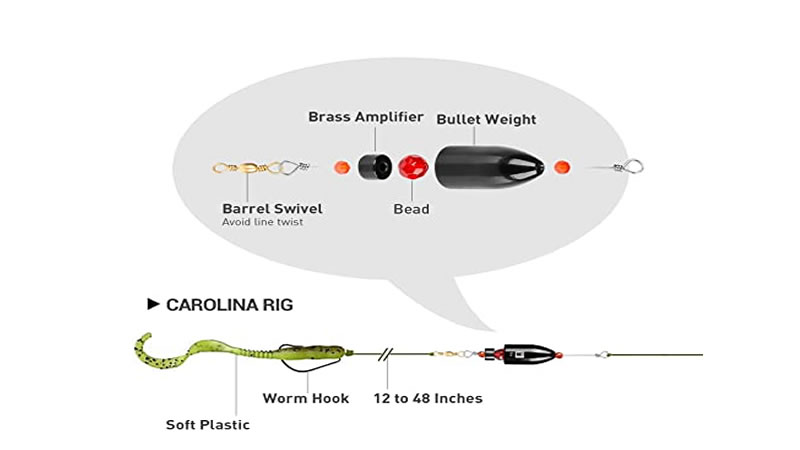
A Carolina rig places the sinker above a swivel, with a leader between the swivel and hook. The weight maintains bottom contact while the soft plastic moves behind it. From shore, the system is especially useful for probing points, channel edges, rock, shell, and firm-bottom transitions within casting range.
How to Set It Up
- Slide a sinker onto the main line.
- Add a bead only if desired, then tie the main line to a barrel swivel.
- Tie a leader to the opposite swivel eye.
- Tie a worm hook to the leader and rig the soft plastic straight.
- Adjust leader length to cover, casting conditions, and how far you want the bait behind the weight.
A sliding sinker is fundamental to the Carolina rig. The old version of this article incorrectly described the weight as fixed. See our dedicated Carolina rig guide for leader, hook, and retrieve details.
Ned Rig
The Ned rig pairs a small, buoyant soft plastic with a compact mushroom-style jighead. It is effective on relatively open banks with rock, gravel, sand, or sparse vegetation. Because the hook is often exposed, it can hang in brush and thick grass. Weedless heads reduce that problem but do not make the rig snag proof.
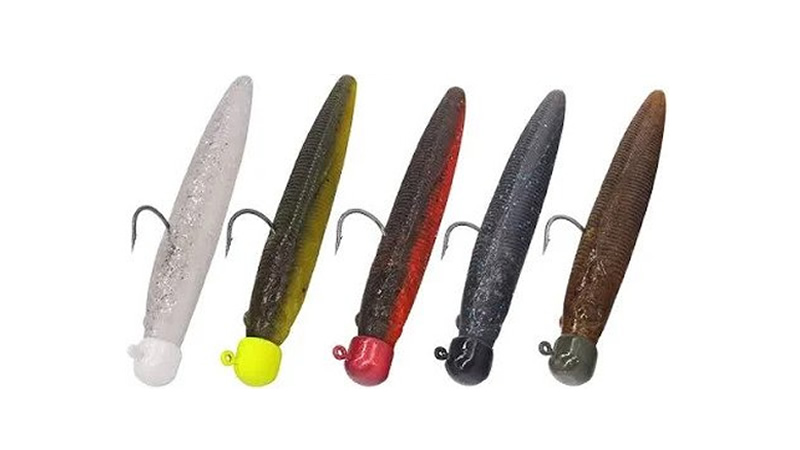
Cast beyond the target, let the bait reach bottom, and use short drags, shakes, or small hops. The goal is control and contact, not constant aggressive movement.
Wacky Rig
A wacky rig hooks a stick worm near its middle so both ends move as it falls. It is an excellent follow-up around shade, dock corners, sparse grass, and isolated cover. The exposed hook is efficient in open water, while a weedless wacky hook is a better fit near light cover. Avoid forcing it through branches or thick vegetation.
Weightless Texas Rig
Remove the sinker from a Texas-rigged stick worm, fluke, or other soft plastic when bass are shallow and a slow, natural fall matters. This setup lands quietly and comes through scattered grass well. Its limitations are depth, wind, and casting control. If you cannot feel or place the bait, add a small weight or change rigs.
Drop Shot From Shore
A drop shot places the hook above the sinker. It is useful when bass hold on a steep bank, retaining wall, dock post, or other compact target that can be reached from shore. Cast past the target, let the sinker settle, and move the bait with minimal line movement. Around rough bottom, a lighter sinker or breakaway-style weight can reduce losses.
For hook placement, leader spacing, and tackle, use our dedicated drop-shot rig guide.
Choose Weight and Line for the Bank
There is no single correct line or sinker size. Choose the lightest weight that lets you cast, reach depth, and understand what the lure is doing. Heavy weight can improve distance and contact, but it also falls faster and may wedge into rock or bury in soft bottom.
Spinning tackle with braid and a leader is practical for lighter rigs. Straight fluorocarbon or monofilament can also work, depending on cover and preference. Around abrasive rock, thick grass, or wood, increase line strength. Check the first several feet often because shore retrieves can drag line across cover.
Retrieve Rigs From Shore
Picture the path back to you before casting. A lure may cross deep water, climb a ledge, enter grass, and finish through shallow rock. Pause at each transition. If the rig loads steadily, it may be in grass; snap it free rather than dragging harder. If it ticks across rock, slow down and keep the rod high enough to prevent the sinker from wedging.
Angles matter. A cast parallel to the bank keeps the rig in a productive depth longer. A cast straight outward crosses several depths. Fan casts reveal whether fish are holding near the shoreline, on the first break, or farther out.
Avoid Snags and Lost Fish
- Use a protected hook point around wood and vegetation.
- Choose cylindrical or lighter sinkers around rock when practical.
- Keep the rod tip up when a bottom rig approaches the shallow lip.
- Do not pull harder the instant a rig stops; give slack, change angle, and try to free it.
- Retie after abrasion, especially after dragging across rock, concrete, shell, or metal.
- Land fish at a safe, gradual bank instead of lifting them up a steep wall.
Two-Rod Bank Fishing System
A simple two-rod system covers most situations. Rig one rod with a Texas rig or compact jig for cover. Rig the second with a Ned, wacky, weightless, or moving presentation based on clarity and activity. This gives you a search option and a follow-up option without making mobility difficult.
If you carry one rod, use a Texas rig first and keep a few alternate weights, hooks, and plastics in a small box. The ability to change depth and profile matters more than carrying several assembled rods.
Common Rigging Mistakes
- Choosing a rig by popularity instead of cover, depth, and bottom type
- Using more weight than needed and losing the natural action of the bait
- Rigging a soft plastic crooked so it twists or tracks poorly
- Dragging an exposed hook through wood or grass
- Using a leader so long that accurate casting becomes difficult
- Failing to inspect line after contact with rock, concrete, or dock hardware
- Casting far before fishing the cover immediately beside the bank
Frequently Asked Questions
What Is the Best All-Around Rig?
A Texas rig is the most adaptable choice for bank fishing because its weight, hook, and soft plastic can be changed for shallow water, deeper breaks, grass, wood, or relatively open bottom.
What Rig Is Best for Weeds?
A Texas rig with a protected hook point is a reliable starting choice. Use enough weight to reach the fish without forcing the sinker deep into vegetation. In shallow scattered grass, a weightless Texas-rigged plastic may be better.
What Rig Casts Farther?
A Carolina rig often casts well because the sinker provides concentrated weight, but lure shape, rod loading, wind, line diameter, and casting skill all matter. Cast only as far as needed to reach the target.
Do I Need Fluorocarbon?
No. Fluorocarbon can provide sensitivity and abrasion resistance, but monofilament and braided line also work. Select line according to cover, presentation, manageability, and the tackle you use.
Before fishing, review current state and waterbody-specific license, harvest, and access rules. The U.S. Fish and Wildlife Service first-time fishing guide also covers basic tackle, casting, safety, and catch-and-release practices.
Build a Small, Purposeful Rig Kit
Carry bullet weights, a few hook styles, swivels, drop-shot weights, jigheads, and a compact selection of soft plastics. Start with the Texas rig, then add the Carolina, Ned, wacky, weightless, or drop-shot option when the bank gives you a reason. A clear decision process catches more fish than an overloaded bag.