
Published: June 18, 2021 | Updated: September 10, 2026
Bank fishing for bass rewards anglers who read the shoreline carefully and keep moving. You do not need a boat to reach productive water. Many bass spend part of the day around cover, shade, depth changes, current breaks, and forage that can be reached from land. The challenge is choosing accessible water, approaching quietly, and presenting a lure from the correct angle.
This guide focuses on shore strategy: where to stand, where to cast, how to cover water, and how to adjust through the seasons. For setup choices, use our focused guide to the best bass rigs for bank fishing. For a broader comparison of common systems, see our bass fishing rigs guide.
Table of Contents
Quick Answer
Start with a small public lake, pond, canal, river access, or reservoir bank that offers several types of cover within walking distance. Make your first casts parallel to the shoreline, then fan casts across visible cover and depth changes. Carry one moving bait and one slower soft-plastic presentation. If a good-looking stretch produces no signs of life after several careful casts, move.
Why Bank Fishing Works
The bank is not merely the edge of the fishery. It is a collection of travel lanes, feeding zones, and ambush points. Docks, laydowns, retaining walls, grass lines, riprap, culverts, shade, and bottom transitions can concentrate forage and bass. Shore anglers can also reach small waters where launching a boat is impractical.
The tradeoff is casting access. A boat can circle structure, while a bank angler may have only one or two useful angles. Good shore fishing therefore depends on position and stealth more than maximum casting distance.
Find Productive Water Before You Cast
Begin with legal access. Public parks, designated fishing areas, wildlife-management areas, boat ramps, and municipal ponds may provide good shoreline water, but posted rules and hours always control. Never cross private property to reach a promising bank.
Once access is confirmed, prioritize variety. A short stretch with a point, a drain, vegetation, and nearby depth gives you more ways to adjust than a long, featureless shoreline. Water movement deserves special attention. Culverts, spillways, creek mouths, and wind-blown banks can gather forage, provided the area is safe and fishing is permitted.
- Look for shade lines beneath trees, docks, bridges, and tall banks.
- Fish isolated cover, especially one stump, laydown, grass clump, or rock pile surrounded by open water.
- Watch for baitfish, bluegill, surface dimples, birds, and other signs of feeding activity.
- Notice bottom changes that you can see or feel, such as sand meeting rock, firm bottom meeting silt, or a shallow flat falling into a channel.
- Favor several reachable targets over one distant target that requires repeated maximum-distance casts.
Read the Bank Like Underwater Structure
The land above the water often hints at the contour below it. A steep bank may continue into deeper water. A broad, gently sloping shoreline often signals a flatter bottom. A point on land may extend underwater, and a drainage ditch may form a small channel. These are starting clues, not guarantees, so confirm them with careful casts.
Use a bottom-contact lure to feel changes. A clean, steady pull may indicate sand or soft bottom. Repeated ticks can indicate rock or shell. A lure that suddenly drops has reached a depth change. Grass feels springy and loads the rod before releasing. Keep track of where each change occurs, because a small irregularity can hold several fish.
Make the First Cast Count
Bass near shore can be easy to spook. Stop several feet back from the water when possible, lower your profile, and avoid casting a shadow across shallow targets. Make a short cast along the near edge before walking to the waterline. Many anglers step directly onto the best fish.
After the parallel cast, work outward in a fan. Cast to the closest target first, then progressively farther away. This sequence reduces the chance of dragging a fish across untouched water or snagging a distant lure through the area you should have fished first.
Move Until You Contact Fish
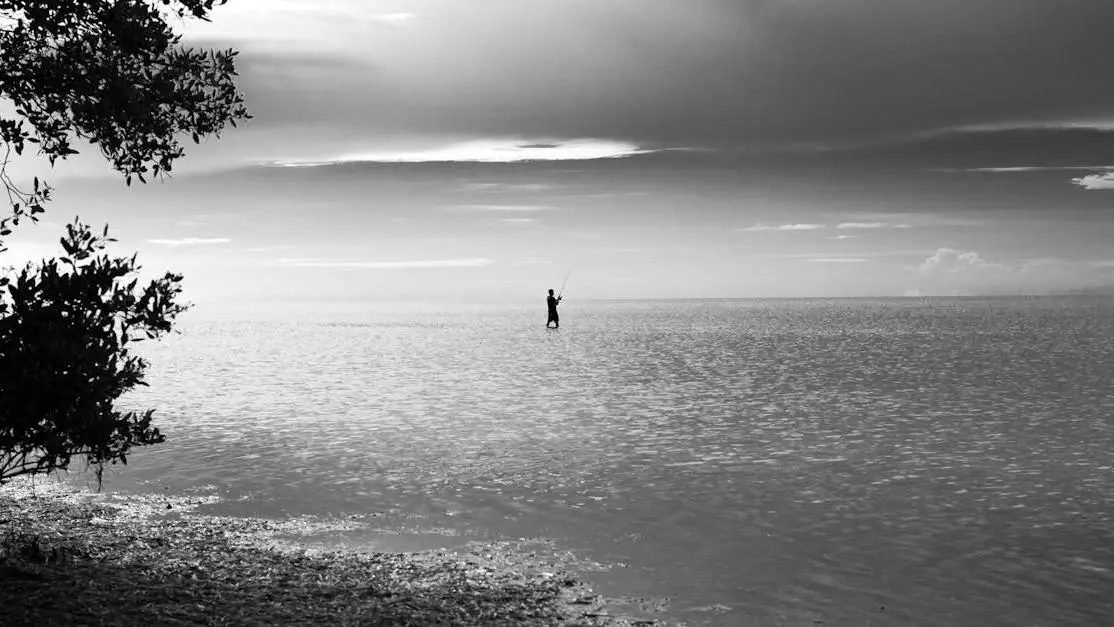
Bank fishing becomes much more effective when you treat walking as part of the presentation. Give each high-percentage target a few deliberate casts with different angles. If you do not see forage, feel cover, or get a bite, move to the next feature. When one fish bites, slow down and repeat the exact depth, cover, retrieve, and angle before leaving.
A simple rotation works well: one lure that covers water, one lure that comes through cover, and one finesse option for reluctant fish. The goal is not to carry every lure you own. It is to make useful changes without hauling a tackle store down the trail.
Best Lures for Bank Fishing
A compact selection can handle most freshwater banks. A spinnerbait or bladed jig covers stained water and vegetation. A squarebill crankbait searches shallow rock and wood. A topwater bait is useful during low light around active fish. A Texas-rigged soft plastic works through cover, while a weightless stick worm or Ned rig provides a slower follow-up.
Match the Lure to Cover and Depth
| Condition | Useful starting choice | Reason |
| Shallow grass or wood | Texas-rigged worm or creature bait | Weedless profile reaches tight cover |
| Rock, points or firm bottom | Ned rig, jig or Carolina rig | Bottom contact reveals contour |
| Stained water or wind | Spinnerbait or bladed jig | Vibration helps cover water |
| Clear, calm water | Weightless stick worm or natural-color finesse bait | Subtle fall and reduced hardware |
| Low light with active fish | Walking bait, popper or buzzbait | Efficient surface search |
These are starting points, not rules. Let cover, depth, water clarity, and fish response determine the final choice. Our largemouth bass bait guide explains natural forage and presentation options in more depth.
Seasonal Bank Fishing Strategy
Spring
Warming water brings many bass toward protected shallows, staging cover, and spawning areas. Fish the first depth change outside a shallow pocket, then work visible wood, grass, and hard-bottom areas. Avoid trampling shoreline cover, and release fish promptly where regulations require or when practicing catch and release.
Summer
During hot weather, early morning, evening, shade, current, and nearby depth become especially useful. Fish the shadow side of docks, bridges, trees, and steep banks. After low-light activity fades, slow a worm, jig, or finesse rig along the deepest structure you can reach safely.
Fall
Cooling water can push forage into creeks, canals, and shallow pockets. Moving baits help locate active fish, but keep a soft plastic ready for targets that deserve a second pass. Wind can concentrate food on one bank, so compare the protected and wind-blown sides instead of assuming calm water is always better.
Winter
Cold-water bank fishing often improves when the shore provides quick access to deeper water, rock, or sun-warmed cover. Slow down, reduce unnecessary movement, and revisit the best structural targets during the warmest part of the day.
Simple Bank Fishing Tackle
One medium or medium-heavy spinning or casting outfit can handle many shore situations. Choose line and leader strength for the cover, not for a universal formula. Lighter line can improve casting and finesse presentations in open water, while heavier line is useful around thick grass, wood, and abrasion.
- Needle-nose pliers and a line cutter
- A compact tackle bag with a few proven lures
- Polarized glasses for seeing cover and protecting your eyes
- Water, sun protection, insect protection, and appropriate footwear
- A landing net when steep banks make hand landing unsafe
- A small trash bag for discarded line and packaging
Beginning anglers can review the U.S. Fish and Wildlife Service first-time fishing guide for basic tackle, casting, safety, and catch-and-release guidance.
Safety, Access and Fish Care
Check the current license, harvest, access, and waterbody-specific rules before fishing. Shorelines may include unstable soil, sharp rock, wildlife, boat traffic, fast water, and sudden drop-offs. Wear a personal flotation device when wading or fishing where a fall could put you in deep or moving water.
Handle a bass with wet hands, support larger fish horizontally, minimize air exposure, and return released fish quickly. Carry out used line. Monofilament and braided line can entangle birds and other wildlife.
Common Bank Fishing Mistakes
- Walking to the edge before casting the water directly in front of you
- Casting only toward the middle and ignoring parallel shoreline cover
- Staying too long on featureless water without signs of fish or forage
- Bringing so much tackle that moving becomes inconvenient
- Using one retrieve speed regardless of temperature, clarity, or activity
- Assuming every visible access point permits fishing
- Leaving line, hooks, bait containers, or soft plastics behind
Frequently Asked Questions
Where Should I Cast First?
Cast parallel to the nearest cover before making long casts. Then fan casts toward points, grass edges, shade, drains, wood, rock, and visible depth changes.
What Is the Best Time of Day?
Low light is a dependable starting point, especially during warm weather, but shade, current, wind, seasonal movement, and fishing pressure can create productive windows at any time.
Can You Catch Big Bass From the Bank?
Yes. Large bass use shallow cover and shoreline feeding areas, and small waters can hold quality fish. Success depends more on access, habitat, timing, and presentation than on owning a boat.
A Better Bank Fishing Routine
Approach quietly, cast close before casting far, fish the highest-percentage cover, and keep moving until the fish tell you where to slow down. Record the depth, cover, lure, retrieve, and weather when you get a bite. That repeatable process turns bank fishing from hopeful casting into a practical pattern.