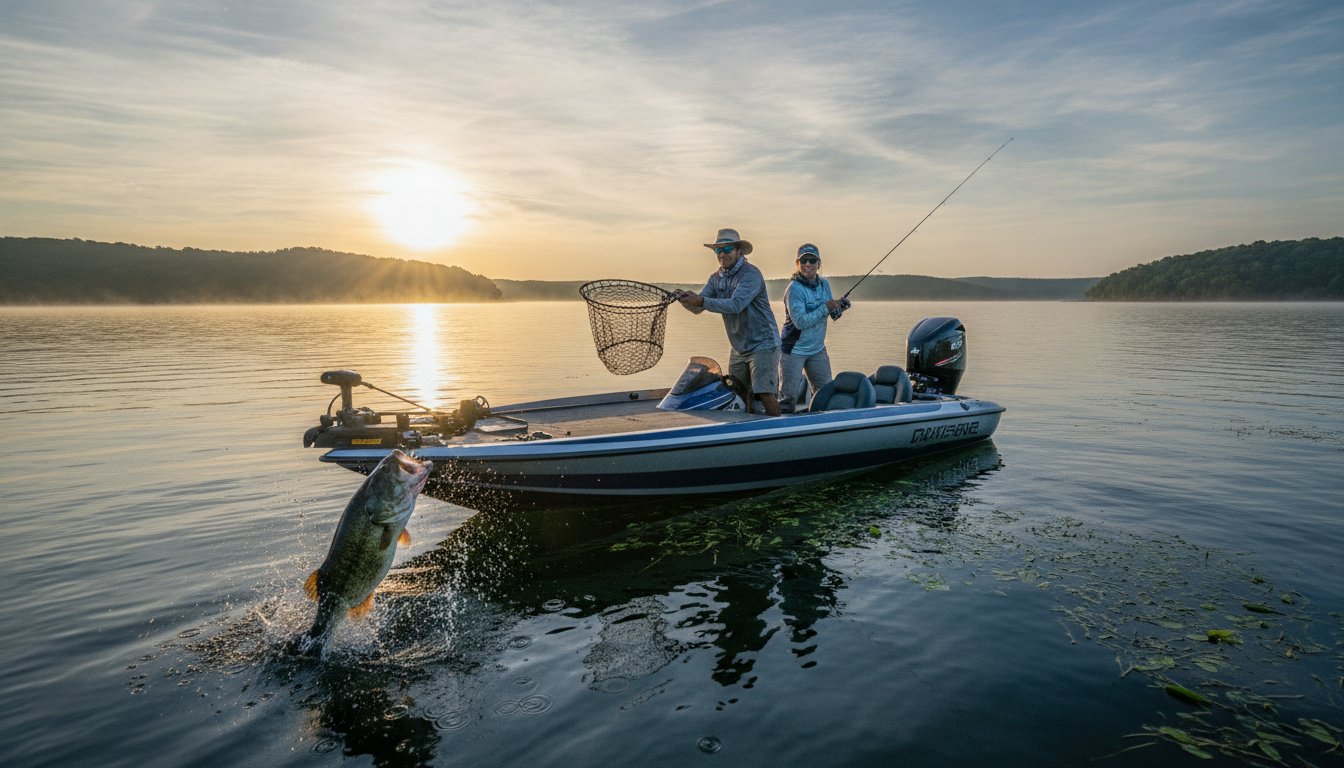

You can’t just show up to the 69,000 acres of Lake Guntersville and expect a double-digit largemouth to jump into your boat. While this legendary stretch of the Tennessee River is a year-round trophy factory, showing up during a “dead” window is the fastest way to waste a trip and a lot of gas. If you’ve ever felt overwhelmed by the massive hydrilla beds or confused by how the current affects the bite, you aren’t alone. Understanding when is the best time to fish Lake Guntersville is the difference between a frustrating day of “fishing” and a career-defining day of “catching.”
I’ve spent years patterning these fish, and I’m going to give you the exact windows for landing your personal best. We’ll dive into the seasonal migrations that dictate where the bass live and how they feed throughout the 2026 season. You’ll learn which lures to pack for the pre-spawn surge and how to master the explosive topwater action that defines the fall. By the time we’re done, you’ll have a field-tested plan that takes the guesswork out of your next Alabama expedition. Let’s get to work and get those rods bent.
Key Takeaways
- Identify why March and April are the ultimate months for landing a trophy largemouth as fish move toward shallow spawning flats.
- Master the fall transition by chasing the legendary grass bite and learning why dying vegetation creates perfect ambush points for topwater strikes.
- Discover exactly when is the best time to fish Lake Guntersville by balancing water temperatures with the Tennessee River’s powerful current.
- Learn to beat the seasonal extremes by targeting deep-water ledges in the summer and hunting for winter lunkers in offshore structures.
- Understand why a professional local guide is the fastest way to decode the lake’s complex grass patterns and daily fish migrations.
The Seasonal Pulse: Understanding Lake Guntersville’s Bass Patterns
Determining when is the best time to fish Lake Guntersville isn’t about picking a random weekend in May and hoping for the best. It’s about understanding a massive, 69,000-acre ecosystem that behaves more like a slow-moving river than a stagnant pond. To master Guntersville Lake, you have to read the seasonal pulse of the Tennessee River system. This isn’t just a body of water; it’s a trophy factory where the current dictates the lunch hour for every largemouth from the dam to the state line.
For the 2026 season, we are seeing incredible grass health across the fishery. The milfoil and hydrilla are establishing strong, oxygen-rich patterns that will hold fish throughout the year. Whether you want the pre-spawn surge in the spring, the deep ledge game of summer, the explosive topwater grass bite in the fall, or the cold-water giants of winter, success depends on your ability to time the river’s flow. I’ve seen the lake change in a matter of hours just based on how much water the TVA is pushing through the system.
To better understand how these seasonal movements translate into actual catches, watch this helpful video on spring patterns:
The Role of Water Temperature and Current
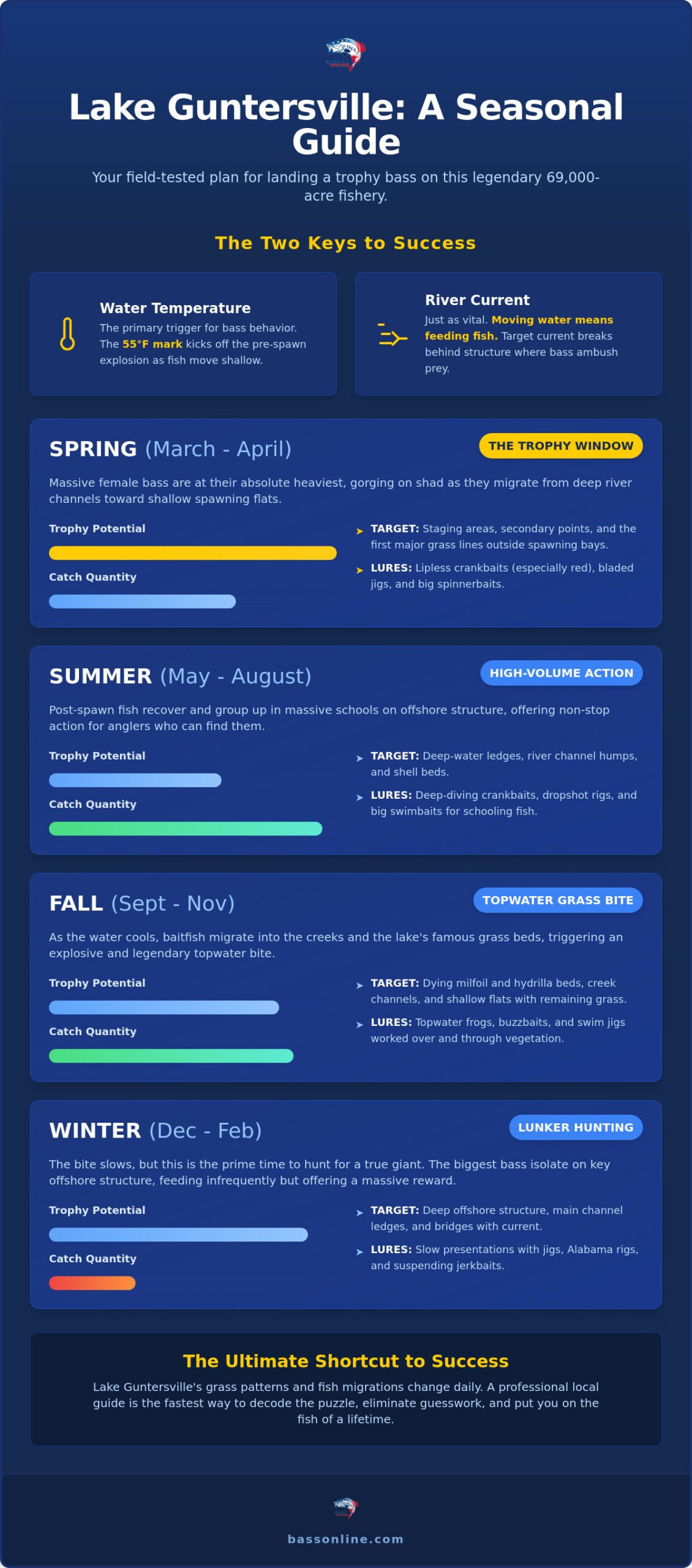
Water temperature is the primary trigger for bass behavior on the Big G. When that thermometer hits the 55-degree mark, the pre-spawn explosion begins as fish move from the deep river channels toward the shallow flats. However, the dam release schedule is just as vital. Current moves baitfish and creates “current breaks” behind stumps or grass clumps where big bass wait to ambush. If the water is moving, the fish are feeding. Stable water levels are the secret to a consistent bite, as sudden drops can pull fish off the shallow cover and back into the main channel. I always tell my clients to watch the flow first and the temperature second.
Numbers vs. Size: Setting Your Goals
You need to decide what kind of day you want on the water before you plan your Lake Guntersville fishing trip. If you’re looking for high numbers and want to catch 50 or more fish in a single outing, the late spring and early summer periods provide non-stop action on schooling fish. If you’re hunting for an 8- to 10-pound “lunker,” you need to target the late winter and early spring windows when the females are at their heaviest. Power fishing with big crankbaits works wonders when fish are aggressive, but you’ll need to switch to finesse tactics like a dropshot or a Neko rig when the current slows or the tournament pressure heats up. Matching your style to the season is how you avoid a “dead” trip.
Spring Fever: Why March and April are the Ultimate Trophy Windows
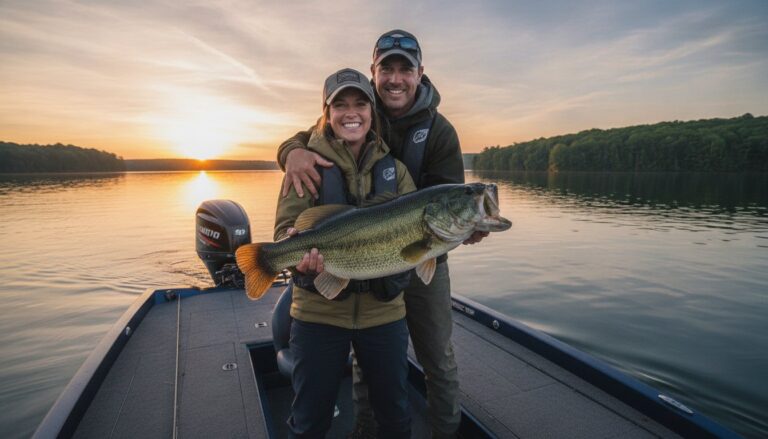
If you ask any local stick when is the best time to fish Lake Guntersville for a personal best, they will point to March and April every single time. This is the heavy-hitter window. During these two months, the massive female largemouth are at their absolute heaviest as they gorge on shad and crawfish to prepare for the reproductive cycle. They begin a massive migration, leaving the deep winter security of the main Tennessee River channel and pushing toward the expansive shallow flats that make this lake famous. To find them, you have to intercept them at their “staging” areas, which are usually secondary points, high spots, or the first major grass lines outside of spawning bays.
According to Alabama’s official fishing guide, the lake’s consistent management helps maintain these incredible trophy opportunities year after year. Success in the spring is all about timing the weather. The spawn is the period when bass move to beds in protected pockets. Before that happens, they are aggressive, hungry, and concentrated in predictable spots. If you want to hold a double-digit bass for a photo, this is your shot.
March: The Pre-Spawn Power Hour
March is all about the red clay. For some reason, these early season bass love to pull up on red clay points and secondary points to soak up the sun’s heat. I always tell my clients to look for the “greenest grass” they can find. Early in the year, most of the hydrilla is still brown and dormant; finding a patch of green vegetation means you’ve found a localized oxygen factory that attracts baitfish like a magnet. Red lipless crankbaits are the legendary choice here. Rip them through the top of the grass to trigger violent reaction strikes. A warm south wind is the secret ingredient in March. It pushes the warmer surface water into the north banks, often raising the temperature just enough to turn a slow morning into a total frenzy.
April: The Sight Fishing and Bed Peak
By the time April rolls around, the water usually clears up in the protected pockets, and the “sight fishing” game begins. This is when you can actually see those giant shadows hovering over light-colored sandy spots. It’s high-intensity fishing that requires patience and the right gear. For those planning Lake Guntersville fishing trips during this peak, you need to have a ChatterBait, a heavy flipping jig, and a soft plastic swimbait tied on at all times. These lures mimic the bluegill and crawfish that threaten bass beds, making them impossible for a protective female to ignore. If you’re ready to test your mettle against a Guntersville giant, you should reach out to a local pro to dial in the exact creek arms that are firing right now.
The Fall Transition: Chasing the Grass Bite and Topwater Blowups
While the spring is legendary for sheer size, the fall transition is when the lake truly shows its teeth. Starting in late September, the cooling water temperatures trigger a massive baitfish migration. Shad begin to move into the creek arms by the millions, and the bass follow them with a single-minded focus on feeding. If you ask a local pro when is the best time to fish Lake Guntersville for high-intensity action, they’ll point to this window. The dying grass creates a unique scenario where bass are forced into specific, predictable ambush points as their cover begins to thin out.
This period offers some of the most exciting fishing of the year. The Alabama Department of Conservation and Natural Resources notes that the lake’s abundant vegetation is the primary driver of its productivity. In the fall, that vegetation becomes your best friend and your biggest challenge. You aren’t just looking for any grass; you’re looking for the points and pockets where the current and the wind trap shad against the mats. This is the time to put the finesse gear away and lean into power fishing.
September and October: Mat Fishing Magic
This is the prime time for the legendary “frog bite.” When the hydrilla mats are at their thickest, bass live underneath the canopy in a world of shade and high oxygen. I always look for “cheese” mats, which are areas where slime and algae have collected on top of the grass. These mats hold heat and attract bluegill, which in turn attract the big largemouth. To get them out, you have two primary choices:
- Topwater Frogs: Use a walking frog in open lanes and a popping frog when you need to make more noise over the thick stuff. The blowups are violent and often completely unexpected.
- Punching: When the fish won’t come up to the surface, you have to go down to them. This requires a heavy 1.5 to 2-ounce tungsten weight, a stout flipping hook, and 65-pound braided line to “punch” through the mat to the fish waiting below.
November: The Last Great Feeding Frenzy
November is arguably the most underrated month on the Big G. As the water continues to clear and the grass recedes further, the bass move to the outside grass edges. This is a pure “numbers” game. You can find massive schools of fish following shad along the main river ledges and secondary points. I’ve had days in November where we’ve caught fish on almost every cast using spinnerbaits and jerkbaits. It’s a great time for anyone booking Alabama fishing trips because the tournament pressure has died down, giving you first crack at the best schools. The fish are aggressive, fat, and ready to fight before the winter chill sets in.
Beating the Extremes: Ledge Fishing in Summer and Winter Lunker Hunting
Most anglers pack up their gear when the Alabama humidity hits 90 percent or the frost starts sticking to the boat decks. That’s a massive mistake. While spring and fall get the glory, the “off-seasons” are when the true technicians separate themselves from the crowd. If you’re asking when is the best time to fish Lake Guntersville for offshore consistency or giant winter bags, you need to look at the seasonal extremes. These windows require more patience and better electronics, but the lack of boat traffic means you have the best spots all to yourself.
Picking when is the best time to fish Lake Guntersville depends on your tolerance for the weather, but the rewards for fishing these extremes are massive. Whether you’re dragging a big spoon across a river ledge in July or slow-rolling an Umbrella Rig through a creek channel in January, you’re hunting for a specific class of fish. These aren’t the small keepers; these are the resident giants that stay deep and feed heavy year-round. If you want to master these technical patterns without the steep learning curve, book a trip with a pro who knows these offshore secrets.
Summer: Mastering the Tennessee River Ledges
From June through August, the bass leave the shallow grass entirely and set up on the river ledges. This is a game of high-end electronics and perfect timing. You’ll be hunting schools in 15 to 25 feet of water, using side imaging to find where the fish are stacked on shell beds or rock piles. The most important rule of summer is “no flow means no go.” When the TVA is pulling water through the dam, the bass face into the current and wait for shad to be swept over the ledge. If the water is stagnant, the bite usually dies. You need heavy artillery here: massive deep-diving crankbaits and 5-inch flutter spoons that mimic a struggling gizzard shad. It’s high-energy power fishing at its finest.
Winter: The Die-Hard Trophy Season
Winter is the die-hard trophy season on the Big G. It’s cold and damp, but it’s when the 10-pounders are most vulnerable. Cold water doesn’t stop big bass from eating; it just makes them look for one massive meal instead of ten small ones. This is why the Umbrella Rig dominates the lake from December through February. This multi-arm rig looks like a small school of baitfish and triggers a primal instinct in lunkers that other lures can’t match. Target bridge pilings and deep creek channel bends where the fish congregate to wait out the winter. If you need a refresher on the basics of these high-stakes techniques, check out our guide to Bass fishing 101.
Maximizing Your Success: Why a Professional Guide is the Ultimate Shortcut
Fishing the Big G is a dream for many anglers, but the sheer size of the lake can be intimidating for even the most seasoned sticks. While I’ve laid out the patterns for each season, the fastest way to truly master this water is to spend a day with someone who lives and breathes these grass lines. Deciding when is the best time to fish Lake Guntersville is only half the battle; the other half is knowing exactly which creek arm is holding fish on that specific Tuesday. A professional guide doesn’t just provide a boat ride. It’s an on-water masterclass where you learn the “why” behind every cast.
Our team tracks the movement of the Tennessee River current and the shifting health of the hydrilla daily. This real-time knowledge is something a map or a blog post simply can’t replicate. When you step onto a high-performance charter, you aren’t just paying for access; you’re investing in the shortcut to a personal best. We provide the top-tier gear and the latest sonar technology to ensure that when that giant finally bites, you have the specialized equipment needed to get her in the boat. We take the guesswork out of the equation so you can focus on the fight.
What to Expect on a Bass Online Charter
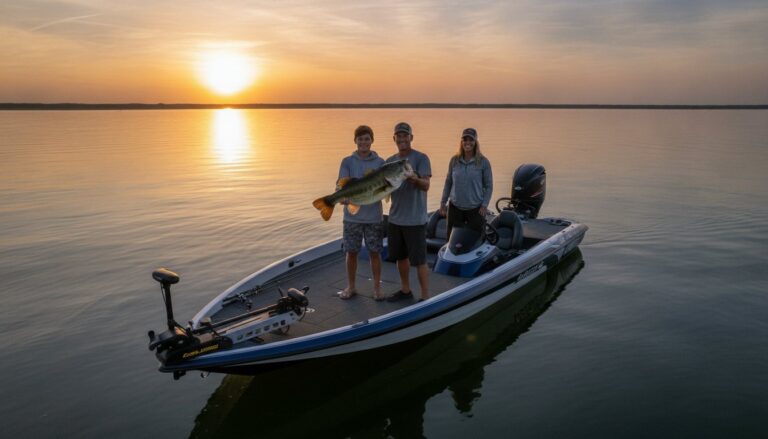
When you join us for one of our Lake Guntersville Fishing Trips: The Ultimate Angler’s Guide for 2026, you’ll get hands-on instruction tailored to your skill level. Whether you want to master the high-intensity art of “punching” thick mats or learn how to dissect deep-water ledges with side-scan sonar, we’ve got you covered. We use professional-grade rods and reels, ensuring you don’t have to worry about gear failure when a double-digit largemouth is on the line. It’s about maximizing every minute you have on the water with a local expert who knows these waters like their own backyard.
Planning Your Logistics for 2026
Preparation is the foundation of a successful 2026 expedition. You’ll need to secure your Alabama freshwater license before hitting the water. Residents can pick up an annual license for $17.00, while non-residents have the option of a $37.00 7-day trip license. Don’t forget to pack high-quality polarized glasses to spot those subtle grass edges and proper seasonal apparel to handle the Alabama elements. I highly recommend booking your spring and fall dates at least three to four months in advance. These peak windows fill up fast because that’s when is the best time to fish Lake Guntersville for those legendary trophy blowups. Guntersville is a world-class fishery that rewards those who time it right and come prepared for the challenge.
Ready to Land Your Guntersville Giant?
Lake Guntersville is a legendary fishery for a reason. We have walked through the pre-spawn trophy windows of March and the explosive fall grass bite that defines this stretch of the Tennessee River. You’ve seen how the current and water temperature dictate the movement of these massive largemouth, and why the technical ledge game can be your secret weapon during the summer heat. Understanding when is the best time to fish Lake Guntersville allows you to plan with confidence, ensuring you don’t waste a single minute on “dead” water.
Success on the Big G comes down to timing and local knowledge. Our expert local guides have decades of experience tracking these fish and specialize in trophy largemouth bass excursions. With thousands of reviews and a top-rated reputation, we are ready to help you land the fish of a lifetime. Don’t leave your trip to chance when you can fish with the best in the business. Book Your Lake Guntersville Fishing Charter Today!
The 2026 season is shaping up to be one for the record books. Grab your gear, check the current, and I’ll see you at the ramp.
Frequently Asked Questions
Is spring or fall better for bass fishing on Lake Guntersville?
Spring wins for trophy size, while fall takes the prize for aggressive topwater action and high numbers. If you want a personal best, target the pre-spawn in March. If you want dozens of blowups on a frog, late September through October is your window. Deciding when is the best time to fish Lake Guntersville depends entirely on whether you prefer quality or quantity during your outing.
Do I need a special license to fish Lake Guntersville?
You must have a valid Alabama freshwater fishing license to fish these waters. For the 2026 season, Alabama residents pay $17.00, while non-residents can grab a 7-day trip license for $37.00 or an annual one for $66.25. Licenses run from September 1 to August 31. You can buy them online at outdooralabama.com or at local tackle shops around the town of Guntersville before your trip.
What is the best lure to use on Guntersville in the summer?
Deep-diving crankbaits that reach depths of 20 feet and 5-inch flutter spoons are the top choices for summer. These lures mimic the large gizzard shad that school up on the river ledges. When the current is moving, these heavy baits trigger aggressive reaction strikes from bass stacked in 15 to 25 feet of water. It is a high-energy way to beat the heat and find offshore schools.
Can you catch trophy bass on Guntersville in the winter?
You can absolutely catch the biggest bass of your life during the winter months. Cold water temperatures concentrate the largest females around bridge pilings and deep creek channel bends. Using an Umbrella Rig or a heavy jig allows you to target these lethargic giants. While the bites are fewer, the average size of the fish you land in January is often much higher than during the summer months.
How does the Tennessee River current affect the fishing?
The Tennessee River current is the most important factor for success on this lake. Current positions the bass on the downstream side of cover, like grass clumps or rock piles, where they wait to ambush baitfish. When the TVA releases water through the dam, the dinner bell rings and the fish start feeding. If there is no flow, you will often find the bite slows down significantly across the reservoir.
Is Lake Guntersville suitable for beginner anglers?
Beginner anglers can have a blast here, but the 69,000-acre size and thick grass can be overwhelming without help. The best way for a novice to see success is by booking a guided trip to learn how to navigate the hydrilla. A pro will show you how to read the current and select the right tackle, turning a potentially frustrating day into a successful learning experience on the water.
What is the best month to catch a 10-pound bass on Guntersville?
March is the absolute best month to target a 10-pound trophy largemouth. This is when the females are at their maximum pre-spawn weight and are moving into predictable staging areas. If you are wondering when is the best time to fish Lake Guntersville for a career-defining lunker, book your trip during the last two weeks of March when the water hits that magic 55-degree mark and the big fish move shallow.
Are there specific areas of the lake that are better than others?
The mid-lake region, specifically the areas between Goose Pond and the Waterfront, is consistently the most productive part of the reservoir. This section offers the perfect mix of main river current and expansive grass flats. While the entire 75-mile stretch holds fish, this central zone provides the most diverse habitat, including the deep ledges and thick mats that trophy bass call home year-round.

Article by
Mr Bass
Todd Kersey, widely known as Mr. Bass by Field & Stream, is a professional angler, accomplished author, and dedicated philanthropist with a lifelong passion for bass fishing. Armed with a degree in Outdoor travel, Mr. Bass has expertly combined his knowledge with his practical fishing experience to become one of the most respected names in the bass fishing, his deep understanding of bass habitats, and fish behavior has earned him numerous accolades as a asset of the sport. Serving 8 years as FWC Stakeholder Chairperson. Leading and passing cutting-edge legislation, such as the Black Bass Management plan, and successfully building, passing, and financing the Trophy Catch program. As CEO, he is committed to giving back to the community through his philanthropic efforts. He supports a variety of causes, especially those centered around physical disabilities. Through his advocacy, his mentorship programs inspire anglers to engage in fishing stewardship, helping to raise more than $ 18 million in donations. Mr. Bass continues to inspire anglers and outdoor enthusiasts alike with his commitment to the sport and the world around him.