
Published: April 14, 2023 | Updated: September 10, 2026
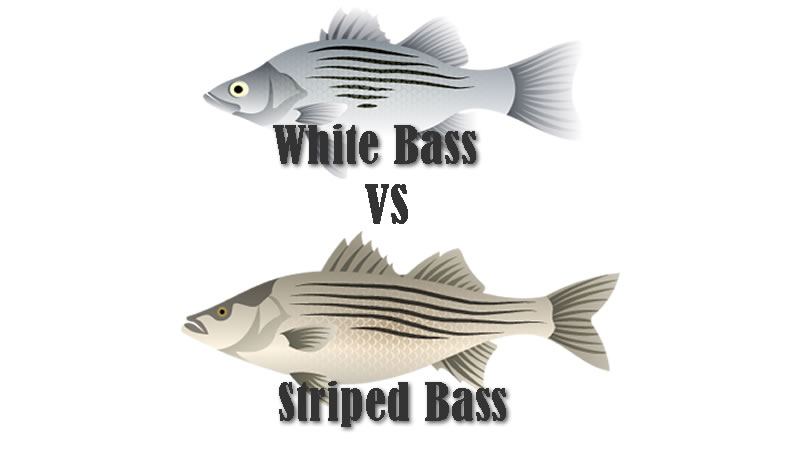
White bass and striped bass belong to the same temperate-bass family, but they are separate species with clear differences in body shape, markings, size, habitat, and seasonal behavior. Those differences matter when you identify a catch, choose tackle, or check fishing regulations.
This guide compares white bass (Morone chrysops) with pure striped bass (Morone saxatilis). If the fish has broken dark stripes and a deep body, also review our hybrid versus striped bass guide, because a hybrid can resemble both species.
Table of Contents
Quick Answer
White bass are smaller, deeper-bodied freshwater fish with faint stripes and one tooth patch on the tongue. Striped bass are larger and more streamlined, usually show several strong stripes reaching the tail, and have two distinct tongue patches. Use several traits together, especially when young fish are similar in size.
White Bass vs. Striped Bass Comparison
| Feature | White Bass | Striped Bass |
|---|---|---|
| Scientific name | Morone chrysops | Morone saxatilis |
| Body shape | Deep body, more than one-third of total length | Slender body, less than one-third of total length |
| Side stripes | Faint; usually only one reaches the tail | Distinct; several extend to the tail |
| Tongue patches | One tooth patch near the rear midline | Two distinct tooth patches near the rear midline |
| Typical size | Often about 10 to 15 inches and near 1 pound | Commonly much longer and heavier; size varies by population |
| Primary habitat | Freshwater lakes, reservoirs, and rivers | Coastal, estuarine, river, and stocked inland waters |
| Key fishing pattern | Spring spawning runs and open-water baitfish schools | Seasonal migrations, current, structure, and baitfish concentrations |
The identification traits above follow the Texas Parks and Wildlife Department comparison guide. Local populations vary, so avoid identifying a fish from color or size alone.
How to Tell White Bass and Striped Bass Apart
1. Follow the Side Stripes
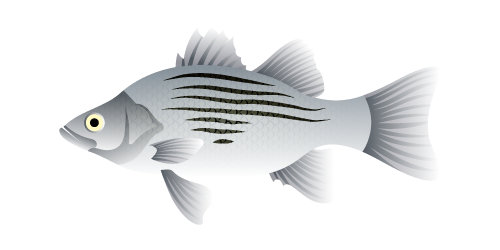
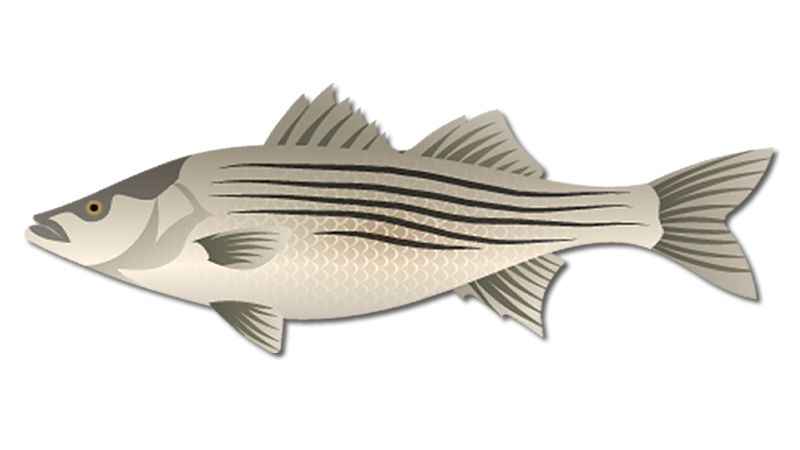
A white bass usually has faint horizontal lines, and only one normally continues all the way to the tail. A striped bass carries stronger, darker lines, with several continuing to the tail. Lighting, water color, and handling can change how bold those markings appear, so treat the stripe pattern as the first clue rather than the final answer.
2. Compare Body Depth
White bass look compact and deep through the middle. Their body depth is more than one-third of their length. Pure striped bass are noticeably longer and more streamlined, with body depth less than one-third of their length. This proportion is especially useful when two fish are close in overall length.
3. Check the Tongue Patch Carefully
White bass have one tooth patch near the rear midline of the tongue. Striped bass have two distinct patches. Wet your hands, support the fish, and inspect the mouth only when you can do so safely. Tongue patches can be hard to see on a moving fish, so confirm the result with body shape and stripes.
4. Use Size as Supporting Evidence
White bass are generally the smaller species. The U.S. Fish and Wildlife Service white bass profile lists a common length of 12.5 inches and a maximum reported length of 17.7 inches. Striped bass can grow dramatically larger, although juveniles may overlap white bass in size.
White Bass Profile
White bass are migratory open-water fish native to much of central North America. Adults commonly follow shad and other baitfish in lakes, reservoirs, and river pools. They often school tightly, which can turn one strike into repeated action when anglers remain over the moving fish.
Spring is the signature white bass season. Fish move into tributaries or onto rocky shoals as water warms and spawning approaches. The run can place large schools in current seams, channel bends, gravel areas, and the mouths of feeder creeks. Outside that period, electronics, diving birds, and surface-feeding bait can reveal roaming schools.
Striped Bass Profile
Striped bass are the largest temperate bass. Native coastal populations are anadromous, spending much of adult life in salt or brackish water and returning to freshwater rivers to spawn. Stocked landlocked populations also support major reservoir fisheries. Learn more on our striped bass species profile.
The U.S. Fish and Wildlife Service striped bass profile notes that adults commonly range from 16 to 30 inches and that exceptional fish can be far larger. Their streamlined shape, strong tail, and schooling behavior suit long migrations and sustained pursuit of baitfish.
Habitat and Distribution
White bass are freshwater fish. They favor lakes, reservoirs, and rivers with enough open water to pursue schools of forage. Current becomes especially important during spawning movements, but fish may suspend over deep basins, points, humps, or channel edges during other seasons.
Striped bass occupy a broader range of salinities. Coastal fish move among ocean water, estuaries, and rivers, while landlocked fish live entirely in freshwater reservoirs and connected rivers. In warm months, deep lakes can create a squeeze between hot surface water and low oxygen below, so productive depth varies by water body.
Feeding and Seasonal Behavior
Both species are schooling predators that frequently key on shad and other small fish. White bass may also eat aquatic insects and small crustaceans, particularly when young. Striped bass consume fish and crustaceans and can pursue larger forage as they grow.
The practical difference is scale. White bass often form dense schools of similarly sized fish, while striped bass may cover more water and attack larger bait. Dawn, dusk, wind-driven points, current breaks, and visible surface activity can be productive for either species. Match lure size to the forage you actually observe.
Fishing Tactics for Each Species
White Bass Tactics
Use light or medium-light spinning tackle, modest line, and compact lures. Small jigs, inline spinners, spoons, blade baits, and crankbaits can all work. During a spring run, cast across current and let the lure sweep through travel lanes. In open water, make controlled casts through the school instead of driving directly over feeding fish.
- Start with a lure close to the size of local shad.
- Count a jig or spoon down to the depth where fish appear on sonar.
- Keep a second lure profile ready when fish follow without striking.
- Use the broader search-bait method to locate active schools, then slow down if needed.
Striped Bass Tactics
Pure striped bass usually justify heavier tackle, stronger leaders, and larger lures than white bass. Casting swimbaits, topwater plugs, bucktail jigs, spoons, or live bait can be effective depending on local rules and forage. Current, channel edges, bridge areas, points, and bait concentrations deserve attention.
- Choose rod power and line strength for the size of fish and surrounding structure.
- Watch for birds, surface breaks, and tightly packed bait on sonar.
- When trolling, control lure depth rather than relying only on boat speed.
- For a deeper technique overview, see our guide to fishing for stripers.
Check Local Fishing Regulations
White bass, striped bass, and hybrids may have different seasons, size limits, possession limits, or combined creel limits. Rules can also change between connected waters or state boundaries. Confirm the species first, then check the current regulations for the exact water before keeping fish.
Do not assume that a rule for largemouth or smallmouth bass applies to temperate bass. Despite their common names, white bass and striped bass are members of the genus Morone, not the black-bass genus Micropterus.
Frequently Asked Questions
Are White Bass and Striped Bass the Same Fish?
No. White bass are Morone chrysops, while striped bass are Morone saxatilis. They are related temperate bass, but they differ in markings, body proportions, maximum size, habitat, and life history.
Are White Bass True Bass?
They are true members of the temperate-bass family, Moronidae. They are not black bass such as largemouth, smallmouth, or spotted bass. The shared word “bass” does not place all of these fish in the same biological family.
Can White Bass and Striped Bass Live in the Same Water?
Yes. Both can occur in the same freshwater reservoirs and river systems, especially where striped bass have been stocked. Their ranges overlap does not make them the same species, and young striped bass may require a close identification check.
Is a Hybrid Striped Bass the Same as a White Bass?
No. A hybrid striped bass is a cross between white bass and striped bass. Hybrids commonly combine a deeper body with multiple dark, often broken stripes. Use our dedicated hybrid identification comparison when that pattern appears.
Which Species Grows Larger?
Striped bass grow much larger. White bass commonly weigh around a pound, while mature striped bass often reach double-digit weights and exceptional specimens can become true giants. Size helps, but it should not replace stripe, body-shape, and tongue-patch checks.
Choose the Right Target
Choose white bass when you want fast action from freshwater schools and seasonal river runs. Choose striped bass when you want a larger migratory predator and tackle suited to heavier fish. In either case, accurate identification improves lure selection, fish handling, and compliance with local regulations.