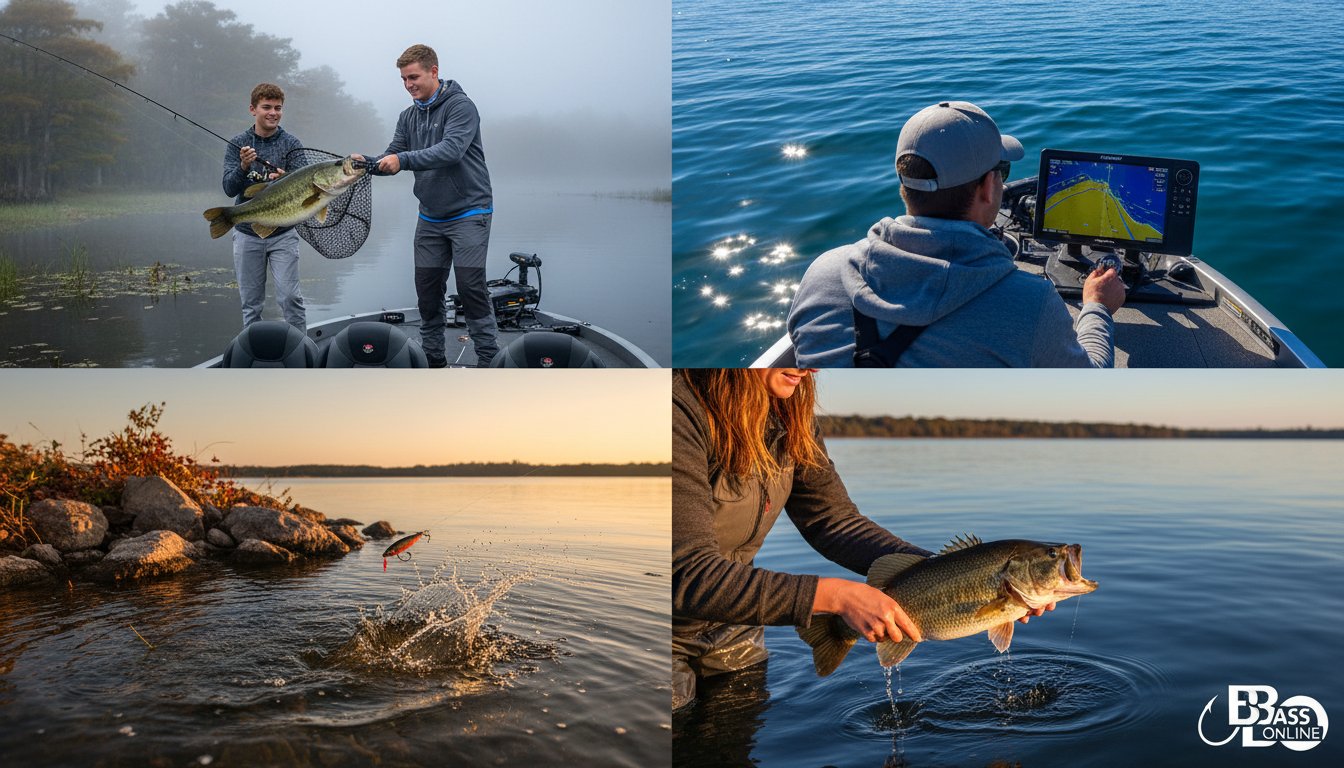

What if I told you that the calendar on your wall is actually your biggest obstacle to landing a wall-hanger? In the South, the date is just a suggestion, while water temperature and light cycles are the true laws of the hunt. Most anglers waste countless hours fishing dead water because they don’t understand the shifting seasonal bass fishing patterns in the south. It’s frustrating to watch the big ones disappear when the summer heat hits or the spring spawn timing feels like a total guessing game.
I’ve spent my life on these waters, and I know that catching trophy bass year-round requires a professional’s edge. This 2026 playbook delivers the field-tested strategies we use on every guided fishing trip to keep our clients on the fish. You’ll learn how to master the migration highway, choose the right lures for shifting temperatures, and handle a late-season Indian Summer. Dylan Nutt proved at the 2026 Bassmaster Classic that the right patterns lead to 66-pound bags; I’m here to show you how to find that same success. Whether you’re throwing a $7.99 Booyah Blade or the latest sonar-specific minnow, you’re about to gain the confidence to turn every outing into a victory.
Key Takeaways
- Learn how to decode seasonal bass fishing patterns in the south by identifying the specific environmental triggers that move fish from deep-water ledges to shallow spawning flats.
- Identify high-percentage “waiting rooms” and staging areas to intercept the heaviest pre-spawn females before they reach their nesting grounds.
- Beat the summer heat by locating the oxygen-rich thermocline and deep-water grass mats where trophy bass seek refuge and easy meals.
- Master the fall shad migration and exploit winter warm fronts to trigger aggressive strikes when the rest of the lake is struggling to find a bite.
Table of Contents
-
Cracking the Code: Why Southern Bass Fishing Patterns Are Different
-
Spring Explosions: Mastering the Pre-Spawn and Spawn Transition
-
Beating the Heat: Summer Ledge Fishing and Grass Mat Strategies
-
Southern "Winter" Secrets: Targeting Trophy Bass in the Cold
Cracking the Code: Why Southern Bass Fishing Patterns Are Different
Southern bass aren’t just larger versions of their Northern cousins; they live by a completely different set of rules. Down here, we enjoy a massive growing season and almost non-existent periods of dormancy. While folks up North are breaking out the ice augers, we’re often out on the water targeting the heaviest fish of the year. Understanding bass behavior in the South means realizing that "winter" is actually prime time for a trophy largemouth. These fish stay opportunistic and active much longer than most anglers realize.
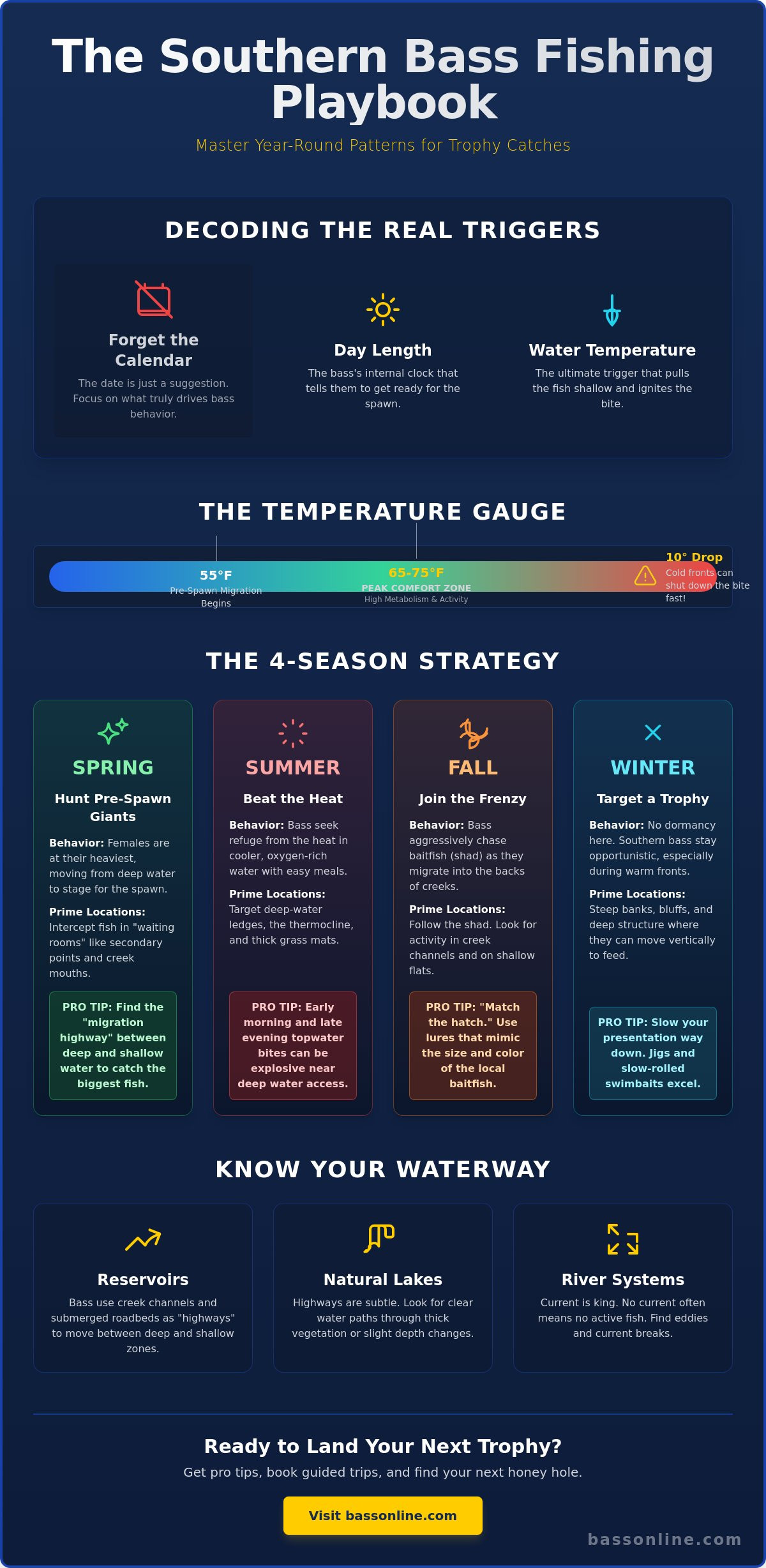
One of the biggest debates I hear on my boat is whether day length or water temperature dictates the move. In my experience, the photoperiod, or day length, acts as the internal clock that tells the fish when to start staging. However, water temperature is the actual trigger that sets the migration in motion. Mastering seasonal bass fishing patterns in the south requires you to watch both the sky and your electronics to predict when that first big wave of fish will push shallow.
To better understand how these fish move throughout the year, watch this helpful video:
Heavy rainfall and the resulting "muddy water" also play a massive role in our seasonal movements. In the South, a spring deluge can turn a crystal-clear lake into chocolate milk overnight. This doesn’t mean the bite is dead. It just forces the bass to hug tight to shallow cover where they can use their lateral lines to hunt. This is a classic example of how local weather patterns can override the traditional calendar.
The Role of Water Temperature in Bass Metabolism
Water temperature is the lifeblood of bass activity. When the thermometer hits that magic 55-degree mark, it acts like a starting pistol for the pre-spawn migration. Their metabolism kicks into high gear, and they start looking for high-protein meals. The "comfort zone" for Southern largemouth typically ranges from 65 to 75 degrees. Be careful, though; our legendary Southern cold fronts can cause a rapid 10-degree drop that shuts down the bite completely. When that happens, you’ve got to slow down your presentation and get the lure right in their face.
Southern Water Types: Reservoirs vs. Natural Lakes
Don’t fall into the trap of thinking all Southern water is the same. On steep-walled reservoirs like those found in Texas, bass use creek channels and submerged roadbeds as highways to move from deep winter haunts to shallow flats. In contrast, shallow, grassy bowls like the Everglades require a different mindset. There, the "highways" are often subtle changes in depth or clear water paths through thick vegetation. In river-fed systems, current is king. If the water isn’t moving, the fish usually aren’t either. Identifying these structural highways is the secret to intercepting fish as they migrate.
Spring Explosions: Mastering the Pre-Spawn and Spawn Transition
Spring in the South is pure adrenaline. It’s the season of giants. For anyone tracking seasonal bass fishing patterns in the south, the pre-spawn is the undisputed heavyweight champion. This is the narrow window when the biggest females in the lake are at their absolute heaviest and most vulnerable. They don’t just sprint to the shoreline, though. They move with a purpose, stopping to feed and wait for the perfect combination of moon phase and water temperature.
Finding these "waiting rooms" is the difference between a record day and a goose egg. These staging areas are usually secondary points or the mouths of major creeks. I look for these transition spots because the fish are hungry and aggressive. Integrating some bass fishing tips into your routine means knowing that these fish aren’t just wandering; they’re following a specific highway from the deep to the shallows. If you can intercept them here, you’re in for the fight of your life.
Staging for the Move: Finding the Highway to the Shallows
To cover water fast in these staging areas, I reach for a lipless crankbait. It’s a legendary search tool that allows me to vibrate through grass and bounce off submerged wood. The secret is the "stop-and-go" retrieve. By pausing your reel for a split second, the lure flutters like a wounded baitfish. This sudden change in rhythm often triggers a violent strike from a pre-spawn bass that was just following the bait. It’s a high-energy way to clear out a point before the fish move even shallower.
Sight Fishing and Bed Etiquette for Trophy Bass
Once the water stabilizes in the mid-60s, the spawn is officially on. You’ll see "beds," which are circular light spots on the bottom where the bass have cleared away debris. A "hot" bed has a fish actively circling or locked onto the center. If the fish swims away and doesn’t return, it’s likely an abandoned bed or a skittish male. When bed fishing, I’m not trying to feed the fish; I’m trying to annoy it. The unique protective instincts of each species dictate whether you should use a white craw to trigger a defensive strike or a natural bluegill pattern to mimic a nest raider.
After the eggs are dropped, the "post-spawn funk" sets in. These females are exhausted. They’ll often suspend under docks or move to the first offshore breakline to recover. Don’t let this phase discourage you. If you’re ready to see how a pro handles these tricky transitions, get in touch with us to plan your next outing on the water.
Beating the Heat: Summer Ledge Fishing and Grass Mat Strategies
When the Southern sun starts beating down in July, the surface temperatures can easily climb into the 90s. This is the time of year when many anglers throw in the towel, but the pros know that the biggest fish in the lake just changed their zip code. To stay consistent, you have to adapt to the shifting seasonal bass fishing patterns in the south. This usually means choosing between two distinct groups of fish: those that head for the deep offshore ledges and the "resident" bass that stay shallow by burying themselves in thick vegetation.
The offshore exodus is driven by a search for cooler, oxygen-rich water. However, you can’t just fish the deepest hole you find. You must understand the thermocline, which is the layer of water where the temperature changes rapidly. Below this "dead zone," there is often very little oxygen, and you won’t find bass there. Mastering Summertime fishing in the South requires finding that sweet spot where deep structure meets the right oxygen levels. If the sun gets too intense, don’t overlook the night bite; it’s the ultimate Southern secret for landing trophy bass when the pressure is low and the water is quiet.
The Deep Water Game: Working Ledges and Channels
On river-fed reservoirs like those found in Texas or along the Tennessee River in Alabama, the ledge game is king. Use your electronics to find the "spot on the spot," which might be a single stump or a rock pile on a massive drop-off. When the dams start generating power, the current kicks in. Bass will orient to "current breaks," which are areas of slack water behind structure where they can wait to ambush bait swept past them. To reach these fish, you’ll need heavy artillery:
-
10-inch Power Worms: The big profile triggers a predatory response from quality fish.
-
Football Jigs: These are designed to crawl over rocks without snagging.
-
Deep-Diving Crankbaits: These allow you to "bang the bottom" and create a reaction strike.
Punching the Mats: Heavy Cover Tactics for Midday
Not every bass leaves the bank. Some stay shallow all year, finding refuge in the shade of thick hydrilla or hyacinth mats. This is where "punching" comes into play. Since the vegetation is so dense, you can’t use standard lures. You need a specialized setup consisting of a 7’11" heavy-action rod, 65-pound braided line, and a tungsten weight of 1.5 ounces or more. The goal is to let that heavy weight "punch" through the canopy to reach the cooler, shaded water underneath. It’s a high-energy, close-quarters fight that often produces the biggest bag of the day.
The Fall Feeding Frenzy: Tracking Baitfish as Temps Drop
Fall is the most electric time to be on the water, but it’s also the most unpredictable. While some anglers believe bass head straight for the depths as soon as the leaves change, the reality of seasonal bass fishing patterns in the south is much more exciting. As the surface temperature cools, the massive schools of shad that spent their summer in the main lake begin a "great migration" into the back arms of the creek. The bass don’t just follow them; they stalk them like wolves. This is your chance to catch a number of aggressive fish in water so shallow their back fins might be sticking out.
You have to be mindful of the "turnover." This happens when the surface water cools and becomes denser than the warm water below, causing the lake to flip and mix. It can temporarily create low-oxygen "dead zones" and murky water. If you see bubbles that don’t pop or smell a sulfur-like odor, move until you find clearer, oxygenated water. Also, keep an eye out for the "Indian Summer." This 2026 season has seen several periods where heat returns after the first frost, which can scatter the fish and force you to adjust your strategy between shallow and deep presentations on the fly.
Following the Bait: The Great Migration
In the fall, your eyes are just as important as your electronics. I’m always scanning the horizon for bird activity. If you see gulls or herons diving, you’ve found the bait, and the bass are guaranteed to be nearby. Look for "shimmer" or surface ripples caused by panicked shad. In these situations, matching the hatch is critical. The "young of the year" shad are often quite small, so downsize your lures to mimic their profile. Don’t be afraid to push your boat into the skin-shallow pockets at the very back of a creek. If there’s six inches of water and a school of bait, there’s a bass ready to eat.
Choosing Reaction Baits for Aggressive Fall Bass
This is the season for speed. I rely on reaction baits like spinnerbaits and buzzbaits because they allow me to cover massive amounts of water and trigger instinctive strikes. When the shad are the primary target, color selection becomes simple: white and silver are the only options that matter. These colors flash and flicker just like a dying shad. To maximize your success, you should master specific bass fishing techniques that prioritize high-speed retrieves. Burning a spinnerbait just under the surface often creates a wake that a hungry largemouth simply can’t resist. If you’re ready to experience the chaos of a fall feeding frenzy firsthand, book your fall trophy hunt today, and let’s get on the water.
Southern "Winter" Secrets: Targeting Trophy Bass in the Cold
Forget everything you’ve heard about bass becoming "dormant" when the temperature drops. In the South, winter is far from a dead zone; it’s actually one of the most consistent times to land a personal best. While Northern anglers are stuck waiting for the thaw, we’re exploiting seasonal bass fishing patterns in the south that revolve around activity rather than hibernation. The secret is realizing that our winter is often just an incredibly long pre-spawn. The fish are heavy, they’re healthy, and they’re looking for high-protein meals to prepare for the spring.
One of the most powerful triggers in the cold months is the "Warm Front" effect. A single afternoon of bright Southern sunshine can raise the surface temp by just two or three degrees, which is more than enough to pull fish out of the depths and onto shallow rock or wood. I focus my efforts on vertical structures like bluff walls, bridge pilings, and standing timber. These features allow a bass to change its depth by twenty feet without burning much energy. Because these movements are so subtle, winter is the absolute best time to book professional fishing guides who have the electronics and the "time on water" to pinpoint these exact holding spots.
The Transition: When Winter is Actually Early Pre-Spawn
By late January, the first wave of big females begins a slow trek toward their eventual spawning grounds. They aren’t in a rush, but they are definitely on the move. To intercept them, you have to adopt a "slow and steady" mindset. My absolute favorite tool for this transition is a suspended jerkbait. I’ll twitch it down to the desired depth and then let it sit for five, ten, or even fifteen seconds. That long pause is usually when the strike happens. It’s a high-stakes game of chicken that often ends with a massive largemouth on the end of your line.
Tactical Lure Selection for Cool Southern Water
In cold water, I move away from the aggressive, wide-wobbling lures of summer. Instead, I reach for tight-action crankbaits. When the water is chilly, the vibration of the lure is much more important than a big, flashy wobble. If the bite gets really tough under a high-pressure bluebird sky, I downsize to a hair jig or a finesse worm on a light jig head. It’s a technical way to fish, but it works. It’s also worth noting that florida bass are genetically more sensitive to sudden cold snaps than other strains, which causes them to seek the most stable temperature refuge available until a warm front returns.
Take Command of the Water in Every Season
You’ve now got the playbook to stop guessing and start catching. Mastering the seasonal bass fishing patterns in the south means looking past the date on your phone and watching the water temperature, light cycles, and baitfish movement. From intercepting giants on the pre-spawn highway to tracking the great shad migration in the fall, you now understand the "why" and "how" behind every move a Southern largemouth makes. Success on the water isn’t about luck; it’s about having the right strategy for the right conditions.
We’ve spent over 25 years on these iconic lakes and rivers, uncovering the secrets of the top 1% of freshwater fishing spots. You don’t have to spend years learning these complex migrations on your own. Our guaranteed professional local guides are ready to put you on the fish of a lifetime using field-tested tactics that work in any weather. We take pride in leading every angler to a successful expedition, whether you’re a beginner or a seasoned pro looking for a new personal best.
Ready to land your trophy? Book a professional Southern bass charter today!
The water is calling, and the big ones are waiting. Let’s get out there and make your next trip a legendary one.
Frequently Asked Questions
What is the best month for bass fishing in the South?
March is widely considered the absolute peak month for trophy hunters because it aligns with the height of the spawn across most of the region. This is when the largest females in the lake are at their heaviest weights and found in shallow, accessible water. While February and April are also excellent, March provides the most consistent window to land a double-digit bass before the fish begin their post-spawn recovery phase and scatter.
How does water temperature affect Southern bass behavior?
Water temperature acts as the primary driver for a bass’s metabolism and physical activity. When temperatures climb into the 60s and 70s, their energy needs spike, leading to aggressive feeding windows and faster movements. Conversely, once the water dips below 50 degrees, their digestion slows down significantly. Understanding these seasonal bass fishing patterns in the south helps you predict whether you need to burn a fast spinnerbait or crawl a slow jig to match their energy level.
Where do bass go during the summer in deep Southern reservoirs?
In deep reservoirs, bass abandon the bank in favor of offshore ledges, river channel bends, and submerged humps. They seek out these specific areas because they offer cooler water and better oxygen levels compared to stagnant, overheated shallows. I look for structure that intercepts the current, especially during power generation at the dams. These spots on the spot become ambush points for schools of bass waiting for shad to be swept past them.
What lures work best for Southern bass in the winter?
Suspended jerkbaits and hair jigs are my top choices for cold-water success. Since bass are less likely to chase a fast-moving target in the winter, a jerkbait that sits perfectly still for ten seconds can be irresistible. Hair jigs offer a subtle, natural pulse that mimics a dying baitfish without being overpowering. These lures allow you to stay in the strike zone longer, which is essential when the water is at its coldest point.
Do Southern bass spawn at the same time every year?
No, the spawn timing varies based on a combination of water temperature, moon phase, and geographic location. In South Florida, we often see bass on beds as early as December or January, while lakes in Alabama or Texas might not see peak activity until March or April. A stable water temperature of 62 to 65 degrees usually triggers the move, but a sudden cold snap can push the fish back deep and delay the process.
How does the "fall turnover" affect fishing in Southern lakes?
The fall turnover occurs when cooling surface water sinks and mixes with the warmer, oxygen-depleted water below. This process can temporarily turn the lake murky and create pockets of water that bass find uncomfortable. You’ll know it’s happening if you see floating debris or smell a faint sulfur odor. The best strategy is to keep moving until you find areas with higher oxygen levels, which are often found near moving water or healthy, deep grass.
What is "punching" and why is it popular in the South?
Punching is a specialized technique used to penetrate thick, floating vegetation mats like hydrilla or hyacinth. It’s popular in the South because our lakes are often choked with heavy cover that provides shade and cooler water during the summer heat. By using a heavy tungsten weight and a stout rod, you can drop your lure directly into the living rooms where big bass hide. This high-energy style of fishing is the best way to catch resident fish.
Is topwater fishing effective in the South during the winter?
While topwater isn’t a primary winter tactic, it can be surprisingly effective during a multi-day warm front. If the surface temperature jumps a few degrees and you see baitfish activity near the top, a slow-moving prop bait or a walking lure can trigger a strike. It’s a low-percentage play compared to a jerkbait, but it’s one of the most exciting ways to catch a winter trophy when the conditions and temperatures align perfectly for an afternoon.

Article by
Mr Bass
Todd Kersey, widely known as Mr. Bass by Field & Stream, is a professional angler, accomplished author, and dedicated philanthropist with a lifelong passion for bass fishing. Armed with a degree in Outdoor travel, Mr. Bass has expertly combined his knowledge with his practical fishing experience to become one of the most respected names in the bass fishing, his deep understanding of bass habitats, and fish behavior has earned him numerous accolades as a asset of the sport. Serving 8 years as FWC Stakeholder Chairperson. Leading and passing cutting-edge legislation, such as the Black Bass Management plan, and successfully building, passing, and financing the Trophy Catch program. As CEO, he is committed to giving back to the community through his philanthropic efforts. He supports a variety of causes, especially those centered around physical disabilities. Through his advocacy, his mentorship programs inspire anglers to engage in fishing stewardship, helping to raise more than $ 18 million in donations. Mr. Bass continues to inspire anglers and outdoor enthusiasts alike with his commitment to the sport and the world around him.