
The post-spawn isn’t a “funk” where fish suddenly stop eating; it’s a predictable two-stage migration where mastering post-spawn bass fishing strategies means shifting your focus from hunting locations to managing your timing. You’ve likely felt the frustration when the shallows go quiet and your favorite sight-fishing spots turn into ghost towns. It’s tough when the bite slows down and you’re left guessing where those big females went once they left the beds. I’ve spent years guiding anglers through this exact transition. I can tell you that the fish are still there, they just changed the rules of the game.
I’m going to help you bridge the gap between the bank and the ledges so you can land lunkers while everyone else is struggling. We’ll dive into finding the specific migration highways bass use to reach deep water and how to capitalize on the early morning shad spawn. You’ll learn how to use forward-facing sonar to track suspended fish and which 2026 gear, like the Shimano Curado 150 M and the latest “fuzzy” baits, will trigger strikes from wary fish. We’re moving beyond the shallows to find consistent hooksets and professional results throughout the late spring.
Key Takeaways
- Identify the biological “funk” as a recovery phase where bass transition from the beds to deeper water over a two to four week period.
- Master specific post-spawn bass fishing strategies by targeting secondary points and depth contours where fish congregate during their offshore migration.
- Exploit the early morning “Power Hour” by locating shad spawns and using topwater walkers to land heavy limits before the sun gets high.
- Utilize deep-diving crankbaits and modern side-imaging to intercept schools of bass as they move along their deep water highways.
- Discover how hiring a professional guide can help you master a lake’s specific migration patterns and hidden hotspots in a single outing.
What is the Post-Spawn Bass ‘Funk’ and Why Does it Happen?
The beds are empty. The shallows are quiet. That easy sight-fishing bite you’ve been enjoying just vanished into thin air. Welcome to the post-spawn, a 2 to 4 week window immediately after the eggs are dropped that leaves most anglers scratching their heads. This period is often called the “funk” because the fish seem to disappear, but they haven’t left the lake. They’ve just changed their priorities. Understanding post-spawn bass fishing strategies starts with realizing that the fish are physically exhausted. Environmental triggers like rising water temperatures and the conclusion of the moon cycles tell the bass it’s time to move, but they don’t all leave at once.
To better understand how these movements look on your electronics and in the water, watch this helpful video:
The shift in Largemouth bass behavior during this time is purely biological. The females have spent weeks fighting for territory and dropping eggs, which takes a massive physical toll. Meanwhile, the smaller males stay behind to protect the next generation. This creates two very different groups of fish for you to target: the retreating giants and the aggressive protectors. Knowing which one to chase determines whether you’re loading the livewell or just practicing your casting.
The Recovery Phase: Why the Big Girls Disappear
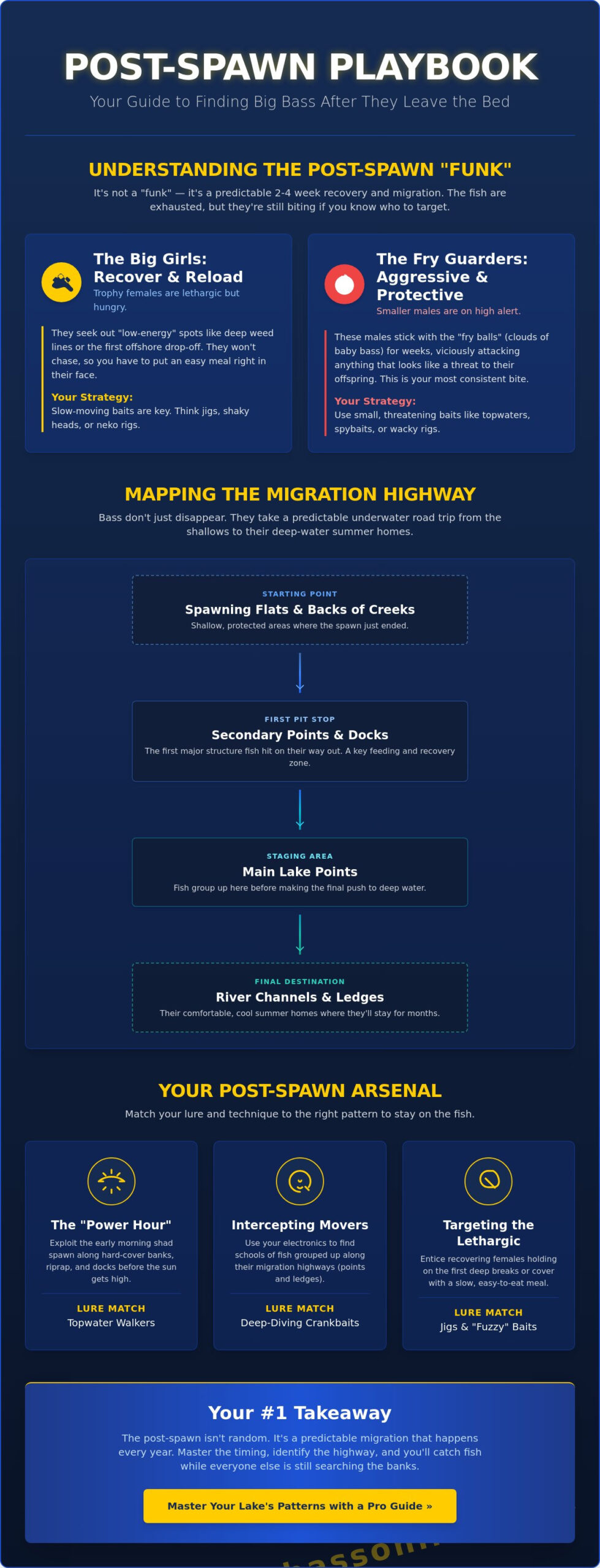
Don’t believe the myth that big bass stop eating after they spawn. They’re hungry, but they’re also incredibly lethargic. A trophy female seeks out “low-energy” environments like the first deep-water break or thick submerged vegetation where she can sit still and let the food come to her. She isn’t going to chase down a high-speed lure. Your job is to put a slow-moving, easy meal right in her face while she recuperates.
Fry Guarders: The Aggressive Male Pattern
If you want to keep the rods bent, look for “fry balls.” These are tiny clouds of bass fry hovering near the surface in the shallows. The male bass stay with these schools for several weeks, and their protective instinct is dialed up. They’ll attack anything that looks like a threat to their offspring. This is the most consistent “safety net” for any angler during the transition. You can find more detailed field reports on these patterns over at our outdoor blog.
Mapping the Migration: Where Bass Go After the Bed
Think of the post-spawn as a massive underwater road trip. Bass don’t just vanish into the abyss; they follow a specific structural path from the shallow spawning flats to their summer homes in the deep. Most anglers fail during this season because they jump straight from the bank to the middle of the lake, missing the “in-between” fish that are still on the move. Mastering post-spawn bass fishing strategies requires you to identify this transition highway and intercept fish at their predictable pit stops.
Bass use depth contours like handrails, moving along creek channels and tapering points until they reach the security of deeper water. Along the way, offshore vegetation and underwater islands act as vital resting areas, providing cover for bass while they hunt roving schools of baitfish. To visualize this movement, look for these key stages on your map:
- The Backs of Creeks: The starting point where spawning recently concluded.
- Secondary Points: The first major structural change fish hit as they exit a cove.
- Main Lake Points: The staging area before fish move to offshore structure.
- River Channels and Ledges: The final destination for the summer months.
The First Stop: Secondary Points and Docks
Secondary points are the primary transition hub for 2026. These are the points located inside a creek or cove rather than on the main lake body. When bass leave the beds, they stop here first to feed and recover. If you’re fishing dock systems, ignore the shallowest slips. Target the outer edges of the docks where the pilings meet the first significant drop-off. This is where big females pause to ambush bluegill before continuing their trek toward the main lake.
Heading Deep: Ledges, Humps, and River Channels
As the water warms, the migration pushes fish from 5 feet of water down into the 15-25 foot range. This is where your electronics become your most valuable tool. Look for “hard-to-soft” bottom transitions, such as a patch of gravel or rock surrounded by soft mud. These spots are magnets for schools of bass. To help you identify which fish are moving and when, you can explore our guide to bass species behavior for deeper insights into seasonal movements.
Finding High-Percentage Patterns during this migration often involves hunting for suspended fish. Modern side-imaging allows you to see bass sitting 10 feet down over 20 feet of water, often tracking baitfish schools across the water column. If you want to skip the learning curve and see these migration highways in person, consider booking a day on the water with a local expert who tracks these movements daily.
High-Percentage Patterns: Shad Spawns and Morning Windows
If you aren’t on the water before the sun breaks the treeline, you’re missing the most explosive bite of the year. While the “funk” makes some fish lethargic, the morning shad spawn creates a feeding frenzy that overrides their post-spawn hangover. Mastering post-spawn bass fishing strategies during this window is all about efficiency. You have a narrow “Power Hour” to land a heavy limit before the sun pushes the baitfish deep and the bite turns technical. Look for flickering water near the bank or birds diving on seawalls. If you see silver flashes against hard structure, you’ve found the jackpot.
The Shad Spawn Feeding Frenzy
Shad love to glue their eggs to hard surfaces like rip-rap, dock pilings, and seawalls. Bass know this and will pin schools of bait against these barriers. This is not the time for subtle finesse. You need to make fast, repetitive casts with white spinnerbaits or swim jigs to trigger reaction strikes. Bass are competing for the same easy meals, so a lure that moves horizontally and mimics a panicked shad will get crushed. Keep your boat moving and cover as much hard shoreline as possible while the activity is high.
The Pro’s Daily Timeline for Post-Spawn Success
The biggest mistake I see anglers make is sticking with the same tactic all day. The post-spawn requires a shifting game plan as the light levels change. Use this timeline to stay on the fish:
- Dawn to 8 AM: Target the shad spawn on hard cover. Use aggressive topwaters like walkers or buzzbaits. This is your best chance for a kicker fish.
- 8 AM to 11 AM: As the shad move out, follow the bass to secondary points. Switch to medium-diving crankbaits that bounce off rocks or stumps in 8 to 12 feet of water.
- 11 AM to 3 PM: When the sun is high, bass seek shade or depth. This is the time for postspawn offshore fishing presentations. Slow down with finesse rigs or drag a heavy jig through deep brush piles and ledges.
Once the morning frenzy ends, isolated cover becomes king. A single stump or a lone dock piling in deeper water can hold a massive female that’s finished her morning meal and is looking to rest. Precision is vital here. If you can’t find the schools, check our latest fishing reports for seasonal updates on where the locals are finding the most consistent action. Stay mobile, watch your clock, and don’t be afraid to leave the bank when the shadows disappear.
The Post-Spawn Tackle Box: Lures for Every Phase
Your tackle box is more than just a collection of plastic and metal; it’s your toolkit for solving the post-spawn puzzle. In 2026, we have better tools than ever to target fish that are transitioning from the shallows. Effective post-spawn bass fishing strategies rely on having a mix of high-speed search baits and slow-moving finesse options. While swim jigs and chatterbaits are great for covering water and finding active schools, you need to be ready to slow down when the “funk” sets in. Using the right tool for the specific stage of the migration determines whether you’re catching fish or just exercising your arm.
Search tools like the white swim jig or a vibrating jig are essential for efficiency. These lures allow you to cover massive flats and long stretches of rip-rap quickly. If you’re fishing deeper, deep-diving crankbaits are the best way to intercept bass on the migration highway. They crash into the bottom and create the kind of erratic movement that a lethargic female can’t ignore. For those tricky days, modern reels like the Shimano Curado 150 M make it easier to launch light finesse baits even in the wind.
Surface Strategies: Walking the Dog
Topwater walking baits are legendary for post-spawn success, but your retrieve is everything. These fish are recovering, so a slow, rhythmic “walk-the-dog” cadence often works better than a high-speed burn. You want to give that big female plenty of time to track the bait and commit. Match your colors to the forage; use translucent or white for shad, and switch to greens or oranges if they’re feeding on bluegill. Learn more about topwater bass lures in our technique guide to master these explosive strikes.
Dragging the Depths: Finesse for Finicky Fish
When the bite gets tough, it’s time to drag. A Carolina Rig is a powerhouse for covering large offshore flats because it keeps your bait in the strike zone longer. If the fish are suspended and won’t touch a heavy rig, the “weightless” approach is a killer. A slow-falling Senko or one of the new “fuzzy” baits, like the Z-Man Fuzzy TRD, provides a subtle presentation that wary bass find irresistible. I recommend tuning your gear with lighter fluorocarbon lines and tungsten weights to increase sensitivity in clear post-spawn water. If you want to see exactly how we rig these for local waters, book a guided bass fishing trip and let’s get to work.
Mastering the Transition with a Professional Guide
You can spend weeks trying to decode the migration highway on your own, or you can spend eight hours with someone who has already found the map. The post-spawn is arguably the most challenging time for any angler because the fish are constantly in flux. While the technical advice and lure selections we’ve covered are essential, there is no substitute for the real-time adjustments made by a seasoned expert. Implementing successful post-spawn bass fishing strategies requires more than just the right bait; it requires an understanding of how a specific lake’s current, wind, and baitfish patterns interact on a Tuesday versus a Saturday.
Professional guides offer more than just a boat ride. We provide a masterclass in reading the water. When we use side-imaging to scan a secondary point, we aren’t just looking for fish. We’re looking for the specific rock pile or submerged brush that acts as a rest stop for those retreating trophy females. Having 20 plus years of local knowledge on your side means knowing exactly which dock pilings hold “fry guarders” and which river channel ledges will stack up with schools by mid-morning. It’s about the “why” behind every move we make, giving you a deeper level of value than any map alone could provide.
Why Pro Guides Beat the Post-Spawn Funk
The biggest advantage of a pro is that we track fish movement daily. Most weekend anglers are fishing where the bass were last Saturday, but a guide knows where they moved on Monday. We have access to the latest professional-grade equipment and 2026 lure technology, ensuring you’re always using the most effective tools for the job. Whether we’re “strolling” for suspended fish or power-fishing a shad spawn, you’ll learn techniques you can take back to your home water. To get started, find a professional fishing guide for your next trip and skip the guesswork.
Book Your Next Adventure
There is nothing quite like the raw excitement of feeling a heavy post-spawn female crush a topwater walker during the early morning window. Our guided fishing trips are designed to be fully equipped and hassle-free, allowing you to focus entirely on the thrill of the catch. We handle the navigation, the tackle, and the strategy so you can capitalize on the best bites of the season. From Lake Okeechobee to the Harris Chain of Lakes, we are committed to your success on the water. Don’t let the post-spawn frustrate you; let it challenge you to become a better angler. Let’s get out there and land your next lunker.
Dominate the Transition and Catch More Fish
The transition from the beds to deep water doesn’t have to be a mystery. You now have the roadmap to beat the funk by targeting the morning shad spawn and tracking fish along their offshore migration highways. Success this season is about timing your aggressive morning bites and shifting to technical finesse as the sun gets high. By applying these post-spawn bass fishing strategies, you’re no longer just casting at empty banks; you’re intercepting fish with professional precision. It’s time to take what you’ve learned and put it to work on the water.
If you’re ready to skip the learning curve and get straight to the action, we’re here to help. With over 25 years of professional guiding experience and thousands of 5-star fishing charter reviews, our expert guides operate across the top US bass lakes to ensure your success. We’ve spent decades patterning these movements so you don’t have to. Book Your Guided Bass Fishing Trip and Master the Post-Spawn! The lunkers are waiting for you; let’s go out and find them together.
Frequently Asked Questions
What is the best lure for post-spawn bass fishing?
The best lure for post-spawn bass depends on the time of day, but a topwater walking bait is the most effective for triggering explosive strikes from recovering females. During the midday heat, you should switch to a deep-diving crankbait to intercept fish moving along the migration highway. These two options allow you to cover the entire water column as fish transition from the shallows to their summer haunts.
How deep do bass go after they spawn?
Bass typically move from the shallow spawning flats to depths of 15 to 25 feet, though they often pause at intermediate depths of 8 to 12 feet on secondary points. This movement happens in stages rather than all at once. Your electronics will be vital for finding these schools as they stack up on ledges, humps, or river channels where the water is cooler and more oxygenated.
Can you catch big bass during the post-spawn recovery?
You can absolutely catch trophy-sized bass during the recovery phase if you adjust your presentation to match their lethargic state. Big females are exhausted after the spawn and won’t often chase fast-moving lures. Using a weightless soft plastic or a slow-drifting Carolina rig puts an easy meal right in their face, which is exactly what they need to rebuild their energy levels without a fight.
What is a shad spawn and why does it matter?
A shad spawn is a massive biological event where baitfish congregate on hard cover like rip-rap or dock pilings to drop their eggs at night and early morning. This matters because it creates the most intense feeding window of the day for post-spawn bass. If you find the shad, you find the bass. It’s your best chance to land a heavy limit before the sun pushes the fish deep.
How long does the post-spawn period last?
The post-spawn period generally lasts between 2 and 4 weeks as fish transition through their recovery phase. This timeframe can shift based on water temperature and weather patterns, but once the fish reach their summer ledges, the pattern officially shifts to the summer peak. Understanding this window helps you stay ahead of the fish as they move from the bank to offshore structure.
Is topwater fishing good during the post-spawn?
Topwater fishing is exceptionally productive during the post-spawn, particularly when targeting the early morning shad spawn or bluegill beds. Implementing post-spawn bass fishing strategies that involve walking baits or poppers can trigger territorial strikes from protective males and hungry females alike. It’s one of the most exciting ways to catch fish before the high sun forces them into deeper, shaded cover for the afternoon.
Why are bass so hard to catch right after the spawn?
Bass are difficult to catch immediately after the spawn because they are physically exhausted and often scatter away from the concentrated bedding areas. Instead of being grouped up in the shallows, they disperse along various structural paths toward deeper water. This “funk” requires anglers to stop hunting for nests and start hunting for the migration routes where fish pause to rest and feed.
What is the difference between pre-spawn and post-spawn behavior?
The primary difference is that pre-spawn bass are aggressive and focused on moving toward the bank, while post-spawn fish are defensive and moving away from it. During the pre-spawn, fish are at their heaviest and most predictable. Effective post-spawn bass fishing strategies account for the fact that fish are now lighter, more spread out, and often more selective about the size and speed of their meals.

Article by
Mr Bass
Todd Kersey, widely known as Mr. Bass by Field & Stream, is a professional angler, accomplished author, and dedicated philanthropist with a lifelong passion for bass fishing. Armed with a degree in Outdoor travel, Mr. Bass has expertly combined his knowledge with his practical fishing experience to become one of the most respected names in the bass fishing, his deep understanding of bass habitats, and fish behavior has earned him numerous accolades as a asset of the sport. Serving 8 years as FWC Stakeholder Chairperson. Leading and passing cutting-edge legislation, such as the Black Bass Management plan, and successfully building, passing, and financing the Trophy Catch program. As CEO, he is committed to giving back to the community through his philanthropic efforts. He supports a variety of causes, especially those centered around physical disabilities. Through his advocacy, his mentorship programs inspire anglers to engage in fishing stewardship, helping to raise more than $ 18 million in donations. Mr. Bass continues to inspire anglers and outdoor enthusiasts alike with his commitment to the sport and the world around him.