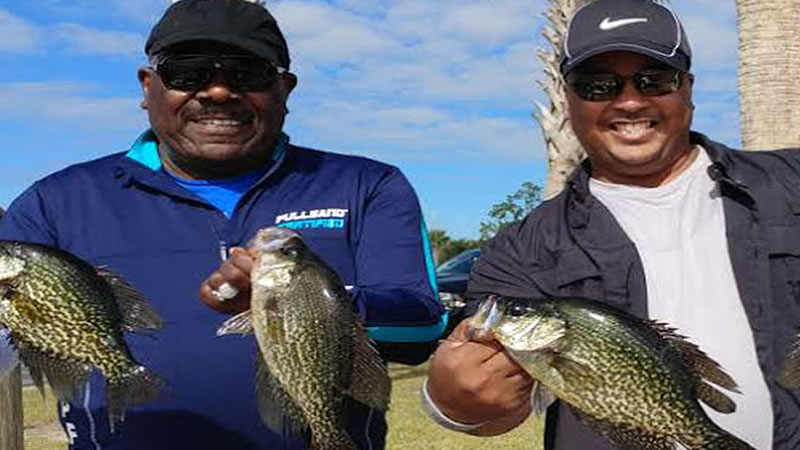

Lake Toho crappie fishing gives Central Florida anglers a second reason to visit one of the state’s best-known freshwater lakes. Lake Tohopekaliga—usually called Lake Toho—is famous for trophy largemouth bass, but the Florida Fish and Wildlife Conservation Commission also lists black crappie among the lake’s popular sport fish.
This guide explains when to target crappie on Lake Toho, where to look, which baits work best, and how to adjust when fish move between shallow spawning areas and deeper offshore water.
Why Fish Lake Toho for Crappie?
Lake Toho covers about 18,810 acres southeast of Kissimmee and has a mix of open water, vegetation, shoreline cover, points, canals, and man-made fish attractors. That variety gives black crappie multiple places to feed, suspend, and stage throughout the year.
Anglers often come to Lake Toho for bass and discover that crappie—also called speckled perch or simply specks in Florida—can provide excellent light-tackle action. Crappie are especially attractive for family trips because they school, bite readily when located, and can be caught with simple tackle.
Best Time for Lake Toho Crappie Fishing
Black crappie are a cool-weather favorite in Florida. FWC notes that crappie generally move inshore to spawn from February through April, with males preparing nests in shallow water while larger fish can hold slightly deeper.
That makes late fall through early spring a popular period for Central Florida crappie anglers, but fish can be caught throughout the year. During warmer periods, expect more fish to suspend offshore or relate to deeper edges and structure.
- Late fall and winter: Look for schooling fish in deeper water, around drop-offs, channels, and attractors.
- Pre-spawn: Follow schools as they move toward shallower cover and spawning areas.
- Spawn: Jigs and small minnows can be effective around shallow cover and protected areas.
- Warm months: Use electronics to find suspended fish and concentrate on depth changes and offshore structure.
Where to Find Crappie on Lake Toho
FWC maintains man-made fish attractors on Lake Toho, and their locations are available through the agency’s Lake Toho fish-attractor map. These structures are useful starting points because they concentrate baitfish and panfish.
FWC also highlights North Steer Beach, South Steer Beach, Browns Point, and the lake’s man-made attractors for panfish activity. Crappie can also suspend away from visible cover, so a productive spot is not always obvious from the surface.
When searching, pay attention to:
- Fish attractors and nearby depth changes
- Edges of hydrilla and other submerged vegetation
- Canal mouths and areas with moving water
- Drop-offs, points, and deeper holes
- Schools of baitfish seen on sonar
Best Baits for Lake Toho Crappie
Live minnows and small jigs remain two of the most dependable crappie presentations. FWC recommends drifting minnows or grass shrimp below a float and using small bright jigs when crappie move shallow.
Live Minnows
Fish a small minnow under a float or suspend it at the depth where crappie are showing on electronics. Depth matters because schooling crappie often hold at a similar level in the water column. If you are marking fish at eight feet, placing the bait several feet above or below them can dramatically reduce bites.
Small Jigs
Small 1/16- to 1/8-ounce jigs are excellent when fish are active or when you need to cover water. Try bright colors in stained water and more natural colors when visibility improves. Slow retrieves, vertical jigging, and controlled drifts can all work.
Spider Rigging and Slow Trolling
When crappie are scattered or suspended, slow trolling multiple rods at controlled depths can help locate schools. Once bites begin, circle back through the productive depth and area instead of continuing to wander.
How to Catch More Lake Toho Crappie
- Find the depth first. Crappie are often more depth-sensitive than structure-sensitive.
- Use electronics. Sonar can reveal suspended schools that would otherwise be missed.
- Stay on the school. When one fish bites, others are often nearby.
- Slow down in cold water. A subtle presentation can outperform aggressive retrieves after a front.
- Watch the wind. Wind can help create productive drifts, but too much wind makes precise depth control difficult.
- Carry both minnows and jigs. Let the fish tell you whether they want live bait or artificial presentations.
Lake Toho Crappie Regulations
FWC’s current statewide daily bag limit is 25 crappie per angler. Regulations can change, and special rules apply to some Florida waters, so always confirm the current rules before harvesting fish.
Lake Toho is part of the Kissimmee Chain and is managed as a major public fishery. Check the current FWC Lake Tohopekaliga forecast and Fish Management Area regulations before your trip.
Can You Catch Bass and Crappie on the Same Trip?
Yes. One of Lake Toho’s strengths is its variety. An angler can target crappie with light tackle and then switch to largemouth bass around hydrilla, grass edges, Goblets Cove, Lanier Point, Browns Point, or other productive bass areas.
If bass are your main goal, use our complete Lake Tohopekaliga fishing guide. For more Florida speck destinations, see our top Florida crappie lakes.
Plan Your Lake Toho Crappie Trip
The simplest Lake Toho crappie plan is to start with the fish attractors and depth changes, use sonar to locate schools, and keep both minnows and small jigs ready. During cool weather and the spring spawning period, pay extra attention to areas where deeper water connects to shallower cover.
For current lake information, fish-attractor maps, and fishery updates, consult the FWC Lake Tohopekaliga fishing forecast.