Published July 26, 2020 · Updated September 9, 2026
A Florida fishing license is generally required when a resident or visitor attempts to take freshwater or saltwater fish, including catch-and-release fishing, unless a specific exemption applies. The license you need depends on the species you intend to target—not simply whether the water looks fresh, salty, or brackish. This guide explains resident and nonresident rules, common freshwater costs, charter differences, exemptions, and how to buy the correct license.
Table of Contents
Table of Contents
Who Needs a Florida Fishing License?
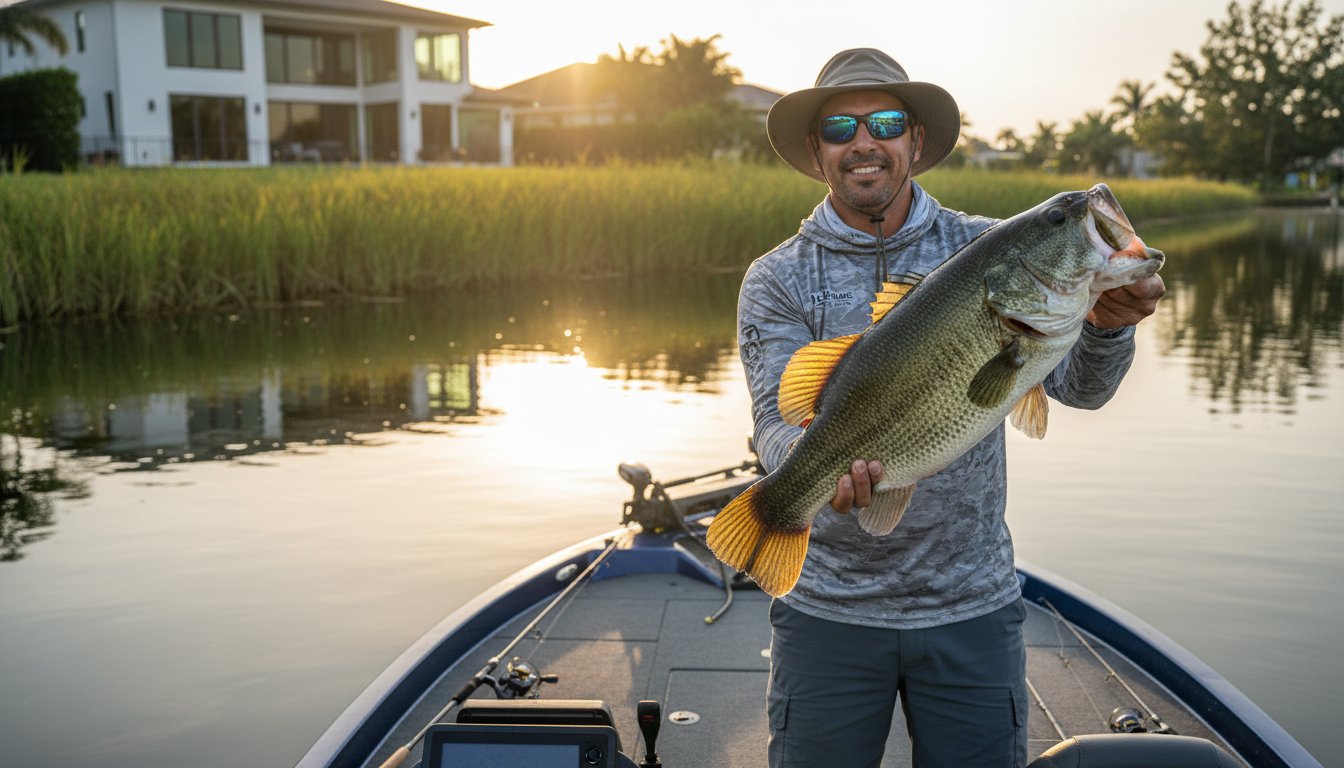
Florida Fish and Wildlife Conservation Commission guidance says residents and visitors generally need the appropriate recreational license when fishing. A license is required to attempt to take fish, so releasing every catch does not by itself remove the requirement. People helping with the take—for example, actively baiting hooks or handling fishing gear—may also need the appropriate license.
The most reliable starting point is the official FWC Do I Need a License? page. It lists current exemptions and explains when freshwater, saltwater, or additional permits apply. Rules can change, so confirm your eligibility before the trip rather than relying on an old screenshot or social-media post.
Catch and release still counts as fishing
If you cast for largemouth bass, peacock bass, crappie, or another freshwater species, you are attempting to take fish even when every fish will be released. Most anglers age 16 and older therefore need a freshwater license unless an exemption applies.
Freshwater or Saltwater License?
Florida bases the license category on the species being targeted. Largemouth bass, peacock bass, crappie, and bluegill require freshwater coverage. Marine species require saltwater coverage. This distinction matters in brackish rivers and canals where freshwater and saltwater species can occupy the same area.
- Freshwater license: for taking or attempting to take native or nonnative freshwater fish.
- Saltwater license: for taking or attempting to take marine organisms.
- Combination coverage: useful for eligible residents who fish both environments.
- Additional permits: may be required for certain species, methods, or managed areas.
When the target species or waterbody is unclear, check the current FWC rules or contact the agency before fishing. A captain can explain what applies to a planned trip, but the angler remains responsible for having any personal freshwater license required.
Florida Fishing License Costs
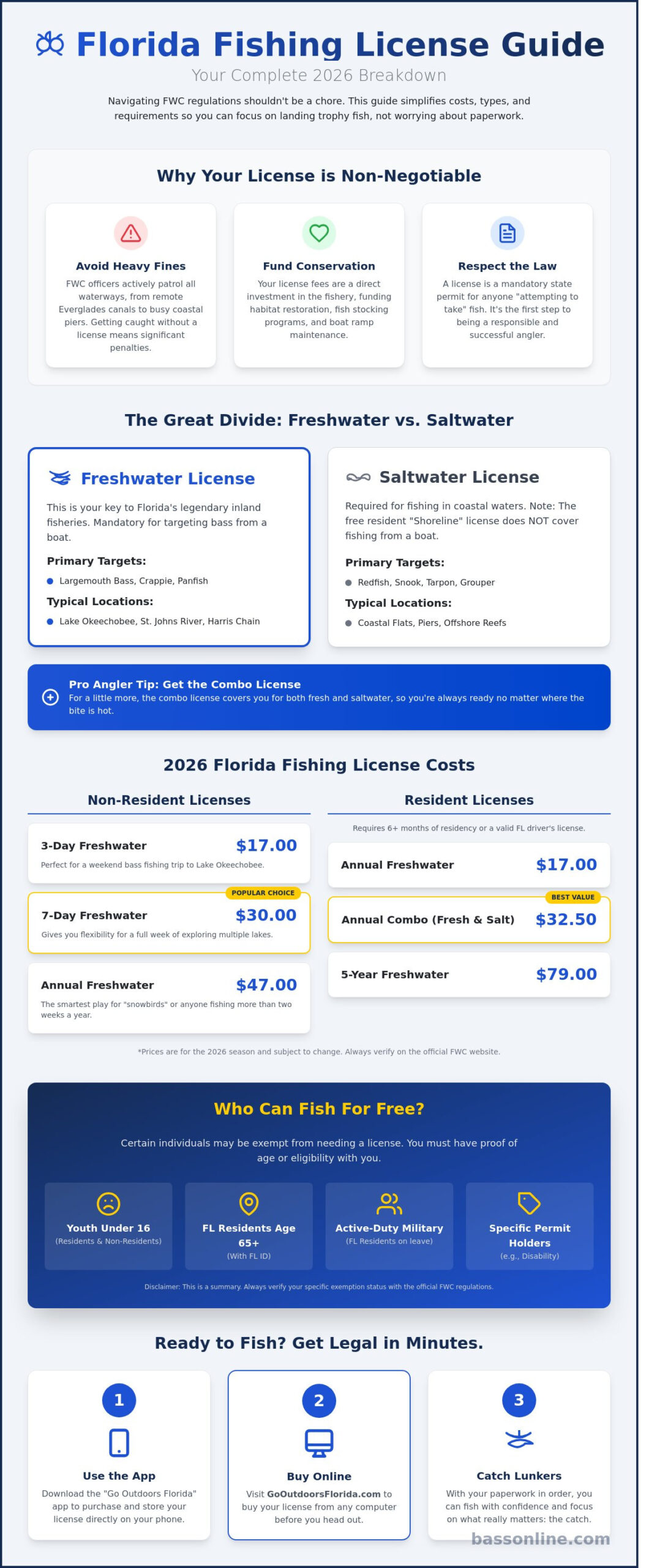
The FWC currently lists the following common freshwater options. Vendor or issuance fees may be added, and prices can change. Confirm the final amount on the official FWC freshwater license page before purchase.
| License | Current listed price | Best fit |
|---|---|---|
| Florida resident annual freshwater | $17 | Residents who fish freshwater during the year |
| Florida resident five-year freshwater | $79 | Residents who want longer coverage |
| Nonresident three-day freshwater | $17 | Short visits |
| Nonresident seven-day freshwater | $30 | Weeklong trips |
| Nonresident annual freshwater | $47 | Frequent visitors or extended stays |
| Resident annual freshwater and saltwater combination | $32.50 | Residents fishing both categories |
For a more detailed price comparison, including package choices, see our separate guide to Florida fishing license costs. Keeping cost intent on that page lets this guide concentrate on eligibility and requirements.
Resident and Nonresident Rules
Residency affects both price and eligibility for certain packages or exemptions. A Florida resident normally verifies residency through qualifying state records or documentation. A visitor should select a nonresident option even if they own property in Florida unless they meet the state’s legal residency requirements.
Nonresident seniors do not receive the resident age-65 exemption simply because they are 65 or older. Likewise, many resident-only military, disability, shoreline, or home-county provisions do not extend to visitors. The official FWC eligibility pages should control the decision.
Visitors choosing between short-term and annual coverage
Match the term to the full span of days you may fish, including an arrival or departure day if you expect to cast. Frequent visitors should compare the combined cost of multiple short-term licenses with annual coverage. If the itinerary includes both freshwater bass and saltwater fishing, confirm whether separate licenses are needed.
Florida Fishing License Exemptions
Common exemptions include youth under age 16 and Florida residents age 65 or older who carry acceptable proof of age and residency. FWC also lists qualified resident disability provisions, limited military leave provisions, certain private fish-pond situations, and narrowly defined home-county fishing with specific nonmechanical gear.
These exceptions are conditional. The resident senior exemption does not automatically apply to a nonresident senior, and a private dock is not necessarily the same as a qualifying private fish pond. Some exemptions also do not cover special permits or federal requirements. Review the official FWC exemption list for the exact language that applies to you.
Free fishing days
Florida designates freshwater and saltwater free fishing days. The schedule and scope should be verified each year through FWC. Other bag limits, size limits, seasons, and gear rules still apply on a license-free day.
How to Buy a Florida Fishing License
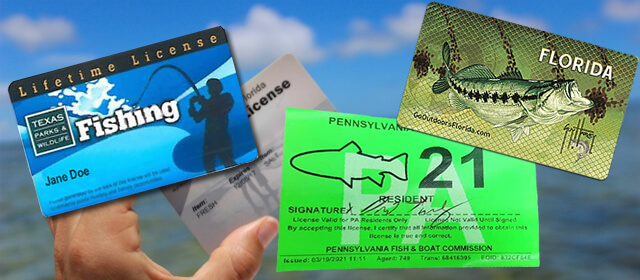
The fastest route for many anglers is the official Go Outdoors Florida portal or the Fish|Hunt FL mobile app. Licenses are also available by phone and from authorized agents, including many tax collectors, sporting-goods stores, and tackle shops. The FWC How to Order page lists current purchase methods.
- Identify the species and water you plan to fish.
- Determine whether resident or nonresident rules apply.
- Check whether you qualify for an exemption.
- Select the correct freshwater, saltwater, combination, and any additional permits.
- Save access to the license and carry the identification or proof required for your status.
Charter Fishing License Rules
Freshwater and saltwater charters are treated differently. Guests on a properly licensed saltwater for-hire vessel are generally covered by the vessel’s charter license. Florida freshwater charter guests usually need their own freshwater license unless they qualify for an exemption. That distinction is especially important for travelers who assume every captain’s license covers every passenger.
Ask the operator what personal license is required before departure. BassOnline guests planning a freshwater trip can review current Florida fishing guides and confirm the license requirement for their destination. Anglers planning where and when to go can also use our Florida bass fishing calendar.
Before Your Florida Fishing Trip
- Confirm the license category by target species.
- Verify current prices and exemptions on FWC—not an undated third-party chart.
- Check destination-specific regulations, seasons, and permits.
- Keep your license or exemption proof accessible.
- Review the current Florida bass fishing regulations if largemouth bass is the target.
- Use the national fishing license directory for a different state.
What a Florida Fishing License Does Not Cover
A recreational fishing license is not blanket permission to keep every fish or use every method. Anglers must still follow species seasons, bag limits, length limits, protected-area rules, and gear restrictions. Some saltwater species require an additional permit, and some wildlife management areas or special-use locations have separate requirements. A license also does not grant access to private property, restricted shorelines, closed ramps, or areas where fishing is prohibited.
Check the rules for the exact species and destination before leaving home. This is especially important when a trip crosses county lines, moves between a lake and a coastal river, or targets more than one species. The license answers who may fish; the regulations answer what, where, when, and how an angler may fish.
Common Florida License Mistakes
- Choosing by water appearance: brackish water can hold both freshwater and marine species, so choose coverage by the species being targeted.
- Assuming every charter covers guests: saltwater vessel licenses and personal freshwater licenses follow different rules.
- Using a resident exemption as a visitor: several senior, disability, military, and shoreline provisions are limited to qualifying Florida residents.
- Relying on an old price chart: confirm fees and available packages through FWC or Go Outdoors Florida at purchase.
- Forgetting supporting proof: an exemption can require Florida identification, residency evidence, orders, a certificate, or other documentation.
- Ignoring special permits: the base license may not cover every species, area, or activity.
When in doubt, use the official license selector or contact FWC. A few minutes of verification prevents an avoidable problem at the ramp and lets the fishing day begin with the right documents already in place.
Florida Fishing License FAQ
Do I need a license for catch-and-release fishing in Florida?
Generally, yes. FWC states that attempting to take fish—including casting and releasing the catch—requires the appropriate license unless an exemption applies.
Does a freshwater guide’s license cover the guests?
Usually not. Freshwater charter guests generally need their own freshwater license or a valid exemption. Saltwater for-hire vessel licensing works differently.
Do children need a Florida fishing license?
Youth under age 16 are among the groups exempt from Florida recreational fishing license requirements. Other regulations still apply.
Do nonresident seniors fish free?
No general age-65 exemption applies to nonresidents. The senior exemption is for qualifying Florida residents who carry proof of age and residency.
Where should I buy a Florida fishing license?
Use Go Outdoors Florida, the Fish|Hunt FL app, the official phone option, or an authorized license agent. Avoid unofficial sellers that cannot verify the exact privilege being purchased.
License requirements, fees, and exemptions can change. BassOnline provides trip-planning information, but FWC and applicable law remain the controlling sources.