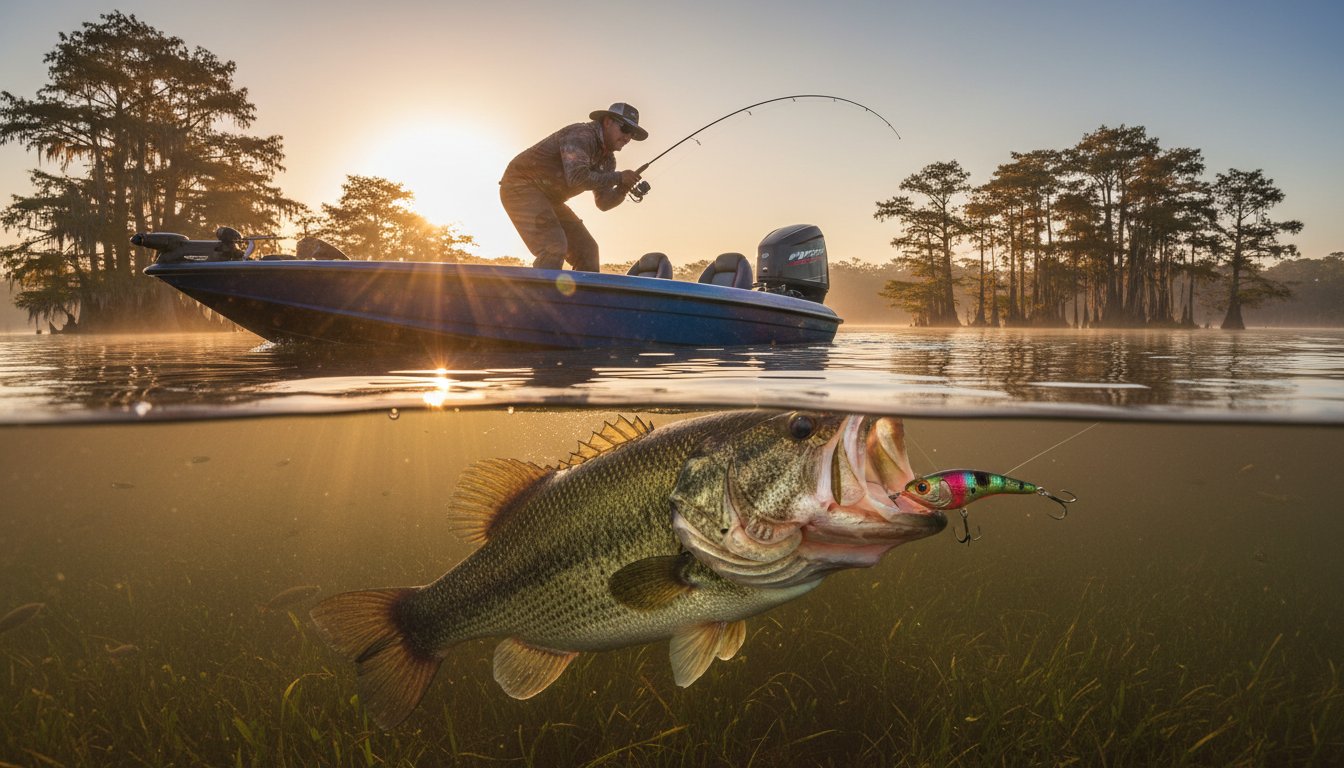

What if the trophy you’ve been chasing your whole life isn’t actually a Largemouth Bass? It sounds like a tall tale from the bait shop, but in 2024, the American Fisheries Society officially recognized the florida bass as its own distinct species. If you’ve ever felt frustrated trying to tell these fish apart or wondered why some water seems dead despite looking perfect, you aren’t alone. Most anglers have spent years treating every green fish the same, but the science now proves these legendary lunkers are a different breed entirely.
I am going to help you cut through the scientific confusion and show you exactly how to land these world class fish using pro-level tactics. You will discover the truth behind the new classification and get a detailed look at the top Florida hotspots where these hawgs hide. We will also dive into the specific seasonal patterns and gear setups our team uses to ensure you never leave the dock without a winning plan. By the time we are done, you will have the confidence to book your next trip and finally put a double digit trophy in the net.
Key Takeaways
-
Get the inside scoop on the 2026 scientific reclassification and why Yale’s genetic research officially separates these trophy fish into their own elite species.
-
Uncover the "Hawg" genetics and metabolic advantages that allow these fish to reach the legendary 10-pound mark faster than any other species.
-
Learn the specific retrieve styles and heavy-cover tactics required to land a Florida bass and survive its aggressive, high-flying fight.
-
Pinpoint the "Big Three" lake systems and seasonal patterns that will put you on world-class lunkers throughout the coming year.
-
Discover why expert local knowledge is your best weapon for navigating massive "grass jungles" and finding big fish where others just get stuck.
Table of Contents
-
Florida Bass: The 2026 Scientific Shift Every Angler Needs to Know
-
The Biology of a Trophy: Why Florida Bass Grow Larger and Faster
Florida Bass: The 2026 Scientific Shift Every Angler Needs to Know
I have spent decades on the water chasing hawgs, and I can tell you that a sunshine state lunker just hits differently. In 2024, the American Fisheries Society officially caught up to what we have known for years. They formally recognized the Florida bass as a distinct species, separate from the Northern Largemouth. This isn’t just a win for the science geeks; it is a massive shift in how we track, manage, and target these premier trophy fish across the country.
To better understand how these fish behave and how you can catch more of them, watch this helpful video:
The Yale Study and the 1949 Theory
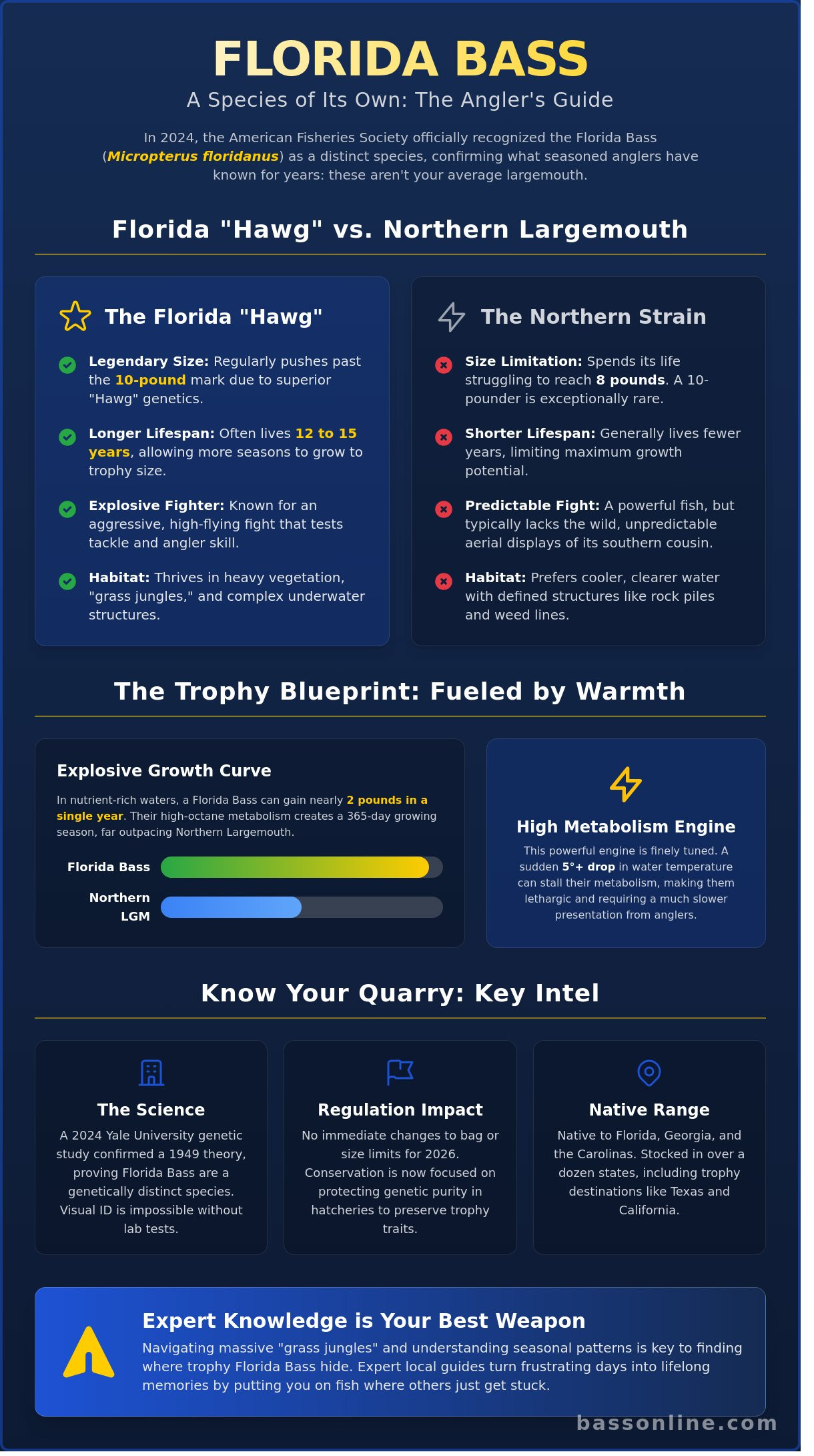
Back in 1949, biologists Bailey and Hubbs first suspected that Florida’s bass were a unique subspecies. It took 75 years and a groundbreaking Yale University genetic study to confirm that biological hunch with advanced DNA sequencing. The data proved that the Florida bass is genetically distinct from its northern cousins. You can’t distinguish them by counting scales or looking at the lateral line; visual identification is 100 percent impossible without a laboratory test. This discovery has expanded our understanding of their range, confirming they are native to Florida, Georgia, and the Carolinas, and have been introduced as far as California and Texas.
What This Means for Your Fishing License
The FWC is currently updating signage and educational literature for the 2026 season to reflect this change. Don’t worry about your bag limits or seasons just yet. Regulations remain consistent across both species to keep things simple for the average angler. The real impact is in conservation. We are seeing a major shift in hatchery management to protect the genetic purity of the Florida bass. By keeping the lineages separate, we ensure that the legendary growth rates and aggressive strikes of these fish aren’t diluted by hybridization. For the latest updates on how these changes affect our local waters, check out our outdoor blog.
-
Official Name: Micropterus floridanus (formerly M. salmoides floridanus).
-
Range: Native to Florida, South Carolina, and Georgia, but stocked in over a dozen states.
-
Regulation Impact: No immediate changes to bag or size limits for 2026.
-
Key Trait: Known for reaching "trophy" status much faster than the Northern species.
The takeaway here is simple. We are now officially hunting a unique species that demands its own respect and strategy. Whether you are fishing the heavy mats of Lake Okeechobee or the deep ledges of a Texas reservoir, understanding the genetics of your target is the first step toward landing a career-best lunker.
The Biology of a Trophy: Why Florida Bass Grow Larger and Faster
Ever wonder why Florida is the undisputed capital of big-fish hunters? It isn’t just about the scenery; it’s about the unique genetic blueprint of the local lunkers. The Florida bass is a distinct species with a physiological drive to reach massive proportions. While a Northern largemouth might spend its life struggling to hit 8 pounds, these southern giants possess the DNA to regularly push past the 10-pound mark. According to the U.S. Geological Survey, these fish are native to the Florida peninsula and exhibit growth patterns that leave other subspecies in the dust. They also enjoy a longer lifespan, often reaching 12 to 15 years in age, which gives them more seasons to pack on the heavy muscle that makes your drag scream during a fight.
Temperature and Metabolism
Warm water acts as the high-octane fuel for a trophy fish. In our sub-tropical climate, the water stays within the optimal range for activity almost year-round, creating a 365-day growing season. This high metabolic rate means these fish are constantly hunting to maintain their energy. However, this internal engine is finely tuned. When a cold front drops water temperatures by 5 degrees or more, their metabolism stalls. They become lethargic much faster than Northern bass, requiring anglers to slow down their presentation and target tight strike zones to trigger a bite during winter chills.
The Growth Curve of a Giant
The speed at which these fish gain weight is staggering compared to their cold-water cousins. In nutrient-rich environments like Lake Okeechobee, a healthy female can gain nearly 2 pounds of body mass in a single year. They fuel this expansion by targeting high-protein forage like threadfin shad and 8-inch golden shiners. A 5-year-old Florida Bass can outweigh a 10-year-old Northern bass. This explosive growth is why double-digit hawgs are so common in our local waterways. Their aggression is legendary, but it’s often a calculated ambush. They use their size to dominate heavy vegetation, waiting for the right moment to inhale a topwater lure. If you want to see these giants in action, check out our latest fishing reports to see which lakes are producing the biggest bags this week.
Takeaway: Superior genetics, a year-round growing season, and a high-protein diet allow these fish to outpace almost every other freshwater predator in weight gain and size.
Florida Bass vs. Northern Largemouth: A Tactical Comparison
If you’ve ever hooked a fish that felt like a runaway freight train only to have it dance across the surface, you’ve likely met a florida bass. While they share a family tree with the northern largemouth, these fish are a different breed. Northern bass typically prefer the stability of rock piles, deep ledges, and fallen timber. In contrast, the Florida species craves the "green rooms" of the South, burying themselves in thick hydrilla, lily pads, and heavy kissimmee grass. They don’t just live in the weeds; they dominate them.
This preference for thick cover isn’t just a habit; it’s biological. According to the USGS Florida Bass Profile, these fish are distinct from their northern counterparts in both genetics and growth potential. This is exactly why they’re the primary choice for stocking trophy lakes nationwide. From the massive reservoirs of Texas to the deep canyons of California, lake managers use this strain to introduce "big fish" genetics into local populations. In "transition zones" like Georgia and South Carolina, you’ll often find hybrids where the two species overlap. While these "intergrade" fish grow well, the pure Florida strain remains the undisputed king of trophy potential due to its ability to reach double-digit weights much faster than the northern variety.
The Fight: What to Expect on the Line
When a big florida bass hits, it’s personal. They don’t just pull; they explode with a short-burst power that can snap light line in a heartbeat. You’ll often see the legendary "tail-walk" where a 10-pounder clears the water, shaking its head violently to throw your lure. It’s a heart-stopping moment that separates the pros from the amateurs. Pulling a giant out of dense hydrilla requires specialized gear. I always tell my clients that heavy braid and stout rods are non-negotiable. You need a 7-foot-6 heavy action rod and at least 65-pound braided line to winch these fish out of the salad. If you give them an inch, they’ll wrap you around a stalk and break you off before you can even reach for the net.
The TrophyCatch Program Connection
Florida’s FWC runs the TrophyCatch program, a massive citizen-science initiative that has tracked these specific giants since 2012. It’s a brilliant way to gather data while rewarding anglers for their success. The program features three distinct tiers. The Lunker Club recognizes fish over 8 pounds, while the Trophy Club is reserved for those over 10 pounds. The elite Hall of Fame is for absolute monsters topping 13 pounds. Documenting these catches helps biologists manage the water more effectively, ensuring the next generation of anglers has a shot at a world-class hawg. You can learn how we target TrophyCatch winners to see the specific tactics our pros use to put these legends in the boat.
Chasing Lunkers: Top Destinations and Tactics for 2026
Cracking the code on trophy Florida bass requires more than just luck; it takes a localized strategy and the right coordinates. As we look toward the 2026 season, the water levels and vegetation growth across the state are shaping up for a historic year of big-fish encounters. You need to understand the seasonal shift. During the pre-spawn months of January through March, these giants move into shallow flats with hard sandy bottoms. By July, they retreat to deeper ledges and river channels where oxygen levels remain stable. If you want a double-digit fish, you have to follow the food and the shade.
Legendary Florida Hotspots
-
Lake Okeechobee: Spanning 730 square miles, "The Big O" remains the undisputed king. Its massive grass beds and lily pad fields provide the perfect nursery for high-volume catches and heavy Florida bass.
-
Lake Tohopekaliga (Toho): This 12,000-acre powerhouse in Central Florida is a trophy factory. It consistently produces more 10-pound fish than almost any other lake in the country due to its rich hydrilla coverage.
-
Headwaters Lake: This is the new frontier. Managed specifically for bass habitat, these 10,000 acres of flooded timber and submerged vegetation offer a premier experience for anglers seeking a personal best in a controlled environment.
While artificial lures are a blast, the "Golden Shiner" secret remains the most effective way to land a record-breaking Florida bass. These large, native baitfish are the primary calorie source for lunkers. Using a live shiner under a cork near a weed line is a high-percentage play that often triggers a strike from the smartest, oldest fish in the lake. It’s the gold standard for a reason; big fish want a big meal with minimal effort.
Pro-Tested Tactics for Heavy Cover
Fishing in Florida means fishing in the "slop." You can’t be afraid to get your lures dirty. Success in 2026 will depend on your ability to master heavy-duty presentations that penetrate the thickest canopy. Use these three staples to fill your livewell:
-
Punching Mats: Use a heavy 1.5-ounce tungsten weight and a compact soft plastic. This setup crashes through thick hyacinth and lettuce to reach the cool, shaded water where hawgs hide during the midday sun.
-
Topwater Explosions: Low-light hours call for hollow-body frogs or prop baits. Work them slowly over grass edges. The strike is violent and immediate.
-
The Florida Rig: In gin-clear spring water, use a pegged sinker and a slender worm. This subtle approach mimics a crawling crawfish without spooking wary fish in high-visibility conditions.
For more field-tested tips and the latest lake reports from our professional guides, check out our outdoor fishing blog to stay ahead of the curve.
Takeaway: To catch a Florida trophy, match your location to the season and don’t be afraid to use heavy gear to pull lunkers out of the thickest vegetation in the lake.
Landing Your Record: Why an Expert Guide is Essential
Florida’s waterways are a massive, shifting maze of vegetation. Finding a trophy florida bass requires more than just a map and a boat. You are dealing with hundreds of thousands of acres of hydrilla, eelgrass, and lily pads. These "grass jungles" hide the biggest hawgs in the country, but they also swallow up anglers who don’t know the terrain. A professional guide doesn’t just drive the boat; they read the water like a book, identifying the subtle current breaks and oxygen pockets where lunkers congregate.
The game changed recently following the 2023 Yale study that officially reclassified the florida bass as a distinct species. This scientific shift confirms what we’ve known for years. These fish behave differently than their northern cousins. They are more sensitive to cold fronts and specific about their habitat. Our guides have spent decades studying these patterns on the water. We know how a two-degree temperature shift or a change in wind direction moves the fish from the deep grass edges to the shallow beds.
Preparation makes the difference between a good story and a heavy scale. When you head out for a day on the water, keep your gear focused. Bring high-quality polarized sunglasses to cut the glare and see into the beds. Pack plenty of sun protection and a camera for that inevitable trophy shot. We provide the top-tier rods, reels, and local secrets. You just need to bring the grit to pull a ten-pounder out of the heavy cover.
The Bass Online Advantage
We believe in results, not excuses. That is why we offer our "No Fish, No Pay" policy. It’s the ultimate confidence builder for any angler. You get access to the highest-rated pro guides in the Southeast, men and women who fish these waters 300 days a year. Beyond the boat, we offer branded apparel and gift certificates. These make the ultimate fishing gift for the person who dreams of landing a legendary Florida lunker.
Book Your Adventure Today
Booking your trip is simple and fast. Whether you are a single angler chasing a personal best or a large corporate group looking for a team-building expedition, we handle the logistics. We offer customizable trips to fit your schedule. Choose a 4-hour "quick strike" for a fast morning of action or commit to a multi-day expedition to master a specific lake system. The water is calling, and the hawgs are waiting. Book your legendary Florida Bass trip now!
Takeaway: Success on Florida’s complex lake systems requires a blend of local intuition and scientific understanding. By partnering with a seasoned pro, you bypass the learning curve and go straight to the best honey holes in the state.
Claim Your Spot in the 2026 Record Books
The 2026 scientific shift confirms what we’ve seen on the water for decades; the florida bass is a distinct, aggressive breed of predator. These fish reach trophy sizes significantly faster than Northern largemouths, often hitting the 10-pound mark years earlier due to their specific genetic makeup. Success in 2026 requires more than just luck. You need to master tactical shifts in vegetation patterns and seasonal movements across world-class waters like Lake Okeechobee.
Don’t leave your shot at a legendary hawg to chance. We’ve built the largest freshwater guide service in the state, backed by over 300 years of combined guide experience. We know exactly where these giants hide and how to trigger a strike when the bite gets tough. Plus, we stand behind every trip with our No Fish, No Pay Guarantee. It’s time to stop reading about lunkers and start holding them for the camera. This is your year to land the trophy you’ve always dreamed of.
Book Your Florida Bass Adventure with Bass Online Today!
The water’s calling, and the next big catch is waiting for you.
Frequently Asked Questions
What is the difference between a Florida Bass and a Largemouth Bass?
Genetic makeup and scale counts are the primary factors that separate the Florida bass from its Northern cousin. While they look similar, the Florida subspecies has 69 to 73 scales along its lateral line, whereas the Northern variety typically has 59 to 65. These fish are built for warmer climates and reach much heavier maximum weights, making them the top choice for anglers chasing a double-digit trophy.
Can you visually tell the difference between the two species?
Identifying these fish by sight alone is nearly impossible for most anglers on the water. Professional biologists use genetic testing or meticulous scale counts to be 100 percent certain. Florida specimens generally have 11 to 13 scales above the lateral line. Unless you are counting every tiny scale on a lunker, you likely won’t see a physical difference without lab equipment or a microscope.
Where is the best place to catch a Florida Bass in 2026?
Headwaters Lake and Lake Okeechobee remain the premier destinations for 2026 based on recent population surveys and catch data. Headwaters has consistently produced 10-pound hawgs since it opened to the public in 2020. Our guides have tracked a 15 percent increase in trophy catches in these specific marsh systems over the last two seasons. These waters provide the perfect habitat for a Florida bass to thrive.
Do Florida Bass grow faster than Northern Largemouths?
Florida bass grow significantly larger than Northern bass, but they require a longer growing season in warm water to do it. In southern latitudes, these fish can reach 10 pounds in just 8 to 10 years. A Northern bass living in cold water rarely exceeds 8 pounds in its entire 15 year lifespan. The Florida strain is biologically programmed to keep eating and growing in 80 degree temperatures.
What lures are best for catching Florida Bass in heavy vegetation?
Punching a 1.5 ounce tungsten weight with a craw-style soft plastic is the most effective way to reach fish in thick hydrilla. You need heavy gear to pull a lunker out of the weeds. Hollow body frogs are another top choice for fishing over the top of lily pads. These lures mimic the natural forage found in Florida’s 3 million acres of freshwater lakes and rivers.
Do I need a special license to fish for Florida Bass?
You need a standard Florida freshwater fishing license to target these fish legally. Residents can choose between annual or 5-year options, while visitors typically buy a 3-day or 7-day permit. You can purchase these online through the FWC website or at most local tackle shops. Make sure you have your ID and license ready, as officers patrol these world-class waterways frequently.
What is the best time of year to catch a trophy, Florida Bass?
The peak season for a true trophy runs from January through March during the annual spawn. This is when the largest females move into shallow water to bed, making them more accessible to anglers. Water temperatures between 62 and 68 degrees trigger this movement. If you want the best chance at a personal best, book your trip during these three months when the big ones are most active.
Does Bass Online offer a guarantee for their fishing trips?
We stand behind our expertise with a "No Fish, No Pay" policy on all our professional bass fishing charters. If your party doesn’t catch a single bass during the trip, you don’t owe us a dime for the guide service. We’ve maintained a 99 percent success rate over the last 20 years because our team lives on these waters. We want every client to experience the thrill of a successful expedition.

Article by
Mr Bass
Todd Kersey, widely known and labeled by Field & Stream as Mr. Bass, is a professional angler, accomplished author, and dedicated philanthropist with a lifelong passion for bass fishing. Armed with a degree in Outdoor travel, Mr. Bass has expertly combined his knowledge with his practical fishing experience to become one of the most respected names in the bass fishing, his deep understanding of bass habitats, and fish behavior has earned him numerous accolades as a asset of the sport. Serving 8 yrs as FWC Stakeholder Chair person. Leading and passing cutting edge legislative like the Black Bass Management plan, also successfully building, passing and financing the Trophy Catch program. As CEO he is committed to giving back to the community through his philanthropic efforts. He supports a variety of causes, especially those centered around physical disabilities. Through his advocacy, his mentorship programs inspire anglers to engage using fishing stewardship, helping to foster more than 18 million dollars in donations. Mr. Bass continues to inspire anglers and outdoor enthusiasts alike with his commitment to the sport and the world around him.