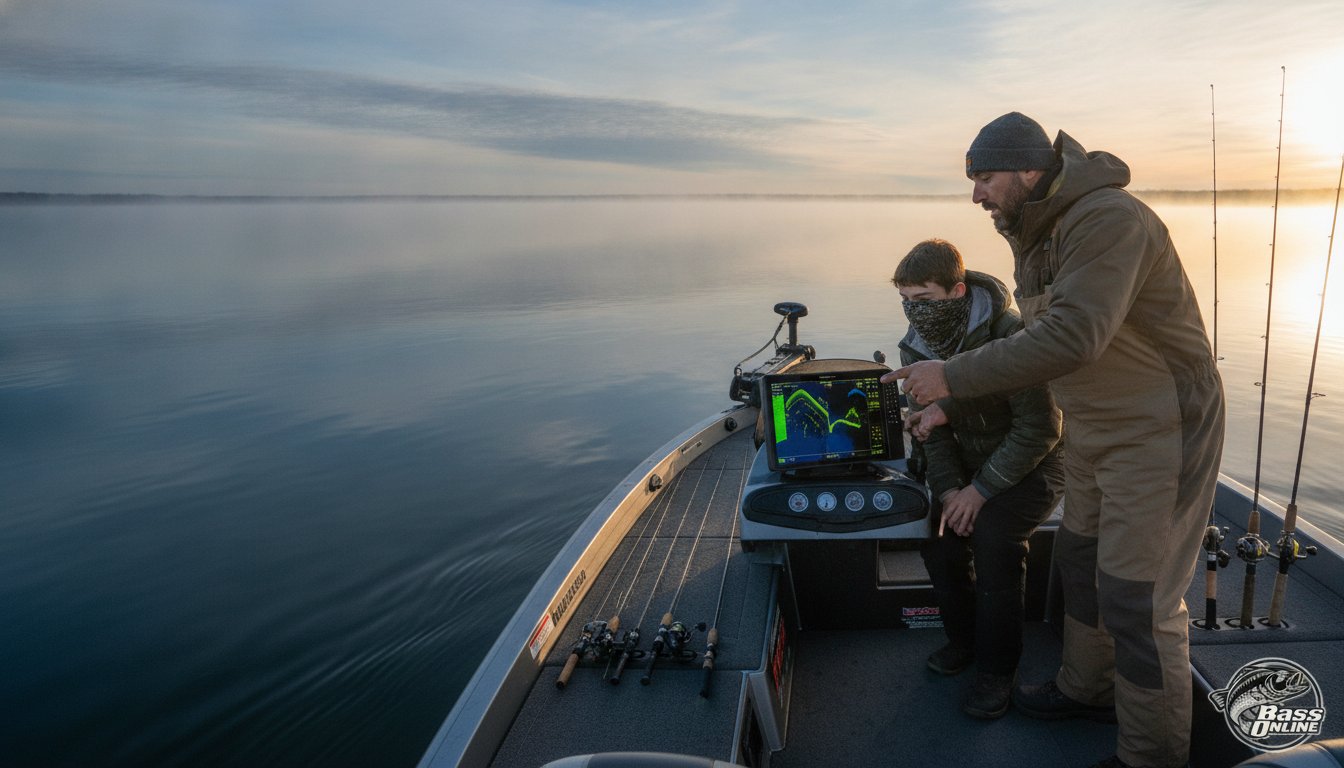

What if the biggest bass in the lake aren’t anywhere near the docks or brush piles you’ve been pounding all morning? When the water temperature plummets, the bank often goes dry, leaving many anglers scratching their heads over miles of dead water. Mastering the art of fishing for suspended bass in winter is the secret to finding trophies when everyone else is home on the couch. It’s a game of shifting your focus from the shoreline to the open water column. That’s where lethargic giants follow the bait instead of the structure.
I get the frustration of staring at ghosts on your electronics that won’t commit to a lure. It’s tough to decode complex sonar readings while your fingers are freezing, especially when fish are hovering in depths as great as 30 to 70 feet. I’m going to show you how to turn those marks into catches by identifying baitfish relationships and picking the perfect lure, like a deep-diving jerkbait or a heavy blade bait. We’ll break down the specific gear you need, including how to use forward-facing sonar to your advantage and the dead stick presentation that triggers stubborn fish. It’s time to stop guessing and start catching.
Key Takeaways
- Learn why big bass abandon the bottom to follow baitfish schools into deeper, more stable water temperatures during the coldest months.
- Master the art of fishing for suspended bass in winter by targeting deep secondary points and channel swings where nomads congregate.
- Identify the best “hovering” lures, like suspending jerkbaits, that stay in the strike zone longer than traditional bottom-bouncing baits.
- Perfect the “dead stick” presentation and the “shaking the minnow” technique to trigger strikes from lethargic, cold-water fish.
- Discover how professional-grade electronics and local guide expertise can help you eliminate miles of dead water in minutes.
Why Bass Suspend in Winter: Understanding Cold-Water Biology
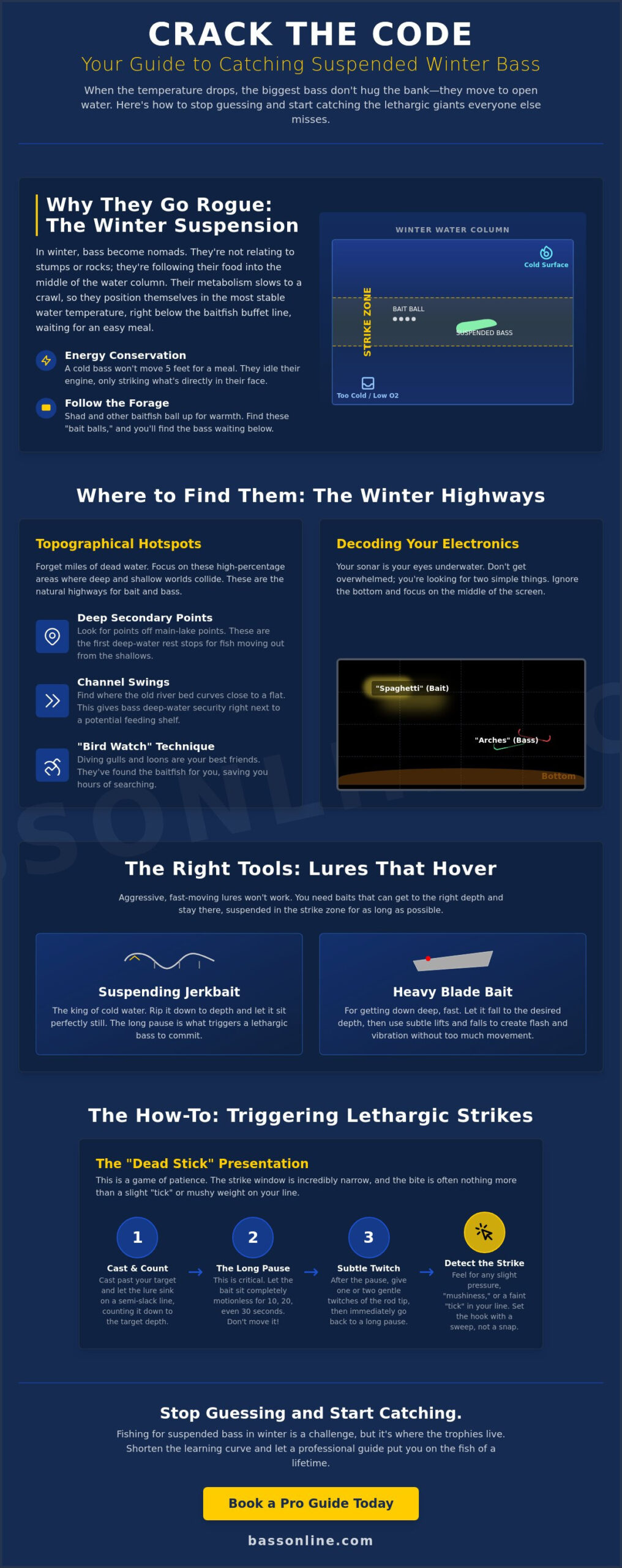
Suspended bass are the nomads of the lake. Unlike the fish you target during the spring spawn or summer heat, these bass hold in the middle of the water column, completely unrelated to the bottom or traditional cover like stumps and rocks. If you’re fishing for suspended bass in winter, you’re hunting fish that are “suspended” between the surface and the floor. This happens because the bottom is often too cold or lacks sufficient oxygen. Bass seek out specific depths where water temperature and density are most stable, often hovering in the “sweet spot” of the water column.
To better understand this concept, watch this helpful video:
Think of the open water as a “Buffet Line.” Baitfish don’t wander randomly; they move to find the warmest water available. Bass, being the ultimate opportunists, simply park themselves right underneath the food. Understanding Largemouth bass biology is vital because their survival depends on finding this thermal balance. In the winter, they won’t move 5 feet for a meal. Their engine is idling to save energy. If your bait isn’t right in their face, they’ll let it pass without a second glance.
The Role of Metabolism in Winter Strikes
Cold water turns a bass’s high-speed chase into a slow-motion crawl. Their metabolism drops significantly, meaning a single meal can take days to digest. You aren’t looking for aggressive reaction strikes where a fish crushes a fast-moving bait. Instead, you’re hunting for “opportunity” strikes. The strike window is incredibly narrow. If your presentation doesn’t hover long enough for them to decide it’s worth the calories, they won’t commit.
Baitfish: The Only Map That Matters
Forget the contour lines for a second and find the forage. In the winter, shad, alewives, and blueback herring “ball up” in massive schools to conserve heat. These balls of bait are heavily influenced by wind and oxygen levels. Wind pushes warmer surface water to specific banks or points, dragging the bait along with it. Bass hover beneath these schools like wolves. Successfully fishing for suspended bass in winter requires finding these bait schools on your electronics, often in 30 to 70 feet of water. If you find the bait, the bass are nearby.
Locating the Nomads: How to Find Suspended Bass
Finding fish in the middle of a massive reservoir feels like searching for a needle in a haystack. Many anglers think they need five thousand dollars in forward-facing sonar to be successful. That’s just not true. While bass move to deeper water as the mercury drops, they remain predictable. You just need to know where the highways are. Start by looking for “points on points.” These are deep secondary points that act as a transition from the shallows to the main lake basins. These spots are high-percentage areas for anyone fishing for suspended bass in winter.
Don’t ignore the sky, either. Gulls and loons are the best free sonar you’ll ever find. If you see birds diving or even just sitting on the water in a specific area, they’ve found the “spaghetti,” those thick clouds of baitfish. The “Bird Watch” technique can save you hours of idling. Once you find the bait, look for the “ditch” or a channel swing where the deep river bed cuts close to a flat. These underwater ditches provide the security of deep water right next to a potential feeding shelf.
Decoding Your Sonar Screen
Your 2D sonar is a powerful tool if you know what you’re looking at. Bait appears as “spaghetti” or fuzzy clouds, while bass show up as distinct arches. Look for arches that are separated from the bottom; these are your active roamers. You can usually tell a bass from a carp because bass tend to hold at a very specific “depth of the day.” If you see three fish at 25 feet, focus your efforts there. Carp and catfish usually look “lazier” on the screen, often hugging the bottom or moving in erratic vertical patterns. Explore our guide to different bass species to see how their winter habits vary across the country.
Topographical Hotspots for Open Water
Verticality is your best friend. In many reservoirs, bass will suspend against bluff walls, bridge pilings, or standing timber. These structures allow them to change depth by moving just a few inches rather than swimming a hundred yards. Sometimes, the best spot is “nothingness.” In massive lakes, bass will suspend over the old river channel in the middle of nowhere just because that’s where the bait is holding. If you’re struggling to find the right depth, you can always ask a local expert about current conditions to get a head start on the water.
The Best Lures for Suspended Winter Bass
When you’re fishing for suspended bass in winter, your lure choice must prioritize one thing: the ability to hover. Because winter bass have a sluggish metabolism, they won’t chase a bait that zips past their nose. You need tools that stay in the strike zone for an eternity. I categorize these lures into two distinct camps: horizontal search baits for covering water and vertical finesse tools for when you’re parked right on top of a school. The goal is to make the meal look so easy that the bass can’t justify letting it swim away.
The undisputed king of the horizontal approach is the suspending jerkbait. It’s designed to dive to a specific depth and then sit perfectly still on the pause. This mimics a dying shad that’s too easy for a lethargic bass to pass up. If the fish are more active or the bait schools are massive, I reach for the Alabama Rig. This “A-Rig” uses multiple swimbaits to mimic an entire school of forage, creating a high-profile target that can draw fish from 20 feet away. It’s a heavy, high-energy option that produces when nothing else will.
Horizontal Search Baits
Success with search baits comes down to visibility. In crystal clear water, I stick with translucent colors that blend in and look natural. If the water has some stain or it’s a cloudy day, I want flashy, chrome finishes that catch what little light is available. While the A-Rig is a power option, remember to keep your retrieve slow. You want it just fast enough to keep the tails kicking. If you’re still getting the hang of these setups, check out our guide on mastering the basics of bass fishing to get your gear dialed in before hitting the lake.
Vertical Finesse Tactics
When the fish are directly under the boat, it’s time to go vertical. The Damiki Rig, often called “moping,” is the ultimate finesse move. It’s just a small fluke-style plastic on a 90-degree jig head. You drop it down to the fish’s level and hold it dead still. It looks like a lone, shivering minnow. For a more aggressive reaction, I use heavy spoons or blade baits. These lures fall fast and flutter, which can trigger a predatory instinct in even the most stubborn fish.
Choosing the right jig head weight is critical here. If it’s windy, you need enough weight, usually 3/8 to 1/2 ounce, to keep your line perfectly vertical. If your lure is swinging like a pendulum, you’ll lose the precision needed for fishing for suspended bass in winter. Keep it straight, keep it still, and wait for that subtle thump that tells you a bass just inhaled your bait.
Mastering the Presentation: Triggering Lethargic Strikes
Having the right lure is only half the battle. When you’re fishing for suspended bass in winter, the way you move that bait determines whether you go home with a story or just a cold nose. These fish are experts at energy conservation. They aren’t going to sprint. They aren’t going to hunt. You have to convince them that your lure is a dying, effortless meal that has simply drifted into their personal space. This requires a level of patience that tests even the most seasoned pros. I’ve seen days where a five-second pause gets zero looks, but a thirty-second pause triggers a limit. You have to slow down until it feels uncomfortable, then slow down some more.
One of my favorite tricks is “shaking the minnow.” Instead of pulling the lure toward the boat, you twitch the rod tip just enough to make the bait quiver on a slack line. The lure stays in the exact same spot in the water column but looks alive. This subtle vibration is often the only thing that will make a 40-degree bass commit. Size matters more than color here. If the shad are two inches long, a five-inch jerkbait might be too intimidating. Match the profile of the forage exactly. I always use fluorocarbon line for this. It sinks, it’s nearly invisible, and it has the sensitivity you need to feel a fish breathe on your bait in 40 feet of water.
The Jerkbait Cadence
The standard “twitch-twitch-pause” is your starting point, but the water temperature dictates the rhythm. In 50-degree water, a three-second pause is plenty. In 42-degree water, you might need to wait 20 seconds. You can check your lure’s balance by watching it near the boat. It should stay perfectly level. Neutral buoyancy is the state where a lure stays at a constant depth without rising or sinking, mimicking a stunned baitfish perfectly. If it floats up or sinks like a stone, adjust your hook size or add a small strip of lead tape to dial it in.
The “Dead Stick” Method
Sometimes the best action is no action at all. Dead sticking involves dropping your bait to the depth where you see fish on your sonar and just letting it sit. Don’t move it. Don’t shake it. Just watch your line. You won’t feel a “thump” like you do in the summer. Instead, the line might just go slightly slack or start to move sideways. If you want to see how the pros handle these finicky winter giants, you can reach out to our team to book a trip and learn these techniques firsthand on the water. Over-working the bait is the number one mistake I see anglers make when fishing for suspended bass in winter. Let the water do the work for you.
Shorten the Learning Curve: Why a Pro Guide Matters in Winter
Winter fishing is a game of inches. While the techniques we’ve discussed can be learned on your own, the “time on water” advantage of a professional guide is impossible to replicate in a single weekend. I’ve spent thousands of hours staring at sonar screens and feeling for that microscopic winter “tick.” When you’re fishing for suspended bass in winter, the margin for error is razor-thin. A guide knows exactly which secondary point is holding bait today and which channel swing has been “dead water” for a week. We eliminate the guesswork so you can focus on the catch.
The learning curve for modern electronics is steep. It’s one thing to see a fish on the screen; it’s another to understand its mood and how it’s reacting to your lure in real-time. We use high-end sonar units and, more importantly, we know how to interpret the data to put you in the strike zone. Safety is also a massive factor. Navigating cold water and unpredictable winter weather requires experience and a rugged, reliable vessel. You can find a professional fishing guide who handles the risks and technical hurdles while you sharpen your skills.
Focus on the Fishing, Not the Logistics
There is a massive difference between shivering in an open bass boat and fishing from a setup designed for the elements. We provide heated boats and top-tier winter tackle specifically tuned for these finicky fish. You won’t just catch fish; you’ll learn the deep-water seasonal patterns that you can apply to your own boat next season. Whether you want to master the jerkbait or the Damiki rig, an insider journey is the fastest way to improve. You can browse our top fishing lakes to see where the hottest winter action is happening right now.
Booking Your Winter Expedition
Don’t let the cold weather keep you off the water. Winter is arguably the best time of year to land a personal best Largemouth. These fish are at their heaviest weights of the year, and the lack of boat traffic means you often have the best holes all to yourself. We are committed to your success on every expedition, ensuring you feel both inspired and in capable hands from the first cast to the last. The bank is for summer; the column is for trophies. Book your winter bass fishing trip with Bass Online today! and see why we are the definitive choice for serious anglers.
Conquer the Deep Water Column Today
Winter doesn’t have to be the off-season. By understanding that bass are following bait into stable temperature zones rather than hugging the bank, you’ve already won half the battle. Success in fishing for suspended bass in winter comes down to your willingness to slow down. Whether you’re letting a jerkbait sit for thirty seconds or “moping” a Damiki rig over a deep channel swing, patience is your most valuable piece of tackle. It’s about out-waiting the fish until they can’t resist an easy meal.
You don’t have to tackle the learning curve alone. With over 25 years of professional guiding experience and expert local guides across more than five states, we’ve helped countless anglers land the trophies of a lifetime. Our team has been featured on major outdoor networks because we know how to produce results in the toughest conditions. Ready to put these field-tested tactics to the test? Book Your Winter Trophy Bass Charter Now and let’s get you on the water. The nomads are waiting; it’s time to go out and find them.
Frequently Asked Questions
Do bass actually eat in 40-degree water?
Yes, bass definitely eat in 40-degree water, but they do it much less frequently than in the summer. Their metabolism drops to a crawl, meaning a single meal can take days to digest. They won’t chase a fast-moving bait, so you have to put the lure right in their face. Success in fishing for suspended bass in winter depends on offering an easy, calorie-efficient meal that looks too good to pass up.
What is the best depth to find suspended bass in winter?
The best depth depends on the lake, but you’ll usually find them wherever the baitfish schools are holding. In deep Southern California reservoirs, bass are commonly found suspended between 30 and 70 feet. Generally, vertical jigging is most effective once you reach depths of 20 feet or more. Use your electronics to find the “depth of the day” and keep your lures at that exact level to stay in the strike zone.
Do I need forward-facing sonar to catch suspended bass?
You don’t need forward-facing sonar to be successful, though it’s a powerful tool for pinpointing roaming fish. Classic 2D sonar is still incredibly effective for finding “spaghetti” bait clouds and arches. I also rely on the “Bird Watch” technique. If you see gulls or loons sitting on the water or diving, they’ve already found the bait schools for you. Just pull up, scan the water column, and start fishing.
What color jerkbait is best for winter fishing?
Color choice should be based on water clarity and available light. In crystal clear water, translucent “ghost” colors are the top choice because they look natural and don’t spook finicky fish. If the sky is overcast or the water has a bit of stain, switch to a flashy chrome or gold finish. These colors reflect the limited light available at depth, making it easier for a lethargic bass to track and strike your lure.
Why do bass suspend instead of staying on the bottom?
Bass suspend to follow the food and find more stable water conditions. The bottom can be too cold or lack sufficient oxygen during the winter months. By moving into the water column, they can track schools of shad or herring and stay in the “sweet spot” where water temperature and density are most comfortable. It’s all about energy conservation; they park themselves where the meal is closest and the environment is most stable.
Is an Alabama Rig legal in all states for winter fishing?
No, the Alabama Rig is not legal in every state, and regulations on hook counts vary significantly. While it’s a powerhouse for fishing for suspended bass in winter, some regions limit you to three hooks, while others allow five. Always check your local 2026 state fishing regulations before heading out. You might need to replace some hooks with “dummy” blades to ensure your rig is compliant with current regional laws.
How long should I pause my jerkbait in cold water?
The colder the water, the longer the pause needs to be. In 40-degree water, a pause of 10 to 30 seconds is often necessary to trigger a strike. It feels like an eternity, but sluggish fish need that extra time to decide if the meal is worth the effort. If the water is slightly warmer, around 48 or 50 degrees, you can usually shorten that pause to five or ten seconds and still get bit.
What is the best line for winter bass fishing?
Fluorocarbon is the non-negotiable choice for deep-water winter fishing. It’s nearly invisible to fish and it sinks, which helps your lures stay at the target depth without rising. Most importantly, it has very little stretch. This gives you the sensitivity to feel a subtle “tick” instead of a hard “thump.” When a bass breathes on your bait 40 feet down, you’ll need that direct connection to set the hook successfully.

Article by
Mr Bass
Todd Kersey, widely known as Mr. Bass by Field & Stream, is a professional angler, accomplished author, and dedicated philanthropist with a lifelong passion for bass fishing. Armed with a degree in Outdoor travel, Mr. Bass has expertly combined his knowledge with his practical fishing experience to become one of the most respected names in the bass fishing, his deep understanding of bass habitats, and fish behavior has earned him numerous accolades as a asset of the sport. Serving 8 years as FWC Stakeholder Chairperson. Leading and passing cutting-edge legislation, such as the Black Bass Management plan, and successfully building, passing, and financing the Trophy Catch program. As CEO, he is committed to giving back to the community through his philanthropic efforts. He supports a variety of causes, especially those centered around physical disabilities. Through his advocacy, his mentorship programs inspire anglers to engage in fishing stewardship, helping to raise more than $ 18 million in donations. Mr. Bass continues to inspire anglers and outdoor enthusiasts alike with his commitment to the sport and the world around him.