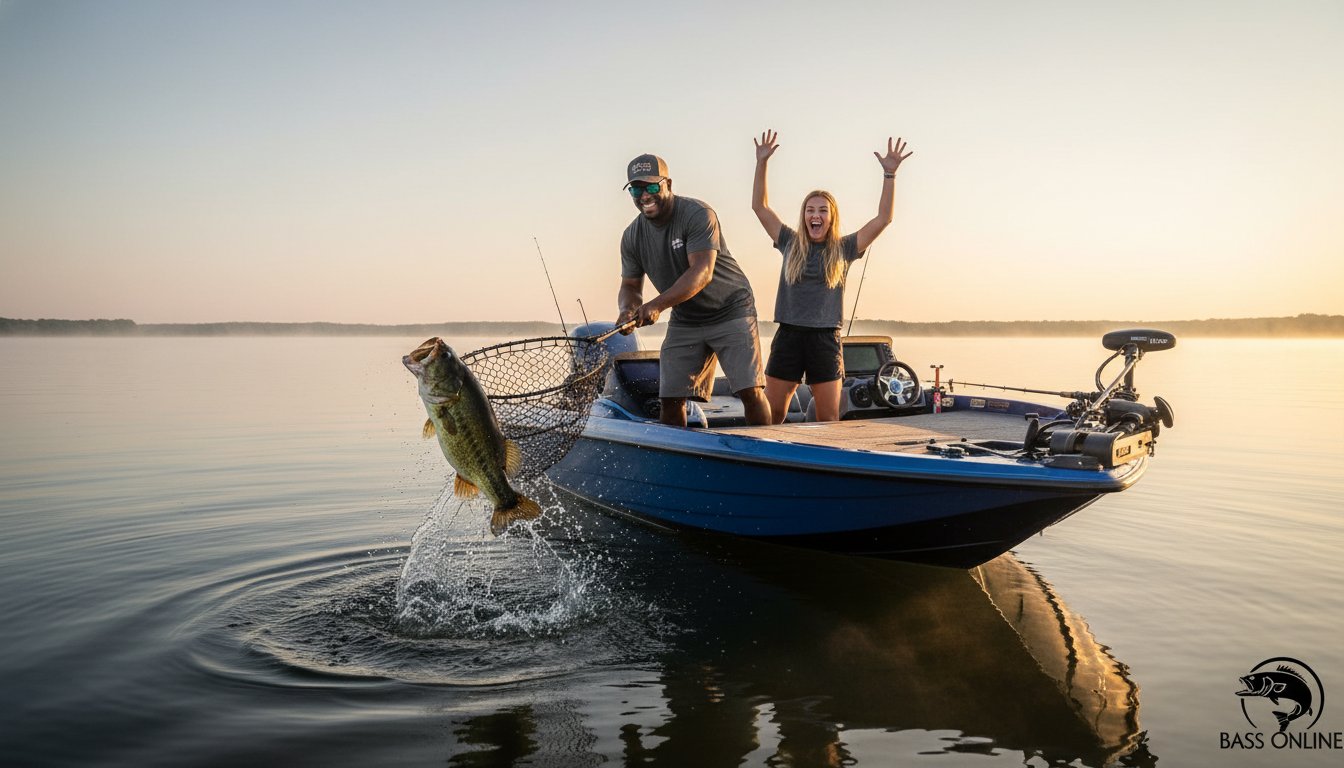

Packing it in when the afternoon heat peaks might be the biggest mistake you make this season. Most anglers assume that 95-degree water means a total hunger strike, but it’s actually the opposite. Since their metabolism is red-lining, these fish are forced to eat more frequently than they do in the cool of spring. I know how it feels to bake under a midday sun for six hours without a single thump on the line. It’s exhausting. It’s easy to wonder if the fish have just vanished. But fishing for bass in hot weather doesn’t have to be a grind. I’m going to show you how to master the tactics and timing needed to land trophy bass while everyone else is heading for the AC.
In this pro guide’s survival guide, we’ll break down exactly how to locate predators as they shift their feeding windows to survive. We’ll explore the latest 2026 gear, from forward-facing sonar optimized lures to the new Berkley PowerBait Chop Block, ensuring you’re equipped for pressured summer waters. Whether you’re targeting a heavy hitter on Lake Okeechobee or working the ledges on Lake Guntersville, you’ll walk away with the confidence to turn a sweltering day into your best outing of the year.
Key Takeaways
- Understand why a bass’s rising metabolism in high temperatures creates more feeding opportunities than most anglers realize.
- Locate high-percentage summer structure like ledges and humps by applying the vertical and horizontal movement theory.
- Master the specific lure selections needed for fishing for bass in hot weather, ranging from aggressive reaction baits to subtle finesse rigs.
- Build a winning summer schedule that capitalizes on the dawn patrol and identifies key transition zones as the sun moves overhead.
- Learn how booking a guided bass fishing trip can help you bypass the learning curve and find offshore schools using professional-grade technology.
Decoding the Summer Slump: Why Bass Behavior Changes in the Heat
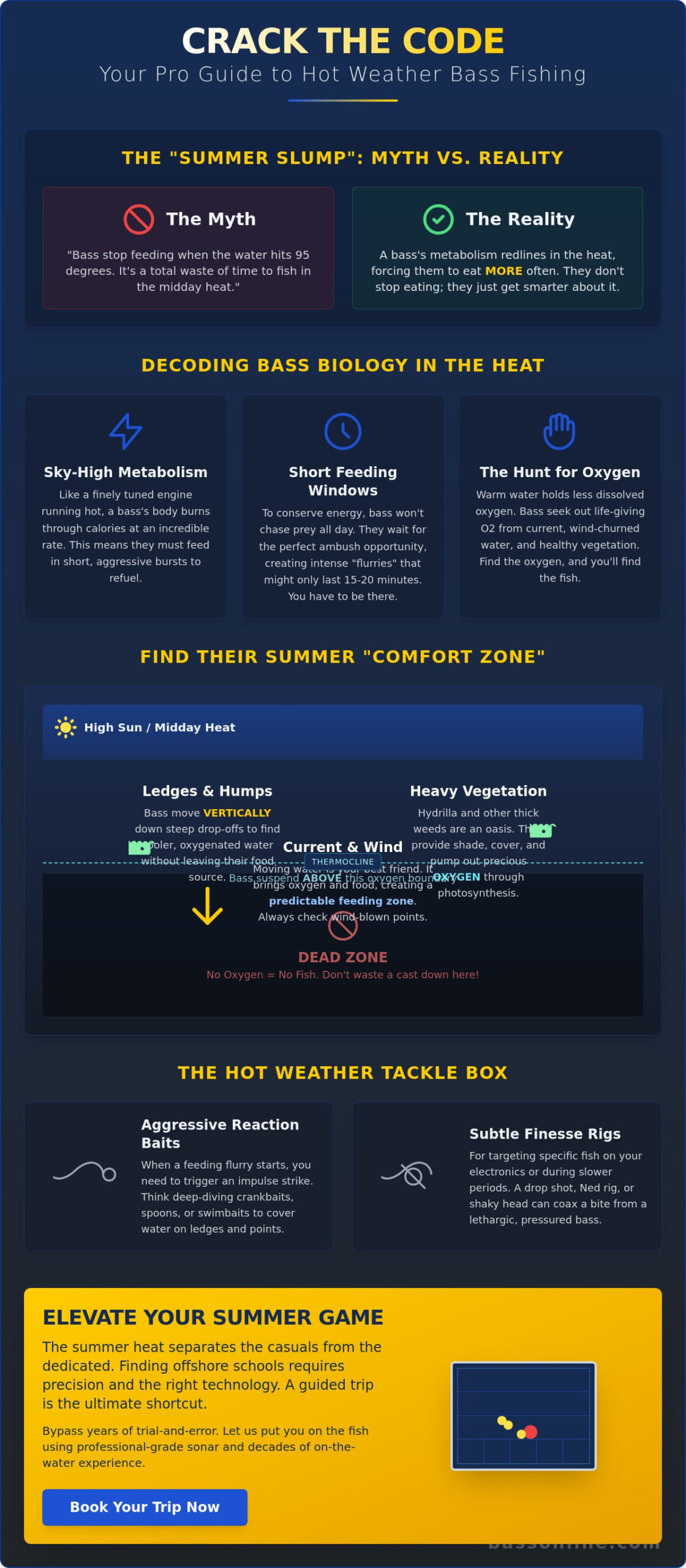
The “summer slump” is a myth born from frustration. Many anglers believe that once the sun starts baking the surface, bass go into a dormant state. In reality, the heat turns their internal engines into overdrive. Because bass are poikilothermic, or cold-blooded, their body temperature matches the surrounding water. When that water gets hot, their metabolism skyrockets. They need more fuel just to maintain their weight. If you understand Largemouth bass behavior, you know they don’t stop eating; they just get smarter about when and where they do it to conserve energy. Fishing for bass in hot weather is actually one of the most predictable times to be on the lake because these fish are slaves to their biology.
Metabolism and Feeding Windows
High water temps mean bass need to eat more frequently, but they won’t burn calories chasing a meal across a flat. They wait for the perfect moment. This creates what I call a “flurry,” a window often lasting only 15 to 20 minutes when an entire school suddenly feeds with reckless abandon. During the midday heat, the sun sits directly overhead, which can actually hurt their predatory vision. Bass lack eyelids and have fixed pupils, so that intense glare makes them seek shade or deeper water where they can track prey without being blinded. If you aren’t on the spot when that window opens, you’ll think the lake is empty.
Dissolved Oxygen: The Invisible Boundary
Don’t fall for the trap of thinking deeper is always better. In many lakes, a thermocline develops in summer. This is a layer where the water temperature changes rapidly, and below it, there is often zero dissolved oxygen. If you fish too deep, you’re essentially casting into a desert. Instead, look for moving water. Current from a dam or even a steady wind oxygenates the water and creates a cool spot that attracts baitfish. Heavy vegetation like hydrilla is another goldmine. During the day, these plants pump oxygen into the water through photosynthesis, creating a localized sanctuary for big fish. You can find more specific field reports on these conditions on our outdoor blog.
Fishing for bass in hot weather requires a shift in mindset. You aren’t just looking for fish; you’re looking for oxygen and efficiency. Big, trophy-sized bass are the ultimate energy conservationists. They will sit in a thick grass mat or on a current-swept point, waiting for the buffet to come to them. If you can find that intersection of high oxygen and easy food, you’ve found the motherlode. Success in 90-degree heat isn’t about luck. It’s about being in the right place during those high-energy feeding bursts.
Finding the ‘Comfort Zone’: Where Bass Hide When the Mercury Rises
Finding the “comfort zone” is the secret to consistent success when fishing for bass in hot weather. When the sun hits its peak, bass follow a specific set of rules based on bass habitat and patterns. I use the “Vertical vs. Horizontal” theory to track them. Instead of swimming a mile to find deeper water (horizontal), most big fish just move down a few feet on a steep point or ledge (vertical). This allows them to stay near their food source while finding a cooler temperature. If you can find a hump or a ledge that drops off into a creek channel, you’ve found a high-priority ambush point.
Current and wind are your best friends when the mercury rises. Wind pushes cooler surface water and baitfish against windward points, creating an active feeding zone. In river systems or lakes with power generation, current acts like a refreshing breeze for bass, bringing oxygen and food directly to their doorstep. Always look for the “wind-blown” side of a structure first. These areas have higher oxygen levels and lower visibility, which makes it much easier to fool a wary trophy fish with a moving bait.
The Thermocline and Deep Water Strategy
The thermocline is the most misunderstood factor in summer fishing. It’s a distinct layer where warm, oxygen-rich surface water meets the cold, stagnant deep water. If your fish finder shows a fuzzy horizontal line across the screen, that’s your boundary. Fishing below this line is a waste of time because there isn’t enough oxygen to support life. Look for fish suspended just above this layer, often hugging rock piles or submerged timber. This is where professional-grade electronics really shine, helping you pick out individual “kickers” sitting in the offshore sweet spots.
Shallow Water Survivors: Fishing the Slop
Don’t assume every fish goes deep. Some of the biggest bass I’ve ever seen stay shallow all year long, especially in places like the Florida Everglades. They survive the heat by burying themselves in “the slop,” which is thick mats of hydrilla or lily pads. These plants act like a natural parasol, blocking the sun and keeping the water underneath up to 10 degrees cooler than the open surface. To catch these fish, you need to target micro-habitats like dock shadows or overhanging brush that provide a break from the glare. If you’re struggling to find these hidden honey holes, you can always reach out to a professional guide to help you dial in the local coordinates.
The Hot Weather Tackle Box: Lures and Rigs That Trigger Strikes
Your bait selection needs to be as aggressive or as subtle as the fish demand. Fishing for bass in hot weather is a game of extremes. You either move fast to shock a lethargic fish into a reaction bite, or you slow down to a crawl to tempt a stubborn predator. It’s about efficiency. During the “Golden Hours” of dawn and dusk, topwater lures like the Rapala Claptail 110 are unbeatable. But once that sun climbs, you have to decide: are you going to force them to strike, or are you going to trick them?
Power Fishing: Forcing a Reaction
When bass are hunkered down on ledges or buried in deep brush, they aren’t looking for a chase. You have to surprise them. I love using oversized flutter spoons or deep-diving crankbaits that can reach the 20-foot mark. The secret is deflection. If your crankbait isn’t banging into rocks or wood, you aren’t doing it right. That sudden change in direction is what triggers the lizard brain of a trophy bass to strike. Sometimes, burning a lure at high speed creates more bites than a slow retrieve because it doesn’t give the fish time to inspect the bait. It’s a high-energy way to hunt for the most active fish in a school.
Finesse Tactics: Coaxing the Bite
When the bite dies completely, it’s time to scale down. A Drop Shot is the ultimate weapon for suspended fish because you can keep the bait shaking in their face indefinitely. For bottom-dwellers, the new Z-Man Fuzzy TRD on a Ned rig provides a subtle, “urchin” style profile that pressured fish in 2026 haven’t seen yet. In clear summer water, stick to natural and translucent colors like green pumpkin or watermelon. You want the bait to blend in, making the bass work just a little bit harder to find it. This approach is perfect for those high-pressure days when the sun is brightest.
If you’re targeting lethargic fish in thick cover, the Texas Rig and Carolina Rig remain the gold standards for reliability. They allow you to probe deep into the “slop” without snagging, reaching fish that other anglers miss. Successfully fishing for bass in hot weather means staying versatile and mindful of the environment. As you land these summer giants, remember that high water temps stress their systems. Following proper summer bass care tips ensures these fish live to fight another day. Whether you’re chasing largemouth or peacock bass, having the right rig for the right depth is the only way to beat the heat.
Mastering the Summer Schedule: Timing and Angler Endurance
Fishing for bass in hot weather isn’t just about what you throw; it’s about when you’re there to throw it. You can’t rely solely on the first and last hour of light if you want to be a consistent stick. To truly master the summer, you need a schedule that accounts for every shift in the sun’s position. While many anglers head for the ramp by 10:00 AM, the most successful sticks know that some of the biggest feeding flurries happen when the sun is at its highest. It’s a game of endurance and tactical timing.
- Step 1: Capitalize on the ‘Dawn Patrol’ and ‘Twilight Bite’: These low-light windows are your best chance to use aggressive topwater lures on shallow flats.
- Step 2: Hunt for ‘Transition Zones’: As the sun rises, follow fish as they move from the shallows to the first major depth break or thickest cover.
- Step 3: Utilize Midday ‘Weather Triggers’: Never ignore a sudden cloud cover or a shift in the wind, as these briefly reset the bass’s comfort level.
- Step 4: Practice ‘Angler Maintenance’: You can’t make accurate casts if you’re suffering from heat exhaustion; stay hydrated to keep your mental edge.
- Step 5: Transition to Night Fishing: When the heat is truly unbearable, wait for the sun to drop and target shallow rocks with dark-colored jigs.
The Midday Grind: Finding Windows of Opportunity
The 10-hour gap between dawn and dusk is where most people fail. On many systems, like the Tennessee River ledges, the midday bite is actually triggered by “current generation” from dams. When the water starts moving at noon, the fish turn on regardless of the heat. You can also use boat traffic to your advantage. Heavy wake can stir up baitfish and create artificial current that pushes predators into predictable ambush spots. Even a 10-minute breeze can ripple the surface and restart a dead bite by breaking up the sun’s penetration. I always follow the “Shadow Line” strategy; as the sun moves, I target the specific side of a dock or rock pile that offers the deepest shade.
Angler Survival: Staying Sharp in 90 Degrees
You are the most important piece of equipment on the boat. Brain fog from dehydration leads to missed hooksets and poor decision-making. I recommend high-performance UPF clothing and polarized lenses to protect your skin and eyes from the brutal 2026 summer glare. Managing your livewell is also critical. Use frozen water bottles to keep your water temps stable so your catch stays healthy in the heat. If you want to see how the pros handle these grueling conditions, you can book a guided session to learn the ropes firsthand. Staying sharp allows you to capitalize on that one trophy bite that usually happens when everyone else has already gone home.
Elevate Your Summer Game: Why a Guided Trip Beats the Heat
Mastering the technical side of fishing for bass in hot weather is a major accomplishment, but sometimes the fastest way to the podium is by following a pro. Summer bass are notorious for their nomadic behavior. One day they’re stacked on a ledge in 20 feet of water, and the next, they’ve vanished into a different creek channel following a baitfish migration. A professional guide eliminates the guesswork. Instead of spending your precious weekend hours scanning empty water, you start your day on the “X.” We track these schools daily, meaning we know exactly when that 15-minute feeding flurry is going to happen before it even starts.
The technology gap is another reason to consider a professional outing. With the rapid advancement of forward-facing sonar in 2026, many offshore “sweet spots” are now being picked apart by those who know how to read the glass. A guide service provides access to pro-grade electronics and the expertise to interpret what you’re seeing. It’s one thing to see a fish on the screen; it’s another to know exactly which angle and lure will trigger a strike from a pressured trophy. We handle the boat positioning, the tackle rigging, and the navigation, leaving you free to focus on the heavy thumps and the drag-screaming runs.
Field-Tested Expertise
There is no substitute for time on the water. Our Bass Online Fishing Guides spend over 300 days a year mapping out heat patterns across the country’s most iconic lakes. This constant presence allows us to identify subtle changes in current or water clarity that the average angler might miss. You also get to fish with the latest 2026 equipment, including the new Abu Garcia Beast reels and specialized rods designed for deep-water endurance. Learning the “why” behind a specific summer pattern directly from an expert is an investment that pays off for the rest of your fishing career.
Booking Your Summer Adventure
Don’t let the thermometer dictate your success. Summer is actually a prime time for landing a personal best because the fish are concentrated and feeding heavily to keep up with their high metabolism. Whether you’re looking for the heavy vegetation of the Florida “slop” or the deep ledges of the Tennessee River, the big ones are waiting. For a look at the best regional hotspots currently producing, check out Bass Fishing Near Me: A Pro Guide’s Roundup for 2026. Fishing for bass in hot weather can be the highlight of your season when you have a seasoned professional at the helm. Book your next trophy hunt with Bass Online today!
Dominate the Dog Days and Land Your Summer Trophy
Success on the water during the hottest months comes down to understanding that bass never stop feeding; they just change their zip code. By targeting high-oxygen transition zones and matching your lure’s energy to the fish’s metabolism, you can turn a slow afternoon into a record-breaking day. Remember that fishing for bass in hot weather is a game of persistence and precision. Whether you are punching through thick mats in the Everglades or probing deep ledges on Lake Guntersville, the rewards are there for those who stay sharp.
At Bass Online, we bring over 25 years of professional guiding experience to every outing. With thousands of 5-star reviews from satisfied anglers, our expert guides specialize in the specific summer trophy patterns that turn a sweltering day into a success. Ready to land a summer lunker? Book your professional guided trip now! The big ones are waiting for you out there. I’ll see you on the water.
Expert Answers for Summer Bass Anglers
What is the best time of day to fish for bass in hot weather?
First light is the most consistent time, but the best window often depends on current and wind. Dawn and dusk offer the easiest topwater action for most anglers. However, if a local dam starts generating power at noon, that current will trigger a feeding frenzy regardless of the sun’s position. I’ve landed some of my biggest summer limits during the heat of the day simply by timing the water movement.
Do bass move deep or shallow when it’s hot?
Bass will move both deep and shallow depending on the available cover and oxygen levels. Many fish head for offshore ledges or humps to sit near the cooler thermocline layer. Others stay in the shallows by burying themselves deep under thick vegetation mats. These mats act as a natural parasol, blocking the sun and keeping the water underneath significantly cooler than the surrounding open areas of the lake.
What are the best lures for summer bass fishing?
You need a mix of reaction and finesse tools when fishing for bass in hot weather. I always have a deep-diving crankbait ready for offshore structure and a hollow-body frog for thick grass. When the bite slows down, I switch to a drop shot or a Ned rig. These finesse presentations allow you to coax a strike from a lethargic fish that won’t chase a fast-moving lure.
How does water temperature affect bass feeding habits?
High water temperatures cause a bass’s metabolism to redline, meaning they actually need to eat more frequently. Since they are poikilothermic, their body temperature matches the water. This makes them hungry, but they won’t burn excess calories chasing food. They prefer to sit in high-oxygen ambush spots, like current-swept points or shaded docks, waiting for an easy meal to drift within their strike range.
Is it worth fishing for bass in the middle of a heatwave?
It is definitely worth it because a heatwave concentrates fish into very specific, predictable locations. While the conditions are brutal for the angler, fishing for bass in hot weather often results in massive catches if you find the right sweet spots. Look for areas with the highest dissolved oxygen, such as river current or wind-blown points, where the biggest predators in the lake will congregate to feed.
How do I keep bass alive in a livewell during the summer?
Use frozen water bottles to lower the temperature of your livewell water by several degrees. Do not use loose ice from a bag, as the chlorine can be fatal to the fish. Keep your aerators on the manual setting so they run constantly. This ensures the water stays oxygenated, which is vital since warm water holds much less oxygen than cool water does throughout the day.
What color lures work best in bright, sunny summer conditions?
Natural and translucent colors are the most effective choices under a bright, summer sun. I rely on shades like green pumpkin, watermelon, and smoke for most of my summer rigs. These colors allow light to pass through the bait, making it look like a natural baitfish or crawdad to the fish. Save the solid blacks and bright chartreuses for muddy water or nighttime trips when visibility is much lower.
Can you catch bass on topwater lures in the middle of the day?
You can absolutely catch midday bass on topwater if you target heavy shade or thick overhead cover. Focus your casts on the dark shadows under boat docks or the interior pockets of dense lily pad fields. A frog or a slow-moving prop bait can trigger a massive strike from a fish that is hiding from the sun but still looking for an easy meal to swim by.

Article by
Mr Bass
Todd Kersey, widely known as Mr. Bass by Field & Stream, is a professional angler, accomplished author, and dedicated philanthropist with a lifelong passion for bass fishing. Armed with a degree in Outdoor travel, Mr. Bass has expertly combined his knowledge with his practical fishing experience to become one of the most respected names in the bass fishing, his deep understanding of bass habitats, and fish behavior has earned him numerous accolades as a asset of the sport. Serving 8 years as FWC Stakeholder Chairperson. Leading and passing cutting-edge legislation, such as the Black Bass Management plan, and successfully building, passing, and financing the Trophy Catch program. As CEO, he is committed to giving back to the community through his philanthropic efforts. He supports a variety of causes, especially those centered around physical disabilities. Through his advocacy, his mentorship programs inspire anglers to engage in fishing stewardship, helping to raise more than $ 18 million in donations. Mr. Bass continues to inspire anglers and outdoor enthusiasts alike with his commitment to the sport and the world around him.