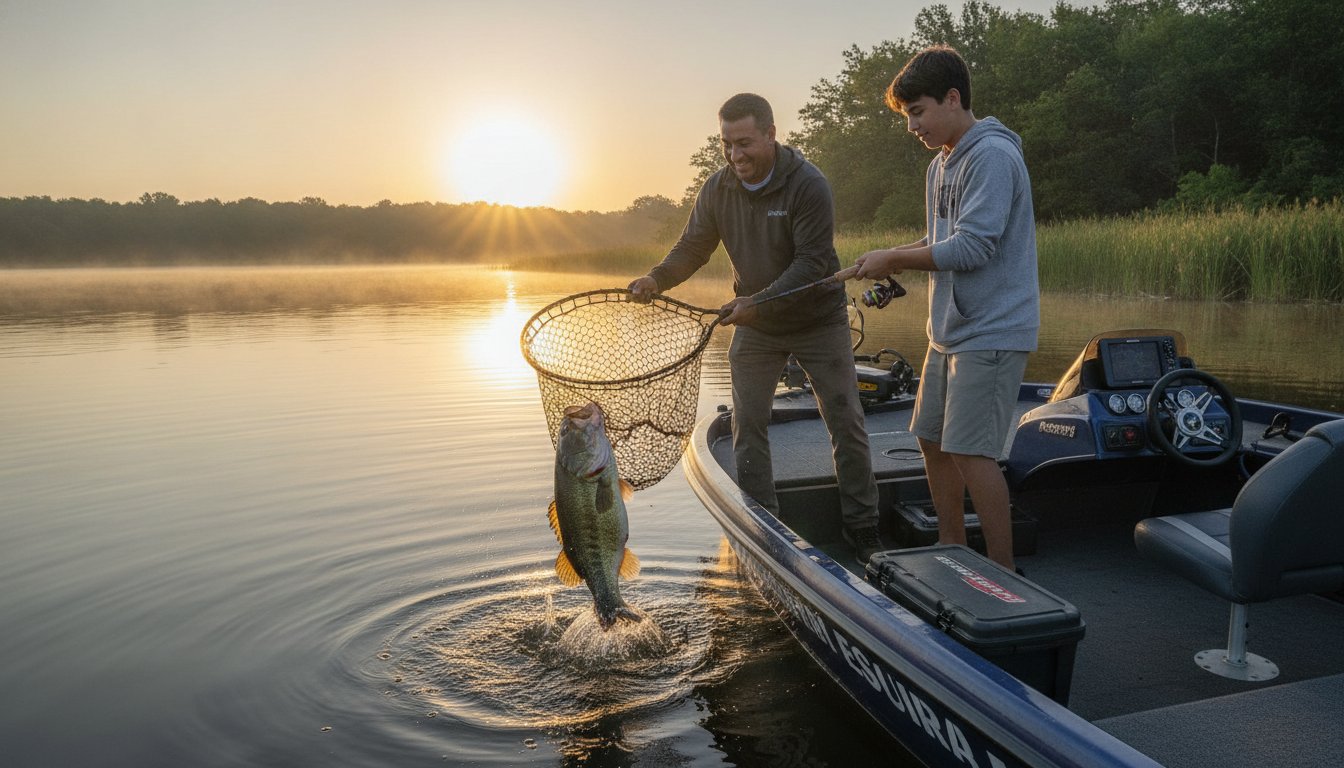

You don’t need a professional’s budget or a tackle box the size of a suitcase to land your first trophy. If you’re asking yourself, what gear do I need for my first freshwater fishing trip, you’re likely feeling the weight of information overload. It’s common to feel anxious about looking like an amateur or wasting money on technical gear that doesn’t actually work. I’ve guided thousands of anglers on legendary waters, and I’ve seen exactly which tools truly matter when you’re just starting out.
I promise to cut through the jargon and provide a field-tested guide to the essentials you actually need to land your first freshwater catch with confidence. We’ll walk through a clear, budget-friendly shopping list that includes reliable rod and reel combos like the Ugly Stik GX2, which typically runs between $40 and $70. You’ll learn the basic function of every tool in your kit and gain the practical skills to handle your fish like a seasoned pro. Let’s get you ready for a successful day on the water.
Key Takeaways
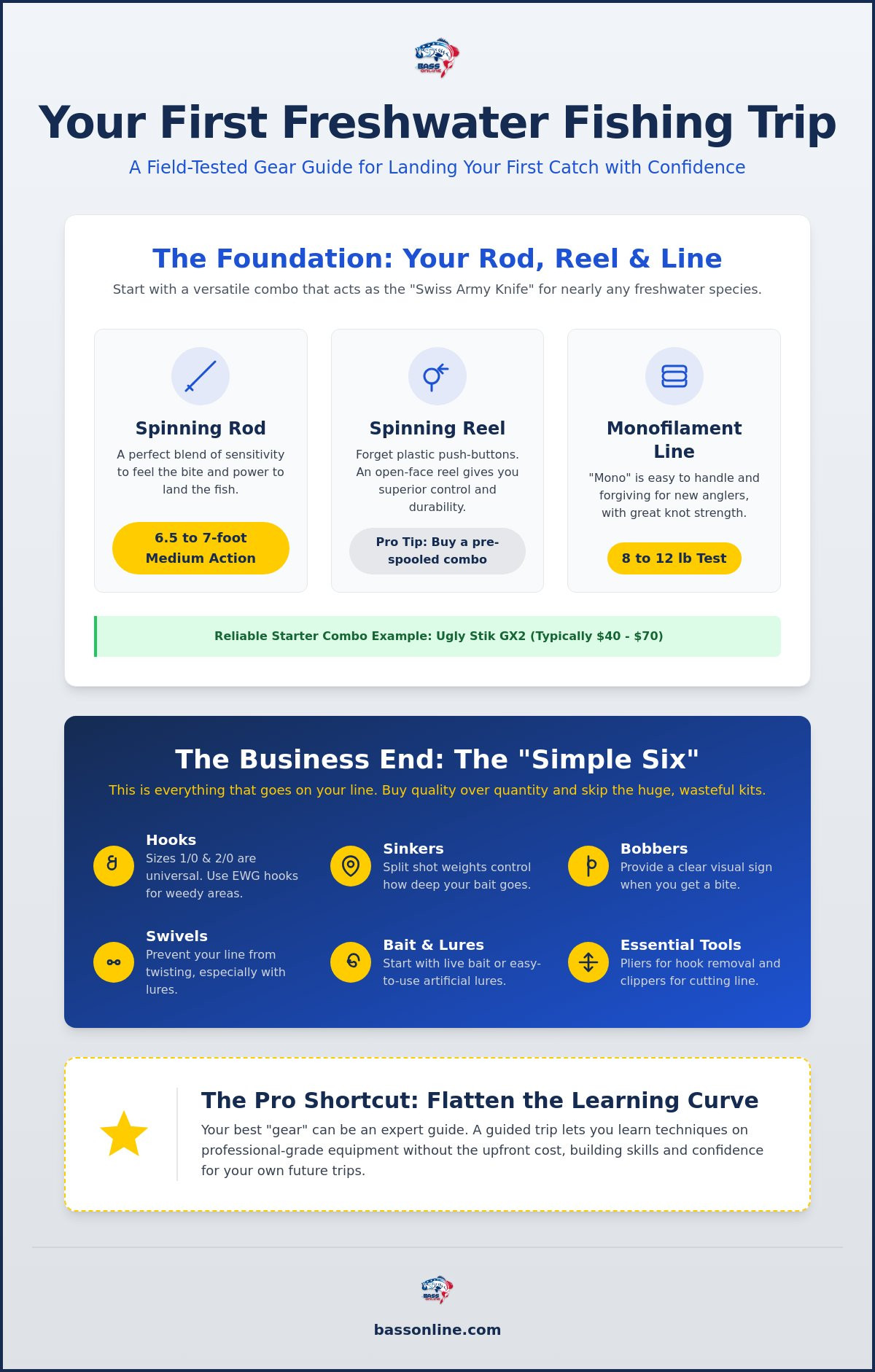
- Start with a versatile 6.5 to 7-foot medium-action spinning rod and reel combo, which acts as the “Swiss Army Knife” for almost any freshwater species you’ll encounter.
- Master the “Simple Six” terminal tackle checklist to ensure you have the right hooks, sinkers, and bobbers to keep your presentation in the strike zone.
- When asking what gear do I need for my first freshwater fishing trip, focus on a foundation-first strategy that prioritizes a few versatile tools over a box full of specialized lures.
- Maximize your success by starting with live bait or beginner-friendly artificial lures that are designed to trigger strikes even with a basic retrieve style.
- Flatten the learning curve by booking a guided fishing trip to use professional-grade equipment and learn expert techniques without the upfront investment of buying your own gear.
The Big Three: Choosing Your Rod, Reel, and Line
Success on the water starts with a solid foundation. When people ask me, “What gear do I need for my first freshwater fishing trip?” I always point them to the Big Three. These are your rod, your reel, and your line. This core set of fishing tackle dictates how you cast, how you feel the bite, and how you fight the fish. Getting this right means you’re halfway to your first catch. I see a lot of novices gravitate toward cheap push-button reels, but a quality spinning setup offers the professional reliability you need for a successful expedition.
To better understand this concept, watch this helpful video:
Forget those plastic push-button spincast reels. While they seem simple, they often lack the durability for serious fishing and limit your casting range. You want a spinning reel. It’s an open-face design that gives you superior control and grows with you as your skills sharpen. Pair it with a 6.5 to 7-foot medium-action rod. I call this setup the Swiss Army Knife of the fishing world. It’s light enough to feel a panfish nibble, yet it has enough power to haul a big bass out of heavy cover. When you’re asking what gear do I need for my first freshwater fishing trip, this versatile combo should be at the top of your list.
The Versatile Spinning Combo
“Medium Action” describes how much the rod bends. A medium-action rod bends mostly in the top half, giving you a perfect blend of sensitivity and lifting power. It’s the sweet spot for everything from small perch to aggressive largemouth bass. When you’re picking one out at the shop, check for a balanced feel. The rod should feel like an extension of your arm, not a heavy stick. Pro tip: Start with a pre-spooled combo. These setups are designed by experts to work together, saving you the frustration of matching components and spooling line on your very first day.
Understanding Your Fishing Line
You’ll see high-tech braided lines on the shelf, but stick with monofilament for your first outing. We call it “mono,” and it’s much more forgiving for new anglers because it’s easy to handle and ties secure knots. Monofilament is the ideal beginner line due to its stretch and knot-holding ability. Go with a breaking strength between 8 and 12 pounds. This range is the industry standard for a reason. It’s strong enough to land a trophy fish but thin enough to remain nearly invisible in the water. Matching your line weight to the fish you expect to catch ensures you won’t lose a great catch due to a snapped line.
The Business End: Essential Terminal Tackle
Terminal tackle is essentially everything on the business end of your line. It’s the gear that interacts directly with the water and the fish. When you’re trying to figure out what gear do I need for my first freshwater fishing trip, it’s easy to get distracted by flashy, expensive lures. I tell my clients to stick to the “Simple Six” checklist: hooks, sinkers, bobbers, swivels, beads, and a few basic lures. These are the building blocks of every successful rig. I always recommend following a basic Freshwater Fishing Checklist to keep your pack light and effective. Professional results don’t require a suitcase full of gear. They require the right tools for the specific job at hand.
Don’t fall for the trap of buying those massive 100-piece kits you see in big-box stores. Those kits often contain 80 percent fluff that you’ll never actually use. You’re better off buying a few high-quality packs of specific items that you know will work in your local lake. If you’re still feeling unsure about how to rig these tools, you can always reach out to a professional guide to see how we set up for a day on the water. Keeping your tackle box lean makes you a more mobile and efficient angler.
Hooks and Weights: The Essentials
For freshwater bass, size 1/0 and 2/0 hooks are your universal choices. They’re small enough for a solid hookset but strong enough to hold a fighter. You also need split shot sinkers. These are small lead or tungsten weights that you pinch onto your line to control how deep your bait sits. If you’re fishing in heavy grass, grab some EWG (Extra Wide Gap) hooks. These are a pro secret. They allow you to bury the hook point inside a soft plastic bait, making your presentation “weedless” so you don’t snag every lily pad in the lake.
Bobbers and Swivels
The classic red-and-white bobber is a staple for a reason. It’s easy to see and perfect for keeping bait at a specific depth, which is great when fishing with kids. For more advanced depth control, you might eventually try a slip float, but start simple. I also suggest keeping a pack of snap swivels on hand. These allow you to change lures in seconds without having to retie your knot every time. Organize all of this in a small, double-sided tackle box. It fits in a backpack and keeps you focused on fishing rather than digging through a giant plastic trunk for a lost hook.
Lures vs. Live Bait: What Actually Gets Bit?
Once you have your rod and terminal tackle sorted, you face the ultimate question: what goes on the hook? When clients ask me, “What gear do I need for my first freshwater fishing trip?” they’re often surprised when I suggest starting with a tub of worms. There is a massive debate between using live bait and artificial lures, but for a beginner, the goal is simple: get a bend in the rod. You want to build confidence quickly, and nothing triggers a strike faster than the real thing. I always suggest checking out this Beginner’s Fishing Checklist to ensure you have your bait storage and license ready before you head to the ramp.
Choosing your presentation depends heavily on the environment. If the water is crystal clear, fish can see your bait from a distance, so a natural look is vital. In muddy or stained water, lures that create vibration or have high-contrast colors usually perform better. Regardless of the conditions, you need to find your “confidence lure.” This is the one bait you believe in so much that you’ll fish it through the slow periods. When you trust your gear, you pay more attention to the subtle ticks on the line that signal a trophy is on the other end.
The Power of Live Bait
Nightcrawlers and minnows are the universal languages of freshwater fish. They smell right, they move right, and they taste right. If you want the highest-percentage play for your first outing, live bait is the undisputed king. To rig a nightcrawler for maximum action, thread the hook through the “collar” or the thickest part of the worm once. This allows both ends to wiggle naturally in the current. You can guide to the best species to see exactly which local fish are most likely to gulp down a live minnow versus a worm.
The Beginner-Friendly Lure Kit
If you’re ready to try artificials, keep it simple. The soft plastic worm, specifically a “Senko” style stick bait, is the number one bass producer in the world. You just cast it out and let it sink; the salt-heavy plastic does all the work for you. Inline spinners, like a Mepps or Panther Martin, are another “idiot-proof” option. You just cast and wind at a steady pace to make the blade flash and vibrate. For pure excitement, try a topwater popper. Seeing a fish explode on the surface is a thrill that keeps new anglers coming back for a lifetime of adventure.
The “Everything Else” Kit: Tools and Safety
Getting your rod and tackle ready is a huge milestone, but your support system on the water is what keeps the day running smoothly. When you’re considering what gear do I need for my first freshwater fishing trip, you have to think beyond the cast. I’ve seen plenty of beginners land a great fish only to realize they have no way to get the hook out safely. Professional results require preparation for the moments between the bites. You need a toolkit that handles the technical work and keeps you comfortable enough to stay out until the sun goes down.
Think of these items as your field-tested essentials for safety and efficiency. If you want to skip the trial and error of building this kit yourself, book a guided trip with our pros. We provide the top-tier tools and safety equipment as part of the experience, so you can focus entirely on the catch. Having the right support gear ensures that a small mishap, like a tangled line or a hot afternoon, doesn’t ruin your first expedition.
Must-Have Hand Tools
A pair of needle-nose pliers is the single most important tool in your bag. You’ll need them for firm, quick hook removal, especially when a bass has taken the bait deep. Never use your teeth to cut line. It’s dangerous and ineffective; keep a pair of dedicated line clippers or standard nail clippers on a lanyard for quick access. For landing your catch, a rubber-coated net protects the fish’s slime coat more effectively than nylon. This is the pro standard for catch and release because it ensures the fish remains healthy and protected after you let it go.
Comfort and Safety Essentials
Polarized sunglasses are a game-changer because they cut through surface glare. You’ll be able to see submerged structures, rocks, and even the fish themselves before you cast. Seeing into the water with polarized lenses gives you a massive advantage over anglers who are just casting blindly. It changes how you read the environment and helps you spot the specific areas where bass like to hide.
Don’t forget about the elements. The sun reflects off the water, which doubles your exposure. Wear a long-sleeved performance shirt and a hat to stay cool and protected for a full day on the lake. Finally, keep first aid basics on hand. Handling fish and sharp hooks means the occasional fin prick or small cut is inevitable. Keep a few bandages and antiseptic wipes in your pocket to handle minor issues immediately. When you combine these tools with the right mindset, you’re not just a person with a rod; you’re a prepared angler ready for anything the lake throws at you.
The Pro Shortcut: Why Your Best Gear is a Guide
You can spend weeks researching every piece of equipment on the market, but the fastest way to get results is to step onto a professional’s boat. If you’re still wondering, what gear do I need for my first freshwater fishing trip, the most honest answer is that your best investment isn’t a piece of plastic; it’s a professional guide. One day spent with a seasoned expert can flatten your learning curve more than a full year of trial and error on your own. You aren’t just paying for access to a boat. You’re paying for a masterclass in reading the water and understanding why fish behave the way they do.
The “Gear Included” advantage is a massive benefit for any beginner. Most professional fishing guides provide top-tier rods, reels, and specialized lures as part of the charter. This allows you to test out high-end equipment before you spend a single dollar at a tackle shop. You get to feel the difference between a budget rod and a professional-grade setup while having an expert right there to explain the nuances of every cast. It’s the ultimate “try before you buy” scenario that ensures you don’t waste money on gear that doesn’t fit your style.
What You Gain from a Professional Charter
Stepping onto a guided boat gives you immediate access to professional-grade spinning and baitcasting combos that are perfectly maintained. Beyond the hardware, you receive hands-on instruction that you simply can’t get from a video. I’ll walk you through knot tying, precision casting, and proper fish handling techniques in real-time. This builds the foundational confidence you need to handle a trophy catch without the anxiety of looking like an amateur. You’ll leave the dock with the skills to repeat that success on your next solo outing.
Planning Your First Expedition
When you’re preparing for your trip, don’t be afraid to ask your guide questions before you even arrive at the dock. Ask about the specific water conditions, what species are most active, and if you need to secure a digital license beforehand. For example, in 2026, a resident freshwater license in Florida costs $17.00, and knowing these details ahead of time keeps your morning stress-free. Use the trip as a blueprint for your future gear purchases. Take note of the line weights and lure colors we use, then check out our outdoor blog for deeper field reports to help refine your personal shopping list. Landing a trophy fish on day one sets a high-energy tone for your new hobby and proves that with the right guidance, anyone can master the water.
Master the Water on Your First Cast
You now have the field-tested roadmap to move from the tackle shop to the shoreline. Success comes down to focusing on the “Big Three” foundation and keeping your terminal tackle lean. Whether you’re rigging a live nightcrawler or a “Senko” style worm, the right mindset is just as important as the right hook. If you’re still asking, what gear do I need for my first freshwater fishing trip, the most efficient answer is to learn directly from the pros.
At Bass Online, we have over 25 years of professional guiding experience and offer all-inclusive trips where we provide all the top-tier gear for you. Our expert local guides specialize in teaching beginners exactly how to land a trophy catch with confidence. We take the guesswork out of the equation so you can focus on the thrill of the strike. Book Your First Professional Bass Fishing Trip with Bass Online Today! The water is calling, and we’re ready to lead the way to your first successful expedition.
Frequently Asked Questions
Do I need a fishing license for my first trip?
Yes, you almost always need a valid license before you cast a line in public waters. In 2026, a resident annual freshwater license in Florida costs $17.00, while a Texas resident license is $30. If you want to try the sport without the cost, look for “Free Fishing Days.” For example, Florida’s 2026 free freshwater dates are April 4th through 5th and June 13th through 14th. Always check your specific state’s wildlife agency website for the most current digital licensing options.
What is the best time of day to go freshwater fishing?
The best time to hit the water is usually during the “golden hours” of dawn and dusk. Fish are light-sensitive and tend to feed most aggressively when the sun is low on the horizon. During these periods, you’ll see more surface activity and have a better chance of triggering a strike. If you’re out during the heat of mid-day, focus your efforts on shaded areas or deeper pockets where the water remains cooler and fish feel more secure.
How much should I expect to spend on a basic beginner fishing setup?
You can expect to spend between $40 and $150 for a reliable beginner setup that actually lasts. A popular entry-point like the Ugly Stik GX2 Spinning Combo typically runs between $40 and $70 at most retailers. If you want a higher-quality starting point with better sensitivity, a pro-grade beginner combo usually lands between $80 and $150. When asking what gear do I need for my first freshwater fishing trip, remember that a massive investment isn’t necessary to start catching fish.
Can I use saltwater gear in freshwater lakes?
You can use saltwater gear in freshwater, but it’s often too heavy and clunky for smaller lake species. Heavy saltwater rods lack the sensitivity required to feel a light bass or panfish bite, which can lead to missed opportunities. If you do transition gear from the ocean to a lake, make sure you’ve thoroughly rinsed it with freshwater first. Salt residue can quickly damage your reel’s internal components if it isn’t cleaned off before you hit the local pond.
What is the easiest fish to catch for a beginner?
Bluegill and other panfish are the most consistent species for beginners because they are aggressive feeders. They usually stay close to the shore near docks, fallen trees, or weed beds, making them easy to find. If you’re looking for a larger challenge, largemouth bass are widely available across North America and respond well to simple presentations like worms or spinners. Starting with these active species builds your confidence and helps you practice the timing of your hooksets.
Should I get a spinning reel or a baitcaster for my first rod?
You should definitely start with a spinning reel for your first rod to avoid the frustration of tangled lines. Baitcasters have a steep learning curve and often result in “bird’s nests” for novices who haven’t mastered thumb control. A spinning reel is intuitive, versatile, and allows for longer casts with lighter lures. When people ask what gear do I need for my first freshwater fishing trip, I always recommend a spinning combo because it lets you focus on the fish rather than the gear.
What happens if I catch a fish and don’t want to keep it?
If you don’t want to keep your catch, practice proper catch and release to ensure the fish survives for the next angler. Keep the fish in the water as much as possible and always wet your hands before touching it to protect its vital slime coat. Use your needle-nose pliers to remove the hook quickly and gently. Once the hook is out, hold the fish upright in the water until it swims away under its own power without struggle.
Do I need a boat to go freshwater fishing?
You don’t need a boat to have a successful and exciting day on the water. Some of the most productive freshwater fishing happens right from the bank, a public pier, or a local park dock. Bank fishing allows you to cover a lot of ground on foot and learn how to read the shoreline for cover like lily pads or submerged rocks. It’s a great way to start because it keeps your logistics simple and your entry costs very low.

Article by
Mr Bass
Todd Kersey, widely known as Mr. Bass by Field & Stream, is a professional angler, accomplished author, and dedicated philanthropist with a lifelong passion for bass fishing. Armed with a degree in Outdoor travel, Mr. Bass has expertly combined his knowledge with his practical fishing experience to become one of the most respected names in the bass fishing, his deep understanding of bass habitats, and fish behavior has earned him numerous accolades as a asset of the sport. Serving 8 years as FWC Stakeholder Chairperson. Leading and passing cutting-edge legislation, such as the Black Bass Management plan, and successfully building, passing, and financing the Trophy Catch program. As CEO, he is committed to giving back to the community through his philanthropic efforts. He supports a variety of causes, especially those centered around physical disabilities. Through his advocacy, his mentorship programs inspire anglers to engage in fishing stewardship, helping to raise more than $ 18 million in donations. Mr. Bass continues to inspire anglers and outdoor enthusiasts alike with his commitment to the sport and the world around him.