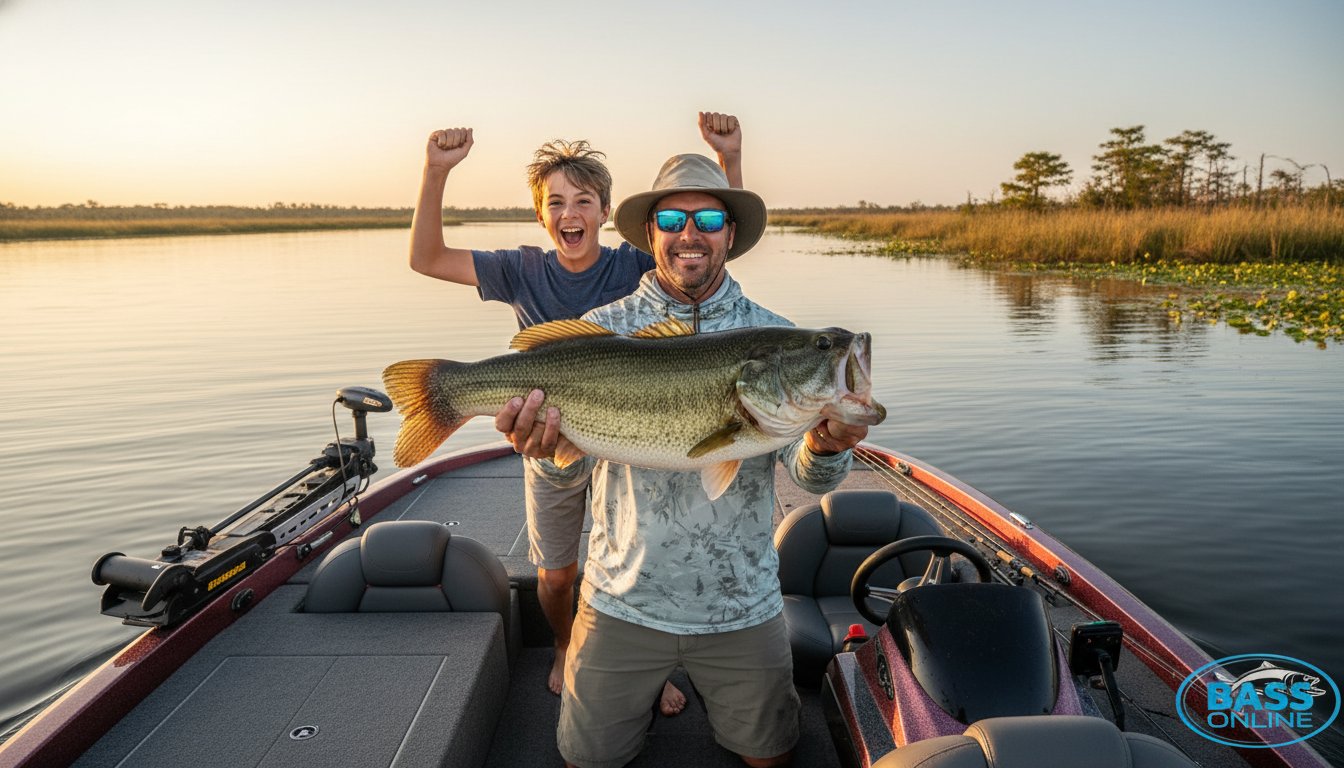

What if I told you that the legendary Lake Okeechobee might not be your fastest ticket to a double-digit fish this season? While the Big O remains a powerhouse, the latest 2026 data shows a new king rising in the marshy waters of the Space Coast. Finding the best florida lake for trophy bass isn’t about following the crowds; it’s about following the current bite and the FWC’s latest TrophyCatch metrics. I know the frustration of spending a multi-day trip on a lake that feels completely dead because the reports you read were six months out of date. You want a career lunker, not a weekend of dinks.
I’ve been on these waters daily, and I’ve seen exactly where the 10-pounders are moving. In this guide, I’ll reveal the elite Florida lakes currently producing massive fish and the seasonal secrets to landing them. We’ll break down the 2026 power rankings, from the dominance of Headwaters Lake to the resurgent Harris Chain where we recently saw a 10.41-pound beast take top honors. You’ll get a clear plan for your next expedition, including the specific gear and bait needed for each trophy spot. Let’s get you on the fish of a lifetime.
Key Takeaways
- Identify which modern hotspots like Headwaters Lake currently offer your highest statistical chance at a double-digit fish.
- Learn why recent data ranks Headwaters Lake as the best florida lake for trophy bass for anglers seeking a double-digit lunker in 2026.
- Master the seasonal timing of the winter spawn between January and March to target heavy females at their absolute peak weights.
- Discover why wild shiners are the ultimate tool for landing giants and the heavy-action gear required to win the fight in thick vegetation.
- Compare the massive volume of Lake Okeechobee against the unique drawdown cycles of Rodman Reservoir to choose your ideal expedition.
Defining the Florida Trophy: What Makes a Lake a “Giant Factory”?
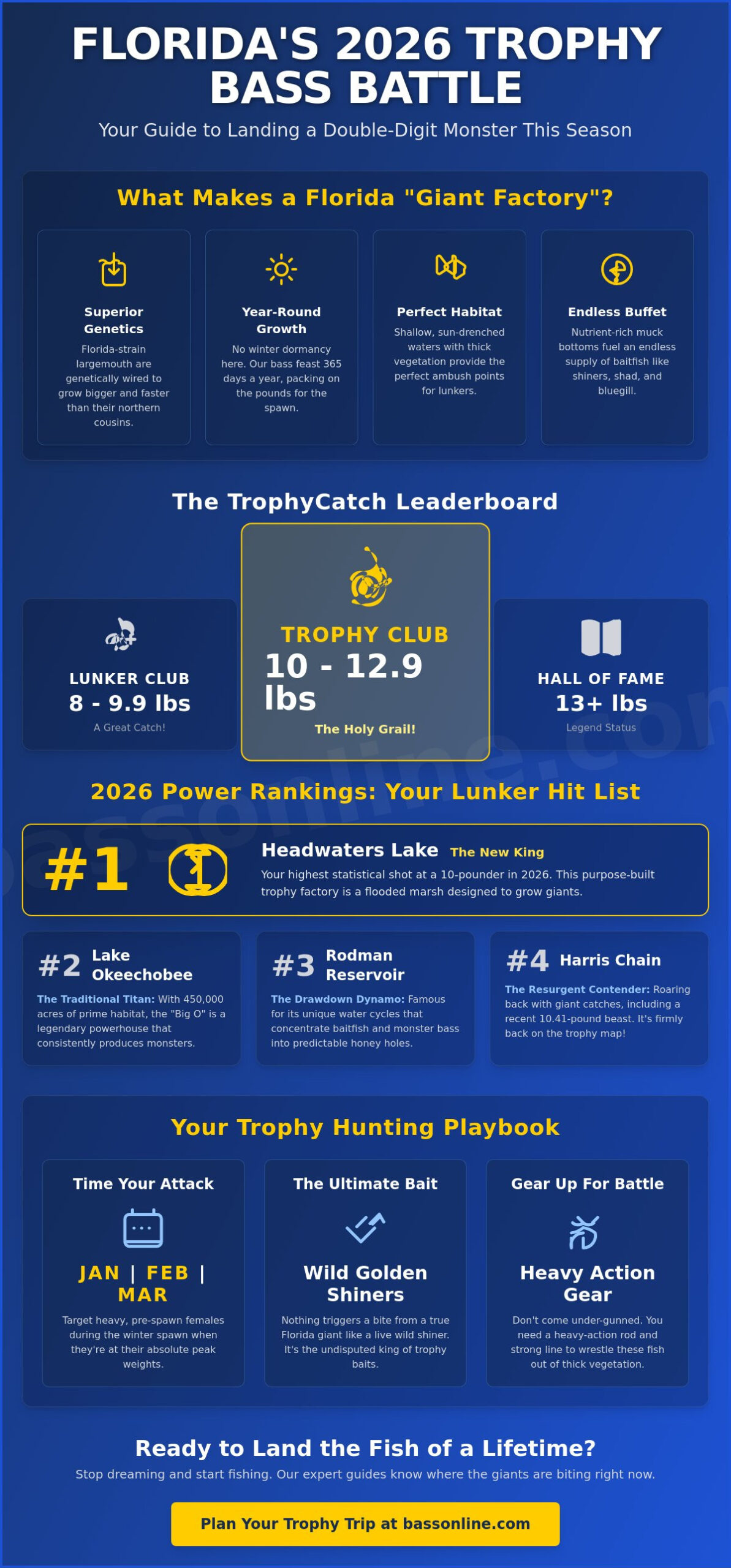
In Florida, we don’t just fish; we hunt for giants. While a five-pounder is a great catch in most states, down here, it’s often just the warm-up. To find the best florida lake for trophy bass, you have to understand what makes these “giant factories” tick. We define a true trophy by the 8-pound benchmark set by the FWC, but for most of us, the 10-pound mark is the holy grail. These fish don’t happen by accident. They are the result of a perfect storm: shallow littoral zones, which are the sun-drenched areas near the shore, and high nutrient loads that create an endless buffet of forage like shad, bluegill, and golden shiners.
To better understand how these giants inhabit even the smallest waters, watch this helpful video:
Florida-strain largemouth bass are genetically wired to grow faster and larger than their northern cousins. While a northern bass might max out at 8 pounds after a decade, a Florida girl can hit that weight in half the time. This leads to the “Land of the Giants” concept. In our premier waters, you aren’t just looking for one big fish. You’re fishing in spots where multiple double-digit bass can live in a single acre of hydrilla or eelgrass. This incredible density is why Lake Okeechobee and our other legendary chains produce massive fish with such consistency.
The Biological Edge of Florida Waters
Our bass benefit from a year-round growing season. There is no winter dormancy here. While northern fish are sluggish under ice, Florida bass are eating and preparing for the spawn. The soil plays a huge role too. Lakes with “muck” bottoms are nutrient powerhouses compared to sterile, sandy-bottom lakes. This muck fuels the massive weed beds that house crawfish and baitfish. In these shallow environments, the lack of a deep thermocline means oxygen and baitfish stay accessible throughout the entire water column, allowing bass to grow massive regardless of where they hold.
TrophyCatch Standards for 2026
The FWC TrophyCatch program tracks our state’s most productive waters using three distinct tiers. For the 2026 season, the Lunker Club covers fish from 8 to 9.9 pounds. The Trophy Club is for the heavy hitters between 10 and 12.9 pounds. If you’re lucky enough to land a beast over 13 pounds, you enter the prestigious Hall of Fame Club. To document your catch properly for these records, you must weigh the fish on a handheld scale with the weight clearly visible in a photo or video. Always prioritize a quick, healthy release to keep these genetics in the lake and ensure Florida remains the undisputed capital of big bass.
The Traditional Titans: Lake Okeechobee and the Kissimmee Chain
When you’re searching for the best florida lake for trophy bass, the conversation always starts with the legends. Lake Okeechobee and the Kissimmee Chain aren’t just famous; they’re biological machines that have been churning out double-digit fish for decades. While newer lakes might get the hype, these titans offer the sheer volume and habitat diversity that keep them at the top of my power rankings every year. These systems are massive, and they require a specific approach to unlock their true potential.
Lake Okeechobee, or the “Big O,” is an inland sea of roughly 450,000 acres. It’s the undisputed king when it comes to trophy potential because of its massive littoral zone. This is where the magic happens. The vast “hayfields” of maidencane and thick stands of bulrush provide the perfect ambush points for giants. Unlike deeper lakes, the bass here live in the grass year-round. They rely on the thick vegetation for shade, oxygen, and a steady supply of golden shiners. If you want to see what a 10-pounder looks like coming out of a mat, this is your arena.
Mastering the Big O in 2026
In 2026, water levels are the deciding factor for our success. When the lake is high, the big girls push deep into the backwaters of Moonshine Bay where they feel protected from boat traffic. If the levels are lower, we focus on the hard-bottom areas of the Shoal. Understanding these shifts is critical because the fish move with the water line. For a deep dive into these patterns, check out Lake Okeechobee Bass Fishing: The Ultimate Guide to the Big O (2026). It breaks down the seasonal movements you’ll need to master this massive system.
The Central Florida Powerhouse: Lake Toho
Moving north into Central Florida, Lake Tohopekaliga, or “Toho,” acts as the crown jewel of the Kissimmee Chain. Toho is famous for holding the record for the heaviest four-day tournament weight in professional bass fishing history. It’s incredibly consistent. The lake is dominated by massive hydrilla beds that act like a giant filter and a nursery for baitfish. When you find the right patch of hydrilla near a natural drop-off, you’re in the strike zone for a career fish.
The North Shore of Toho is legendary during the spring months. It’s a massive spawning flat where 10-pounders are caught with surprising frequency. The key here is patience. We slow down and pick apart the vegetation with heavy jigs or weightless plastics. If you’re looking to cross a “Toho Titan” off your bucket list, booking a guided trip with a local expert will save you days of searching through empty water. We know exactly which grass lines are holding the big females right now.
The Modern Gold Rush: Headwaters Lake and Rodman Reservoir
While the classics like Okeechobee are legendary, the real buzz in 2026 is around two specific bodies of water that have completely redefined the trophy game. If you’re asking me for the best florida lake for trophy bass right now, I’m pointing you toward the East Coast marsh and the North Florida forest. Headwaters Lake and Rodman Reservoir represent the new era of trophy hunting. These spots don’t look like your typical Florida grass lake. Instead of endless flats of lily pads, you’re dealing with man-made pits and standing timber that require a completely different mindset.
Headwaters Lake: The 10-Pounder Factory
Headwaters Lake, or Fellsmere, is a man-made marvel that feels like a lab experiment designed to grow giants. The FWC built this place with specific underwater “pits” and contours that hold massive schools of bass in ways natural lakes just don’t. Because it’s a catch-and-release only fishery for black bass, these fish have had years to grow without the pressure of being harvested. You’re fishing over submerged vegetation and deep-cut channels that hold fish even when the Florida sun is at its peak. To get the full experience on this high-tech fishery, Explore our Headwaters Lake fishing trips and see why we’re seeing 10-pounders caught here almost daily.
Rodman Reservoir: The Land of the Giants
Then there’s Rodman. This place is rugged and unforgiving. It’s a flooded forest full of standing timber and floating logs that can swallow a lower unit if you aren’t careful. The real secret here is the “river channel” logic. You have to follow the old Ocklawaha River bed to find where the giants transition from deep cover to shallow spawning flats. Rodman is famous for its 3-4 year drawdown cycle, where the water is lowered to let the sun bake the muck and kill off excess vegetation. This process resets the lake’s health and triggers a massive growth spurt in the bass population. Rodman is easily the best-kept secret for 13-pounders in the entire Southeast.
Both of these lakes demand respect and specialized gear. You can’t show up with your standard medium-action spinning rod and expect to win. Between the flooded timber at Rodman and the dense, managed hydrilla at Headwaters, you need the heavy artillery. I’m talking 65lb braid and heavy-action rods. If a 10-pounder wraps you around a submerged cypress stump or dives into a thick mat, you need the pulling power to get her out. It’s a different game than the open-water “hayfields” of the Big O, but the rewards are significantly larger.
Tactical Selection: Choosing Your Lake Based on Seasonal Patterns
Picking the best florida lake for trophy bass isn’t just about looking at a map; it’s about looking at your calendar. A lake that produces 10-pounders in February might leave you scratching your head in August if you don’t understand the seasonal shifts. Florida bass are notoriously sensitive to weather and water temperature. To land a career lunker, you must match your destination to the current biological cycle of the fish. Whether you’re hunting heavy pre-spawn females or targeting aggressive schools in the summer heat, timing is everything.
The Spawning Window: January to April
The winter spawn is the prime time for trophy hunters because this is when the biggest females are at their absolute heaviest weights. While most of the country is frozen, our lakes are exploding with life. Shallow systems like Lake Istokpoga often peak earliest in the season because their dark water warms up faster than deeper chains. We pay close attention to the moon phases during this window. The full and new moons in February and March typically trigger the largest waves of giants to push into the shallows to bed.
During this period, we focus on protected pockets with hard sandy bottoms. Understanding the “why” behind this movement helps you intercept fish as they move from deep grass edges to the spawning flats. For a deeper look at how these genetics play into your strategy, read Florida Bass: The Science and Strategy Behind America’s Favorite Trophy Fish. It breaks down the unique behavior of the Florida-strain largemouth that every angler needs to know.
Summer and Fall: The Offshore Game
As the water temperature climbs into the 80s, the “Dog Days” of summer push trophy bass toward deeper structure. This is when the Harris Chain of Lakes truly shines. We use high-end electronics to locate submerged brush piles and shell bars in 10 to 15 feet of water. Even in the heat, these fish remain active. We saw this in early 2026 when a Big Bass Tour event on the Harris Chain produced a massive 10.41-pounder. In the summer, we lean on big 10-inch worms and deep-diving crankbaits to trigger those lethargic giants.
When fall rolls around, the Everglades becomes a top-tier choice. As the rainy season ends and water levels drop, the bass are forced out of the vast sawgrass marshes and into the canals. This concentration creates a feeding frenzy. You can target aggressive lunkers with topwater frogs and swimbaits before the first major cold fronts of the year arrive. If you want to skip the learning curve and get straight to the action, contact us to plan your seasonal expedition. We’ll make sure you’re on the right water at the exact right time to catch your trophy.
Landing the Lunker: Why Local Expertise is the Ultimate Trophy Tool
You can spend days researching the best florida lake for trophy bass, but being on the right water is only half the battle. Landing a double-digit fish requires a combination of the right gear, the right bait, and the local knowledge to know exactly where that fish is holding at 2:00 PM on a Tuesday. I’ve seen countless anglers lose the fish of a lifetime because they brought “northern” gear to a Florida swamp or didn’t understand how a slight shift in wind direction changes the bite. To catch a giant, you have to think like one.
Artificial vs. Live Bait for Trophies
If you want the absolute highest probability of a 10-pounder, wild shiners are the undisputed “cheat code.” We use the shiner method because a giant bass is an apex predator that wants the biggest meal for the least amount of effort. A wild golden shiner struggling on a hook sends out vibrations and scents that an artificial lure just can’t perfectly replicate. It triggers a predatory response in the biggest fish in the school, often resulting in a strike from a trophy while the smaller fish stay back.
If you prefer the challenge of artificials, my top three picks for 2026 are the speed worm, the swim jig, and the frog. The speed worm is a vibration machine that excels in sparse grass. The swim jig is our go-to for swimming through thick hydrilla. The frog is the king of the “slop,” allowing you to pull giants out of the thickest mats imaginable. To see how we rig these for different lakes, you should Meet our professional fishing guides and see the specialized setups we use every day.
Why a Guided Trip is Your Best Bet
A pro guide saves you 20 years of learning the hard way. We spend over 300 days a year on these lakes, monitoring daily water temperature shifts and clarity changes that don’t show up on any map. We know the “spot on the spot,” which might be a single submerged cypress stump or a tiny patch of eelgrass that holds a 12-pounder year after year. This level of detail is what separates a good day from a legendary one.
You also need the right artillery. In Florida cover, anything less than 65lb braid and a heavy-action rod is a liability. When a 10-pounder buried in a mat decides to run, you need the pulling power to turn her head before she wraps you around a stump. A trophy bass isn’t just a fish; it’s the result of perfect timing and professional prep. 2026 is shaping up to be a record-breaking year for our fisheries. Don’t leave your career lunker to chance. Secure your spot on the water and let’s go hunt some giants.
Lock in Your 2026 Trophy Expedition
Your hunt for a double-digit giant starts with picking the right water at the exact right time. Whether you choose the massive grass flats of the Big O or the high-tech pits of Headwaters Lake, remember that timing the winter spawn is your best bet for maximum weight. Finding the best florida lake for trophy bass in 2026 requires moving beyond old reports and trusting current field data. You’ll need the heavy braid and local shiner secrets we’ve discussed to turn a big bite into a legendary photo.
Don’t leave your bucket-list fish to chance. With over 25 years of professional guiding experience and featured appearances on ESPN and the World Fishing Network, our team knows exactly where the giants are holding today. As the highest-rated guide service on TripAdvisor, we take pride in putting our clients on the fish of a lifetime every single day. The water is calling, and the next record-breaker is waiting for your bait right now.
Book Your 2026 Trophy Bass Charter with Florida’s Top Guides!
I’ll see you on the water, and we’ll make sure you have the heavy tackle ready when that lunker finally strikes. Let’s go make some history together.
Frequently Asked Questions
What is considered a trophy bass in Florida?
An 8-pound largemouth is the official state benchmark for a trophy bass in Florida. While most anglers consider a 10-pounder the ultimate prize, the FWC’s TrophyCatch program starts rewarding you once a fish hits that 8-pound mark. These fish are recognized as “Lunkers.” If you manage to land one over 13 pounds, you’ve hit the Hall of Fame tier, which is the rarest achievement in our waters.
Which Florida lake has the most 10-pound bass caught per year?
Headwaters Lake currently records the highest number of 10-pound bass submissions in the state. Since its opening, this man-made reservoir has consistently dominated the leaderboards, making it a strong contender for the best florida lake for trophy bass in 2026. The catch-and-release regulations here ensure that these giants stay in the system, allowing them to reach massive weights that you won’t find in heavily pressured public waters.
When is the best month to catch a trophy bass in Florida?
February is widely considered the best month to target a trophy-sized female. This is the heart of the spawning season when the biggest fish move into the shallows to bed. During this window, females are at their maximum weight because they are carrying eggs. While the spawn can start as early as December in South Florida, the months of January through March offer the most consistent opportunities across the entire state.
Do I need a special license to fish for trophy bass in Florida?
You only need a standard Florida freshwater fishing license to hunt for trophies. As of June 2026, a resident annual license costs $17.00. For out-of-state visitors, you can grab a 3-day license for $17.00, a 7-day for $30.00, or an annual for $47.00. There are no additional trophy permits required, but you must follow specific regulations like the circle hook requirement when using natural bait at Headwaters Lake.
What is the best bait for catching a trophy-sized largemouth bass?
A live wild golden shiner is the most effective bait for landing a double-digit bass. These giants are looking for a high-protein meal that requires minimal effort to catch, and nothing beats the real thing. If you prefer artificial lures, I recommend using a 10-inch ribbon-tail worm or a large profile swimbait. These bigger presentations help filter out the smaller three-pounders and get the attention of the true lake matrons.
Is Headwaters Lake better than Lake Okeechobee for big fish?
Headwaters Lake currently offers a higher statistical probability for a 10-pounder, but Lake Okeechobee remains the king of sheer volume. If you want to pick apart specific underwater pits and managed vegetation, Headwaters is the place to be. However, if you love the traditional experience of flipping miles of bulrush and maidencane, the Big O is still a legendary choice. Both are among the top options when searching for the best florida lake for trophy bass.
Can I catch a trophy bass from the shore in Florida?
You can absolutely catch a trophy from the bank, especially in the Everglades canals or managed neighborhood ponds. Many of these smaller bodies of water have high nutrient loads and zero boat pressure, allowing bass to grow undisturbed. While a boat allows you to reach offshore brush piles and deeper ledges, some of the biggest fish I’ve seen were caught by guys walking the bank with a topwater frog or a simple plastic worm.
What should I do if I catch a bass over 8 pounds in Florida?
You should document the weight and length immediately and then release the fish alive. To enter the TrophyCatch program, you need a clear photo of the fish on a scale with the weight visible. The FWC requires the fish to be released in the same waterbody where it was caught. Documentation allows you to earn rewards and helps state biologists track the health and growth of our trophy populations for future seasons.

Article by
Mr Bass
Todd Kersey, widely known as Mr. Bass by Field & Stream, is a professional angler, accomplished author, and dedicated philanthropist with a lifelong passion for bass fishing. Armed with a degree in Outdoor travel, Mr. Bass has expertly combined his knowledge with his practical fishing experience to become one of the most respected names in the bass fishing, his deep understanding of bass habitats, and fish behavior has earned him numerous accolades as a asset of the sport. Serving 8 years as FWC Stakeholder Chairperson. Leading and passing cutting-edge legislation, such as the Black Bass Management plan, and successfully building, passing, and financing the Trophy Catch program. As CEO, he is committed to giving back to the community through his philanthropic efforts. He supports a variety of causes, especially those centered around physical disabilities. Through his advocacy, his mentorship programs inspire anglers to engage in fishing stewardship, helping to raise more than $ 18 million in donations. Mr. Bass continues to inspire anglers and outdoor enthusiasts alike with his commitment to the sport and the world around him.