
Published: April 24, 2017 · Updated: September 9, 2026
April Lake Okeechobee fishing can bring changing water levels, warmer temperatures, wind-driven water clarity and a mix of spawning and postspawn largemouth bass. This evergreen report preserves four real April field examples from Clewiston and Belle Glade, then explains how to use those observations without mistaking old trip results for today’s conditions.
For the newest guide updates, browse the current Lake Okeechobee fishing reports. Before traveling, check the Florida Fish and Wildlife Conservation Commission Lake Okeechobee forecast and Florida freshwater fishing regulations.
April Lake Okeechobee Fishing: What Changes
April is a transition month. Some bass may still be associated with spawning areas, while others may be recovering and feeding near shallow cover. The balance changes with weather, moon phase, water temperature, lake level and habitat conditions.
Wind is especially important on a lake this large. It can reduce clarity, make navigation more difficult and push anglers toward protected water. Review current Lake Okeechobee water-level information and local reports before selecting a route. Historical statements about “low water” or “clean water” describe a specific trip, not a permanent April condition.
Where to Fish Lake Okeechobee in April
The April field history centers on two major access areas:
- Clewiston provides access to the southwest side, canal system and broad areas of southern and western vegetation.
- Belle Glade and Slims Fish Camp provide southeast-side access and a practical starting point for many South Florida visitors.
The best side of the lake depends on wind direction, navigable water, healthy vegetation, clarity and recent guide observations. April opportunity is lake-wide, but daily conditions are not.
April Bass Patterns and Presentations
The preserved reports show productive fishing with both wild shiners and artificial lures. Reed heads, clean-water pockets and wind-protected areas repeatedly mattered. Those patterns provide useful starting points, but they should be confirmed on the water.
- Reed heads and shallow vegetation: can hold bass when bait, depth and water quality align.
- Protected water: may keep a trip productive when strong wind affects exposed areas.
- Clean-water transitions: can be more valuable than a famous location when wind has stirred nearby water.
- Artificial lures: help cover water and produced strong early action in the Belle Glade report.
- Wild shiners: produced high numbers during the multi-day family trip, although no bait guarantees a trophy.
April Lake Okeechobee Field Reports
April 7: A Multi-Day, Three-Generation Clewiston Trip
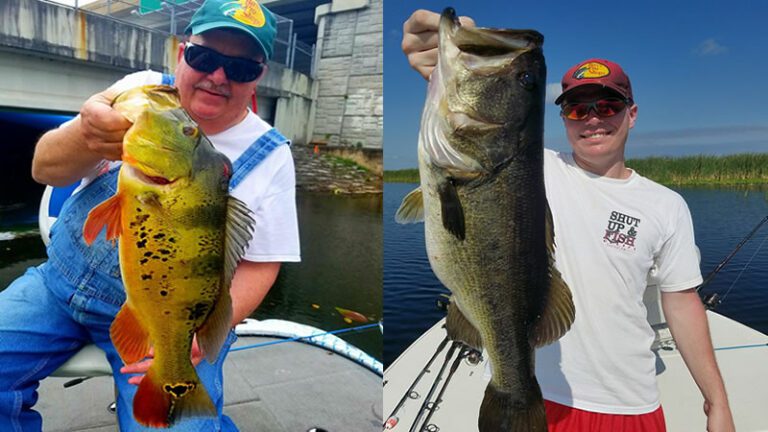
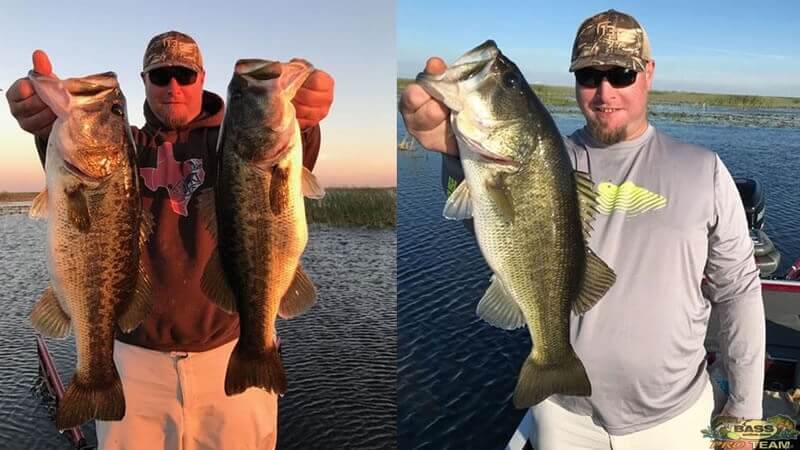
Captain Mark Rose guided David, his father and his son from Clewiston during a period of low water. Navigation required extra care, but wild shiners produced more than 100 bass across consecutive days. The largest fish weighed approximately 5 pounds 8 ounces. The durable lesson is not the old lake level—it is the value of safe navigation, local knowledge and keeping a family group around concentrated fish.
April 16: Clean Water and a Six-Pound Bass Near Clewiston
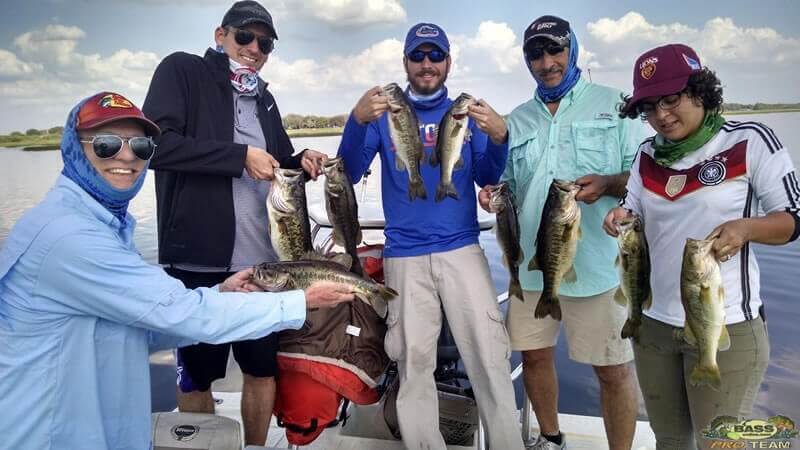
Captain Brian Brown fished with Ron Powers, Caitlin and Alyssa from the Clewiston side. High wind had discolored some water, so the group adjusted until they found cleaner conditions. They caught about 30 largemouth bass, including a 6-pound fish and several bass near 4 pounds. The report also occurred around a full-moon period, but the successful adjustment to water clarity is the more transferable planning lesson.
April 22: Forty Bass in Protected Afternoon Water
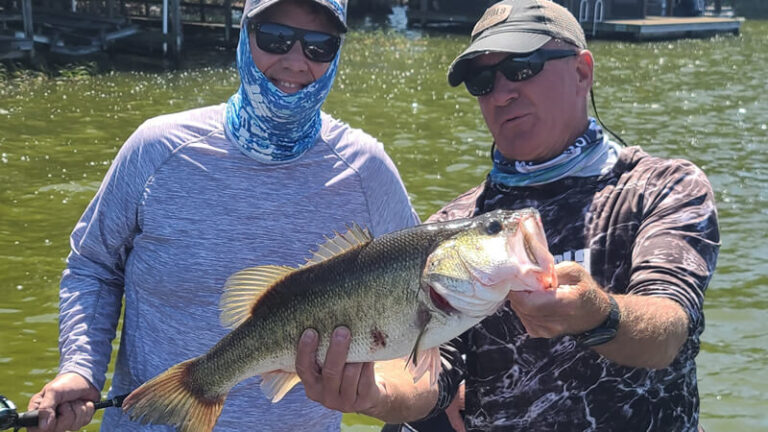
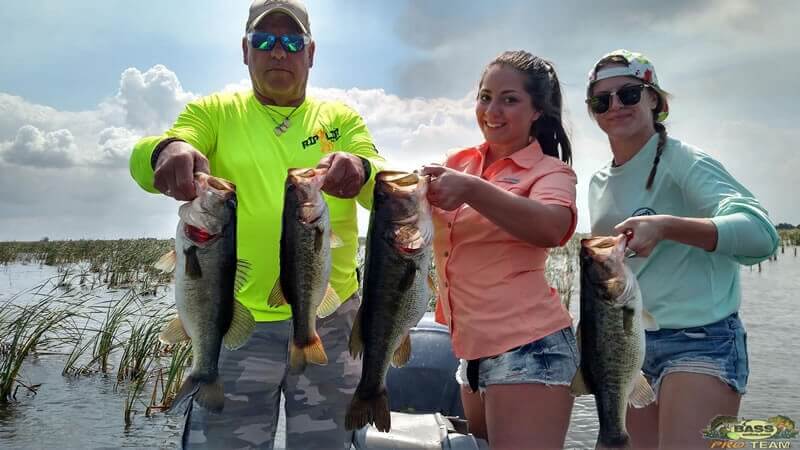
Gabe and Israel traveled from Syracuse, New York, for their first Lake Okeechobee trip. Wind affected the open-water bite, but Captain Mark Rose located protected water where the bass remained active. The anglers caught about 40 fish in four hours. This trip demonstrates why changing areas can be more productive than waiting for uncomfortable water to improve.
April 24: Reed-Head Bass From Belle Glade
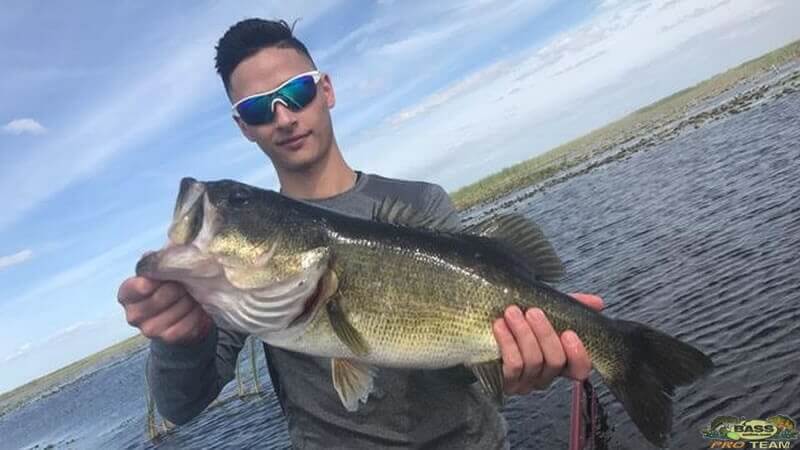
On the Belle Glade side, Captain Mark Rose guided Travis, who was visiting from Texas and fishing Lake Okeechobee for the first time. Artificial lures produced early action around reed heads. Travis caught about 40 bass; the largest weighed 5 pounds 8 ounces, with several others in the 4- to 5-pound range. This historical field report supports reed heads as an April pattern worth checking when current conditions are suitable.
April Lake Okeechobee Fishing FAQ
Is April a good month to fish Lake Okeechobee?
Yes. April can produce both numbers and quality largemouth. Water level, wind, vegetation and the stage of the spawning cycle still determine which areas and presentations are most productive.
Where should I launch in April?
Clewiston and Belle Glade are proven April starting points, but neither is automatically best. Choose according to current wind, water clarity, navigability and where healthy habitat is holding fish.
Should I use wild shiners or artificial lures?
Both can work. Shiners may help keep anglers around concentrated fish, while artificial lures allow a guide to search vegetation and water transitions efficiently. The best choice depends on the group’s goals and current fish position.
Does the April full moon guarantee spawning bass?
No. Moon phase is only one factor. Temperature, weather stability, water level and suitable habitat also influence spawning movement.
Plan an April Lake Okeechobee Fishing Trip
Use these reports as seasonal field evidence, then confirm present conditions before choosing a launch area. Explore the main Lake Okeechobee fishing guide, compare Clewiston and Belle Glade, or browse available Lake Okeechobee fishing guides.