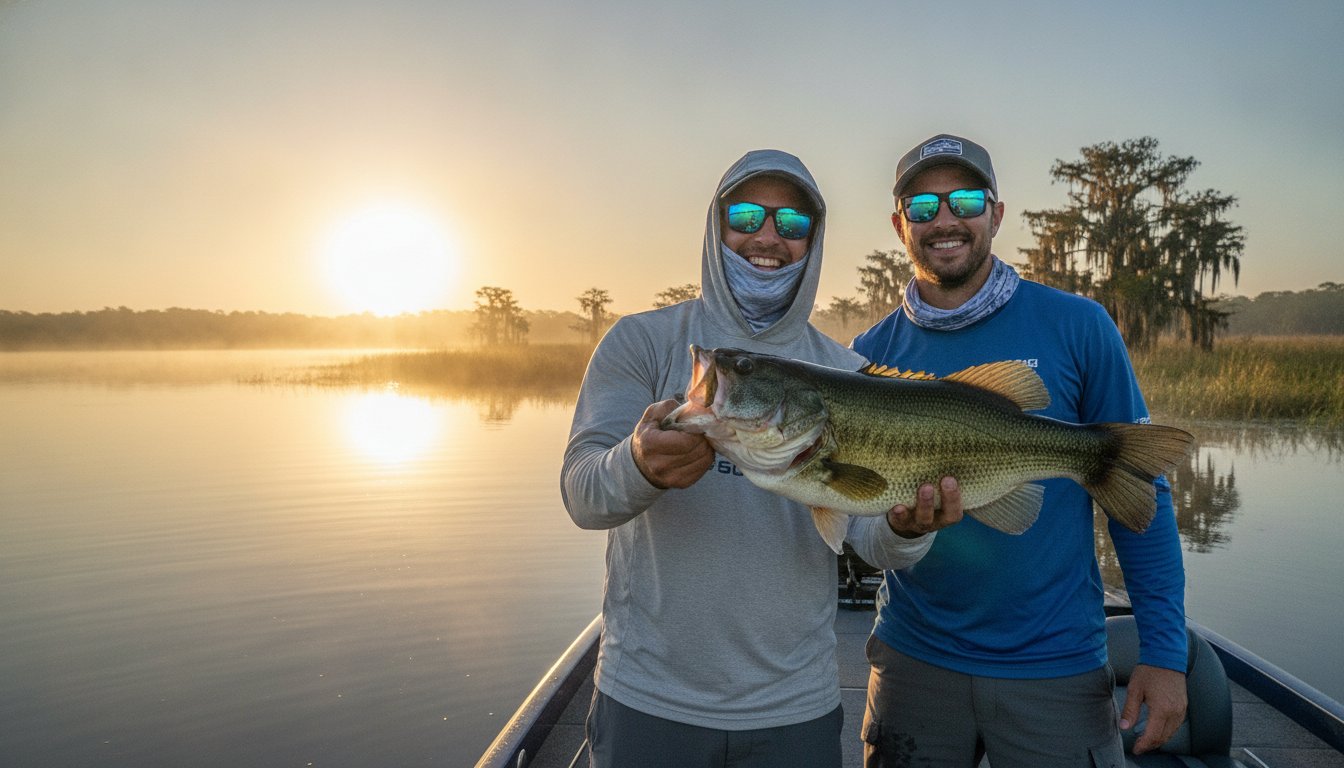

I’ve watched plenty of tough anglers tap out by noon, not because the bass stopped biting, but because they wore a heavy cotton t-shirt in 95-degree humidity. You can have the best tackle in the world, but if you’re battling a brutal sunburn or soaking in sweat, you’ve already lost the fight. We all want to stay on the water as long as possible to land that legendary kicker. Figuring out exactly what to wear for a florida bass fishing trip is the difference between a career-best day on Lake Okeechobee and a miserable, early retreat to the air conditioning.
I know how it feels to have a trip cut short by heat exhaustion or painful chafing, and it’s completely avoidable with the right gear. I’m going to show you how to master the art of tactical fishing apparel so you stay cool, dry, and protected. We’ll dive into the 2026 essentials, including UPF 50+ performance hoodies, moisture-wicking fabrics, and the best deck-safe footwear to keep you stable on a high-speed bass boat. It’s time to gear up like a professional so you can focus on the only thing that matters: the fish.
Key Takeaways
- Ditch the cotton and switch to UPF 50+ performance fabrics to prevent heat exhaustion and painful sun damage during long days on the water.
- Master the professional uniform by choosing a lightweight performance hoodie with a built-in sun mask for maximum coverage and cooling.
- Learn exactly what to wear for a florida bass fishing trip to handle shifting conditions, from 50-degree winter mornings to the peak of summer humidity.
- Prioritize your vision and safety with high-quality polarized sunglasses for sight-fishing and non-marking footwear that provides a steady grip on the boat deck.
- Prepare for the Everglades and iconic lakes with a tactical checklist that includes moisture-wicking trousers and essential sun-protection accessories.
The Florida Environment: Why Your Clothing is Tactical Gear
Florida fishing isn’t a fashion show; it’s a battle against the elements. If you treat your clothes as part of your fishing tackle, you’ll stay in the game longer and fish more effectively. I’ve seen plenty of guys show up in dark heavy hoodies thinking they’re prepared, only to be drained by the heat before the morning bite even ends. Deciding what to wear for a florida bass fishing trip is about more than just looking the part. It’s about maximizing your endurance so you can make that thousandth cast just as accurately as your first.
Visual stealth is a factor that most amateur anglers completely overlook. Bass are ambush predators that spend a lot of time looking up toward the surface for a meal. If you’re wearing a bright red or dark black shirt, you’re creating a high-contrast silhouette against the bright Florida sky. This can spook a trophy bass in the shallows before you even get your lure in the strike zone. Stick to light blues, soft grays, and whites. These colors help you blend into the horizon, giving you a tactical advantage when sight-fishing in clear water.
Comfort directly translates to focus. When you’re not constantly adjusting a scratchy collar or wiping sweat out of your eyes, you’re more likely to feel that subtle “tick” on the line. An 8-hour charter on a lake like Toho or Okeechobee is a physical grind. If your gear is working with you instead of against you, your casting stays sharp and your reaction time stays fast. For more field-tested advice on preparing for the water, check out our outdoor blog for the latest guide reports.
The Danger of the ‘Cotton Trap’
Cotton is the absolute enemy of the Florida angler. It’s a “thirsty” fabric that absorbs humidity and sweat like a sponge. In our 90% humidity, that moisture never evaporates. Instead, the shirt gets heavy, sags, and starts to chafe your skin raw. This is why I always tell my clients to check their labels for 100% polyester or nylon blends. These technical wicking fabrics pull moisture away from your body and allow the wind to dry it instantly, which actually helps regulate your core temperature and keeps you from overheating.
Understanding UPF Ratings
Sunscreen is a great backup, but it’s not enough when you’re sweating through a July afternoon. UPF 50+ is the gold standard for long-term skin health on the water. This rating means only 1/50th of the sun’s UV radiation can penetrate the fabric. It’s a physical barrier that doesn’t wash off, doesn’t need reapplication, and keeps you shielded even when you’re busy fighting a double-digit bass. UPF, or Ultraviolet Protection Factor, measures the amount of UV radiation that a fabric allows to reach your skin.
Core Tactical Layers: The Performance Fishing Uniform
When you look at professional fishing guides on the water today, you’ll see a very specific uniform. It isn’t just about the look; it’s about survival and efficiency in a subtropical climate. For anyone wondering what to wear for a florida bass fishing trip, the industry standard has shifted from old-school short-sleeve shirts to high-tech, full-coverage layers. These pieces are designed to work together to keep your skin cool while blocking the punishing UV rays that bounce off the water’s surface and hit you from every angle.
Ventilation is the secret to staying out for a full eight-hour shift. Modern fishing apparel often features mesh panels under the arms and along the sides of the torso. These breathable zones act like an exhaust system for your body heat, allowing even the slightest breeze to pull warmth away from your skin. The fit is equally critical. You want your clothing to be loose enough to allow a full range of motion for heavy casting and reaching for the net, but not so baggy that the fabric gets caught in your baitcaster or snagged on a rod tip.
The Performance Long-Sleeve Hoodie
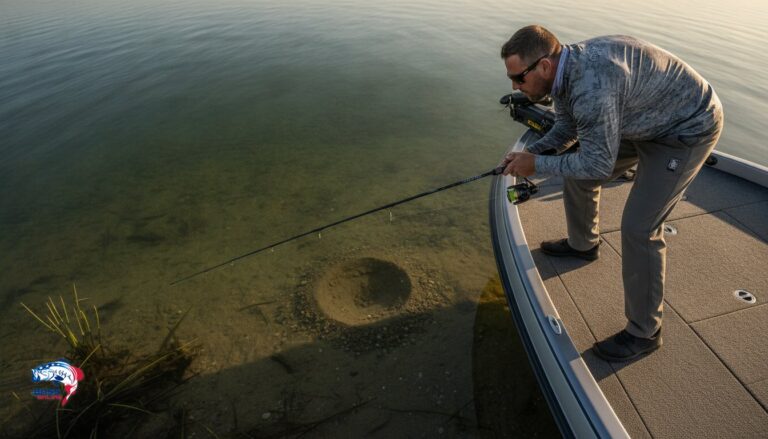
The “sun-hoodie” is the single most important piece of clothing you can own. It has completely replaced the traditional t-shirt for serious anglers because it solves the two biggest burn problems: the back of the neck and the tops of the ears. Most of these tops feature a built-in gaiter or a high-cut collar that provides a seamless barrier between your skin and the sun. Sun-protective clothing like this is far more effective than trying to reapply greasy lotion every hour while you’re busy working a topwater lure.
Bass Online Pro Tip: Look for models with thumb loops. These keep your sleeves locked in place over your wrists during big overhead casts, ensuring your forearms don’t get fried while your hands are on the reel. It’s a small detail that makes a massive difference by the end of the day.
Tactical Fishing Pants vs. Shorts
While shorts might seem like the cooler choice, many pros prefer lightweight tactical pants. They offer protection from more than just the sun. In the Everglades or the thick vegetation of Lake Okeechobee, pants keep biting insects at bay and protect your legs from stray hooks or rough fish scales. The advanced nylon fabrics used today are so light that they often feel cooler than bare skin because they block direct thermal heat.
If you can’t commit to full pants, zip-off options are a lifesaver. You can start the cool 6 AM run in full trousers and switch to shorts as the mercury climbs toward 90 degrees. Just ensure the fabric is a durable blend that can handle the grit and high-speed wind of a professional bass boat. If you’re ready to test your new gear against a trophy largemouth, you can always reach out to our team to get your trip on the calendar.
Seasonal Strategies: Winter Lunkers vs. Summer Heat
Florida weather is a master of disguise. Most folks arrive expecting a tropical paradise, but our winter cold fronts can be a shock to the system. If you want to stay effective on the water, you have to dress for the wind chill. When the air is 50 degrees and we’re running at 40 miles per hour down a lake, it feels like 30 degrees. Knowing what to wear for a florida bass fishing trip means understanding that our seasons don’t just change by the month; they change by the hour.
Before you even step onto the dock, make sure you’ve secured your Florida fishing license. With that out of the way, your focus should shift to the three-layer system. This strategy allows you to shed weight as the sun climbs, keeping you comfortable from the first light until the final cast. A base layer wicks sweat; a mid-layer provides insulation; and a windproof shell stops the bite of the morning air. It’s the only way to handle a 40-degree temperature swing in a single day.
Dressing for the Trophy Season (Nov – March)
This is the time of year we live for. The big females are moving, and the Florida bass are at their heaviest. To catch them, you have to survive the morning run. A lightweight beanie and a pair of wind-resistant gloves are non-negotiable for the first two hours. Once we reach the spot and the sun breaks the horizon, you’ll be glad you have those layers to peel off. Focus on windproof materials for your outer shell. If the wind can’t get through, your body heat stays trapped where it belongs.
Summer Heat and Rain Management
Summer in Florida is a test of will. The heat is heavy, and the 2 PM tropical downpour is almost a guarantee. You need a rain suit that actually breathes. Cheap plastic ponchos are a mistake; they turn into a personal sauna in minutes. I recommend a high-quality jacket with a breathable membrane like Gore-Tex. It lets the humidity out while keeping the rain off your back. It’s the difference between staying dry and being steamed alive.
My biggest guide tip is to keep a dry change of clothes in a waterproof bag inside the boat’s storage. If you do get soaked during a sudden storm, having a fresh shirt for the ride back to the ramp makes the end of the day much better. Always avoid dark colors in July. They soak up the thermal energy from the sun and will cook you faster than any workout. Stick to the light blues and grays we discussed earlier to keep your core temperature down when the mercury hits 95.
Footwear and Accessories: Protecting Your Feet and Vision
Most anglers spend weeks obsessing over their rods and reels but give zero thought to their sunglasses or shoes. On a professional bass boat, your accessories are actually specialized tools. If you are finishing your list of what to wear for a florida bass fishing trip, these items should be at the very top. They determine how well you see the fish and how long you can stand on the deck without your back giving out. I’ve seen great trips hampered by something as simple as a headache from poor-quality lenses or a slip on a wet deck.
Don’t forget about your hands. Sun gloves are the most underrated piece of gear in the 2026 pro guide. While your body is covered by a performance hoodie, the backs of your hands are constantly exposed to direct UV rays while you’re holding your rod. A pair of lightweight, fingerless sun gloves prevents “old man hands” and keeps your skin from frying. For headwear, a wide-brim hat is excellent for the Everglades, but a structured trucker cap is better for high-speed runs because it won’t catch the wind and fly off your head at 50 miles per hour.
Choosing the Right Polarized Lenses
In Florida, polarized sunglasses are non-negotiable. Many of our lakes, like those in the Kissimmee Chain, have “tannic” water. This is a tea-colored tint caused by decaying vegetation. To see through this, amber or copper lenses are superior to standard gray. They provide the high contrast needed to spot a bedded bass or a submerged cypress knee. Polarization isn’t just about glare; it’s about seeing through the water column to identify fish and underwater structure. Beyond the fishing advantage, these lenses are a safety feature that helps you spot submerged timber or shallow sandbars before they become a problem.
Boat-Ready Footwear
Professional guides take immense pride in their boats. The first rule of footwear is “no black soles.” Dark-colored rubber leaves scuff marks on the gel coat that are incredibly difficult to remove. Stick to non-marking soles, usually found on athletic sneakers or dedicated boat shoes. While sandals are popular, I always recommend closed-toe options. They protect your feet from the sun and from the occasional heavy lure or weight that might drop on the deck.
Avoid flip-flops at all costs. They offer zero lateral support and almost no traction on a wet surface. When you’re leaning into a heavy hookset on a trophy largemouth, you need a stable platform. A good pair of sneakers or technical boat shoes will keep you planted and reduce fatigue in your legs after eight hours of standing on the casting platform. If you’re ready to step onto the deck and test your skills, contact us to schedule your next adventure and we’ll get you on the water.
The Pro Guide’s Final Checklist for Your Florida Trip
Your goal is to be a mobile, efficient angler. Before you leave the dock, double check your bass fishing setup. While we provide the high-end rods, reels, and lures, your personal gear is what keeps you focused. Don’t forget a small bottle of anti-fog lens cleaner for your sunglasses. Florida’s high humidity can cloud your vision the moment you step out of the truck, and being able to see that first blow-up on a topwater frog is critical.
The 5-Minute Morning Prep
Success starts before you arrive at the ramp. Your morning routine should include a heavy application of SPF lip balm; your lips will burn faster than your face in the reflection off the water. Start your hydration strategy early. Don’t wait until you’re thirsty to reach for a bottle. I tell my clients to start drinking water an hour before the first cast to stay ahead of the Florida heat. Finally, pull up your Florida fishing license on your phone to ensure it’s active and ready for inspection. Having it saved as a screenshot or in your digital wallet saves time if we’re in an area with spotty cell service.
What NOT to Bring
Avoid bringing oversized tackle boxes. Space on a bass boat is at a premium, and your guide will already have the boat loaded with the exact lures and terminal tackle needed for the current conditions. If you have a “lucky” lure, bring it in a small pocket-sized container. Otherwise, trust the professional gear we provide. Focus your energy on the experience and the environment. When you’re properly dressed and prepared, you can stop worrying about the sun and start focusing on the trophy of a lifetime.
Gear Up for the Strike
Mastering what to wear for a florida bass fishing trip is about more than just comfort; it’s a tactical decision that keeps you in the game when the trophy bite happens. By prioritizing UPF 50+ performance fabrics, utilizing a smart three-layer system for winter shifts, and choosing the right polarized optics, you’re setting yourself up for success. You won’t be distracted by the heat or the glare. You’ll be focused on every movement of your line while we hunt for your next personal best.
At Bass Online, we bring over 25 years of expert guiding experience to every outing. We’ve led top-rated charters on Lake Okeechobee and across Florida’s most legendary waters, providing the elite tackle and pro-grade gear recommendations you need to win the day. Don’t let the elements cut your trip short. Let our seasoned pros handle the navigation and the strategy while you enjoy the raw excitement of the strike. Book Your Professional Florida Bass Charter with Bass Online Today! There’s a trophy lunker out there with your name on it, and we’re ready to help you land it.
Frequently Asked Questions
Do I really need polarized sunglasses for bass fishing?
Yes, polarized sunglasses are the most important tool in your kit after your rod and reel. They cut through the surface glare, allowing you to see submerged grass lines, timber, and bedding bass. Without them, you’re essentially fishing blind in Florida’s often-tannic waters. They also act as a critical safety barrier against flying lures or stray hooks during a chaotic hookset.
Can I wear flip-flops on a guided fishing boat?
I strongly recommend against wearing flip-flops on the water. They offer zero lateral support and can be incredibly slippery on a wet fiberglass deck. When you’re bracing yourself to land a heavy fish, you need the stability of a closed-toe shoe with a non-marking sole. Sneakers or technical boat shoes also protect your feet from the intense sun and accidental drops.
What is the best color shirt to wear for fishing in Florida?
Choosing the right colors is a huge part of what to wear for a florida bass fishing trip. I always recommend light blues, soft grays, or white. These shades help you blend in with the bright Florida sky, making you less visible to bass in shallow water. They also reflect the sun’s thermal energy, keeping your core temperature much lower than dark fabrics would.
Should I wear shorts or pants for a Florida bass trip?
Lightweight technical pants are the professional choice for maximum protection. They provide a total shield against the sun, biting insects in the Everglades, and abrasive fish scales. If you prefer shorts, make sure you’re diligent with sunblock or choose a high-performance fabric. Many pros use zip-off pants to handle the transition from a cool morning to a scorching afternoon.
What happens if it rains during my guided fishing charter?
We typically fish through light rain, as the bass often get more active during a storm. However, if lightning or high winds move in, we prioritize your safety and head for the dock immediately. Having a breathable rain suit in your bag ensures you stay dry and comfortable during those quick tropical showers that pass through almost every afternoon in the summer.
Do I need to bring my own life jacket or rain gear?
We provide all the Coast Guard-approved life jackets and safety equipment required for your trip. You don’t need to worry about the heavy gear, but you should definitely bring your own rain jacket. Personal rain gear usually fits better and offers better mobility than a generic spare. It’s an essential item to keep in your day bag just in case.
Is a camouflage pattern better for catching bass?
Camouflage isn’t necessary, but it doesn’t hurt. Bass are looking for high-contrast silhouettes against the sky, so a “water camo” or a light solid color works equally well. The goal is to break up your outline so you don’t spook fish in the shallows. Most pros stick to light blues and grays because they offer the best balance of stealth and heat reflection.
How do I dress for a Florida fishing trip in January?
Knowing what to wear for a florida bass fishing trip in the winter is all about the three-layer system. You’ll likely start the morning in 45-degree weather and end it in 75-degree sunshine. Wear a wicking base layer, a fleece or light jacket for insulation, and a windproof outer shell to block the chill during the boat run. You can shed these layers as the day warms up.

Article by
Mr Bass
Todd Kersey, widely known as Mr. Bass by Field & Stream, is a professional angler, accomplished author, and dedicated philanthropist with a lifelong passion for bass fishing. Armed with a degree in Outdoor Travel, Mr. Bass has expertly combined his knowledge with his practical fishing experience to become one of the most respected names in bass fishing.
His deep understanding of bass habitats and fish behavior has earned him numerous accolades as an asset to the sport. Serving 8 years as FWC Stakeholder Chairperson. Leading and passed cutting-edge legislation, such as the Black Bass Management Plan, and successfully built, passed, and helped finance the Trophy Catch program.
As CEO, he is committed to giving back to the community through his philanthropic efforts. He supports a variety of causes, especially those centered around physical disabilities. Through his advocacy, his mentorship programs inspire anglers to engage in fishing stewardship, helping to raise more than $18 million dollars in donations. Mr. Bass continues to inspire anglers and outdoor enthusiasts alike with his commitment to the sport, industry, and the world around him.