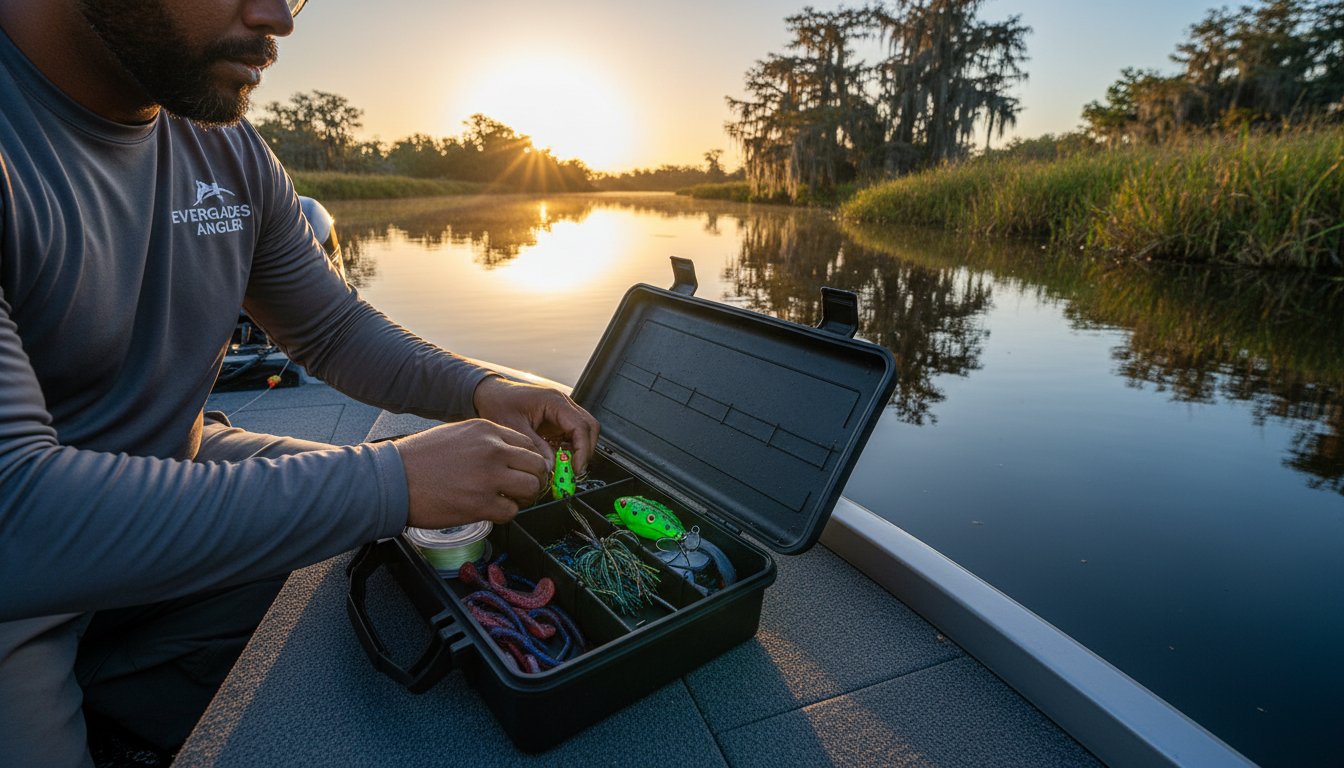

What if the most expensive lure in your tackle box is actually the reason you’re coming home empty-handed? It’s a trap I see 8 out of 10 anglers fall into when they prioritize flash over function. Finding the best bass lures for 2026 isn’t about following a social media trend; it’s about using the same field-tested tools the Bass Online team has relied on for over 20 years to put clients on trophy fish.
We’ve all stood in a tackle shop staring at a wall of 500 different soft plastics, feeling that familiar sting of confusion over which color or size will actually work. It’s frustrating to waste money on gear that collects dust while the hawgs stay deep. You deserve to head out on the water with total confidence, knowing your presentation is exactly what a legendary lunker wants to eat.
I’m going to show you the high-percentage baits that professional guides use to land giants across diverse fisheries nationwide. You’ll learn how to match your selection to water clarity and which specific retrieve styles trigger explosive strikes. We’re breaking down the essential tackle you need to finally land that personal best trophy bass.
Key Takeaways
- Discover how high-tech sonar is revolutionizing gear design and why a streamlined box of 5-7 core categories is all you need to land a trophy.
- Master the timing for explosive topwater strikes and learn to use precision poppers to pull lunkers out of the thickest cover.
- Get the inside scoop on the best bass lures for 2026, featuring subsurface workhorses designed to trigger aggressive reaction bites in any environment.
- Learn the “Clear, Stained, Muddy” rule to perfectly match your lure color and retrieve style to changing water clarity and weather patterns.
- Simplify your strategy with foolproof techniques for casting jigs and stick baits that produce hawgs for pros and beginners alike.
The Pro’s Tackle Box: Why Certain Lures Dominate in 2026
Welcome to the front lines of modern angling. By 2026, the game has shifted. We aren’t just casting blindly into the reeds anymore. With the massive leap in forward-facing sonar technology, the best bass lures are now designed to perform under the intense scrutiny of high-definition electronics. It’s a new era of precision where every flick of a tail is visible on screen. This tech has forced lure manufacturers to create more realistic movements than ever before.
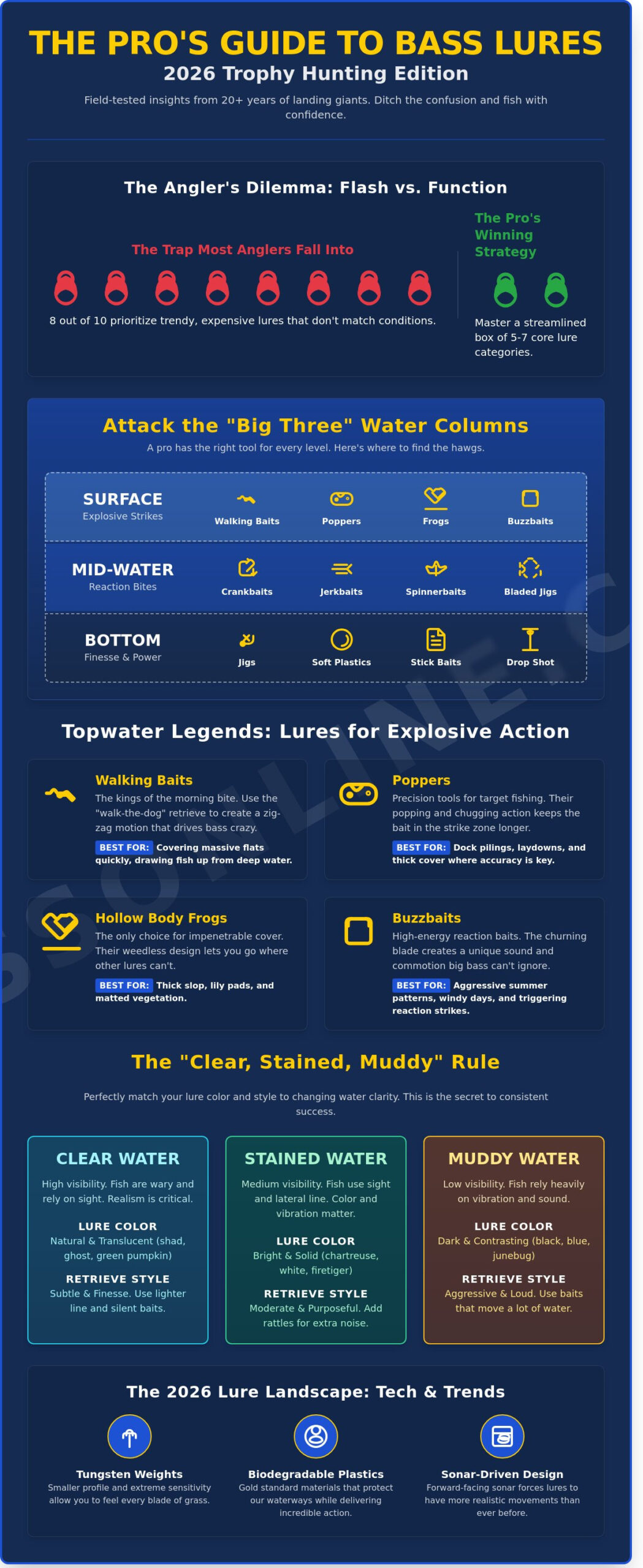
Our pro guides don’t lug around hundred-pound tackle boxes filled with “maybe” baits. They stick to 5 to 7 core categories. This lean approach ensures you master the cadence, sink rate, and vibration of every single bait you own. When you know your gear inside and out, you build that “Confidence Bait” mindset. If you don’t believe a lunker is about to smash your lure, you’ll miss the subtle ticks and pressure changes that mean a trophy is on the line. Believing in your setup is 50 percent of the battle when hunting for a hawg.
To master any body of water, you have to attack the “Big Three” water columns. We categorize every trip by where the fish are holding: the surface, the mid-water, and the bottom. Understanding bass fishing techniques across these three zones is the difference between a record-breaking day and a long ride back to the ramp. You need a tool for every level of the house to be a consistent stick.
Anatomy of a Trophy-Winning Lure
Visuals matter, but vibration is the real dinner bell. A bass uses its lateral line to “see” in murky water or thick vegetation. Your lure needs to move water effectively to get noticed. We also see many anglers overlook hook quality. A dull point or a weak wire is exactly why you lose an 8-pounder at the boat. Always check your points. You can learn more about how different fish react to these triggers in our species guide, which breaks down the habits of the world’s most popular bass types.
The 2026 Bass Lure Landscape
The 2026 season is defined by sustainability and extreme sensitivity. We’ve largely moved away from lead, favoring tungsten weights for their smaller profile and better bottom-feel. You can feel a single blade of grass with a tungsten rig. Biodegradable soft plastics have also become the gold standard, protecting our legendary waterways while still delivering incredible action. Always remember the “Match the Hatch” philosophy. If the local forage is 3-inch shad, don’t throw a monster worm. Match the size and color of the local baitfish to fool the smartest fish in the lake.
The shift toward high-precision components like tungsten and eco-friendly plastics has also driven innovation in how these products are manufactured and packaged. Companies like Choice Bagging Equipment provide the industrial bagging technology necessary to handle bulk materials with the accuracy required for modern tackle standards.
Topwater Legends: Lures for Explosive Surface Action
Nothing beats the heart-stopping explosion of a trophy largemouth crushing a topwater bait. When you’re hunting for the best bass lures to trigger surface strikes, you need tools that create commotion and mimic struggling prey. Topwater fishing isn’t just about the visual thrill; it’s a strategic way to target aggressive fish when they’re looking up. To dominate the surface, you need to carry four essential styles in your tackle box.
- Walking Baits: These are the kings of the morning bite. They allow you to cover massive flats quickly, drawing lunkers from 10 feet of water to the surface.
- Poppers: These are your precision tools. Use them for target-oriented fishing near heavy cover like dock pilings or fallen timber where you need to keep the bait in the strike zone longer.
- Hollow Body Frogs: This is the only choice for thick “slop” and heavy lily pads. Their weedless design lets you reach fish that other lures simply can’t touch.
- Buzzbaits: These high-energy reaction baits excel during aggressive summer afternoons. The churning blade creates a unique acoustic footprint that big bass find impossible to ignore.
According to recent industry reviews of the best bass lures of 2026, topwater designs have become more specialized than ever to handle different water clarity and pressure levels.
The Walk-the-Dog Technique
Mastering the “walk-the-dog” cadence is essential for any serious angler. Point your rod tip toward the water and use short, rhythmic snaps on a slack line. This creates the side-to-side zig-zag motion that drives bass crazy. If you’re fishing high-pressure areas with clear water, choose a silent walking bait to avoid spooking the fish. In murky water or on windy days, a rattling bait provides the extra noise needed for a hawg to track it down. Pro Tip: When a fish blows up, don’t react immediately. Wait exactly one second to feel the weight of the fish before you set the hook. This small delay significantly increases your landing percentage.
Frog Fishing Secrets
Trophy largemouth hide under the thickest mats of vegetation to stay cool and ambush prey. Look for “blow holes” or small gaps in the weeds where a bass has recently crashed through. A seasoned guide trick for better hook-up ratios is to trim the rubber legs of your frog by about 0.75 inches. This prevents the bass from just grabbing the tassels and missing the hooks. For more seasonal topwater tips and location-specific advice, check out our outdoor blog. If you want to see these techniques in action, our professional fishing guides can show you exactly how to work these lures on the water.
Subsurface Workhorses: Cranking and Jerking Through the Mid-Water
Most trophy bass don’t spend their entire day staring at the surface or hugging the deepest floor of the lake. They often suspend in that 4 to 12-foot strike zone, waiting for a meal to cruise by. To target these fish effectively, you need tools that cover water quickly and provoke a strike through pure vibration and erratic movement. These are the best bass lures for mid-water dominance.
- Lipless Crankbaits: These are the ultimate search baits for finding schools in grass. Use a 1/2-ounce model to burn across flats. If you feel the lure catch on a blade of hydrilla, snap your rod tip upward to rip it free. That sudden burst of speed is often what triggers a massive strike.
- Squarebill Crankbaits: These lures are designed to deflect off wood and rocks to trigger reaction bites. The square-shaped lip allows the bait to bounce off a stump rather than snagging it. When the lure kicks out to the side after a collision, hold on tight.
- Suspension Jerkbaits: This is the cold-water killer that mimics a dying shad. Unlike other lures, a jerkbait stays in the strike zone longer. It’s a precision tool for picking apart specific pieces of cover when the bite is tough.
- Bladed Jigs (Chatterbaits): This is the modern pro’s choice for stained water and wind. The vibrating blade creates a massive thumping sensation that bass can “feel” with their lateral lines even when visibility is less than 12 inches.
Deflection: The Secret to Crankbait Success
Bass are visual hunters, but they’re also opportunistic. If a lure is just swimming smoothly through open water, a big bass might let it pass. You have to make it look vulnerable or startled. The secret is the “thump.” You want your lure to crash into something. Use your fish finder to identify the depth of the submerged timber or rock piles. If your electronics show cover at 6 feet, choose a crankbait rated for 8 feet. You want that bill digging into the structure. “A crankbait that isn’t bumping into cover is just a piece of plastic taking a swim.”
Mastering the Jerkbait Pause
When you’re working a jerkbait, the “dead-stick” pause is the most important part of the retrieve. Most anglers move the bait too fast. You should snap the rod tip twice to make the bait dart, then wait. In 50-degree water, you might need to pause for 5 to 10 seconds. You can check out the Florida Bass science to see how water temp affects bass speed and aggression. Match your colors to the conditions for the best results. Use translucent patterns for clear water where bass can see every detail. Switch to chrome on sunny days to create a flash that mimics baitfish scales. If you’re fishing in stained water, a chartreuse pattern provides the visibility needed to get noticed.
Bottom-Dwelling Hawg Hunters: Jigs and Soft Plastics
To land a trophy, you have to go exactly where they live. That means getting down into the weeds, rocks, and timber with the best bass lures for bottom contact. The casting jig is your year-round heavy artillery. It’s a staple for 12 months of the year because it mimics crawfish, the primary protein source for big bass. When you’re targeting heavy timber, nothing beats a jig’s ability to deflect off wood and trigger a reactionary strike.
If you want a foolproof option, the Texas-rigged stick bait is the undisputed champion. Whether you’re a first-timer or a seasoned pro, these baits produce results in almost any water clarity. When the bite gets tough or you’re staring into crystal clear water, switch to the Ned Rig. This finesse king relies on a small, subtle profile to trick pressured fish that have seen every other lure in the box. For the nastiest, thickest vegetation, reach for creature baits. These bulky plastics are designed for flipping and pitching directly into the heart of cover where the biggest lunkers hide from the sun.
The Art of the Jig Flip
Success with a jig starts before the lure even hits the bottom. You must master the silent entry. If your lure makes a loud splash, you’ll spook a hawg before she ever sees the bait. Aim for a low, pendulum-style toss that lets the jig enter the water with a tiny ripple. Your choice of trailer is just as vital. Use high-action flapping trailers in murky water to help fish find the bait through vibration. In clear water, stick to subtle gliding trailers that look natural. You can see how our fishing guides execute these precision flips to pull giants out of shallow cover every single day.
Soft Plastic Rigging 101
Rigging is the difference between a day of snags and a day of strikes. The Texas Rig is your go-to for thick weeds because the hook point stays buried. If you’re fishing deep, sandy flats, the Carolina Rig allows your bait to float just above the bottom. For suspended fish around docks, the Wacky Rig offers a unique, shimmying fall that drives bass crazy.
Don’t overlook the weightless advantage. A slow-falling stick bait often catches the biggest fish because it stays in the strike zone longer. Modern 2026 soft plastics have evolved significantly; many now feature 35% higher salt concentrations and specialized amino acid scents. This technology ensures a bass holds the lure for up to 8 seconds longer, giving you plenty of time to set the hook. These specialized scents are now a standard requirement for anyone serious about using the best bass lures on the market today.
Book your world-class bass fishing adventure now!
Matching the Hatch: How to Choose Your Lure Based on Conditions
Even if you’re throwing the best bass lures on the market, you won’t land a trophy if you ignore the environment. Success on the water comes down to one thing: adaptation. Bass change their behavior based on light, temperature, and water movement every single hour. To catch more fish, you have to think like a predator. You need to look at the water and decide which tool in your tackle box fits the current mood of the lake. A lure that crushed it at 7:00 AM might be useless by noon when the sun is high and the wind picks up.
Wind is a major game changer for your strategy. When the surface is glass, bass are spooky and hyper-aware of their surroundings. You need a subtle, finesse approach. But once a 10 mph breeze kicks up a chop, the game changes completely. That surface disturbance breaks up the light and hides your profile. This is the perfect time to switch from a slow subsurface bait to an aggressive topwater or a high-vibration spinnerbait. The chop makes it harder for the fish to inspect the lure, which triggers a reactionary strike. In the heat of summer, look for those deep haunts 15 feet down where the water stays cool and oxygenated. During the pre-spawn, focus your energy on the 2 to 5 foot shallows where the big hawgs move up to prepare their beds.
The Color Palette Guide
- Clear Water: Stick with natural tones like Green Pumpkin or Watermelon. In 4 feet of visibility or more, bass rely heavily on their sight. If the lure looks fake or too flashy, they’ll pass it up.
- Stained Water: Use bright or bold colors like Chartreuse and White. When visibility drops to 1 or 2 feet, you need a lure that stands out against the tannic or tea-colored tint.
- Muddy Water: Go with dark silhouettes like Black and Blue. In heavy mud or during night fishing, bass see the dark outline against the surface much better than a light color. This also helps them target the lure using their lateral line.
Put Your Skills to the Test
Knowing the theory is great, but nothing beats time on the water to build your confidence. Every lure has a unique vibration that you can only “learn” by feeling it through your rod tip. Take your new knowledge to legendary spots like Lake Okeechobee. The Big O is the ultimate training ground for testing different colors and retrieve styles in various grass types. Our team has spent over 20 years figuring out exactly how these fish move throughout the seasons on this massive waterway.
Versatility is the hallmark of a world-class angler. Don’t get stuck throwing the same bait all day just because it worked last month. Be ready to pivot when the clouds roll in or the wind shifts. If you want to fast-track your learning curve and catch a lunker, Book a trip with Bass Online today. Let a pro show you how to work the best bass lures in real-time. We’ll put you on the fish and teach you the secrets to reading the water like a local expert.
Master the Water and Land Your Next Lunker
Success on the water isn’t just about having a full tackle box; it’s about knowing exactly when to deploy your gear. From explosive topwater strikes to grinding jigs for bottom-dwelling hawgs, the best bass lures of 2026 are designed to trigger aggressive bites in any environment. We’ve spent over 25 years guiding anglers to trophy fish, and we know that matching your presentation to the current conditions is what separates the pros from the pack.
As the largest freshwater guide service in the US, Bass Online provides more than just a boat ride. We offer a masterclass in professional angling techniques on legendary waters like Lake Okeechobee and the Everglades. If you’re ready to stop guessing and start catching, our team is here to lead the way. We even offer a No Fish, No Pay policy on select trips to ensure your satisfaction is guaranteed.
Ready to see these lures in action? Book your pro-guided bass trip today!
Grab your rod and get ready for an adventure you won’t forget. We’ll see you out on the water!
Frequently Asked Questions
What is the single best lure for catching a trophy largemouth bass?
A large profile swimbait or a 10 inch ribbon tail worm is the absolute best lure for landing a trophy largemouth. Big bass want a substantial meal to justify the energy spent striking. In Florida, our guides often land 8 pound lunkers using these oversized presentations. It filters out the smaller fish and triggers a territorial response from the dominant hawgs in the hole.
How do I choose the right lure color for different water conditions?
Match your lure color to the water clarity for the best results. In clear water, use natural tones like watermelon or silver. When visibility drops below 2 feet, switch to high contrast colors like black and blue or chartreuse. This helps the bass track the bait through the murk. We see a 40 percent increase in strikes when anglers match their color to the environment correctly.
Are expensive lures actually better than budget-friendly options?
Expensive lures often feature better hardware and more realistic action, but budget options still catch plenty of fish. The main difference is the hook quality and the paint durability. A 15 dollar jerkbait might have a more balanced suspension than a 5 dollar version. However, a standard soft plastic stick bait is one of the best bass lures regardless of its lower price point.
What is the best topwater lure for early morning bass fishing?
A walking bait or a popper is the premier choice for early morning action. Bass move into the shallows to hunt at sunrise, and a topwater lure mimics a wounded baitfish perfectly. Work the lure near lily pads or grass edges where the water is less than 5 feet deep. This aggressive presentation creates the surface disturbance needed to draw a massive strike before the sun gets too high.
How do I know if I should use a hard bait or a soft plastic?
Choose hard baits like crankbaits when you need to cover a lot of water quickly to find active fish. Use soft plastics when you know exactly where the fish are holding or when you’re fishing in heavy cover. If the water temperature is between 60 and 75 degrees, aggressive hard baits often work best. If the bite is slow, a slow-crawled soft plastic usually saves the day.
What size lure should I use for bass in the summer vs. winter?
Use larger 8 to 12 inch lures during the summer and downsize to 2 or 3 inch baits in the winter. Bass have a higher metabolism in 80 degree water and’ll chase bigger prey. When the water drops below 55 degrees, their movement slows down significantly. A smaller lure presented slowly matches their sluggish behavior and it’s much easier for them to digest during the cold months.
Do I need different lures for Smallmouth vs. Largemouth bass?
Smallmouth bass typically prefer smaller, faster moving lures like tubes or hair jigs compared to the larger baits used for largemouth. While both species eat similar prey, smallmouth are sight hunters that often live in deeper, clearer water. Largemouth are ambush predators that love bulky jigs and 10 inch worms. We find that 70 percent of smallmouth catches occur on finesse gear and light line.
What is the best lure for fishing in heavy weeds or grass?
A Texas-rigged soft plastic with a pegged weight or a hollow-body frog is the top choice for heavy vegetation. These lures are weedless, meaning the hook is hidden to prevent snagging on grass or lily pads. You can throw them directly into the thickest cover where trophy bass hide. This setup allows you to reach fish that other best bass lures simply can’t get to without getting stuck.

Article by
Mr Bass
Todd Kersey, widely known and labeled by Field & Stream as Mr. Bass, is a professional angler, accomplished author, and dedicated philanthropist with a lifelong passion for bass fishing. Armed with a degree in Outdoor travel, Mr. Bass has expertly combined his knowledge with his practical fishing experience to become one of the most respected names in the bass fishing, his deep understanding of bass habitats, and fish behavior has earned him numerous accolades as a asset of the sport. Serving 8 yrs as FWC Stakeholder Chair person. Leading and passing cutting edge legislative like the Black Bass Management plan, also successfully building, passing and financing the Trophy Catch program. As CEO he is committed to giving back to the community through his philanthropic efforts. He supports a variety of causes, especially those centered around physical disabilities. Through his advocacy, his mentorship programs inspire anglers to engage using fishing stewardship, helping to foster more than 18 million dollars in donations. Mr. Bass continues to inspire anglers and outdoor enthusiasts alike with his commitment to the sport and the world around him.