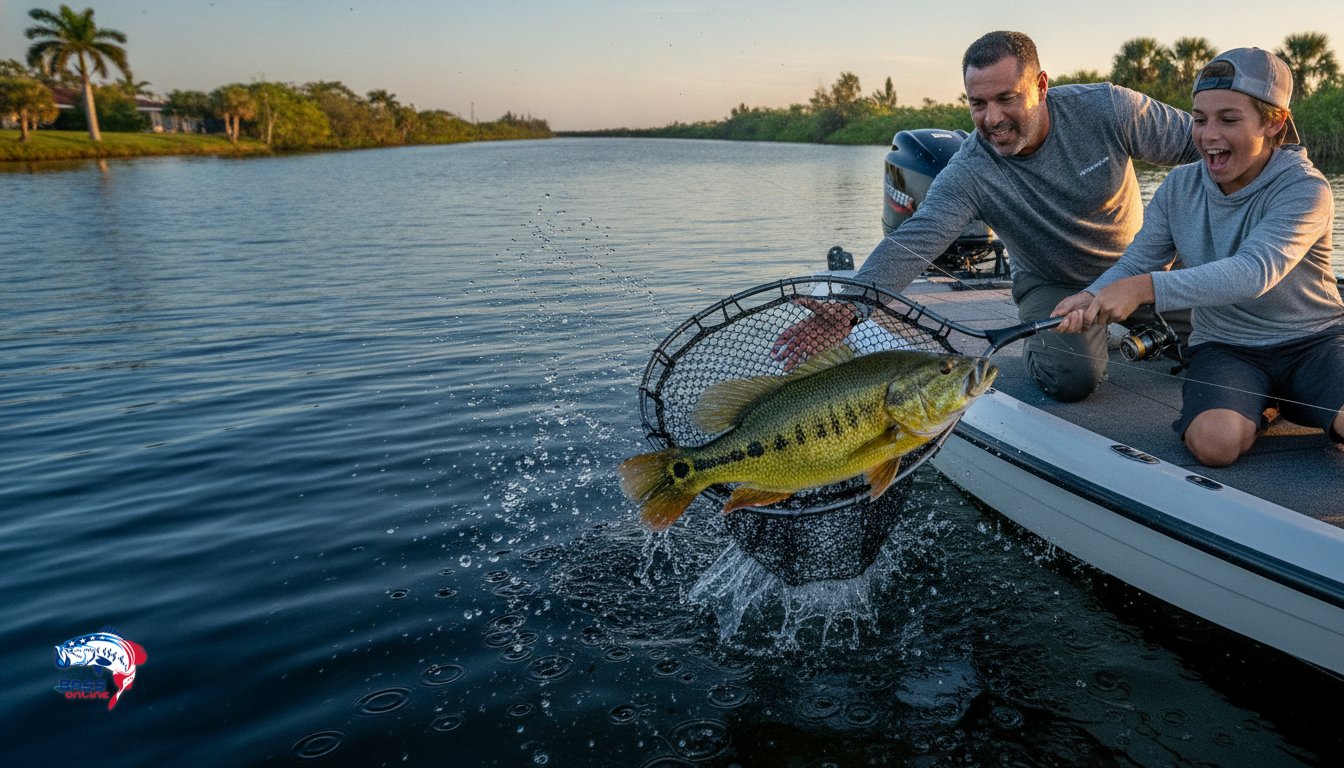

You can throw the most expensive topwater plug in your tackle box all day, but nothing triggers a territorial peacock bass like the real thing. It’s incredibly frustrating when you’re staring at a trophy fish in clear water and they simply won’t budge for an artificial lure. We have all been there. Mastering live bait fishing for peacock bass is the fastest way to turn those high-pressure days into a total feeding frenzy. When you understand how to present live bait correctly, you aren’t just fishing; you’re exploiting the raw instincts of the world’s most aggressive freshwater fighter.
I’ve spent decades on the water seeing how a bucket of lively shiners can transform a slow morning into a consistent 20-fish day. In this guide, I’m going to show you how to keep your bait frisky in the heat and master the art of live bait chumming to draw fish out from deep cover. We’ll cover exactly how to rig for those lightning-fast strikes so you never miss another hookset on a five-pound trophy. From navigating 2026 bait regulations to choosing the right gear, you’re about to get the pro-level blueprint for total dominance on the water. It’s time to stop guessing and start catching.
Key Takeaways
- Learn why golden shiners are the ultimate trigger for aggressive peacock bass and how they consistently outperform artificial lures on pressured water.
- Master the essential free-line and float rigging techniques that make live bait fishing for peacock bass look natural and irresistible to trophies.
- Discover the “live chumming” secret used by pros to ignite a feeding frenzy and pull big fish out of heavy structure.
- Improve your success rate by learning to read surface activity and timing your hooksets to match the lightning-fast speed of a peacock bass strike.
- Understand why a professional charter is the most efficient way to learn complex bait management while targeting the most productive local honey holes.
Why Live Bait is the Ultimate ‘Cheat Code’ for Peacock Bass
Live bait fishing for peacock bass is like bringing a megaphone to a quiet conversation. While artificial lures certainly have their place, they often fail when the sun is high and the water is crowded with other anglers. On those high-pressure days, a fish might look at a topwater plug and swim away; however, they simply cannot ignore the erratic, high-frequency vibration of a live shiner. It’s a biological trigger that bypasses their caution and forces an immediate reaction. You aren’t just offering a meal; you’re presenting a problem that the fish feels compelled to solve with its teeth.
The Territorial Strike vs. The Hunger Strike
Peacock bass aren’t just looking for a snack; they’re defending their home. As members of the cichlid family, Peacock bass are some of the most territorial fish on the planet. When a live baitfish enters their strike zone, it creates a unique scent trail and a distress vibration that signals an easy win for the bass. They strike not because they’re hungry, but because they want that intruder out of their sight. In murky freshwater canals, that natural scent and movement are often the only things that will pull a trophy out of the shadows. This territorial aggression is why live bait consistently out-produces lures when the bite turns “off.”
Maximizing Your Success Rate in 2026
If you’re aiming for a consistent 20-fish day or hunting a trophy over 5 pounds, live bait is your best friend. It’s the perfect way to get kids or beginners hooked on the sport because the action is nearly constant. Our professional guides often use live bait to scout high-density areas. If the bait is getting nervous, we know the big ones are nearby. As waters become more pressured in 2026, switching to live bait ensures you stay ahead of the curve. There are specific times when this tactic becomes mandatory for success:
- Post-Frontal Conditions: When cold fronts make fish lethargic and lure-shy.
- Mid-Day Heat: When bass retreat to deep structure and won’t chase fast-moving hardware.
- High-Traffic Weekends: When fish have seen every plastic worm and crankbait in the catalog.
- Murky Water: When visibility is low and the natural scent of bait is required to draw them in.
By focusing on the “why” behind the strike, you can better understand how to manipulate the fish’s behavior. Live bait doesn’t just wait for a bite; it actively hunts for one by creating a disturbance that no artificial lure can truly replicate. It’s about working with the fish’s natural instincts rather than trying to trick them with plastic and paint.
Selecting the Best Live Bait for Trophy Peacock Bass
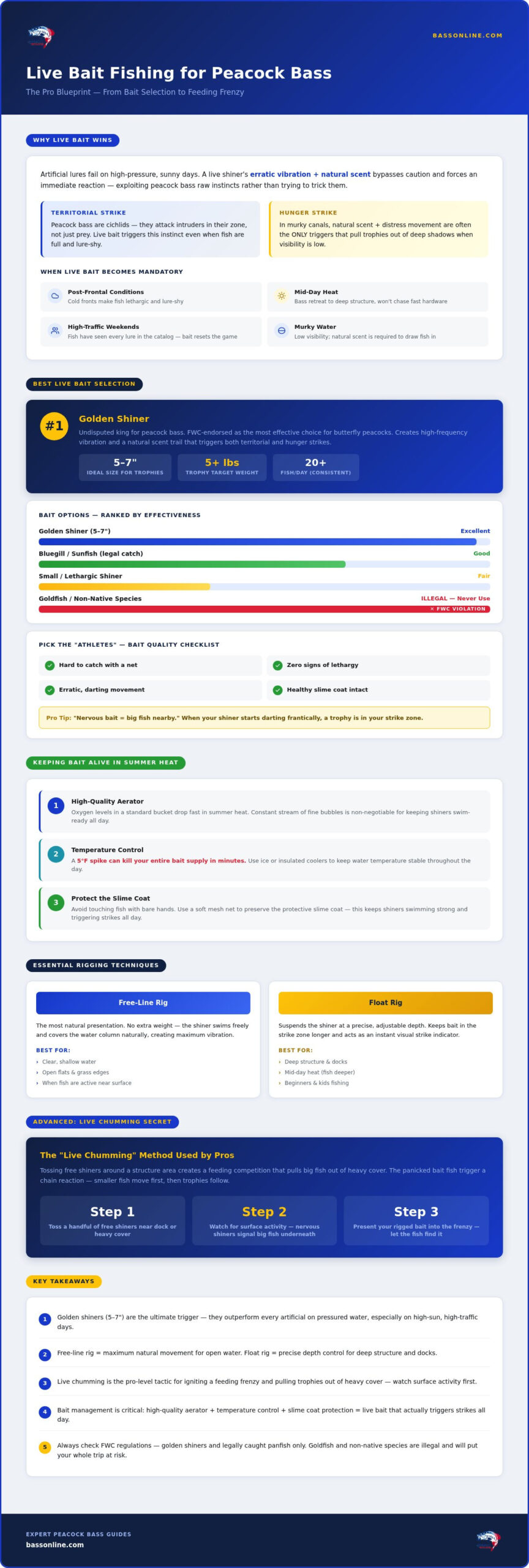
You can’t just grab any minnow and expect a peacock bass to go wild. While these fish are aggressive, they’re also highly selective about what they actually swallow. The undisputed king of live bait fishing for peacock bass is the golden shiner. According to the Florida Fish and Wildlife Conservation Commission, these native shiners are the most effective choice for enticing butterfly peacocks. When you’re hunting a lunker over five pounds, don’t settle for small bait. You want shiners in the five to seven inch range. Large baits create more vibration and offer a high-calorie reward that a trophy fish can’t pass up.
If shiners aren’t available, legally caught panfish like bluegill or sunfish can work in a pinch. Just remember that regulations are strict; never use goldfish or non-native species not approved by the FWC. When you’re picking your bait at the shop, look for the “athletes” of the tank. You want fish that are hard to catch with a net and show zero signs of lethargy. Nervous bait is simply a fish that senses a predator nearby and begins to dart frantically. That’s the exact energy you need to trigger a strike.
The Art of Keeping Bait Alive
Keeping your shiners healthy is the hardest part of the job. In the 2026 summer heat, oxygen levels in a standard bucket drop fast. You need a high-quality aerator that provides a constant stream of fine bubbles. Temperature control is equally vital. A five-degree spike in water temperature can shock and kill your entire bait supply in minutes. I always recommend adding a small amount of ice or using insulated coolers to keep the water stable. Avoid touching the fish with your bare hands whenever possible. Use a soft mesh net to preserve their protective slime coat, which keeps them swimming strong all day.
Sourcing Your Bait
While you can catch your own bait using bread balls or tiny hooks, it’s a massive time sink for anyone serious about live bait fishing for peacock bass. Most anglers buy their shiners from local shops to maximize their actual fishing time. However, the best way to ensure you have premium, lively bait is to book one of our guided fishing trips. Our pros handle the sourcing, transport, and aeration, so you only have to focus on the hookset. We know which shops have the “hot” shiners and how to keep them nervous until they hit the water.
Essential Rigging Techniques for Live Bait Success
The best shiner in the shop won’t do you any good if your presentation looks like a mess underwater. When you’re live bait fishing for peacock bass, your goal is to let the bait do the work. The most effective way to do this in shallow, clear water is the free-line rig. This setup is just a hook tied directly to your leader with no added weight. It allows the shiner to swim naturally and reach depths where big peacocks hide. If you’re working around heavy cover or need to keep your bait at a specific depth, a small slip float is your best friend. It helps you track exactly where your bait is and gives you a visual cue the second a lunker inhales it.
For your terminal tackle, circle hooks are non-negotiable. We prioritize the health of the peacock bass, and circle hooks almost always catch the fish in the corner of the mouth rather than the gut. A 1/0 or 2/0 size is perfect for most shiners. Pair this with a 20lb fluorocarbon leader. It’s virtually invisible in the water and provides the abrasion resistance you need when a five-pounder tries to wrap you around a dock piling or bridge support. This setup is the sweet spot for strength and stealth.
Hook Placement Strategies
Where you put the hook changes how that bait behaves. If you’re drifting or slowly trolling, nose-hooking is the way to go. It allows the fish to swim forward naturally without spinning. For stationary fishing near structure, dorsal-hooking (just behind the top fin) keeps the bait struggling near the surface, sending out massive distress vibrations. If you need the bait to swim away from the boat toward a specific lily pad or piling, try tail-hooking. It forces the shiner to swim against the tension of your line, right into the strike zone.
Weight and Terminal Tackle
While free-lining is great, sometimes the wind or current is too strong. Adding a small split shot about 12 inches above your hook can help you manage the presentation without killing the bait’s action. Always use a high-quality barrel swivel between your main line and leader to prevent the line twist that comes from a spinning shiner. For the best results, use a 7-foot medium-heavy spinning rod with a fast action. It gives you the backbone to pull fish out of cover while remaining sensitive enough to feel your bait get nervous before the strike. Our professional guides always have these rigs ready to go, ensuring you spend your time catching rather than rigging.
Advanced Strategies: Chumming and Strike Management
Live bait fishing for peacock bass reaches a whole new level when you start using live chumming. This isn’t just about catching one fish at a time; it’s about creating a competitive environment where every peacock in the area wants a piece of the action. When you find a likely looking dock or a deep canal ledge, don’t just cast. Throw a single “sacrificial” shiner toward the structure. Watch for the “flash” of gold or the sudden surface explosion. That blow-up is your green light to put your hooked bait right in the middle of the chaos.
Reading the water is a skill that separates the pros from the weekend warriors. You aren’t just looking for the bait; you’re looking for the reaction. If you see shiners jumping or “showering” on the surface, a predator is active. A peacock bass strike is often violent and fast. You’ll see a massive swirl or a “pop” as the fish inhales the bait. This is where your discipline is tested. If you react too fast, you’ll pull the bait right out of their mouth. If you wait too long, they might head for the nearest piling.
How to Live Chum Effectively
I prefer the “one at a time” method to keep the fish interested without overfeeding them. Position your boat upwind or up-current from the heavy structure. Toss a shiner so it drifts naturally into the shadows. If you don’t get a hit after three or four sacrificial baits, it’s time to move. However, if the water erupts, throw a handful of three or four baits to ignite a true feeding frenzy. This makes the fish lose their caution, allowing you to land multiple trophies from a single spot.
Mastering the Hookset and Fight
The “Count-to-Three” Rule is the gold standard for live bait. When your float disappears or your line starts peeling, count to three before you do anything. Because we use circle hooks, you should never “snap” the rod upward. Simply point the rod tip at the fish and reel until the line is tight. The hook will set itself perfectly in the corner of the mouth. Once the fish is on, prepare for the legendary first run. Peacock bass fight harder pound-for-pound than almost any other freshwater fish. Keep your drag firm but smooth; if it’s too tight, they’ll snap your 20lb leader in the vegetation.
When you finally bring that lunker to the boat, handle it with care. Keep your hands wet and avoid touching the gills. Remember that the daily bag limit is two fish, and only one can be over 17 inches. We always advocate for catch and release to keep these fisheries healthy for years to come. Ready to see these explosive strikes for yourself? Contact our team to schedule your professional trip.
Book Your Professional Peacock Bass Charter
Reading about the mechanics of a perfect free-line rig is a great start, but nothing replaces the hands-on experience of a day on the water with a seasoned professional. Live bait fishing for peacock bass involves a lot of moving parts. You have to source high-quality shiners, keep them alive in the heat, and navigate complex freshwater canal systems. When you book a Guided Bass Fishing Trip with Bass Online, we take all that stress off your shoulders. Our guides have been the market leaders since 1997, and we’ve spent decades perfecting the art of the live bait strike. We provide the premium shiners, the professional-grade tackle, and the local knowledge required to land a trophy.
The Advantage of Local Expertise
The biggest hurdle for most anglers is simply finding the fish. Peacock bass are notorious for moving based on water temperature and flow. Our fishing guides spend every day on these waters, tracking the exact structure where five-pounders are currently holding. You won’t just be fishing; you’ll be receiving a masterclass in on-the-water tactics. We’ll help you refine your casting accuracy and coach you through the discipline of the “count-to-three” hookset. This personalized instruction ensures you walk away with the skills to catch more fish for the rest of your life. Plus, you’ll be fishing from top-tier boats equipped with the best aeration systems to keep your bait in peak condition.
Planning Your Trip
Success starts with timing. While you can catch these aggressive fighters year-round, certain seasonal patterns offer higher catch rates. You can learn more about these patterns on our Bass Online Species Page. Generally, the warmer months of 2026 will see the most explosive topwater action, but our pros know how to trigger strikes even when the weather turns. To prepare for your day, just bring some sunscreen, a pair of polarized sunglasses, and your sense of adventure. We handle everything else, from the terminal tackle to the navigation. Whether you’re looking for a 20-fish day or that one career-defining trophy, we’re committed to making your expedition a success. Don’t leave your results to chance; join the best in the business for an insider journey you’ll never forget.
Dominate the Water and Land Your Trophy
Mastering the art of live bait fishing for peacock bass is about more than just a bucket of shiners. It’s about understanding the raw, territorial instincts of these fish and using the right rigging to trigger an explosive strike. By focusing on bait health, perfecting your “count-to-three” hookset, and using live chumming to ignite a feeding frenzy, you’ll see your catch rates soar in 2026. These tactics turn slow days into legendary ones, putting you in the driver’s seat for a 20-fish outing.
With over 25 years of professional guiding experience and top-rated fishing charter reviews, our team at Bass Online is ready to show you these secrets firsthand. Our expert local guides handle all the hard work, from sourcing the best bait to navigating the most productive freshwater systems. Whether you’re a beginner or a seasoned angler, we’ll ensure you’re in the best position to land a trophy over five pounds. Don’t leave your next expedition to chance; let’s get you on the water and into the action. Book Your Trophy Peacock Bass Charter with Bass Online Today! It’s time to experience the raw power of a peacock bass strike.
Frequently Asked Questions
What is the best live bait for peacock bass?
Golden shiners are the absolute best choice for live bait fishing for peacock bass. These fish are aggressive piscivores, meaning they hunt other fish almost exclusively. A five to seven inch shiner provides the perfect profile and vibration to trigger a trophy strike. While you can use small tilapia or bluegill where legal, shiners remain the gold standard for every professional guide in our network. They’re hardy, visible, and irresistible to these colorful fighters.
Do peacock bass eat live worms or crickets?
Unlike largemouth bass or panfish, peacock bass rarely show interest in worms or crickets. They are high-speed sight hunters that prefer the erratic movement of a struggling baitfish. If you drop a worm in front of them, they’ll likely ignore it or swim away. Stick to live shiners or fish-imitating lures if you want to see action. These fish evolved to chase down fast prey, so vibration and flash are the primary keys to success.
How do I keep my shiners alive in the summer heat?
High-quality aeration is the most critical factor for keeping bait alive in the 2026 summer heat. You should use an insulated bucket and a powerful battery-operated aerator to maintain oxygen levels. Avoid letting the water temperature spike; even a five-degree increase can be fatal. Adding a small amount of ice periodically or using a water conditioner helps. Remember to handle your bait as little as possible to preserve their protective slime coat and swimming energy.
What size hook should I use for live shiners?
A 1/0 or 2/0 circle hook is the ideal size for most shiners used during live bait fishing for peacock bass. Circle hooks are essential because they typically hook the fish in the corner of the mouth, which is much safer for catch and release. This size is large enough to handle a five-pound trophy but light enough to let the shiner swim naturally. Match the hook size to the bait’s mouth or dorsal area for the best presentation.
Is live bait better than lures for peacock bass?
Live bait is often the superior choice when fish are lethargic or pressured by other anglers. While lures are fun to throw, a live shiner creates a natural vibration and scent trail that no plastic can perfectly replicate. It’s especially effective during the mid-day heat when bass move to deeper structure. If you’re looking for consistent 20-fish days, starting with live bait is the fastest way to get the job done on any freshwater system.
Can you catch peacock bass at night with live bait?
You won’t have much luck at night because peacock bass are strictly daytime hunters. They rely heavily on their eyesight to track and strike fast-moving prey. Once the sun goes down, these fish become dormant and stop feeding entirely. They usually retreat to heavy cover or deep holes to rest until sunrise. Plan your trips for the brightest part of the day to take full advantage of their aggressive, sight-based hunting habits.
Do I need a special license for live bait fishing in freshwater?
You need a standard freshwater fishing license to target these fish. As of 2026, a resident annual freshwater license costs $17.00, while a non-resident annual license is $47.00. Short-term options are also available, such as a 3-day non-resident license for $17.00. If you book a trip with a professional guide, you should check if your license is covered under their commercial permit, as this is a common benefit on many charters.
How much live bait should I bring for a full day of fishing?
I recommend bringing at least four to six dozen shiners for a full day of serious fishing. This amount allows you to use some for live chumming to ignite a feeding frenzy while ensuring you have plenty of fresh bait for your hooks. If the bite is hot, you’ll go through bait faster than you think. It’s always better to have a few dozen left over than to run out just as the big ones start biting.

Article by
Mr Bass
Todd Kersey, widely known as Mr. Bass by Field & Stream, is a professional angler, accomplished author, and dedicated philanthropist with a lifelong passion for bass fishing. Armed with a degree in Outdoor Travel, Mr. Bass has expertly combined his knowledge with his practical fishing experience to become one of the most respected names in bass fishing.
His deep understanding of bass habitats and fish behavior has earned him numerous accolades as an asset to the sport. Serving 8 years as FWC Stakeholder Chairperson. Leading and passed cutting-edge legislation, such as the Black Bass Management Plan, and successfully built, passed, and helped finance the Trophy Catch program.
As CEO, he is committed to giving back to the community through his philanthropic efforts. He supports a variety of causes, especially those centered around physical disabilities. Through his advocacy, his mentorship programs inspire anglers to engage in fishing stewardship, helping to raise more than $18 million dollars in donations. Mr. Bass continues to inspire anglers and outdoor enthusiasts alike with his commitment to the sport, industry, and the world around him.