
Published: March 27, 2018 · Updated: September 9, 2026
Lake Okeechobee grass fishing is one of the most dependable ways to target largemouth bass on the Big O because vegetation gives bass shade, ambush cover, baitfish, and travel lanes. Around Clewiston, productive grass can change quickly with water level, wind, water clarity, and seasonal growth, so success often comes from reading the vegetation instead of simply fishing every patch that looks good.
How Lake Okeechobee Grass Fishing Works
Grass is not all equal. The most productive areas usually have something different from the surrounding cover: a clean outside edge, a point, an opening, a thicker clump beside sparse vegetation, a submerged hump, or a transition where two types of cover meet. Bass often use these changes as feeding lanes.
On a large, shallow lake such as Lake Okeechobee, wind and water color matter too. A vegetation line with cleaner water, active bait, and a little wind can be far more productive than a similar-looking stretch only a short distance away.
Grass Fishing from Clewiston and the East Wall
Clewiston gives anglers access to the southern and southwestern portions of Lake Okeechobee and a broad mix of grass, reeds, edges, cuts, and open-water transitions. The historic trip behind this article focused on the East Wall area, where scattered grass humps were holding fish.
The important lesson was not one exact waypoint. The anglers had to keep moving until they found the right combination of vegetation and active bass. Once they located productive grass, the action improved quickly.
Best Areas to Target in Lake Okeechobee Grass
Outside Grass Edges
Outside edges are efficient places to start because they create a natural boundary between thicker cover and open water. Bass can hold just inside the grass and move out to feed. Parallel casts help keep a lure in the productive zone longer.
Historic winter outside-edge example: On a January trip, Capt. Mark Rogers guided Norm and his son Pruitt along wind-blown outside grass edges with live shiners while waves of pre-spawn bass were moving shallow. They caught steady numbers, several bass in the 3- to 4-pound range, and a 6-pound best fish. The lesson is that an outside edge becomes more valuable when wind, bait, and seasonal fish movement line up.
Scattered Grass Humps and Clumps
Isolated grass can be especially important when most of the surrounding water looks the same. A small clump, hump, or thicker patch can concentrate fish. The East Wall field report is a good example: scattered grass humps became the key once the productive pattern was identified.
Openings, Points, and Transitions
Small holes in vegetation, points that extend into open water, and changes from sparse to thick cover all create ambush opportunities. These irregularities are usually more valuable than long stretches of uniform grass.
Artificial Lures for Lake Okeechobee Grass Fishing
Weedless soft plastics are natural choices around vegetation because they can move through cover without constantly hanging up. Texas-rigged worms, stick worms, flukes, and similar soft plastics can be worked along edges, through openings, and beside isolated clumps. When fish are active, moving baits can help cover water until a productive section of grass is found.
In thicker vegetation, accurate presentations become more important. Instead of making random casts, target visible holes, points, pockets, and changes in the grass. When the bite slows, reducing speed and keeping the bait near productive cover longer can help.
Live Shiners Around Lake Okeechobee Grass
Live shiners are also effective around grass edges, openings, and other places where largemouth bass are positioned to ambush prey. They can be especially useful for first-time visitors or anglers whose main goal is simply to experience the lake and catch quality bass. Artificial-lure anglers, however, can still have excellent days when they identify the right vegetation pattern.
Historic East Wall Grass-Fishing Field Proof
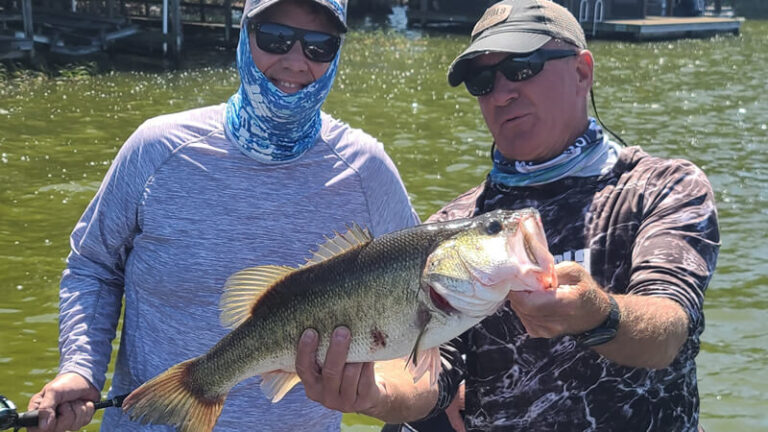
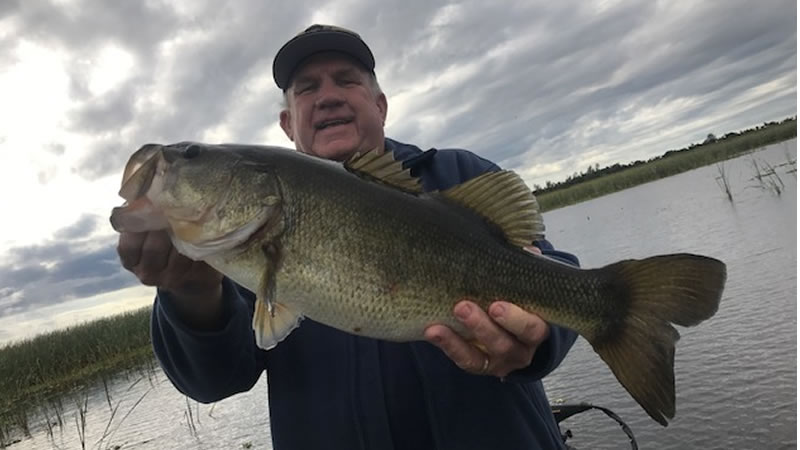
On the original trip, an angler visiting from Pennsylvania fished the East Wall out of Clewiston with Capt. Mark Rose. The main target was scattered grass humps. The boat moved until the productive vegetation was located, then the bite turned on.
The six-hour trip produced 28 largemouth bass. The biggest fish weighed approximately 6.5 pounds and measured about 22 inches. That day remains a useful example of why Lake Okeechobee grass fishing is more about identifying the right cover than fishing every patch of vegetation.
When Grass Fishing Changes
Lake Okeechobee is dynamic. Water levels, wind, seasonal vegetation changes, and water clarity can move fish or change which areas are practical to access. Before a trip, review the current Florida Fish and Wildlife Conservation Commission Lake Okeechobee forecast and the current Florida freshwater fishing regulations.
Anglers unfamiliar with the lake should also be cautious around shallow water, vegetation, and changing navigation conditions. A local guide can shorten the learning curve and help identify productive grass safely.
Lake Okeechobee Grass Fishing FAQ
What makes one grass patch better than another?
Look for differences: cleaner water, bait activity, an outside edge, a point, an opening, isolated clumps, or a transition in vegetation density.
Can I fish Lake Okeechobee grass with artificial lures?
Yes. Weedless soft plastics, flukes, stick worms, and other vegetation-friendly presentations can be very effective when matched to the thickness of the cover.
Are live shiners effective around grass?
Yes. Live shiners can be presented along grass edges and openings where largemouth bass are positioned to feed.
Is Clewiston a good starting point for grass fishing?
Yes. Clewiston provides access to productive southern Lake Okeechobee habitat, including grass, edges, cuts, and other vegetation-related structure.
Plan a Lake Okeechobee Grass Fishing Trip
The biggest takeaway is simple: do not fish vegetation blindly. Search for the grass that has life, clean water, bait, irregular edges, or another feature that separates it from everything around it. Once that pattern is found, Lake Okeechobee can produce both strong numbers and trophy-quality largemouth bass.