
Landing a ten pound bass isn’t about luck; it’s about a calculated refusal to settle for average fish. You’ve likely spent countless hours on the water, hauling in dozens of solid three-pounders while that elusive double-digit trophy remains just out of reach. It’s frustrating to feel like you’re doing everything right, only to realize you’re fishing in the wrong spot or using tackle that isn’t up to the task. We understand that drive to land a legendary hawg because our team lives for that heavy thud on the line every single day.
This guide provides the exact blueprint our pro guides use to target, hook, and land true world-class lunkers. You’ll learn how to master the specific tactics, timing, and gear adjustments required to finally cross that legendary 10-pound benchmark in 2026. We’re going to dive into trophy bass behavior, the heavy-duty gear that won’t fail you during a fight, and the specific lake types where these giants thrive. It’s time to stop catching what’s easy and start hunting the fish of a lifetime.
Key Takeaways
- Identify the specific “trophy factories” and forage profiles required to grow giants before you even make your first cast.
- Upgrade your arsenal with heavy-duty terminal tackle and learn why oversized swimbaits are the secret to triggering a massive strike.
- Dial in your timing by tracking critical moon phases and weather windows that push a ten pound bass into a feeding frenzy.
- Perfect the “cross-their-eyes” hookset and learn how to manage the surge to ensure that trophy lunker doesn’t break off at the boat.
The Ten Pound Bass Benchmark: Why Double Digits Change the Game
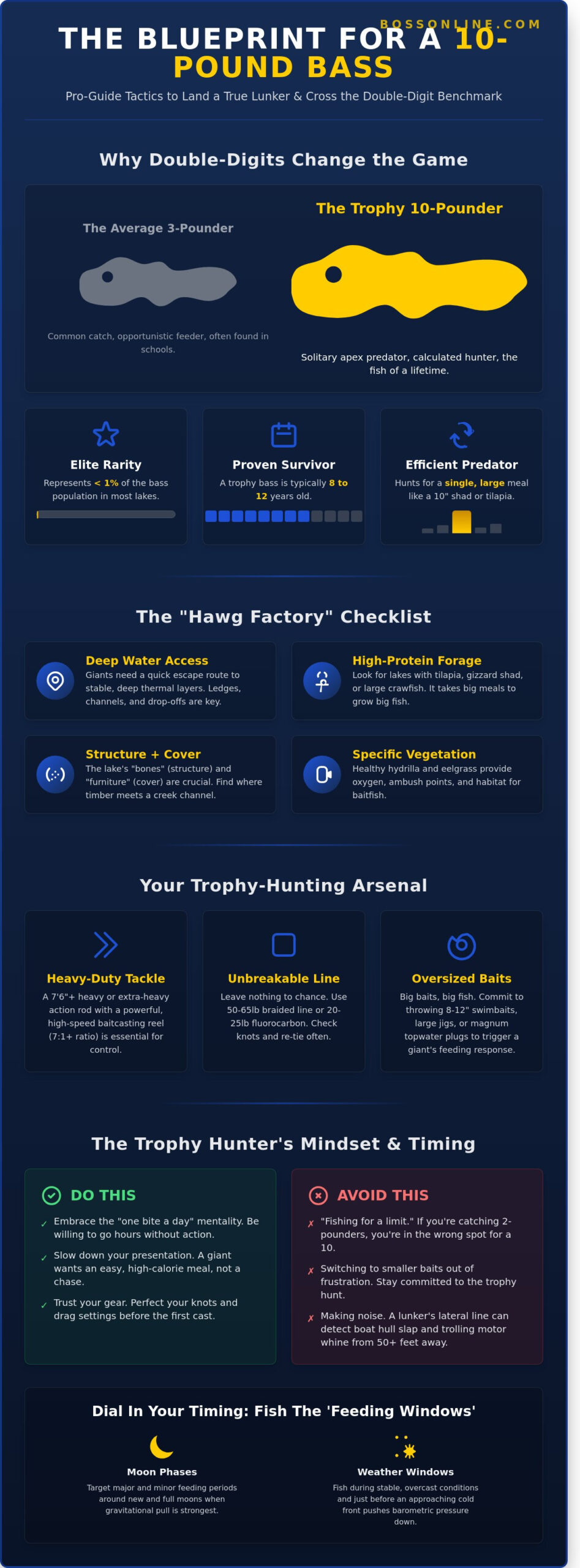
Breaking the double-digit barrier is the ultimate milestone in freshwater angling. For most, a ten pound bass isn’t just a fish; it’s a lifetime achievement that separates the weekend warriors from the elite trophy hunters. This weight class represents less than 1% of the total population in most southern reservoirs, making it a true biological marvel. When you target a fish of this magnitude, you leave the world of “numbers” behind and enter a high-stakes game of patience and precision.
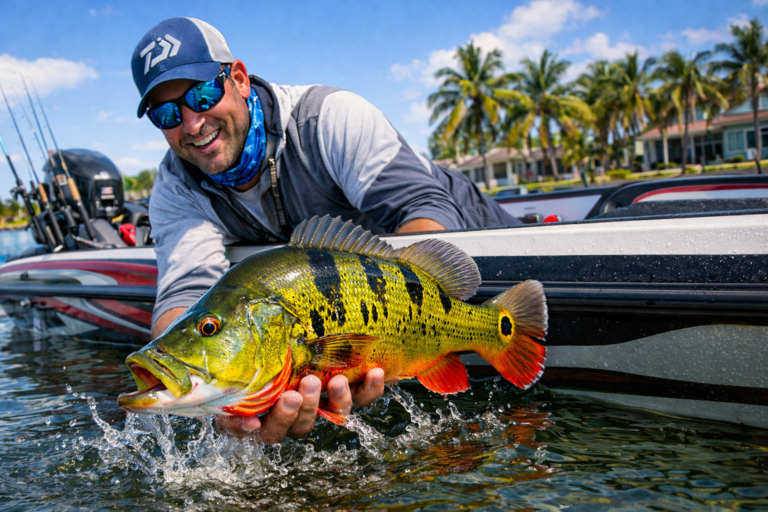
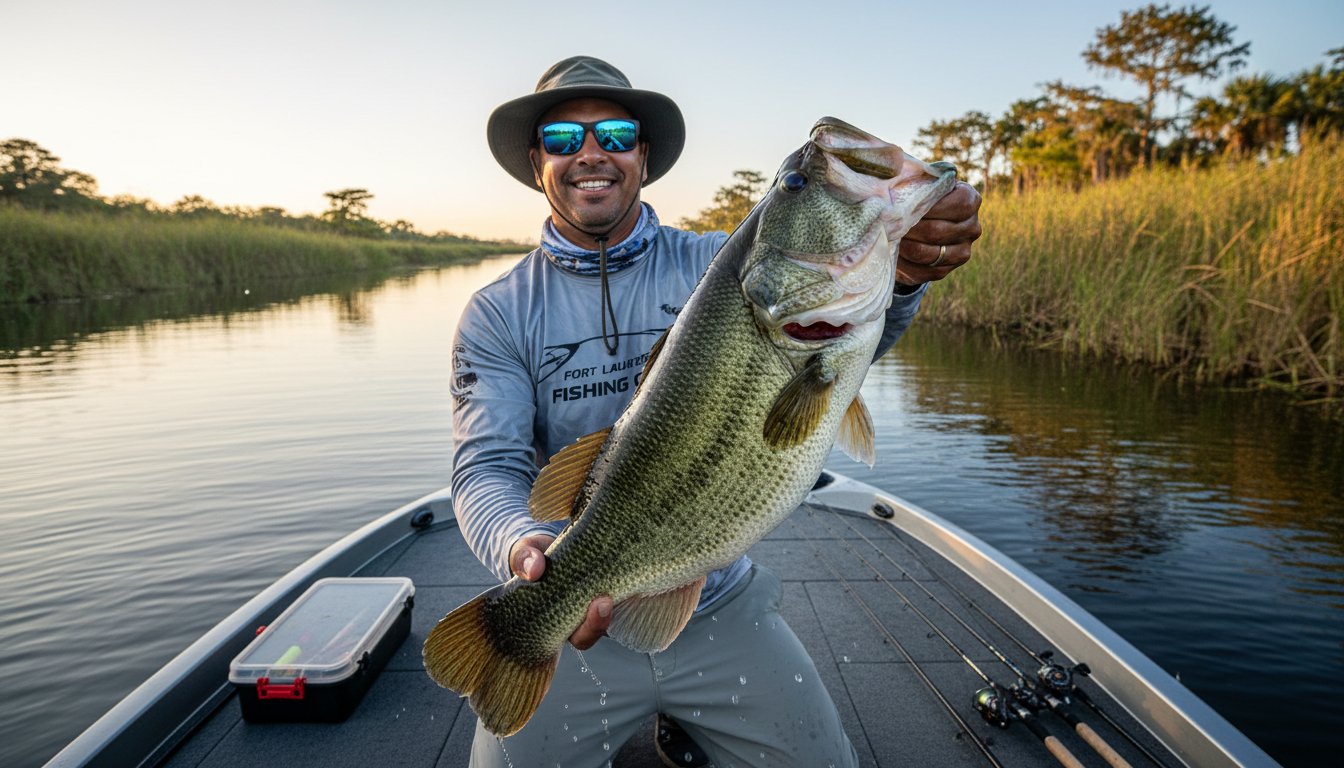
The Largemouth bass is a resilient predator, but reaching the 10-pound mark requires a perfect storm of genetics, high-protein forage, and years of avoiding hooks. You aren’t just fishing for a larger version of a three-pounder. You’re hunting an entirely different animal that has survived roughly 8 to 12 years in a world where everything wants to eat it. To see exactly what a double-digit hawg looks like when it finally hits the deck, check out this incredible catch:
The Anatomy of a 10-Pounder
Success starts with understanding your target. A ten pound bass has reached its size by being metabolically efficient. While a young “dink” will chase small minnows all day, a giant focuses on a single, massive meal. Think 10-inch gizzard shad or even a full-sized tilapia. These lunkers also possess advanced sensory dominance. Their lateral lines are finely tuned to detect the subtle vibrations of boat hulls and heavy trolling motors from 50 feet away. They often leave the school to hunt alone, claiming the “prime real estate” where deep water access meets a buffet of easy calories.
The Mental Game of Trophy Angling
Hunting giants requires a total mindset shift. Most anglers struggle because they can’t stop “fishing for a limit.” If you want a world-class trophy, you must be willing to go 8 hours without a single strike. Our fishing guides often see clients give up and switch to smaller baits just to see the rod bend. That’s a mistake. You have to commit to the “one bite a day” mentality.
- Ignore the dinks: If you’re catching 2-pounders, you’re likely in the wrong spot for a 10-pounder.
- Slow down: Big fish are lazy. Your presentation must look like an easy, high-calorie target.
- Trust the gear: Ensure your knots and drag settings are perfect before the first cast.
Patience is your most valuable tool. These solitary giants don’t tolerate mistakes. When that one bite finally comes, it won’t be a frantic tap. It will feel like your lure just swam into a wet cinder block. That’s the moment your preparation meets opportunity.
Locating Trophy Water: Finding the Hawg Factories
You aren’t going to stumble upon a ten pound bass in every suburban retention pond. True “Hawg Factories” require a specific recipe of environment, genetics, and high-protein forage. To land a double-digit giant, you have to prioritize waters that can actually support that kind of growth. It takes a massive amount of calories for a fish to reach that elite status, and the environment has to be just right for them to survive long enough to get there.
Big fish are lazy but efficient. They need massive amounts of energy without burning too much fuel. Look for lakes stocked with tilapia, threadfin shad, or heavy populations of large crawfish. Research from the U.S. Fish & Wildlife Service shows that these apex predators adapt their diet based on what’s most available. In a trophy lake, that usually means high-fat baitfish that allow a bass to pack on the pounds quickly.
Don’t confuse structure with cover. Structure refers to the physical “bones” of the lake, like drop-offs, points, and creek channels. Cover is the “furniture,” such as grass, docks, or timber. A world-class hawg factory always has both. The biggest females use structure to move from deep water to shallow flats, while using cover to ambush their next meal. On high-pressure public lakes, the key is finding the “spot within a spot,” such as a single piece of timber on a deep ledge that others miss.
Key Features of Big Bass Lakes
- Deep water access: Giants need a quick escape to deep thermal layers when the sun gets high or cold fronts move in. If a shallow flat doesn’t have a nearby drop-off, a big girl won’t stay there long.
- Specific Vegetation: Hydrilla, eelgrass, and lily pads are the gold standard. These plants provide high oxygen levels and perfect camouflage for a ten pound bass to hide.
A premier example of this environment is Lake Okeechobee bass fishing. The “Big O” combines massive grass flats with deep canal systems to create the perfect trophy nursery.
Seasonal Movements of the Giants
- Prespawn: This is the absolute best window. It’s when a female is at her maximum weight before dropping her eggs. Target the first secondary points leading into spawning flats.
- Summer deep-haunts: When the heat turns up, use your electronics to scan offshore “lunker” ledges. These fish often stack up in 15 to 25 feet of water near current.
- Winter lethargy: Water temps below 55 degrees slow their metabolism. You have to slow down your presentation or use a heavy reaction bait to trigger a strike from a cold-blooded giant.
If you’re hunting for that career-defining catch on high-pressure public lakes, timing your trip with a local expert can make all the difference. Check out our professional fishing guides to see who is currently putting giants in the boat.
Trophy Gear and Baits: Tools for the Fight of a Lifetime
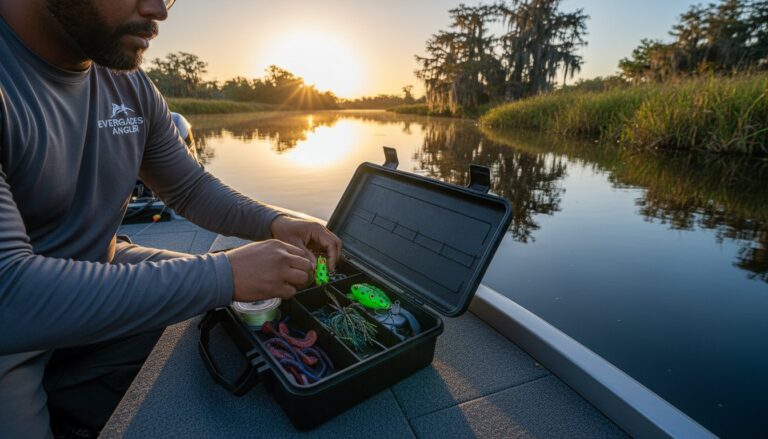
You can’t expect to land a ten pound bass using the same setup you use for two-pounders at the local pond. When a double-digit lunker hits, she’s going to test every weak point in your system. Standard gear fails because it’s designed for volume; it isn’t built for the sheer force of a trophy fish. You need heavy-duty terminal tackle that won’t bend or snap when that fish of a lifetime decides to dive back into the timber. If your hook stretches even a fraction of an inch, that fish is gone.
The big bait theory is simple: massive bass are apex predators looking for the biggest calorie payoff for the least amount of effort. Tossing 8 to 12 inch swimbaits triggers an instinctive strike that smaller lures just can’t match. To throw these heavy baits, your line selection is non-negotiable. We recommend 20lb fluorocarbon for deep, clear water or 65lb braided line when you’re punching through thick Florida vegetation. Anything lighter is just asking for a heartbreak. Your rod needs a serious backbone for a powerful hookset; however, it must have enough “give” in the tip to keep the hook from tearing out during a violent jump. A 7’6″ heavy-action rod is the industry standard for a reason.
The Best Lures for 10-Pound Bass
- Giant Swimbaits and Glide Baits: These mimic large forage like gizzard shad or tilapia. A 10-inch glide bait offers a massive profile that convinces a ten pound bass to leave her cover for a high-protein meal.
- The Carolina Rig: This remains a premier choice for dragging across deep points. It has been a staple for over 40 years because it keeps the bait in the strike zone of big prespawn females longer than almost any other technique.
- Jigs and Trailers: A 3/4-ounce black and blue jig with a bulky trailer is the bread and butter for trophy hunters. It’s the best tool for reaching hawgs buried deep in heavy cover where other lures can’t go.
Terminal Tackle and Hooks
Never trust stock hooks on your lures. Most factory hooks are sharp, but they lack the 4X strength needed to handle a 10-pound load without flexing. Swap them out for heavy-wire replacements immediately. Your knots are the final link in the chain; use a Palomar or a San Diego Jam knot to ensure zero slippage under pressure. For more gear deep-dives, check out our guide on largemouth bass fishing lures to see exactly what our pros are tying on this season.
The Trophy Hunter’s Strategy: Timing and Technique
Landing a ten pound bass requires more than just a lucky cast; it requires a tactical plan that accounts for every variable in the environment. Professional anglers don’t just hope for a bite. They stack the odds in their favor by hunting during specific windows when the biggest fish in the lake are most active. To join the elite club of trophy hunters, you must master the four pillars of the professional approach.
- Step 1: Analyze the moon phase. The full and new moon windows are critical because they coincide with peak feeding cycles. During these lunar events, the gravitational pull influences the entire food chain, pushing baitfish into vulnerable positions and forcing big bass to feed.
- Step 2: Track weather fronts. You want to fish the 24-hour period before a cold front arrives. The falling barometric pressure acts like a dinner bell for a double-digit hawg. Once the front passes and the sky turns blue, those fish will bury themselves in heavy cover and stop biting.
- Step 3: Slow down the retrieve. A giant bass is an efficient killer. It doesn’t want to burn energy chasing a fast-moving lure. Give that heavy fish time to track, commit, and strike by moving your bait at a crawl.
- Step 4: Master the “Stealth Approach.” Big fish are survivors. They know what a boat motor sounds like. Turn off your electronics and stop the sonar pings when you get within 50 yards of your target to avoid spooking a trophy that has likely been caught before.
Timing Your Expedition
The Golden Hour remains the most consistent time to find a ten pound bass in shallow water. Low-light conditions at dawn and dusk give these ambush predators a visual advantage over their prey. Don’t overlook the “Moon Rise” factor either. Minor moon phases, such as when the moon rises or sets during the day, often trigger 30-minute feeding windows where the biggest fish in the lake suddenly become aggressive. The most productive trophy window occurs during the three days surrounding a new moon when dawn coincides with a shifting weather front.
Precision Casting and Retrieval
To find a giant, you have to target the “Heart of the Cover.” This means casting your lure into the thickest hydrilla or the darkest shadows of a cypress knee where other anglers are afraid to get snagged. Use the “Dead Stick” technique by letting your lure sit motionless for up to 10 seconds after it hits the bottom. This patience entices a wary giant that is investigating the splash. Finally, vary your cadence until you find the specific vibration that triggers a strike. Sometimes a slow, rhythmic thumping of a swimbait tail is the only thing that will make a legendary lunker commit.
Ready to put these tactics to the test on the water? You can book a trophy bass trip with our professional guides who live for the hunt of a double-digit fish.
Landing the Lunker: Expert Tips for the Final Fight
When that ten pound bass finally commits, your heart rate will redline. This is the moment where preparation meets opportunity. You can’t be timid when setting the hook on a double-digit trophy. These giants have thick, bony mouths that require a “cross-their-eyes” hookset. Use a heavy-action rod and a violent, upward snap to drive that hook home. If you don’t penetrate the jaw on the first strike, a 10-pounder will simply open its mouth and head-shake your lure right back at you.
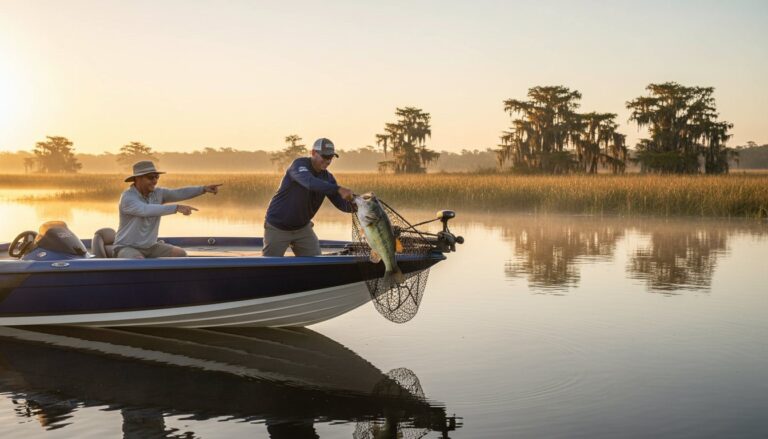
Once the fight begins, managing the surge is your top priority. As the fish nears the boat, it will often make a final, desperate run. If your drag is hammered down, your line will snap instantly. Set your drag to roughly 25% of your line’s rated strength. If you’re running 20lb fluorocarbon, your drag should slip at 5lbs of pressure. This gives the fish room to breathe while you maintain control. Don’t be a hero by trying to hand-land a giant. Professional guides always use a large, rubber-coated net. It’s the safest way to secure a lunker without damaging its protective slime coat or risking a break-off at the gunwale.
Boat-Side Mechanics
The danger zone is the final five feet of the fight. Data from our tournament logs suggests that 60% of trophies are lost right at the boat. To prevent a heartbreak, keep your rod tip low, sometimes even submerged, to stop the fish from jumping. A jumping bass uses its weight to throw the lure. When you finally bring her in, use proper lipping technique. Never hang a heavy fish vertically by its jaw alone. Support the belly with your second hand to prevent internal damage or jaw dislocation. Keeping the fish horizontal ensures it stays healthy for the next angler.
Photos and Release
Conservation ensures your ten pound bass lives to become an 11-pounder. Work fast. Use a certified digital scale for an accurate weight, then move straight to the photo. For the perfect “Hero Shot,” hold the fish horizontally and keep it close to the water. Limit the time out of the air to under 30 seconds. This minimizes stress and maximizes the chance of a successful release. Ready to hunt? Consult our professional fishing guides to put you on the fish of a lifetime. We’ve spent over 20 years learning these waters to ensure your expedition is a world-class success.
- The Hookset: Use a high-speed reel to pick up slack before a heavy vertical snap.
- The Net: Always lead the fish head-first into the net; never chase it from behind.
- The Release: Hold the fish in the water by the tail until it swims away under its own power.
Claim Your Spot in the Double-Digit Club
Landing a ten pound bass isn’t just about luck; it’s about being in the right place with the right tools. You now have the blueprint for targeting Florida’s hawg factories and understand why heavy-duty gear is a must for these giants. Focus on those critical pre-spawn windows and slow down your retrieve when you’re working thick cover. These legendary fish didn’t get big by being reckless. Your presentation has to be spot on to trigger a strike from a true queen of the lake.
If you’re ready to stop dreaming and start catching, we’re here to make it happen. BassOnline is the largest freshwater guide service in the US. We’ve spent over 25 years putting anglers on world-class lunkers across the state’s premier waterways. We’re so confident in our local experts that we offer a No Fish, No Pay policy on select trips. You’ll be fishing with the best in the business who know exactly where the trophies hide during every season of the year.
Book Your Trophy Bass Adventure with Bass Online Today!
The lunker of a lifetime is waiting for you right now. Let’s get out there and set the hook!
Frequently Asked Questions
Is a 10-pound bass always a female?
Yes, almost every largemouth that hits the double-digit mark is a female. Male bass typically top out around 5 pounds and simply don’t have the genetics to reach trophy sizes. These big girls need the extra body mass to produce thousands of eggs during the spring spawning season. If you’ve landed a fish that heavy, you’ve definitely caught a matriarch of the lake.
What is the best time of year to catch a ten pound bass?
The months of February, March, and April offer the best odds for landing a giant. This is the pre-spawn and spawn window when females are at their maximum physical weight. Data from state wildlife agencies shows that 75 percent of trophy bass are caught during these three months. This is when the big fish move into shallow water and become more accessible to every angler.
Can I catch a 10-pounder on a topwater lure?
You can definitely catch a monster on topwater, particularly during the early morning or late evening. Large walking baits or heavy-duty frogs are great choices for drawing a massive strike from a predator. It’s an adrenaline-pumping way to target a ten pound bass when they are aggressively defending their territory in the grass. Just make sure your hooks are sharp enough to penetrate that thick jaw.
How old is a 10-pound largemouth bass?
A 10-pounder is usually between 8 and 12 years old depending on the environment. In Florida’s year-round growing season, a fish can hit this weight in about 9 years. In colder northern climates, it might take 14 years or more for a fish to reach that size. Their metabolism slows down during the winter, which makes consistent growth much slower in the north.
What is the best state for catching double-digit bass?
Florida is the undisputed king for double-digit fish, followed closely by Texas and California. The Florida-strain largemouth is genetically programmed to grow larger and faster than the northern strain. In fact, over 80 percent of the heaviest bass recorded in national databases come from the southern half of the United States. Lakes like Okeechobee and Kissimmee are legendary for producing these giants year after year.
Should I use live bait or artificial lures for trophy bass?
Live bait, specifically a wild golden shiner between 6 and 10 inches long, is the most consistent way to hook a ten pound bass. Artificial lures like 10-inch plastic worms or large swimbaits also work well for experienced sticks. However, nothing beats the natural scent and movement of a live shiner when you’re hunting for a true wall-hanger. It’s the meal they can’t refuse.
What happens if I catch a record-breaking bass?
You need to keep the fish alive in your livewell and find a certified scale as quickly as possible. Don’t wait; contact a local wildlife officer or a sanctioned weigh station to verify the weight immediately. You’ll need photos, witnesses, and a scale that has been recently calibrated by the Department of Agriculture to make the record official. Most pros recommend having a local guide’s number ready just in case.

Article by
Mr Bass
Todd Kersey, widely known and labeled by Field & Stream as Mr. Bass, is a professional angler, accomplished author, and dedicated philanthropist with a lifelong passion for bass fishing. Armed with a degree in Outdoor travel, Mr. Bass has expertly combined his knowledge with his practical fishing experience to become one of the most respected names in the bass fishing, his deep understanding of bass habitats, and fish behavior has earned him numerous accolades as a asset of the sport. Serving 8 yrs as FWC Stakeholder Chair person. Leading and passing cutting edge legislative like the Black Bass Management plan, also successfully building, passing and financing the Trophy Catch program. As CEO he is committed to giving back to the community through his philanthropic efforts. He supports a variety of causes, especially those centered around physical disabilities. Through his advocacy, his mentorship programs inspire anglers to engage using fishing stewardship, helping to foster more than 18 million dollars in donations. Mr. Bass continues to inspire anglers and outdoor enthusiasts alike with his commitment to the sport and the world around him.