
Published: March 29, 2018 · Updated: September 9, 2026
An archived trip with an FLW Tour fishing partner shows how tournament experience can translate into practical decisions on Lake Okeechobee. The day was more than a reunion between longtime fishing friends: it preserved a useful lesson about targeting largemouth bass with artificial lures by flipping matted vegetation.
This page documents that historical outing and the techniques behind it. Anglers looking for current availability, assigned captains, and booking information should visit our Lake Okeechobee fishing charters page.
From FLW Tour Partners to Lake Okeechobee
Captain Mark Shepard and his longtime friend Kurt originally met while fishing the FLW Tour. After years of tournament travel and shared time on the water, Kurt continued returning to Lake Okeechobee for annual fishing trips.
Their history mattered because they already understood each other’s fishing style. Kurt wanted to use artificial baits rather than live bait, and the trip was planned around that goal. Instead of treating the day as a numbers-only outing, they concentrated on the type of heavy cover that can hold a larger bite.
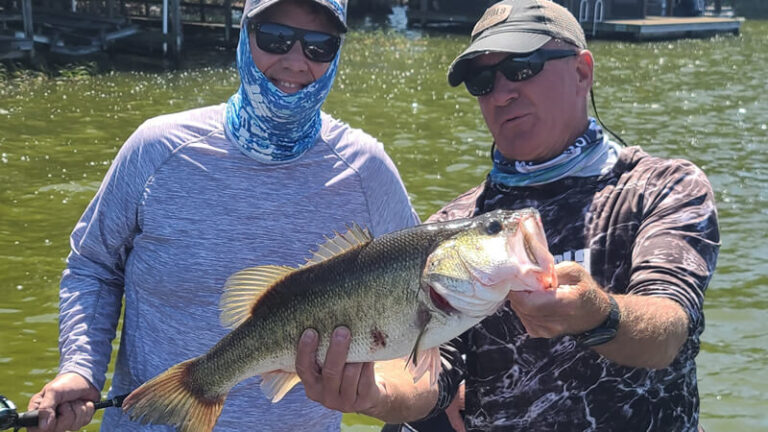
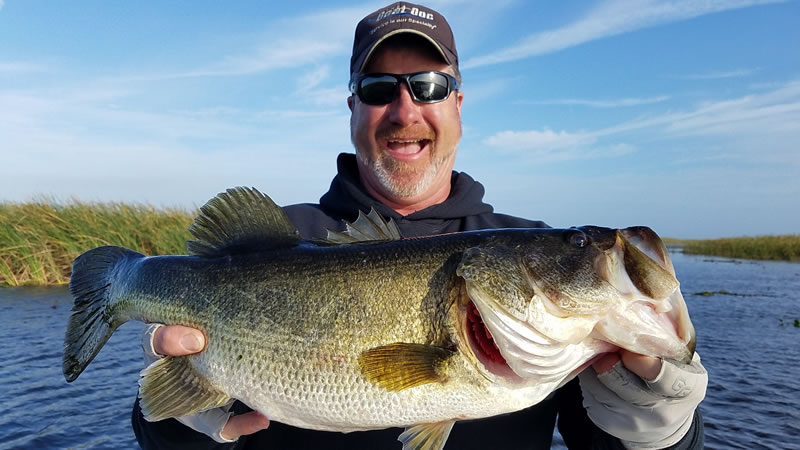
The result was a productive reunion, a quality largemouth in the five-to-six-pound range, and another chapter in a friendship built through competitive fishing.
Why Flipping Mats Was the Preferred Method
Matted vegetation creates shade, overhead cover, and ambush opportunities for bass. It can also make lure placement and fish extraction more demanding. On this historical trip, flipping mats was the preferred method because Kurt wanted to fish artificial baits and target quality largemouth around dense cover.
The approach required deliberate presentations rather than simply casting across open water. The lure needed to enter small openings or penetrate the mat, remain in the strike zone, and come back through vegetation that could make landing a fish difficult.
That style of fishing rewards accuracy and confidence. It also requires strong attention to each presentation because a bite beneath heavy cover may feel different from a strike in open water.
Lake Okeechobee Mat-Flipping Lessons
The archived trip provides several useful lessons for anglers interested in fishing artificial lures around vegetation:
- Fish the available cover. Productive vegetation changes with water level, wind, season, and local lake conditions.
- Make controlled presentations. Accuracy helps place the bait into openings and edges where bass can use the mat as cover.
- Expect demanding hooksets and landings. Once a fish bites, the angler must manage both the bass and the surrounding vegetation.
- Stay ready for one quality opportunity. Mat flipping may involve repeated presentations before the better bite arrives.
- Let the day’s conditions guide the location. A historically productive area is evidence of a pattern, not a permanent waypoint.
For broader information about the fishery, visit the canonical Lake Okeechobee fishing guide. Anglers can also learn more about the target species through our largemouth bass guide. For current fishery, vegetation, and water-level information, consult the FWC Lake Okeechobee forecast.
A Quality Bass on Artificial Tackle
Kurt put multiple fish in the boat before connecting with the better bite they were seeking. The best largemouth weighed in the five-to-six-pound range and came from the type of cover they had intentionally chosen to fish.
The catch is useful historical proof because it connects the result to a clear method: artificial tackle, matted vegetation, repeated accurate presentations, and an angler comfortable fishing heavy cover. It does not promise the same result on a future date. Instead, it illustrates how a defined technique can help an experienced angler pursue a specific goal.
What Tournament Experience Adds to a Fishing Trip
Tournament experience can sharpen several skills that also matter during a guided day: reading changing conditions, making efficient lure changes, recognizing productive cover, and staying focused when the best bite does not arrive immediately.
A guide still has to adapt those skills to the guest. Some anglers want to learn an advanced artificial-lure technique; others want a simpler presentation, more action, or a relaxed family outing. The best plan begins with a clear conversation about experience level and expectations.
Captain Mark Shepard’s current guide profile is available at Captain Mark Shepard. His tournament background is part of the historical context behind this trip, while current scheduling and trip details should always be confirmed through the booking team.
Planning an Artificial-Lure Trip from Clewiston
The original outing centered on the Clewiston side of Lake Okeechobee. Today, the canonical Clewiston fishing page should be used for local-market information, nearby guides, and related Lake Okeechobee resources.
Before a trip, tell the booking team whether artificial-lure fishing is a priority. Also discuss comfort level with heavy-cover techniques, preferred trip length, and whether the main goal is learning, numbers, or pursuing a larger bass. That preparation helps match the outing to the angler instead of forcing every guest into the same plan.
The Lasting Value of the FLW Tour Fishing Partner Story
This was ultimately a trip between longtime friends who first connected through tournament fishing. They caught bass, landed a quality fish, shared memories, and continued a relationship built on time outdoors.
The catch made the report exciting, but the enduring value is the combination of friendship and technique. Lake Okeechobee gave two former tour partners another opportunity to fish together—and left behind a practical example of how patient mat flipping with artificial tackle can produce a memorable largemouth.