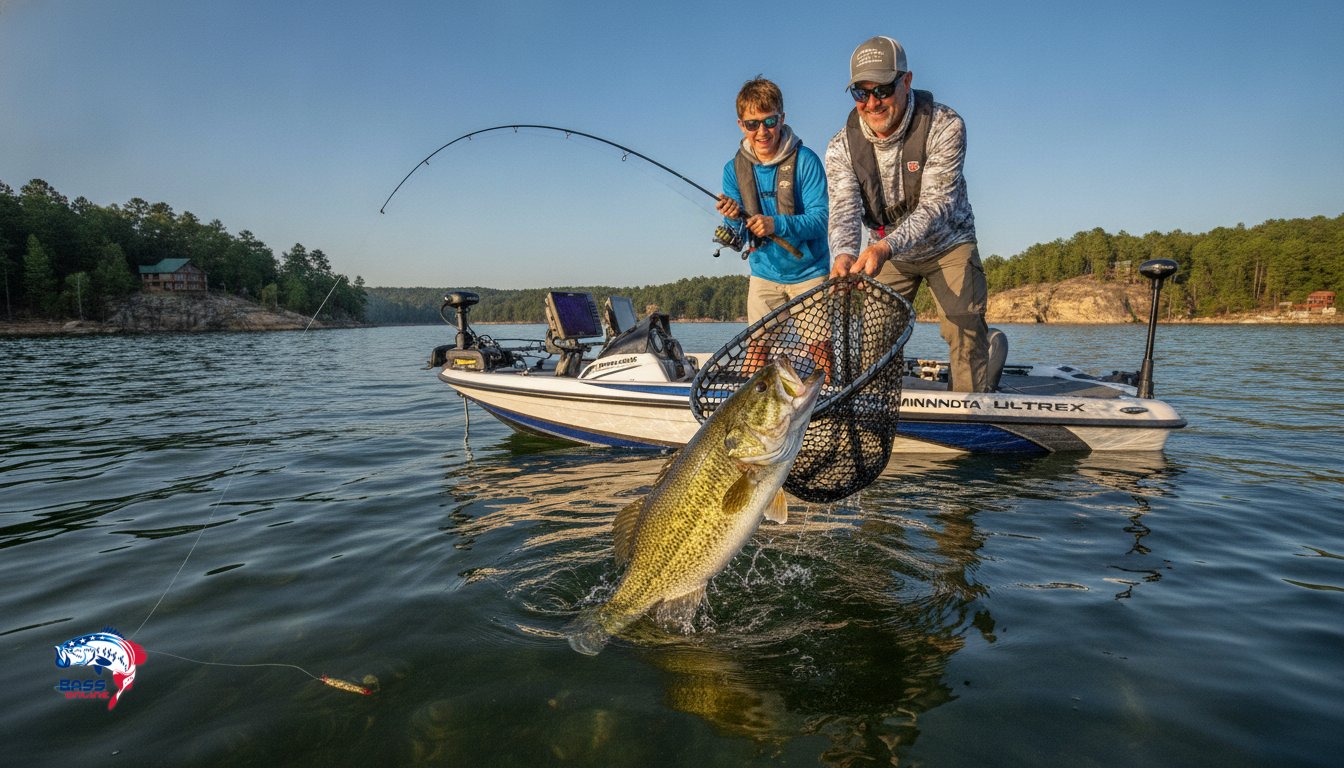

Did you know that while spotted bass make up nearly 90 percent of the population in lake allatoona, the Florida-strain largemouth still claim “big fish” honors in 75 percent of local tournaments? This 11,860 acre reservoir is a legendary highland fishery, but it’s also a high pressure environment where heavy boat traffic and gin-clear water can humble even the most experienced sticks. Many anglers struggle to translate what they see on their electronics into actual fish in the livewell, especially when those schoolers are suspended over deep timber or rocky points.
I know how tough it feels when the fish seem locked in a deep water funk or the lake feels more like a jet ski park than a fishing hole. That’s why I’ve put together this breakdown to help you master the deep water tactics and seasonal patterns needed to land trophy bass on one of Georgia’s most iconic reservoirs. You’re going to learn the nuance between spotted and largemouth behaviors, the best lures for clear water finesse, and how to navigate 270 miles of shoreline to find the most productive structure in any season.
Key Takeaways
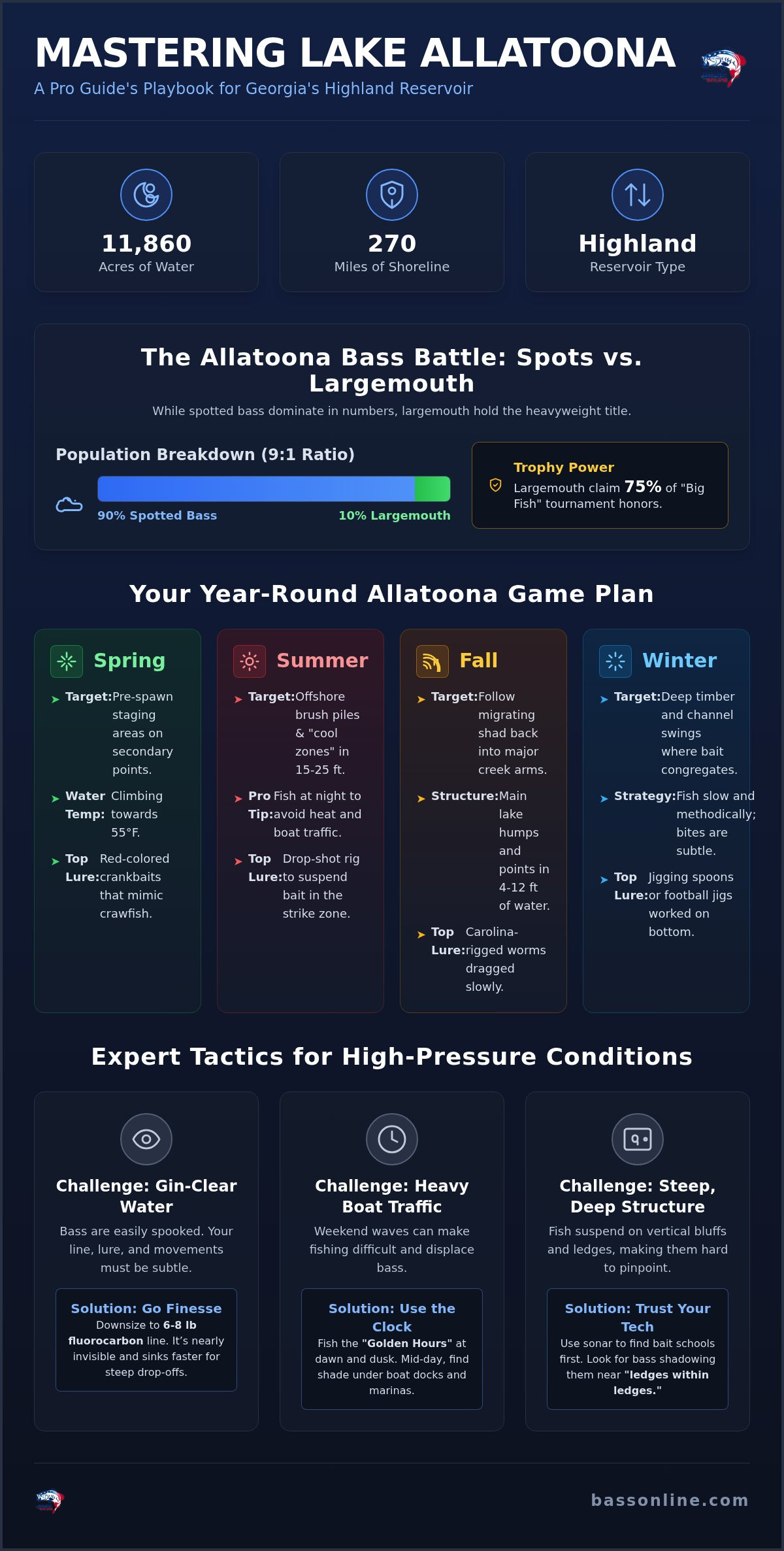
- Understand the 9:1 ratio of Spotted Bass to Largemouth and how to target the hard-fighting “spots” that dominate the population.
- Master the “Marina Pattern” and vertical bluff walls to find consistent bites even during periods of heavy recreational boat traffic.
- Learn to track seasonal transitions on lake allatoona, moving from shallow spring spawning flats to deep summer “cool zones” and brush piles.
- Identify the specific finesse lures and clear-water retrieves that trigger strikes from pressured trophy bass in a highland reservoir environment.
- Discover how a professional guided bass fishing trip can cut through the lake’s complexity, teaching you years of local knowledge in a single outing.
Understanding Lake Allatoona: A Highland Reservoir Overview
Lake Allatoona isn’t your average shallow fishery. It’s a rugged, deep-water highland reservoir that demands a specific mindset from any angler who wants to be successful. If you’re used to flipping lily pads in three feet of water, prepare for a major shift in strategy. This lake is defined by its steep, rocky banks and clear water, which are a direct result of the Etowah River being harnessed by the Allatoona Dam. Managed by the U.S. Army Corps of Engineers, lake allatoona is a dynamic environment where water levels and current flow dictate exactly where the fish will be. When the dam starts pulling water, it creates a dinner bell effect for predators. The current positions baitfish on the upstream side of points, and the bass set up in the eddies to ambush them. With 270 miles of shoreline, you’ve got access to endless micro-habitats, from red clay flats in the north to vertical rock bluffs near the dam.
Water Clarity and Depth Dynamics
The clarity here is a double-edged sword. It’s beautiful to look at, but it makes the bass extremely wary and prone to “spooking” easily. You can’t get away with heavy 20-pound monofilament in 15 feet of visibility. I always recommend dropping down to 6 or 8-pound fluorocarbon for your finesse rigs. It’s nearly invisible underwater and sinks faster, which is crucial when you’re targeting fish on those steep drop-offs. Because the bottom drops away so quickly, your electronics are your most valuable tool. You aren’t just looking for fish; you’re looking for “the ledge within the ledge.” Even on a sheer bluff wall, a small rock outcrop or a single submerged stump can hold a limit of spots. Use your sonar to find the bait schools first, then look for the predators shadowing them on your screen.
The Impact of Recreational Traffic
Let’s be real: Lake Allatoona gets crowded. With 12,000 acres of water sitting so close to a major metropolitan hub, the weekend wake can feel like a washing machine. The secret is using that traffic to your advantage. Heavy waves often stir up the shoreline, disorienting baitfish and triggering a bite for aggressive spotted bass. However, for the best results, I always push my clients to target the “golden hours.” The first two hours of daylight and the final hour before sunset offer calm water and active, feeding fish. If you must fish during the heat of the day, look for deep brush piles or the “Marina Pattern” where boat docks provide a permanent ceiling of shade and cooler water. Navigating safely is key, so keep your eyes peeled and your life jacket on while you hunt for that trophy bite.
Seasonal Bass Patterns: Tracking the Allatoona Bite
Success on lake allatoona isn’t about luck; it’s about staying one step ahead of the migration. Bass are creatures of habit. Their movements are dictated by water temperature and the forage they chase. If you want to keep your rod bent all year, you have to understand the “why” behind their movement. This isn’t a static fishery where the fish stay in one place for twelve months.
Spring Spawn and Pre-Spawn Tactics
When the water temperature climbs toward 55 degrees, the pre-spawn migration kicks into high gear. Bass move from their deep winter haunts to secondary points inside the major creek arms. These points act as staging areas. I’ve found that red-colored crankbaits are absolute killers during this window. They mimic the crawfish that bass gorge on before the spawn. Focus your casts on shallow wood and rocky shorelines where the sun warms the water faster. For those bank fishing or looking for accessible spawning flats, Red Top Mountain State Park fishing spots offer some of the most productive terrain on the lake.
Summer Offshore Strategy
As summer heat settles in, the fish seek out “cool zones” and offshore structure. This is when you need to hunt for man-made brush piles in 15 to 25 feet of water. Spotted bass love to suspend over this cover. A drop-shot rig is my go-to choice here because it keeps the bait hovering right in their strike zone. If the recreational boat traffic gets too heavy during the day, don’t overlook the night bite. The water cools down, the crowds disappear, and the biggest fish in the lake move shallow to feed under the cover of darkness. You’ll find they are much less wary without the constant hum of jet skis overhead.
When the leaves start to turn, follow the shad. Bass move back into the creek arms, shadowing the baitfish. Recent field reports from August 2026 show success using Carolina-rigged worms on main lake humps and points in 4 to 12 feet of water. Once winter arrives, everything slows down. You’ll find fish in deep timber near the main channel. This is the time for “dead-sticking” a soft plastic or slow-rolling a heavy jig. It takes patience, but the results are worth it. If you’re ready to see these patterns in action, reach out to a local pro to get on the water today.
Targeted Species: Spotted Bass vs. Largemouth Bass
When you’re out on lake allatoona, you’re fishing in a world dominated by the Spotted Bass, specifically the Alabama Bass subspecies. According to Georgia DNR data, these aggressive predators make up 80 to 90 percent of the total bass population. They’re nomadic, school heavily, and love the clear, deep water of the main lake. However, if you’re hunting for a kicker fish to win a tournament, you’re likely looking for a Largemouth. While they only represent about 11 percent of the bass weighed in during competitions, they take home “big fish” honors roughly 75 percent of the time. Understanding the personality of each bass species is the first step to a heavy livewell.
Tactics for Aggressive Spotted Bass
Spotted bass are the “bullies” of the reservoir. They’re highly competitive and often school up to chase herring and shad. Because the water is so clear, finesse is your best friend. A shaky head rig, which is a round-head jig with a straight-tail worm, is a staple on this lake. Cast it onto rocky points or secondary ledges and work it slowly. On calm mornings, the topwater action is electric. I recommend walking baits with a “walk the dog” retrieve. The side-to-side action mimics a wounded baitfish and can pull spots up from 20 feet of water to explode on the surface. If you see “clouds” of bait on your sonar with vertical streaks beneath them, you’ve found a hungry school of spots.
Hunting the Elusive Allatoona Largemouth
Finding the “green fish” requires a different mindset. Largemouth on lake allatoona prefer more “colored” or stained water and heavy cover. You’ll find them lurking in the backs of creek arms or up the Etowah River and Little River arms where the current brings in nutrients and silt. The DNR actively stocks Florida-strain largemouth here to boost the size quality, so the potential for a trophy is real. Focus your efforts on flipping and pitching a jig or a Texas-rigged creature bait into submerged wood, laydowns, or beneath the densest boat docks you can find. In the winter, don’t be afraid to throw a large 6 to 8-inch swimbait. It’s a high-risk, high-reward move that can trigger a massive strike from a resident trophy largemouth looking for one big meal.
The “Allatoona Slam” is a local badge of honor. It’s when you land a Spotted Bass and a Largemouth in the same outing. On your electronics, you can often tell them apart by their positioning. Spotted bass tend to hover in tight, suspended groups away from the bottom. Largemouth are usually solo or in small pairs, tucked tight against a specific piece of structure like a stump or a dock piling. Mastering these subtle differences will make you a much more efficient angler on these 12,000 acres.
Strategic Structure: Where the Big Fish Live
Finding fish on 12,000 acres of water like lake allatoona requires a structural blueprint. You can’t just beat the bank and hope for the best. You need to understand how the underwater topography and man-made additions create high-percentage ambush points. Whether it’s a vertical rock wall that drops into 60 feet of water or a brush pile tucked away on a subtle hump, the big fish are always tied to something specific. Understanding these “high-rent districts” is what separates the weekend warriors from the local pros.
The “Marina Pattern” is one of the most consistent ways to find fish year-round. While many see marinas as just a place to park a boat, they’re actually massive floating reefs. They provide shade, cover, and a constant supply of baitfish that congregate around the dock lights and slip structures. These areas offer a permanent ceiling for bass, protecting them from the sun and providing a perfect vantage point for ambushing shad.
Working the Marinas and Docks
To catch these dock-dwellers, you have to get your lure where others won’t. Skipping jigs under floating docks is a high-skill tactic that pays off with big bites. Focus your casts on the walkways and the darkest shadows in the back of the slips. Current is also a major factor. If the dam is pulling water, the fish will position themselves on the upstream side of the dock pilings to wait for food to drift by. For a deeper dive into these foundational skills, check out our guide on Bass Fishing 101. Pay attention to “dock-talk” too; if you see bait flickering near a specific slip, that’s where you need to be.
Main Lake Points and Humps
When you aren’t fishing docks, you should be “point hopping.” Lake allatoona is famous for its long, tapering points and offshore humps. These areas act as transit corridors for schools of spotted bass. The key is identifying the “sweet spot” on a point. This might be a single large boulder or a transition where the bottom changes from clay to rock. I love using deep-diving crankbaits to probe these areas. The trick is to “deflect” the lure off the structure. That sudden, erratic change in direction when the bait hits a rock is often what triggers a reaction strike from a trophy bass. If you’re struggling to find these hidden gold mines on your own, book a trip with our expert team to learn the lake’s secrets firsthand.
Bluff walls are another vertical gold mine. These steep rock faces allow bass to change depth by moving only a few feet horizontally. This is especially useful during seasonal transitions when water temperatures are volatile. You can work a jig or a shaky head vertically down the face of the bluff until you find the depth where the fish are holding. Don’t forget submerged timber. The U.S. Army Corps of Engineers often leaves standing timber in the deeper creek channels, creating a graveyard of cover that holds some of the lake’s largest, most elusive residents.
Maximize Your Success: The Professional Guide Advantage
Fishing lake allatoona isn’t just about dropping a line; it’s about solving a complex puzzle every single day. With its massive 12,000-acre expanse and 270 miles of shoreline, this reservoir can be intimidating for even the most seasoned sticks. A professional guide is more than just a boat captain. They’re a shortcut to success. You can spend years of trial and error trying to find the right brush piles, or you can learn the lake’s secrets in a single afternoon. Our team uses the latest in sonar technology, including forward-facing sonar, to pinpoint exactly where those suspended schools are holding. This tech allows us to see fish reactions in real-time, which is a game-changer on a clear highland reservoir where bass are notoriously wary.
What to Expect on a Bass Online Charter
When you step onto a Bass Online charter, you’re entering a classroom on the water. We take a mentor-first approach to every trip. It doesn’t matter if you’re a seasoned tournament pro looking to refine a specific technique or a novice holding a rod for the first time. We tailor the experience to your specific skill level. If you want to master the drop-shot or learn the precise art of skipping jigs under floating docks, we’ll show you the “how” and “why” behind every move. Booking Lake Allatoona Fishing Guides ensures you aren’t just catching fish; you’re gaining the field-tested knowledge needed to land trophy bass on your own. We track the daily USACE water level management and current flow so you’re always fishing the most productive windows.
Preparing for Your Adventure
Preparation is key to a successful expedition on lake allatoona. While your guide provides the elite equipment, including high-performance rods, reels, and a selection of the best lures for clear water, you need to handle the personal basics. To ensure your trip is as productive as possible, we recommend coming prepared with the following:
- A valid Georgia fishing license. Residents are $15.00 for the year, while non-residents can get a one-day pass for $10.00.
- Polarized sunglasses to cut through the surface glare and spot submerged structure.
- Sunblock and weather-appropriate clothing to stay comfortable during a full day on the water.
- A camera or smartphone to document your trophy catches before we release them.
Staying comfortable is vital for maintaining focus. When you’re searching for the best Bass Fishing Near Me, being prepared means you’re ready when that trophy spot finally strikes. Our guides handle the navigation and the technical details, leaving you free to focus on the thrill of the hunt. By the end of the day, you’ll have a reinforced understanding of how to break down any highland reservoir, giving you a massive advantage for your future outings.
Ready to Conquer the Highland Reservoir?
Mastering the deep, clear waters of lake allatoona is a journey that rewards technical precision and local knowledge. You now have the roadmap to transition from beating the bank to targeting high-percentage offshore structure. Remember that finesse is your best friend when hunting aggressive spotted bass on rocky points. If you’re chasing trophy largemouth, stick to the stained water and heavy cover in the creek arms. By tracking seasonal migrations and utilizing the right gear, you can turn a challenging day into a career-best outing.
Since 1997, Bass Online has provided elite local expertise. Our top-rated guides are featured in major outdoor publications and bring over 25 years of professional experience to every trip. We maintain a performance-based commitment to your fishing success, ensuring you’re in the most capable hands in the industry. Don’t leave your next expedition to chance. Book Your Lake Allatoona Bass Fishing Charter with the Pros today and let us mentor you on these iconic waters. The fish are waiting, so let’s get out there and land a trophy!
Frequently Asked Questions
Do I need a special permit to fish Lake Allatoona?
You don’t need a special lake-specific permit, but a valid Georgia fishing license is mandatory for all anglers. Residents can purchase an annual license for $15, while non-residents can grab a one-day pass for $10. If you’re launching your own boat at a U.S. Army Corps of Engineers park, expect a $5 daily fee. These funds help maintain the ramps and facilities that make this 11,860-acre reservoir so accessible.
What is the best time of year to catch trophy bass on Allatoona?
The best window for landing a trophy is during the pre-spawn months of February and March. As water temperatures climb toward the 50s, the biggest fish move from deep haunts to staging points. While spring offers the highest volume of bites, don’t overlook the late winter months. Large Florida-strain largemouth often feed aggressively just before the spawn, giving you a legitimate shot at a “big fish” honor on this iconic reservoir.
Are there Spotted Bass in Lake Allatoona?
Spotted bass, specifically the Alabama bass subspecies, are the undisputed kings of lake allatoona. They make up roughly 80 to 90 percent of the total bass population according to recent DNR data. These fish are known for their aggressive nature and tendency to school in deep, open water. Because they are so abundant, there’s currently no minimum size limit for spotted bass on the lake, making it a fantastic destination for high-action days.
How deep is Lake Allatoona on average?
While the maximum depth near the Allatoona Dam reaches approximately 145 feet, the average depth across the lake settles between 30 and 40 feet. This deep-water environment is why electronics are so critical here. You’ll find most of your productive fishing happens along steep rocky bluffs and submerged river channels. Understanding these depth dynamics helps you locate the “ledges within ledges” where trophy spots and largemouth prefer to ambush their prey.
What are the best lures for clear water fishing on Allatoona?
Finesse tactics are essential when fishing the gin-clear waters of lake allatoona. I always recommend using a shaky head rig with a straight-tail worm or a drop-shot to entice wary fish. In low-light conditions, walking topwater baits are incredibly effective for drawing aggressive spots up from the depths. Stick to natural colors like green pumpkin or shad patterns to match the local forage and avoid spooking fish with overly bright or unnatural presentations.
Can you catch Largemouth Bass in Lake Allatoona?
You can absolutely catch largemouth bass here, although they are less common than spotted bass. They represent about 11 percent of the tournament catch but account for the majority of “big fish” trophies. To find them, head to the river arms where the water is more stained. Look for heavy cover like laydowns or thick boat docks, and remember there’s a 12-inch minimum size limit for largemouth bass on this fishery.
Is Lake Allatoona good for beginner anglers?
Lake Allatoona is an excellent choice for beginners because of the high abundance of aggressive spotted bass. The high “bite rate” keeps things exciting and helps new anglers practice their hook sets and retrieves. However, the lake’s deep-water complexity can be a steep learning curve for those without experience. Starting with a guided trip is the best way to learn the ropes, as a professional can simplify the technical aspects of sonar fishing.
What should I bring on a guided fishing trip to Allatoona?
Your guide provides the high-end rods, reels, and lures, so you can focus on the fishing. You just need to bring a valid Georgia fishing license, polarized sunglasses, and sun protection. It’s also smart to pack a small cooler with your favorite snacks and drinks to stay fueled for a full day on the water. Don’t forget a camera to capture your trophy catches before we release them back into the reservoir’s clear depths.

Article by
Mr Bass
Todd Kersey, widely known as Mr. Bass by Field & Stream, is a professional angler, accomplished author, and dedicated philanthropist with a lifelong passion for bass fishing. Armed with a degree in Outdoor Travel, Mr. Bass has expertly combined his knowledge with his practical fishing experience to become one of the most respected names in bass fishing.
His deep understanding of bass habitats and fish behavior has earned him numerous accolades as an asset to the sport. Serving 8 years as FWC Stakeholder Chairperson. Leading and passed cutting-edge legislation, such as the Black Bass Management Plan, and successfully built, passed, and helped finance the Trophy Catch program.
As CEO, he is committed to giving back to the community through his philanthropic efforts. He supports a variety of causes, especially those centered around physical disabilities. Through his advocacy, his mentorship programs inspire anglers to engage in fishing stewardship, helping to raise more than $18 million dollars in donations. Mr. Bass continues to inspire anglers and outdoor enthusiasts alike with his commitment to the sport, industry, and the world around him.