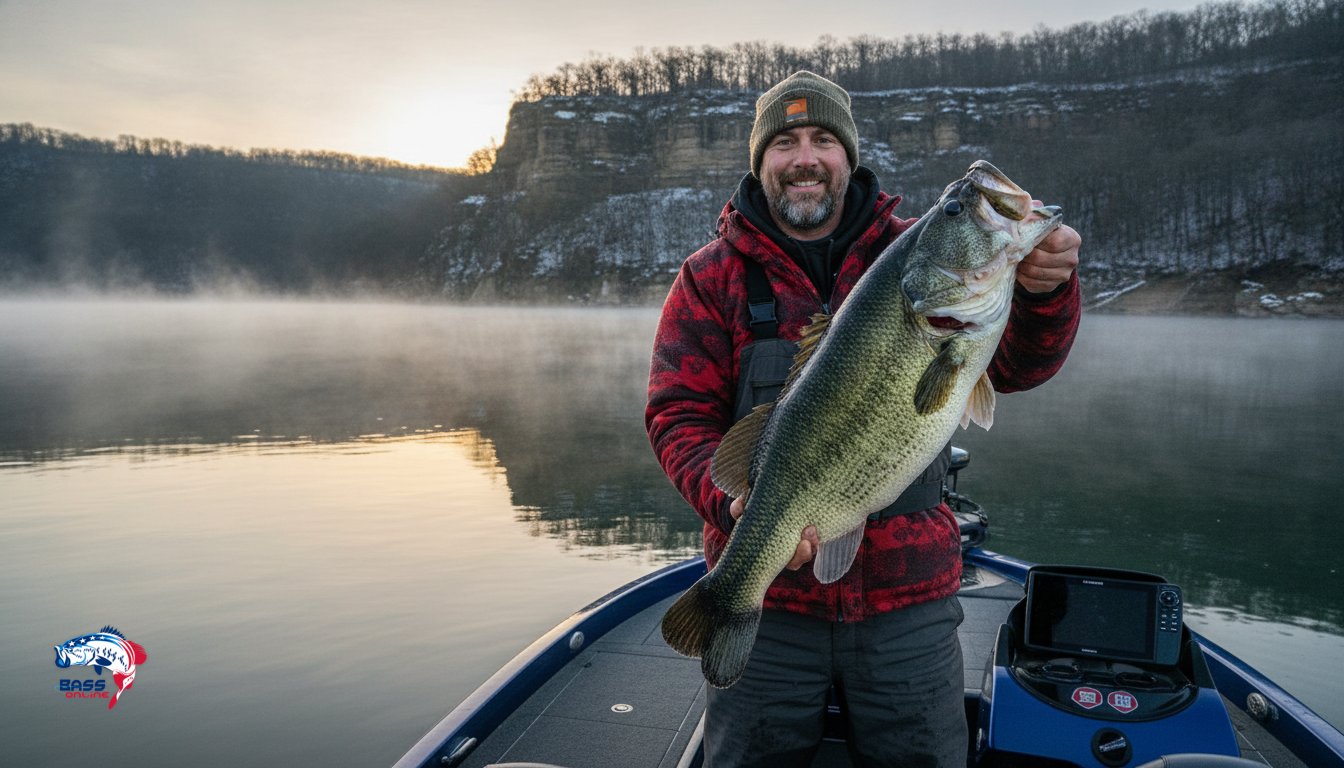

Quick answer: Cold-weather bass fishing is usually about slowing down, finding stable water and vertical structure, and keeping a lure in the strike zone longer. Jerkbaits, finesse jigs, blade baits, spoons and drop shots can all work, but depth, cadence and lure choice should follow actual fish position rather than one fixed winter rule.
Winter isn’t the off-season for trophy hunters; it’s actually the best time to land your personal best. While most anglers hang up their rods when the frost hits the grass, the pros know that big fish are still feeding. Mastering cold weather bass fishing tactics isn’t about working harder or casting faster. It’s about precision and understanding the metabolic shift that turns an aggressive summer predator into a calculated winter survivor. If you’re tired of staring at a blank fish finder or fighting frozen line, it’s time to adjust your approach.
I know how frustrating it feels when the bass seem to have permanent lockjaw and won’t chase a single lure in your tackle box. It’s easy to feel like you’re casting into an empty bathtub once the water temperatures drop. This guide will show you exactly how to locate deep-water haunts and execute the slow-retrieve techniques that trophy bass can’t resist. We’ll break down the specific gear adjustments needed for cold water and the seasonal patterns that professional guides use to stay on the bite all year long. You’ll gain the confidence to hunt for giants even when the thermometer says you should stay home.
Key Takeaways
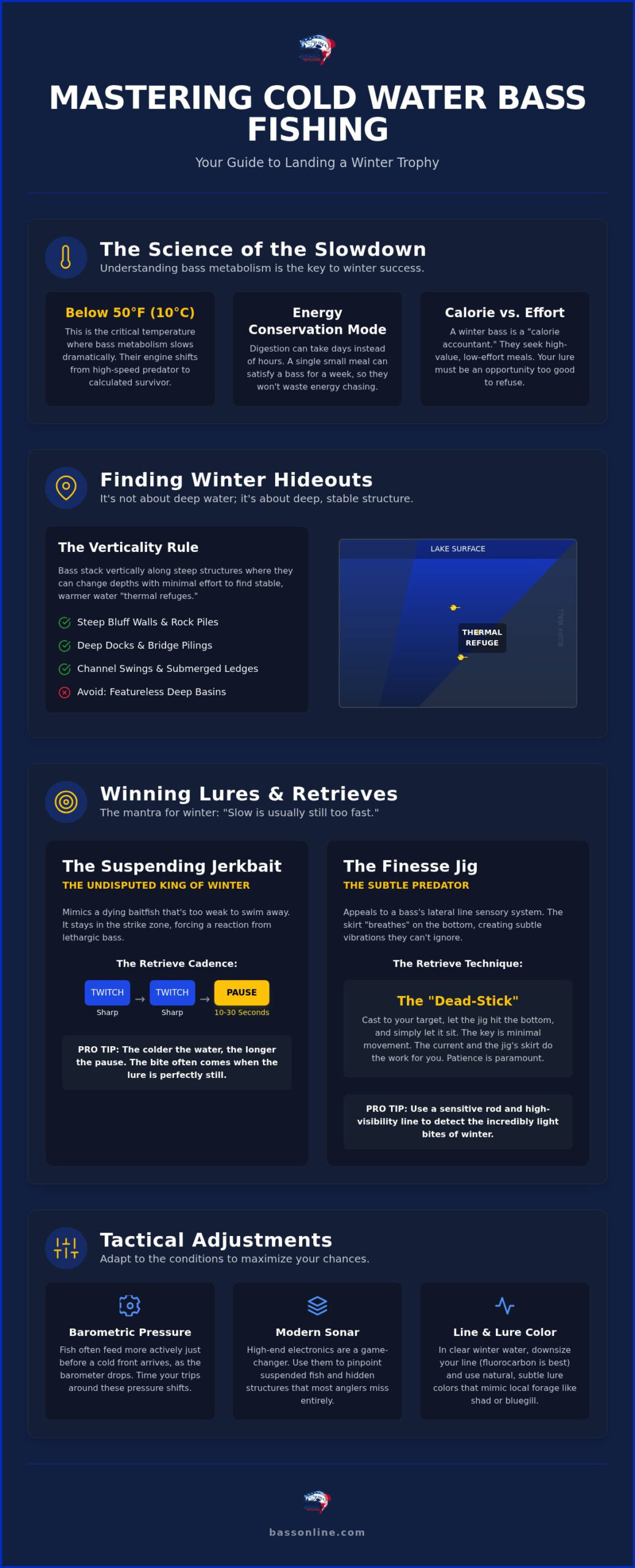
- Identify “thermal refuges” and use the Verticality Rule to find bass stacked along steep bluff walls or deep drops where water temperatures stay stable.
- Master the art of the “dead-stick” retrieve with finesse jigs to trigger bites from bass that aren’t willing to chase fast-moving lures.
- Learn to adjust your cold weather bass fishing tactics by timing your outings around barometric pressure shifts and approaching cold fronts.
- Discover why suspending jerkbaits are the king of winter and how to time your pauses to match the fish’s slower metabolism.
- Shorten the learning curve by seeing how professional guides use high-end sonar to pinpoint winter honey-holes that most anglers miss.
The Science of Cold Water: How Bass Metabolism Dictates Your Strategy
To catch fish when the mercury bottoms out, you have to think like a predator whose engine has slowed to a crawl. Once water temperatures dip below the 50°F mark, your standard approach needs to change. This is where mastering cold weather bass fishing tactics begins. Bass are ectothermic, meaning their body temperature and energy levels are entirely dictated by the water around them. When the lake gets chilly, their heart rate drops and their digestion slows to a glacial pace. A meal that a bass would process in a few hours during the summer might take several days to digest in January.
This biological shift is the foundation of all successful cold weather bass fishing tactics. Because their metabolism is so low, they don’t need to eat nearly as often. They aren’t looking for a high-speed chase; they are looking for a high-value, low-effort opportunity. Their lateral line, a row of sensory organs running down their sides, becomes their primary radar. This system picks up the tiniest pressure changes and subtle vibrations in the water. It allows them to feel a jig “breathing” on the bottom even when they are too lethargic to see it clearly.
Understanding the 40-Degree Barrier
As the water cools toward that 40-degree barrier, bass transition from their aggressive fall feeding patterns into a strict survival mode. They aren’t looking to pack on pounds anymore; they’re just trying to conserve what they have. Feeding and digestion vary with water temperature and other conditions. Research on largemouth bass digestion links gastric evacuation rate to temperature; a fixed one-baitfish-per-week rule is not a reliable guide. You have to respect this biological timeline. Winter metabolism is the primary driver of lure speed, so if your bait is moving faster than a crawl, you’ve already lost the bite.
The Calorie-to-Effort Calculation
Think of a winter bass as a calorie accountant. A lethargic fish won’t burn 50 calories to chase down a 5-calorie snack. It’s a losing investment. However, if a larger, vulnerable meal sits right in front of its nose, the reward finally outweighs the effort. This is why “soak time” is your best friend on the water. You need to leave your lure in the strike zone until the fish simply can’t ignore it. For more biological context on how these patterns vary across different types of fish, take a look at our Bass Species Guide. Success in the cold is about patience and presenting a meal that looks too easy to pass up.
Deep Water vs. Deep Structure
There’s a huge difference between deep water and deep structure. A deep, flat basin is usually a desert. Instead, hunt for channel swings where a river current hits a bank or submerged bridges that provide a hard vertical surface. Bass often suspend in the water column around these structures rather than sitting on the bottom. They might be 20 feet down over 50 feet of water, hanging out where the temperature feels most stable.
The Role of Sun and Wind
Don’t ignore the elements. Sun-exposed banks, rock and dark-bottom areas can warm slightly on bright winter days and sometimes attract baitfish and bass. Even a tiny temperature increase can trigger a feeding window. Wind also plays a role by pushing warmer surface water into specific pockets. You can research specific Lakes and Locations to see which bodies of water have the best winter structure. If you’re struggling to read the water, booking a day with a pro can help you learn to spot these honey-holes in real-time.
Top Lures and Retrieve Techniques for Lethargic Winter Bass
You’ve found the fish. Now comes the hard part: making them bite. When the water is cold, your lure choice and retrieve cadence are the difference between a trophy and a skunk. The biggest mistake I see anglers make is moving too fast. In winter, “slow” is usually still too fast. You need to present an easy target that requires zero chase. Implementing the right cold weather bass fishing tactics means shifting your focus from coverage to saturation.
Mastering the Jerkbait Pause
A suspending jerkbait is one of the most useful winter options because it can stay in the strike zone during long pauses. It mimics a dying shad that is too weak to swim. To fish it effectively, follow these steps:
- Step 1: Cast and crank the lure down to its maximum depth.
- Step 2: Use two sharp, downward twitches of the rod tip to create a “dying” erratic action.
- Step 3: Give it a long pause. Wait 10 to 30 seconds. This is the ultimate mental test of winter fishing; the colder the water, the longer the pause.
- Step 4: Watch your line closely. Most strikes won’t feel like a thump; you’ll just see a subtle “tick” or your line will slowly move to the side.
Finesse Jigs and Dead-Sticking
When bass are pinned to the bottom, a finesse jig is your best weapon. I always reach for a hair jig, specifically bucktail, in ultra-cold water. Natural hair has a subtle, lifelike movement even when the lure is sitting perfectly still. Hair jigs continue to move subtly at slow speeds, which can be useful when bass are inactive.
The best retrieve is the “drag-and-stop.” You want to move the jig just a few inches by dragging it along the bottom, then let it sit. This is called dead-sticking. It mimics a crawfish slowly emerging from the mud. Keep your trailers simple. Avoid big, flapping claws that move too much water. A low-action chunk or a small straight-tail trailer is much more realistic for a winter presentation.
If the fish are suspended and won’t commit to a jerkbait, it’s time to get vertical. Metal blade baits and heavy spoons create a high-vibration reaction strike when hopped off the bottom. For fish that are completely “locked,” a dropshot rig allows you to shake a small worm right in their face without moving the weight. This precision placement is often the only way to trigger a non-active fish into feeding.
Tactical Adjustments for Cold Fronts and Barometric Pressure
Weather changes everything on the water. Treat barometric pressure as one weather observation, not a reliable predictor of bass behavior on its own. In Ralph Manns’ account of his bass-tracking field study, pressure readings did not consistently predict feeding or proximity to cover. Weather fronts and pressure changes can alter bass position and activity, but they do not create a guaranteed feeding window. This is your window to use aggressive cold weather bass fishing tactics. After a front, assess water temperature, light, wind and fish position rather than assuming higher pressure forces bass into cover. They don’t stop eating entirely, but they do become much harder to entice.
Fishing Through the Front
The period before a front can be productive, but results vary by water temperature, wind, forage and local conditions. An approaching front can coincide with a change in feeding activity, but falling pressure alone does not guarantee an active bite. This is the only time in winter when I’ll reach for a mid-depth crankbait or a vibrating jig. You can cover water faster and look for those active schools. But you’ve got to keep safety in mind. High winds often precede these fronts, so keep your boat positioned to take waves at an angle and never fish alone in extreme conditions. The feeding window is great, but it’s never worth a swampy boat.
The Post-Front Finesse Pivot
When the clouds clear and the wind dies down, it’s time to downsize. After a front, bass may hold tighter to cover or move deeper, so downsizing and slowing down can be worth testing. I switch to 6-pound or 8-pound fluorocarbon line to increase sensitivity and reduce visibility. This is the time for “contact fishing.” You want to physically bump your lure into the structure. That sudden deflection often triggers a “flight or fight” response from a fish that was otherwise going to let your bait pass by. Adding a gel-based scent to your jigs can also give hesitant bass a reason to hold on just a second longer.
If you’re still mastering the basics of how weather impacts your catch, check out our outdoor blog for more foundational strategies. Learning how fish reposition after weather changes can make cold-water fishing more consistent. If you’re ready to see these adjustments in action on the water, contact us to book a guided trip and let a professional show you how to beat the post-front blues.
Why a Guided Winter Trip is the Ultimate Masterclass
Winter fishing is a high-stakes mental game. It tests your patience, your gear, and your ability to read the water when the usual signs of life are absent. While studying cold weather bass fishing tactics gives you the foundation, there’s no substitute for seeing these techniques executed by a pro. A guided trip acts as a shortcut to success, condensing years of trial and error into a single, high-energy outing. You don’t just catch fish; you learn the “why” behind every move the captain makes.
Knowing exactly where to cast is 90% of the battle when the mercury drops. Bass often use stable wintering areas such as channel swings, deep structure, bluff walls, ledges and protected basins, but exact locations vary by fishery. Our team has been identifying these seasonal transitions since 1997, tracking how fish move from summer haunts to deep-water refuges. You can find a local expert through our fishing guides page to unlock these secret spots. Local knowledge can reduce search time and help anglers recognize seasonal structure more quickly.
From Theory to Trophy
There is a raw, rugged satisfaction in landing a winter lunker while the boat ramps are completely empty. While the rest of the world waits for the spring thaw, you can be out there landing the heaviest fish of the year. To get started, all you need are warm layers and a desire to learn; we provide the technical strategy and the professional-grade tackle. Booking a guided bass fishing trip is the best way to transition from theoretical knowledge to real-world success. Winter can produce quality bass in some fisheries, especially when anglers locate stable water and match slow seasonal patterns.
Master the Chill and Land Your Winter Lunker
Success on the water doesn’t stop just because the temperature drops. By mastering cold weather bass fishing tactics, you’ve learned that patience and precision are your greatest tools. Remember to focus on vertical structure like bluff walls and give your lures plenty of “soak time” to match the slow metabolic pace of winter giants. Whether you’re dead-sticking a hair jig or timing the perfect jerkbait pause, these adjustments turn a cold day into a career-best outing.
Don’t let the frost keep you off the lake. We’ve been leading the industry since 1997 with over 25 years of professional guiding experience. Our expert captains are on the water every single day; they fish regardless of the weather to track shifting winter honey-holes. With top-rated reviews from winter anglers across the country, we’re ready to help you land a legendary fish. Book Your Winter Bass Masterclass with a Pro Guide today and see why the cold season is secretly the best time to hunt for trophies. A guided trip can help shorten the learning curve when winter conditions are unfamiliar.
Frequently Asked Questions
What is the best water temperature for winter bass fishing?
There is no universal winter temperature sweet spot. Bass activity changes with species, region, forage, acclimation and waterbody conditions. While bass feed down to near-freezing levels, this range keeps their metabolism high enough to strike lures with some aggression. Once the water dips below 40 degrees, you’ll need to slow down significantly. In these frigid conditions, focus on finding areas where the water is just a degree or two warmer than the rest of the lake.
Do bass move deep or shallow when it gets cold?
Most bass move to deeper water to find thermal stability during the winter months. Deep structure like river channels and submerged bridges provide a consistent environment away from the fluctuating surface temperatures. However, don’t ignore the shallows on bright, sunny afternoons. Large rocks and dark bottoms can absorb heat, drawing baitfish and predators into three or four feet of water for a short, intense feeding window.
What is the #1 lure for bass in 40-degree water?
Suspending jerkbaits are a common choice in cold water, but jigs, blade baits, spoons and drop shots can be equally useful depending on fish position. Its ability to stay perfectly still in the strike zone mimics a dying baitfish that is too cold to swim. This presentation is a core part of effective cold weather bass fishing tactics. If the fish are pinned to the bottom, a 1/4-ounce hair jig is a close second because the natural fibers move even when the lure is stationary.
How slow should I retrieve my lure in the winter?
You should retrieve your lure much slower than you think is necessary. For jerkbaits, this means pauses lasting anywhere from 10 to 30 seconds between twitches. If you’re using a jig, you might only move it a few inches every minute. The goal is to keep the bait in the fish’s tiny strike window for as long as possible. If you feel like you’re being too patient, you’re probably finally fishing at the right speed.
Do bass still eat topwater lures in cold weather?
Topwater becomes less common as water cools, but there is no single temperature at which bass stop striking on the surface. Their metabolism is too low to justify the energy required for a surface explosion. You’re much better off focusing on the middle and bottom of the water column. Stick to jerkbaits, jigs, and spoons that stay near the fish. Save the poppers and frogs for the spring thaw when the surface activity really kicks back into gear.
How does barometric pressure affect winter bass fishing?
Falling pressure before a front can coincide with stronger feeding in some situations, but wind, light, forage and temperature are usually more useful when building a pattern. This is the best time to use your most aggressive cold weather bass fishing tactics. On clear days after a front, check both cover and nearby depth changes; fish position varies with local conditions. If fish are reluctant to strike, try a slower or finesse presentation close to their observed position, then adjust to their response.
Is fluorocarbon or monofilament better for cold water fishing?
Fluorocarbon, monofilament and braid can all work in winter. Choose line based on lure type, depth, cover, stretch and handling characteristics. It sinks, which helps keep your lures deep, and it doesn’t absorb water like monofilament. This prevents your line from becoming stiff or freezing on the reel in sub-freezing air temperatures. Use line strength appropriate for the lure, cover and fish size; lighter line can help some finesse presentations but is not always necessary.
Can you catch bass through the ice with these tactics?
In waters where ice fishing is legal and safe, bass can sometimes be caught vertically with jigs, spoons or blade-style presentations. Spoons and blade baits are highly effective when dropped directly over fish holding in deep wintering holes. While the retrieve is strictly vertical, the principle of slow, subtle movement remains the same. Focus on small hops and long pauses to entice lethargic fish. It’s a different way to fish, but the biological rules of winter bass behavior still apply.

Article by
Mr Bass
Todd Kersey, widely known as Mr. Bass by Field & Stream, is a professional angler, accomplished author, and dedicated philanthropist with a lifelong passion for bass fishing. Armed with a degree in Outdoor Travel, Mr. Bass has expertly combined his knowledge with his practical fishing experience to become one of the most respected names in bass fishing.
His deep understanding of bass habitats and fish behavior has earned him numerous accolades as an asset to the sport. Serving 8 years as FWC Stakeholder Chairperson. Leading and passed cutting-edge legislation, such as the Black Bass Management Plan, and successfully built, passed, and helped finance the Trophy Catch program.
As CEO, he is committed to giving back to the community through his philanthropic efforts. He supports a variety of causes, especially those centered around physical disabilities. Through his advocacy, his mentorship programs inspire anglers to engage in fishing stewardship, helping to raise more than $18 million dollars in donations. Mr. Bass continues to inspire anglers and outdoor enthusiasts alike with his commitment to the sport, industry, and the world around him.
Historical Lake Okeechobee cold-front field note
One older Lake Okeechobee trip documented a sharp post-front change: water temperature fell from about 75°F to 58°F in two days. The guide used live shiners in 10–15 mph east wind, moved repeatedly to locate scattered fish, and described a slower bite that improved somewhat under overcast conditions. Treat this as a historical field example, not a fixed rule; the useful lesson is to expect reduced activity after a major temperature drop, keep moving until you locate fish, and adjust presentation speed to the conditions in front of you.