
Published: March 25, 2019 · Updated: September 8, 2026
Bluebird sky bass fishing on Lake Okeechobee can be beautiful, but clear skies, light wind, and post-front conditions can also make largemouth bass less willing to roam. The key is not to assume the fishing is poor. It is to adjust where you fish, how fast you fish, and how tightly you work the lake’s grass, mats, and other cover.
Lake Okeechobee is a huge, shallow system, so even on bright days, bass can settle into shade, vegetation, and protected edges. Historical trips from both Belle Glade and Okeechobee City show why bluebird conditions do not automatically mean a slow day.
What Does Bluebird Sky Bass Fishing Mean?
Anglers usually use the phrase bluebird skies for bright, cloudless conditions that often follow a weather front. On a shallow lake such as Lake Okeechobee, those conditions can change how fish position. Bass may hold tighter to grass lines, submerged vegetation, reed edges, or overhead mats instead of moving far from cover.
That means a productive plan often becomes more precise: slow down, make repeated casts, target shade and vegetation, and watch to small changes in water clarity, wind, and cover.
Where to Fish Lake Okeechobee Under Bluebird Skies
Vegetation is usually the first place to look. Lake Okeechobee’s grass beds, cattail edges, reeds, and floating mats give bass both security and ambush cover. Bright conditions can make these areas even more important because the vegetation breaks up sunlight and creates shade.
Instead of covering huge stretches of open water, focus on high-percentage details: points in a grass line, holes inside a mat, transitions between vegetation types, cleaner-water pockets, and edges where wind is moving water into the cover.
Grass Mats and Heavy Cover
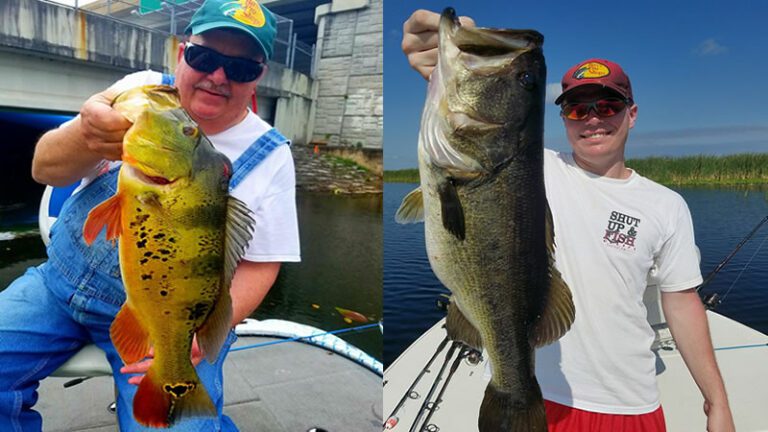
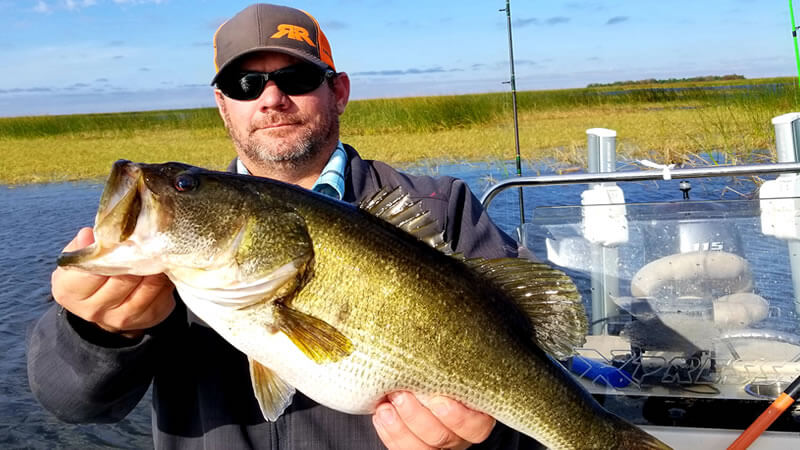
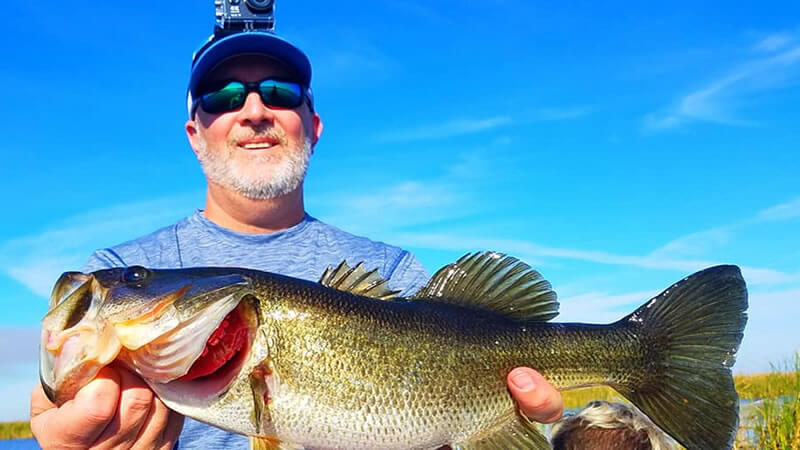
One historical Belle Glade trip with Captain Paul Dampier produced more than 20 Florida largemouth bass while concentrating on grass mats. Live bait was the most productive method, but the group also caught fish on artificial lures, including a soft-plastic Senko. The lesson still holds: when conditions are bright and calm, fish can be caught by working the cover carefully rather than abandoning the area.
Okeechobee City and Protected Water
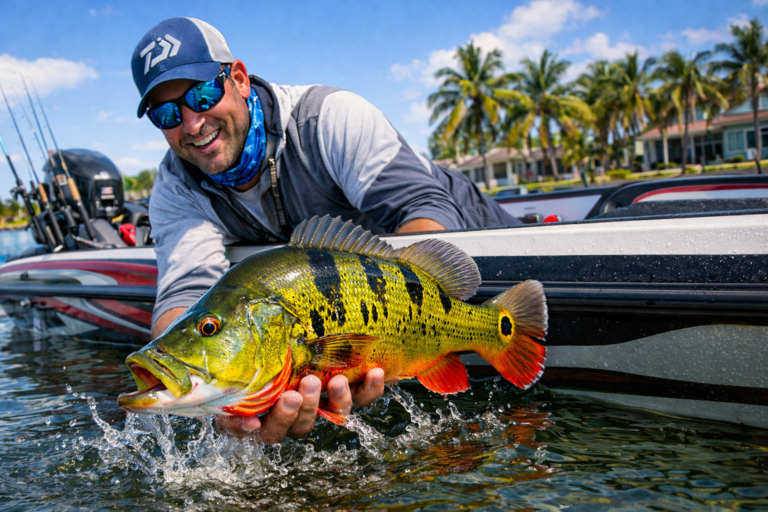
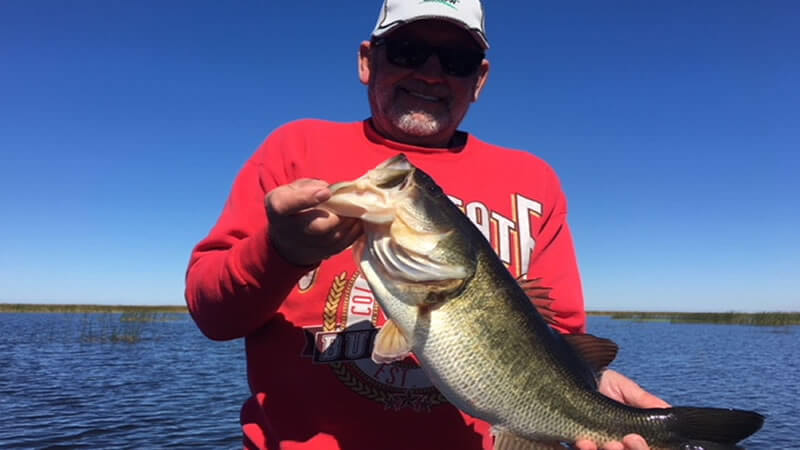
Another historical trip left from Okeechobee City with Captain Paul Dampier. Wild-caught live shiners produced 15 quality bass during a four-hour outing, including a largemouth around 7.5 pounds. That trip is a good reminder that clear skies don’t prevent a trophy bite when fish are positioned around good habitat, and the presentation matches their mood.
Best Baits for Bluebird Sky Bass Fishing
Live wild shiners have a long history of producing Lake Okeechobee bass, especially when fish are holding in vegetation and do not want to chase far. Presenting a lively shiner near a grass edge or mat can keep the bait in the strike zone naturally.
Artificial-lure anglers should think about control and accuracy. Soft plastics, stick worms, compact flipping baits, and other slower presentations can be especially useful when bass are tight to cover. A Senko-style bait can be effective because you can work it slowly around holes, edges, and sparse grass without requiring aggressive fish.
For more on the target species itself, see our largemouth bass guide.
Should You Fish Slower After a Front?
Often, yes. Bright, stable conditions can reward patience. That does not mean every cast should sit motionless, but it does mean anglers should avoid rushing through productive cover. Make several casts to the best openings, work both the outside and inside edges, and change the presentation angle before moving on.
Wind can also change the equation. A slight breeze may help by moving water and breaking up surface glare. On completely calm days, fish may stay even tighter to cover, so accurate presentations matter more.
Historical Bluebird-Sky Field Proof on Lake Okeechobee
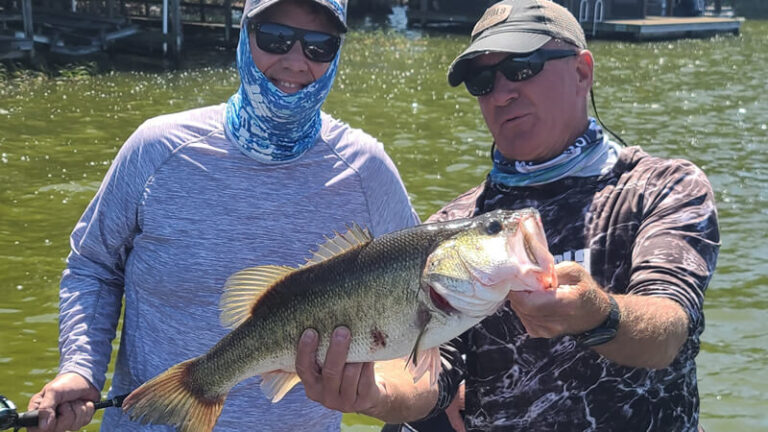
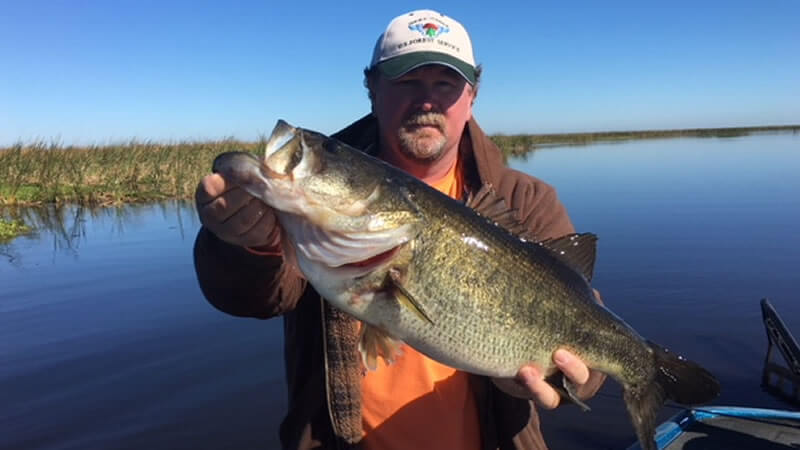
A third historical trip from Belle Glade with Capt. Dave Lauer took place under friendly weather and clear blue skies. The bite was not as aggressive as the anglers wanted, but they still put quality fish in the boat by working wild shiners around mats. The biggest bass weighed about 6 pounds.
That is exactly why this page remains useful. Bluebird conditions may change the pattern, but they do not eliminate opportunity. The better question is: where did the bass reposition, and what presentation keeps a bait in front of them long enough to trigger a strike?
Lake Okeechobee Bluebird Sky Fishing Tips
- Start with vegetation: grass, reeds, cattails, and mats provide shade and ambush cover.
- Slow down around good cover: do not make one cast and leave.
- Use live shiners when appropriate: they can be excellent around pressured or tight-holding bass.
- Keep artificial baits compact: soft plastics and controlled presentations are easier to work around cover.
- Watch the wind: even a small breeze can improve a bright-day bite.
- Move when the habitat changes: look for cleaner water, mixed vegetation, openings, and edges.
Bluebird Sky Bass Fishing FAQ
Can you catch bass on Lake Okeechobee under bluebird skies?
Yes. Historical BassOnline trips have produced more than 20 bass, a 7.5-pound fish, and another 6-pound bass under bright or calm conditions. Location and presentation become especially important.
What is the best bait after a front on Lake Okeechobee?
Live wild shiners are a proven option around vegetation. Artificial baits can also do well with slow, accurate soft-plastic presentations around mats, edges, and holes in the grass.
Where should I fish when the sky is clear, and the wind is light?
Start with productive cover such as grass mats, reed edges, cattails, and mixed vegetation. Bass often use those areas for shade and security.
Where can I check current Lake Okeechobee conditions?
Use the official Florida Fish and Wildlife Conservation Commission Lake Okeechobee forecast for current fishery information, and review the FWC freshwater fishing regulations before your trip.
Plan a Lake Okeechobee Fishing Trip
Blue skies are not a reason to cancel a Lake Okeechobee fishing day. They are a reason to fish smarter. Focus on cover, make deliberate presentations, and let the conditions tell you whether to stay shallow, work thicker vegetation, or move to a different section of the lake.
Explore the main Lake Okeechobee fishing page or browse Florida fishing guides when planning your next trip.