
What if the legendary dawn and dusk magic hours are actually causing you to miss out on the biggest bites of the day? Most anglers I talk to are frustrated by the same thing: they have limited time to hit the water, and they are tired of burning daylight without a single thump on the line. I get it. There is nothing worse than second-guessing your spot because you are stuck between conflicting advice about when the fish are actually active. Finding the best time of day for largemouth bass fishing is not just about following the sun. It is about understanding the biological triggers that turn a lethargic bucketmouth into a guided missile.
In this guide, I am going to hand you the keys to the 2026 bass clock so you can stop guessing and start catching. You will learn exactly how light penetration and barometric pressure dictate feeding windows, allowing you to master the water at any hour. We will break down a complete hourly schedule and look at the latest tech, like using the new Graph ShadZ with forward-facing sonar to hunt deep midday monsters. By the time we are done, you will have the confidence to trigger aggressive strikes, whether it is a misty morning on Lake Okeechobee or a high-sun afternoon on the St. Johns River.
Key Takeaways
- Learn how a bass’s superior low-light vision creates a massive biological advantage during the critical dawn and dusk feeding transitions.
- Identify the best time of day for largemouth bass fishing during the midday heat by hunting the specific shadows and heavy cover where giants hide.
- Recognize the “Pre-Front Window” and how falling barometric pressure can trigger an aggressive feeding frenzy regardless of what the clock says.
- Adapt your schedule to the seasons, prioritizing late-afternoon warmth in the early spring and moonlit nights during the peak of summer.
- Understand why professional guided fishing trips provide the real-time pattern tracking you need to catch fish when apps and calendars fail.
Table of Contents
The Golden Hours: Why Dawn and Dusk Rule the Bass World
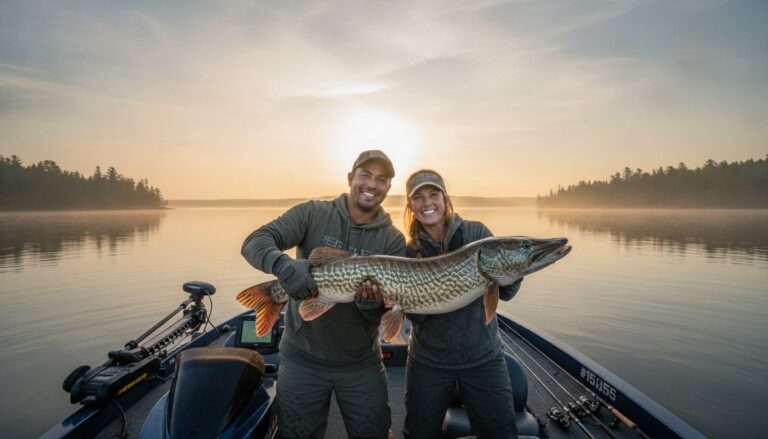
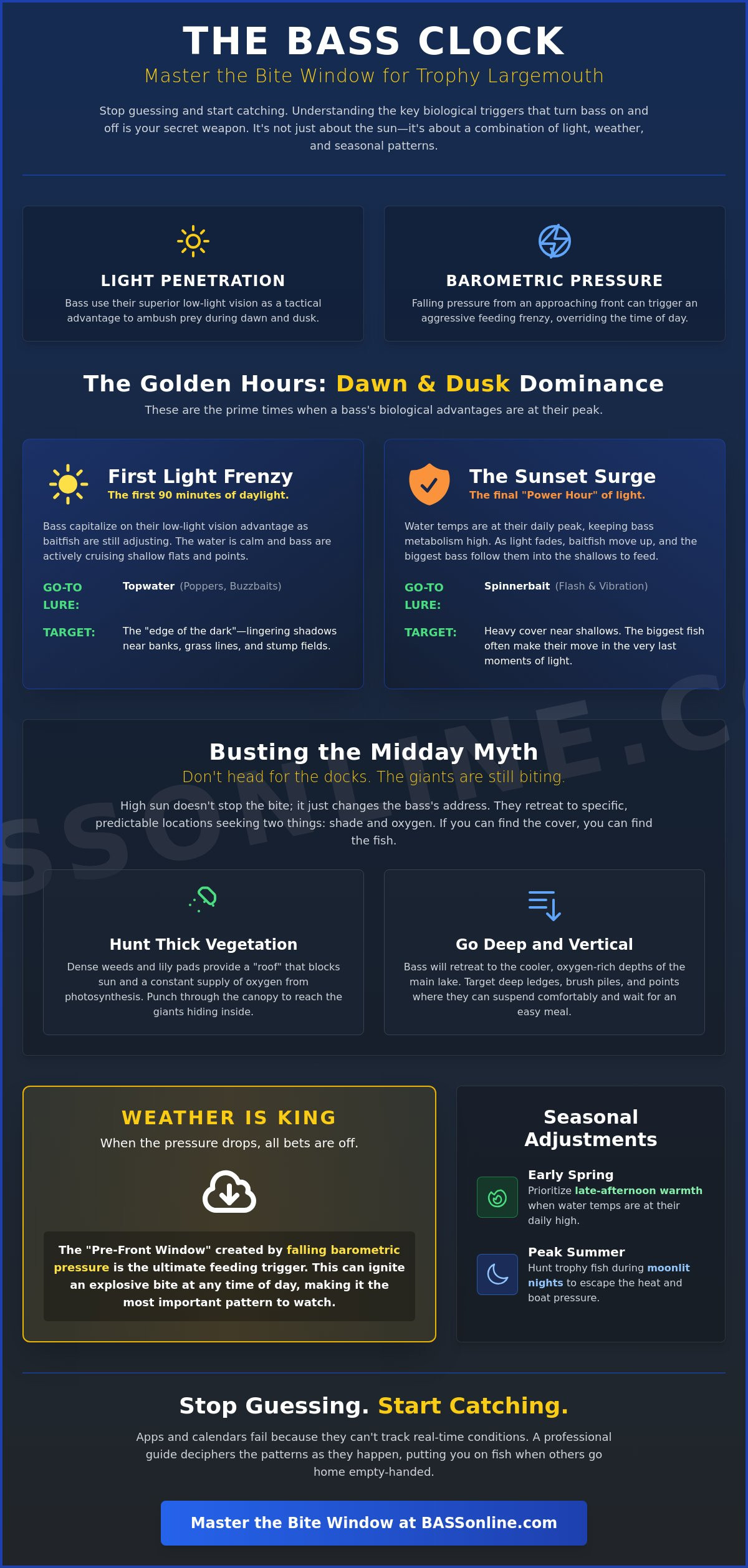
Ask any pro, and they will tell you the same thing: bass are the ultimate low-light bullies. They possess a biological cheat code that gives them a massive advantage over their prey. While bluegill and shad are still blinking their eyes and trying to adjust to the dim light, a bass’s vision is already dialed in. This creates a perfect "Feeding Transition" where fish leave the security of deep ledges and move into shallow ambush points like grass lines and stump fields. It is easily the best time of day for largemouth bass fishing because the fish are aggressive, focused, and physically superior to everything they are hunting. They aren’t just looking for a snack; they are looking to capitalize on their tactical advantage before the sun levels the playing field.
To better understand this timing and how to capitalize on these specific windows, watch this helpful video:
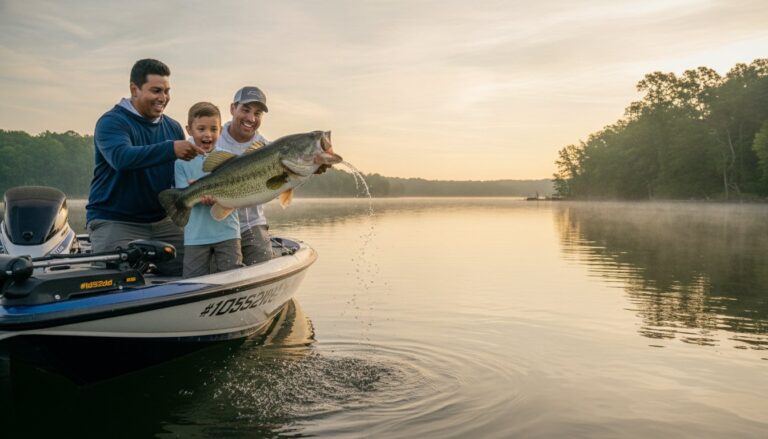
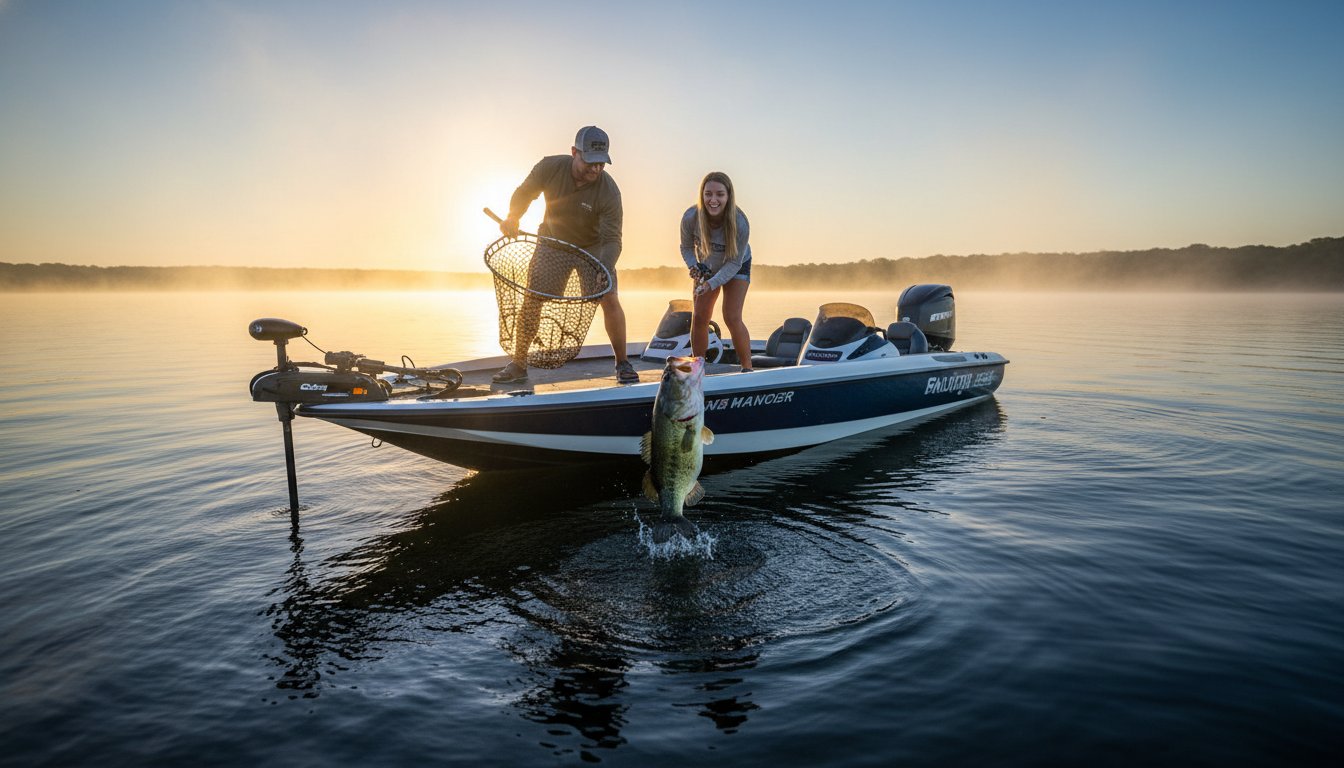
I usually find that the first 90 minutes of light provide the most explosive action of the entire day. The water is often glass-calm, and the bass are cruising with high confidence. As the sun begins to crest the horizon, the bite intensifies until the light penetration becomes too intense, forcing the fish back into the shadows. It is a race against the clock. If you can get your boat positioned on a primary point or a shallow flat just as the sky turns grey, you are likely to see baitfish jumping and bass busting the surface in a frenzy that just doesn’t happen at noon.
First Light Tactics: Topwater and Reaction
Before the sun hits the water, topwater lures are your best friends. I love throwing buzzbaits and poppers because they draw heart-stopping strikes from fish that are looking up. You need to target the "edge of the dark," focusing on those lingering shadows near the bank where bass feel most secure. Learning these nuances of Largemouth bass behavior is a foundational skill we cover in our Bass Fishing 101 guide. It is all about capitalizing on that brief window before the fish retreat to deeper cover as the light levels rise.
The Sunset Surge: Following the Baitfish
The evening surge is the mirror image of the morning, but with a twist. After a full day of sun, water temperatures are at their highest, which keeps the fish’s metabolism red-lined. As the light fades and the air begins to cool, baitfish like shad move toward the surface, and the bass follow them in a late-day "Power Hour." I reach for a spinnerbait here; the flash and vibration mimic a panicked baitfish perfectly in the dimming light. Never underestimate the power of that final cast near heavy cover. The biggest fish often wait until the very last sliver of light to make their move into the shallows.
Busting the Midday Myth: Catching Giants Under a High Sun
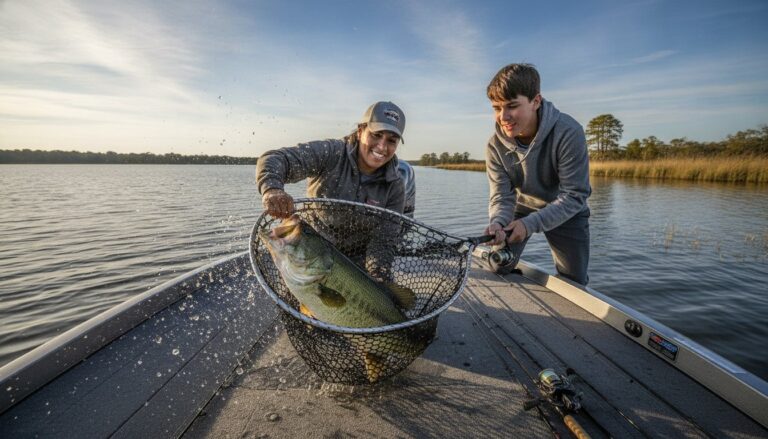
Many weekend warriors pack it up and head for the docks when the sun gets high, assuming the best time of day for largemouth bass fishing has passed. That is a massive mistake. While it is true that bass often retreat from the shallows when the overhead light intensifies, they don’t stop eating. They just change their zip code. The high sun creates a "verticality" factor. It pushes fish into two very specific places: deep into the heart of the thickest vegetation or out toward the cooler, oxygen-rich depths of the main lake. If you can find the shade, you can find the fish.
In the midday heat, oxygen levels and water temperature become the primary drivers of fish positioning. Bass seek out dense weeds because plants produce oxygen during the day through photosynthesis, and the thick canopy provides a "roof" that blocks the sun. Understanding this shift is just as important as knowing seasonal bass behavior, as it allows you to hunt trophy fish while everyone else is eating lunch. If you want to see how we track these high-sun movements in real-time, you can always book a session with our team to flatten the learning curve.
Punching and Flipping the Heavy Cover
When the sun is beating down, I head straight for the matted grass. This is where "punching" becomes the dominant strategy. You need a heavy tungsten weight, often 1.25 to 1.5 ounces, to break through the surface canopy and reach the bass buried underneath. I prefer compact craw-style baits because they slide through the weeds without snagging. The goal here is a "Reaction Strike." By dropping a heavy lure directly in front of a bass’s nose in its shaded bedroom, you force it to bite out of pure instinct before it can even think about whether it is hungry.
Deep Water Structure and the Thermocline
If the fish aren’t in the grass, they are likely offshore. Midday is the perfect time to use your electronics to locate bass holding on ledges, humps, or deep brush piles. Bass often congregate near the thermocline, which is the transition layer between warm surface water and cooler deep water, because it offers the best balance of temperature and oxygen. This is when drop-shots and Carolina rigs shine. These finesse presentations stay in the strike zone longer, giving pressured midday fish plenty of time to commit to the bait while they hold in their summer refuge.
Beyond the Clock: When Weather Overrules the Time of Day
I have seen days where the clock says it is the dead of noon, but the bass are acting like it is the crack of dawn. That is because weather is the ultimate wildcard. While we talk a lot about the best time of day for largemouth bass fishing, a major weather shift can throw the standard schedule right out the window. The "Pre-Front Window" is the most legendary example. When a storm system is rolling in and the sky starts to darken, bass often enter a total feeding frenzy. They know a period of instability is coming, and they want to gorge themselves before the pressure changes force them to hunker down.
Cloud cover is your best friend for extending those "Golden Hour" bites. If you have a thick, overcast ceiling at 2:00 PM, the bass will stay shallow and active just like they do at sunrise. The low light gives them that same visual advantage we discussed earlier. Wind works much the same way. A steady chop on the surface breaks up light penetration, making it harder for fish to see you and easier for them to ambush prey. I always tell my clients that "the wind is your friend" because it creates a sense of chaos that bass love to exploit.
The Science of Barometric Pressure
To understand why the bite turns on or off, you have to look at the bass’s swim bladder. This internal organ helps them maintain buoyancy, and it is extremely sensitive to atmospheric changes. Barometric pressure is the weight of the air pressing down on the water, and it directly impacts how comfortable a bass feels at certain depths. When the pressure is falling, bass feel less "compressed" and often move more freely to hunt. Conversely, the "bluebird sky" after a front brings high pressure that usually pins fish to the bottom or deep into heavy cover, making them sluggish and hard to catch. It is the toughest time to be on the water.
Fishing the Storm: Timing Your Outing
Timing a storm is all about hitting the "Calm Before." There is often a 30 minute window right before the rain starts where the air gets still and the bass go absolutely nuts. I have caught some of my biggest fish during this eerie silence. However, you have to be smart. If you hear thunder or see lightning, get off the water immediately. Carbon fiber rods are essentially lightning rods, and no fish is worth the risk. After the storm passes, keep an eye on runoff points. Fresh water pouring into the lake brings worms, insects, and cooler oxygenated water, which can kickstart a localized bite even in muddy conditions.
Seasonal Adjustments: How the Best Time Shifts Yearly
The calendar on your wall is just as important as the watch on your wrist. If you try to fish a summer schedule in the dead of winter, you are going to spend a lot of time looking at an empty livewell. As the seasons change, the best time of day for largemouth bass fishing moves in response to water temperature and baitfish migration. In the peak of summer, you might be focused on the first light of dawn. But when the frost is on the ground, that 6:00 AM start is usually a recipe for frozen guides and zero bites. Understanding these seasonal pivots is what separates the pros from the folks who only catch fish when they are "lucky."
Fall is perhaps the most exciting time for a clock-watcher. As the water cools, bass move into a massive all-day feeding binge to prepare for the winter. They follow schools of shad into the backs of creeks and shallow pockets. During this time, the "Golden Hour" rule almost disappears, and you can find aggressive fish for 12 hours straight. Conversely, summer demands a tactical choice: either beat the sun to the water or wait for it to go down entirely. Night fishing is a secret weapon during the heat of July, allowing you to escape the crowds and target giants that only move into the shallows under the cover of total darkness.
Spring Spawn Timing
In the early spring, forget what I said about dawn being king. The water is often at its daily low point at sunrise, which keeps fish sluggish. You want to wait for the midday warm-up. Once the water temperature hits that magic 60°F mark, the activity level spikes. I focus on shallow flats that face the south because they bake in the afternoon sun and warm up faster than the rest of the lake. This is a huge factor when targeting Florida bass, where even a two-degree temperature swing can be the difference between a trophy and a skunk. If you want to experience this peak action, you can book a guided bass fishing trip with our team to hit the spawn at exactly the right moment.
Winter Languor and the Midday Peak
Winter fishing is a game of patience and timing. Early morning is almost always a waste of time during a cold front because the fish are in a state of languor, or extreme lethargy. They won’t move far for a bait when their metabolism is bottomed out. The real window opens between 1:00 PM and 4:00 PM. This is when the water reaches its maximum daily temperature. I switch to slow-rolling lures like a heavy jig or a broad-bladed spinnerbait, crawling them along the bottom to give those slow-moving winter giants plenty of time to react. It isn’t fast-paced, but it is the best way to land a monster when the mercury drops.
Hiring a Professional Guide to Master the Bite Window
You can read every blog and download every moon-phase app on the market, but nothing beats real-time intelligence. The best time of day for largemouth bass fishing isn’t a static number on a screen; it is a living, breathing puzzle that changes based on what happened yesterday and what is happening right now. Our captains at Bass Online are on the water nearly every single day. They don’t track patterns by the week; they track them by the hour. When you step onto one of our boats, you aren’t just paying for a ride. You are tapping into a network of local experts who have spent decades learning the specific nuances of these legendary lakes.
A full-day charter is the ultimate classroom for any serious angler. It allows you to witness the feeding transitions first-hand as we move from the early morning topwater explosion into the technical midday punch-bite. You get to see exactly how we adjust our tactics as the sun climbs and the barometric pressure shifts. My goal as a guide is to handle the "why" and the "where" so you can focus entirely on the "thump." It is about maximizing your limited time on the water and ensuring that every cast has the highest possible chance of connecting with a trophy.
The Advantage of Real-Time Adjustments
Guides are masters of the pivot. As the sun moves, we don’t just sit in one spot and hope for the best. We move with the fish, shifting from shallow grass lines to deep ledges or shaded pockets to keep you in the strike zone. You also get immediate access to top-tier, specialized gear that is rigged and ready for every specific scenario. Whether we need a heavy punching rig for high noon or a finesse drop-shot for deep structure, our Bass Online Fishing Guides have the right tool ready before the fish even know we are there.
Book Your Trophy Hunt Today
There is no substitute for learning on the water from a seasoned pro. You will walk away with more than just a photo; you will have a deeper understanding of how to read the clock and the conditions on your own. If you are looking to hit the peak of the spawn or a specific seasonal window, booking in advance is critical. These prime slots fill up fast because every angler wants a shot at their personal best. Don’t leave your success to chance or an outdated app. Book your next bass fishing adventure with Bass Online and let’s go catch a giant.
Take Command of the Water and Land Your Next Trophy
You now have the tactical blueprint to beat the clock on any lake in the country. Remember that the golden hours of dawn and dusk offer a biological edge, but the midday heat is simply an invitation to hunt the heavy shade. Weather will always be your wildcard; keep a close eye on that falling barometer to catch the most aggressive feeding windows. Mastering the best time of day for largemouth bass fishing is the foundation of every successful trip, but applying these lessons in real-time is where the magic happens.
At Bass Online, we bring over 25 years of professional guiding experience to every outing. Our top-rated guides are frequently featured in major outdoor publications and have spent thousands of hours mastering legendary waters from Lake Okeechobee to Lake Erie. We don’t just find fish; we help you understand the environment so you can fish with total confidence. The giants are out there waiting for the right moment to strike, and we know exactly when that is.
Ready to land your PB? Book a professional bass guide now!
The water is calling and the patterns are setting up perfectly. I’ll see you on the boat!
Frequently Asked Questions
Does the moon phase actually affect the best time of day for bass fishing?
Moon phases create major and minor feeding windows that can often override the standard clock. During a full or new moon, gravitational pull affects water movement and baitfish activity, frequently triggering a bite mid-morning or mid-afternoon. I pay close attention to moon rise and set times because they often coincide with a sudden flurry of activity. It is a vital secondary layer to the best time of day for largemouth bass fishing.
Is it better to fish for bass in the morning or the evening?
Both windows are highly productive, but they offer different types of action. Morning is usually better for finding fish in shallow transition zones before the sun gets too high and the light becomes intense. Evening windows are often more aggressive because the water has warmed up all day, keeping the fish’s metabolism high. I prefer the first light for topwater and the last light for big, slow-moving reaction baits near heavy structure.
What is the best time of day to catch bass in the summer?
Early dawn and late dusk are the most consistent times during the summer heat. You want to be on the water before the sun starts baking the shallows, as fish will retreat to deep ledges or thick mats once the temperature rises. If you can’t get out early, the night bite is a fantastic alternative for catching big, active fish that move shallow under the cover of darkness to hunt for food.
Do largemouth bass bite at night?
Largemouth bass are highly effective night hunters and will absolutely bite after the sun goes down. They rely on their lateral line, a sensory organ that detects vibrations, to find prey in total darkness. I recommend using dark-colored lures like black spinnerbaits or jigs with large rattles. These help the fish track the bait through the water column when visibility is at its lowest, leading to some of the year’s biggest strikes.
How does barometric pressure change the best time to fish?
Falling barometric pressure is the ultimate trigger for an aggressive feeding frenzy. When the pressure drops before a storm, bass feel less internal pressure on their swim bladders and become much more active. Conversely, high pressure after a cold front usually results in a tough bite. On those clear, bluebird days, you have to slow down your presentation and fish much tighter to heavy cover to get a reaction from sluggish fish.
What is the best time to catch bass in the winter?
The best time of day for largemouth bass fishing in the winter is between 1:00 PM and 4:00 PM. You need to wait for the sun to reach its highest point to warm the surface water even by a few degrees. This slight temperature increase is enough to kickstart a lethargic fish’s metabolism. Focus on southern-facing banks and slow-roll your baits along the bottom for the best results when the water is cold.
Does rain affect the best time of day for bass fishing?
Light rain is a massive advantage because it breaks up the surface of the water and creates low-light conditions. This makes bass feel more secure and encourages them to leave their heavy cover to hunt for baitfish. Heavy rain can be hit-or-miss, but the runoff it creates often brings fresh oxygen and food into the lake. Just make sure you are off the water immediately if you hear any thunder or see lightning.
Why do bass stop biting in the middle of the day?
Bass don’t actually stop biting in the middle of the day; they just change their location to find more comfortable conditions. Most amateur anglers struggle at noon because they continue to fish shallow, open water where the light is too intense. To catch fish under a high sun, you must target the deepest shadows or move offshore to main-lake structure. The fish are still there, they are just tucked away in the shade.

Article by
Mr Bass
Todd Kersey, widely known as Mr. Bass by Field & Stream, is a professional angler, accomplished author, and dedicated philanthropist with a lifelong passion for bass fishing. Armed with a degree in Outdoor travel, Mr. Bass has expertly combined his knowledge with his practical fishing experience to become one of the most respected names in the bass fishing, his deep understanding of bass habitats, and fish behavior has earned him numerous accolades as a asset of the sport. Serving 8 years as FWC Stakeholder Chairperson. Leading and passing cutting-edge legislation, such as the Black Bass Management plan, and successfully building, passing, and financing the Trophy Catch program. As CEO, he is committed to giving back to the community through his philanthropic efforts. He supports a variety of causes, especially those centered around physical disabilities. Through his advocacy, his mentorship programs inspire anglers to engage in fishing stewardship, helping to raise more than $ 18 million in donations. Mr. Bass continues to inspire anglers and outdoor enthusiasts alike with his commitment to the sport and the world around him.