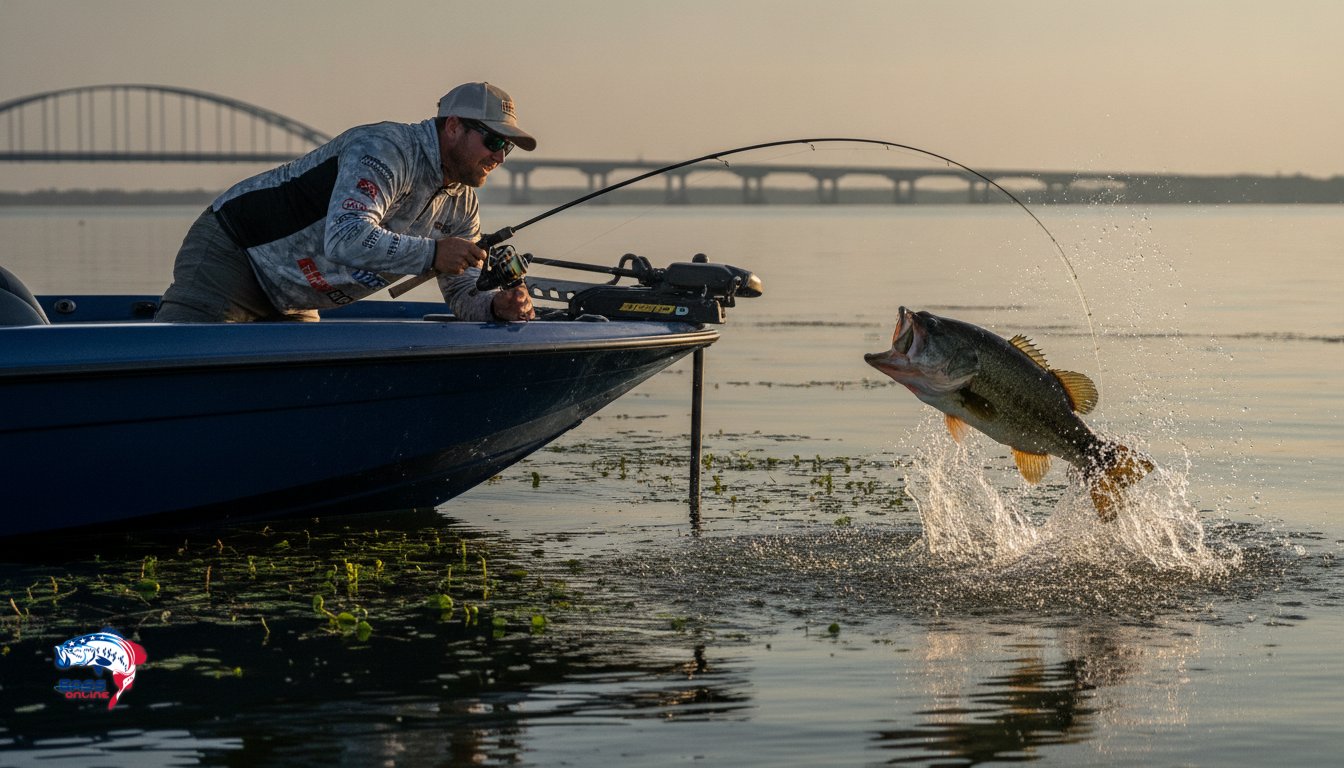

In February 2026, Hank Cherry stunned the fishing world by hauling in over 88 pounds of bass at Lake Guntersville using a simple three-inch curly tail grub and zero forward-facing sonar. It’s a powerful reminder that while the “Big G” is famous for its massive 69,000-acre expanse, you don’t need a boat full of expensive gadgets to land a trophy. We know how intimidating it feels to stare at miles of thick hydrilla or try to decode conflicting tournament reports while your tackle box feels like a graveyard of lures that don’t work in Alabama’s unique conditions. It’s easy to get frustrated when the grass seems winning, but the right approach changes everything.
You’re here because you want to stop guessing and start catching. This guide promises to help you master the grass without the frustration, providing a seasonal strategy to land that personal best seven-pounder. We’ve compiled the field-tested selections our professional guides use every day to find the best lures for Lake Guntersville bass across every season. You’ll get a clear, step-by-step tackle plan, an insider’s look at how to fish the milfoil, and the technical details of how TVA current triggers a massive bite. It’s time to stop wasting money on the wrong gear and start fishing with the confidence of a local pro.
Key Takeaways
- Learn how to read Lake Guntersville’s massive grass beds to choose the right gear for hydrilla versus milfoil dominance.
- Identify the best lures for Lake Guntersville bass for every season, including the specific red crankbaits that dominate the spring pre-spawn.
- Master high-energy techniques like punching through thick mats and timing topwater blow-ups for the lake’s biggest trophy largemouth.
- Understand how TVA current releases and wind patterns dictate exactly where fish position on the main river ledges.
- Discover why simple, “old school” lures are making a major comeback for anglers who want to catch fish without relying on complex electronics.
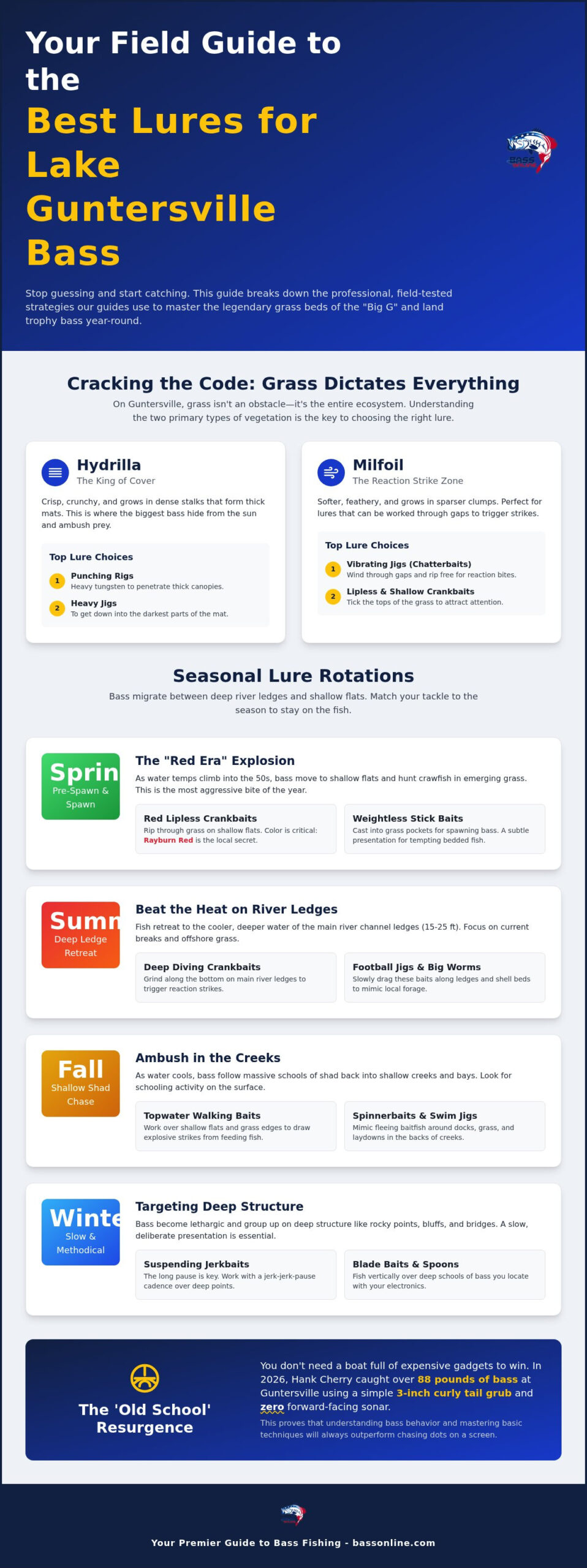
Cracking the Code of the ‘Big G’: Why Grass Dictates Your Lure Choice
Lake Guntersville isn’t just another body of water; it’s 69,000 acres of legendary bass habitat that can humble even the most seasoned angler. If you want to find the best lures for Lake Guntersville bass, you have to start with one word: grass. On the Big G, vegetation isn’t an obstacle; it’s the entire ecosystem. Submerged plants like hydrilla and milfoil act as the lifeblood of this reservoir, providing oxygen, cover, and a buffet of baitfish for trophy largemouth.
Think of these massive grass beds as underwater cities. The thickest sections are the residential areas where big fish hide, while the edges and channels act as highways for hunting. My golden rule is simple: if your lure isn’t touching grass, you aren’t catching fish. Bass here are ambush predators. They tuck into the shade and wait for something to struggle past. Understanding how to navigate this greenery is the difference between a frustrating day of cleaning your hooks and landing a seven-pounder.
Hydrilla vs. Milfoil: Choosing Lures for Different Cover
Not all grass is created equal. Hydrilla is the king of cover on Guntersville. It’s crisp, crunchy, and grows in dense stalks that reach for the surface. This is where you find the heavy-hitters. For thick hydrilla mats, you need lures that can penetrate the canopy, like a heavy tungsten-weighted plastic. Milfoil is softer and more feathery, often growing in sparser clumps. It’s perfect for winding a vibrating jig or a lipless crankbait through the gaps. Ripping your lure out of a grass clump often causes a reaction strike from a bass that was just watching it go by.
- Hydrilla: Best for punching rigs and heavy jigs that can get through the roof.
- Milfoil: Ideal for swim jigs and shallow-diving crankbaits that can tick the tops.
- Co-mingled Grass: Target areas where both types meet; these transitions are often big-fish magnets.
Visualizing the Strike Zone in Heavy Vegetation
Bass position themselves strategically based on the sun and wind. On bright days, they bury deep into the shade of the mats. When the wind kicks up, they move to the windward edges where baitfish get pushed by the waves. You want to target the edge effect. This is the transition zone where the grass wall meets open water or a different depth. This is the prime hunting ground where we focus during our Lake Guntersville fishing trips.
To master this, use the tick-and-rip technique. Cast your lure so it barely ticks the top of the submerged grass. When you feel the bait snag or bog down, give your rod a sharp snap. This creates a sudden burst of movement that mimics a fleeing shad. It’s a high-energy way to fish that demands focus, but it’s how you trigger the biggest fish in the lake to commit.
Seasonal Lure Rotations: From Shallow Flats to Deep River Ledges
Mapping bass movement on the “Big G” is like following a biological clock. From the freezing depths of winter to the shallow, grassy explosions of spring, these fish are always on the move. To consistently find the best lures for Lake Guntersville bass, you need to understand this migration. Bass spend their lives transitioning between the main river ledges and the shallow spawning flats. If you’re in the wrong spot for the season, it won’t matter what’s on the end of your line.
Spring is the most famous time to be here. As water temperatures climb into the low 50s, the “red era” begins. This is when red lipless crankbaits dominate the flats. Once the heat of summer arrives, the fish retreat to the 15 to 25 foot depths of the river ledges. Fall brings them back shallow as they chase shad into the creeks. Winter requires a slow, methodical approach on rocky points. Each season demands a specific shift in your tackle box to keep the rods bent.
The Spring Explosion: Red Baits and Soft Plastics
Rayburn Red isn’t just a color; it’s a confidence booster. During the pre-spawn, bass are hunting crawfish in the emerging hydrilla. A lipless crankbait ripped through the grass is a high-energy way to trigger a strike. As the fish move onto the shallow flats to spawn, switch to a weightless stick bait. Cast it into the pockets of the grass and let it sink slowly. This subtle presentation is perfect for tempting a protective female on a bed. Don’t overlook the shad spawn on the edges of the ledges in late spring. It’s a short window of intense activity where a swim jig can produce a limit in minutes.
Summer Ledges: Deep Diving and Heavy Metal
When the sun gets high, the big fish go deep. We target the river ledges in 15 to 25 feet of water. Success here depends on the TVA current. When they pull water through the dam, the bass line up to feed. Use a massive 10XD crankbait to reach those deep-dwelling schools. If the fish are finicky, drag a 10-inch ribbon-tail worm through the structure. For schooling bass on the bottom, a heavy structure spoon is the ultimate tool. It mimics a dying shad and triggers a reaction when nothing else will. If you want to skip the trial and error, you can book a day with a local pro to see these ledge patterns in action.
Fall is the chase. Bass follow shad into the back of the creeks. This is where topwater lures shine. Keep your eyes peeled for bait breaking the surface. Winter is the time for patience. Take a cue from the February 2026 tournament scene. Hank Cherry won the Bassmaster Elite with over 88 pounds by slowing down with a 3-inch chartreuse curly tail grub on a 1/8-ounce ball-head jig. It’s an “old school” tactic that still produces massive bags on rocky points when the water is cold.
Topwater vs. Subsurface: Mastering Guntersville’s Dense Mats
Late summer on the Big G transforms the lake into a carpet of green. While many anglers see matted vegetation as a nightmare, we see it as a fortress for giant largemouth. When the sun bakes these mats, the water underneath stays cool and oxygenated. This is when you have to decide: do you pull them out from the top or go down and get them? Mastering this choice is the key to consistent success during the hottest months of the year.
Evaluating the conditions is your first step. In low light or when you see baitfish skipping across the “slop,” topwater is your primary weapon. If the sun is high and the fish are buried deep in the shade, you have to switch to subsurface tactics. Both methods require specialized gear and a lot of nerve. You’re fishing in the thickest cover imaginable, and the strikes are often violent and sudden.
Frogging 101: Walking the Dog Over the Slop
The hollow-body frog is easily one of the best lures for Lake Guntersville bass from July through October. It’s completely weedless, allowing you to slide it over the thickest hydrilla without snagging. Use a popping frog when you need to create a ruckus in stained water or low-light conditions. Switch to a walking frog for a more natural, gliding action when the water is clear and the sun is bright. Color selection is simpler than you think. Use black to create a strong silhouette against a grey sky, and white or shad patterns on bluebird days.
- The Patience Rule: This is the hardest part. When a bass explodes through the mat, don’t set the hook immediately. Count to one. Let the fish turn and pull the frog down. If you swing too fast, you’ll just pull the lure away from its mouth.
- Rhythm: Keep a steady “twitch-twitch-pause” cadence to mimic a struggling creature.
Punching the Mats: The Heavyweight Approach
When the “blow-ups” stop, it’s time to punch. This is the only way to reach bass under “unfishable” matted grass. This is heavy-duty combat fishing. You need a 1.5-ounce tungsten weight to break through the canopy. Pair this with a stout flipping rod and 65lb braided line. There is no room for light tackle here. If you hook a seven-pounder in that mess with monofilament, it’s game over. Use compact craw-style trailers because long, flappy legs will just get hung up on the grass stalks during the entry.
The magic happens on the vertical drop. As soon as that weight breaks through the mat, pay close attention. Bass usually strike in the first two seconds of the fall. If it hits the bottom without a bite, give it two quick hops and then reel up for the next cast. It’s a game of efficiency. We cover miles of mats during our Alabama bass fishing trips, looking for that one specific pocket where the big ones are stacked.
The ‘Old School’ Resurgence: Winning Without Forward-Facing Sonar
The 2026 tournament season at Lake Guntersville marked a massive turning point for professional bass fishing. A major Bassmaster Elite event held in February 2026 banned the use of forward-facing sonar (FFS), forcing the pros to return to traditional “blind” fishing. The results were staggering. Hank Cherry took the trophy with a four-day total of 88 pounds, 11 ounces, by relying on his knowledge of the grass and a simple grub. This shift proves that the best lures for Lake Guntersville bass aren’t always the newest or most expensive gadgets on the shelf. Sometimes, the most basic presentations are what trigger the biggest bites.
Going back to basics isn’t about being outdated; it’s about being efficient. When every boat on the lake is pinging fish with high-tech sonar, those bass get pressured and spooky. Traditional search tools like lipless crankbaits and jerkbaits allow you to cover massive flats and trigger reaction strikes from fish that haven’t seen a “dumb” bait in years. It’s about rhythm, feel, and understanding the underwater terrain of the Big G. You have to trust your ability to read the grass and the current rather than staring at a screen all day.
Fishing the Grub: Finesse on a Big Lake
The curly tail grub is the ultimate finesse tool for pressured fish. Rigging a 3-inch chartreuse grub on a light 1/8-ounce ball-head jig sounds like a tactic from thirty years ago, but it’s deadly in 2026. The key is the “slow roll” retrieve. You want to keep the bait swimming just inches above the submerged grass. It mimics a lone baitfish separated from the school, making it an easy target for a big largemouth. This tactic works exceptionally well in the clear, cold water of late winter when bass are lethargic but still looking for an easy meal.
Lipless Cranks: The ‘Big G’ Bread and Butter
If the grub is for finesse, the lipless crankbait is for power. These are the workhorses for covering the massive 4 to 8 foot flats that define Guntersville. Use the “yo-yo” retrieve: let the bait sink until it ticks the grass, then rip it out with a sharp rod snap. This sudden burst of sound and vibration is often what triggers a strike. Pay attention to the sound chambers. One-knockers provide a deep, thumping sound that’s great for stained water, while multi-rattle chambers create a high-pitched shriek that works better in clear conditions.
Jerkbaits also play a huge role in this old-school resurgence. In cold water, a jerkbait suspended over a grass edge can be irresistible. The secret is the pause. Sometimes you have to wait ten seconds between jerks to let a big bass commit. If you want to master these high-percentage tactics, contact us to schedule a guided trip and learn directly from the pros who have spent decades perfecting these techniques. This is how you win on Guntersville: by trusting your instincts and the lures that have stood the test of time.
Maximizing Your Lake Guntersville Adventure: Pro Tips for Success
Lake Guntersville is a massive 69,000-acre puzzle. While we have covered the best lures for Lake Guntersville bass in the previous sections, knowing what to tie on is only half the battle. The other half is execution. Boat positioning is where the game is won or lost on the Big G. You want to keep your lure in the strike zone for the maximum amount of time. This means positioning your boat so you can cast parallel to the grass edges or quartering your casts across the river ledges. If you’re sitting too far away, you’re wasting half your retrieve in dead water.
Managing the wind is another critical skill. Because Guntersville is oriented roughly northeast to southwest, a strong wind can turn the main channel into a washing machine. However, wind is often your friend. It pushes baitfish against the grass walls and creates a “feeding shelf” where bass congregate. We use the wind to drift our baits naturally over submerged islands, using the trolling motor just enough to stay on track. This creates a presentation that looks far more natural than a lure being dragged against the gale.
Common Mistakes to Avoid on the Big G
Even experienced anglers fall into traps on this lake. We see it every week. To keep your momentum high, watch out for these three common errors:
- Ignoring the TVA Schedule: The Tennessee Valley Authority controls the current. When they pull water through the dam, the bass line up on the ledges to eat. If the water isn’t moving, the bite on the ledges often dies. Save your deep-water cranking for when the current is flowing.
- Fishing the Wrong Speed: A common mistake is fishing too slow in the grass. Bass in the vegetation are often looking for a reaction. If you’re moving your vibrating jig like a snail, they have too much time to look at it. Conversely, on the deep ledges, many anglers fish too fast, pulling their baits right over the heads of the fish.
- Light Line Weakness: Don’t bring a knife to a gunfight. Using 10lb or 12lb line in the heavy mats is a recipe for heartbreak. Stick to the 65lb braid for punching and heavy fluorocarbon for the grass edges.
Book Your Lake Guntersville Experience
The Bass Online difference is about more than just finding fish; it’s about learning the “why” behind every move we make. We want you to leave the boat with the confidence to tackle this lake on your own next time. Our guided fishing trips include all the high-end gear we’ve discussed, from 10XD crankbaits to specialized punching rigs. We can customize your day based on your favorite style, whether you want to master the “old school” grub or witness the raw power of a topwater blow-up in the mats.
Before you head out, make sure you have your 2026-2027 Alabama freshwater fishing license ready. Bring plenty of water, polarized sunglasses to see the grass edges, and a camera for when that seven-pounder hits the deck. Ready to skip the learning curve? Book your Lake Guntersville fishing charter today and let’s go catch a trophy.
Master the Big G and Land Your Next Trophy
Lake Guntersville is a massive, rewarding challenge that demands respect and a rock-solid strategy. You now have the roadmap to navigate the dense grass mats and deep river ledges that define this legendary fishery. By understanding how the seasons dictate fish movement and why “old school” tactics are winning tournaments again, you’re ahead of most anglers on the water. We’ve identified the best lures for Lake Guntersville bass, but the real magic happens when you apply these techniques with confidence.
Don’t let the 69,000 acres of the Big G intimidate you. Our expert local guides have over 20 years of experience on these waters and are ready to show you the exact ambush points that hold giant largemouth. We provide all the professional tackle and lures you need; you can focus entirely on the thrill of the strike. As the service rated #1 for trophy bass trips in Alabama, we take pride in helping you land your personal best.
Book Your Lake Guntersville Bass Fishing Trip today and let’s turn these tactics into a story you’ll tell for years. The big ones are waiting in the grass. Let’s go get them.
Frequently Asked Questions
What is the single best lure for Lake Guntersville bass?
A red lipless crankbait is widely considered the single best lures for Lake Guntersville bass, especially during the spring. It allows you to cover massive flats and rip the bait out of emerging hydrilla to trigger reaction strikes. While a 3-inch grub or a hollow-body frog has its moment, the lipless crankbait’s ability to search and find active schools makes it a staple in every pro’s boat year after year.
Do I need a specific rod for punching the grass on Guntersville?
You absolutely need a heavy-power rod with a fast action to successfully punch the dense mats on Guntersville. I recommend a rod at least 7 feet 6 inches long to provide the leverage needed to pull a seven-pounder out of thick vegetation. Pair this with 65lb braided line and a high-speed reel. Without this specialized gear, you’ll likely lose fish when they bury themselves deep in the hydrilla stalks after a strike.
What color lure works best in the stained water of Lake Guntersville?
In stained water, dark colors like black and blue or high-visibility chartreuse work best because they provide a strong silhouette. Bass rely on their lateral lines and sight to hunt. A dark blue jig or a chartreuse-colored vibrating jig creates the contrast needed for a predatory bass to track the bait in low visibility. On the Big G, Rayburn Red is also a legendary choice when the water has a slight tint during the spring.
Is topwater fishing effective year-round on the Big G?
Topwater fishing is most effective from late spring through the end of fall when water temperatures are above 60 degrees. While you might get a rare blow-up in the winter, it’s generally not a productive strategy during the coldest months. Focus your topwater efforts during the post-spawn and throughout the summer months when bass are actively hunting baitfish near the surface or hiding under the shade of the matted grass in the heat.
How do I fish for bass on Guntersville without forward-facing sonar?
Fishing without forward-facing sonar requires you to trust your instincts and focus on visible cover like grass edges and points. Use high-vibration search baits like lipless crankbaits or a slow-rolled grub to find active fish. Pay close attention to the wind and current, as these factors position bass on the structure. By covering water and hitting high-percentage spots like creek mouths and ledge transitions, you can land massive bags just like the pros.
What is the best time of year to use lipless crankbaits on Guntersville?
The best time to use lipless crankbaits is from late January through April. This is when bass move onto the shallow flats to feed on crawfish before spawning. Ripping a red-colored lure through the grass is a proven way to find the best lures for Lake Guntersville bass during the pre-spawn. The vibration and noise trigger aggressive strikes from big females that are looking to bulk up before they move onto their beds.
Can I catch trophy bass on Lake Guntersville using live bait?
While you can catch trophy bass using live bait like large golden shiners, most anglers on Lake Guntersville prefer artificial lures to cover the vast acreage. Live bait is highly effective when targeting specific deep-water structures or fishing around docks, but it limits your ability to find active schools across the 69,000-acre reservoir. Most of our trophy bass tactics focus on artificials because they allow for a more aggressive approach that triggers predators.
How does the water current affect lure selection on the river ledges?
TVA current releases are the primary factor for lure selection on the river ledges. When the current is strong, you need heavier lures like 1-ounce jigs or deep-diving crankbaits to stay in the strike zone. The flow positions bass on the upstream side of the structure, waiting for bait to wash over. If the current stops, you often need to downsize to a finesse worm or a lighter spoon to tempt a bite.

Article by
Mr Bass
Todd Kersey, widely known as Mr. Bass by Field & Stream, is a professional angler, accomplished author, and dedicated philanthropist with a lifelong passion for bass fishing. Armed with a degree in Outdoor Travel, Mr. Bass has expertly combined his knowledge with his practical fishing experience to become one of the most respected names in bass fishing.
His deep understanding of bass habitats and fish behavior has earned him numerous accolades as an asset to the sport. Serving 8 years as FWC Stakeholder Chairperson. Leading and passed cutting-edge legislation, such as the Black Bass Management Plan, and successfully built, passed, and helped finance the Trophy Catch program.
As CEO, he is committed to giving back to the community through his philanthropic efforts. He supports a variety of causes, especially those centered around physical disabilities. Through his advocacy, his mentorship programs inspire anglers to engage in fishing stewardship, helping to raise more than $18 million dollars in donations. Mr. Bass continues to inspire anglers and outdoor enthusiasts alike with his commitment to the sport, industry, and the world around him.